

Written by Acorn Sales Company, manufacturing stamps and seals since 1964 · Reviewed by Holly R, VP of Sales and Marketing at Acorn Sales, against the Arizona State Board of Technical Registration and A.R.S. § 32-125(B) on 21 September 2026 · Updated 21 September 2026
Arizona prints the specification and then checks your work. R4-30-303(A) requires an ink seal 1-1/2 inches in diameter, identical in style, size and appearance to the sample in Appendix A, and Appendix A adds the tolerances: outer circle 1 1/2″ plus or minus 1/16″, inner circle 1 1/8″ plus or minus 1/16″. The upper annular space reads Registered Architect, the bottom reads Arizona U.S.A., and the inner circle carries your name as registered, your registration number and the literal words “date signed.”
That date-signed legend is where national templates fail. A generic architect die cut with a name line and a number line and nothing else is non-compliant on its face in Arizona. So is a die with the date built into the rubber, because the Board’s substantive policy statement 7 says “It is not acceptable to change the date on a seal” and fixes the correct date as the day the document is sealed and signed. Only a blank line satisfies that.
Then there is a step almost no other state imposes. R4-30-303(B) requires you to file an imprint of the seal with the Board, with an original signature superimposed over it, plus an affidavit regarding use of the seal, immediately on receiving the seal and before using it for any purpose. The Board has ten working days to disapprove a seal that misses the exact specifications, and a registrant whose seal is disapproved buys another at their own cost.
Arizona architect seal requirements at a glance
| Requirement | Arizona rule | Source |
|---|---|---|
| Seal required | Yes | A.R.S. § 32-125(B) |
| Required elements | Registered Architect, Your name as registered, Your registration number, The words “date signed” and Arizona U.S.A. | A.A.C. R4-30-303(A) |
| Size and shape | 1-1/2 inches outside diameter, tolerance plus or minus 1/16 inch, with an inner circle of 1-1/8 inches, same tolerance. | A.A.C. R4-30-303(A) |
| Device allowed | R4-30-303(A) names an ink seal, so an inked rubber stamp is the compliant device and the safe buy. | A.A.C. R4-30-303(A), R4-30-304(E)(1), R4-30-304(F) |
| Signature and date | Seal, signature and date travel together. | A.A.C. R4-30-304(E), R4-30-304(G) |
| What must be sealed | R4-30-304(A) lists nine categories and does not vary them by profession: each sheet of drawings or maps; each master sheet reproduced into a finished set; the cover, title, index or table of contents page or first sheet of each set of project specifications; the same for each addendum or change order; the same for bound supplemental details; the same for any report, specification or other professional document; the signature line of any letter or other professional document; shop drawings that require professional services; and public works projects requiring each professional’s signature. | A.A.C. R4-30-304(A), R4-30-304(D) |
| Electronic seal | Arizona names no cryptographic standard and no product. | A.A.C. R4-30-304(C), R4-30-304(E)(1), R4-30-304(G) |
| Renewal and lapse | A.R.S. § 32-125(C) makes it “unlawful for a registrant whose certificate has expired or has been revoked or suspended to use the seal”, and § 32-125(D) makes it unlawful for a nonregistrant to cause or permit illegal use of a registrant’s seal, signature or stamp. | A.R.S. § 32-125(C), (D) |
| Firm requirements | A firm must be registered, but the firm gets no seal. | A.R.S. § 32-141 |
| Regulator | The Arizona State Board of Technical Registration | A.R.S. Title 32, Chapter 1 (§§ 32-125, 32-127, 32-141) |




Is a seal required in Arizona?
Arizona splits the duty between statute and rule. A.R.S. § 32-125(B) provides that plans, specifications, plats or reports prepared by a registrant or a registrant’s bona fide employee “shall be issued under the registrant’s seal if the board requires the registrant to use a seal”, which hands the question to the Board. R4-30-303(A) answers it for every design registration the Board grants: each registrant required to use a seal shall secure and use an ink seal 1-1/2 inches in diameter identical in style, size and appearance to the sample in Appendix A. R4-30-304(A) then requires “a permanently legible imprint of the registrant’s seal and signature” on a nine item list of document types. Registered architects seal on exactly the terms that bind engineers, geologists, landscape architects and land surveyors.
What must appear on the seal
- Registered Architect
- Your name as registered
- Your registration number
- The words “date signed”
- Arizona U.S.A.
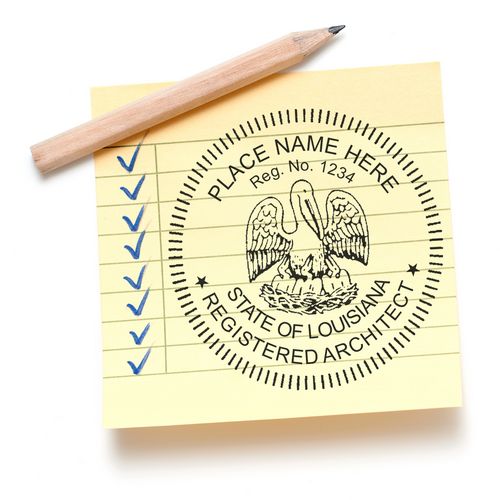
Nothing on the Arizona die is optional. R4-30-303(A) fixes the legend for this registration as “Registered Architect” in the upper annular space, puts Arizona U.S.A. at the bottom, and puts the registrant name, the registration number and the words “date signed” inside the inner circle. Two habits from other states are wrong here. Licensed Architect is not the Arizona legend, and a generic die cut with only a name line and a number line omits the date-signed legend the rule requires. The branch line is an engineering requirement under R4-30-303(B) and has no place on an architect seal. A date built into the rubber is prohibited in effect: the Board’s substantive policy statement 7 states “It is not acceptable to change the date on a seal” and fixes the correct date as the day the document is sealed and signed, which only a blank line can satisfy.
Size and shape
1-1/2 inches outside diameter, tolerance plus or minus 1/16 inch, with an inner circle of 1-1/8 inches, same tolerance. R4-30-303(A) requires “an ink seal 1 1/2 inches in diameter and identical in style, size, and appearance to the sample shown in Appendix A”, and Appendix A prints both tolerances: “Outer circle shall be 1 1/2″ plus or minus 1/16″ Inner circle shall be 1 1/8″ plus or minus 1/16″”. This is an exact specification rather than a minimum, and the Board enforces it under R4-30-303(B) by disapproving a seal that misses “the exact specifications”.


Embosser, rubber stamp or digital
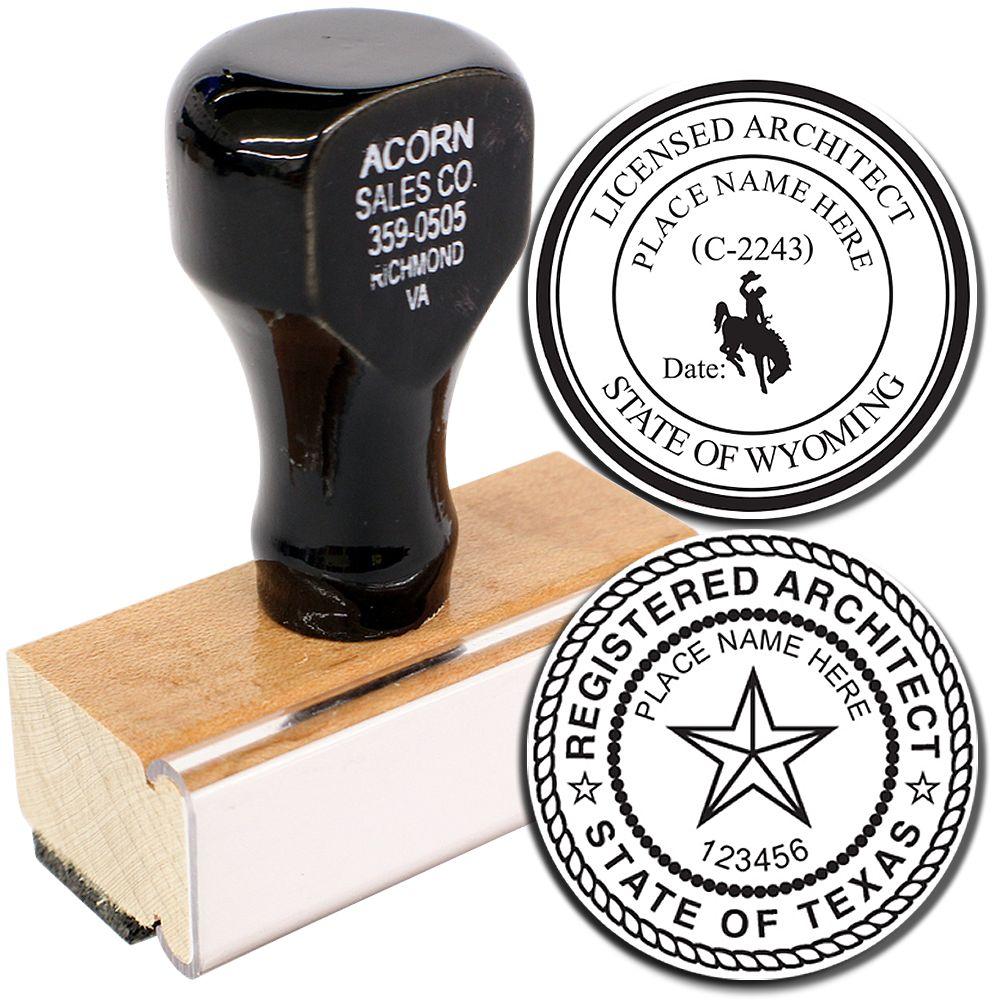
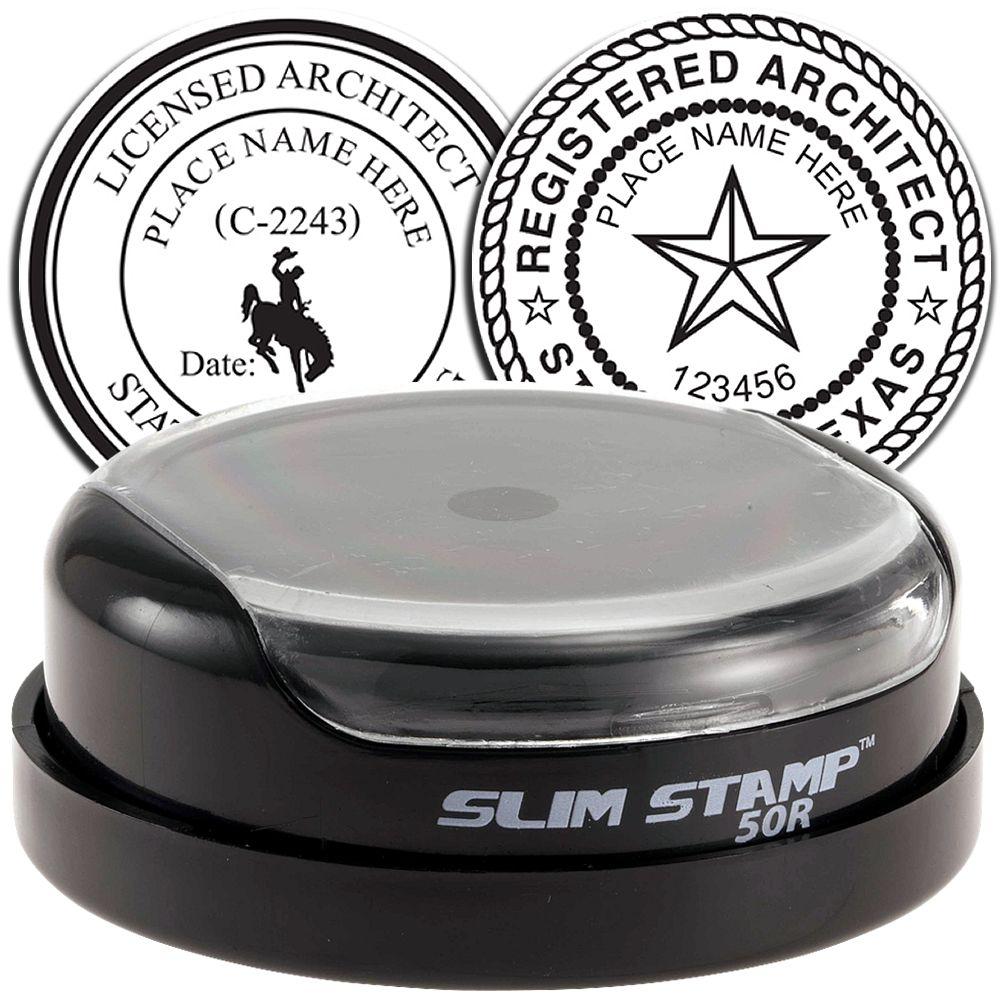
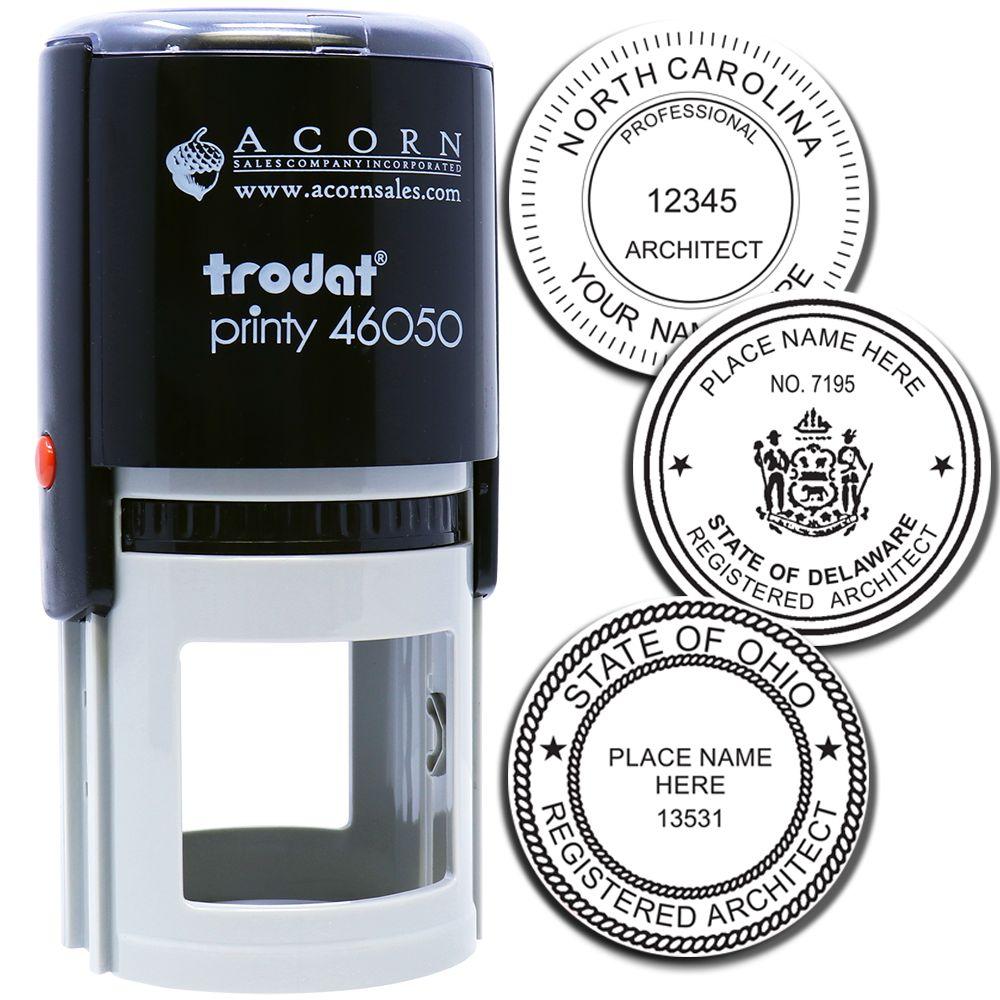
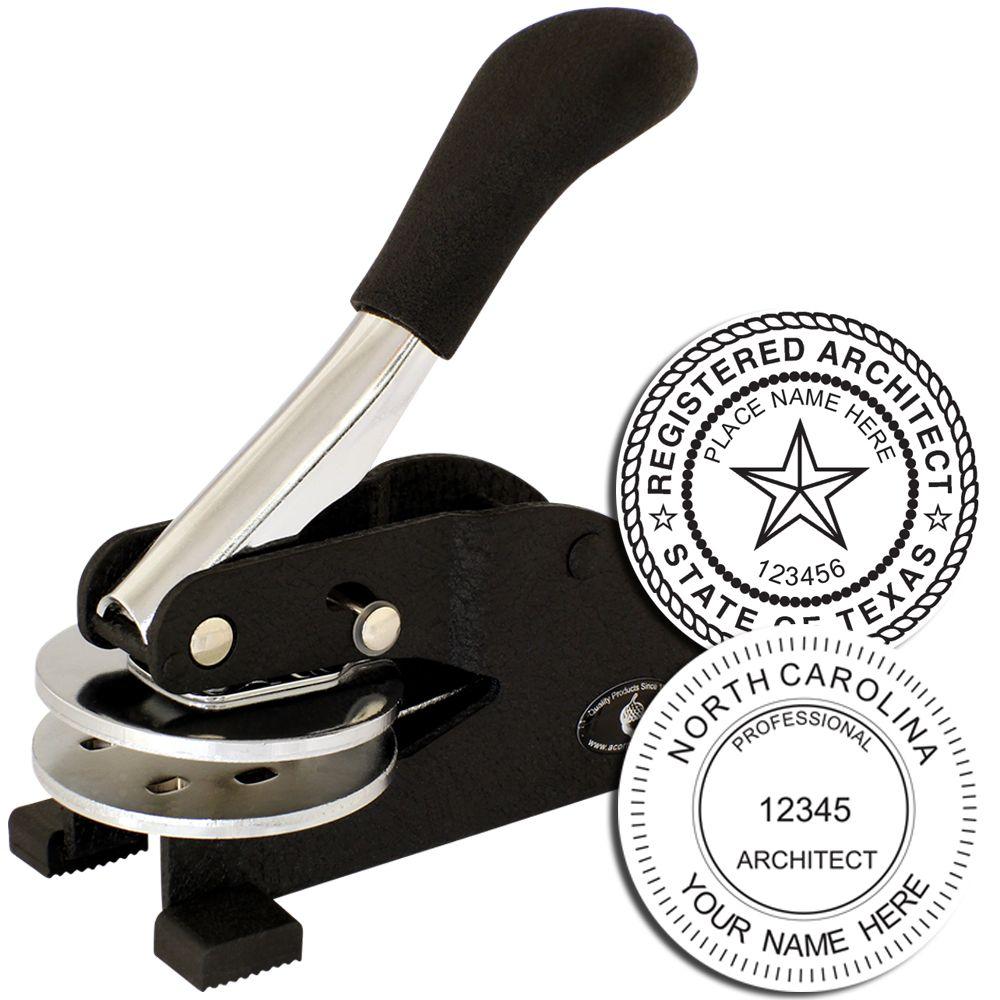
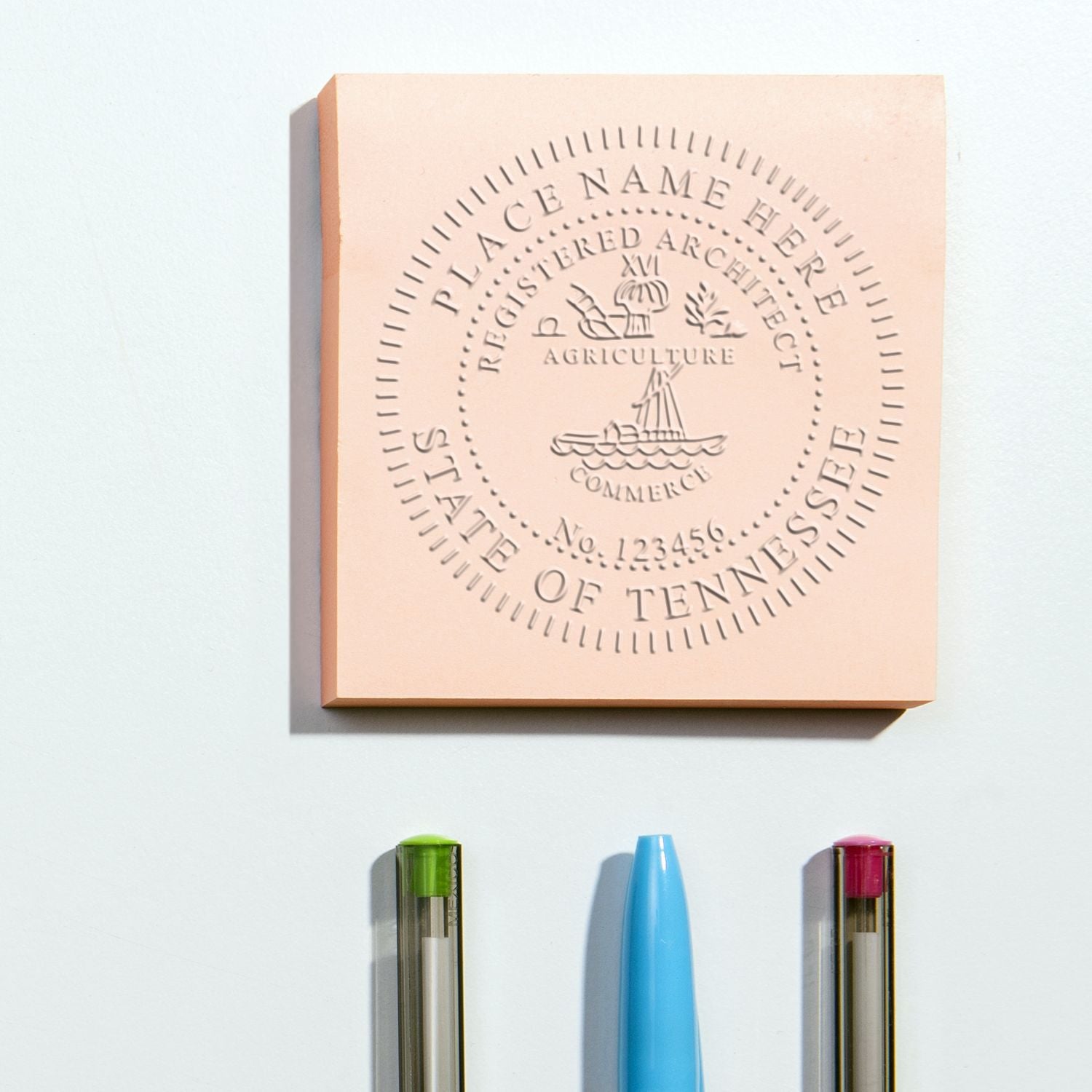
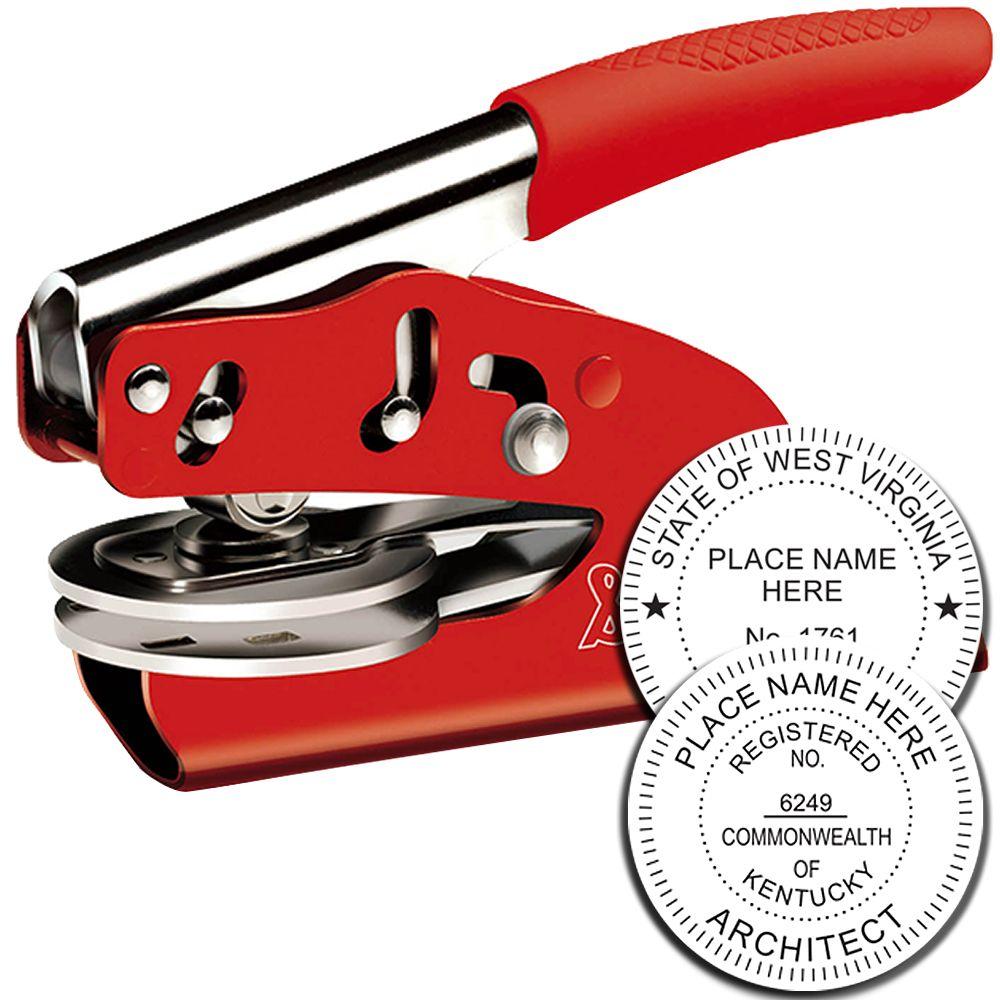
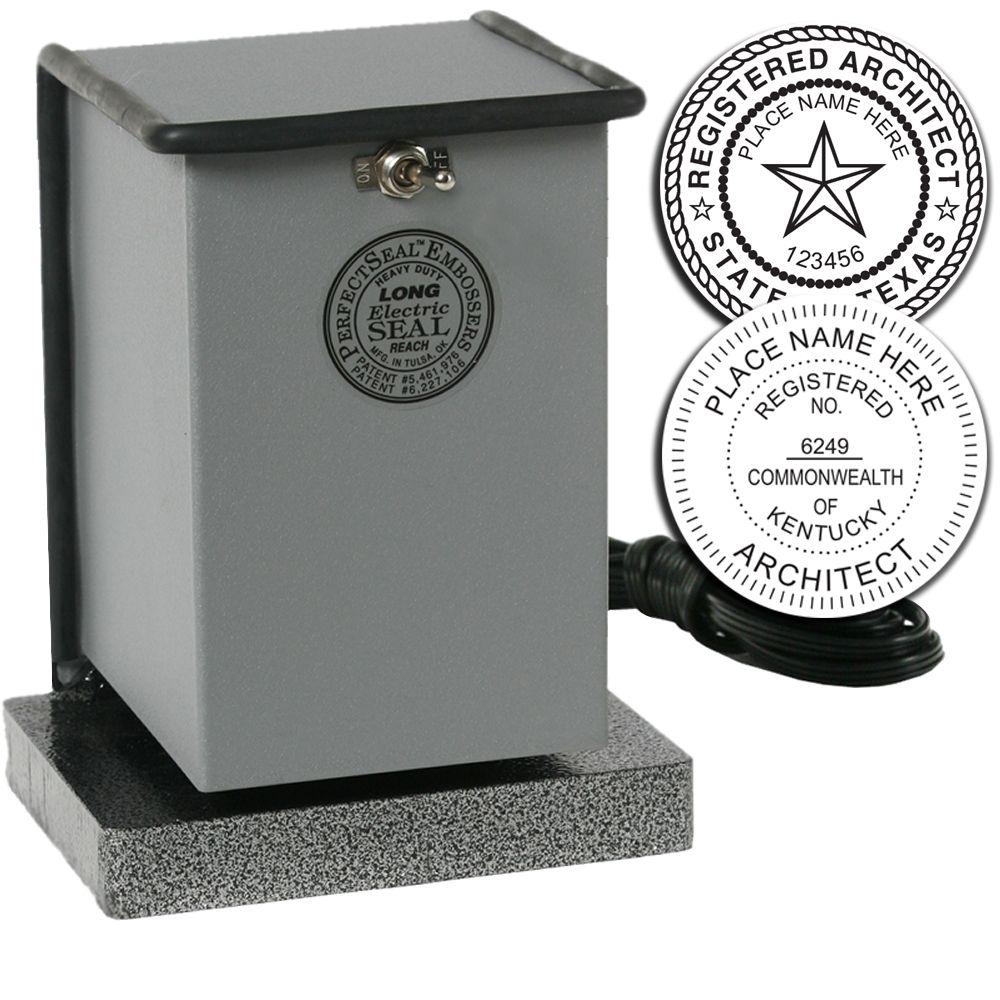
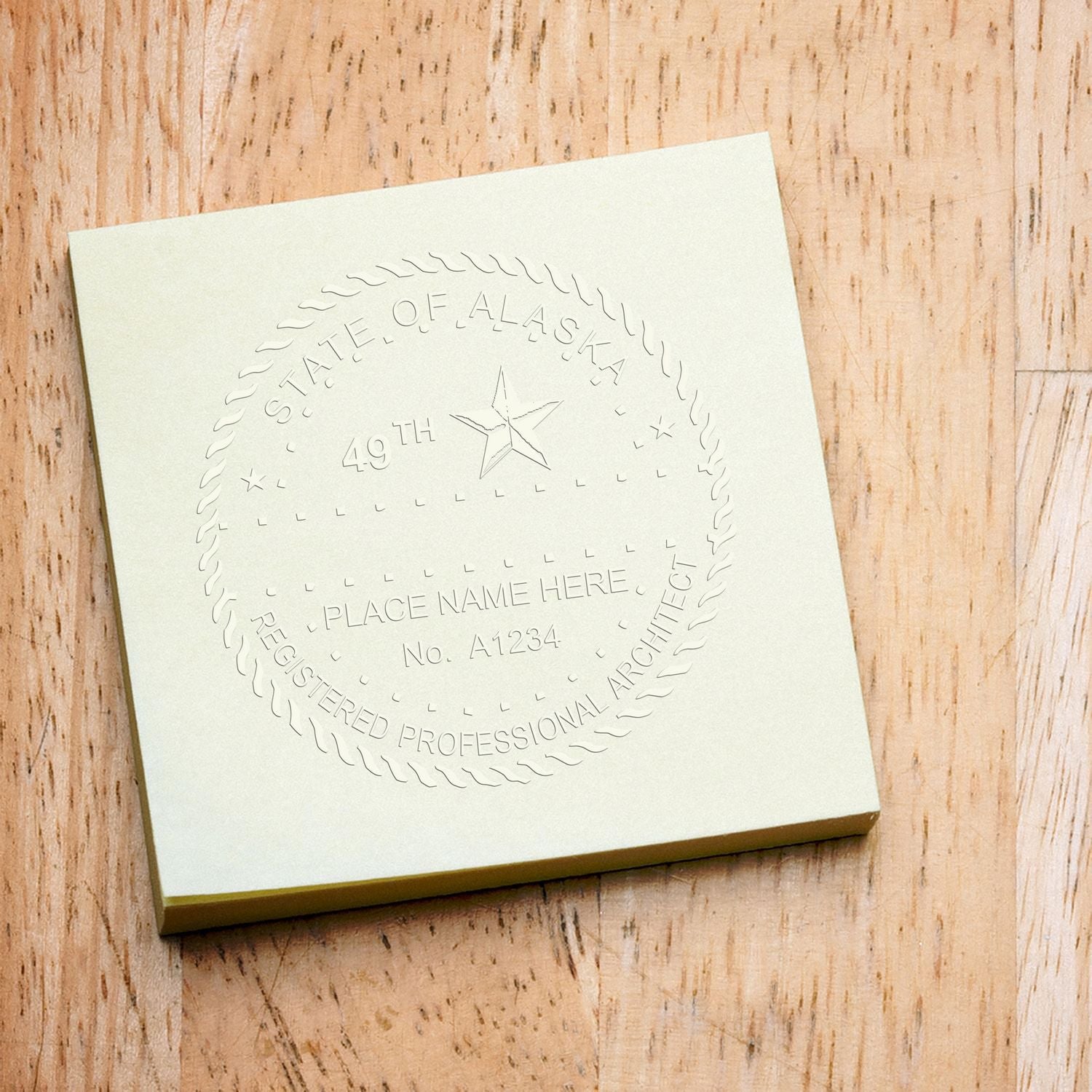
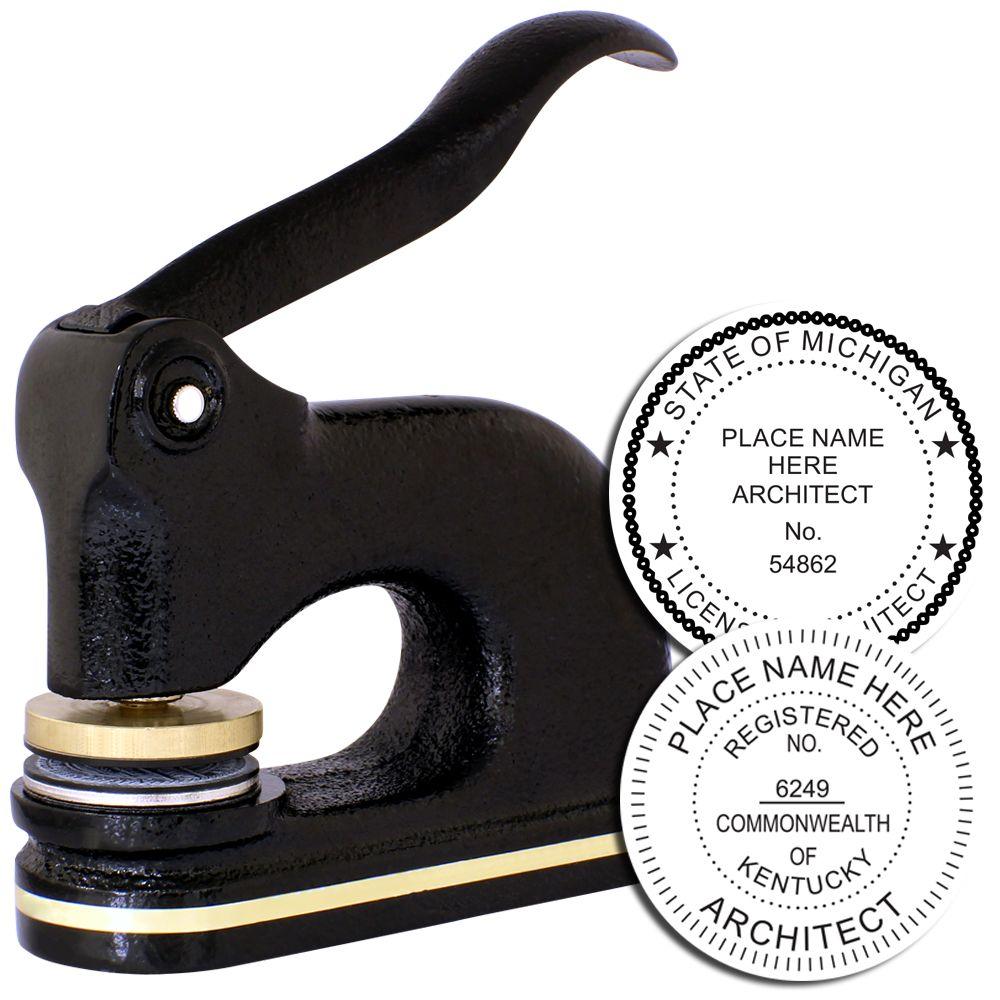
R4-30-303(A) names an ink seal, so an inked rubber stamp is the compliant device and the safe buy. An embosser as the seal is not authorized anywhere in the chapter.
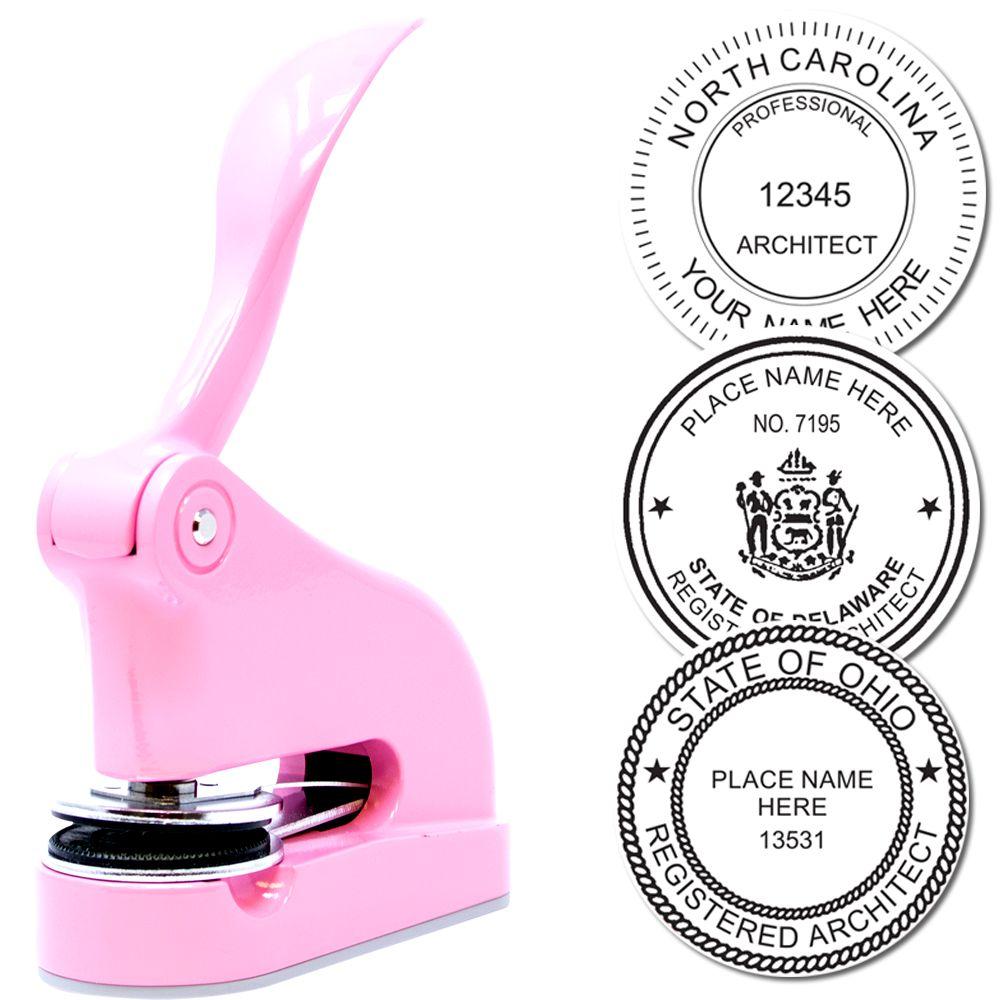
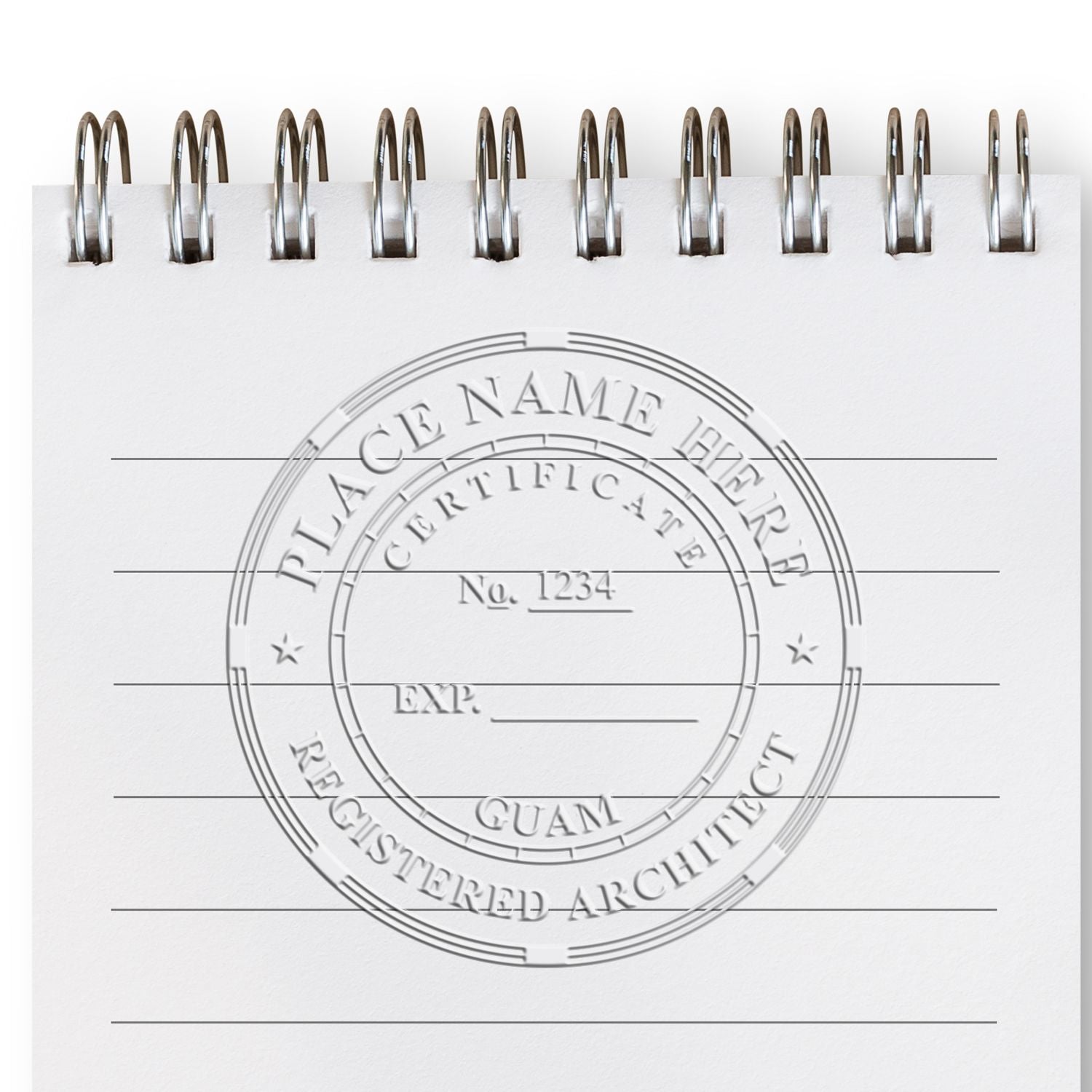
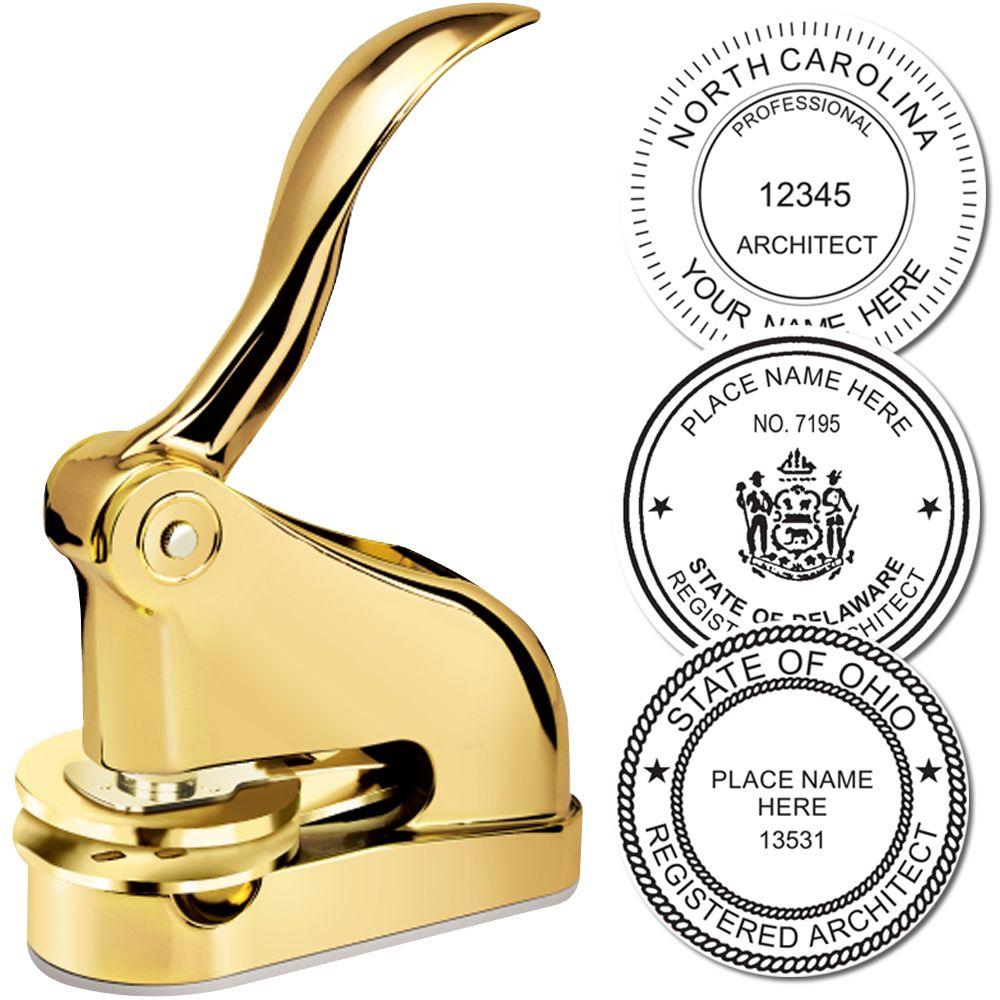
Supplemental, and worth knowing: the rule governs what seals the document, not what else may sit on the sheet. An embosser used alongside the compliant device is a different product doing a different job. Plenty of firms still want the raised impression on the client copy, the title sheet or the record set, because it reads as finished work in a way an inked mark does not. Order the compliant device as your seal, and treat the embosser as the companion it is.
Back to the compliant device. For the applied imprint, R4-30-304(E)(1) accepts either “An original seal imprint or a computer-generated seal that matches the seal on file at the Board’s office”, and R4-30-304(F) closes off everything else: “Methods of transferring a seal other than an original seal imprint or a computer-generated seal are not acceptable.” Buy the ink stamp first, because the imprint you file with the Board is what any computer-generated version has to match.
Signing and dating
Seal, signature and date travel together. R4-30-304(E) requires an original document to carry the seal imprint, “An original signature that does not obscure either the registrant’s printed name or registration number”, and “The date the document was sealed.” Appendix A gives the placement: “Sign your name across lower portion of the seal. Do not cover your name or registration number with your signature.” Signing across the seal is expected, but only across the lower portion. The date is the sealing date: substantive policy statement 7 states that “The appropriate date on the seal of an original document is the day that document is sealed and signed”. R4-30-304(G) permits an electronic signature in place of a permanently legible one, in accordance with A.R.S. Title 41 and Title 44.
The die has to say “date signed”, and the Board has to bless the imprint before you use it
Two Arizona requirements have no counterpart in most states, and both are die problems rather than practice problems. R4-30-303(A) puts the literal words “date signed” inside the inner circle beside the registrant name and registration number. A national template architect seal cut with a name line and a number line and nothing else is non-compliant on its face here.
Then R4-30-303(B) adds a filing step. Immediately on receiving the seal, and before using it for any purpose, the registrant files with the Board an imprint of the seal with an original signature superimposed over it plus an affidavit regarding use of the seal. The Board has ten working days to disapprove any seal that does not meet the exact specifications of subsection (A), and a registrant whose seal is disapproved has to buy another at their own cost before sealing any work.
The legend is the third trap. Arizona says “Registered Architect”. It does not say Licensed Architect, and it does not say Architect alone. Get the wording, the 1-1/2 inch outer circle, the 1-1/8 inch inner circle and the date-signed legend right the first time and the filing is a formality.
Which documents must be sealed
R4-30-304(A) lists nine categories and does not vary them by profession: each sheet of drawings or maps; each master sheet reproduced into a finished set; the cover, title, index or table of contents page or first sheet of each set of project specifications; the same for each addendum or change order; the same for bound supplemental details; the same for any report, specification or other professional document; the signature line of any letter or other professional document; shop drawings that require professional services; and public works projects requiring each professional’s signature. R4-30-304(D) sets the timing: seal before the document goes to a client, contractor or reviewing body “unless the document is marked ‘preliminary,’ ‘draft,’ or ‘not for construction’”, with an exception for work product intended for other members of a design team, and always seal documents prepared for dispute resolution, litigation, arbitration or mediation.



Electronic and digital seals
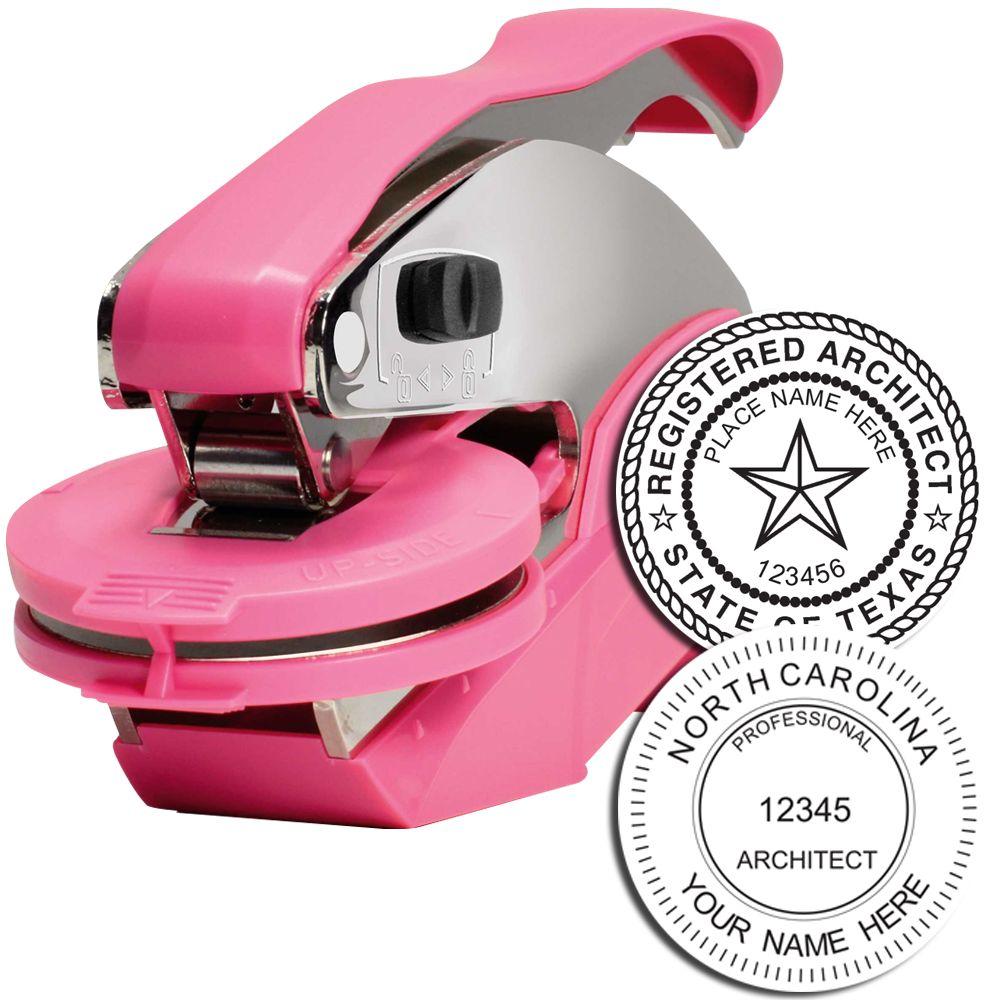
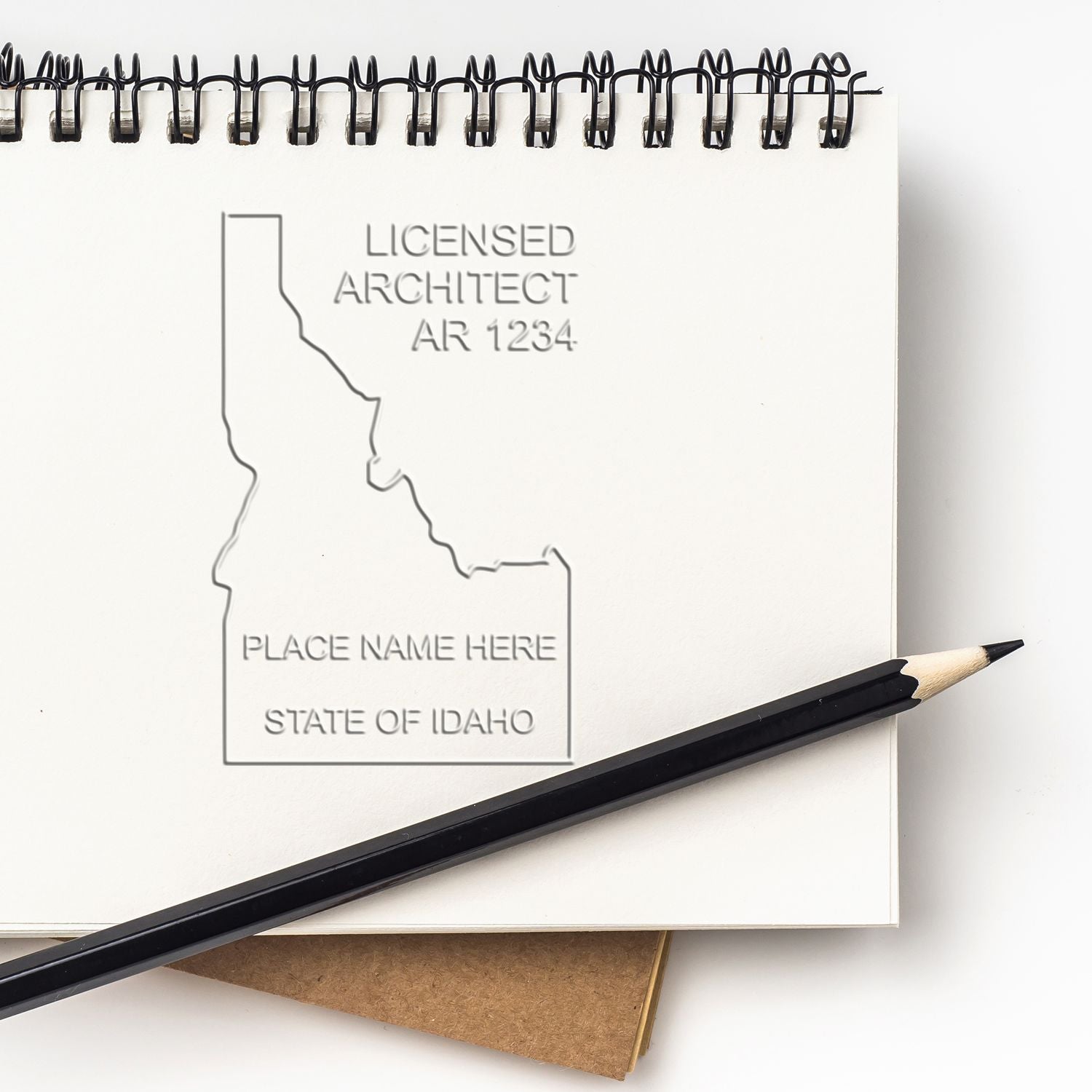
Arizona names no cryptographic standard and no product. R4-30-304(G) accepts an electronic signature for all professional documents “in accordance with A.R.S. Title 41 and Title 44”, which is the state’s general electronic transactions law, and adds that the registrant “shall provide adequate security regarding the use of the seal and signature.” A computer-generated seal is allowed under R4-30-304(E)(1) only where it matches the imprint on file with the Board. R4-30-304(C) governs unsigned electronic copies, which must be marked “Electronic copy of final document; sealed original document is with (identify the registrant’s name and registration number)”.
Renewal, lapse and retirement
A.R.S. § 32-125(C) makes it “unlawful for a registrant whose certificate has expired or has been revoked or suspended to use the seal”, and § 32-125(D) makes it unlawful for a nonregistrant to cause or permit illegal use of a registrant’s seal, signature or stamp. A.R.S. § 32-127 bars practice while a registration is inactive or invalid, cancels a certificate after one full renewal period of invalidity, and then requires application as a new candidate. Whether a reinstated registrant keeps the old number is not addressed in § 32-127 or in 4 A.A.C. 30, so confirm the number with the Board before ordering a replacement. Neither the statute nor the rules require a dead seal to be surrendered or destroyed; the duty is to stop using it and to keep it secure.
Firm requirements
A firm must be registered, but the firm gets no seal. A.R.S. § 32-141 provides that “A firm shall not engage in the practice of any board-regulated profession or occupation unless the firm is registered with the board and the professional services are conducted under the full authority and responsible charge of a principal of the firm, who is also a registrant”, and each branch office needs its own registration and its own designated registrant in responsible charge. Nothing in § 32-141, R4-30-303 or R4-30-304 puts a firm seal or a firm registration number on a sealed document.
What to check before you order
Order an inked rubber stamp, not an embosser. Outer circle 1-1/2 inches plus or minus 1/16 inch, inner circle 1-1/8 inches plus or minus 1/16 inch. The upper annular space reads Registered Architect, the bottom reads Arizona U.S.A., and the inner circle carries your name as registered, your registration number and the words date signed. Do not let a supplier build a date into the die and do not accept a branch line, which belongs only on engineer seals. Arizona asks no proof of licensure from you at the counter, so the check happens afterward: file the imprint and the affidavit with the Board before you use the stamp, and expect a decision within ten working days.
Browse architect stamps and seals.
Frequently asked questions
Is an architect seal required in Arizona?
Yes. A.R.S. § 32-125(B) provides that plans, specifications, plats or reports prepared by a registrant or a registrant’s bona fide employee “shall be issued under the registrant’s seal if the board requires the registrant to use a seal,” and R4-30-303(A) answers that for every design registration the Board grants. R4-30-304(A) then requires “a permanently legible imprint of the registrant’s seal and signature” on a nine item list of document types. Registered architects seal on exactly the terms that bind engineers, geologists, landscape architects and land surveyors.
What has to appear on an Arizona architect seal?
Five things, and none of them is optional. Registered Architect in the upper annular space, Arizona U.S.A. at the bottom, and your name as registered, your registration number and the words “date signed” inside the inner circle, under R4-30-303(A) and Appendix A. Licensed Architect is not the Arizona legend. The branch line is an engineering requirement under R4-30-303(B) and does not belong on an architect device.
What size is an Arizona architect seal?
Outer circle 1 1/2 inches plus or minus 1/16 inch, inner circle 1 1/8 inches plus or minus 1/16 inch. R4-30-303(A) states the diameter and Appendix A prints both tolerances. This is an exact specification rather than a minimum, and the Board enforces it under R4-30-303(B) by disapproving a seal that misses “the exact specifications” of subsection (A).
Can I use an embosser in Arizona?
R4-30-303(A) names an ink seal, and an embosser alone is not authorized anywhere in 4 A.A.C. 30. For the imprint on the document, R4-30-304(E)(1) accepts either an original seal imprint or a computer-generated seal that matches the seal on file at the Board’s office, and R4-30-304(F) closes the rest off: “Methods of transferring a seal other than an original seal imprint or a computer-generated seal are not acceptable.” Buy the ink stamp first, because the imprint you file is what any computer-generated version has to match.
Do I have to register my seal with the Arizona Board?
Yes, and before you use it. R4-30-303(B) requires you to file with the Board, immediately on receiving the seal and prior to using it for any purpose, an imprint of the seal with an original signature superimposed over it and an affidavit regarding use of the seal. The Board then has ten working days to disapprove a seal that does not meet the exact specifications of R4-30-303(A). Getting the wording, the two diameters and the date-signed legend right the first time makes the filing a formality.
Where do the signature and date go on an Arizona sealed document?
Across the lower portion of the seal. Appendix A says “Sign your name across lower portion of the seal. Do not cover your name or registration number with your signature.” R4-30-304(E) requires the original document to carry the seal imprint, an original signature that does not obscure either your printed name or registration number, and the date the document was sealed. Substantive policy statement 7 fixes that as the day the document is sealed and signed.
Which documents have to be sealed in Arizona?
Nine categories under R4-30-304(A), identical across every profession the Board registers: each sheet of drawings or maps; each master sheet reproduced into a finished set; the cover, title, index or table of contents page or first sheet of each set of project specifications; the same for each addendum or change order; the same for bound supplemental details; the same for any report, specification or other professional document; the signature line of any letter or other professional document; shop drawings requiring professional services; and public works projects requiring each professional’s signature.
Does preliminary work need a seal in Arizona?
R4-30-304(D) requires sealing before the document goes to a client, contractor or reviewing body “unless the document is marked ‘preliminary,’ ‘draft,’ or ‘not for construction,’” with a further exception for work product intended for other members of a design team. Documents prepared for dispute resolution, litigation, arbitration or mediation are always sealed.
Can I seal drawings electronically in Arizona?
Yes, with no named technology. R4-30-304(G) accepts an electronic signature for all professional documents “in accordance with A.R.S. Title 41 and Title 44,” the state’s general electronic transactions law, and requires you to “provide adequate security regarding the use of the seal and signature.” A computer-generated seal is allowed under R4-30-304(E)(1) only where it matches the imprint on file with the Board. Unsigned electronic copies fall under R4-30-304(C) and must be marked “Electronic copy of final document; sealed original document is with (identify the registrant’s name and registration number).”
What happens to my Arizona seal if my registration expires?
You stop using it. A.R.S. § 32-125(C) makes it “unlawful for a registrant whose certificate has expired or has been revoked or suspended to use the seal,” and § 32-125(D) makes it unlawful for a nonregistrant to cause or permit illegal use of a registrant’s seal, signature or stamp. A.R.S. § 32-127 bars practice while a registration is inactive or invalid, cancels a certificate after one full renewal period of invalidity and then requires application as a new candidate. Whether a reinstated registrant keeps the old number is not stated in § 32-127 or in 4 A.A.C. 30, so confirm it with the Board before ordering a replacement. Neither the statute nor the rules require a dead seal to be surrendered or destroyed; the duty is to stop using it and keep it secure.
Does an Arizona architecture firm get its own seal?
No. A.R.S. § 32-141 provides that “A firm shall not engage in the practice of any board-regulated profession or occupation unless the firm is registered with the board and the professional services are conducted under the full authority and responsible charge of a principal of the firm, who is also a registrant,” and each branch office needs its own registration and its own designated registrant in responsible charge. Nothing in § 32-141, R4-30-303 or R4-30-304 puts a firm seal or a firm registration number on a sealed document.








