

Written by Acorn Sales Company, manufacturing stamps and seals since 1964 · Reviewed by Holly R, VP of Sales and Marketing at Acorn Sales, against the Arizona State Board of Technical Registration and A.R.S. § 32-125(B) on 21 September 2026 · Updated 21 September 2026
An Arizona engineer registered in two branches buys two seals, not one. R4-30-303(B) requires a registrant to secure and use a seal for each branch of engineering in which registration has been granted, and Appendix A directs that engineers must list the branch. A single die naming two branches does not satisfy the rule.
The face also has to carry the literal words “date signed” inside the inner circle alongside the name and registration number, under R4-30-303(A)(2). A generic engineer seal cut with a name line and a number line and nothing else is non-compliant in Arizona on its face. Size is an exact specification rather than a minimum: 1-1/2 inches outside diameter with a 1-1/8 inch inner circle, each plus or minus 1/16 inch.
Then there is a step before first use. R4-30-303(B) requires the registrant to file an imprint of the seal with an original signature superimposed over it, plus an affidavit regarding use of the seal, immediately on receiving it and before using it for any purpose. The Board has ten working days to disapprove a seal that misses the exact specifications, and a disapproved registrant buys another at their own cost.
Arizona PE seal requirements at a glance
| Requirement | Arizona rule | Source |
|---|---|---|
| Seal required | Yes | A.R.S. § 32-125(B) |
| Required elements | Registered Professional Engineer, The engineering branch, Your name as registered, Your registration number, The words “date signed” and Arizona U.S.A. | A.A.C. R4-30-303(A) |
| Size and shape | 1-1/2 inches outside diameter, tolerance plus or minus 1/16 inch, with an inner circle of 1-1/8 inches, same tolerance. | A.A.C. R4-30-303(A) |
| Device allowed | R4-30-303(A) names an ink seal, so an inked rubber stamp is the compliant physical device and the safe buy. | A.A.C. R4-30-303(A), R4-30-304(E)(1), R4-30-304(F) |
| Signature and date | Seal, signature and date travel together. | A.A.C. R4-30-304(E), R4-30-304(G) |
| What must be sealed | R4-30-304(A) lists nine categories: each sheet of drawings or maps; each master sheet reproduced into a finished set; the cover, title, index or table of contents page or first sheet of each set of project specifications; the same for each addendum or change order; the same for bound supplemental details; the same for any report, specification or other professional document; the signature line of any letter or other professional document; shop drawings that require professional services; and public works projects requiring each professional’s signature. | A.A.C. R4-30-304(A), R4-30-304(D) |
| Electronic seal | Arizona names no cryptographic standard and no specific technology. | A.A.C. R4-30-304(C), R4-30-304(E)(1), R4-30-304(G) |
| Renewal and lapse | A.R.S. § 32-125(C) makes it “unlawful for a registrant whose certificate has expired or has been revoked or suspended to use the seal”, and § 32-125(D) makes it unlawful for a nonregistrant to cause or permit illegal use of a registrant’s seal, signature or stamp. | A.R.S. § 32-125(C), (D) |
| Firm number on documents | A firm must be registered, but the firm does not get a seal. | A.R.S. § 32-141 |
| Licensing board | The Arizona State Board of Technical Registration | A.R.S. Title 32, Chapter 1 (§§ 32-125, 32-127, 32-141); Arizona Administrative Code Title 4, Chapter 30, Articles 1 to 3 |
Rules for other states are on PE stamp requirements by state.




Is a seal required in Arizona?
Arizona requires a seal Arizona splits the duty between statute and rule. A.R.S. § 32-125(B) says plans, specifications, plats or reports prepared by a registrant or a registrant’s bona fide employee “shall be issued under the registrant’s seal if the board requires the registrant to use a seal”, so the statute itself is conditional and points at the Board. The Board then makes it unconditional for the design professions by rule: R4-30-303(A) opens “Each registrant required to use a seal shall secure and use an ink seal”, and R4-30-304(A) requires “a permanently legible imprint of the registrant’s seal and signature” on a nine item list of document types. Registered professional engineers, architects, geologists, landscape architects and land surveyors all seal. Certified home inspectors and certified alarm businesses and agents, which the same Board licenses, have no seal at all.
What must appear on the seal
- Registered Professional Engineer
- The engineering branch
- Your name as registered
- Your registration number
- The words “date signed”
- Arizona U.S.A.
Nothing on the Arizona die is optional, and two things are commonly wrong. First, the words “date signed” belong on the face of the seal, inside the inner circle with the name and registration number, per R4-30-303(A)(2). Template stamps sold as generic engineer seals leave that legend off. Second, an engineer must list a branch. Appendix A directs that “ENGINEERS MUST LIST BRANCH” and names the permitted branches: Agriculture, Architectural, Chemical, Civil, Control Systems, Electrical, Environmental, Fire Protection, Geological, Industrial, Mechanical, Mining, Metallurgical, Nuclear, Petroleum, Sanitary and Structural. R4-30-303(B) adds that engineers registered in more than one branch “shall secure and use a seal for each branch of engineering in which registration has been granted”, so a dual branch engineer buys two stamps, not one stamp naming two branches. A pre-set or fixed date in the die is prohibited in effect: the Board’s substantive policy statement 7 states “It is not acceptable to change the date on a seal” and that the correct date is the day the document is sealed and signed, which only a blank date line can satisfy.
Size and shape
1-1/2 inches outside diameter, tolerance plus or minus 1/16 inch, with an inner circle of 1-1/8 inches, same tolerance. R4-30-303(A) fixes the seal at “an ink seal 1 1/2 inches in diameter and identical in style, size, and appearance to the sample shown in Appendix A”, and Appendix A supplies the tolerances for both circles. This is an exact specification, not a minimum, and the Board polices it: under R4-30-303(B) it may disapprove a seal that does not meet “the exact specifications” and require the registrant to buy another.
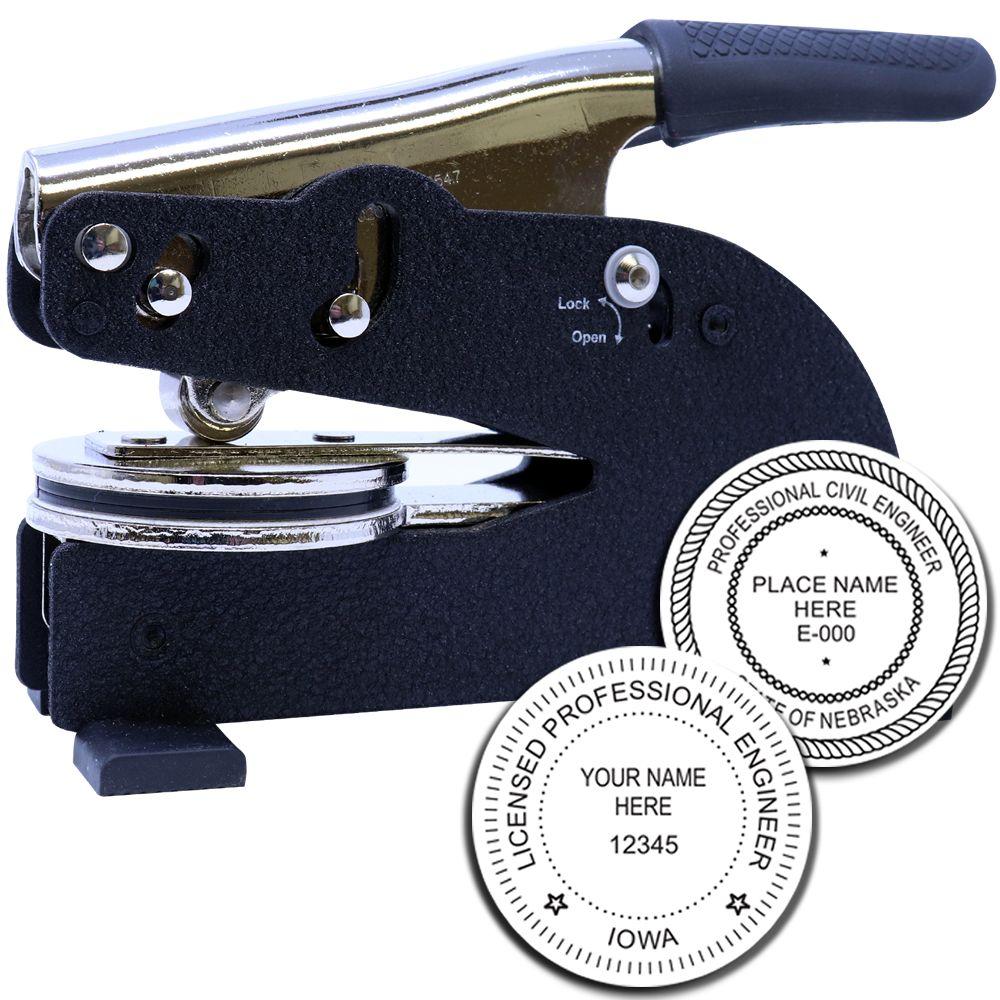

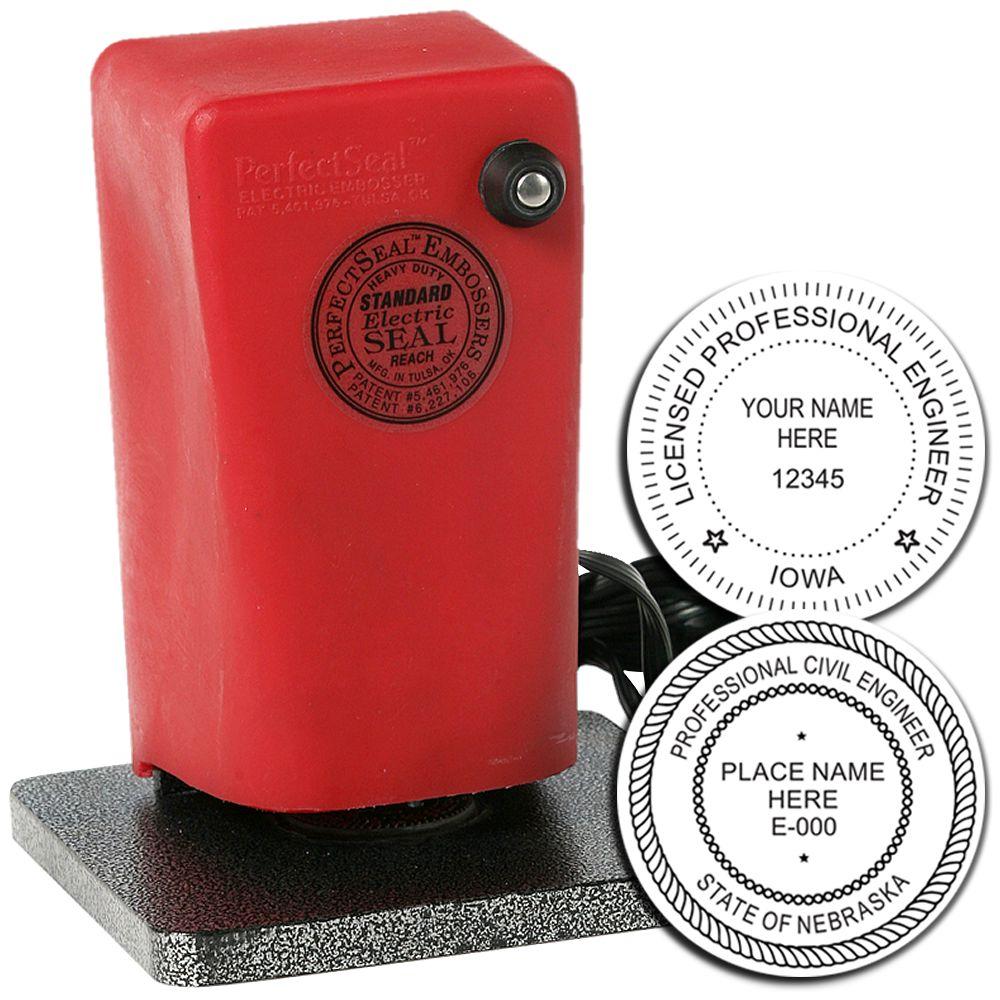
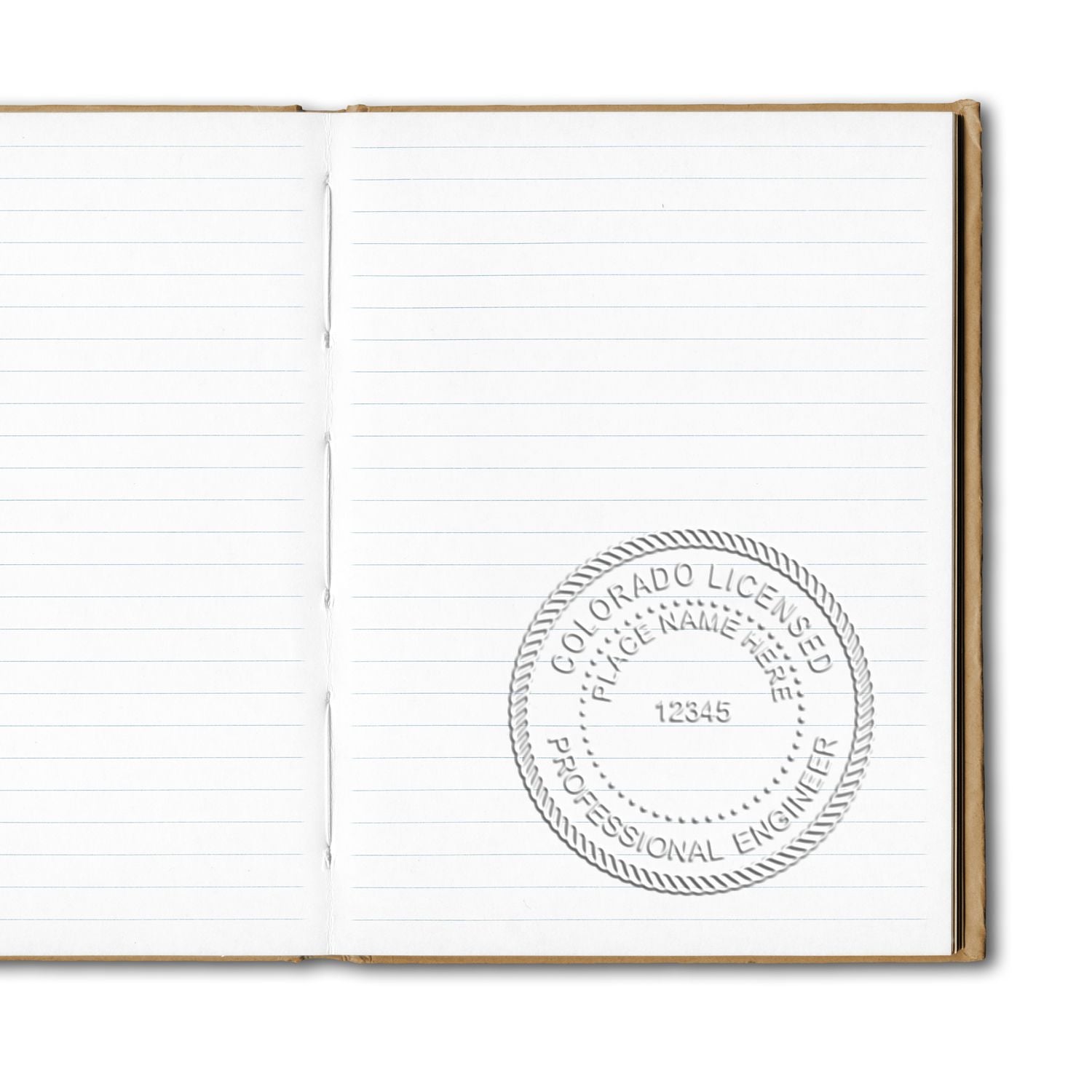
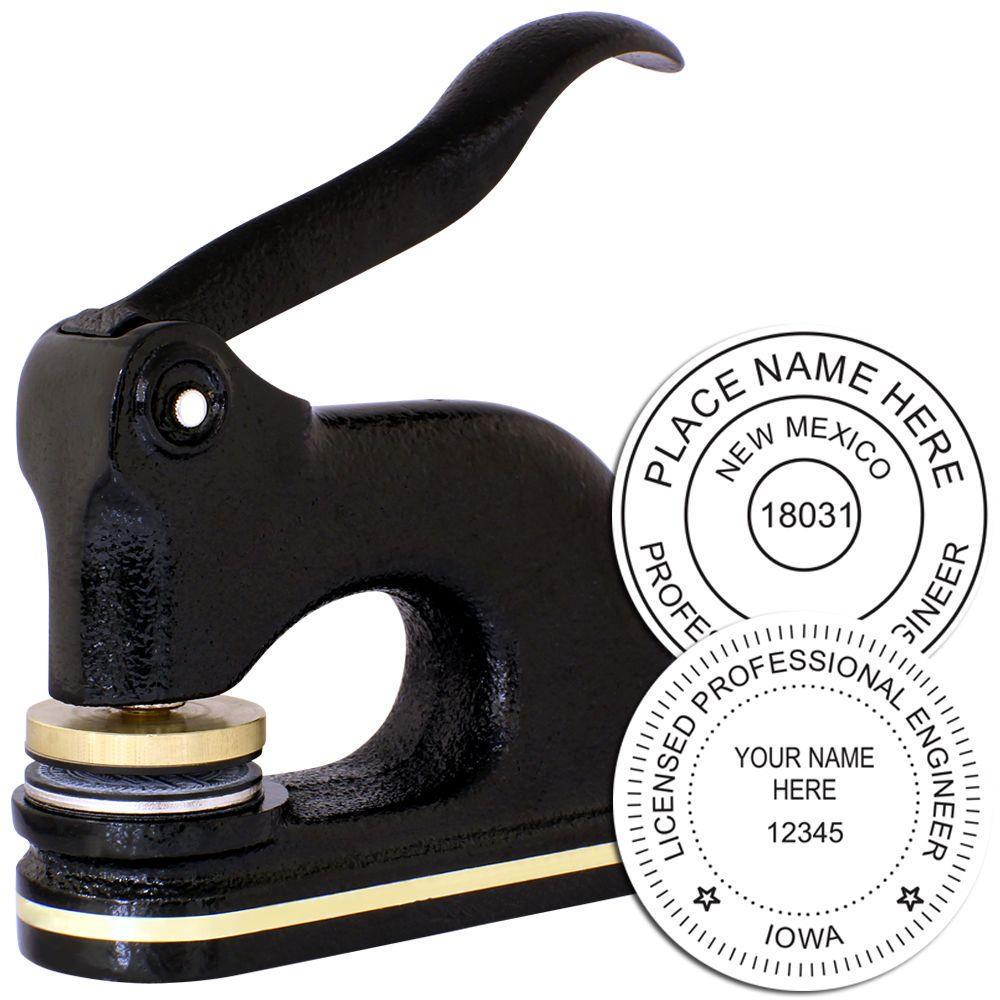


Embosser, rubber stamp or digital
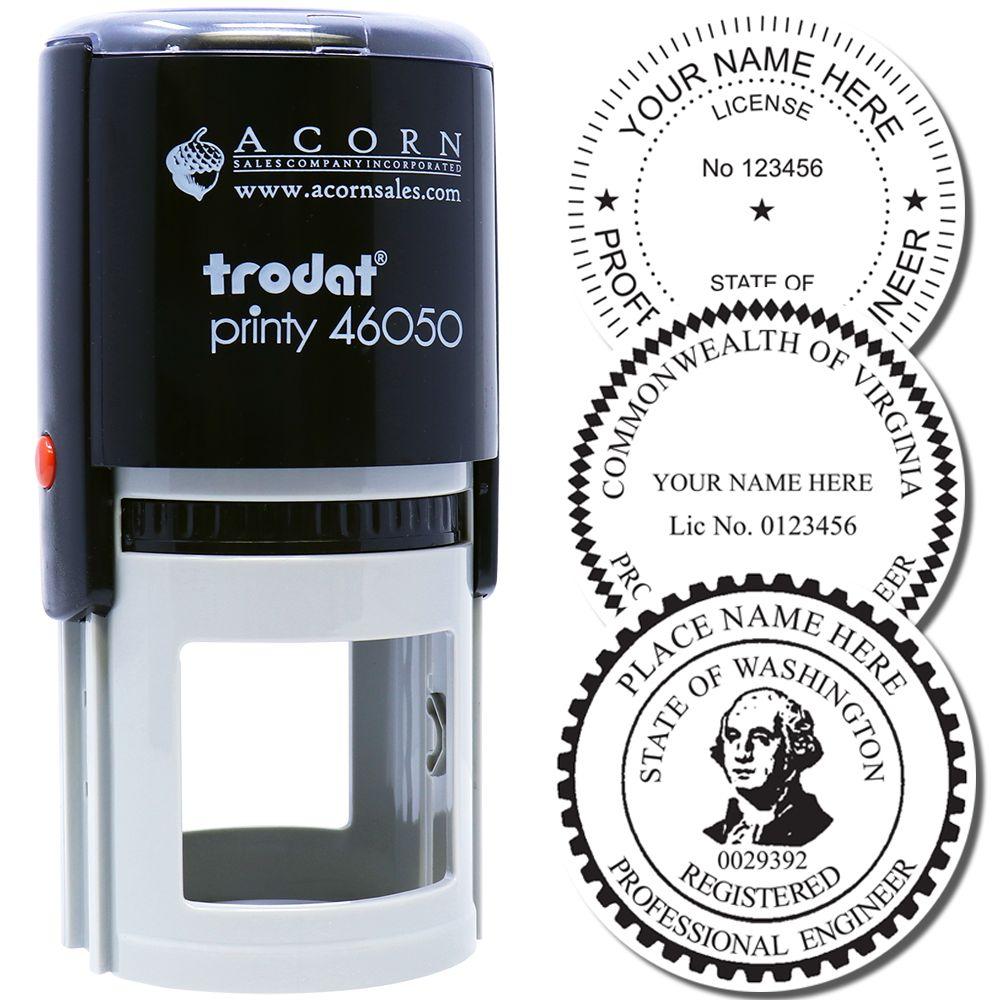
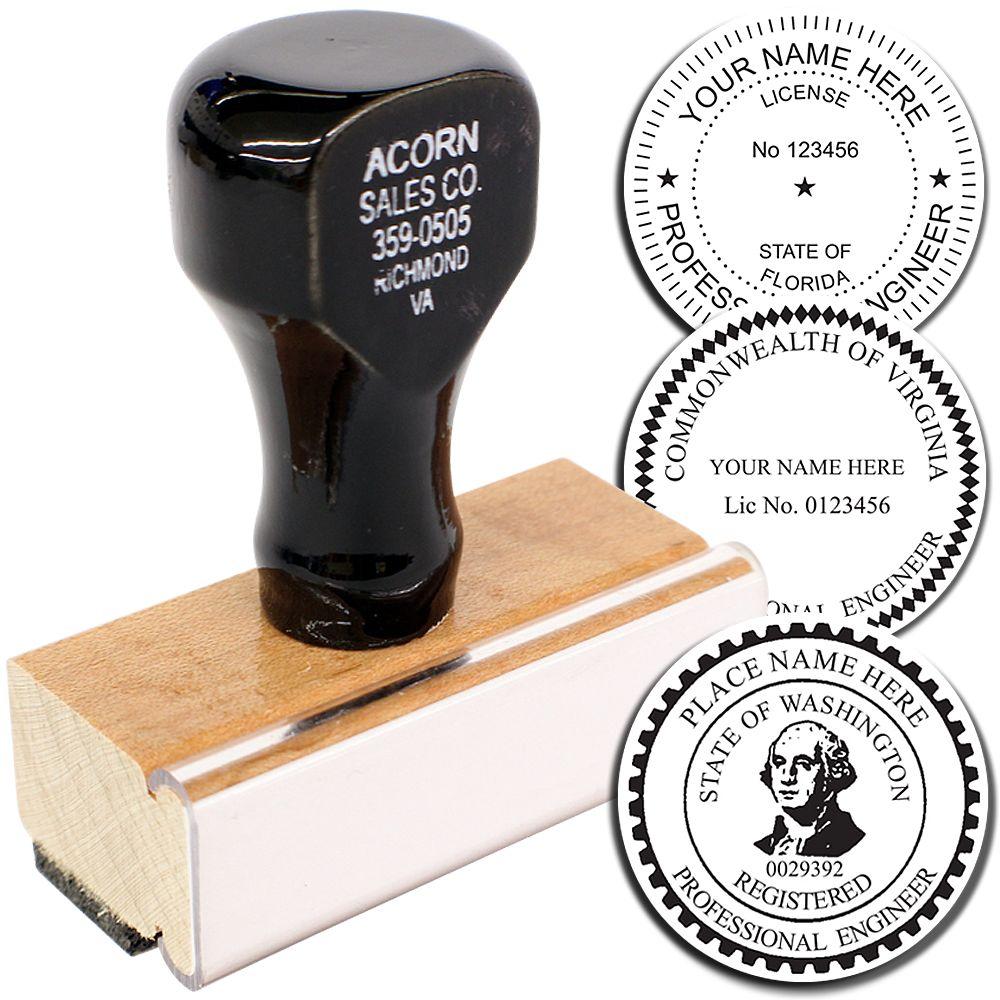
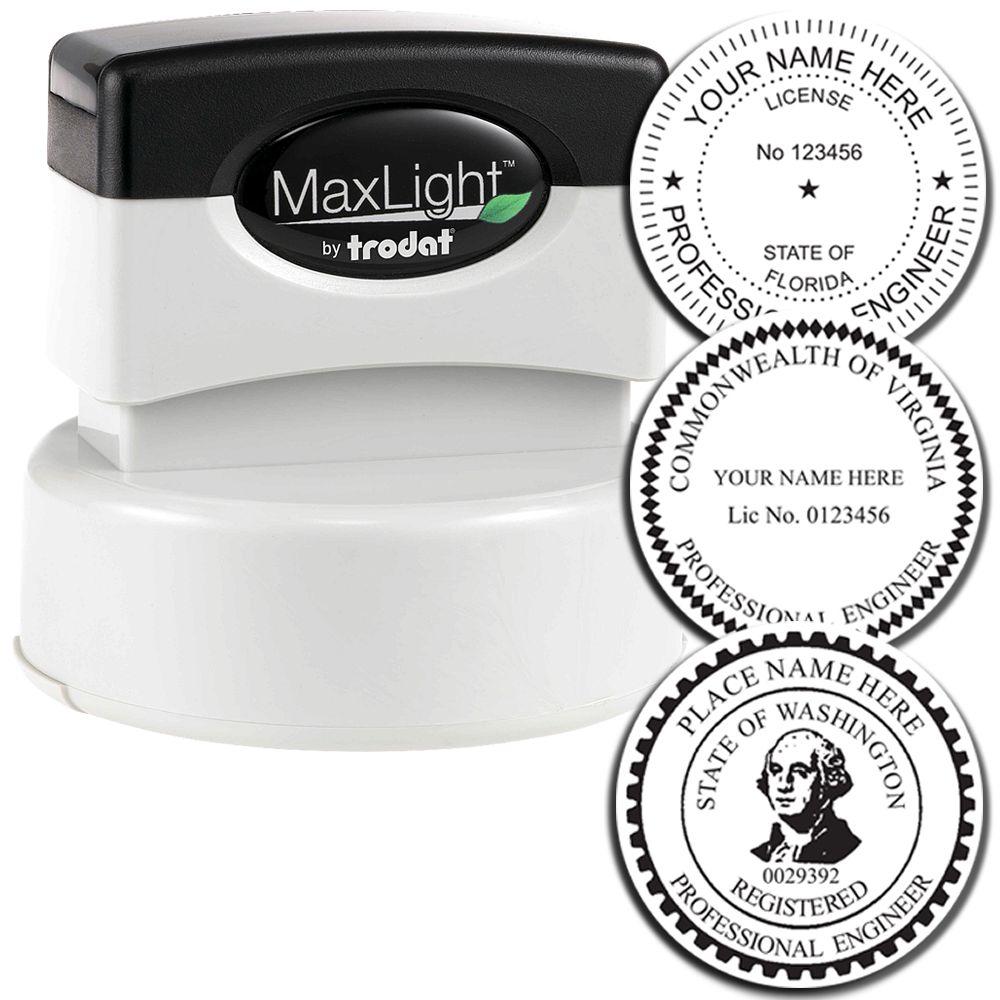
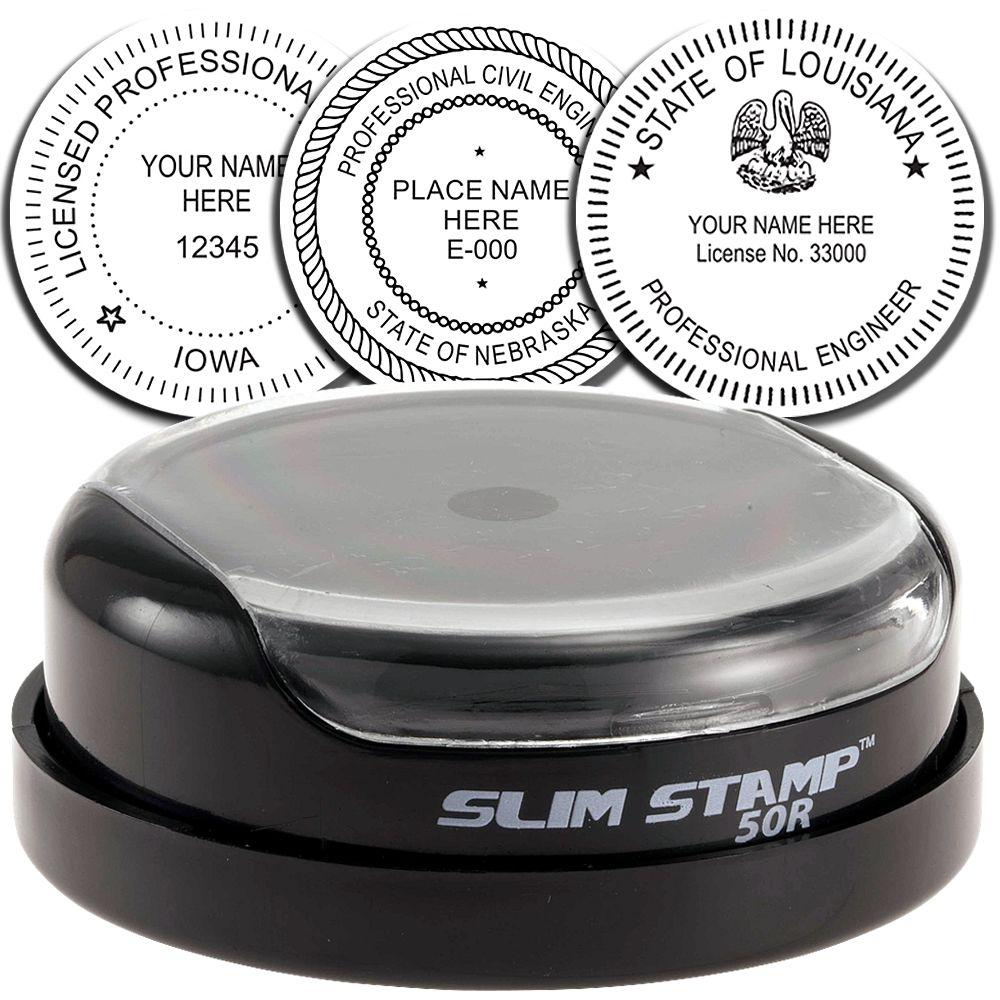
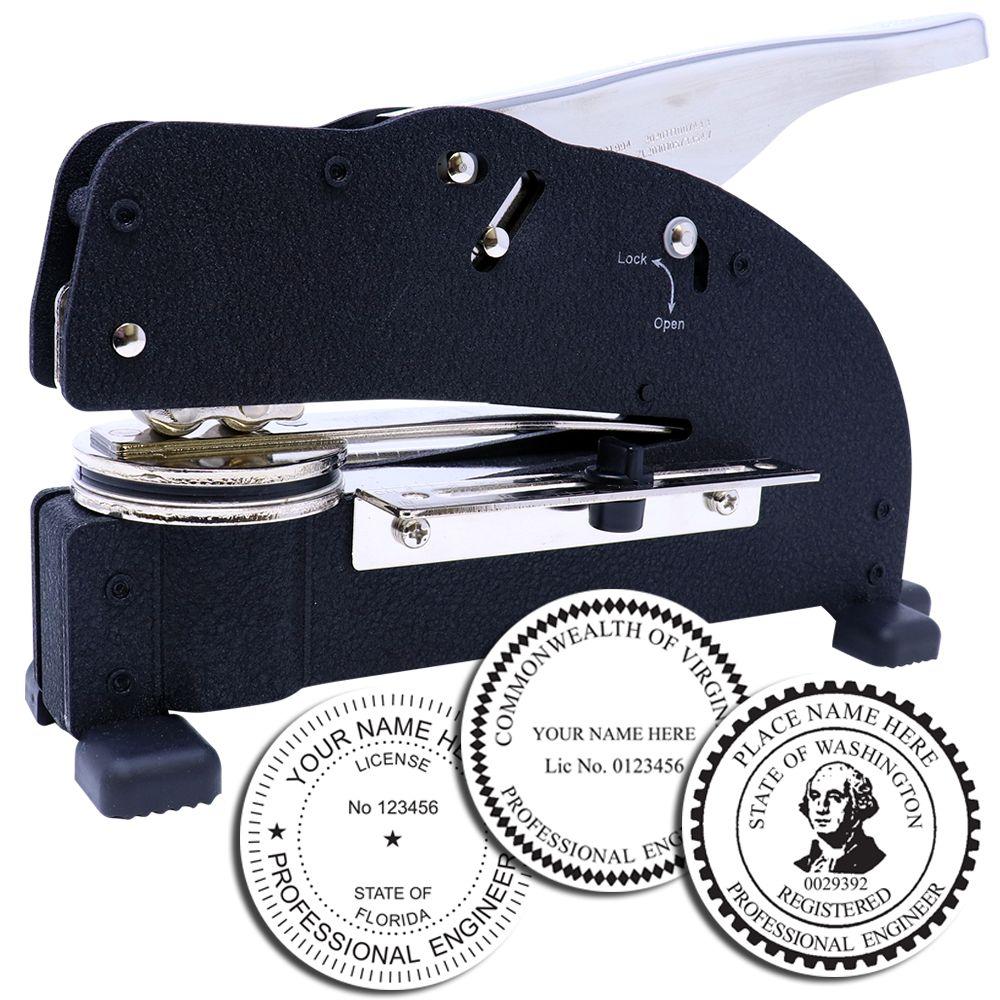
R4-30-303(A) names an ink seal, so an inked rubber stamp is the compliant physical device and the safe buy. An embosser as the seal is not authorized anywhere in the chapter.
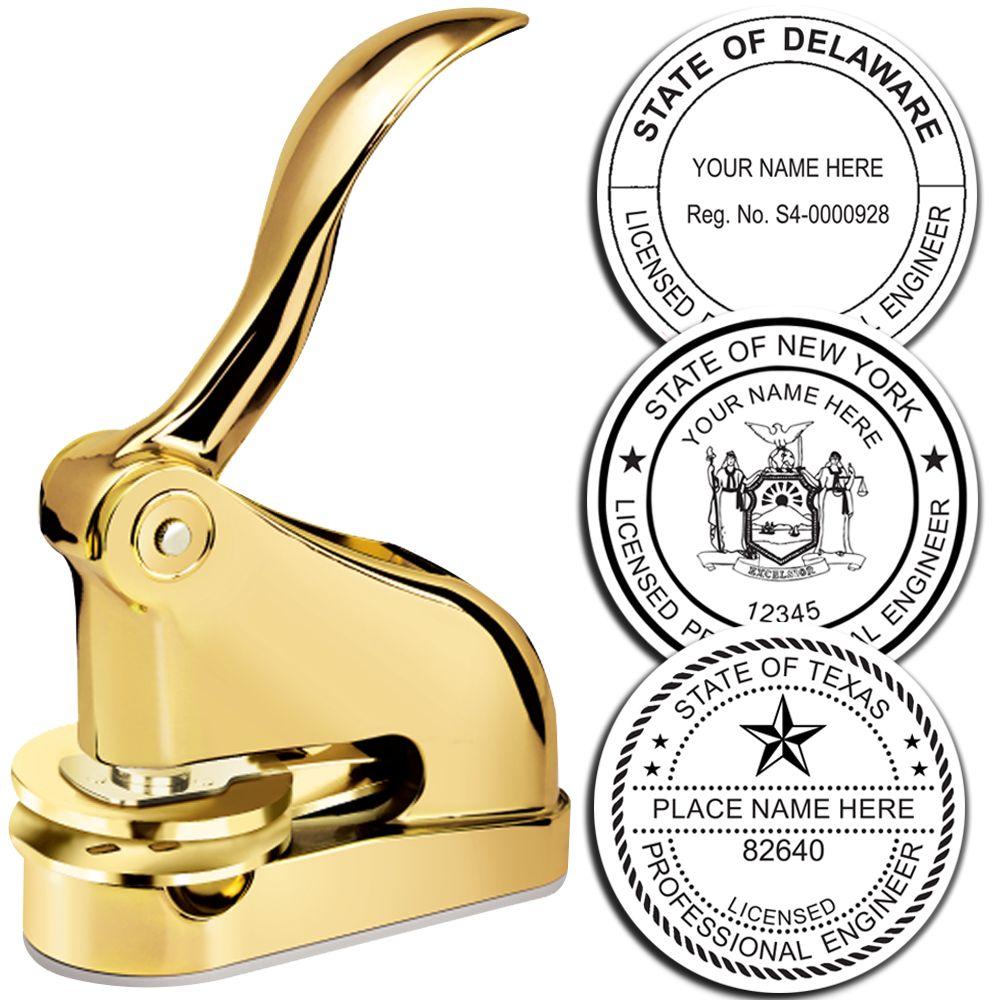
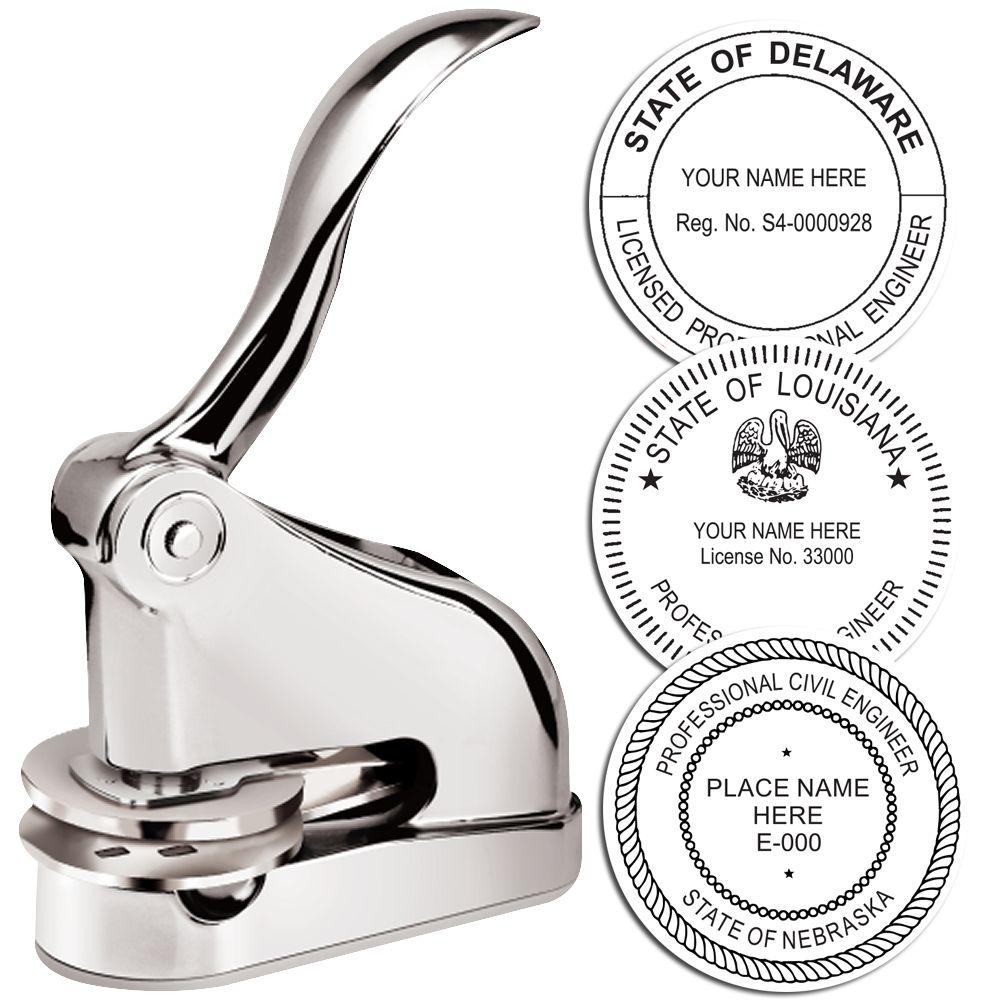
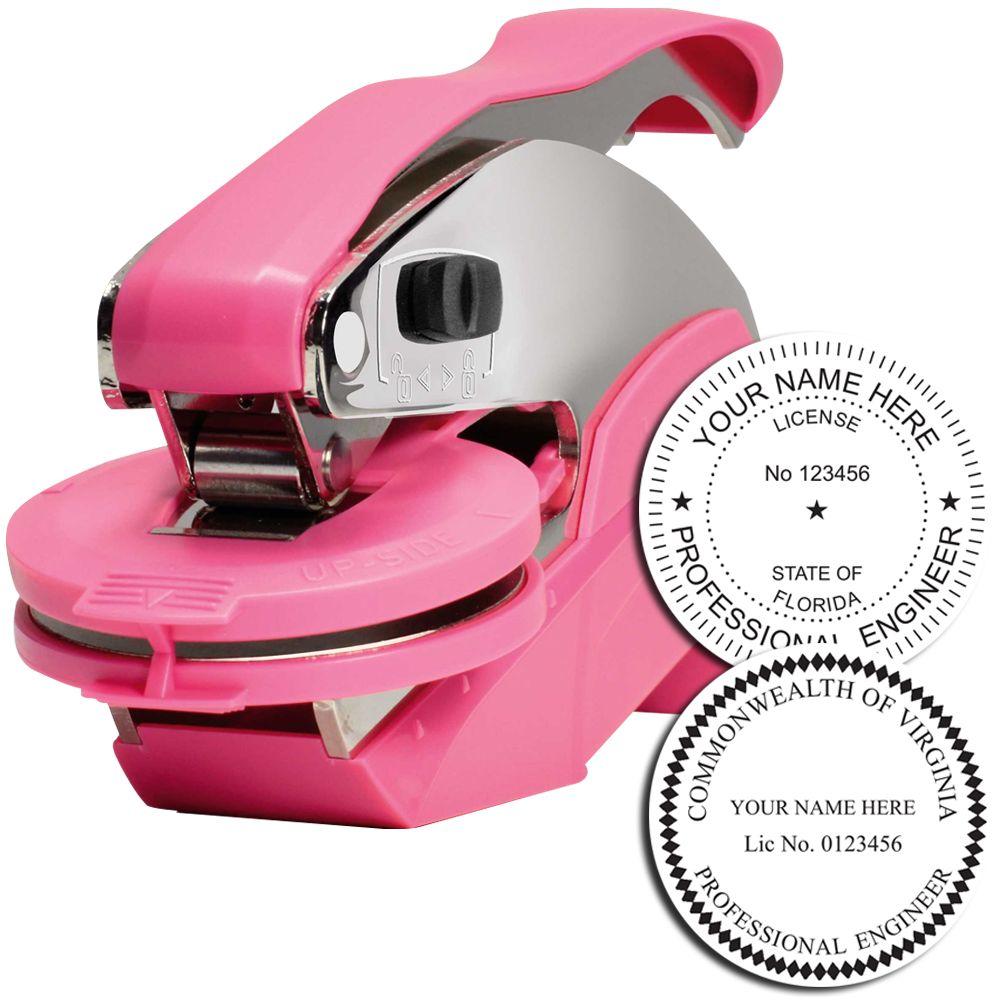
Supplemental, and worth knowing: the rule governs what seals the document, not what else may sit on the sheet. An embosser used alongside the compliant device is a different product doing a different job. Plenty of firms still want the raised impression on the client copy, the title sheet or the record set, because it reads as finished work in a way an inked mark does not. Order the compliant device as your seal, and treat the embosser as the companion it is.
Back to the compliant device. For the applied imprint, R4-30-304(E)(1) accepts either “An original seal imprint or a computer-generated seal that matches the seal on file at the Board’s office”, and R4-30-304(F) closes the door on everything else: “Methods of transferring a seal other than an original seal imprint or a computer-generated seal are not acceptable.” A photocopied or pasted-in seal image is therefore out. Buy the ink stamp first, because the imprint filed with the Board is what the computer-generated version has to match.
Signing and dating
Seal, signature and date travel together. R4-30-304(E) requires original documents to carry the seal imprint, “An original signature that does not obscure either the registrant’s printed name or registration number”, and “The date the document was sealed.” Appendix A gives the placement: “Sign your name across lower portion of the seal. Do not cover your name or registration number with your signature.” So signing across the seal is expected, but only across the lower portion. The date is the sealing date, not some later transmittal date: substantive policy statement 7 states “The appropriate date on the seal of an original document is the day that document is sealed and signed”. R4-30-304(G) permits an electronic signature in place of a permanently legible one, in accordance with A.R.S. Title 41 and Title 44.
The seal has to say “date signed” and the Board has to bless the imprint before you use it
Two Arizona requirements have no counterpart in most states, and both are vendor problems rather than engineer problems. R4-30-303(A)(2) puts the literal words “date signed” inside the inner circle alongside the registrant’s name and registration number. A generic engineer seal cut with a name line and a number line and nothing else is non-compliant on its face in Arizona.
Then R4-30-303(B) adds a filing step. Immediately on receiving the seal, and before using it for any purpose, the registrant must file with the Board an imprint of the seal with an original signature superimposed over it plus an affidavit regarding use of the seal. The Board has ten working days to disapprove any seal that does not meet the exact specifications of subsection (A), and a disapproved registrant has to buy another seal at their own cost before sealing any work.
That turns a wrong die into a real expense and a real delay, so the die is worth getting right the first time: 1-1/2 inch outer circle, 1-1/8 inch inner circle, the branch spelled out, Arizona U.S.A. at the bottom, and the date-signed legend present.
The date legend also has teeth. The Board’s substantive policy statement 7 says the correct date is the day the document is sealed and signed, and that changing the date on a seal is not acceptable. A stamp with a date built into the rubber would force exactly the practice the Board prohibits.
Which documents must be sealed
R4-30-304(A) lists nine categories: each sheet of drawings or maps; each master sheet reproduced into a finished set; the cover, title, index or table of contents page or first sheet of each set of project specifications; the same for each addendum or change order; the same for bound supplemental details; the same for any report, specification or other professional document; the signature line of any letter or other professional document; shop drawings that require professional services; and public works projects requiring each professional’s signature. R4-30-304(A)(8) carves out shop drawings that show only fabrication sizing and dimensioning, construction techniques or sequences, previously approved components or components designed by the registrant of record, or modifications to existing installations that do not affect the original design parameters and require no additional computations. R4-30-304(D) sets the timing: seal before the document goes to a client, contractor or reviewing body “unless the document is marked ‘preliminary,’ ‘draft,’ or ‘not for construction’”, with an exception for work product intended for other members of a design team, and always seal documents prepared for dispute resolution, litigation, arbitration or mediation.





Electronic and digital seals
Arizona names no cryptographic standard and no specific technology. R4-30-304(G) says an electronic signature is acceptable for all professional documents “in accordance with A.R.S. Title 41 and Title 44”, which is Arizona’s general electronic transactions law rather than an engineering-specific standard, and adds that the registrant “shall provide adequate security regarding the use of the seal and signature.” A computer-generated seal is allowed under R4-30-304(E)(1) only where it matches the imprint on file with the Board. R4-30-304(C) governs unsigned electronic copies: where a copy is supplied by disk, tape, CD or other electronic form and does not meet subsection (D), it must be marked “Electronic copy of final document; sealed original document is with (identify the registrant’s name and registration number)”.
Renewal, lapse and retirement
A.R.S. § 32-125(C) makes it “unlawful for a registrant whose certificate has expired or has been revoked or suspended to use the seal”, and § 32-125(D) makes it unlawful for a nonregistrant to cause or permit illegal use of a registrant’s seal, signature or stamp. A.R.S. § 32-127 provides that a registrant may not practice, offer to practice or advertise while the registration is inactive or invalid, that a certificate is cancelled after one full renewal period of invalidity, and that reinstatement then requires applying as a new candidate. Whether a reinstated registrant keeps the old registration number is not addressed in A.R.S. § 32-127 or in 4 A.A.C. 30, so a cancelled registrant should confirm the number with the Board before ordering a replacement stamp. Neither the statute nor the rules require an expired or revoked seal to be surrendered or destroyed; the duty is simply to stop using it, plus the standing R4-30-303 duty to keep it secure.
Firm registration
A firm must be registered, but the firm does not get a seal. A.R.S. § 32-141 provides that “A firm shall not engage in the practice of any board-regulated profession or occupation unless the firm is registered with the board and the professional services are conducted under the full authority and responsible charge of a principal of the firm, who is also a registrant”, and each branch office needs its own registration and its own designated registrant in responsible charge. Nothing in § 32-141, R4-30-303 or R4-30-304 requires a firm seal or the firm registration number to appear on a sealed document. The individual registrant’s seal and signature carry the document.
What to check before you order
Order an inked rubber stamp, not an embosser, with the outer circle held to 1-1/2 inches plus or minus 1/16 inch and the inner circle to 1-1/8 inches plus or minus 1/16 inch. The upper annular space carries Registered Professional Engineer plus your branch, the bottom carries Arizona U.S.A., and the inner circle carries your name, your registration number and the words date signed. Never have a date built into the die, and never merge two branches onto one stamp. Arizona does not require anyone to verify your licensure; the check happens after the fact, when you file the imprint and affidavit with the Board and the Board decides within ten working days whether to disapprove it.
Browse professional engineer stamps and seals.
Frequently asked questions
Is a PE seal required in Arizona?
Yes for the design professions. A.R.S. § 32-125(B) is conditional and points at the Board, and the Board makes it unconditional by rule: R4-30-303(A) opens with the requirement that each registrant required to use a seal shall secure and use an ink seal, and R4-30-304(A) requires a permanently legible imprint of the seal and signature on a nine item list of documents. Registered professional engineers, architects, geologists, landscape architects and land surveyors all seal. Certified home inspectors and certified alarm businesses and agents, licensed by the same Board, have no seal.
Does an Arizona seal really have to say “date signed”?
Yes. R4-30-303(A)(2) places the words date signed inside the inner circle with the registrant name and registration number. That is a legend on the die, not a line the engineer writes, and it is the single element most often missing from stamps bought outside Arizona.
I am registered in two branches. Do I need two seals?
Two. R4-30-303(B) requires a seal for each branch of engineering in which registration has been granted. Appendix A lists the permitted branches: Agriculture, Architectural, Chemical, Civil, Control Systems, Electrical, Environmental, Fire Protection, Geological, Industrial, Mechanical, Mining, Metallurgical, Nuclear, Petroleum, Sanitary and Structural.
What size is an Arizona PE seal?
1-1/2 inches outside diameter with a tolerance of plus or minus 1/16 inch, and an inner circle of 1-1/8 inches to the same tolerance. R4-30-303(A) requires an ink seal 1 1/2 inches in diameter and identical in style, size and appearance to the sample in Appendix A, and Appendix A supplies both tolerances. This is a fixed specification, not a floor.
Do I have to file my seal with the Arizona Board?
Yes, before you use it. R4-30-303(B) requires an imprint of the seal with an original signature superimposed over it and an affidavit regarding use of the seal, filed immediately on receipt of the seal and before using it for any purpose. The Board then has ten working days to disapprove a seal that does not meet the exact specifications of subsection (A), and the registrant must buy another at their own cost before sealing any work.
Embosser or rubber stamp in Arizona?
An inked rubber stamp. R4-30-303(A) names an ink seal, and an embosser on its own is not authorized anywhere in the chapter. For the applied imprint, R4-30-304(E)(1) accepts an original seal imprint or a computer-generated seal that matches the seal on file at the Board’s office, and R4-30-304(F) says methods of transferring a seal other than those two are not acceptable, which rules out a photocopied or pasted-in image. Buy the ink stamp first, because the filed imprint is what the computer-generated version has to match.
Where does the signature go on an Arizona seal?
Across the lower portion. Appendix A says to sign your name across the lower portion of the seal and not to cover your name or registration number, and R4-30-304(E) requires an original signature that does not obscure either the printed name or the registration number, along with the date the document was sealed.
Can the date be built into my Arizona stamp?
No, in practical effect. The Board’s substantive policy statement 7 says the appropriate date on the seal of an original document is the day that document is sealed and signed, and that it is not acceptable to change the date on a seal. Only a blank date line can satisfy both statements.
Which documents must be sealed in Arizona?
The nine categories in R4-30-304(A): each sheet of drawings or maps; each master sheet reproduced into a finished set; the cover, title, index or table of contents page or first sheet of each set of project specifications; the same for each addendum or change order; the same for bound supplemental details; the same for any report, specification or other professional document; the signature line of any letter or other professional document; shop drawings requiring professional services; and public works projects requiring each professional’s signature. R4-30-304(D) requires sealing before the document goes to a client, contractor or reviewing body unless it is marked preliminary, draft or not for construction, and always for documents prepared for dispute resolution, litigation, arbitration or mediation.
Does an Arizona firm need a seal or a firm number on the drawing?
No. A.R.S. § 32-141 requires the firm to be registered with the Board, with services under the full authority and responsible charge of a principal who is also a registrant, and each branch office needs its own registration and designated registrant. Nothing in § 32-141, R4-30-303 or R4-30-304 requires a firm seal or the firm registration number on a sealed document.
Can I use my Arizona seal after my registration expires?
No. A.R.S. § 32-125(C) makes it unlawful for a registrant whose certificate has expired or has been revoked or suspended to use the seal, and § 32-127 provides that a certificate is cancelled after one full renewal period of invalidity, with reinstatement then requiring application as a new candidate. Whether a reinstated registrant keeps the old number is not addressed in § 32-127 or in 4 A.A.C. 30, so confirm the number with the Board before ordering a replacement. Nothing requires an expired seal to be surrendered or destroyed.