
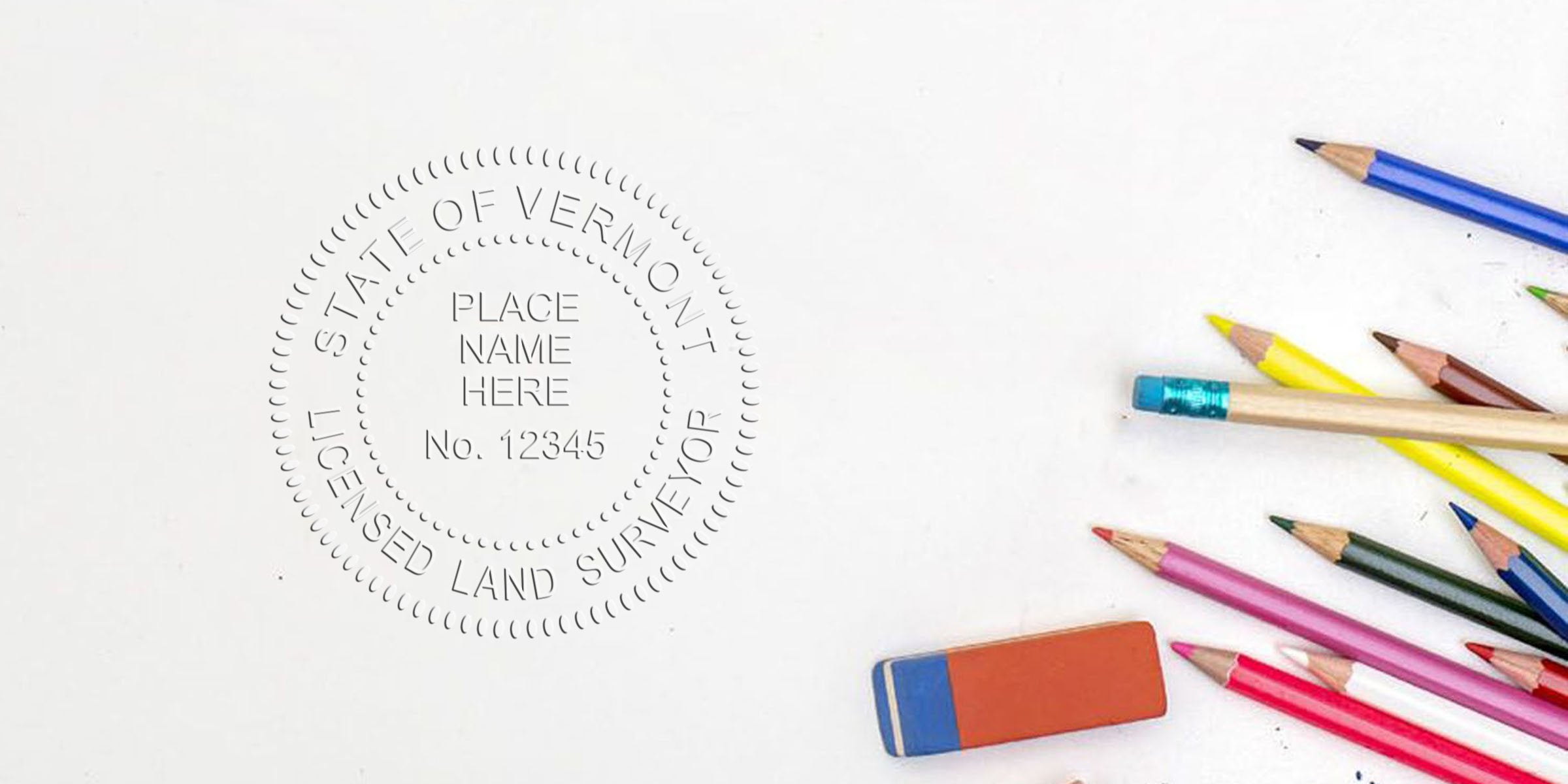
If you’re about to place your Vermont land surveyor stamp order, you want to make sure every detail meets state guidelines. After all, the stamp or seal you use is an essential part of your documentation, and a small oversight can lead to big headaches. In Vermont, the rules for land surveyor stamps and seals are strict for good reason: they help maintain consistent standards and uphold public trust in survey results. That trust is vital, especially when your professional documents impact real property, legal boundaries, and official records.
So, how can you avoid the most common mistakes that pop up when you get ready to order your stamp or seal? Let’s explore what you need to know about Vermont land surveyor requirements, the difference between a seal and a stamp, and how to ensure your final product aligns with local regulations. We’ll also share tips from Acorn Sales, a trusted supplier with over 60 years of experience in crafting quality stamps and seals, including Vermont Land Surveyor options. Whether this is your first time ordering or your tenth, a refresher on best practices never hurts.
Get Familiar With Vermont Rules
You might wonder why Vermont has so many rules for land surveyor stamps in the first place. The simplest answer: accuracy matters. A land surveyor’s seal or stamp indicates that the professional takes responsibility for the survey. That symbol conveys authenticity and authority to everyone who reads the final documents.
Vermont’s guidelines tend to specify the exact layout, wording, size, and sometimes even the ink color used on an official impression. If you’re new to these requirements, it may feel like you’ve stepped into a maze of details. Don’t worry. The key is to understand that these specifications exist to protect both you and the client. By following the state’s rules, your final stamp meets legal criteria and ensures uniformity across the profession.
Why Vermont Precision Matters
Think of your seal or stamp like a signature on a check. If the signature is incorrect—maybe missing a letter or not authorized—it won’t be valid. The same goes for survey documentation. It must look a certain way to stand up to a client’s scrutiny, pass muster in court, or move smoothly through municipal offices.
Precision also matters for client clarity. When copies of your work get passed around, the stamp design and text must remain clear and consistent. If something looks off, people may question your legitimacy, which is the last thing you want when you’ve invested time and energy in your profession.
Quick Note on Stamps vs. Seals
In casual conversation, the words “stamp” and “seal” often get tossed around as if they’re identical. Technically, a seal is the engraved design itself, and a stamp is the product you use to make the impression. In many states, you can buy a single rubber stamp or an embosser device that creates a raised impression. The decision usually comes down to regulations and personal preference. However, always verify which one Vermont specifically permits or prefers before making any purchase.
Spot Common Ordering Mistakes
Ordering your official seal or stamp should be straightforward. Yet, mistakes happen more often than you’d think. It might be something small, like forgetting to confirm the exact text layout. Or it could be a bigger blunder, like using incorrect dimensions, which can cause you to reorder entirely. Let’s break down the most frequent pitfalls.
Not Checking State Regulations
Have you ever started a project without reading the instructions first? We’ve all been there. But in this case, skipping the rulebook can cost you time and money. Before you choose a supplier or finalize your design, review your state’s guidelines so you know what’s mandatory.
- Confirm the required wording. Is your full name needed or just initials?
- Double-check if the license number format has to include prefixes or suffixes.
- Look up any color restrictions. Some jurisdictions insist on a specific ink color.
You’ll find these details useful whether you’re placing a brand-new order or updating an older stamp to match recent rule changes.
Overlooking Design Specifications
Even the design itself has strict guidelines. The size of the outer circle, spacing between lines of text, and presence of certain symbols can all be contested if they don’t match Vermont standards. It’s easy to assume “close enough” is acceptable, but in the world of official documentation, “close enough” might lead to a rejection.
Double-check measurements before you finalize. If possible, request a proof sample from your stamp supplier. A good supplier, such as Acorn Sales, will show you the layout before production, giving you a chance to spot any issues.
Follow Vermont Regulations Carefully
Now that you’re aware of common snags, let’s dive deeper into Vermont’s specific requirements. While the rules may seem strict, they’re there for a reason: to ensure every land surveyor in the state works on a level playing field and upholds professional standards.
Key State Guidelines
Most states, including Vermont, outline mandatory elements for your stamp or seal. These may include:
- Your name exactly as it appears on your license
- Your official license number
- Specific wording that might read “Professional Land Surveyor” or an abbreviation
- A precise outer diameter (for round stamps)
Even minor deviations here can invalidate your impression. So if you’re confused about whether to list middle initials or suffixes like “Jr.” or “III,” consult the guidance in your licensing documents or check official state resources.
Where to Learn More
If you’re looking for a straightforward breakdown of these rules, you can check out helpful resources like vermont land surveyor stamp requirements. This guide outlines exactly what size is needed and how to arrange the text. That resource can save you from second-guessing yourself when it’s time to finalize your order. Plus, it’s a lot shorter than combing through lengthy legal documents on your own.
Order With Acorn Sales
When it comes to placing an accurate stamp order, picking the right supplier is half the battle. You need a company that understands local regulations, produces high-quality products, and offers a reliable proofing process. That’s where Acorn Sales steps in. With more than six decades in business, we’re proud to say we’ve seen it all—from changes in design rules to special custom requests.
Our 60+ Years of Experience
If you’re not sure which design meets current requirements, a quick conversation with an experienced supplier can save you plenty of headaches. Acorn Sales staff are trained to guide you step by step, so you’re not stuck guessing which options are best. Having worked with professionals across the country, we’re also well-versed in the subtle differences from state to state. Our team can point out Vermont-specific guidelines you must follow, and we’ll help confirm the correct seal size, text spacing, and any custom features needed.
We also use high-grade materials to ensure sharp impressions. That means your final product is legible and lasts a long time, so you’re not tempted to replace it sooner than expected. And if you’re curious about the difference between a self-inking stamp, pre-inked stamp, or an embossing seal, we’re happy to walk you through the pros and cons of each.
Free Electronic Seal With Every Purchase
Ever get asked to provide a digital copy of your survey? In many cases, you still need a digital seal to place on PDFs or other electronic documents. With Acorn Sales, you get a free electronic version of your seal with every order. That’s a bonus that can save you extra costs down the line. It also ensures your brand consistency—no more mismatched designs when you’re toggling between printed and online documents.
Even if you prefer old-school paper printouts for your day-to-day tasks, having a digital seal is super handy for last-minute requests or when you need to email a client package. Plus, it’s one less expense, and who doesn’t like to save money?
Maintain and Store Your Stamp
Congratulations—your new Vermont land surveyor seal or stamp arrived in the mail. Now what? Proper upkeep and storage can make the difference between a crisp, professional impression and a messy ink blur.
Cleaning Basics
From time to time, ink can build up on the face of a stamp, especially if you’re stamping multiple sheets. Luckily, keeping it clean is simple:
- Use a damp cloth to wipe away excess ink on rubber stamp surfaces.
- Lightly tap an embosser’s metal plates to dislodge any paper bits.
- Avoid harsh chemicals. Rubbing alcohol might break down the materials and cause early wear.
A quick wipe down after heavy use extends your stamp’s life and ensures it’s ready the next time you need it.
Proper Storage Tips
Stamps, like any office tool, last longer with a little TLC. Resist the urge to toss them into a drawer without protection, especially if you use self-inking or pre-inked styles. Store them in a cool, dry spot to preserve the ink and prevent unwanted impressions on random items in your desk.
Embossing seal users should also remember to lock the handle in place (if possible) so the die plates don’t grind against each other. If you’re traveling to different job sites, invest in a protective case. That way, you won’t mar the seal or damage the handle while on the road.
Double-Check Before Using
Even the best stamp can create an invalid impression if you overlook a small detail. Whether you’re finalizing a new plat map or signing off on boundary documents, it’s worth pausing to confirm details.
- Verify the date if you’re adding a date stamp alongside your professional seal.
- Make sure your license number is still valid and current.
- Inspect the impression for legibility. If the design is fuzzy or incomplete, it may be time for re-inking or a quick cleaning.
When you’re in a rush, these checks can feel like extra steps. However, that extra 30 seconds helps maintain the integrity of your professional record and preserves public trust in your work. Being thorough also spares you from having to reprint or re-sign official paperwork because of a subpar stamp.
Concluding Advice
The rules in Vermont may seem strict, but keep in mind that your official stamp or seal carries professional weight and responsibility. That’s why it’s so important to ensure your order meets every standard the state sets. By confirming dimensions, text layouts, and the precise wording, you’re protecting both your clients and your own reputation.
Your journey doesn’t have to be complicated. Start by reviewing the official guidelines, possibly consulting the vermont land surveyor stamp requirements. Next, choose a supplier who knows these regulations and can guide you through each step. Acorn Sales has been serving professionals like you for more than 60 years, offering reliable products and a free electronic seal to simplify your workflow.
If you keep an eye on basic upkeep—like cleaning and proper storage—your stamp should work for quite a while without any trouble. By applying a little care and diligence, you’ll avoid common errors and stay on top of ever-shifting industry standards. In a line of work where details matter, every step you take to maintain accuracy is time well spent.
Feel free to reach out if you have any further questions. Taking the time to understand Vermont’s regulations for land surveyor stamps can feel a bit tedious, but it offers you peace of mind. That peace of mind extends to your clients as well. Ultimately, a proper Vermont land surveyor stamp order ensures accuracy, maintains professional standards, and keeps your documentation squeaky clean in the eyes of the law. And that’s a win for everyone involved.
Frequently Asked Questions
How Do I Make Sure My Vermont Stamp Fits Current Regulations?
Review the rules provided by the Vermont Board for land surveyors and compare them against the proof from your chosen supplier. You can also check out vermont land surveyor stamp requirements for a concise summary.
Should I Buy a Rubber Stamp, Self-Inking Stamp, or Embosser?
It depends on your preference and the requirements of your specific tasks. Self-inking stamps are convenient if you produce multiple impressions back to back. Embossers create raised impressions but may be less practical if you have to stamp hundreds of pages quickly. Rubber stamps work with separate ink pads, which can be cost-effective if you don’t mind re-inking occasionally.
Can I Change the Design of My Stamp Once it’s Made?
If you notice an error after receiving your stamp, contact your supplier immediately to correct it. Major changes in design—like resizing or altering the text—will likely require ordering a new stamp. That’s why we recommend requesting a proof first to save time and money.
Why Does Acorn Sales Provide a Free Electronic Seal?
We know many surveyors need digital copies of their stamp for official documents. Offering a free electronic version simplifies the process and ensures consistency between your paper and digital files, so you don’t have to worry about mismatched designs.
How Often Should I Replace My Stamp?
Most quality stamps last for several years if you take care of them. Look for signs of wear, such as faded impressions or broken handles. If your stamp is no longer creating crisp impressions, or if your state’s guidelines have changed, it’s time to order a new one.








