
Written by Acorn Sales Company, manufacturing stamps and seals since 1964 · Reviewed by Holly R, VP of Sales and Marketing at Acorn Sales, against the Oregon State Board of Examiners for Engineering and Land Surveying and Or. Rev. Stat. § 672.025(2) on 21 September 2026 · Updated 21 September 2026
At least 2 inches point to point, and no resizing on a final document. OAR 820-025-0005(2) sets the floor and then forbids reduced or enlarged seals on final documents, and OAR 820-025-0010(3)(f) repeats the 2 inch requirement for the computer generated image measured when the page is printed to full size. Oregon has one of the largest required surveyor seals in the country. The second half of the rule is the part surveyors miss: shrinking the seal image to fit a crowded plat title block, or scaling a sheet down for reproduction, produces a noncompliant final document even though the die itself was correct.
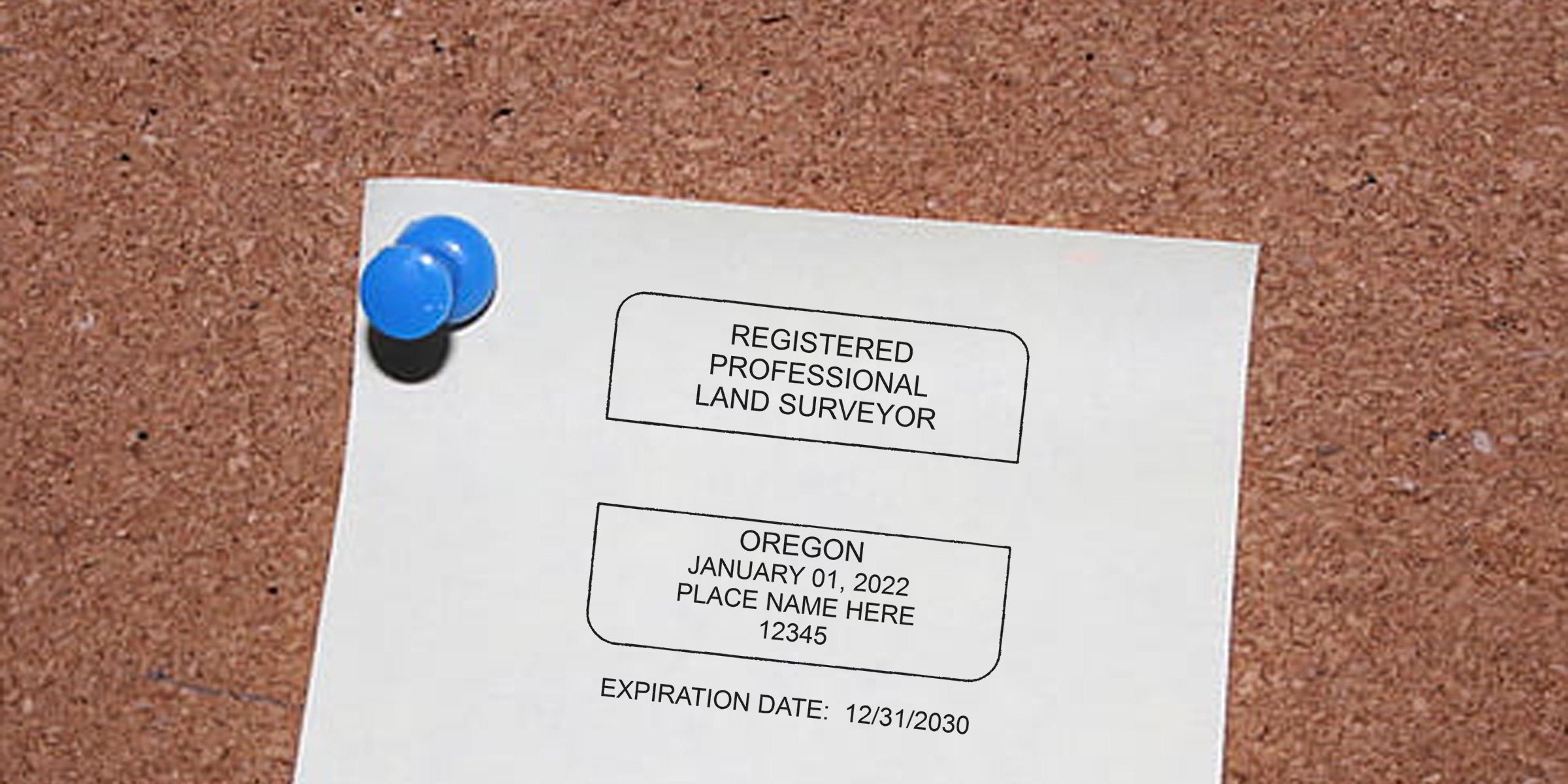
The content is unusual too. Subsection (1) requires your printed name, your date of registration, your certificate of registration number and your professional title. The date of registration is the date you were first registered. It is fixed for life, so it never forces a reorder, but a supplier working from a generic surveyor template has no field for it and will hand you a seal missing a required element. The printed name “will be exactly the same as the registrant’s name on file with the Board,” so a middle initial the board does not have produces a mismatch.
Oregon also closes the scan loophole most states leave open. OAR 820-025-0010(2) says a Digital Seal and Signature “is not a photocopy, scanned copy, or other facsimile of a signed and sealed hard copy document, nor is it a copy or facsimile of a rubber stamp seal and ink signature,” and such seals and signatures “are not allowed on final documents.”
Oregon land surveyor seal requirements at a glance
| Requirement | Oregon rule | Source |
|---|---|---|
| Seal required | Yes | Or. Rev. Stat. § 672.025(2) |
| Required elements | Your printed name exactly as on file with the board, Your date of registration, Your certificate of registration number, Your professional title and Optionally, the expiration or renewal date | Or. Admin. R. 820-025-0005(1), (2) |
| Size and shape | At least 2 inches from point to point. | Or. Admin. R. 820-025-0005(2) |
| Device allowed | OAR 820-025-0005(3): “The seal may be applied to a document by rubber stamp or it may be computer-generated onto the document.” A 2 inch rubber stamp is the safe buy for recorded survey work. | Or. Admin. R. 820-025-0005(2), (3) |
| Signature and date | OAR 820-025-0005(4) requires the registrant to “sign through the middle of the seal or in the place on the seal as indicated for signature, in handwriting, and in permanent ink.” Signing across the seal is mandatory. | Or. Admin. R. 820-025-0005(4), (5) |
| What must be sealed | Every final document, which OAR 820-025-0015(1) ties to the statutory list: drawings, specifications, designs, reports, narratives, maps and plans. | Or. Admin. R. 820-025-0015, 820-025-0025 |
| Electronic seal | Oregon names the technology and closes the scan loophole. | Or. Admin. R. 820-025-0001, 820-025-0010 |
| Renewal and lapse | OAR 820-010-0520 provides that registrants who are delinquent, retired, inactive, suspended or revoked are not authorized to practice and, with a narrow exception, may not hold out as professional land surveyors. | Or. Admin. R. 820-010-0505, 820-010-0520 |
| Firm requirements | Not applicable. | Or. Rev. Stat. §§ 672.002 to 672.325 (no firm permit provision) |
| Regulator | The Oregon State Board of Examiners for Engineering and Land Surveying | Or. Admin. R. ch. 820 div. 25 (820-025-0001, -0005, -0010, -0015, -0025) and div. 10 (820-010-0505, 820-010-0520), read from the Oregon Secretary of State Administrative Rules database, with Or. Rev. Stat. §§ 672.020, 672.025, 672.028 and 672.060 and the board’s seals and signatures publication. Division 25 governs six credentials on identical terms and they differ only in which Exhibit 1 design applies. |




Is a seal required in Oregon?
The duty is statutory and blunt. ORS 672.025(2) requires each registered professional land surveyor, upon registration, to obtain a seal of the design authorized by the board, and provides that every final document issued by a registrant shall be stamped with the seal and signed by the registrant. OAR 820-025-0015(2) then closes the definitional gap by treating anything submitted to a client, customer, public entity or any other person as a final document unless it is clearly marked otherwise.
What must appear on the seal
- Your printed name exactly as on file with the board
- Your date of registration
- Your certificate of registration number
- Your professional title
- Optionally, the expiration or renewal date
Oregon requires the date of registration on the face of the seal, which is a different thing from the expiration date and is a field most templates do not carry. The expiration or renewal date is the optional element, and leaving it off comes with a condition: “If the expiration or renewal date is not made part of the seal, it must be handwritten, in permanent ink, after the word ‘Expires’ or ‘Renews.’” The printed name is not a free choice either; it “will be exactly the same as the registrant’s name on file with the Board.” Resizing is prohibited: “Reduced or enlarged seals are not permitted on final documents.” OAR 820-025-0005(6) makes it a representation of unlawful practice for an unregistered person to use a seal of similar shape, form or wording.
Size and shape
At least 2 inches from point to point. OAR 820-025-0005(2) sets the floor and forbids reduction or enlargement on final documents, and OAR 820-025-0010(3)(f) repeats the 2 inch requirement for the computer generated seal image on electronic final documents, measured when the page is printed to full size. Oregon has one of the largest required surveyor seals in the country, and a 1 5/8 inch die bought for a neighboring state will not pass.


Embosser, rubber stamp or digital
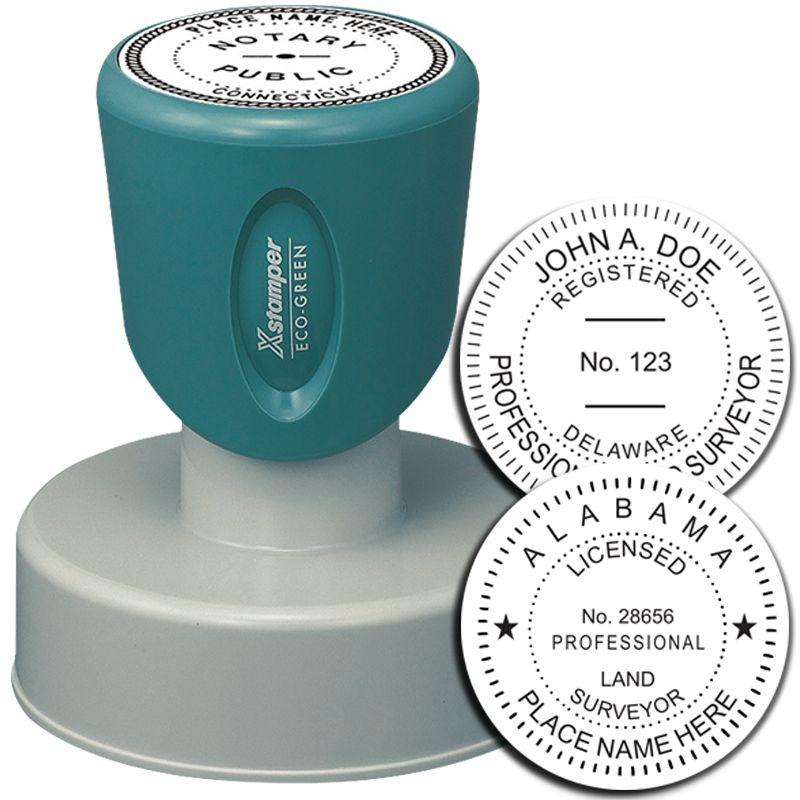
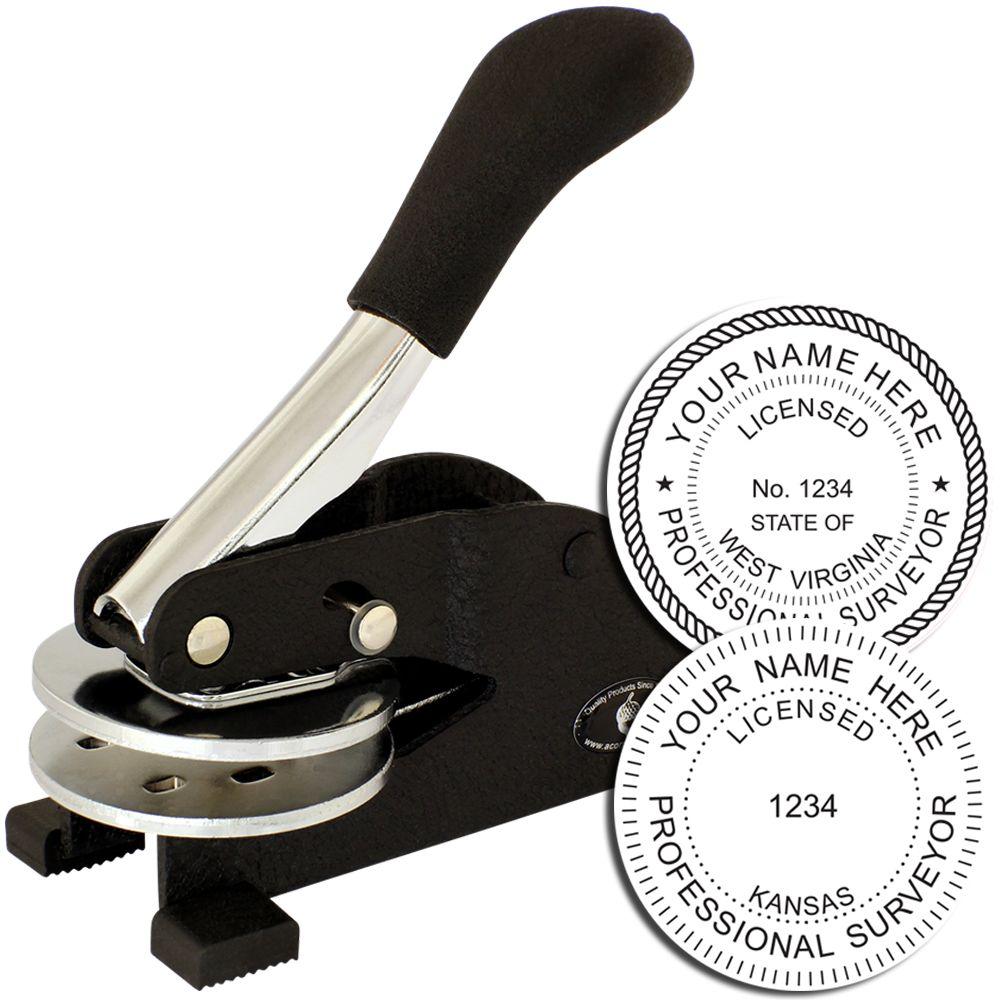
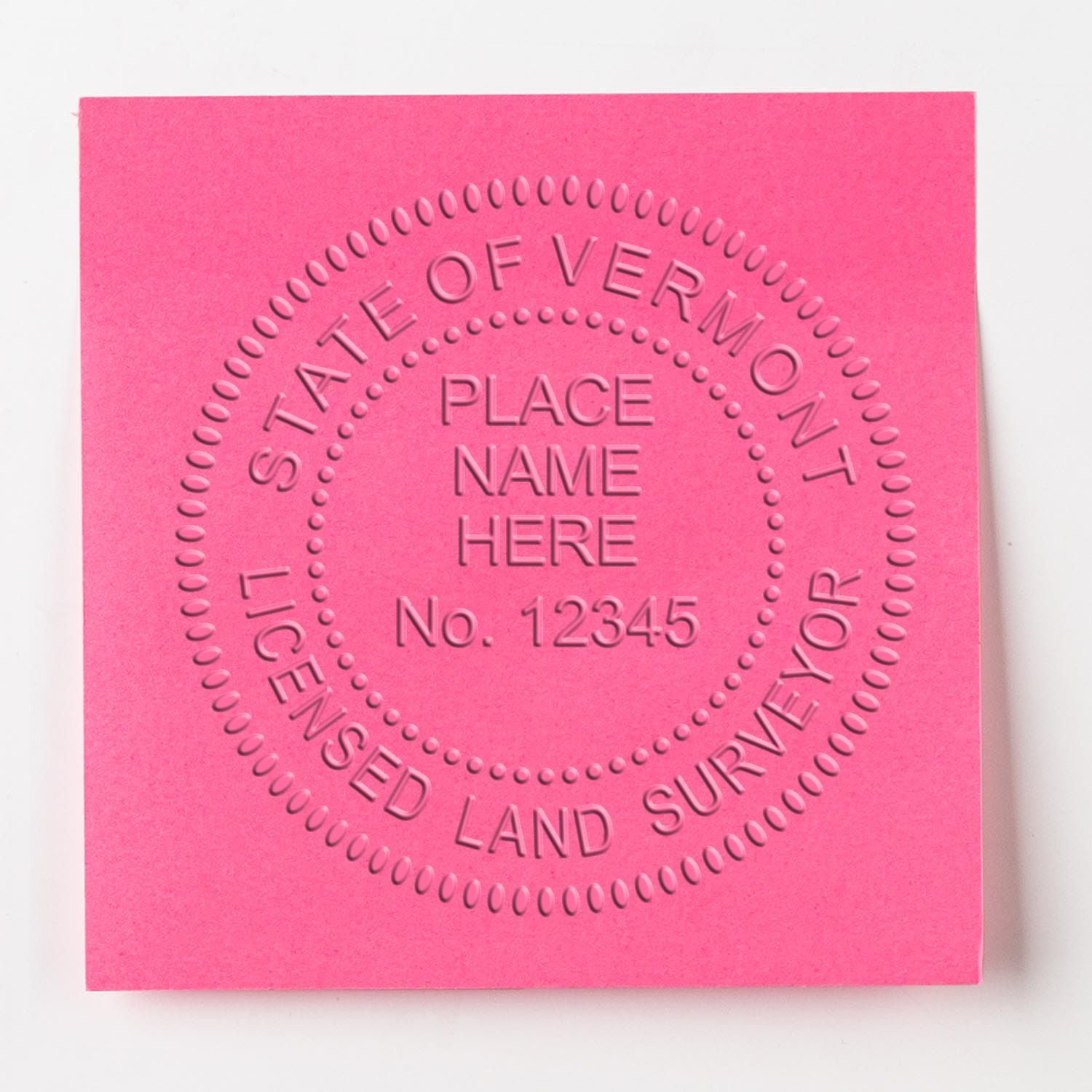
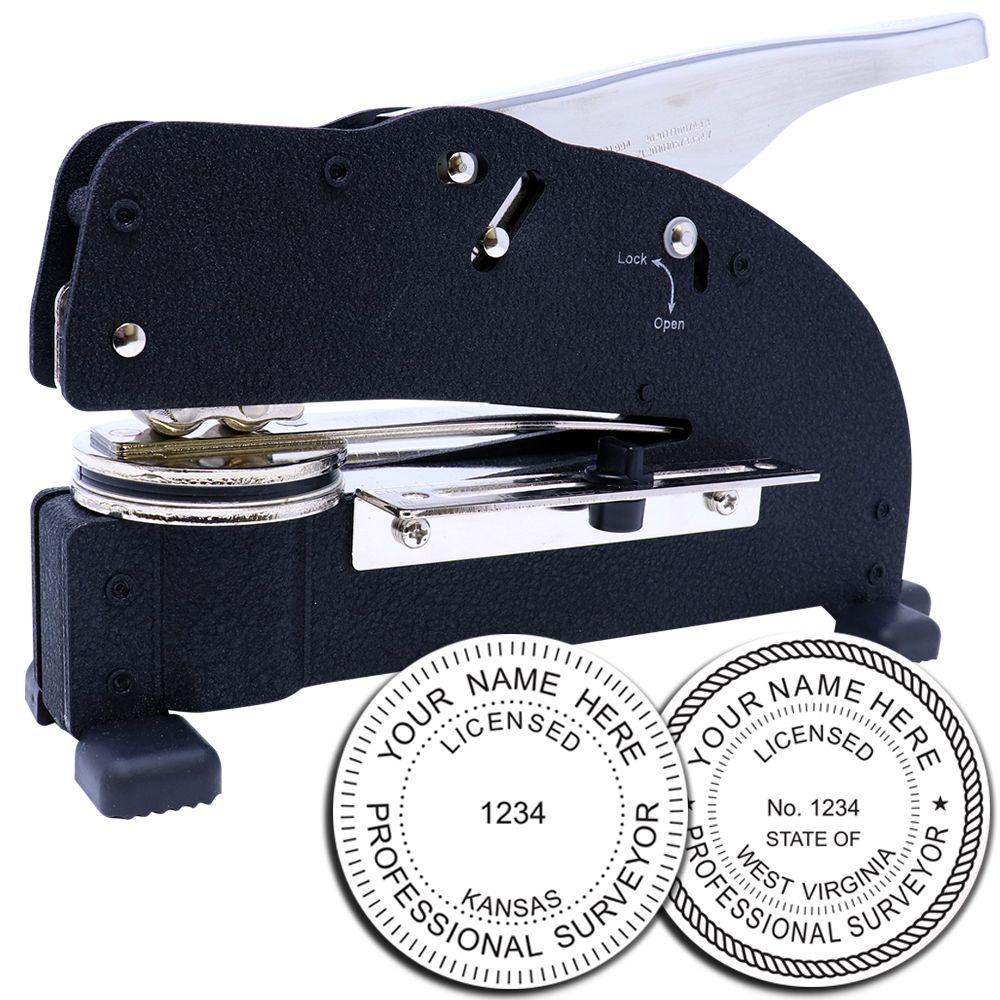
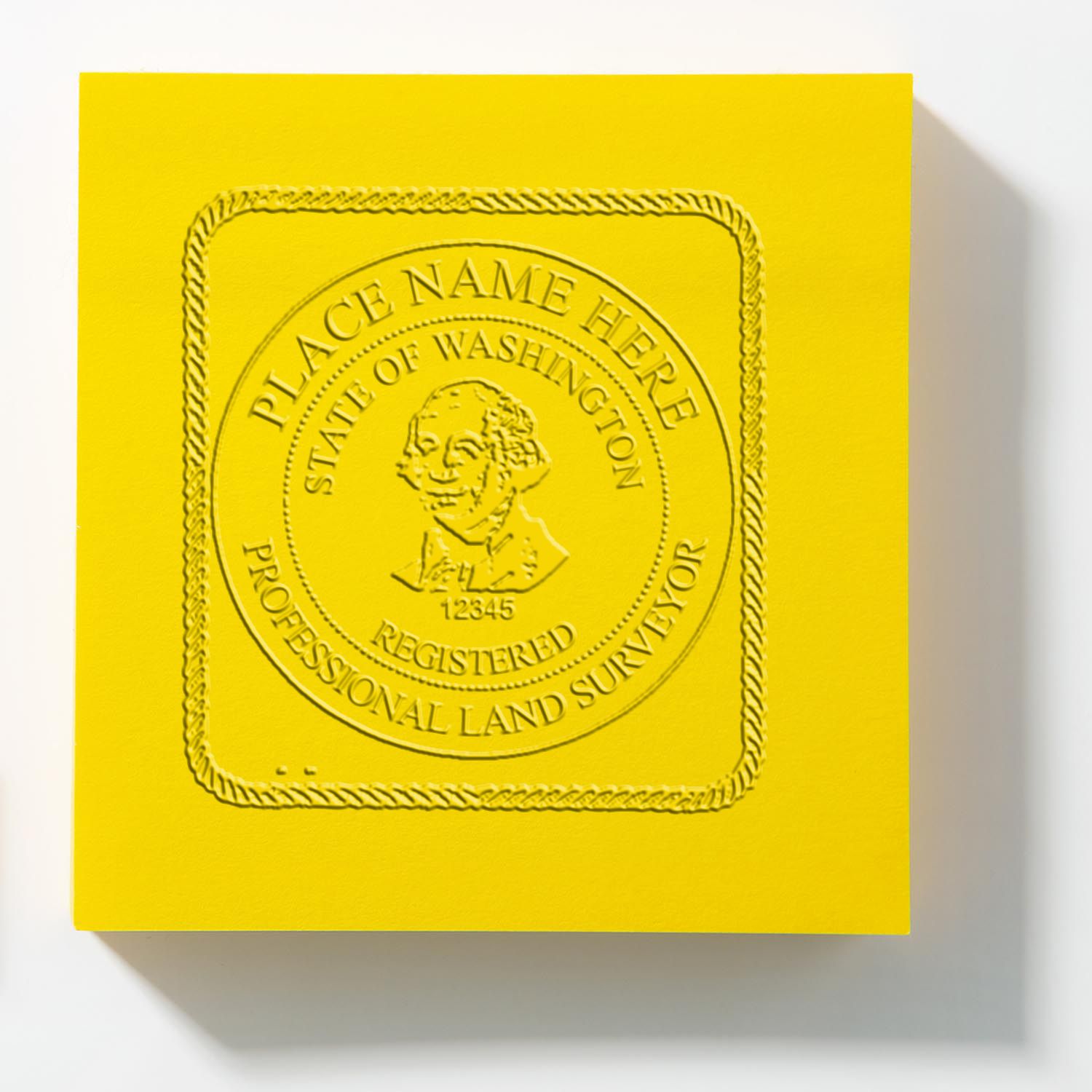
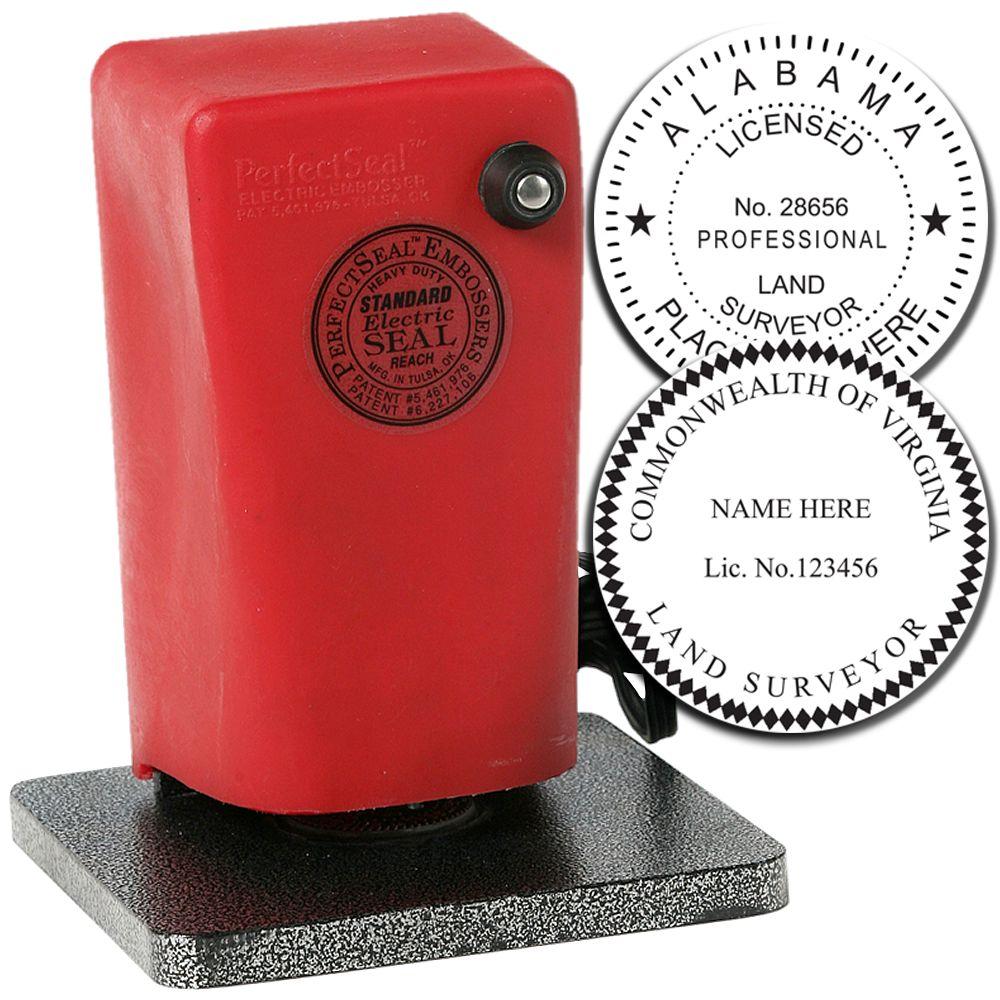
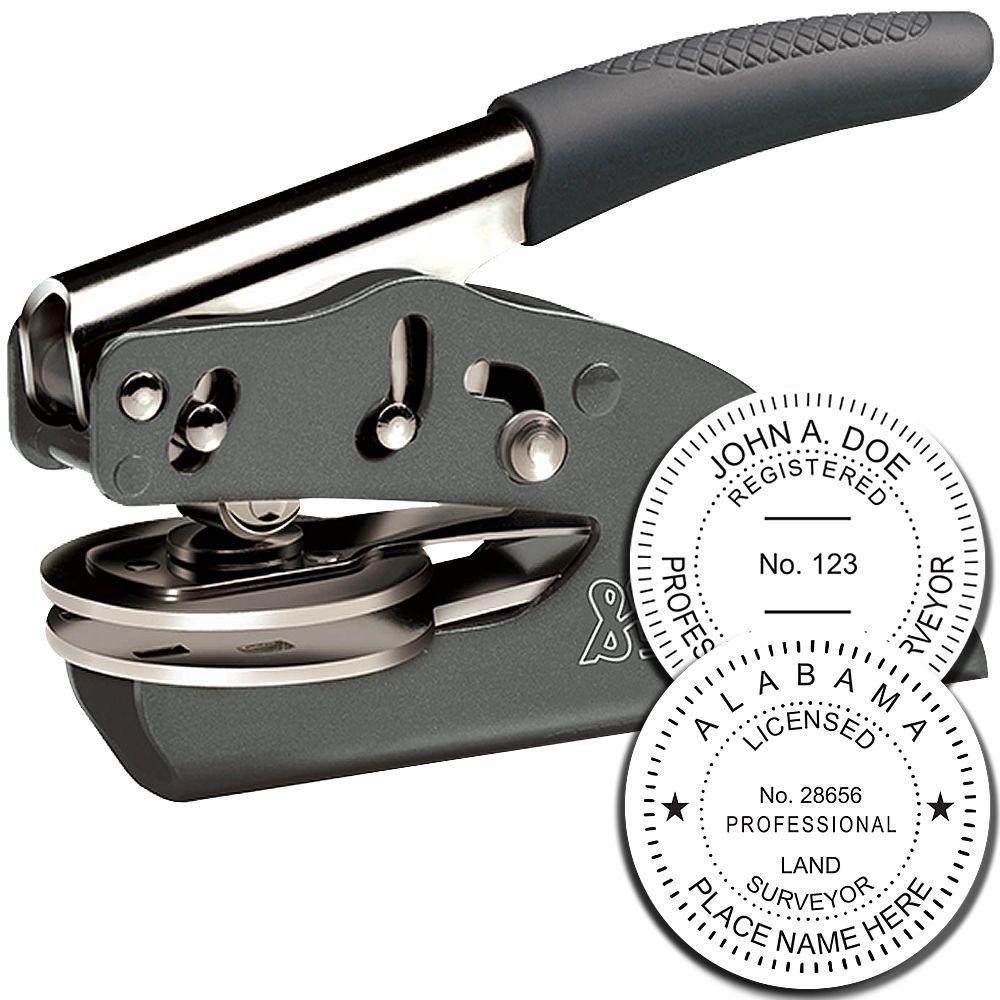
OAR 820-025-0005(3): “The seal may be applied to a document by rubber stamp or it may be computer-generated onto the document.” A 2 inch rubber stamp is the safe buy for recorded survey work. The design must be “an exact replica, in style, of the examples shown in Exhibit 1 (Official Seals)” for the profession involved. Exhibit 1 is not printed in the rule; the editor’s note says the exhibits are available from the agency, and the board publishes the download on its seals page.
Signing and dating
OAR 820-025-0005(4) requires the registrant to “sign through the middle of the seal or in the place on the seal as indicated for signature, in handwriting, and in permanent ink.” Signing across the seal is mandatory. The only alternative to handwriting is a digital signature under OAR 820-025-0005(5), which must be unique to the registrant, independently verifiable by a third party Certificate Authority, under the registrant’s sole control, linked so that any change invalidates it, and must bear the phrase “digitally signed” in place of a handwritten signature.
Two inches, no resizing, and the date you were first registered on the face
Oregon asks for a physically larger surveyor seal than almost anywhere else. OAR 820-025-0005(2) sets a floor of 2 inches point to point and then forbids reduced or enlarged seals on final documents. The second half is the part surveyors miss. Shrinking the seal image to fit a crowded plat title block, or scaling a sheet down for reproduction, produces a noncompliant final document even though the die itself was correct.
The content is unusual too. Subsection (1) requires the printed name, the date of registration, the certificate number and the professional title. The date of registration is the date you were first registered. It is fixed for life, so it never forces a reorder, but a supplier working from a generic surveyor template has no field for it and will hand you a seal missing a required element.
The name is not negotiable either. The printed name must be exactly your name on file with the board, so a middle initial the board does not have, or a married name not yet updated, produces a mismatch.
Finally, Oregon closes the scan loophole that most states leave open. OAR 820-025-0010(2) says a copy or facsimile of a rubber stamp seal and ink signature is not a Digital Seal and Signature and is not allowed on final documents. The only electronic route is a true digital signature verified by a third party Certificate Authority.
Which documents must be sealed
Every final document, which OAR 820-025-0015(1) ties to the statutory list: drawings, specifications, designs, reports, narratives, maps and plans. The only escape is labeling. OAR 820-025-0015(2) requires non final documents to be marked “preliminary,” “not for construction,” “review copy,” “draft copy, subject to change” or similar, and treats anything given to a client, customer, public entity or other person as final unless so marked. Under OAR 820-025-0025, more than one registrant may seal a document only if each registrant’s portion of the work is clearly explained and denoted on the document.



Electronic and digital seals
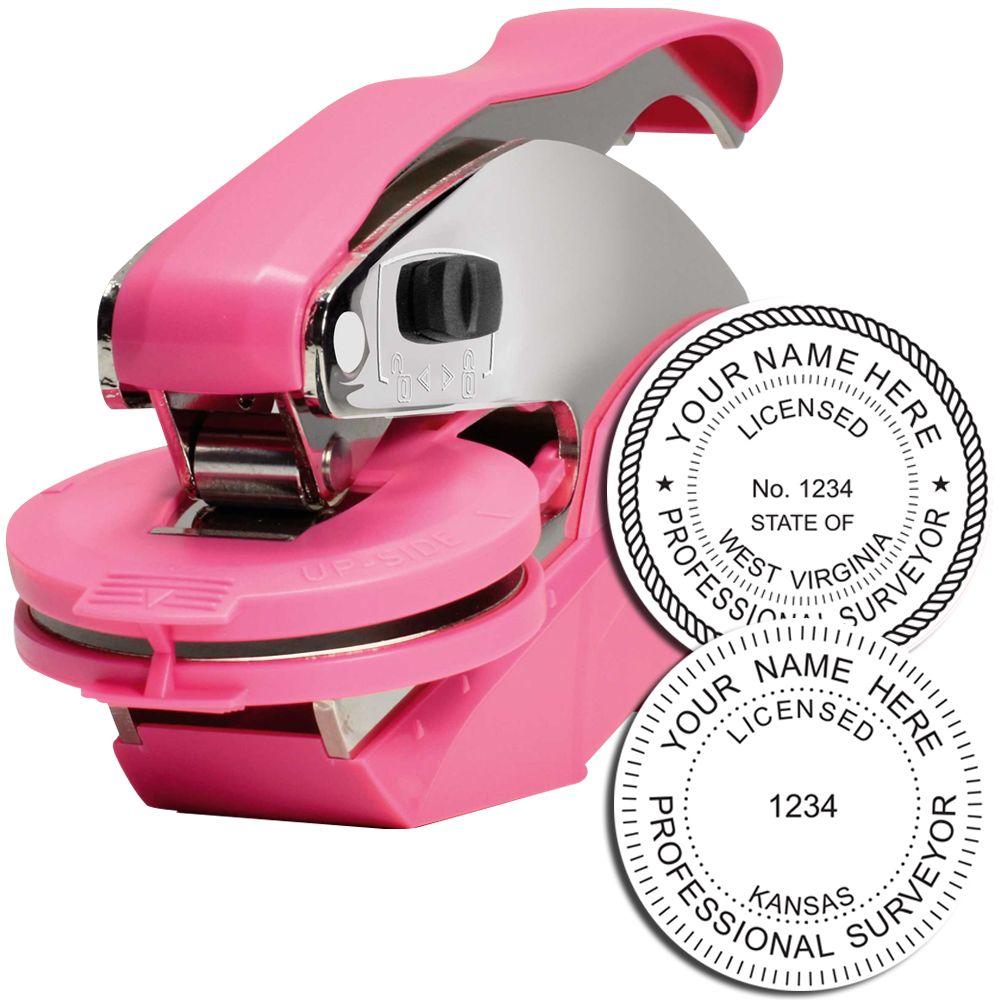
Oregon names the technology and closes the scan loophole. OAR 820-025-0001 defines a Certificate Authority as the trusted third party that issues and manages digital certificates and states that a digital certificate is required to affix a digital signature. OAR 820-025-0010(2) then excludes the common workaround outright: a Digital Seal and Signature “is not a photocopy, scanned copy, or other facsimile of a signed and sealed hard copy document, nor is it a copy or facsimile of a rubber stamp seal and ink signature,” and such seals and signatures “are not allowed on final documents.” A PDF of a wet stamped plat is therefore not a compliant Oregon electronic final document. This rule was amended effective 11 September 2024.
Renewal, lapse and retirement
OAR 820-010-0520 provides that registrants who are delinquent, retired, inactive, suspended or revoked are not authorized to practice and, with a narrow exception, may not hold out as professional land surveyors. A registrant becomes delinquent by failing within five years of the renewal date to renew, pay renewal or delinquent fees, or satisfy professional development hour requirements. The certificate number does not change on renewal, so a seal carrying only the registration number and the date of registration stays valid indefinitely. A seal that carries the expiration or renewal date on its face has to be replaced each cycle, which is the practical argument for leaving that element off and handwriting it.
Firm requirements
Not applicable. Oregon issues no certificate of authorization and no business registration for land surveying firms. ORS 672.002 to 672.325, the sections creating the board and its registration scheme, contain no firm permit provision, and the board publishes no business registration process. Documents carry the individual registrant’s seal only. Note the contrast inside Oregon: the architect board does register firms under OAR 806-010-0080 and the landscape architect board does under OAR 804-035-0010.
What to check before you order
Give the supplier four things: your name exactly as the board has it on file, your date of registration, your certificate of registration number and the land surveyor design from the board’s Exhibit 1, which you download from the board rather than describe, because OAR 820-025-0005(2) requires an exact replica in style. Order at 2 inches or larger point to point and never accept a reduced version to fit a title block. Decide whether the expiration or renewal date is engraved or left off; if you leave it off you must handwrite it in permanent ink after the word Expires or Renews, and if you engrave it you will be reordering every cycle. Keep the signature area open, because you have to sign through the middle of the seal in permanent ink.
Browse land surveyor stamps and seals.
Frequently asked questions
Is a seal required for land surveyors in Oregon?
Yes. ORS 672.025(2) requires each registered professional land surveyor, upon registration, to obtain a seal of the design authorized by the board, and provides that every final document issued by a registrant shall be stamped with the seal and signed by the registrant. OAR 820-025-0015(2) closes the definitional gap by treating anything submitted to a client, customer, public entity or any other person as a final document unless it is clearly marked otherwise.
What has to appear on an Oregon land surveyor seal?
Four required items and one optional one under OAR 820-025-0005(1) and (2): your printed name exactly as on file with the board, your date of registration, your certificate of registration number and your professional title, with the expiration or renewal date optional. Leaving that last one off comes with a condition: “If the expiration or renewal date is not made part of the seal, it must be handwritten, in permanent ink, after the word ‘Expires’ or ‘Renews.’”
What size is an Oregon land surveyor seal?
At least 2 inches from point to point, and it may not be reduced or enlarged on final documents. A 1 5/8 inch die bought for a neighboring state will not pass here.
Rubber stamp or computer generated in Oregon?
Either. OAR 820-025-0005(3): “The seal may be applied to a document by rubber stamp or it may be computer-generated onto the document.” A 2 inch rubber stamp is the safe buy for recorded survey work. Whichever you use, the design must be “an exact replica, in style, of the examples shown in Exhibit 1 (Official Seals)” for your profession. Exhibit 1 is not printed in the rule; the editor’s note says the exhibits are available from the agency, and the board publishes the download on its seals page.
Do I have to sign across the seal in Oregon?
Yes. OAR 820-025-0005(4) requires the registrant to “sign through the middle of the seal or in the place on the seal as indicated for signature, in handwriting, and in permanent ink.” The only alternative to handwriting is a digital signature under subsection (5), which must be unique to you, independently verifiable by a third party Certificate Authority, under your sole control, linked so that any change invalidates it, and must bear the phrase “digitally signed” in place of a handwritten signature.
Which Oregon documents are final documents?
Drawings, specifications, designs, reports, narratives, maps and plans, per the statutory list picked up by OAR 820-025-0015(1). The only escape is labeling. Subsection (2) requires non final documents to be marked “preliminary,” “not for construction,” “review copy,” “draft copy, subject to change” or similar, and treats anything given to a client, customer, public entity or other person as final unless so marked.
Can more than one Oregon registrant seal a document?
Yes, with attribution. Under OAR 820-025-0025, more than one registrant may seal a document only if each registrant’s portion of the work is clearly explained and denoted on the document.
Is a scanned PDF of a sealed Oregon plat acceptable?
Not as an electronic final document. OAR 820-025-0010(2) excludes the workaround outright: a Digital Seal and Signature is not a photocopy, scanned copy or other facsimile of a signed and sealed hard copy document, nor a copy or facsimile of a rubber stamp seal and ink signature, and such seals and signatures are not allowed on final documents. The only electronic route is a true digital signature with a digital certificate from a Certificate Authority, defined in OAR 820-025-0001 as the trusted third party that issues and manages digital certificates. This rule was amended effective 11 September 2024.
Does my Oregon seal need replacing at renewal?
Only if you engraved the expiration or renewal date. The certificate number does not change on renewal, so a seal carrying only the registration number and the date of registration stays valid indefinitely, which is the practical argument for leaving the expiration date off and handwriting it. OAR 820-010-0520 provides that registrants who are delinquent, retired, inactive, suspended or revoked are not authorized to practice and, with a narrow exception, may not hold out as professional land surveyors. A registrant becomes delinquent by failing within five years of the renewal date to renew, pay renewal or delinquent fees, or satisfy professional development hour requirements.
Does an Oregon surveying firm need registration or a seal?
Neither. Oregon issues no certificate of authorization and no business registration for land surveying firms. ORS 672.002 to 672.325 contain no firm permit provision and the board publishes no business registration process, so documents carry the individual registrant’s seal only. Note the contrast inside Oregon: the architect board does register firms under OAR 806-010-0080 and the landscape architect board does under OAR 804-035-0010.








