

Written by Acorn Sales Company, manufacturing stamps and seals since 1964 · Reviewed by Holly R, VP of Sales and Marketing at Acorn Sales, against the Connecticut State Board of Examiners for Professional Engineers and Land Surveyors and Regs. Conn. State Agencies § 20-300-10(a) on 21 September 2026 · Updated 21 September 2026
Connecticut refers the seal to a size and design the Board prescribes, and does not print either. Regs. Conn. State Agencies § 20-300-10(a) provides that each licensee on notification of licensure “will be authorized to obtain an official seal of a size and design prescribed by the Board”, and no inch figure, legend or number placement appears anywhere in the subtitle. So a Connecticut seal is built from the Board issued specimen rather than from a published figure. Ask the Board for it before anything is cut.
One element that is fixed, and that costs money, sits in subsection (b): “Where a licensee is classified as a professional engineer and as a land surveyor, two seals are necessary.” Connecticut does not offer a combined device the way some neighboring states do.
Surveyors also carry a legend duty engineers do not. Under § 20-300-10(f), a map or survey bearing your seal and signature, submitted to a client or to a town clerk under Conn. Gen. Stat. § 7-31, must state that it is substantially correct to the degree of accuracy shown, classified under § 20-300b-11. A map sealed without that statement is incomplete.
Connecticut land surveyor seal requirements at a glance
| Requirement | Connecticut rule | Source |
|---|---|---|
| Seal required | Yes | Regs. Conn. State Agencies § 20-300-10(a) |
| Required elements | The words “STATE OF CONNECTICUT” around the upper arc; Your place name on a second line beneath it; A serrated outer border of fine radial ticks; A five-pointed star at each side, on the horizontal centerline; The Connecticut state coat of arms, the shield of three grapevines above the ribbon reading Qui Transtulit Sustinet, in the center; The words “LICENSED LAND SURVEYOR” around the lower arc; Your license number beneath the legend, in the form “No. 12345”; A dotted inner ring enclosing the center block | Acorn Sales production artwork, Connecticut land surveyor seal (Regs. Conn. State Agencies § 20-300-10(a) delegates the design to the Board) |
| Size and shape | This is what Acorn actually makes for Connecticut, taken from our own production artwork rather than from a published rule. | Acorn Sales production artwork, Connecticut land surveyor seal |
| Device allowed | Section 20-300-10(b) permits a rubber stamp on the express condition that it be “of identical size and design to the specified seal”. | Regs. Conn. State Agencies § 20-300-10(b), (c) |
| Signature and date | The regulation’s language, “a handwritten signature and live seal on paper documents,” treats a wet signature as the paper norm, and subsection (b) requires the licensee’s seal and signature to be affixed where a licensee seals documents prepared by others. | Regs. Conn. State Agencies § 20-300-10(b), (c), (f) |
| What must be sealed | All plans, maps, surveys, sketches, drawings, specifications and documents pertaining to any project submitted by the licensee to the client. | Regs. Conn. State Agencies § 20-300-10(a), (b) |
| Electronic seal | Connecticut names a technology, which most states do not. | Regs. Conn. State Agencies § 20-300-10(c), (d), (e) |
| Renewal and lapse | Section 20-300-11(a) puts every license on an annual cycle expiring January thirty-first of the year following issuance or renewal, and says that unless renewed the license becomes invalid after that date, “making practice illegal.” Failure to renew does not destroy the right of renewal for five years from the date the license became invalid; after five years only a new application will do. | Regs. Conn. State Agencies §§ 20-300-11, 20-300-3b(d), 20-300-10(g) |
| Firm requirements | Not applicable in the sense that matters to a stamp buyer. | Conn. Gen. Stat. §§ 20-304, 20-306a, 20-306b |
| Regulator | The Connecticut State Board of Examiners for Professional Engineers and Land Surveyors | Regs. Conn. State Agencies §§ 20-300-1 through 20-300-15, principally § 20-300-10 (License seals and stamps), § 20-300-11 (Renewals) and § 20-300-3b, read from the Secretary of the State’s eRegulations portal |




Is a seal required in Connecticut?
Connecticut’s statute says almost nothing and hands the subject to regulation. Conn. Gen. Stat. § 20-304 provides only that the Commissioner of Consumer Protection, with the advice and assistance of the board, “may adopt regulations, in accordance with chapter 54, pertaining to the design and use of seals by licensees under this chapter.” The duty therefore lives in the regulation. Regs. Conn. State Agencies § 20-300-10(a) provides that each licensee on notification of licensure “will be authorized to obtain an official seal of a size and design prescribed by the Board”, and that “The seal shall be applied to all plans, maps, surveys, sketches, drawings, specifications, and documents pertaining to any project submitted by the licensee to his or her client.” The trigger is submission to the client, not filing with a public authority.
What must appear on the seal
- The words “STATE OF CONNECTICUT” around the upper arc
- Your place name on a second line beneath it
- A serrated outer border of fine radial ticks
- A five-pointed star at each side, on the horizontal centerline
- The Connecticut state coat of arms, the shield of three grapevines above the ribbon reading Qui Transtulit Sustinet, in the center
- The words “LICENSED LAND SURVEYOR” around the lower arc
- Your license number beneath the legend, in the form “No. 12345”
- A dotted inner ring enclosing the center block
The list above is Acorn’s own production artwork, not a published specification. It is what we cut and ship for this credential, and it is offered as a starting point rather than as the rule. As for what the state itself publishes: Not addressed. Section 20-300-10 prescribes no legend, no name format and no license number placement, because subsection (a) delegates the whole design to the Board. The sources here are Regs. Conn. State Agencies §§ 20-300-1 through 20-300-15 on the Secretary of the State’s eRegulations portal, Conn. Gen. Stat. ch. 391 §§ 20-299 through 20-310, and the Department of Consumer Protection site. One element is fixed and is easy to miss: subsection (b) provides that “Where a licensee is classified as a professional engineer and as a land surveyor, two seals are necessary.”
Size and shape
This is what Acorn actually makes for Connecticut, taken from our own production artwork rather than from a published rule. Section 20-300-10(a) says only that the seal is of a size and design prescribed by the Board, and no inch figure appears anywhere in the subtitle. What follows is the die we cut. The printed die measures 1-1/2 inches across, drawn inside a guide circle a shade over that, so 1-1/2 inches is the figure to work from. That is the same plate size across all three Connecticut credentials we cut, which is worth knowing because Connecticut delegates the design to three different boards and none of them prints a diameter.
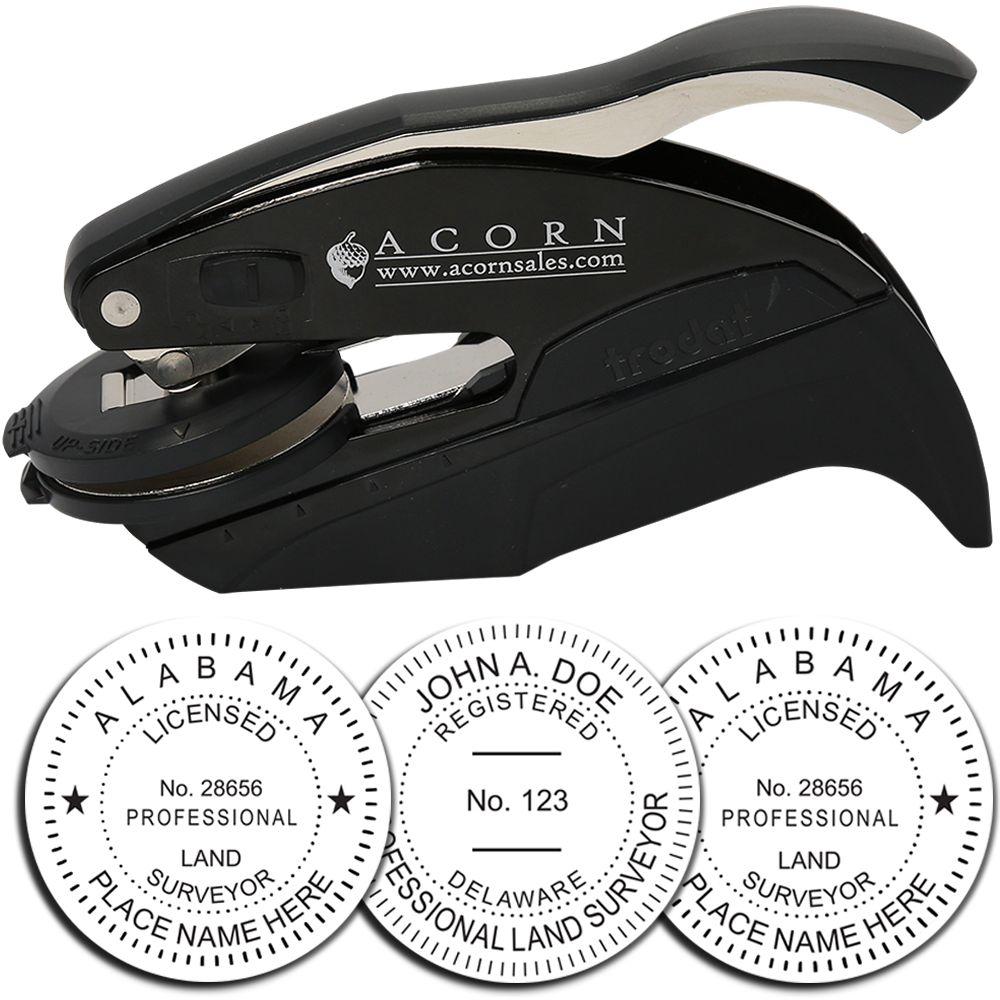
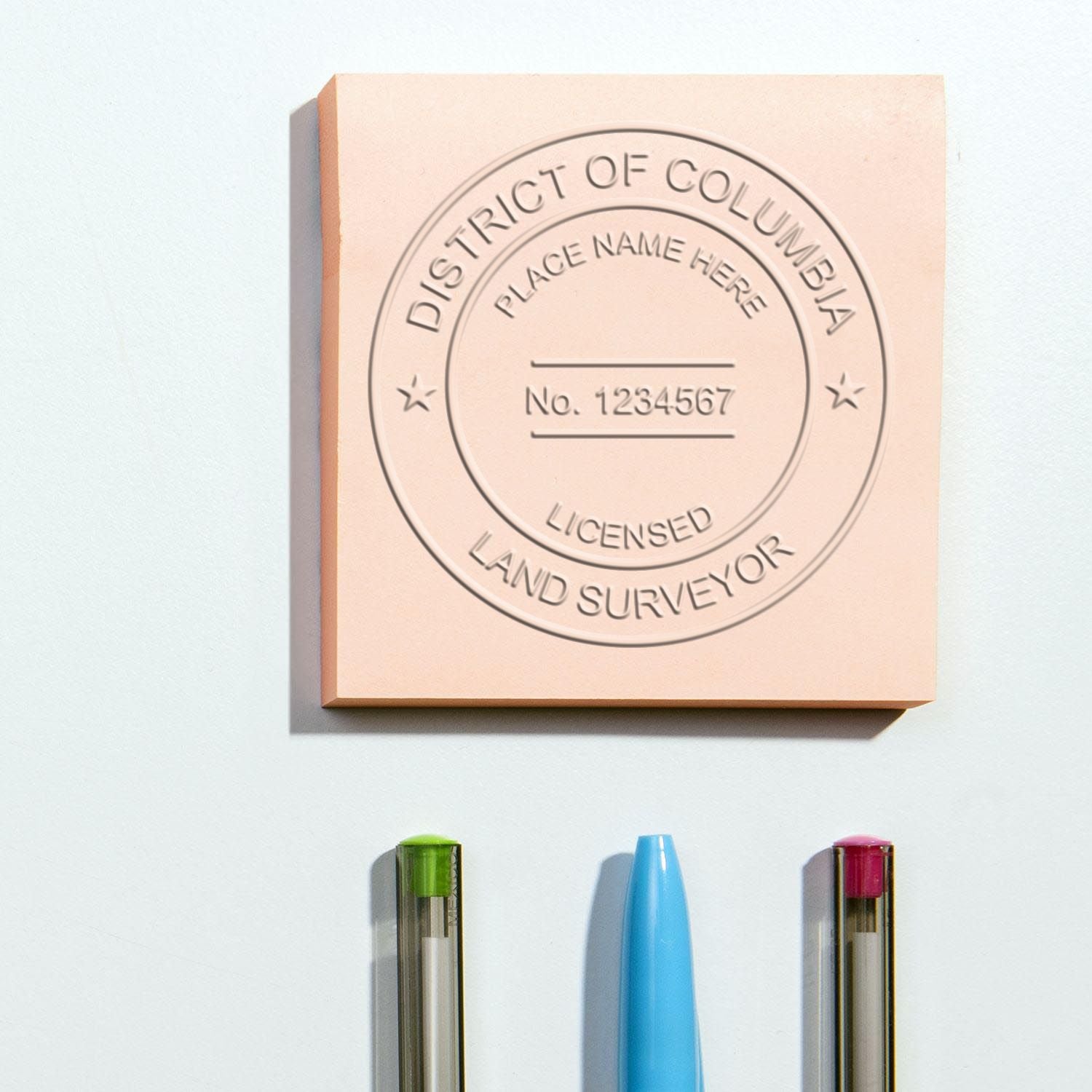
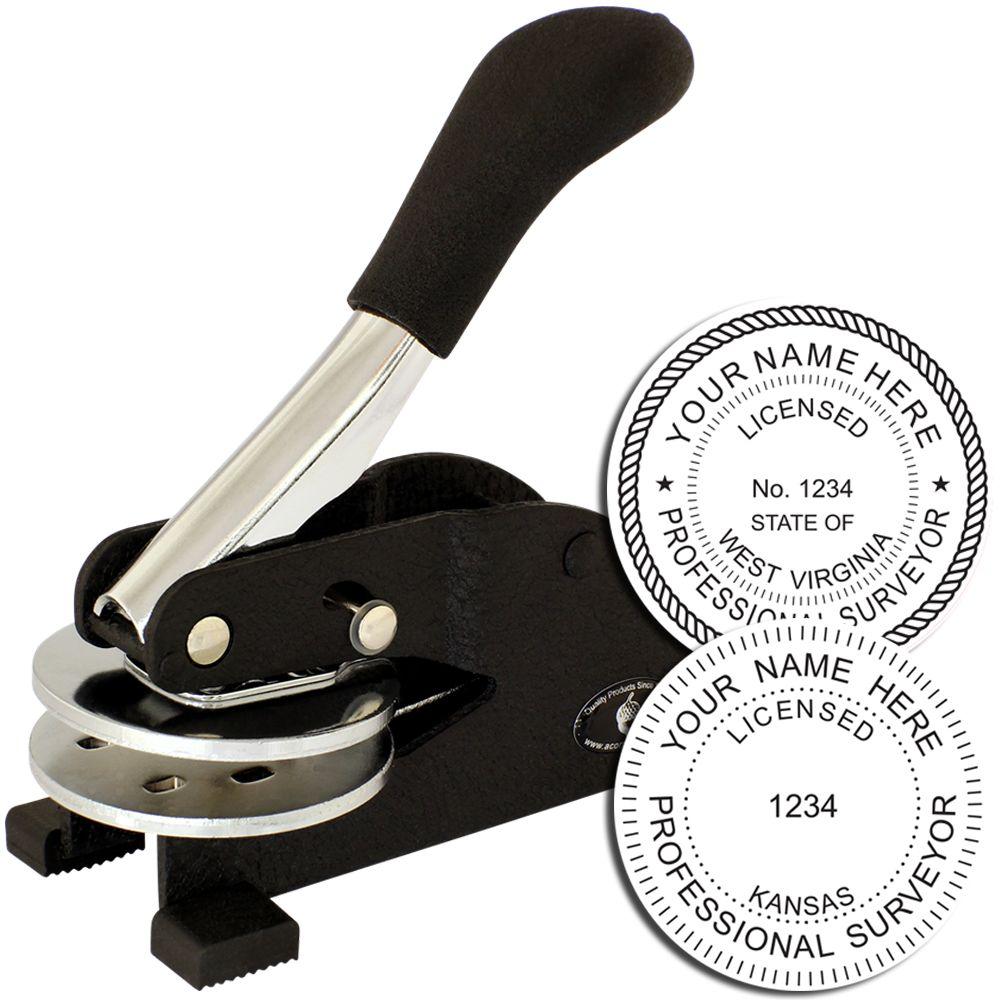
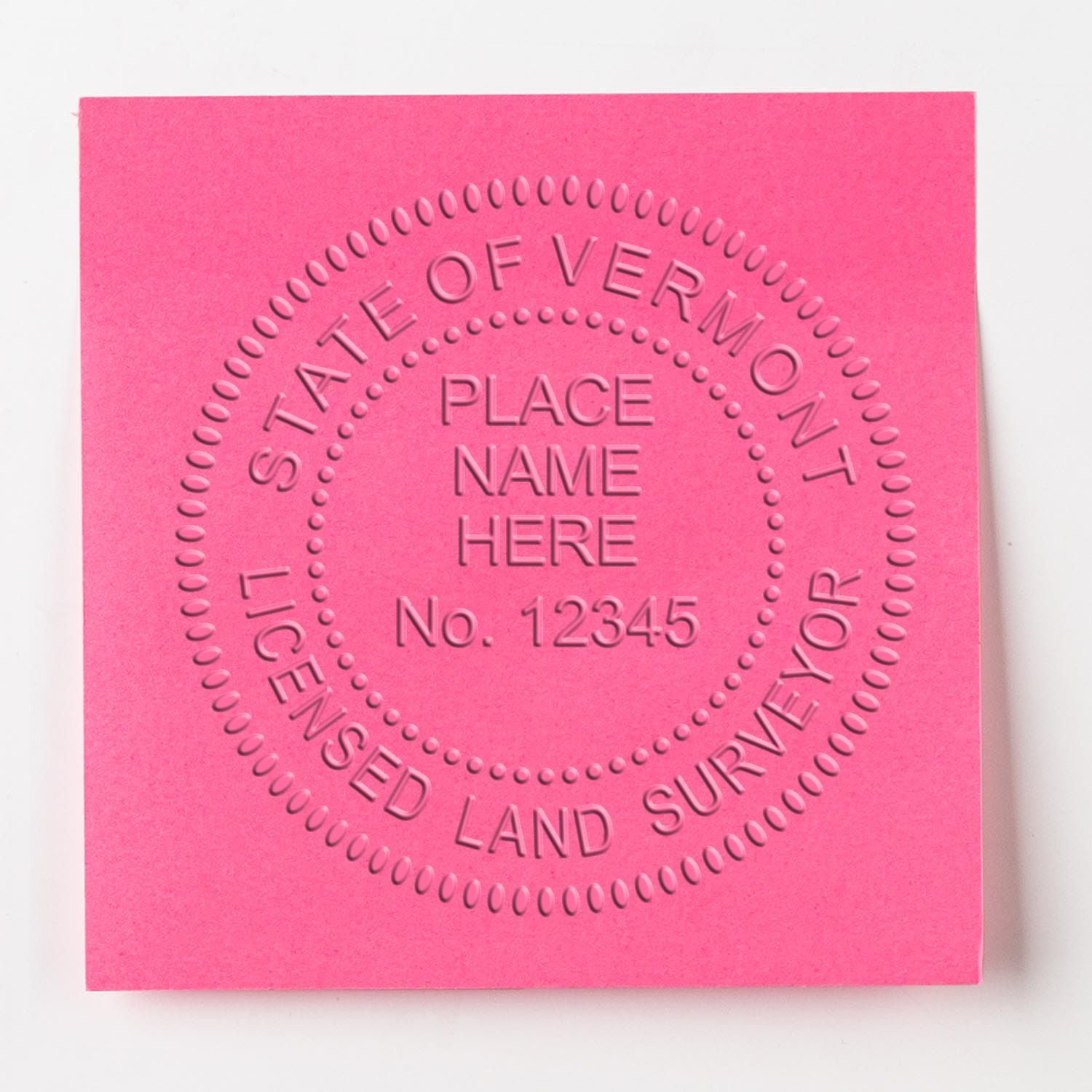

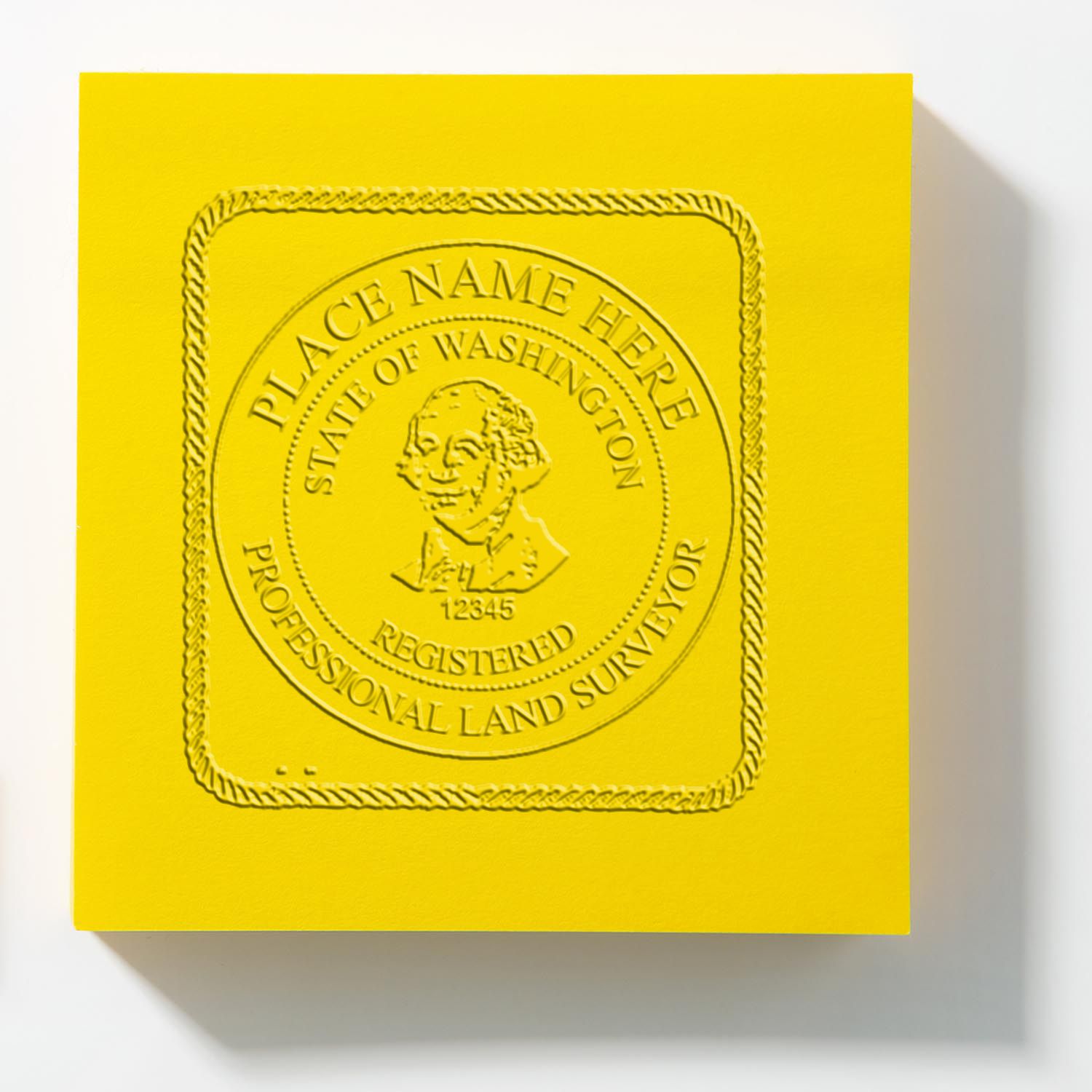
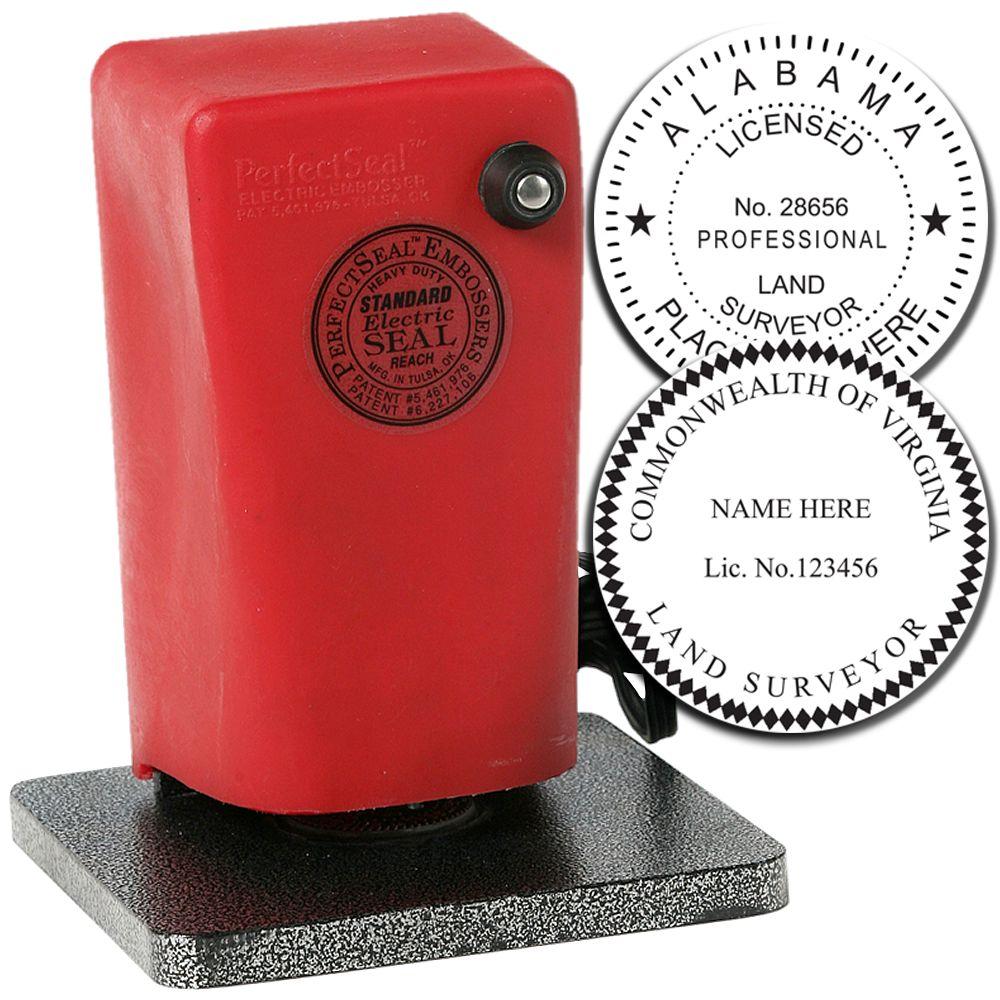

Embosser, rubber stamp or digital
Section 20-300-10(b) permits a rubber stamp on the express condition that it be “of identical size and design to the specified seal”. Subsection (c) permits a digital signature on electronic documents “In lieu of a handwritten signature and live seal on paper documents”, which is the regulation’s own phrase and confirms that the paper baseline is a live impression plus a wet signature. The safe buy is the rubber stamp, cut to match the Board’s specimen.
Signing and dating
The regulation’s language, “a handwritten signature and live seal on paper documents,” treats a wet signature as the paper norm, and subsection (b) requires the licensee’s seal and signature to be affixed where a licensee seals documents prepared by others. Whether a date must appear next to the seal, and whether the signature must cross the impression, are not addressed; checked § 20-300-10 in full along with §§ 20-300-9, 20-300-11 and 20-300-12 and Conn. Gen. Stat. § 20-304. Land surveyors carry an extra legend duty under § 20-300-10(f): a map or survey bearing the surveyor’s seal and signature, submitted to a client or a town clerk under Conn. Gen. Stat. § 7-31, must state that it is substantially correct to the degree of accuracy shown, classified under § 20-300b-11.
A dual licensee needs two seals, and the accuracy statement is surveyor-only
Regs. Conn. State Agencies § 20-300-10(b) contains a sentence that costs money: “Where a licensee is classified as a professional engineer and as a land surveyor, two seals are necessary.” Connecticut does not offer a combined device the way some neighboring states do. Budget for two.
Which documents must be sealed
All plans, maps, surveys, sketches, drawings, specifications and documents pertaining to any project submitted by the licensee to the client. Connecticut then reverses the usual rule for bound sets: “Where drawings or documents are bound together, the application of the seal on one sheet or page shall be considered sufficient, except in filing plans for building permits and appurtenant structures where each sheet shall be sealed.” One seal covers a bound set unless it is a building permit filing, where every sheet needs one. Subsection (b) bars sealing work not prepared personally or under the licensee’s supervisory control, with one route in: the licensee must prepare and keep for not less than six years a thorough written evaluation of the professional services represented, identifying the project, the documents, the source of the documents, the person or organization for whom the evaluation was done and its date, with the licensee’s seal and signature affixed to the evaluation.
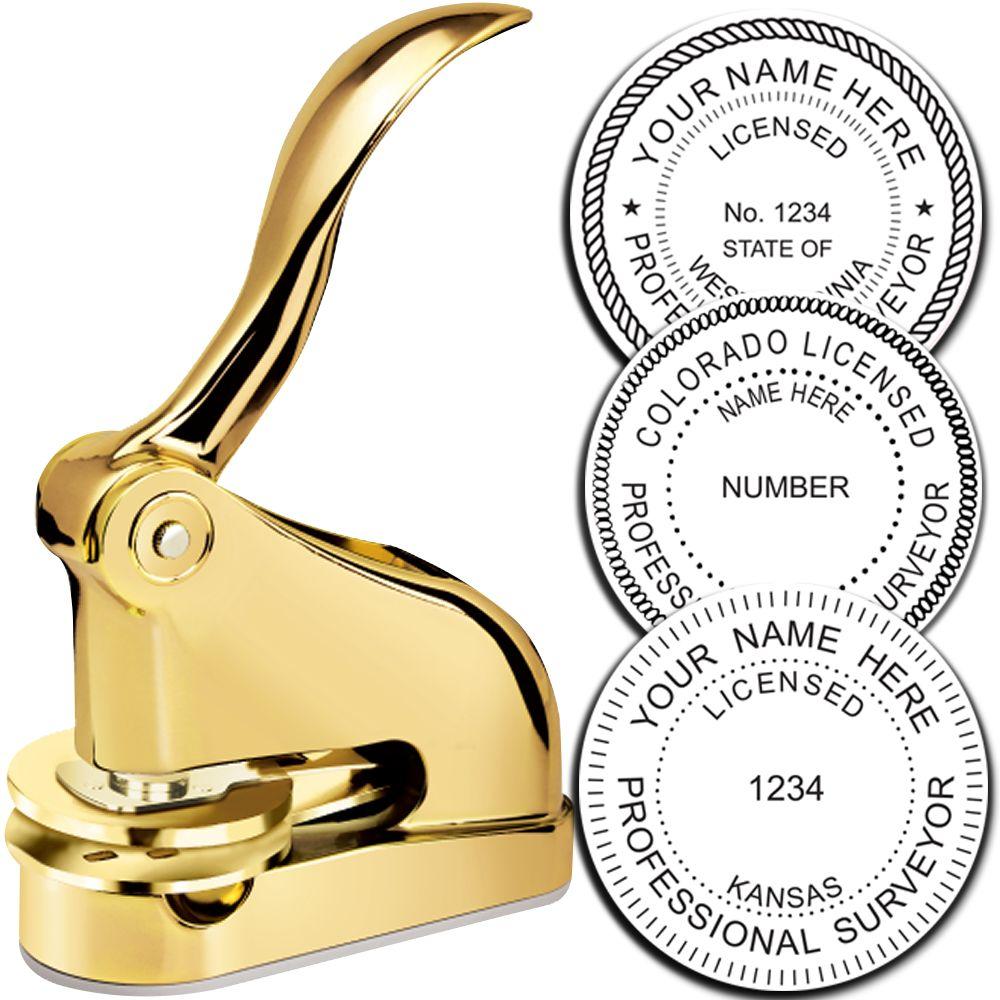
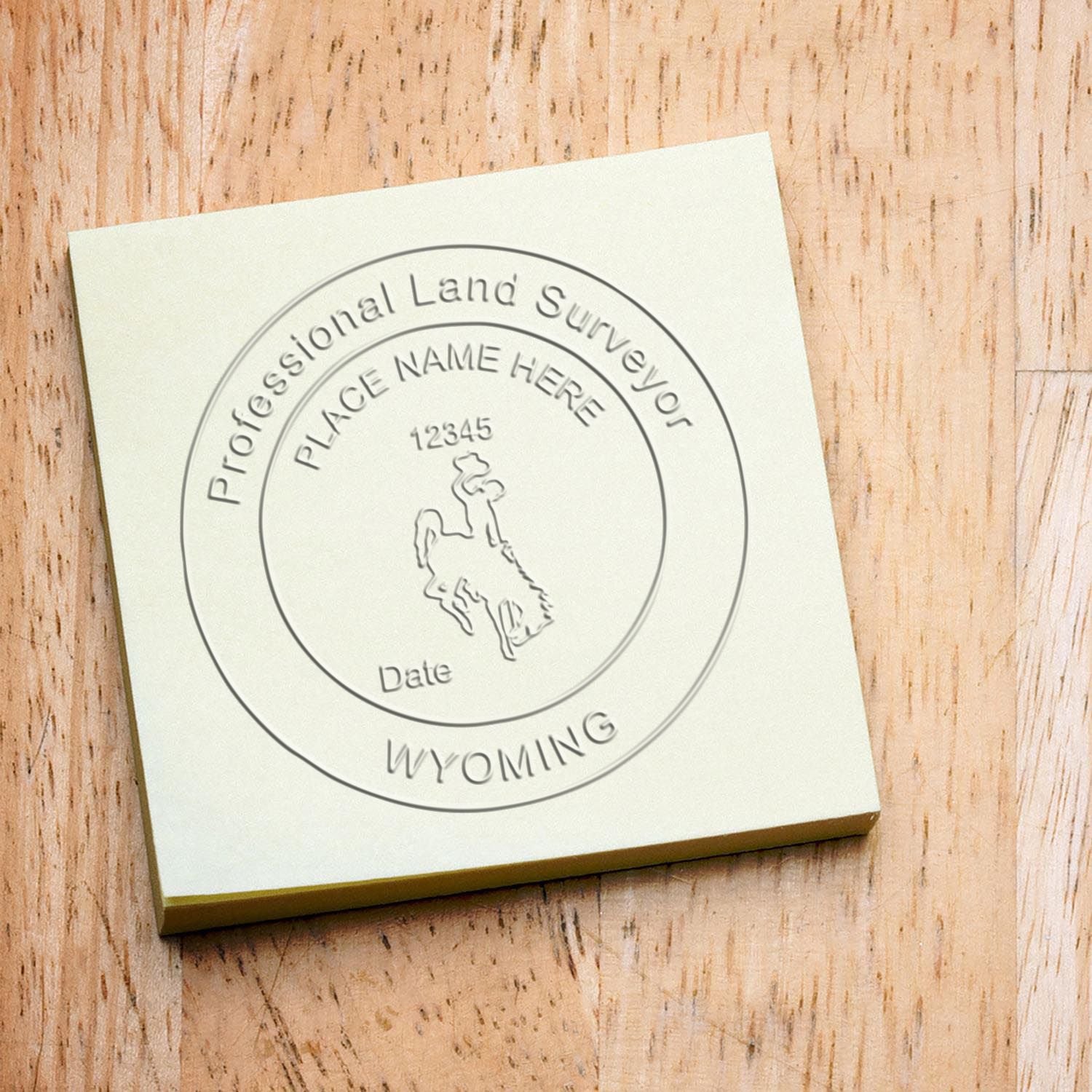


Electronic and digital seals
Connecticut names a technology, which most states do not. Section 20-300-10(c)(1) requires that “The digital signing process satisfies the requirements of the Digital Signature Standard” established by the National Institute of Standards and Technology. The remaining criteria are that the keys are unique to the licensee, that they can be verified by a trusted third party or other approved process as belonging to the licensee, that the private key is under the licensee’s direct and exclusive control, and that an electronic document altered after signing fails verification. Subsection (d) then deems a document so signed to be sealed. Subsection (c)(6) covers unsigned transmissions: a licensee may send an electronic document without a digital signature provided no graphical facsimile of the handwritten signature or stamp appears, and where the facsimile cannot be removed a prominent note must state that “This shall not be considered a sealed document.” Subsection (e) requires a lost or compromised private key to be reported to the board and the Department within fifteen days of discovery.
Renewal, lapse and retirement
Section 20-300-11(a) puts every license on an annual cycle expiring January thirty-first of the year following issuance or renewal, and says that unless renewed the license becomes invalid after that date, “making practice illegal.” Failure to renew does not destroy the right of renewal for five years from the date the license became invalid; after five years only a new application will do. Section 20-300-3b creates a reduced fee non-practicing class for licensees aged sixty-five and over, and subsection (d) is explicit that such licensees may not “sign or seal any engineering or any land surveying documents for clients while this license is in force.” On the device itself, § 20-300-10(g) requires loss of a seal or stamp to be reported to the board and the Department immediately and not later than fifteen days after discovery, permits a petition for a new license at the same time, and leaves misuse of the lost seal on the licensee until the loss is reported. Whether the license number changes, and whether a seal must be destroyed on revocation, are not addressed.
Firm requirements
Not applicable in the sense that matters to a stamp buyer. Connecticut has no certificate of authorization number that must appear on a sealed document. Conn. Gen. Stat. § 20-306a governs practice by a corporation or limited liability company and § 20-306b covers formation of an entity for joint practice, but neither § 20-304 nor § 20-300-10 puts firm data on the document. Section 20-304 points the other way, requiring every state agency and political subdivision to accept final drawings, specifications, plots, reports, papers or documents “when sealed and submitted on behalf of an employer by a licensed professional engineer or licensed land surveyor.” Firms have no seal.
What to check before you order
Ask the Board for the seal specimen it prescribes before you order, because Regs. Conn. State Agencies § 20-300-10(a) refers to a size and design prescribed by the Board and Connecticut publishes neither. Buy a rubber stamp cut identical in size and design to that specimen. If you hold both a professional engineer license and a land surveyor license, you need two separate seals. Seal everything you submit to a client, and remember that a bound set needs only one seal unless it is a building permit filing, where every sheet needs one. On maps and surveys going to a client or a town clerk, add the accuracy statement required by subsection (f). Report a lost seal to the board and the Department within fifteen days; until you do, misuse of it stays your responsibility.
Browse land surveyor stamps and seals.
- Connecticut Land Surveyor Stamp Color: Tips for Success
- Shop Smart: Connecticut Land Surveyor Stamp Online Tips
Frequently asked questions
Is a seal required for land surveyors in Connecticut?
Yes, and the trigger is submission to the client rather than filing with a public authority. Regs. Conn. State Agencies § 20-300-10(a) provides that “The seal shall be applied to all plans, maps, surveys, sketches, drawings, specifications, and documents pertaining to any project submitted by the licensee to his or her client.” The statute itself says almost nothing: Conn. Gen. Stat. § 20-304 only authorizes the Commissioner of Consumer Protection, with the advice and assistance of the board, to adopt regulations pertaining to the design and use of seals.
What has to appear on a Connecticut land surveyor seal?
Not addressed in the regulation. Section 20-300-10 prescribes no legend, no name format and no license number placement, because subsection (a) delegates the whole design to the Board. Sections 20-300-1 through 20-300-15, Conn. Gen. Stat. ch. 391 and the Department of Consumer Protection site all leave it there. Work from the Board issued specimen. Acorn’s own production artwork carries STATE OF CONNECTICUT on the upper arc with the place name beneath it, LICENSED LAND SURVEYOR on the lower arc with the license number beneath that, the Connecticut coat of arms, the three-grapevine shield over the Qui Transtulit Sustinet ribbon in the center, a star at each side, a dotted inner ring and a serrated outer border. That is what we cut, not a published specification.
What size is a Connecticut land surveyor seal?
No inch figure is published. Section 20-300-10(a) says only that the seal is “of a size and design prescribed by the Board”, and subsection (b) that “A rubber stamp of identical size and design to the specified seal shall suffice.” Build the device from the specimen rather than from a number. Acorn’s own production artwork for this seal prints at 1-1/2 inches across, the same plate we cut for Connecticut architects and landscape architects. That is our production record rather than a published rule, so the board remains the authority if it later publishes a figure.
Do I need two seals if I hold both Connecticut licenses?
Yes. Section 20-300-10(b) states it plainly: “Where a licensee is classified as a professional engineer and as a land surveyor, two seals are necessary.” Budget for two devices.
Rubber stamp or embosser in Connecticut?
A rubber stamp is permitted on the express condition that it be “of identical size and design to the specified seal”. Subsection (c) permits a digital signature on electronic documents “In lieu of a handwritten signature and live seal on paper documents,” which is the regulation’s own phrase and confirms that the paper baseline is a live impression plus a wet signature. A rubber stamp cut to the Board’s specimen is the safe buy.
What accuracy statement does a Connecticut survey need?
Under § 20-300-10(f), a map or survey bearing the surveyor’s seal and signature, submitted to a client or a town clerk under Conn. Gen. Stat. § 7-31, must state that it is substantially correct to the degree of accuracy shown, classified under § 20-300b-11. Engineers have no equivalent duty.
How many seals does a bound Connecticut set need?
One, unless it is a building permit filing. The rule runs backwards from most states: “Where drawings or documents are bound together, the application of the seal on one sheet or page shall be considered sufficient, except in filing plans for building permits and appurtenant structures where each sheet shall be sealed.” Read the exception before deciding how many impressions a job needs.
Can I seal work prepared by someone else in Connecticut?
Only by the documented route. Subsection (b) bars sealing work not prepared personally or under your supervisory control, with one way in: you must prepare and keep for not less than six years a thorough written evaluation of the professional services represented, identifying the project, the documents, the source of the documents, the person or organization for whom the evaluation was done and its date, with your seal and signature affixed to the evaluation.
What does Connecticut require for digital signing?
Connecticut names a technology, which most states do not. Section 20-300-10(c)(1) requires that “The digital signing process satisfies the requirements of the Digital Signature Standard” established by the National Institute of Standards and Technology. The remaining criteria are that the keys are unique to you, that they can be verified by a trusted third party or other approved process as belonging to you, that the private key is under your direct and exclusive control, and that an electronic document altered after signing fails verification. Subsection (d) then deems a document so signed to be sealed. Subsection (c)(6) covers unsigned transmissions: you may send an electronic document without a digital signature provided no graphical facsimile of the handwritten signature or stamp appears, and where the facsimile cannot be removed a prominent note must state that “This shall not be considered a sealed document.” Subsection (e) requires a lost or compromised private key to be reported to the board and the Department within fifteen days of discovery.
What happens if my Connecticut license lapses or my seal is lost?
Section 20-300-11(a) puts every license on an annual cycle expiring January thirty-first of the year following issuance or renewal, and says that unless renewed the license becomes invalid after that date, “making practice illegal.” Failure to renew does not destroy the right of renewal for five years; after five years only a new application will do. Section 20-300-3b creates a reduced fee non-practicing class for licensees aged sixty-five and over who may not “sign or seal any engineering or any land surveying documents for clients while this license is in force.” On the device, § 20-300-10(g) requires loss of a seal or stamp to be reported to the board and the Department immediately and not later than fifteen days after discovery, and leaves misuse of the lost seal on you until the loss is reported. Whether the license number changes, and whether a seal must be destroyed on revocation, are not addressed.
Does a Connecticut surveying firm need a seal or a number on the document?
No to both. Connecticut has no certificate of authorization number that must appear on a sealed document. Conn. Gen. Stat. § 20-306a governs practice by a corporation or limited liability company and § 20-306b covers formation of an entity for joint practice, but neither § 20-304 nor § 20-300-10 puts firm data on the document. Section 20-304 points the other way, requiring every state agency and political subdivision to accept final drawings, specifications, plots, reports, papers or documents “when sealed and submitted on behalf of an employer by a licensed professional engineer or licensed land surveyor.”








