
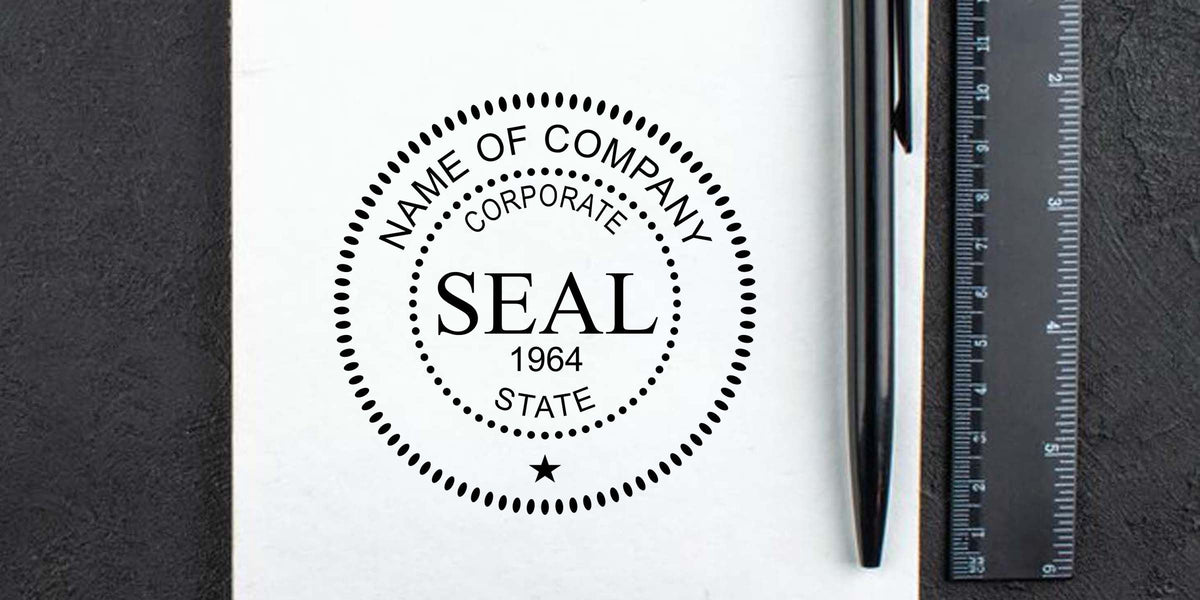
Written by Acorn Sales Company, manufacturing stamps and seals since 1964 · Reviewed by Holly R, VP of Sales and Marketing at Acorn Sales, against Acorn Sales product catalog, stock certificate, corporate kit and foil seal range (99 plus 16 published SKUs) on 21 September 2026 · Updated 25 September 2026
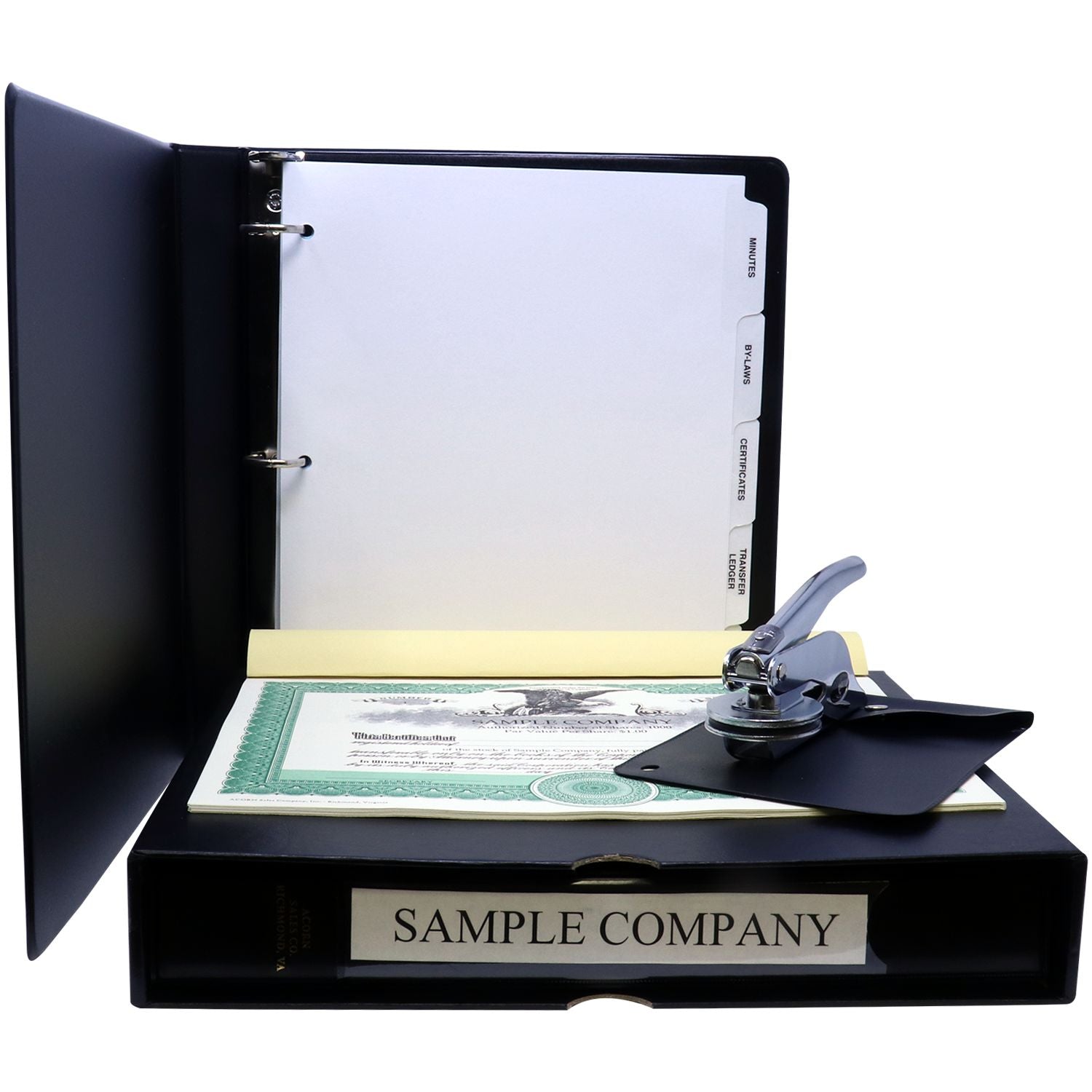
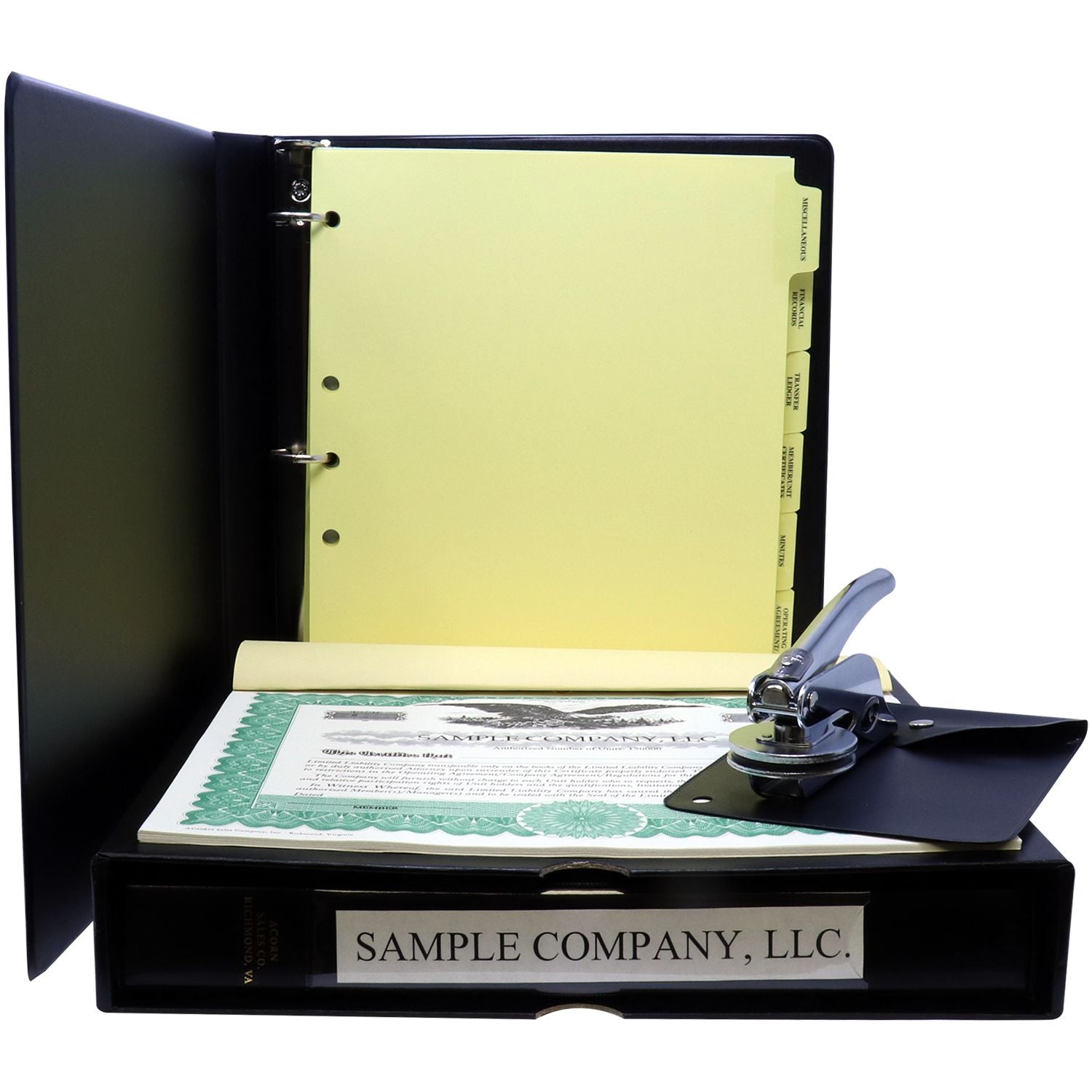
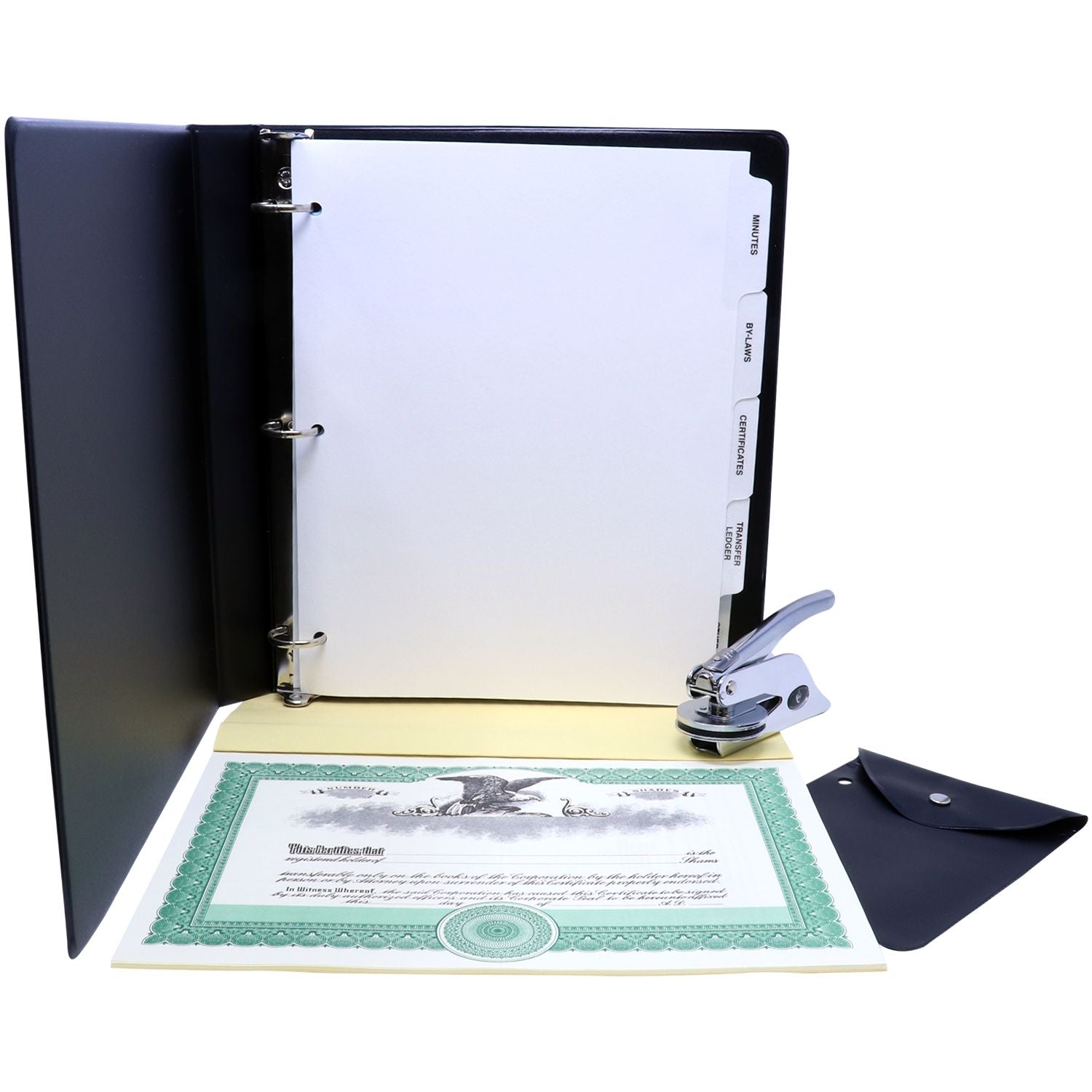
A corporate kit is the cheaper way to buy certificates, because the seal comes with it. The Basic Corporate Kit at $69.95 includes a customized corporate seal, 10 unprinted stock certificates with transfer sheets, a three ring minute book with tab indexes and a stock and transfer ledger. The Deluxe Corporate Kit at $89.95 raises that to 15 custom printed certificates and adds a slip box and a typeset name for the minute book spine. Bought loose, long form Goes certificates measure 8-1/2″ x 15″ at $2.50 to $2.75 each, and short form certificates measure 8-1/2″ x 11″, three-hole punched to fit the minute book.What these are for
This is the paperwork a new corporation or LLC needs on day one and then keeps for the life of the entity. The certificates evidence who owns what. The minute book holds the articles, bylaws, minutes and resolutions. The stock and transfer ledger records issuance and transfer so the cap table is not a spreadsheet nobody can find. The seal authenticates all of it. Buyers are newly formed corporations and LLCs, attorneys and accountants ordering on a client’s behalf, registered agents and incorporation services, and established companies who need more certificates because the original set of ten ran out. All of it is assembled at Acorn’s Richmond, Virginia headquarters.
The ranges we stock
Corporate kits, basic and deluxe
Four kits, two entity types. The Basic Corporate Kit is $69.95 with a customized corporate seal, 10 unprinted stock certificates with stock transfer sheets, a three ring corporate minute book with tab indexes and a stock and transfer ledger; the Basic LLC Corporate Kit is the same at $69.95. The Deluxe Corporate Kit is $89.95 and upgrades the certificates to a set of 15 custom printed ones, then adds a slip box for the minute book and a typeset sheet carrying the company name for the spine; the Deluxe LLC Corporate Kit is $89.95 on the same terms.
Long form Goes certificates, general and state-specific
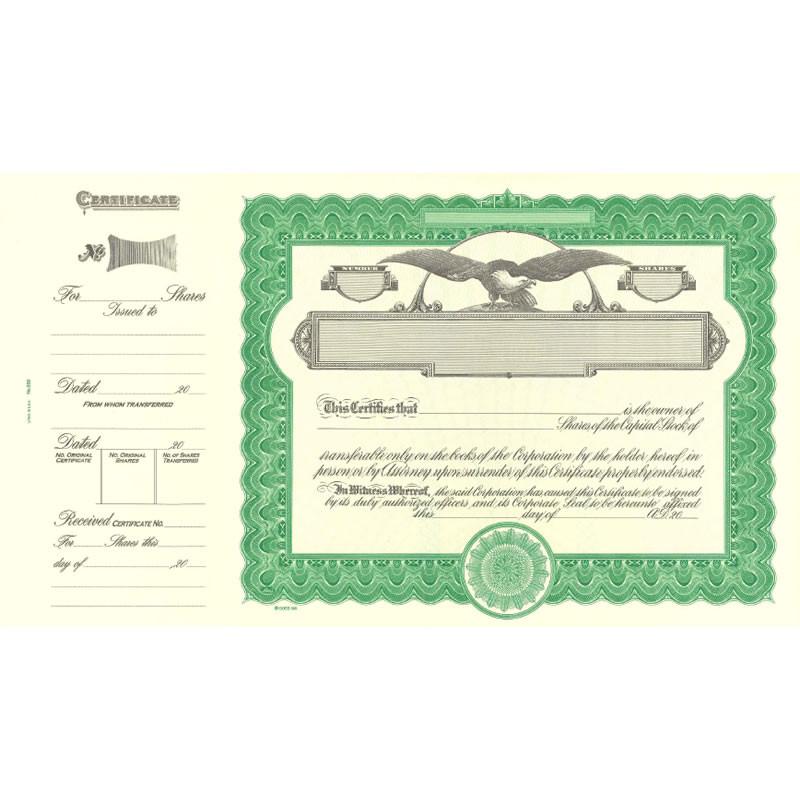
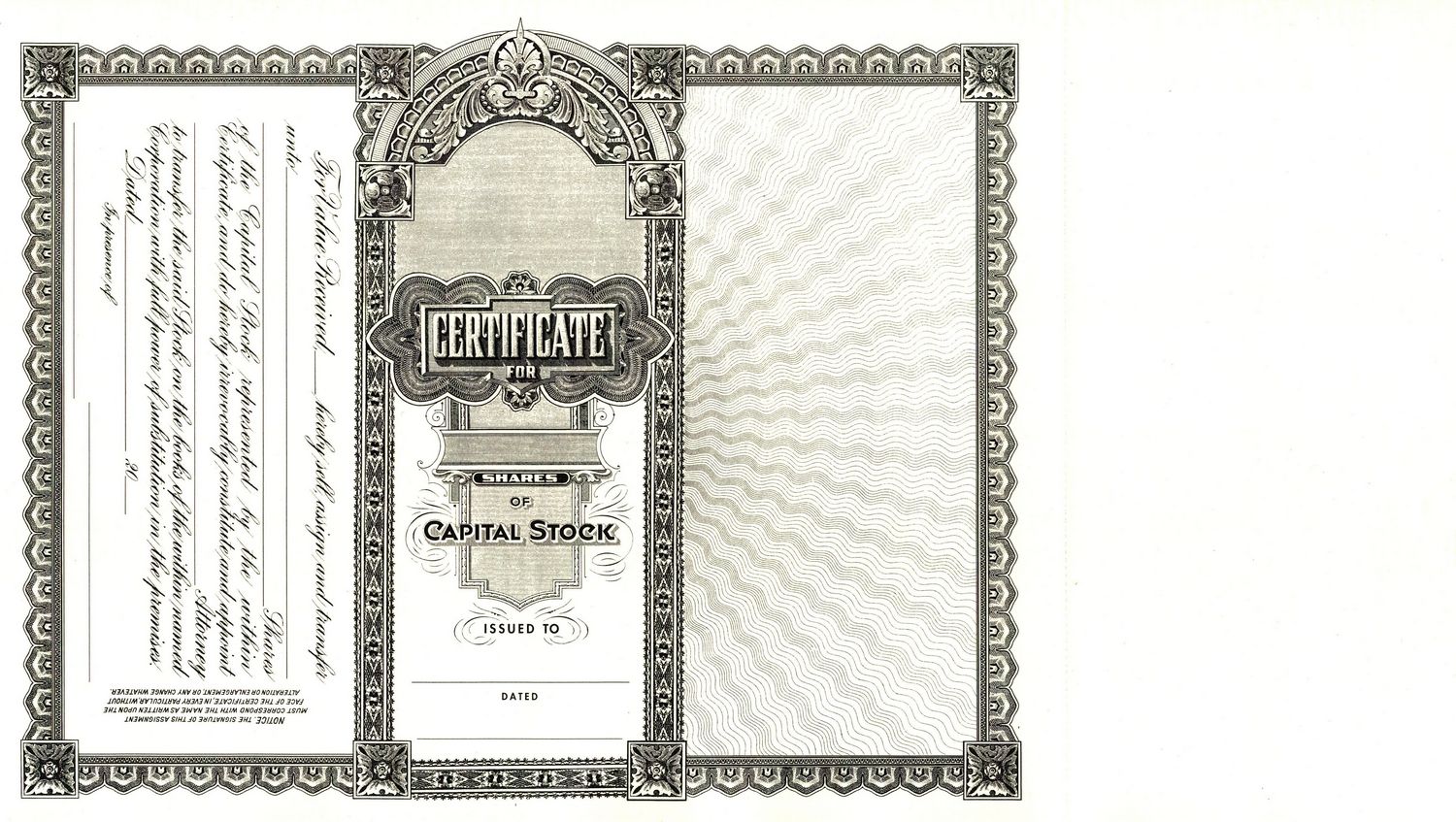
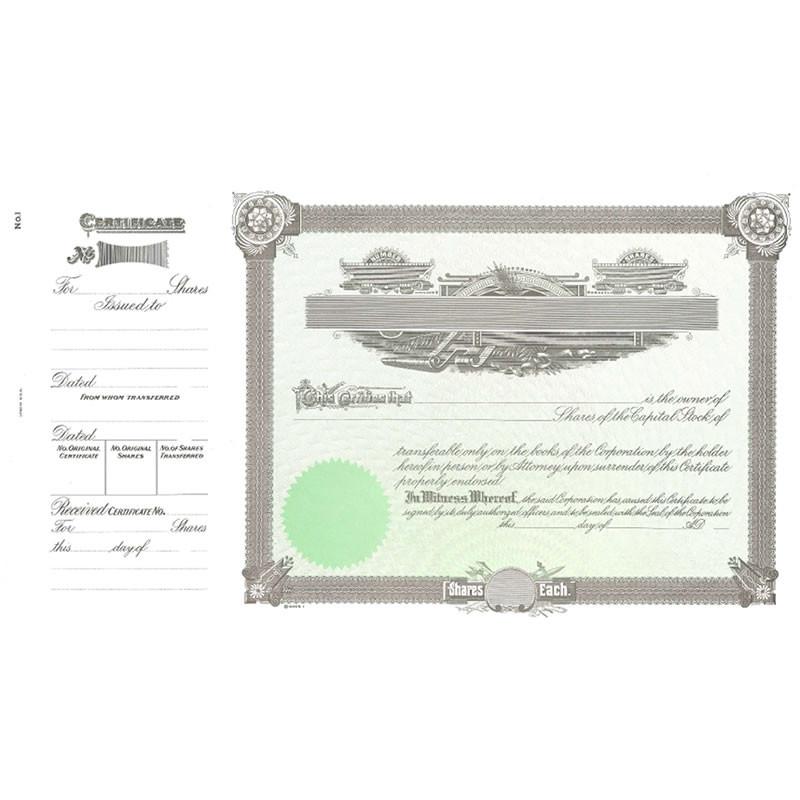
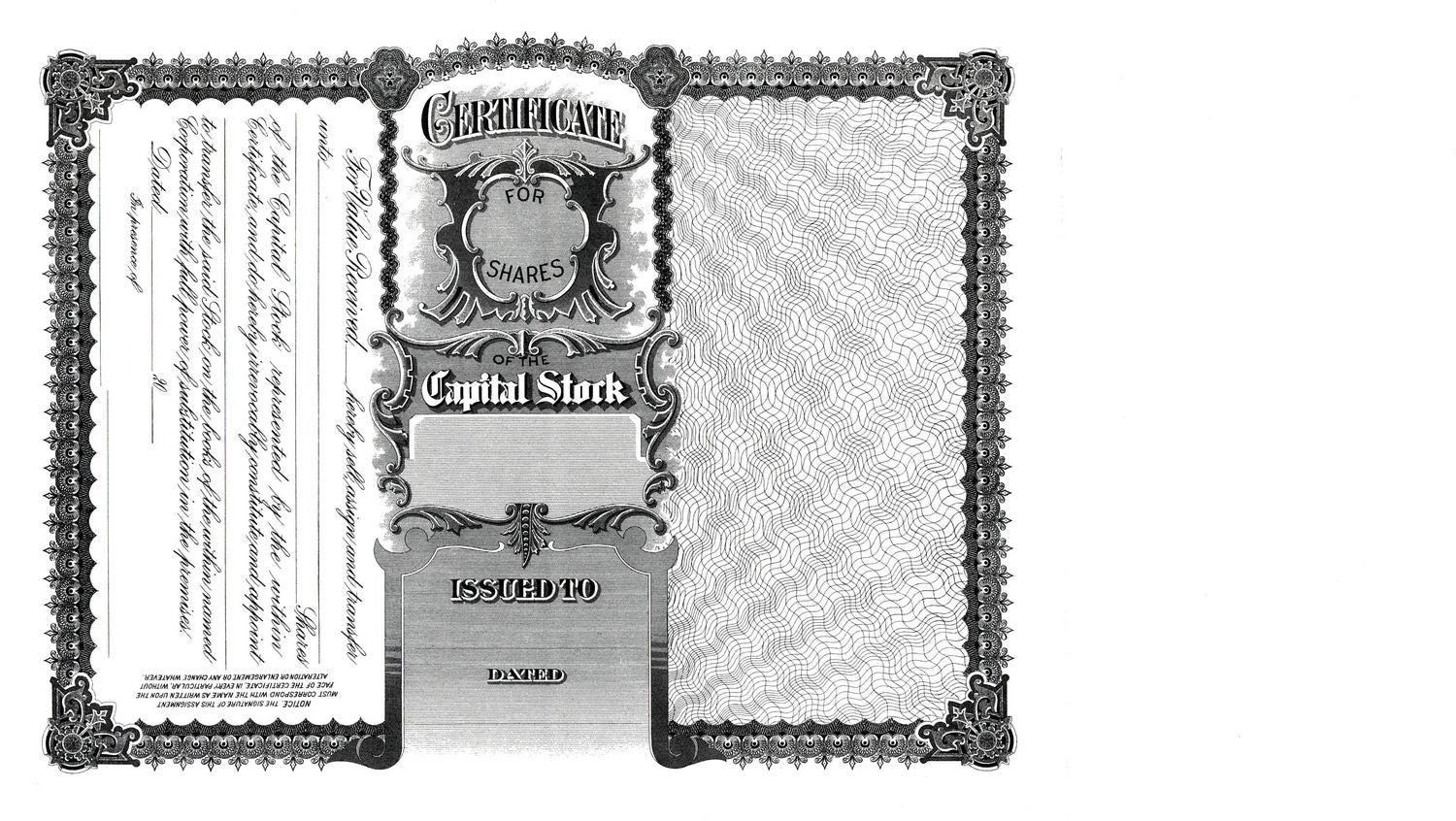
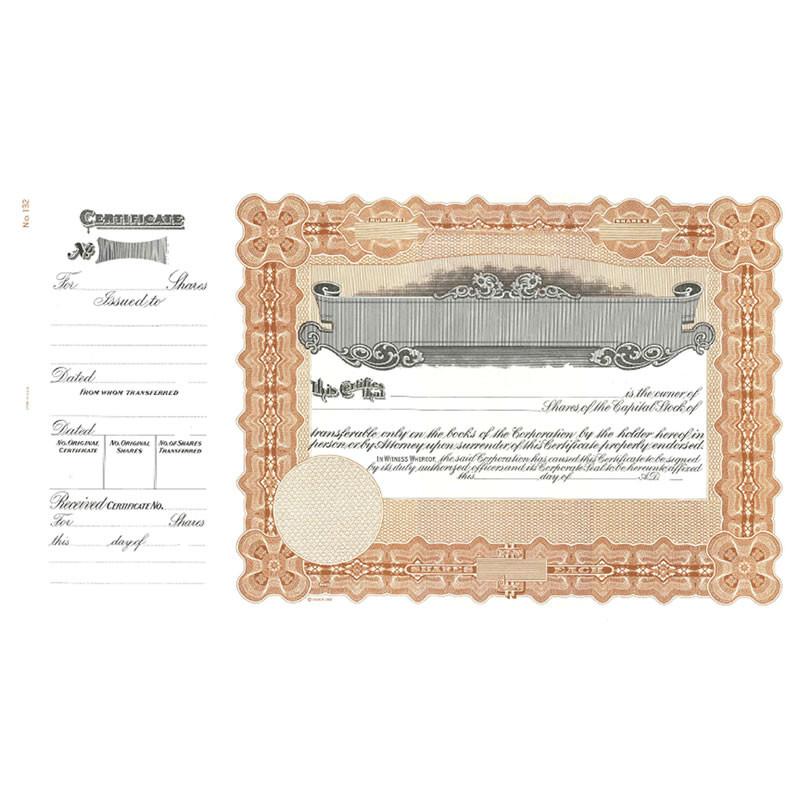
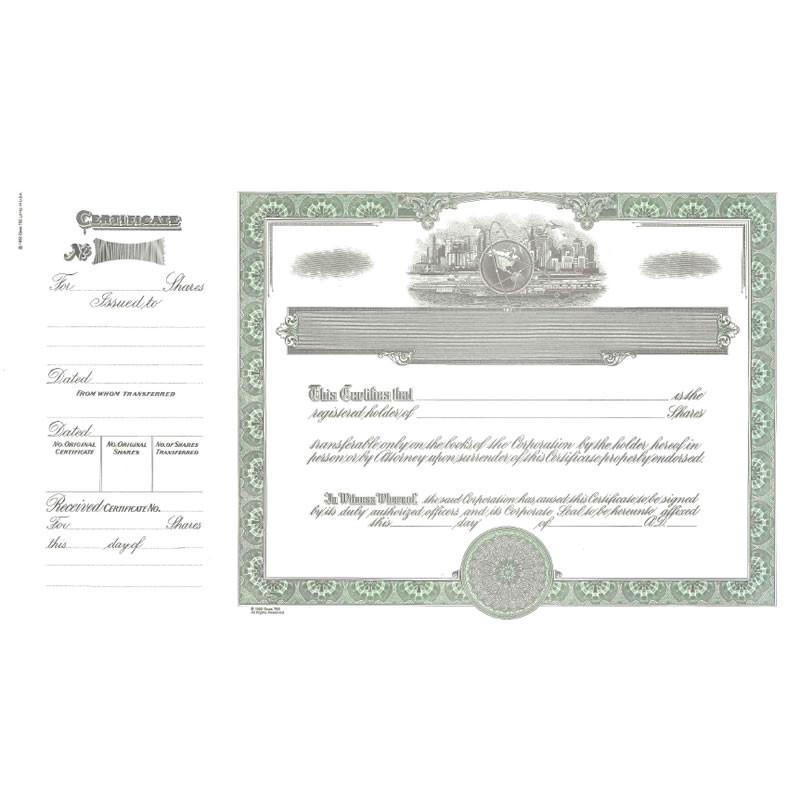
The traditional lithographed certificate at 8-1/2″ x 15″, priced at $2.75 for most numbers and $2.50 for some. Examples include the Goes 214 at $2.75, green with capital text and a printed back, and the Goes 508 at $2.50, brown with an eagle. Custom printing adds the corporate or company name, state of incorporation, authorized number of shares and two signature lines. For an additional charge, printed certificates can be permanently bound in a hard black binder with the word Stock Certificates stamped in gold on the cover. Some states have their own Goes number in the same 8-1/2″ x 15″ format at $2.75: the Goes 156 for Virginia, the Goes 223 for North Carolina, the Goes 220 for South Carolina, the Goes 265 for Texas, the Goes 199 for Kansas, the Goes 150 for Oklahoma, the Goes 193-1/2 for Louisiana and the Goes 90 for Colorado. One number runs larger than the rest: the Goes 532-1/2 at $2.75 measures 9-1/2″ x 16″.
Short form certificates
8-1/2″ x 11″ and three-hole punched to fit a standard corporate minute book, all at $2.50. The Short Form Blue, Green, Orange and Brown Stock Certificates are geared to typical C and S corporations. The Blue Short Form LLC Certificate and the Short Form Green LLC Certificate are the LLC equivalents. The Short Form Membership Certificate suits membership and non-profit organizations. Printed certificates are sequentially numbered, typically starting at 1 unless otherwise noted, and can be permanently bound in a loose-leaf section or ordered loose.
Blank certificates for printing yourself
Roughly half the range is sold unprinted so you can run your own text through a printer. The Goes 367 at $2.75 is brown with an eagle and no text on either side. The Goes 501 at $2.50 is green, marked Common, with a printed back. The Goes 504, 506, 732, 754, 762 and many others sit in the same 8-1/2″ x 15″ format at $2.50 to $2.75. Preferred and Common variants are stocked separately, so the Goes 503 and 513 are preferred blanks at $2.50 and the Goes 500 is a common blank at $2.50.
Minute book and record-keeping supplies
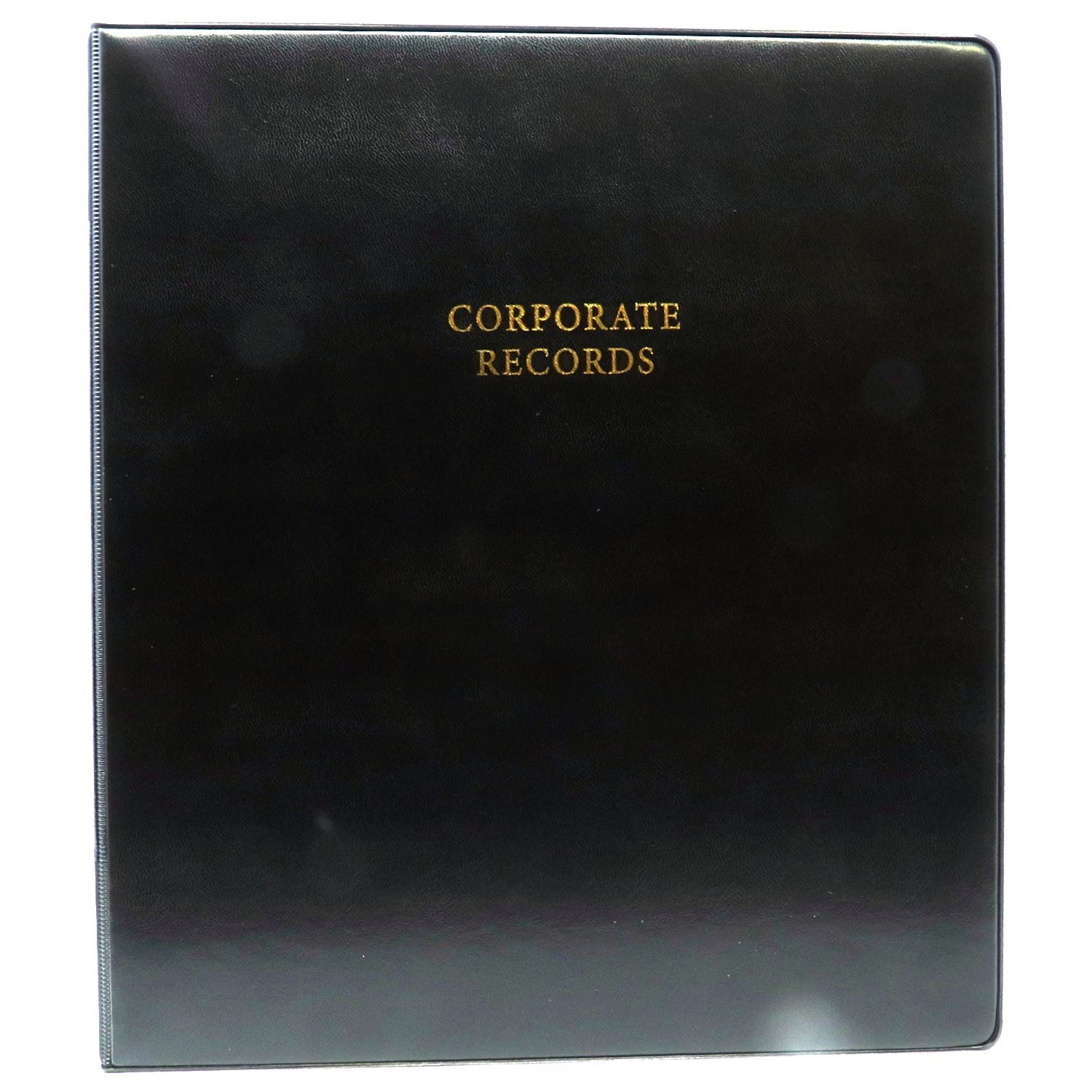
Sold individually if you already have a seal. The Corporate Minute Book is $15.95, a black three ring binder with 1″ rings, heavily padded plush construction, gold stamping reading Corporate Records on the front and a clear spine holder for the company name. The Stock and Transfer Ledger is $9.95, a bound booklet of 8 ruled pages on ledger stock, indexed A to Z, 8-1/2″ x 11″ and three-hole punched. The Slip Box is $17.95 with a 1″ capacity, made of heavy black skytogen grained material to fit the Acorn minute book. Stock Transfer Sheets come 15 to a pack at $4.95.
Foil seals for the certificate face
Foil seals sit under the embossed impression so it catches the light. A 40 pack is $6.95 in gold, silver, red, green or blue, and the Combination Pack Foil Seals at $11.95 mixes gold, black, red, blue and green. Silver Heart Foil Seals are $8.00 for 40. For volume, a roll of 1,000 is $94.95 in gold, silver, red, green or blue. Most of the range is sized for a 1-5/8″ embosser, which matches the standard corporate die.
Sizes and dimensions
Certificates come in three footprints. Long form Goes certificates are 8-1/2″ x 15″, which is the size of nearly every Goes number Acorn stocks and is why they are sold loose or bound in a hard black binder rather than in a ring binder. Short form certificates are 8-1/2″ x 11″ and three-hole punched, so they drop straight into the minute book alongside the minutes. One outlier, the Goes 532-1/2, measures 9-1/2″ x 16″. On the supplies side, the Corporate Minute Book takes 1″ rings, the Slip Box has a 1″ capacity and is built to fit that book, the Stock and Transfer Ledger pages are 8-1/2″ x 11″, the Leatherette Pouch is 4″ x 6″ and the 3 Hole Punch Seal Pouch is 6-1/2″ x 4-3/4″. The corporate seal that goes on the certificate carries a 1-5/8″ impression, and Acorn’s embossing seals have a 2 inch maximum impression across the wider range.
How many impressions you get
Impression counts belong to the seal, not the certificate, and the seal you receive with a kit is a customized corporate seal at a 1-5/8″ die. Hand embossers carry a two year warranty rather than a stated impression count. If the certificates will be photocopied or scanned rather than kept as wet-signed originals, an embossed impression will not show, and an inked corporate seal stamp is rated instead: about 5,000 impressions for the Self Inking Corporate Stamp Seal at $27.95, about 25,000 for the Slim Pre-Inked Corporate Seal Stamp at $34.95 and up to 15,000 for the MaxLight Pre Ink Company Seal Stamp at $45.95. What a certificate order is counted in is sheets: 10 unprinted certificates in a Basic kit, 15 custom printed in a Deluxe kit, 15 stock transfer sheets to a pack, and 1,000 foil seals to a roll.


Ink and colors
Certificates are lithographed rather than inked by you, and the color is part of the stock. Green, brown, blue, orange and gold all appear across the range: the Goes 214 is green, the Goes 508 is brown, the Goes 265 for Texas is gold, the Goes 532-1/2 is blue. Short form certificates print the eagle and the wording in black on the colored stock. Foil seals are the decorative layer on top, in gold, silver, red, green, blue, black or a mixed pack, and they are designed to be embossed through so the impression reads as raised foil.
What you can customize
Custom printed certificates carry the corporate or company name, the state of incorporation, the authorized number of shares and two signature lines, typically the President and the Secretary. The LLC version substitutes the company name, the state of organization, the authorized number of units, par value if any, and two signature lines, normally the Manager and the Member. Printed certificates are sequentially numbered and start at 1 unless you specify otherwise. They can be permanently bound in a loose-leaf section of the minute book, bound in a hard black binder with Stock Certificates stamped in gold for an additional charge, or ordered loose. A Deluxe kit also includes a typeset sheet with the company name for the minute book spine. There is no minimum order and no setup fee. If you are adding a logo to the seal that goes with the kit, EPS is best and a transparent PNG is good, with about 2% edge space around the imprint.
The kit is cheaper than the parts, and the seal is why
Buyers routinely assemble the pieces separately and pay more. A Corporate Minute Book is $15.95, a Stock and Transfer Ledger is $9.95, a Slip Box is $17.95 and a pack of 15 Stock Transfer Sheets is $4.95. That is $48.80 before a single certificate and before the seal, and the cheapest customized corporate seal in the catalog is the Handheld Corporate Seal at $29.95. The Basic Corporate Kit is $69.95 with the seal included and ten certificates on top, and the Deluxe Corporate Kit is $89.95 with fifteen custom printed certificates, the slip box and a typeset spine.
The real decision inside the kits is printed against unprinted. The Basic kit ships 10 unprinted certificates, meaning blank lithographed stock you fill in by hand or run through a printer. The Deluxe kit ships 15 custom printed certificates already carrying the entity name, the state, the authorized share count, par value if any and two signature lines. Twenty dollars separates them. If the company has more than two or three shareholders, or if anyone outside the founders will ever look at a certificate, the printed set is the one to buy.
The second thing people get wrong is certificate size against storage. Long form Goes certificates are 8-1/2″ x 15″. They do not fit a three ring minute book, which is why they are sold loose or bound separately in a hard black binder with Stock Certificates stamped in gold. Short form certificates are 8-1/2″ x 11″ and three-hole punched precisely so they do fit. Buying long form certificates and then expecting them to live in the minute book is the most common ordering mistake in this range.
The foil seals are where the sizes have to agree. Most of Acorn’s foil seals, the 40 packs at $6.95 and the rolls of 1,000 at $94.95, are sized for a 1-5/8″ embosser, which is the standard corporate die. Two products in the range are listed for a 2″ embosser instead, the Round Gold Foil Seals and the Round Silver Foil Seals at $6.95 for 40, and the Gold Square Foil Seals at $6.95 are listed for a 1″ x 2″ embosser. Check the seal size against your die before ordering a roll of a thousand.
Ordering, proofs and delivery
Order online and supply the entity name, the state, the authorized share or unit count and par value if any. Production is 1 business day. Kits are assembled at Acorn’s Richmond, Virginia headquarters and ship from there, with transit of 3 to 10 business days by method and carrier, sometimes next day if rush shipping is selected. A PDF proof is an optional add-on; when you order one, production waits until you approve it, which is worth doing on a printed certificate set because the share count and the legal name are printed on all fifteen sheets at once. There is no minimum order and no setup fee, so a single loose certificate at $2.50 is a valid order.
Care and longevity
Certificates are archival documents and should be treated as such. Keep the set in the minute book or the slip box rather than loose in a drawer; the Slip Box at $17.95 has a 1″ capacity and is sized to the Acorn minute book. Keep the corporate seal with the book, either in the Leatherette Pouch at $5.95 or the 3 Hole Punch Seal Pouch at $3.95 that attaches inside the binder. Record every issuance and transfer in the Stock and Transfer Ledger, $9.95, which is indexed A to Z for exactly that purpose, and use the Stock Transfer Sheets, 15 to a pack at $4.95, to track which certificates have been issued. Unused blank certificates should be stored flat and out of light so the lithographed color does not fade. If the original ten or fifteen run out, order more of the same Goes number so the set stays consistent.
Products in this range
| Product | Price |
|---|---|
| Deluxe Corporate Kit | $89.95 |
| Deluxe LLC Corporate Kit | $89.95 |
| Basic Corporate Kit | $69.95 |
| Corporate Minute Book | $15.95 |
| Stock and Transfer Ledger | $9.95 |
| Short Form Blue Stock Certificate | $2.50 |
| Goes 214 Stock Certificate | $2.75 |
| Gold Foil Seals Qty 40 | $6.95 |
Browse the full range: Corporate Stock Certificates, Corporate Kits, Foil Seals.
Related guides
- Corporate and LLC Seals: Embossers and Seal Stamps
- Embossers: Complete Guide to Types, Uses and Ordering
- Everything You Should Know About Stock Certificate Transfer
- Discover the Value of Quality Embossed Stock Certificates
- What You Need to Know About Stock Certificate Size
- Start Your Business with an Incorporation Kit
- LLC Membership Certificates: What They Are and What Goes on One
- What Goes on a Stock Certificate, and How to Issue One
- Lost Stock Certificate: How a Corporation Replaces It
Frequently asked questions
What comes in a corporate kit?
The Basic Corporate Kit at $69.95 includes a customized corporate seal, 10 unprinted stock certificates with stock transfer sheets, a three ring corporate minute book with tab indexes and a stock and transfer ledger. The Deluxe Corporate Kit at $89.95 includes the same seal and book plus a set of 15 custom printed stock certificates, a slip box for the minute book and a typeset sheet with the company name for the spine.
Is there a separate kit for an LLC?
Yes. The Basic LLC Corporate Kit is $69.95 and the Deluxe LLC Corporate Kit is $89.95, matching their corporate counterparts piece for piece. The difference is the wording on the certificates: the LLC version carries the company name, the state of organization, the authorized number of units, par value if any, and two signature lines, normally the Manager and the Member.
What size is a stock certificate?
Two standard sizes. Long form Goes certificates are 8-1/2″ x 15″, the traditional lithographed format, priced at $2.50 to $2.75 each. Short form certificates are 8-1/2″ x 11″ and three-hole punched so they fit a standard corporate minute book, all at $2.50. One number, the Goes 532-1/2, is larger at 9-1/2″ x 16″.
What gets printed on a custom stock certificate?
The corporate or company name, the state of incorporation, the authorized number of shares and two signature lines, typically the President and the Secretary. Par value is printed where there is one. Printed certificates are sequentially numbered and start at 1 unless you specify otherwise, and they can be bound in a loose-leaf section, bound in a hard black binder with Stock Certificates stamped in gold for an additional charge, or shipped loose.
Can I buy blank stock certificates and print them myself?
Yes, and a large part of the range is sold that way. The Goes 367 at $2.75 is brown with an eagle and carries no text on either side. The Goes 501 at $2.50 is green and marked Common with a printed back. Blank Goes certificates run $2.50 to $2.75 in the 8-1/2″ x 15″ long form, and preferred and common variants are stocked separately.
Do you have state-specific stock certificates?
For several states, yes. The Goes 156 covers Virginia, the Goes 223 North Carolina, the Goes 220 South Carolina, the Goes 265 Texas, the Goes 199 Kansas, the Goes 150 Oklahoma, the Goes 193-1/2 Louisiana and the Goes 90 Colorado. All are 8-1/2″ x 15″ long form certificates at $2.75, available blank or custom printed.
What is a stock and transfer ledger for?
It records who was issued which certificate and who transferred what to whom, which is the company’s own record of ownership. The Stock and Transfer Ledger is $9.95, a bound booklet of 8 ruled pages printed on ledger stock, indexed A to Z, with 8-1/2″ x 11″ pages that are three-hole punched to sit in the minute book. It is included in both the Basic and Deluxe kits.
Do I need a corporate seal to issue stock certificates?
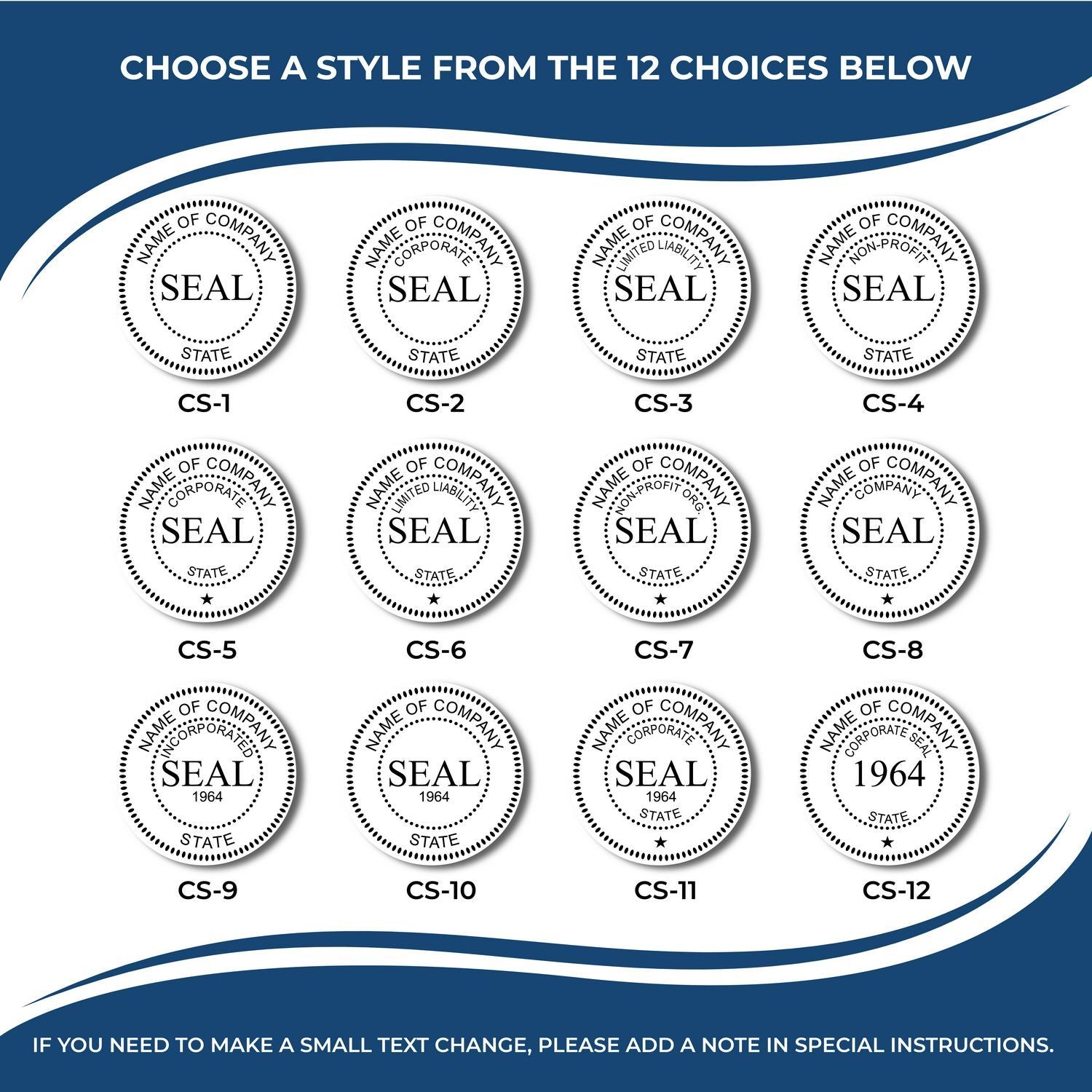
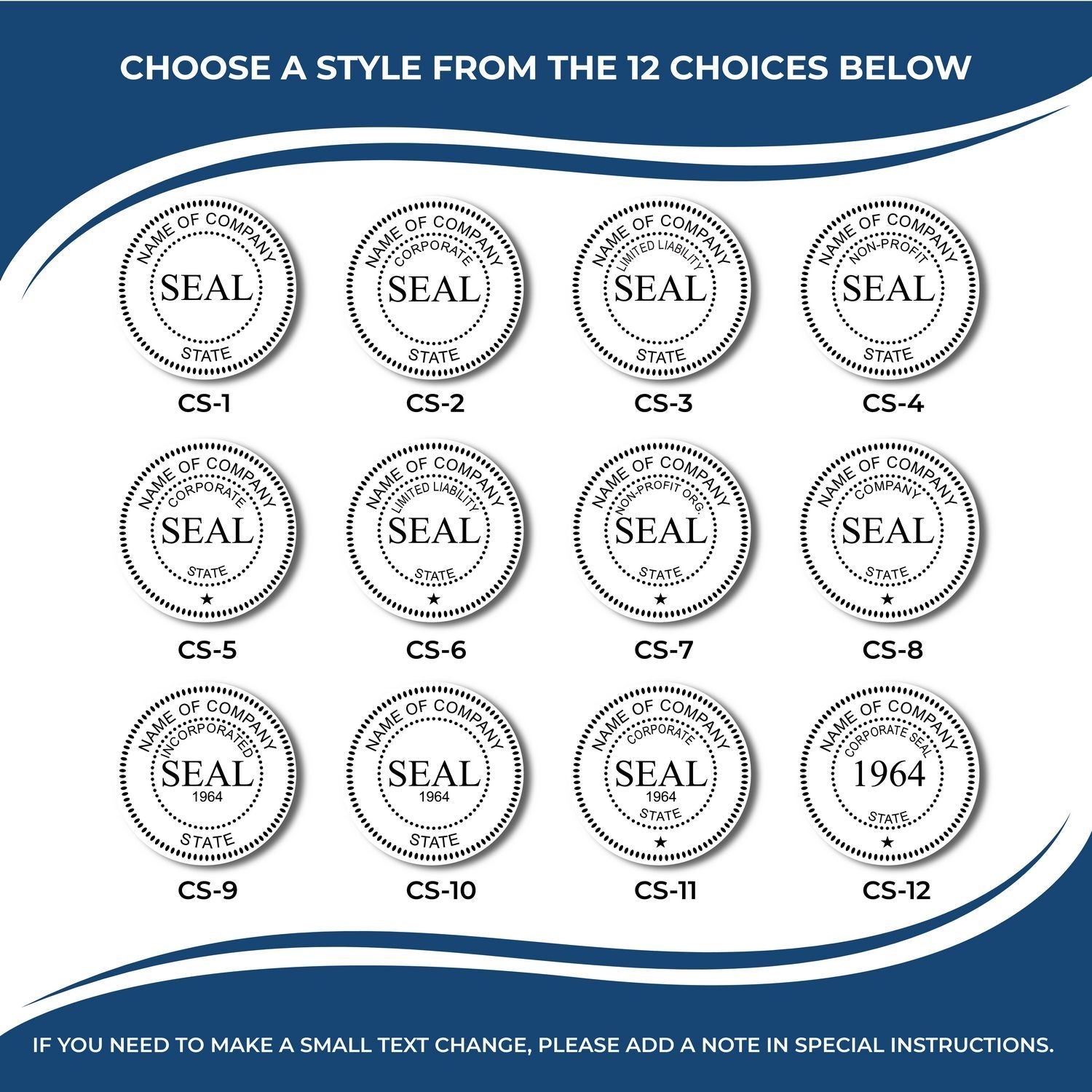
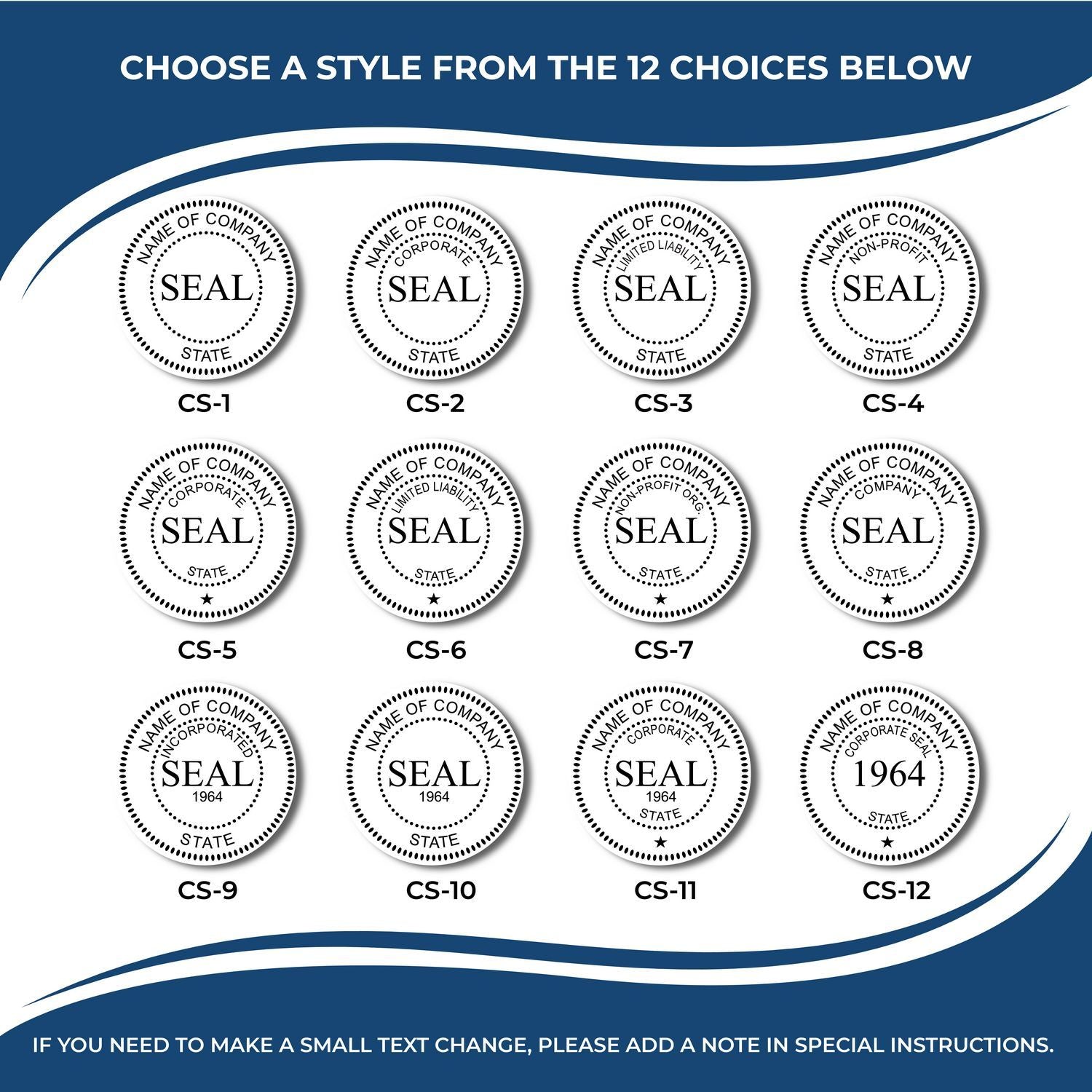
A customized corporate seal is included in every Basic and Deluxe kit, which is the usual way buyers get one. Bought separately, the Handheld Corporate Seal is $29.95 and the Corporate Seal Desk Embosser is $34.95, both with a 1-5/8″ impression and a choice of 12 styles. If the certificates will be scanned or photocopied, buy an inked seal stamp as well, because an embossed impression is colorless and does not reproduce.
What size foil seal fits my embosser?
Most of the range is sized for a 1-5/8″ embosser, which matches the standard corporate die: the gold, silver, red, green and blue 40 packs at $6.95, the Combination Pack at $11.95, the Silver Heart pack at $8.00 and the rolls of 1,000 at $94.95. Three products differ. The Round Gold Foil Seals and Round Silver Foil Seals, both $6.95 for 40, are listed for a 2″ embosser, and the Gold Square Foil Seals at $6.95 are listed for a 1″ x 2″ embosser.
How many foil seals come in a pack?
Forty in a package at $6.95 for the single-color rounds, $8.00 for the silver hearts and $11.95 for the combination pack that mixes gold, black, red, blue and green. For volume, a roll holds 1,000 seals at $94.95 and is stocked in gold, silver, red, green and blue. The roll keeps the seals together and each one peels off individually.
Can I order more certificates later?
Yes. There is no minimum order and no setup fee, so a single certificate at $2.50 is a valid order. Order the same Goes number as the original set so the design stays consistent, and tell us the number to start from so the sequence continues rather than restarting at 1. Stock Transfer Sheets are available separately at $4.95 for a pack of 15.
How long does a corporate kit take to arrive?
Production is 1 business day. Kits are assembled at Acorn’s Richmond, Virginia headquarters and ship from there, with transit of 3 to 10 business days depending on method and carrier, sometimes next day if rush shipping is selected at checkout. A PDF proof is an optional add-on, and when one is ordered production waits until it is approved, which adds to the total.








