

Written by Acorn Sales Company, manufacturing stamps and seals since 1964 · Reviewed by Holly R, VP of Sales and Marketing at Acorn Sales, against the District of Columbia Board of Architecture, Interior Design, and Landscape Architecture and 17 DCMR §§ 3413.1, 3413.2 on 21 September 2026 · Updated 21 September 2026
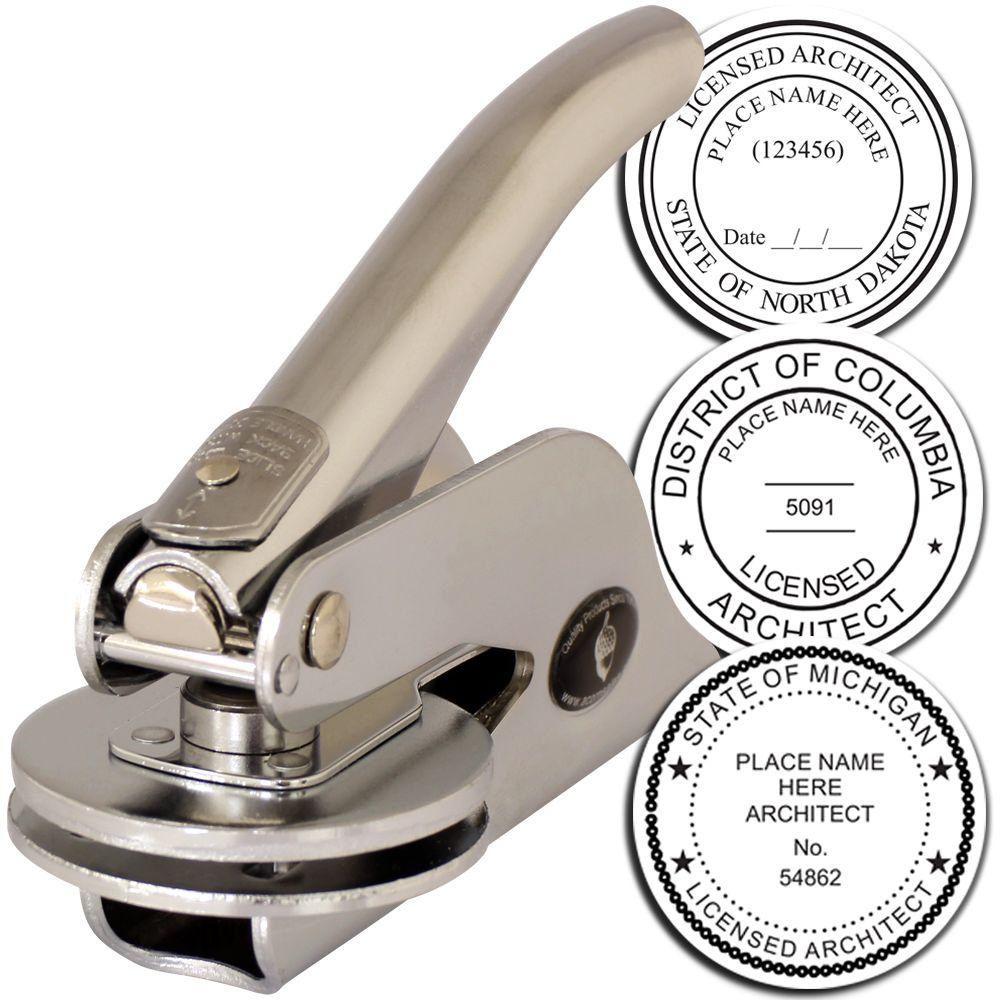
The sentence and the picture it points to do not say the same thing, and both are in force. 17 DCMR § 3413.1 does two things. First it names three contents, including the words “LICENSED ARCHITECT-DISTRICT OF COLUMBIA.” Then, in the same rule, it says the seal “shall comply in all respects, including size and format, with the specimen shown below.” The specimen reproduced in the rule does not carry those words. It is a two ring design: DISTRICT OF COLUMBIA around the top of the outer ring and ARCHITECT around the bottom, a star at each side, a placeholder for the registrant’s name around the top of the inner ring and REGISTERED around the bottom, with a placeholder license number between two horizontal rules in the center.
So the artwork says REGISTERED where the sentence says LICENSED, and it puts DISTRICT OF COLUMBIA in the outer ring rather than hyphenated to the profession. This is not a printing slip. The adopted rule filed for the May 9, 2008 version and the adopted rule filed for the current August 17, 2012 version carry the sentence word for word identically and the same specimen picture; the 2012 rulemaking changed only § 3413.7, replacing the handwritten signature requirement with manual or electronic signature and adding the four electronic signature criteria.
What that means when you order. The second half of § 3413.1 is the mandatory one, because it demands conformity in all respects, and it is also the only place any layout or size information exists. A die cut to the specimen already carries the jurisdiction and the profession on its face. A die cut to the literal words of the first sentence produces a legend that appears nowhere in the rule and matches no published artwork. Nothing in the chapter reconciles the two, and there is no separate seal detail sheet: Appendix A at 17 DCMR § 3498 is a training unit schedule.
District of Columbia architect seal requirements at a glance
| Requirement | District of Columbia rule | Source |
|---|---|---|
| Seal required | Yes | 17 DCMR §§ 3413.1, 3413.2 |
| Required elements | Your name as licensed, Your license number, The words LICENSED ARCHITECT-DISTRICT OF COLUMBIA and Conformity with the specimen printed in the rule | 17 DCMR § 3413.1 |
| Size and shape | Not addressed as a measurement. | 17 DCMR § 3413.1 (specimen image |
| Device allowed | The rule does not name a device type. | 17 DCMR §§ 3413.1, 3413.2, 3413.7 |
| Signature and date | You sign across the seal, and you may sign by hand or electronically. | 17 DCMR §§ 3413.7, 3499.1 |
| What must be sealed | All technical submissions, defined at § 3499.1 as “studies, designs, drawings, specifications, and any other technical documentation prepared in the course of the practice of architecture.” Section 3413.2 places the imprint on each design and each drawing, on the cover and index pages identifying each set of specifications, and on the cover page and index, if applicable, of all other technical submissions. | 17 DCMR §§ 3413.2, 3413.4, 3413.5, 3413.8, 3499.1 |
| Electronic seal | Electronic signing is expressly allowed and the standard is a four-part functional test, not a named product. | 17 DCMR §§ 3413.7, 3499.1, as amended at 59 DCR 9963, 9967 (August 17, 2012) |
| Renewal and lapse | Discipline, not expiration, is what the rule addresses. | 17 DCMR §§ 3413.6, 3407.1, 3409.2 |
| Firm requirements | The firm needs its own license, but not its own seal. | D.C. Official Code §§ 47-2853.64, 47-2853.65, 47-2853.66 |
| Regulator | The District of Columbia Board of Architecture, Interior Design, and Landscape Architecture | D.C. Official Code §§ 47-2853.61 to 47-2853.69 and 17 DCMR Chapter 34 (Architects), principally §§ 3411, 3413 and 3499, administered by the District of Columbia Board of Architecture, Interior Design, and Landscape Architecture at the Department of Licensing and Consumer Protection. Chapter 34 governs architects only |





Is a seal required in District of Columbia?
The duty sits in the board rule, not in the statute. D.C. Official Code Title 47, Chapter 28 licenses architects and professional design firms and never mentions a seal for an individual architect. The command is 17 DCMR § 3413.1: “Each licensed architect shall procure a seal, which shall contain the name of the licensed architect, his or her license number, and the words LICENSED ARCHITECT-DISTRICT OF COLUMBIA.” Section 3413.2 supplies the trigger: “The seal shall be evidence of the authenticity of the document and shall be imprinted on all technical submissions.” Chapter 34 states no project threshold, no small-building carve-out and no exempt class of work.
What must appear on the seal
- Your name as licensed
- Your license number
- The words LICENSED ARCHITECT-DISTRICT OF COLUMBIA
- Conformity with the specimen printed in the rule
Section 3413.1 lists three contents and then closes the door on variation: the seal “shall comply in all respects, including size and format, with the specimen shown below.” The specimen is a picture reproduced inside the rule, not a written description, and it carries no expiration date, no renewal year, no firm name and no NCARB number. Because conformity is demanded in all respects, anything added to the face is a departure from the specimen. Nothing in Chapter 34 expressly permits or expressly forbids an addition, so the rule does not address it. The live problem is the opposite of an optional extra: the words the sentence calls for and the words on the specimen are not the same, which the quirk below sets out.
Size and shape
Not addressed as a measurement. Section 3413.1 fixes size by reference to a picture rather than a figure: the seal “shall comply in all respects, including size and format, with the specimen shown below.” No diameter, no ring width and no type height appears anywhere in the rule. The sources here are all of Chapter 34, section by section, including Appendix A at 17 DCMR § 3498, which turns out to be the training unit schedule and says nothing about the seal, and we read the board page at dlcp.dc.gov. No published figure exists. Order from the specimen artwork, not from a number.




Embosser, rubber stamp or digital
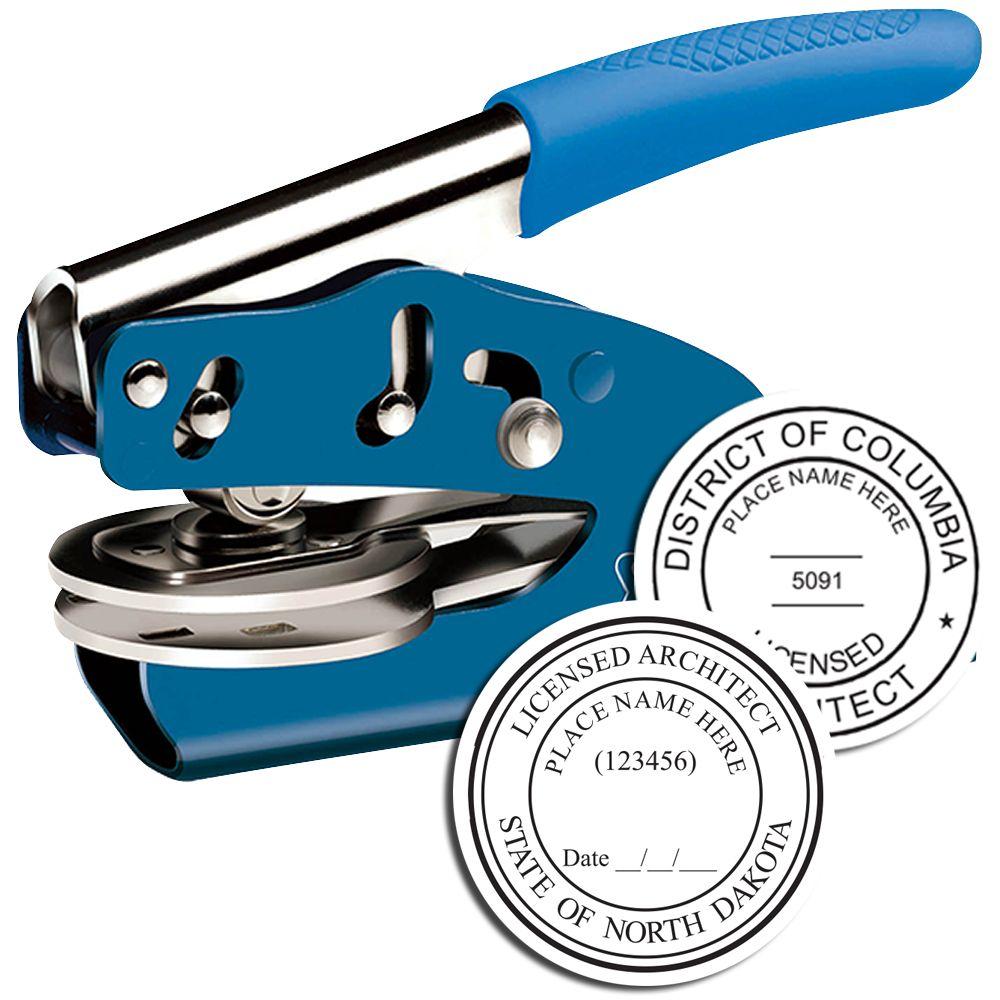
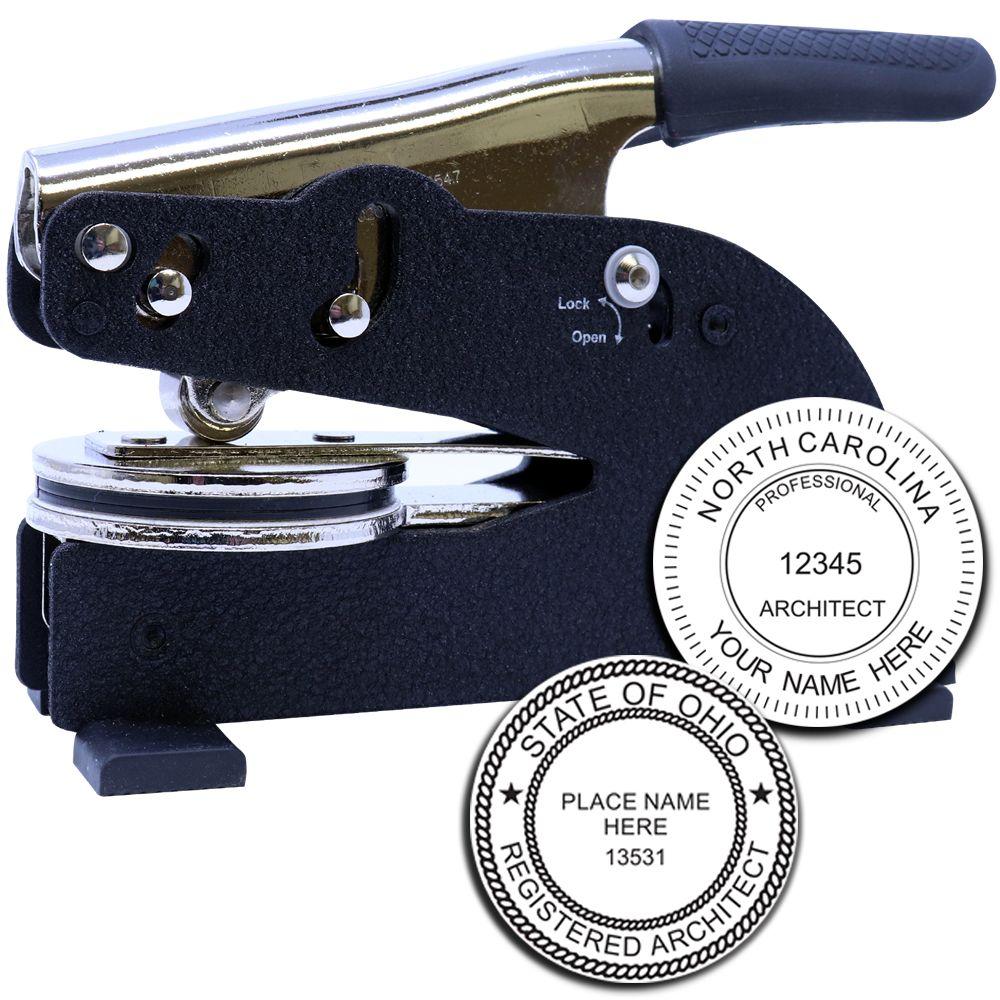
The rule does not name a device type. It says you shall “procure a seal”, that the seal shall be “imprinted” on technical submissions, and, in § 3413.7, that you sign “across the printed image of the seal.” Embosser, rubber stamp, self-inking stamp and computer-generated image are none of them named, and none of them is prohibited. What the text does require is an image that prints: a raised impression alone leaves no printed image to sign across and does not survive reproduction on a permit set. So an inked stamp or a drawn image placed in the file is the safe buy, and an embosser cannot carry the job by itself. The rule does not address owning an embosser or pressing one beside a compliant inked imprint; that is silence, not permission, and a raised device carrying the same required elements invites an argument that it is the seal. A firm name or a neutral device on the embosser avoids the question.
Signing and dating
You sign across the seal, and you may sign by hand or electronically. Section 3413.7 reads: “The licensed architect, when affixing his or her seal to any technical submission or any other instruments of services, shall affix his or her name, by manual signature or electronic signature, across the printed image of the seal.” A manual signature is defined at § 3499.1 as “the handwritten name of a person applied to a document”, and Signature is defined to include either form. No date is required. Chapter 34 nowhere asks for a seal date, a signature date or an expiration date, and we checked every section of the chapter for the word seal: only §§ 3411 and 3413 use it.
The sentence and the picture it points to do not say the same thing
17 DCMR § 3413.1 does two things in two sentences. First it names three contents, including the words “LICENSED ARCHITECT-DISTRICT OF COLUMBIA.” Then it says the seal “shall comply in all respects, including size and format, with the specimen shown below.” The specimen reproduced in the rule does not carry those words. It is a two ring design: DISTRICT OF COLUMBIA curves around the top of the outer ring and ARCHITECT around the bottom, with a star at each side; a placeholder for the registrant’s name curves around the top of the inner ring and REGISTERED around the bottom; a placeholder license number sits between two horizontal rules in the center.
So the artwork says REGISTERED where the sentence says LICENSED, and it puts DISTRICT OF COLUMBIA in the outer ring rather than hyphenated to the profession. This is not a transcription slip in one printing. We pulled the adopted rule filed for the May 9, 2008 version and the adopted rule filed for the current August 17, 2012 version from the Office of Documents and compared them: the sentence is word for word identical in both and the specimen image is the same picture in both. The 2012 rulemaking changed only § 3413.7, replacing the handwritten signature requirement with manual or electronic signature and adding the four electronic signature criteria.
What that means when you order. The second half of § 3413.1 is the mandatory one, because it demands conformity in all respects, and it is also the only place any layout or size information exists. A die cut to the specimen already carries the jurisdiction and the profession on its face. A die cut to the literal words of the first sentence produces a legend that appears nowhere in the rule and matches no published artwork. Neither the chapter nor the board has published anything reconciling the two, and there is no separate seal detail sheet: Appendix A at 17 DCMR § 3498 is a training unit schedule.
One more trap sits in § 3413.6. A District seal is not simply yours to keep. On revocation or suspension you have thirty days to surrender the seal to the secretary of the Board, and on a suspension the Board returns it to you when the suspension ends. Replacing a surrendered seal by quietly ordering a duplicate is not a repair; the rule also forbids using the seal for any purpose after the effective date of the suspension or revocation.
Which documents must be sealed
All technical submissions, defined at § 3499.1 as “studies, designs, drawings, specifications, and any other technical documentation prepared in the course of the practice of architecture.” Section 3413.2 places the imprint on each design and each drawing, on the cover and index pages identifying each set of specifications, and on the cover page and index, if applicable, of all other technical submissions. Section 3413.8 adds that all technical submissions and other instruments of service shall be identified as architecture documents. Two prohibitions travel with the duty: § 3413.4 bars sealing work you are not competent to perform, and § 3413.5 and § 3411.15 bar sealing work not prepared by you or under your direct supervision, with a narrow allowance in § 3411.15 for portions prepared under another licensed architect in your employ or firm that you have reviewed and coordinated. There is no preliminary or draft exemption in the chapter.







Electronic and digital seals
Electronic signing is expressly allowed and the standard is a four-part functional test, not a named product. Section 3413.7 requires that an electronic signature be unique to the person using it, capable of verification, under the sole control of the person using it, and linked to a document in such a manner that the electronic signature is invalidated if any data in the document are changed. Section 3499.1 defines an electronic signature as “a digital authentication process which is attached to, or logically associated with, an electronic document.” No certificate authority, no file format and no vendor is specified. This language entered the chapter in the final rulemaking effective August 17, 2012; before that date § 3413.7 required a handwritten signature, so guidance written from the 2008 text is stale.
Renewal, lapse and retirement
Discipline, not expiration, is what the rule addresses. Section 3413.6: when a license is revoked or suspended, the architect “shall surrender his or her seal to the secretary of the Board within a period of thirty (30) days” after the action takes effect; on a suspension the seal is returned when the suspension period expires; and “the seal shall not be used for any purpose after the effective date of any suspension or revocation.” An architect license expires at midnight on April 30 of each even numbered year under § 3407.1, and an architect on inactive status may not practice under § 3409.2, but neither section, nor § 3408 on renewal, nor § 3413 says anything about surrendering or destroying a seal on lapse, inactive status or retirement, and nothing states whether a license number survives reinstatement. Not addressed; we checked §§ 3407 through 3409 and 3413 and the general rules chapter at 17 DCMR Chapter 33.
Firm requirements
The firm needs its own license, but not its own seal. D.C. Official Code § 47-2853.65(a) bars any firm, franchise, partnership, association or corporation from offering or performing professional design services in the District without a professional design firm license, and § 47-2853.65(c) provides that “No person shall sign and stamp a professional design document on behalf of the professional design firm except an architect, interior designer, or landscape architect licensed in the District.” The stamping is therefore still yours, under your individual seal. Section 47-2853.66(a) requires the firm to be under the responsible charge of at least one licensed member serving in that capacity at one office only, and 17 DCMR § 3411.14 requires each District office where drawings, specifications or reports are prepared to have a licensed architect regularly employed there who directly supervises the work. No statute or rule requires a firm license number on the drawing or a separate firm seal.
What to check before you order
Order to the specimen image printed in 17 DCMR § 3413.1, not to a written description, because the rule states no diameter, ring width or type height anywhere and the picture is the only layout authority. Give your supplier the two ring artwork with DISTRICT OF COLUMBIA above and ARCHITECT below in the outer ring, a star at each side, your name in the inner ring above and REGISTERED below, and your license number between two rules in the center. Ask for an inked stamp or self-inking stamp rather than an embosser alone: § 3413.2 wants the seal “imprinted” and § 3413.7 makes you sign “across the printed image of the seal”, which a raised impression does not give you. If you want a raised seal for the office wall or for firm letterhead, keep the required elements off it so it cannot be mistaken for the instrument the rule requires. You do not need a date block, an expiration date or a firm line on the die, and if you sign electronically you need no second device at all, only a signature meeting the four tests in § 3413.7.
Browse architect stamps and seals.
Frequently asked questions
Is an architect seal required in the District of Columbia?
Yes, and the duty sits in board rule rather than statute. D.C. Official Code Title 47, Chapter 28 licenses architects and professional design firms and never mentions a seal for an individual architect. The command is 17 DCMR § 3413.1: “Each licensed architect shall procure a seal, which shall contain the name of the licensed architect, his or her license number, and the words LICENSED ARCHITECT-DISTRICT OF COLUMBIA.” Section 3413.2 adds the trigger: “The seal shall be evidence of the authenticity of the document and shall be imprinted on all technical submissions.” Chapter 34 states no project threshold and no exempt class of work.
Should my DC seal read LICENSED or REGISTERED?
Both words are in the rule, in different halves of the same sentence. The text calls for LICENSED ARCHITECT-DISTRICT OF COLUMBIA; the specimen the sentence makes mandatory reads REGISTERED, with DISTRICT OF COLUMBIA and ARCHITECT in the outer ring. The conformity clause is the operative one, because it demands compliance in all respects and it carries all the layout and size information there is. A die cut to the specimen matches published artwork. A die cut to the literal words of the first sentence matches none.
What size is a DC architect seal?
No measurement is published. Section 3413.1 fixes size by reference to a picture rather than a figure, and no diameter, ring width or type height appears anywhere in Chapter 34. Appendix A at 17 DCMR § 3498 turns out to be the training unit schedule and says nothing about the seal, and the board page at dlcp.dc.gov publishes no figure either. Order from the specimen artwork, not from a number.
Can I use an embosser for a DC architect seal?
The rule names no device type. It says you shall “procure a seal,” that the seal shall be “imprinted” on technical submissions, and, at § 3413.7, that you sign “across the printed image of the seal.” Embosser, rubber stamp, self inking date stamp and computer-generated image are none of them named and none of them prohibited. What the text does require is an image that prints, and a raised impression alone leaves nothing to sign across and does not survive reproduction on a permit set. So an inked stamp or a drawn image placed in the file carries the job.
Can I keep a raised seal for the office in DC?
The rule does not address owning an embosser or pressing one beside a compliant inked imprint, and that silence is not permission. The practical risk is confusion: a raised device carrying the same required elements invites an argument that it is the seal, which would then fail the imprint and sign-across requirements. Putting a firm name or a neutral device on the embosser instead of the required elements avoids the question entirely.
Where does the signature go on a DC sealed document?
Across the seal. Section 3413.7 reads: “The licensed architect, when affixing his or her seal to any technical submission or any other instruments of services, shall affix his or her name, by manual signature or electronic signature, across the printed image of the seal.” A manual signature is defined at § 3499.1 as “the handwritten name of a person applied to a document,” and Signature includes either form.
Does the District require a date with the seal?
No. Chapter 34 nowhere asks for a seal date, a signature date or an expiration date. Only §§ 3411 and 3413 use the word seal anywhere in the chapter, and neither imposes a dating duty.
Which documents get the DC architect seal?
All technical submissions, defined at § 3499.1 as “studies, designs, drawings, specifications, and any other technical documentation prepared in the course of the practice of architecture.” Section 3413.2 places the imprint on each design and each drawing, on the cover and index pages identifying each set of specifications, and on the cover page and index, if applicable, of all other technical submissions. Section 3413.8 adds that all technical submissions and other instruments of service shall be identified as architecture documents. Two prohibitions travel with the duty: § 3413.4 bars sealing work you are not competent to perform, and § 3413.5 with § 3411.15 bars sealing work not prepared by you or under your direct supervision, with a narrow allowance for portions prepared under another licensed architect in your employ or firm that you have reviewed and coordinated. There is no preliminary or draft exemption.
What are the DC electronic signature requirements?
A four-part functional test, not a named product. Section 3413.7 requires an electronic signature to be unique to the person using it, capable of verification, under the sole control of the person using it, and linked to a document in such a manner that the electronic signature is invalidated if any data in the document are changed. Section 3499.1 defines an electronic signature as “a digital authentication process which is attached to, or logically associated with, an electronic document.” No certificate authority, file format or vendor is specified. This language entered the chapter in the rulemaking effective August 17, 2012, so guidance written from the 2008 text is stale.
What happens to my DC seal if my license is suspended?
You surrender it. Section 3413.6 provides that on revocation or suspension the architect “shall surrender his or her seal to the secretary of the Board within a period of thirty (30) days” after the action takes effect, that on a suspension the seal comes back when the suspension period expires, and that “the seal shall not be used for any purpose after the effective date of any suspension or revocation.” Quietly ordering a duplicate is not a repair, because the use bar stands on its own.
Does my DC seal need replacing when my license expires?
An architect license expires at midnight on April 30 of each even numbered year under § 3407.1, and an architect on inactive status may not practice under § 3409.2. Neither those sections, nor § 3408 on renewal, nor § 3413 says anything about surrendering or destroying a seal on lapse, inactive status or retirement, and nothing states whether a license number survives reinstatement. Sections 3407 through 3409, section 3413 and the general rules at 17 DCMR Chapter 33 all read the same way.
Does a DC architecture firm need its own seal?
The firm needs its own license, but not its own seal. D.C. Official Code § 47-2853.65(a) bars any firm, franchise, partnership, association or corporation from offering or performing professional design services in the District without a professional design firm license, and § 47-2853.65(c) provides that “No person shall sign and stamp a professional design document on behalf of the professional design firm except an architect, interior designer, or landscape architect licensed in the District.” Section 47-2853.66(a) requires the firm to be under the responsible charge of at least one licensed member serving in that capacity at one office only, and 17 DCMR § 3411.14 requires each District office where drawings, specifications or reports are prepared to have a licensed architect regularly employed there who directly supervises the work. No firm license number goes on the drawing.








