
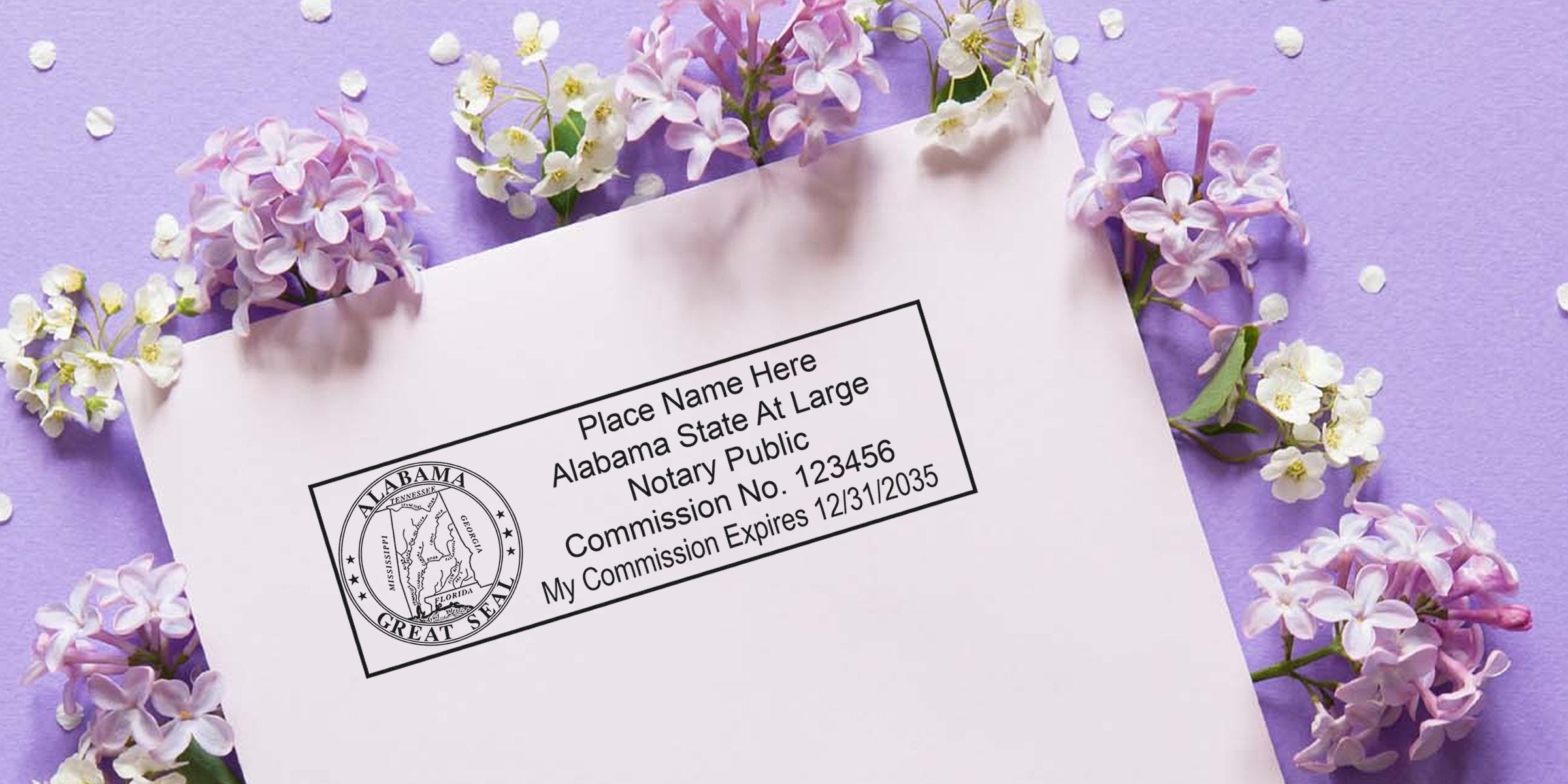
If you’re curious about Alabama notary stamp requirements, you’ve come to the right place. Getting the right stamp is a key step in serving your community as a notary public in Alabama. But it’s easy to feel overwhelmed if you’re not sure what the rules are or which products meet state guidelines. Let’s clear that up together so you can get your official stamp in hand and start performing notarial acts with confidence.
Think of this as your go-to resource. By the time you’re finished reading, you’ll know everything from the basics of what goes on your seal to the importance of using a trusted supplier like Acorn Sales. You’ll also learn a few pointers on how to properly use and protect your stamp, plus how to handle commission renewals so you’re always on the right side of state rules. Ready to dive in? Let’s go.
Understand Alabama notary stamp requirements
Before you explore different notary stamps, it helps to have a quick understanding of the laws and traditions that shape Alabama’s notarial process. As a notary, you’ll be confirming identities, witnessing signatures, and ensuring that documents meet the legal standards the state has in place. The stamp (or seal, if you prefer an embosser) is your official symbol of authority.
Because Alabama law recognizes the stamp as a clear sign of authenticity, it’s not something you can just buy haphazardly. There are specific guidelines on what your stamp should include, like your name, your title as a notary public, and a reference to the state of Alabama. Depending on local county rules, you might need additional elements, but in most cases the basics are straightforward.
Your stamp is more than just a formality. Think of it as your personal notarial signature. It effectively states, “Yes, I am legally commissioned to perform notarial acts in Alabama, and this document is officially notarized.” If you skip any essential element or fail to comply with the relevant laws, you could run into problems like rejected documents or, in severe situations, trouble with the Secretary of State’s office.
Here’s a general overview of what Alabama typically expects to see:
- Your full name as it appears on your commission.
- The words “Notary Public.”
- A reference to “State of Alabama.”
- Any additional elements required by local legislation.
These requirements help confirm that you’re a valid notary. People relying on your notarial act want reassurance that the stamp is legitimate and provided by someone with actual commissioning. So, if you’ve been wondering how to get all of these details right, no worries. We’ll step through the guidelines that keep your stamp and your notary practice in good standing.
Fulfill official guidelines
In Alabama, the official notary guidelines come from the Secretary of State and sometimes from the probate judge in your county. It’s helpful to think of these guidelines as a checklist that starts with applying for your notary commission and ends with choosing a state-compliant seal or stamp.
Focus on your commission
Before you can even use a stamp, you have to secure your notary commission. Requirements can vary by county, but generally you need to:
- Be at least 18 years old.
- Be a resident of Alabama or have an established place of employment in the state.
- Fill out an application through your county probate office or the Secretary of State’s office.
- Purchase a surety bond (often around $25,000 in Alabama, but always verify current requirements).
- Pay any required application fees.
Once you’ve completed these steps, you’ll receive your notary commission certificate. This certificate is your cue that you’re officially authorized to provide notarial services. At this point, you’re ready to get your stamp or seal.
Clarify local mandates
Every county in Alabama might add small twists to how they handle notary registrations. For instance, some counties have specific instructions about bonding companies or where to send your application forms. Others might have guidelines on record-keeping or the color of ink you should use for your notary acts.
It’s smart to double-check your county’s mandates, especially if you’re applying for the first time. The more you’re aware of local rules, the easier it is to avoid fines or complications later. If you’re unsure, contact the probate judge’s office in your county or consult the Secretary of State’s website for more information.
Keep track of your renewal schedule
At some point, your commission will expire, which means you’ll need to renew. If you renew on time, you can maintain continuous notary authority without any interruptions. Missing your renewal deadline can lead to a lapse, forcing you to reapply as a brand-new notary. Staying current helps you keep consistent legal standing.
Choose your stamping device
Now that you’re fully commissioned and familiar with the rules, it’s time to pick a stamping device. Although it may sound minor, your stamp choice can significantly affect your day-to-day notary work. Do you often travel to clients’ offices? Are you mostly working from home? Do you have a preference for a certain ink color?
Consider different stamp types
Alabama law allows you to use a traditional inked stamp or an embosser seal. Both are valid, but they serve your needs a bit differently.
- Self-inking stamps: These stamps have an internal ink pad, so you just press down and mark. They’re known for convenience and speed. If you handle a high volume of notarizations, you might love the simplicity.
- Pre-inked stamps: These hold the ink within the rubber die. They tend to produce crisp, clear images and can last for thousands of impressions before needing a refill.
- Embosser seals: This type raises an impression on the paper. An embosser can add an official aesthetic to documents, but some people find them less convenient. Depending on the paper thickness, an embossed mark can sometimes be difficult to scan or photocopy. However, they’re still widely used and recognized.
Weigh practicality and personal style
Your personal preferences matter here because it’s something you’ll handle all the time. Ask yourself:
- Do you need multiple colors of ink?
- Would you rather press a quiet self-inking stamp, or is the extra pressure of an embosser no big deal?
- How important is portability? Some stamps are compact enough to fit seamlessly in a purse or briefcase.
If you tend to store your stamp at home or in an office and rarely move it, then size might not be a top concern. But if you’re traveling often, you’ll appreciate a smaller, less bulky tool. Also, certain industries might have a preference for a particular style. Ultimately, pick the device that feels easiest for you to use properly.
Don’t forget about durability
Stamps go through a lot of wear and tear. You’ll press them on many documents over the years, so longevity does matter. One reason many notaries across the country turn to Acorn Sales is because of our track record for quality. We’ve been making stamps and seals for over 60 years, and we focus on materials that can stand up to everyday use. A long-lasting, easy-to-use stamp can save you from frustration and frequent replacements down the road.
Comply with design specifics
No matter which type of stamp you settle on, you need to confirm that it meets Alabama’s requirements for design details. You might see some differences from state to state, but in Alabama, the essentials are straightforward. Typically, you should see your exact name and your official title, “Notary Public.” Most stamps also include “State of Alabama” directly on the face so that anyone reading the notary imprint can tell which jurisdiction applies.
Essential text and formatting
When you order a stamp, verify that it includes:
- Your name as listed on your commission.
- Your official title, like “Notary Public.”
- Reference to “State of Alabama.”
- Optionally, your commission expiration date if your county or the Secretary of State advises it.
It’s also wise to be sure your stamp doesn’t omit or alter your name and title. For instance, if your official commission has you listed as “Jane Q. Doe,” you shouldn’t order a stamp that just says “Jane Doe.” If you do, a strict interpretation might invalidate a notarization or raise questions about identity. Accuracy is everything in notarial work, so always double-check that your details match exactly.
Consider shape and ink color
Most commonly, notary stamps come in a rectangular design, but some notaries prefer round stamps. As long as the text is readable and meets Alabama guidelines, the shape is usually up to you. The same goes for ink color. Black ink is the most common because it’s easy to scan, but sometimes notaries branch out into blue ink to distinguish an original document from a photocopy.
Confirm with local authorities
If you’d rather be extra cautious, you can confirm your stamp design with your local probate office. Let them know which supplier you plan to use and show them a mockup of the stamp. If they see any issues with the layout, they can point it out before you finalize your purchase. This small step makes it that much easier to ensure your notarial acts are legally valid from day one.
Ensure proper usage
Getting an Alabama-compliant stamp is only half the story. Knowing how to use it correctly is what will keep your notarizations rock-solid. Each time you notarize a document, be sure to follow the standard steps: verify the signer’s identity, confirm willingness or mental competence (if relevant), and fill out any required logs or notarial certificates.
Keep documents legible
When you affix your stamp, press firmly to get a crisp imprint. If the document is on an uneven surface, you might get a partial impression, which can raise doubts about authenticity. For embosser seals, be sure the raised impression is visible on both sides so it’s unquestionably clear. If your stamp doesn’t come out clearly, don’t just try to stamp over it again. That can lead to a messy double-image. Instead, note the misstamp in your notarial journal (if required) and redo the stamping on a clean area. The last thing you want is confusion about whether your notarization is legitimate.
Secure your stamp
You’ll want to keep your stamp in a safe place. Some notaries store it in a locked drawer. Others keep it in a desk that stays in a locked office. Either way, remember that you are personally responsible for every document bearing your notarial impression. If someone else gets hold of your stamp and uses it fraudulently, you could be implicated. That’s why security matters.
Log your acts
While Alabama doesn’t always demand a formal journal for notarial acts, it’s a very good practice to keep one. Each entry can include the date of notarization, the type of document, the signer’s name, and the type of identification presented. This record becomes a safety net if disputes ever arise or if you need to recall details about a past notarization. Plus, it can show you’re serious about maintaining professional standards.
Renew your commission
Your notary commission isn’t permanent. In Alabama, you’ll typically need to renew every four years, but keep an eye on local specifics to confirm the exact timeframe. Renewing on time prevents any gaps in your authority. If your commission lapses, you lose the ability to perform notarial acts until you get officially re-commissioned.
Mark your expiration
It’s smart to note your expiration date somewhere visible, maybe even on your personal calendar or in a reminder app. That way, you can start the renewal process at least a month or two before your commission expiry. Some notaries set up automatic reminders that alert them every few weeks as the date gets closer. Since it’s often the same steps as your initial application (like paying a fee and possibly renewing your surety bond), planning ahead will save you any last-minute headaches.
Recheck your stamp details
When you renew, confirm that your address and name are still accurate. If anything has changed, like getting married and taking a new last name, you might need a stamp that reflects your updated identity. Remember, accuracy is key. Using a name that doesn’t match your official commission can lead to invalid notarizations or legal disputes.
Maintain your records
In some counties, you may have to file your renewed commission certificate or an updated bond with the probate court. Failing to file could mean you’re not recognized as a valid notary, even if you think you’re all set. Double-check your county’s requirements so you never miss a step.
Shop with Acorn Sales
Purchasing your Alabama notary supplies from a trustworthy source ensures your stamp meets all legal standards, holds up over time, and arrives quickly. That’s why so many notaries turn to Acorn Sales. We’ve been a stamp and seal maker for over 60 years, offering top-quality products that align with each state’s requirements (including Alabama). We pride ourselves on super fast service, and we stay up-to-date on the latest regulations.
One-stop shop for stamps
You can explore a variety of alabama notary supplies right on our website. You’ll find self-inking and pre-inked stamps, plus embossers, ink refills, and related accessories. Because we specialize in state-compliant notary products, you don’t have to spend hours researching whether your purchase will pass muster with Alabama law. We handle that part for you.
Personalize your seal
If you need your commission date or other text integrated into your stamp, no problem. Our team makes it simple to personalize your seal so it reflects your name exactly as it appears on your commission. This personalization helps you avoid any mismatch issues that could potentially invalidate a notarization. If you have questions about the layout, we’re happy to provide guidance.
Benefit from our experience
After six decades in the business, we’ve seen the notary requirements evolve. We’re constantly refining our products to ensure they stay in line with current legislation, and we’re always ready to answer your questions. Whether you’re renewing a commission or applying for the first time, our customer support team is here to point you in the right direction.
Wrap up and next steps
That covers the core of Alabama notary stamp requirements. Hopefully, you feel confident about what it takes to become a notary in the state, how to pick a suitable stamp, and how to keep your commission in good shape. The process isn’t complicated once you know the rules and have a reliable supplier on your side.
Your next step? If you haven’t already, lock in your notary commission or plan for your renewal. Then snag a high-quality stamp or seal you trust. If you’re still weighing your options, you can always reach out to Acorn Sales for more personalized help. Now go forth and notarize with peace of mind.
Frequently Asked Questions
Do I really need a notary stamp in Alabama?
Yes, a notary stamp (or seal) is essential for validating your notarial acts. It serves as proof that you’re an officially commissioned notary in the state.
What color ink should I use for my stamp?
Black ink is the most common choice due to its clarity when photocopied or scanned, but blue ink is sometimes used to distinguish originals from copies. Alabama law doesn’t strictly dictate color, so choose what works for you unless your county says otherwise.
How long does an Alabama notary commission last?
Typically, your commission is valid for four years. However, it’s important to check with your local probate office to confirm deadlines and any specific renewal steps in your county.
Can I use an embosser instead of an inked stamp?
Absolutely. Alabama recognizes both embossers and inked stamps, as long as they include the required information. Keep in mind an embosser can be harder to read on photocopies, so some people also opt for an inked stamp.
Where can I find quality Alabama notary supplies?
You can find everything you need at Acorn Sales. We’ve been making state-compliant notary stamps and seals for over six decades, and we’re happy to help you pick out the perfect device. Check out our selection of alabama notary supplies to get started.








