

Written by Acorn Sales Company, manufacturing stamps and seals since 1964 · Reviewed by Holly R, VP of Sales and Marketing at Acorn Sales, against the State Board of Registration for Professional Engineers and Surveyors and Ohio Rev. Code § 4733.14 on 21 September 2026 · Updated 21 September 2026
Ohio prescribes two things on the face of a PE seal and nothing else: your name as registered and the legend “Registered Professional Engineer.” Ohio Admin. Code 4733-23-01(A) lists those two items, and Ohio Rev. Code § 4733.14 matches it word for word. The word that trips buyers is Registered. Ohio kept it when most states moved to “Licensed,” so a die reading Licensed Professional Engineer does not carry the legend the statute prescribes.
The registration number is customary, not required. Nearly every Ohio seal in circulation shows it, and including it breaks no rule, but a supplier who tells you the number is mandatory in Ohio is stating something the code does not say. Treat it as a choice.
There is also no Ohio seal size. The statute authorizes a seal of the design authorized by the board, and the board has never published a design or a dimension. Ohio Admin. Code chapter 4733-23 is a single rule, chapter 4733-21 covers only posting the certificate, and the board’s Laws & Rules page at peps.ohio.gov links to nothing but Ohio Rev. Code chapter 4733 and Ohio Admin. Code chapter 4733. Any diameter quoted to you as the Ohio standard is a trade convention. Acorn cuts this seal to 2 inches. That is our production record rather than an Ohio rule; the board still publishes neither a design nor a dimension.
Ohio PE seal requirements at a glance
| Requirement | Ohio rule | Source |
|---|---|---|
| Seal required | Yes | Ohio Rev. Code § 4733.14 |
| Required elements | Your name as registered, The legend “Registered Professional Engineer” and A design authorized by the board | Ohio Admin. Code 4733-23-01(A) |
| Size and shape | Acorn cuts this seal to 2 inches, and that is a production record rather than a published rule. | Acorn Sales production record, Ohio professional engineer seal |
| Device allowed | Two routes are legal. | Ohio Rev. Code § 4733.14 |
| Signature and date | The registrant signs and dates next to the stamped seal. | Ohio Admin. Code 4733-23-01(A) and (C) |
| What must be sealed | All plans, specifications, plats, reports and all other engineering or surveying work product issued by a registrant. | Ohio Rev. Code §§ 4733.14, 4733.18 |
| Electronic seal | Ohio Admin. | Ohio Admin. Code 4733-23-01(D) |
| Renewal and lapse | Registration expires biennially on the last day of December following initial registration or renewal. | Ohio Rev. Code § 4733.15(A) |
| Firm number on documents | A firm, partnership, association, limited liability company or corporation offering professional engineering or professional surveying services in Ohio must hold a certificate of authorization from the board and must designate one or more registrants in responsible charge. | Ohio Rev. Code §§ 4733.16, 4733.15(B) |
| Licensing board | The State Board of Registration for Professional Engineers and Surveyors | Ohio Rev. Code chapter 4733 (§§ 4733.14 seal, 4733.15 renewals, 4733.16 certificate of authorization, 4733.18 exemptions) |
Rules for other states are on PE stamp requirements by state.





Is a seal required in Ohio?
Ohio requires a seal Ohio requires a seal on essentially everything a registrant lets out the door. The duty sits in the statute and is repeated verbatim in the board rule: “Plans, specifications, plats, reports and all other engineering or surveying work product issued by a registrant shall be stamped with the said seal and be signed and dated by the registrant, or bear a computer generated seal and electronic signature and date.” Obtaining the seal is permissive (“Each registrant may upon registration obtain a seal”), but once work product is issued, stamping is mandatory. Ohio Rev. Code § 4733.14 carries the same sentence, so the requirement survives any change to the rule.
What must appear on the seal
- Your name as registered
- The legend “Registered Professional Engineer”
- A design authorized by the board
Ohio does not require the registration number on the seal. Rule 4733-23-01(A) lists the name and the legend and nothing else, and Ohio Rev. Code § 4733.14 matches it word for word. Nearly every Ohio seal in circulation carries the number anyway, and adding it breaks no rule, but a vendor who tells a buyer the number is mandatory in Ohio is stating something the code does not say. The legend wording is fixed and is the one element buyers get wrong: Ohio still says “Registered”, not “Licensed”. A surveyor seal obtained before the April 4, 1985 amendment and reading “Registered Surveyor” stays a legal seal for that registrant. Professional surveyors use the legend “Registered Professional Surveyor”.
Size and shape
Acorn cuts this seal to 2 inches, and that is a production record rather than a published rule. The state publishes no dimension, so the figure below is what we make and ship for Ohio licensees rather than something you can point a reviewer at. Ohio Rev. Code § 4733.14 authorizes a seal of the design authorized by the board, and the board has published neither a design nor a dimension, so any diameter quoted as the Ohio standard is a trade convention. Two inches is ours. What the state publishes: Ohio Rev. Code § 4733.14 authorizes “a seal of the design authorized by the board”, and the board has published no design or dimension. Checked Ohio Admin. Code chapter 4733-23 (the entire chapter is one rule, 4733-23-01), chapter 4733-21 (certificate of registration, which only requires the certificate to be posted), and the board’s Laws & Rules page at peps.ohio.gov, which links to nothing but Ohio Rev. Code chapter 4733 and Ohio Admin. Code chapter 4733. Any diameter a supplier quotes as the Ohio standard is a trade convention, not a board specification.




Embosser, rubber stamp or digital
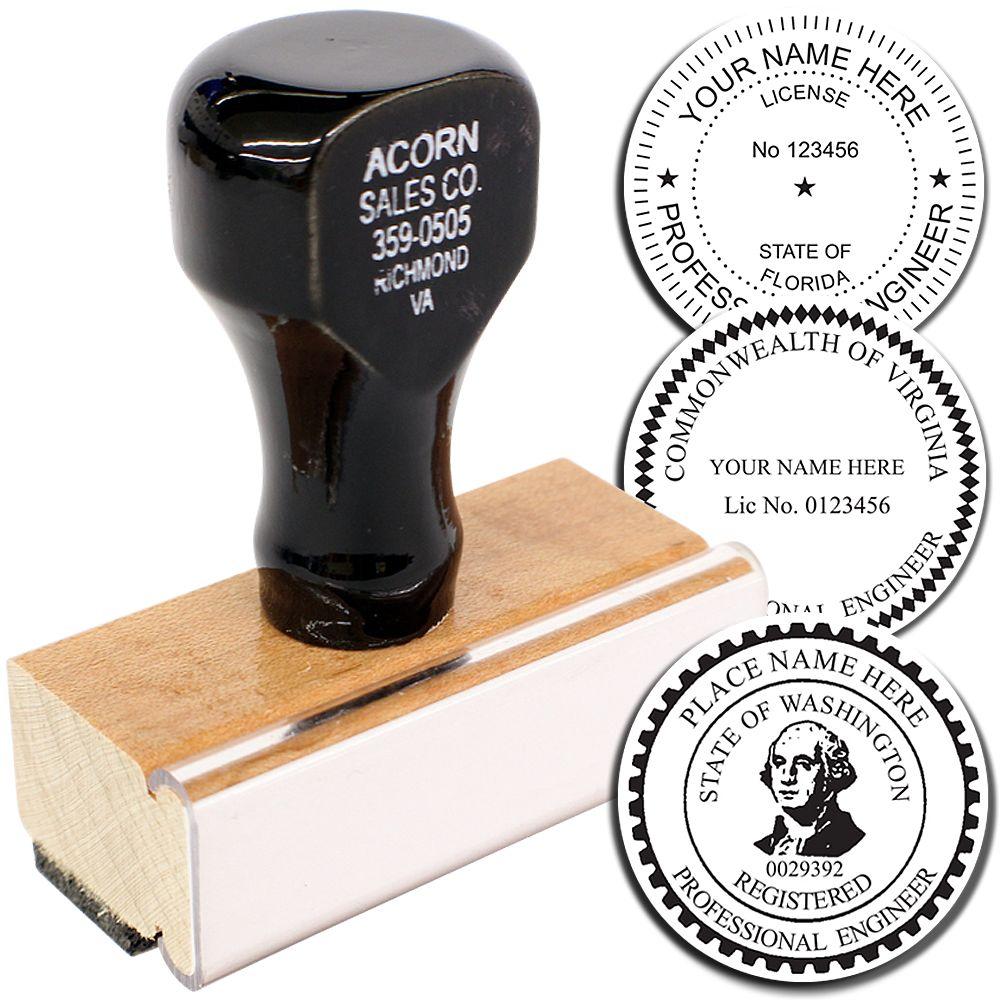
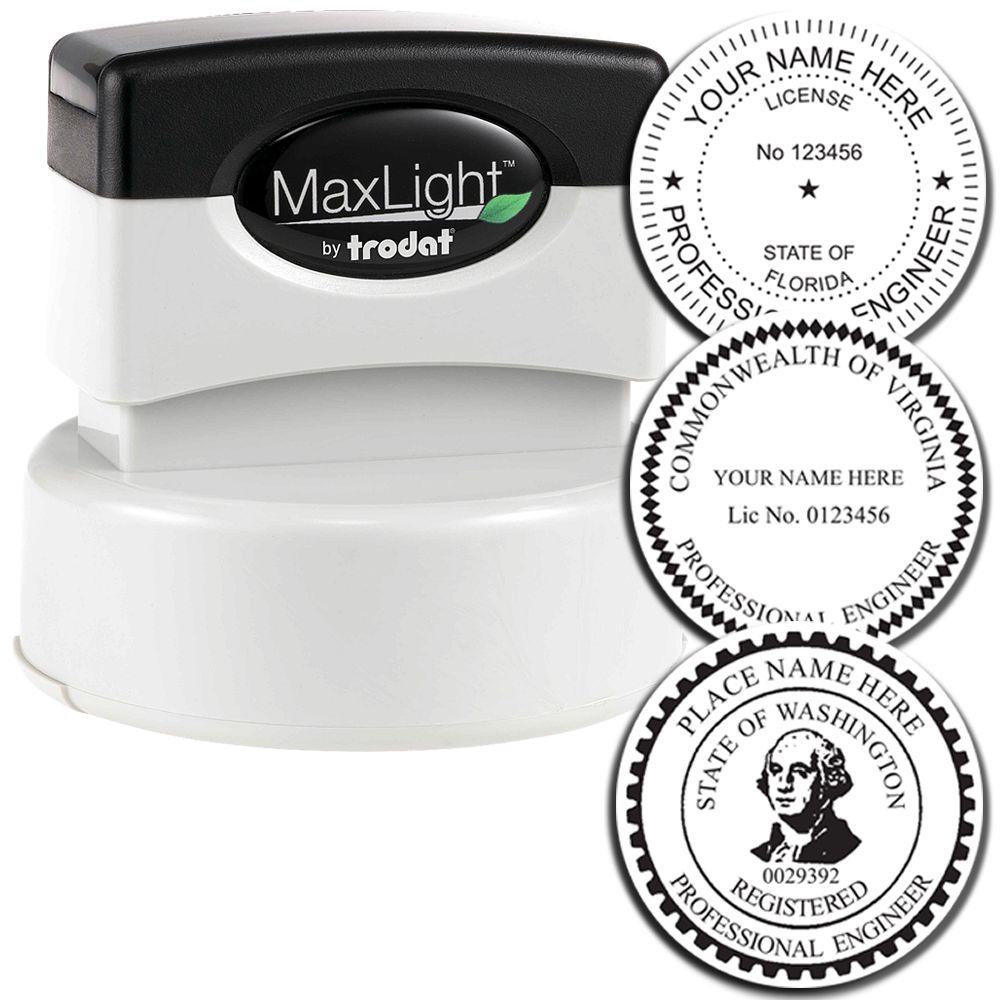
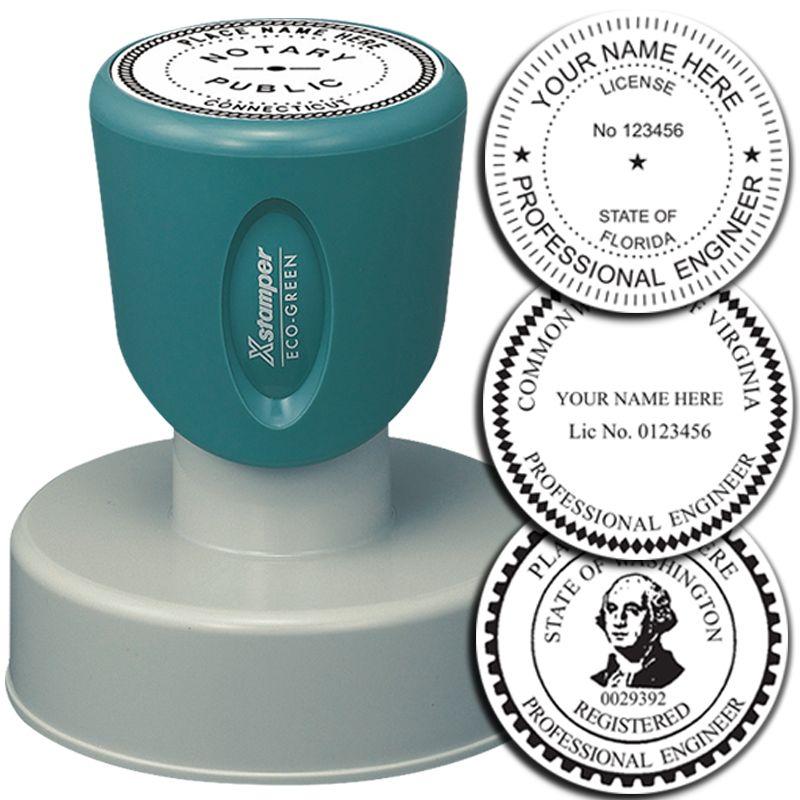
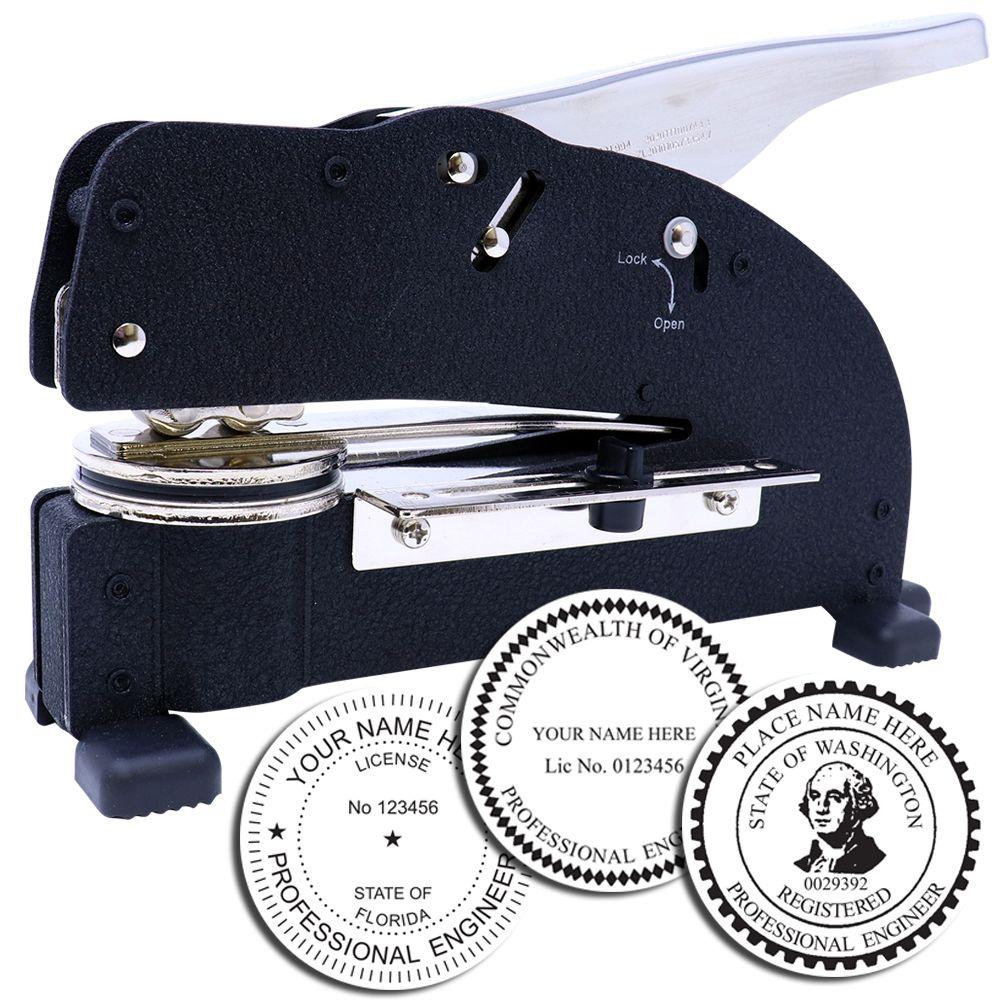
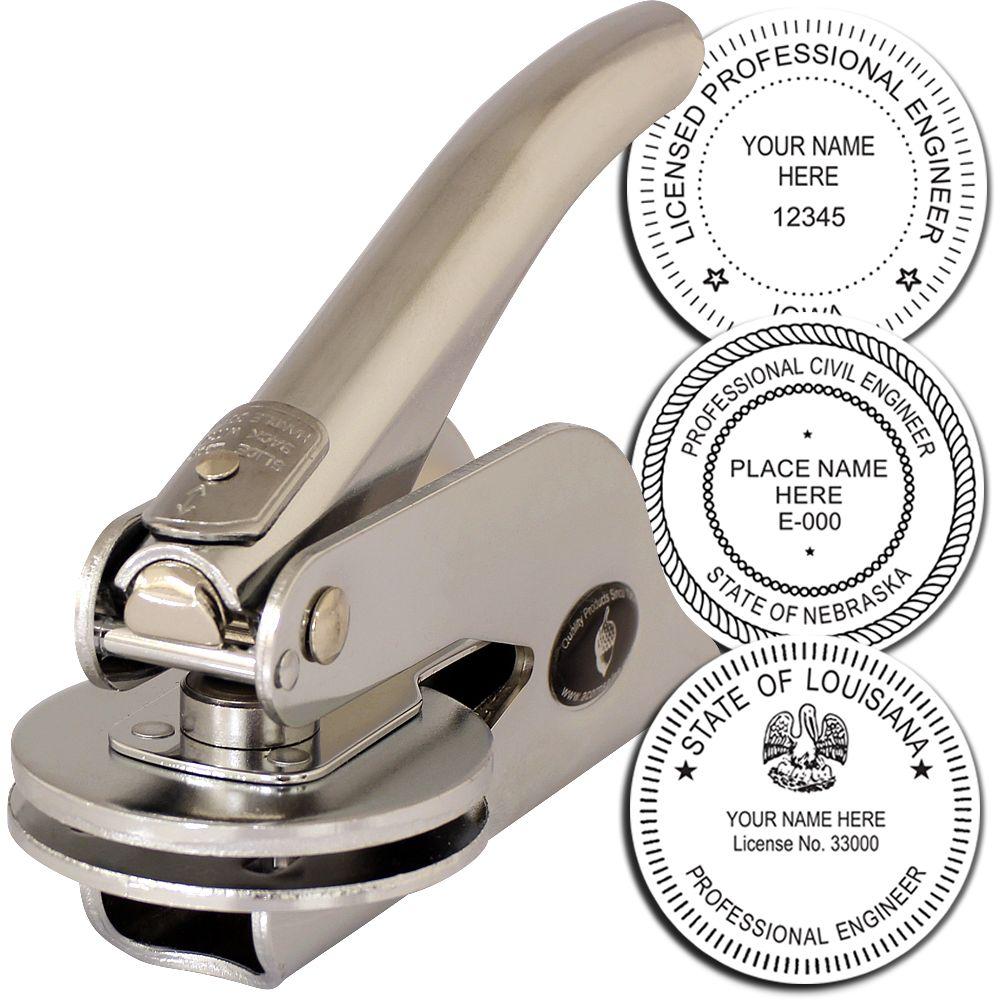
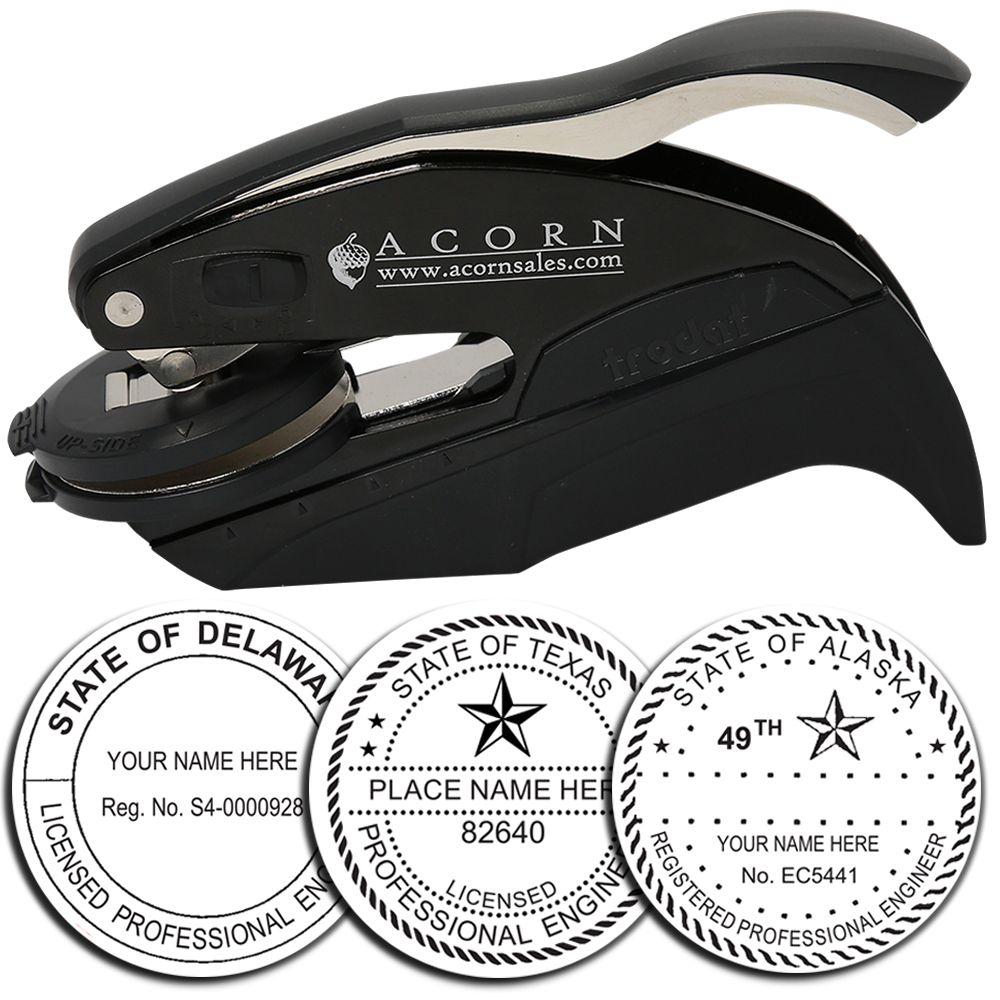
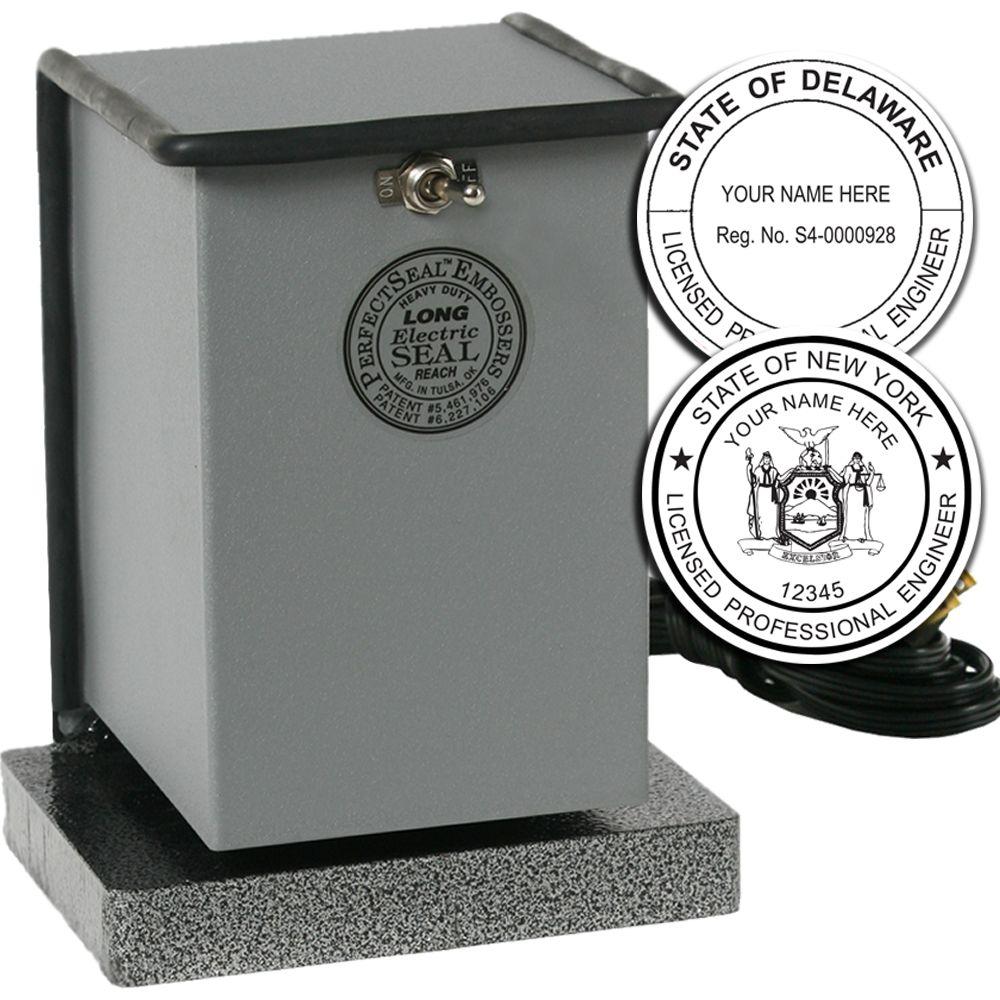
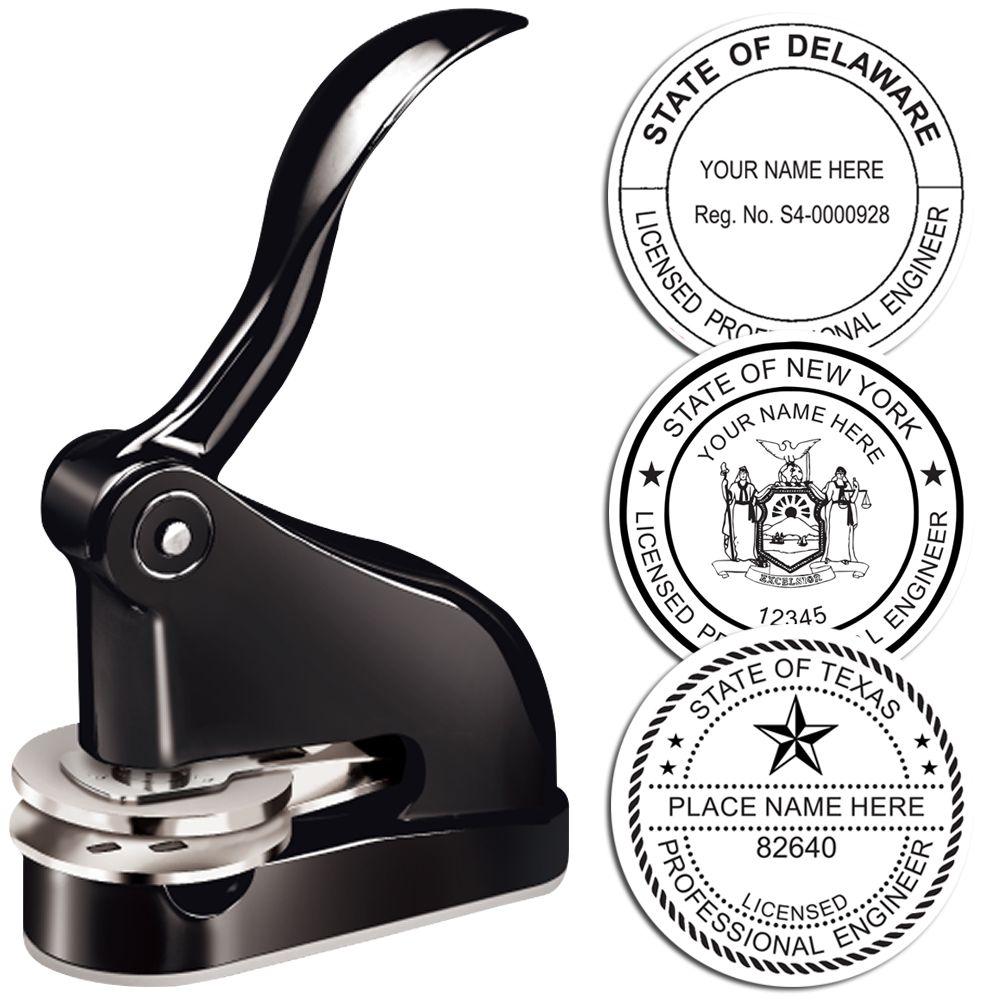
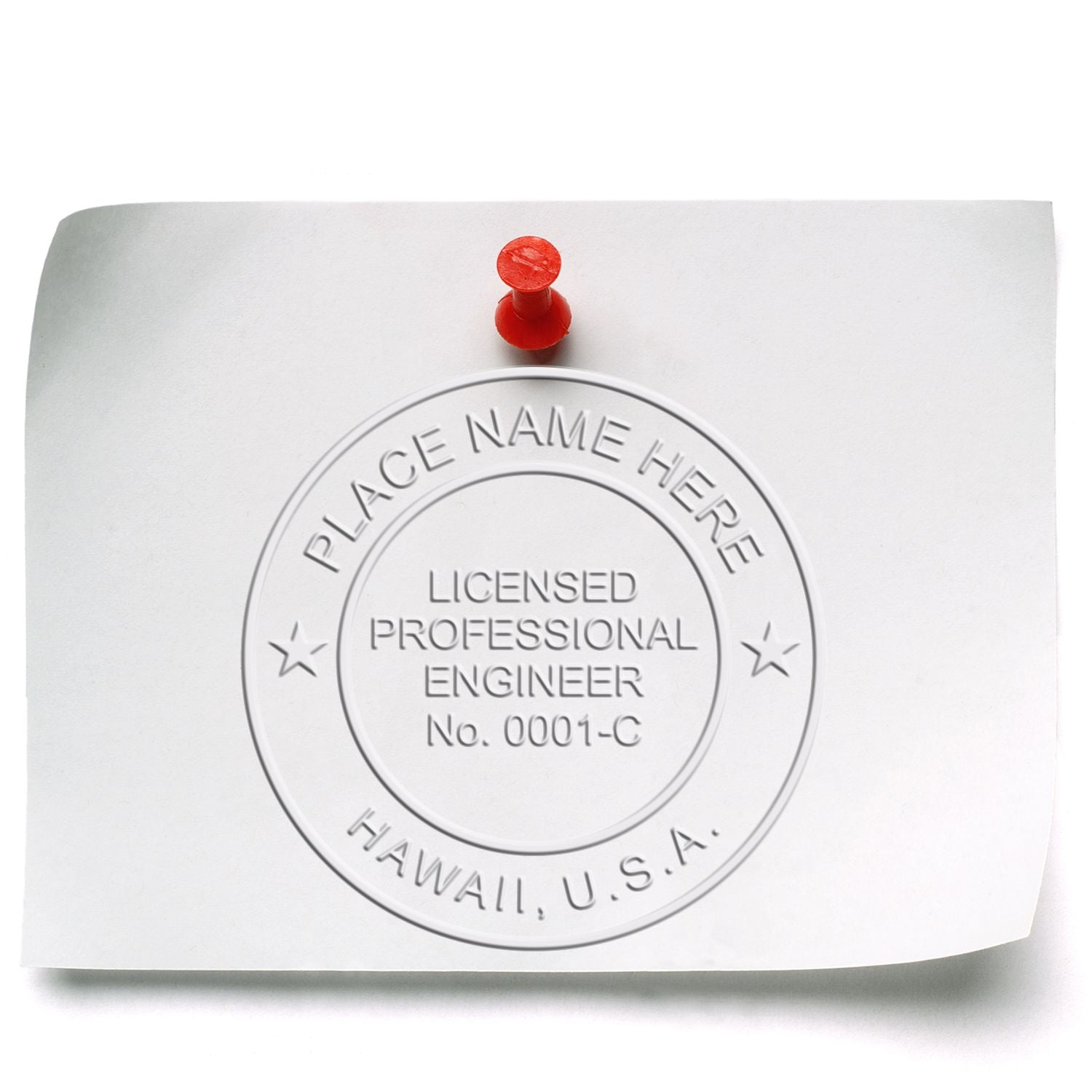
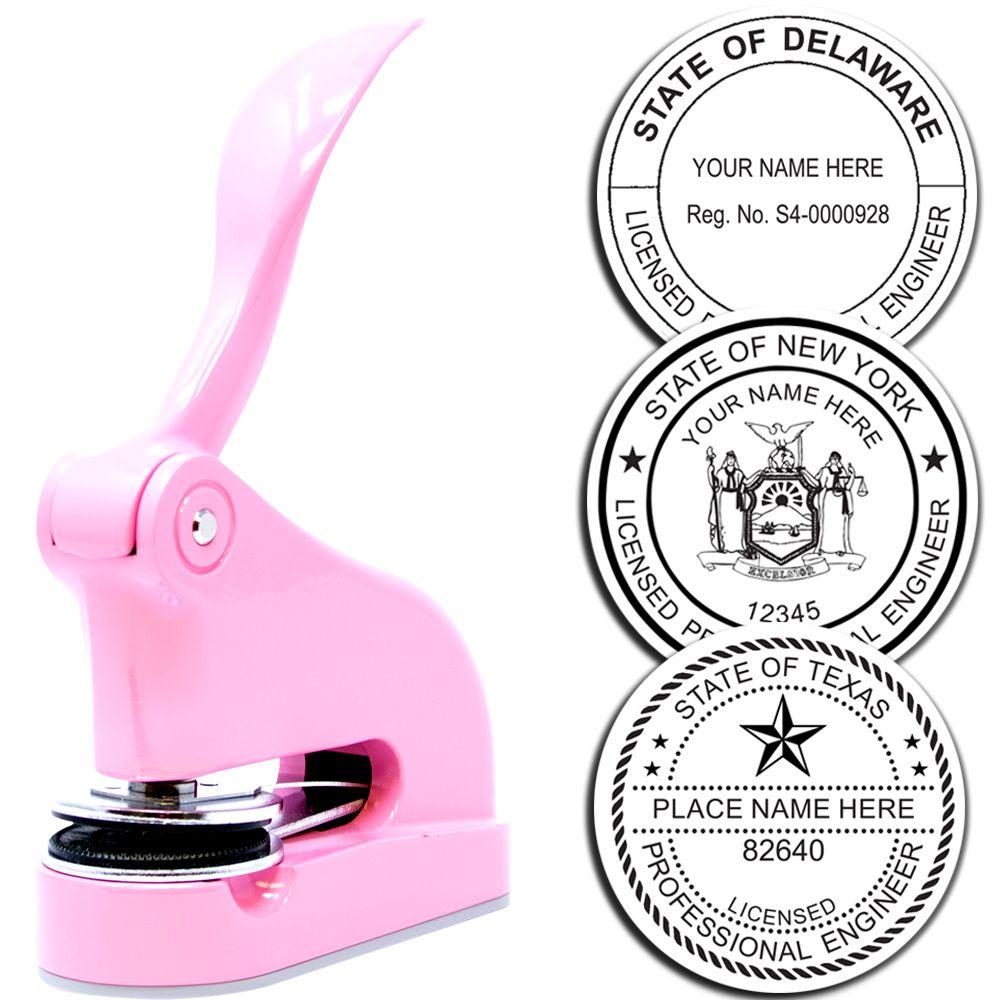
Two routes are legal. A physical device (embosser or inked rubber stamp) applied to the document and then signed and dated by hand, or a computer generated seal carrying an electronic signature and date. The rule draws the line at the pairing, not the device: a stamped seal must be accompanied by a wet signature and date, and a computer generated seal must be accompanied by an electronic signature and date. The safe buy is a self-inking or hand-held rubber stamp, because an embossed impression does not reproduce on a print or a scan and Ohio requires the seal to appear on the issued work product.
Signing and dating
The registrant signs and dates next to the stamped seal. Nothing in Ohio Rev. Code § 4733.14 or Ohio Admin. Code 4733-23-01 requires the signature to cross the seal, and nothing states whether the date is the seal date or the signing date; the rule simply pairs them, so practice is to date the day of signing. There is no provision allowing a facsimile of a handwritten signature on a physically stamped document; the alternative Ohio recognizes is the full computer generated seal plus electronic signature plus date. Affixing the seal is itself a certification: “By affixing their seal to any document, the registrant certifies to the accuracy and completeness of the information contained in the sealed document, and by such action, assumes full responsibility thereof.”
Ohio authorizes a seal design it has never published
Both the statute and the rule say the registrant may obtain a seal “of the design authorized by the board”. The board has not put that design in the Administrative Code. Chapter 4733-23 consists of a single rule, 4733-23-01, and it specifies only two things that must appear: the registrant’s name and the legend. There is no diameter, no ring count, no illustration and no template anywhere in Ohio Rev. Code chapter 4733 or Ohio Admin. Code chapter 4733, and the board’s own Laws & Rules page points to nothing else.
Two practical consequences follow. First, the registration number on an Ohio seal is customary, not required. A buyer who has changed nothing but wants a clean seal can drop it, and a buyer who wants it can keep it. Second, no supplier can truthfully say a particular diameter is what Ohio requires. The common 1-5/8 inch and 2 inch offerings are market conventions carried over from states that do publish dimensions.
What is not negotiable is the legend. Ohio kept the word “Registered” when most states moved to “Licensed”. A stamp reading “Licensed Professional Engineer” does not match the legend the statute prescribes. The same applies on the survey side, where the legend is “Registered Professional Surveyor” and the older “Registered Surveyor” form is grandfathered only for individuals who held that registration before April 4, 1985.
Which documents must be sealed
All plans, specifications, plats, reports and all other engineering or surveying work product issued by a registrant. Ohio writes no preliminary, draft or for-review carve-out into the seal rule, which is unusual; the escape is that the duty attaches to work product “issued by a registrant”. The exemptions sit in Ohio Rev. Code § 4733.18: employees and subordinates of a registrant whose duties do not include responsible charge, federal officers and employees, an engineer engaged solely as an officer of a privately owned public utility, work on property owned or leased by the person doing it unless the public welfare or the safeguarding of life, health or property is involved, and work relating solely to the design or fabrication of manufactured products. Section 4733.18(C) also lets non-engineers prepare plans and obtain permits for residential buildings and one-, two- or three-family units.




Electronic and digital seals
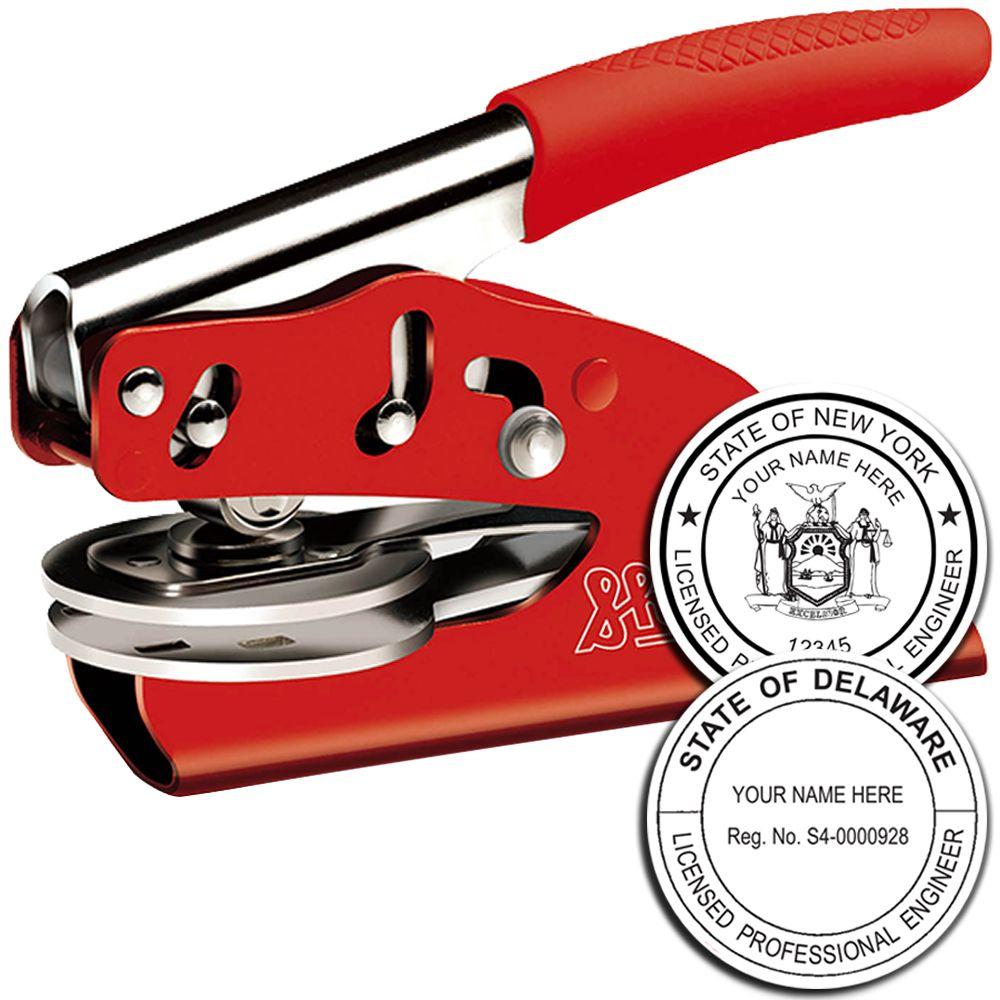
Ohio Admin. Code 4733-23-01(D): work product bearing a computer generated seal and electronic signature and date “shall have an electronic authentication process attached to or logically associated with the electronic document.” The electronic signature must be unique to the person using it, capable of verification, under the sole control of the person using it, and linked to the document so that the signature is invalidated if any data in the document is changed. The board names no technology, no certificate authority and no file format. PKI is the usual way to satisfy the four criteria, but Ohio does not require it by name.
Renewal, lapse and retirement
Registration expires biennially on the last day of December following initial registration or renewal. Ohio Rev. Code § 4733.14 and Ohio Admin. Code 4733-23-01(A) both forbid stamping, sealing or signing any document after the registration has expired or has been revoked or suspended, unless it has been renewed or reissued; there is a twelve month window to renew late at a fifty per cent surcharge. Certificates of registration carry a serial number and nothing in chapter 4733 provides for that number to change, so a renewal does not obsolete an existing seal. There is no duty to surrender or destroy the seal on lapse or revocation; the duty is custodial: “Each registrant is charged with the safeguarding of their personal seal.”
Firm registration
A firm, partnership, association, limited liability company or corporation offering professional engineering or professional surveying services in Ohio must hold a certificate of authorization from the board and must designate one or more registrants in responsible charge. The firm has no seal of its own and no rule requires the certificate of authorization number to appear on sealed documents. What the rule requires is physical display: the current certificate must be posted conspicuously in the firm’s place of business. Certificates of authorization expire biennially on June 30, on a different cycle from individual registration.
What to check before you order
Have the legend lettered exactly as the statute writes it, Registered Professional Engineer or Registered Professional Surveyor, with your name set exactly as it reads on your certificate of registration. The registration number is optional, so it is your choice whether to include it. Ohio specifies no size, so any diameter you are quoted is a shop standard and not the Ohio requirement. Choose the rubber stamp over the embosser, because Ohio requires the seal to appear on issued work product and an embossed impression does not survive reproduction. Ohio imposes no proof-of-registration requirement before your seal is made; the custody duty falls on you as the registrant.
Browse professional engineer stamps and seals.
Frequently asked questions
Do I need a PE stamp in Ohio?
Yes, once you issue work product. Ohio Rev. Code § 4733.14 and Ohio Admin. Code 4733-23-01(A) carry the same sentence: “Plans, specifications, plats, reports and all other engineering or surveying work product issued by a registrant shall be stamped with the said seal and be signed and dated by the registrant, or bear a computer generated seal and electronic signature and date.” Obtaining the seal is written as permissive, since each registrant “may upon registration obtain a seal,” but stamping is mandatory the moment work product goes out.
What has to appear on an Ohio PE seal?
Your name as registered and the legend “Registered Professional Engineer,” on a design authorized by the board. That is the whole list in Ohio Admin. Code 4733-23-01(A), and Ohio Rev. Code § 4733.14 states it identically. Professional surveyors use the legend “Registered Professional Surveyor.”
Does my Ohio seal have to show my registration number?
No. Rule 4733-23-01(A) names the registrant’s name and the legend and stops there. Adding the number violates nothing, and most Ohio registrants keep it, but if you want a clean seal you may leave it off without breaking the rule.
Should my Ohio stamp say Registered or Licensed Professional Engineer?
Registered. The statute and the rule both fix the wording as “Registered Professional Engineer.” A surveyor seal obtained before the April 4, 1985 amendment and reading “Registered Surveyor” stays a legal seal for that registrant, but that grandfather clause does not extend to new orders.
What size does an Ohio PE stamp have to be?
Ohio does not say. No dimension exists anywhere in the code. Checked Ohio Admin. Code chapter 4733-23 in full, which is the one rule 4733-23-01; chapter 4733-21, which requires only that the certificate of registration be posted; Ohio Rev. Code § 4733.14; and the board’s Laws & Rules page. The common 1-5/8 inch and 2 inch offerings are market conventions carried over from states that do publish dimensions. Acorn cuts this seal to 2 inches. That is our production record rather than an Ohio rule; the board still publishes neither a design nor a dimension.
Can I use an embosser, a rubber stamp or a digital seal in Ohio?
All three routes exist, but the rule pairs each seal with a matching signature. A physical device, embosser or inked rubber stamp, must be accompanied by a handwritten signature and date. A computer generated seal must be accompanied by an electronic signature and date. There is no provision for a printed facsimile signature on a physically stamped sheet. The practical buy is a self-inking or hand-held rubber stamp, because Ohio requires the seal to appear on the issued work product and an embossed impression does not survive a print or a scan.
Where do the signature and date go on an Ohio document?
Next to the stamped seal. Nothing in Ohio Rev. Code § 4733.14 or Ohio Admin. Code 4733-23-01 requires the signature to cross the seal, and nothing states whether the date is a seal date or a signing date, so practice is to date the day of signing. Affixing the seal is itself a certification: “By affixing their seal to any document, the registrant certifies to the accuracy and completeness of the information contained in the sealed document, and by such action, assumes full responsibility thereof.”
Which Ohio documents have to be sealed?
All plans, specifications, plats, reports and all other engineering or surveying work product issued by a registrant. Ohio writes no draft, preliminary or for-review carve-out into the seal rule; the limit is the word “issued.” The exemptions sit in Ohio Rev. Code § 4733.18 and cover employees and subordinates of a registrant whose duties do not include responsible charge, federal officers and employees, an engineer engaged solely as an officer of a privately owned public utility, work on property owned or leased by the person doing it unless public welfare or the safeguarding of life, health or property is involved, and work relating solely to the design or fabrication of manufactured products. Section 4733.18(C) also lets non-engineers prepare plans and obtain permits for residential buildings and one, two or three family units.
What does Ohio require for a computer generated seal?
An electronic authentication process. Ohio Admin. Code 4733-23-01(D) requires work product bearing a computer generated seal and electronic signature and date to “have an electronic authentication process attached to or logically associated with the electronic document.” The electronic signature must be unique to the person using it, capable of verification, under that person’s sole control, and linked to the document so that the signature is invalidated if any data in the document is changed. The board names no technology, no certificate authority and no file format. PKI is the usual way to satisfy those four criteria, but Ohio does not require it by name.
Do I need a new seal when I renew my Ohio registration?
No. Registration expires biennially on the last day of December following initial registration or renewal, and there is a twelve month window to renew late at a fifty per cent surcharge. Certificates carry a serial number and nothing in chapter 4733 provides for that number to change, so a renewal does not obsolete an existing seal. What the statute and the rule do forbid is stamping, sealing or signing any document after registration has expired or has been revoked or suspended, unless it has been renewed or reissued.
Do I have to surrender my Ohio seal if my registration lapses?
Not addressed. Neither Ohio Rev. Code § 4733.14 nor Ohio Admin. Code 4733-23-01 requires the device to be surrendered or destroyed. The duty the rule does impose is custodial: “Each registrant is charged with the safeguarding of their personal seal.”
Does my firm’s certificate of authorization number go on sealed drawings?
No. A firm, partnership, association, limited liability company or corporation offering professional engineering or professional surveying services in Ohio must hold a certificate of authorization and must designate one or more registrants in responsible charge, but the firm has no seal of its own and no rule puts the authorization number on sealed documents. What the rule requires is display: the current certificate must be posted conspicuously in the firm’s place of business. Certificates of authorization expire biennially on June 30, on a different cycle from individual registration.