
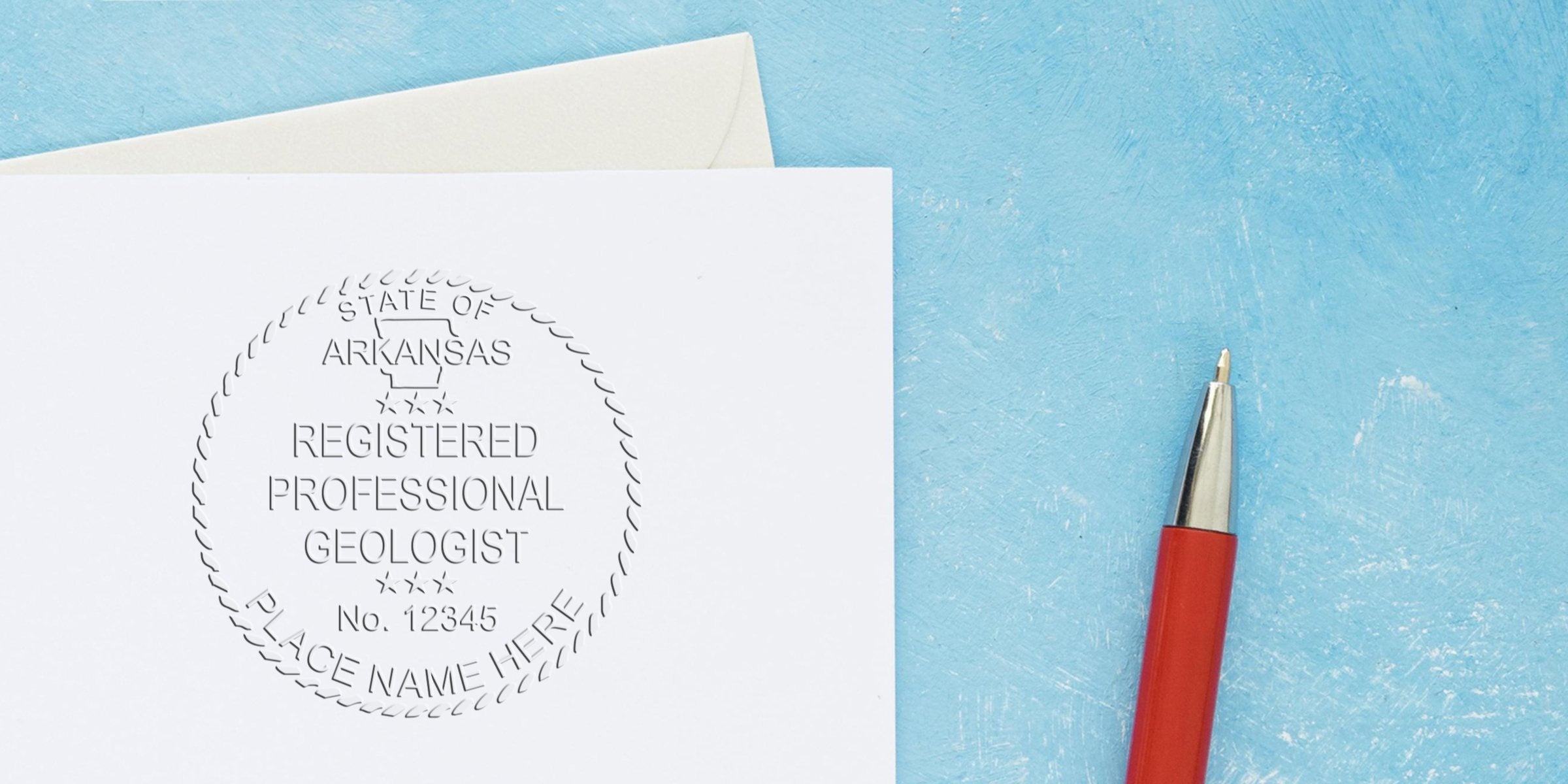
Welcome! You may be wondering about Arkansas geologist stamp specifications and how to ensure you meet every rule. If your goal is to practice geology in Arkansas, you’ll need to follow the state’s guidelines for professional stamping and sealing. These standards matter. After all, a proper stamp confirms that your work is officially recognized, and it also gives your documents the authority they need. You’ll find that most guidelines in Arkansas are pretty straightforward, but it’s good to clear up the details so that you can focus on the geology you love without worrying about compliance. In this article, you’ll learn exactly what elements to include, what materials to choose, where to get your stamp, and how to keep everything properly maintained. By the end, you’ll be confident in your stamp choice, your usage habits, and your record-keeping practices.
Below, we’ll walk you through key requirements for geologist stamps in Arkansas with a friendly, step-by-step approach. Think of this as a casual chat with a knowledgeable friend who’s been through the stamping process many times. We’ll also look at ways to keep your stamp in tip-top shape, so you never have that heart-sinking moment of discovering your seal has run out of ink at the worst possible time. Ready? Let’s dive into the essentials.
Understand Arkansas Requirements
Before ordering your geologist stamp, it helps to know why these requirements exist. In Arkansas, the Board of Registration for Professional Geologists lays out specific rules that aim to protect the public and maintain professional standards. Put plainly, the stamp identifies you as a licensed geologist and shows that your documents meet the minimum requirements in geological practices. You’re sending the message, “Yes, I’m officially recognized to do this work.”
Most commonly, the board requires that your stamp or seal include your name as listed on your license, your license number, and a clear indication that you’re a professional geologist in Arkansas. Some states allow fancy wording or elaborate designs, but Arkansas keeps things more direct. You’ll also want to remember that every official geological document you produce should bear that legible stamp. Whether you’re working on site studies, environmental assessments, or geological maps, your stamp is part of your compliance kit.
In many cases, you’ll see these guidelines spelled out on the official state website. There may even be PDFs or quick reference charts that you can refer to, though it’s always wise to check if the board’s rules have been updated recently. If it’s been a few years since you last reviewed guidelines, it might be time for a quick refresher. Doing so ensures you won’t miss any new or changed requirements that could leave you out of compliance. Above all, stay informed, and your stamp’s usage will flow smoothly.
Include Essential Stamp Elements
Next up, it’s time to talk about the nuts and bolts of your seal or stamp. For Arkansas geologist stamp specifications, you need the right information in the right format to keep your paperwork valid. Typically, you’ll see the following elements:
- Your Full Name: Exactly as it appears on your geologist license. If your license says “Charles R. Smith,” don’t shorten it to “Chuck Smith.”
- Professional Title: This clarifies you’re a geologist, such as “Professional Geologist” or a similar designation recognized by the board.
- License Number: This distinctive number is your unique identifier. Make sure it’s easily legible.
- State Name: The stamp must include “Arkansas” or “State of Arkansas,” depending on the board’s preference. This localizes your authority.
- Circular or Rectangular Border: Many states prefer a circular design. Check your board’s guidelines to confirm shape and layout requirements.
If you’re unsure about the design, it’s best to work with a trusted stamp maker that specializes in professional seals. Often, they’ll have design templates to meet your state’s exact rules. Some geologists like adding a subtle decorative flair, possibly a small geological motif. However, keep it minimal, because too many images can diminish clarity. The most important goal remains to highlight your credentials so that anyone reading your reports knows they meet official standards.
It’s also worth noting that different boards may slightly vary the mandated size. In Arkansas, you’re typically looking at a seal diameter somewhere around 1 5/8 inches to 2 inches for circular seals. Checking current guidelines will make sure you land in the right range. Once those critical components are in place, you can be confident that your stamp design meets Arkansas’ fundamental specifications.
Pick The Right Materials
After finalizing your design, how do you pick the actual physical stamp? The style you pick impacts how crisp your impression turns out and how convenient it is to store and carry. Most geologists choose one of three main options for their Arkansas Geologist Stamp:
- Traditional Rubber Stamp: This style requires a separate ink pad. It’s often budget-friendly and delivers consistent clarity. If you only stamp documents from your desk, a traditional rubber stamp can be a great option.
- Self-Inking Stamp: This design keeps ink in an internal pad and automatically re-inks after every impression. With a self-inking stamp, you typically get thousands of crisp imprints before needing to refill. It’s also portable, so you can toss it in your work bag for field visits without worrying about ink pads.
- Pre-Inked Stamp: If you need truly sharp detail, a pre-inked stamp might be your top choice. The ink is impregnated into the stamp’s die, giving you fine lines and a clean look. They’re slightly more expensive, but the results are top-notch.
Also consider the color of your ink. Black is standard and widely accepted for official documents, but some professionals prefer blue or red for their stamps to stand out. Before going the colorful route, confirm if your board allows or prefers a certain shade for stamping. Many states simply say “any legible color,” though black remains the best choice if you’re uncertain.
Finally, consider your working environment. If you often find yourself miles away from a desk, leaning into the trunk of your car to sign documents, a self-inking or pre-inked stamp can feel more effortless. You won’t have to juggle a separate ink pad or search for a stable surface. On the other hand, if your stamping is done mostly in an office, the traditional rubber stamp is perfectly fine. Pick the material that suits your daily stamping routine best.
Work With Acorn Sales
You might be asking, “Where do I actually order my Arkansas geologist seal or stamp?” This is where working with a reputable company like Acorn Sales can make an enormous difference. We’ve been in business since 1964, providing professional seals and stamps for geologists in Arkansas, and we know the ins and outs of state guidelines. Whether you need a fancy pre-inked stamp or a simple rubber one, we’ll make sure it satisfies Arkansas regulations.
At Acorn Sales, we’re proud to offer a free digital seal with your physical stamp order, which can be really handy for electronic documents. You’ll love the convenience of adding your seal to PDFs, reports, and contracts without needing to print everything out. Plus, all our stamps come with a satisfaction guarantee, so you’ve got nothing to lose by giving us a try.
Our ordering process is simple. We’ll confirm your license details, personalization preferences, and state requirements. After that, we manufacture your stamp using top-quality materials. We run a final office check to confirm everything meets the proper specifications, and then we ship it quickly to your doorstep. If you have questions about whether your design is correct or if you need multiple stamps for different states, our team can guide you every step of the way.
Follow Proper Usage Steps
Once your stamp arrives, what’s next? You’ll want to start by getting a feel for it. If you opted for a self-inking or pre-inked style, give it a test on scratch paper a few times, so the ink flows consistently. If you chose a traditional rubber style, experiment with how much pressure is needed on the ink pad to achieve that bold, legible impression. Getting to know your stamp’s quirks early on can help you avoid messing up an important document later.
When you apply the stamp to actual project documents, place it somewhere that’s easy to read, often near your signature or at the bottom of the page. Make sure the entire stamp impression is visible, especially your name and license number. If you slightly tilt or shift your hand mid-stamp, you can create smudges or double images. A good method is to press the stamp down lightly, then apply firm, even pressure before lifting it straight up again.
You’ll also want to pay attention to the documents that require stamping versus those that don’t. In many cases, official reports, site evaluations, or any professional opinions with a geologic scope must carry your seal. If you’re unsure, it’s safer to apply the stamp than to leave it off. Remember, your stamp is an official marker that you’ve reviewed, approved, and taken responsibility for the geologic content of the document. Over time, stamping becomes second nature, but starting with mindful habits helps you stay squarely within Arkansas guidelines.
Maintain Your Stamp For Longevity
Stamps, like any tool, need a bit of regular upkeep. If the impression from a self-inking stamp starts to fade, it’s time to re-ink the inner pad according to the manufacturer’s instructions. Avoid waiting until the ink is completely dry. If you do, you might damage the internal mechanism or the die plate. Once you notice a light impression, top things off.
Similarly, if you use a traditional rubber stamp, keep your ink pad from drying out. You can handle this by adding a few drops of compatible ink to the pad. Be sure to use the right ink type. Mixing different types of ink could yield poor results and might damage the rubber. Store your stamp and ink pad in a cool, dry place, ideally protected from direct sunlight, to minimize wear and tear.
If your stamp ever gets dirty, wipe it gently with a soft cloth. Avoid heavy-duty cleaners, because they can degrade the rubber or the die. Little steps like these keep your Arkansas Geologist Stamp fresh and crisp, giving you a professional look on every impression. Think of your stamp as an extension of your reputation. After all, each document it marks represents your professional identity, so a clean, bold stamp helps you look your best.
These common issues pop up for Arkansas geologists regularly, so don’t hesitate to keep this FAQ close at hand. You’ll save time by having these quick answers at your fingertips, especially if you’re juggling multiple projects or working in the field. And if you need more detail, it’s always best to consult official state information or ask experienced colleagues.
By now, you should have a solid handle on everything from Arkansas geologist stamp specifications to best practices for daily use. The key takeaway is to ensure your stamp design meets state guidelines, includes legible information, and makes your documentation process smooth. Remember that once you’re set up with the right stamp, much of your compliance concerns around sealing geologic reports will fall neatly into place.
This journey doesn’t have to be overwhelming. Whether you need a self-inking stamp that fits easily in your work pack or a classic rubber style for the office, the important thing is that your stamp is clear, accurate, and right for you. If you’re still in search of a dependable supplier, consider working with Acorn Sales. After all, we’ve been trusted since 1964, and we’re confident we can help you create the ideal Arkansas Geologist Seal for your documents. Don’t forget to snag that free digital seal we offer. It could be the difference between a stressful filing marathon and a breezy online submission.
With your stamp ready, you’ll be able to affirm your geological expertise on any document that crosses your desk (or your laptop). In the end, a well-crafted, properly maintained geologist stamp is one of the simplest ways to keep your professional life organized, compliant, and ready for whatever comes next. If you need guidance along the way, we’re just a message away. Here’s wishing you a smooth stamping experience and all the best on your geological pursuits!
Frequently Asked Questions
How Often Should I Replace My Stamp?
The average lifespan depends on its type (rubber, self-inking, or pre-inked) and how frequently you use it. Many stamps last for thousands of impressions. If the handle or mechanics show signs of wear, it’s time for an upgrade. If the imprint is still clear, you can keep going with simple ink refills.
Can I Use A Digital Seal Instead Of A Physical Stamp?
Arkansas generally requires a physical stamp for paper documents, but a digital seal is handy for electronic documents and submissions. Real-world usage often calls for both. Many geologists order a physical stamp and grab a digital seal for remote or paperless tasks. At Acorn Sales, we provide a free digital seal file with your purchase for maximum flexibility.
Does The Stamp Have To Be Circular?
Many state boards prefer a circular design, but some allow a rectangular shape. Arkansas typically aligns with the circular seal tradition. Still, double-check with the Arkansas Board of Registration for Professional Geologists if you have a particular shape in mind.
What Ink Color Is Acceptable?
Black is almost always acceptable, and it is the safest choice if you’re uncertain. Some states allow blue or red. Make sure you choose a dark color that reproduces clearly on copies or scans. If your board guidelines mention specific ink colors, follow them exactly.
Is Pre-approval Required For My Stamp Design?
Usually you do not need to submit your design for pre-approval, as long as it follows the board’s guidelines. However, if you want peace of mind or have a unique layout in mind, you can always contact the board’s office to verify it before ordering.








