
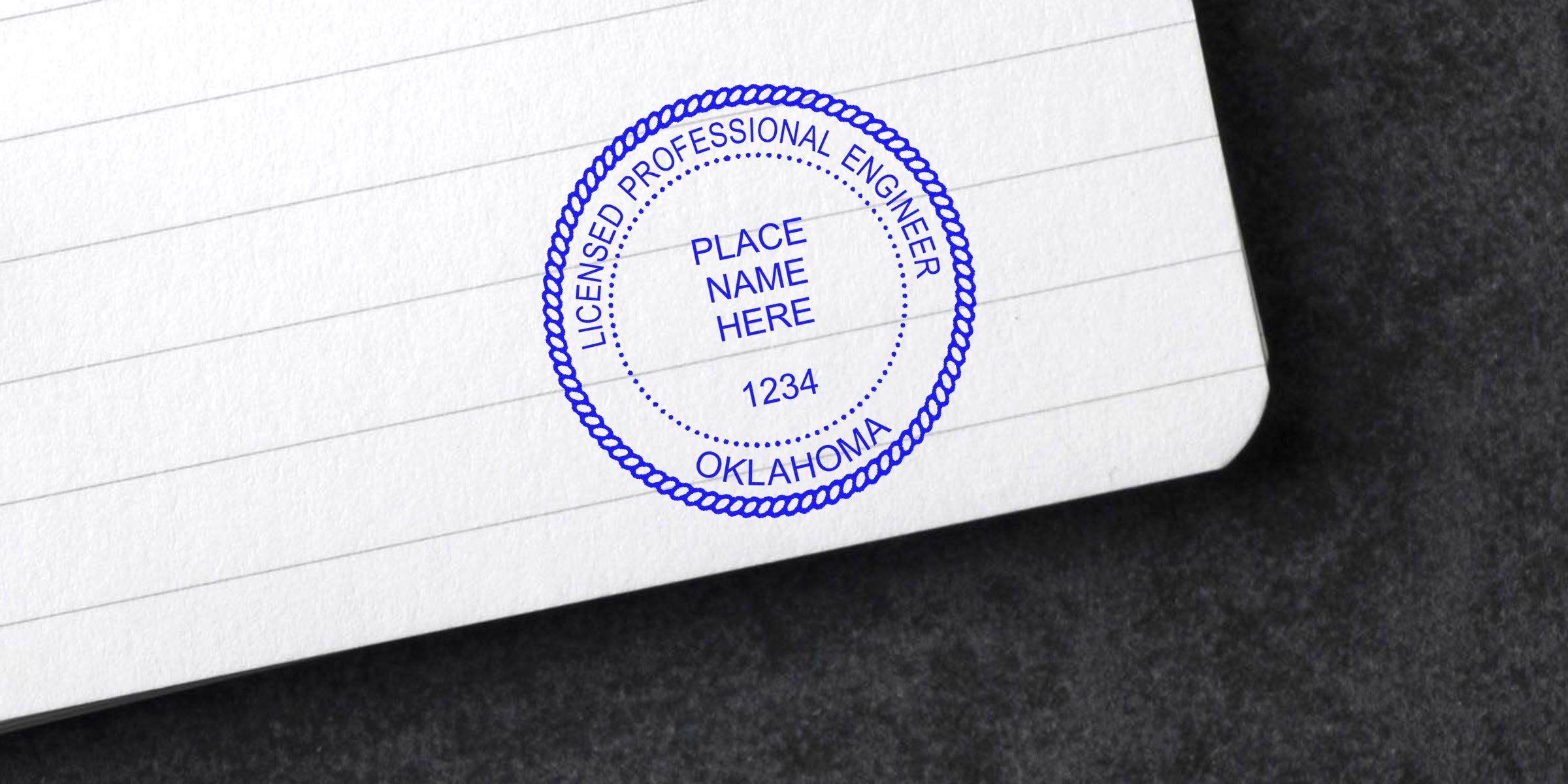
If you’re gearing up for a major construction plan or any formal engineering project in the Sooner State, you’ll quickly realize that Oklahoma engineer stamp requirements are an essential consideration. Meeting these guidelines helps you stay compliant with the Oklahoma State Board of Licensure for Professional Engineers and Land Surveyors, ensures your work is taken seriously, and keeps your documentation error-free. In this article, we’ll walk through key rules, the basic design elements, and a few insider tips so you can stamp, seal, and deliver your projects with confidence. Let’s dive right in.
Review Oklahoma rules
Before you design or purchase your professional seal, you should understand the basic rules prescribed by Oklahoma’s engineering authorities. In most cases, you’re working under regulations set by the Oklahoma State Board, which lays out what belongs on the seal, how large it should be, and the documentation in which it must appear.
Know your licensing board
The very first step is to familiarize yourself with your licensing board’s guidelines. These are the folks who define what your seal needs to look like and where it needs to be placed. You typically need to include your name exactly as it appears on your license, along with “Professional Engineer” or “P.E.” plus your license number. The word “Oklahoma” should be front and center so there’s no confusion about which state board you’re registered under. You’ll also want to confirm any special instructions related to discipline or branch of engineering, if applicable.
- Look for official references on size, which are often given in diameter specifications.
- Make sure to check if color, style, or embossing are explicitly required or just recommended.
- Clarify how to note your license number; some prefer a prefix like “No.” or “License #,” while others simply want your digits.
Identify correct labeling
Even a small mislabel can throw your project’s authenticity into question. The label “Professional Engineer” or the abbreviated “P.E.” is generally mandatory. You may also find that referencing “State of Oklahoma” or the exact state board’s name is required. Double-check that your spelling, spacing, and punctuation match official guidelines, as an overlooked typographical error can cause unnecessary headaches. The best approach is to keep a quick checklist handy while you’re drafting or ordering your seals.
Prepare your seal design
Once you have a good grasp of the official rules, it’s time to shape your Oklahoma engineering seal design. This seal is more than a formality; it’s a clear symbol of your professional credentials. If you’re thinking of creating a design on your own, be sure you cover all the bases outlined below. Otherwise, you can partner with a trusted supplier who knows the ins and outs of the Oklahoma requirements.
Essential design elements
In general, an Oklahoma Professional Engineer seal is circular, although the board may allow variations within reason if the essential information remains clear. Expect to include:
- Your full name (exactly as on your license)
- Your license number
- The phrase “Professional Engineer” or “P.E.”
- “State of Oklahoma” around the perimeter
Font size matters so all text is legible. If the lettering or numbers are too small, the information can be impossible to read on large-scale project plans. Consult official sources or a vetted supplier for the correct diameter and text size, or consider reviewing oklahoma engineering seal design guidelines for extra clarity.
Partnering with a trusted supplier
Handcrafting a seal yourself can be risky if you haven’t gone through the approval process before. Even if you’re a seasoned pro, you might still miss subtle formatting rules that complicate your project. That’s where Acorn Sales comes in. We’ve been making stamps and seals for over 60 years, delivering quality products to engineers nationwide. We also offer a free digital seal with every physical purchase, meaning you’ll have an electronic version ready to upload and place on your plans whenever needed. Working with a reputable supplier significantly reduces the chance of design inconsistencies, saving you time and headaches in the long run.
Select a suitable format
When it comes to your seal or stamp, you have plenty of format options. Some engineers stick to a traditional rubber hand stamp, while others prefer a self-inking or pre-inked style. You might even go for an embosser, which creates a raised impression that’s tough to forge. Here’s a closer look at each.
Embosser vs. ink stamp
An embosser literally presses your seal into the page, leaving a tactile imprint. It’s often seen as more official because it’s three-dimensional, but you may need a darker inked seal on final documents for scanning. A rubber or pre-inked stamp, on the other hand, gives you a crisp image each time. It’s easier to replicate on multiple sheets, and it shows up clearly on photocopies or digital scans. If you’re considering an embosser for your Oklahoma seal, take a look at oklahoma engineer stamp embosser to explore your options.
Below is a quick comparison table to simplify your selection:
| Format | Best For | Pros |
|---|---|---|
| Embosser | Long-term record authenticity | Hard to duplicate or alter, classic look |
| Self-inking stamp | High-volume usage on standard documents | Quick, consistent impressions, easy to use |
| Pre-inked stamp | Crisp detail without needing a stamp pad | Compact, clean lines, minimal smudging |
| Rubber hand stamp | Occasional stamping, flexible ink options | Simple, affordable, more customization |
Digital seal considerations
Digital seals have become a must for many modern applications. If you regularly submit plans online, having a digital version of your seal allows you to insert your credentials in PDF or other document formats. Always confirm whether your licensing board permits digitally applied seals and if they need a specific third-party authentication. Remember, you still need to sign and date near the seal’s placement, even in a digital environment. Tools like PDF editors or dedicated engineering software make it fairly straightforward to position your seal in the correct spot.
Apply the stamp correctly
Placing your seal in the right location is key. You might attach a seal to your final drawings, calculations, or reports, but the specifics usually depend on the type of document and whether you’re working with an official or preliminary file. Taking a consistent approach helps you avoid missing crucial steps when deadlines are tight.
Placement on plans
A typical requirement is to place your seal prominently on the cover page or title block of engineering documents. If you’re preparing large-scale drawings, it might go in the lower-right corner, near your project’s identifying information. On smaller pages, you can adjust accordingly. The main idea is that the plan reviewer or client can quickly spot your credentials without rummaging through layers of text.
- Align the seal so all text is upright and readable.
- Ensure the impression is clean, with no missing letters or smudged lines.
- Double-check that it doesn’t overlap important details like dimension lines or revision notes.
Signature and date
Alongside the seal, you’ll generally need to sign and date the document. This step indicates you’ve taken responsibility for the accuracy of the content. Make sure these items go hand in hand:
- Signature: An original wet signature or a legally recognized electronic signature.
- Date: The day you applied your seal, which may differ from the revision date of the document.
Some boards require a notation stating “My license expires on…” or “License renewal date,” so confirm whether that applies in Oklahoma. You also don’t want to sign half an inch away from your seal, making it look disconnected. Keep your credentials and signature neatly together.
Maintain thorough documentation
From a legal and professional standpoint, stamping your paperwork is only half the battle. You also need to keep a clear record of what you sealed, when you sealed it, and why. That way, if a client or official entity ever questions a design choice, you’ll have solid documentation to back up your professional judgment.
Project record overview
Maintaining good project files generally includes:
- Copies of all stamped documents (physical or digital)
- A record of revisions that details what, when, and why changes were made
- Any official acknowledgments from local or state agencies
Linking these records to your billing or project management system can be a lifesaver. If you’re ever audited or if a dispute arises, you’ll have easy access to critical timestamps. For guidance on the legal side, check out oklahoma engineer stamp laws, which outline broader responsibilities and potential penalties for misuse.
Legal responsibilities
Because your seal represents your professional integrity, you can face disciplinary actions if you misuse it. Misuse can range from stamping documents before you’ve verified their accuracy to failing to include required elements in the seal itself. Oklahoma’s licensing board can impose fines, suspend or revoke your license, or even open you up to civil liabilities if a client suffers damages due to negligence. So treat your seal with respect: only apply it to completed work you’ve reviewed carefully, and don’t let anyone else stamp on your behalf.
Keep your registration current
A valid engineering license is the foundation that allows you to use your Oklahoma seal in the first place. Consequently, letting your license expire can lead to a slew of problems, from invalidated contracts to professional misconduct charges. Renewing on time keeps everything above board.
Renewal intervals
Oklahoma’s renewal process typically follows a set timeline you must meet to remain in good standing. Watch for these steps:
- Receive a renewal notice from the licensing board, usually well before your license lapses.
- Complete any required continuing education or professional development hours if applicable (some states require a certain number of hours each renewal period, so get clarity on Oklahoma’s specific rules).
- Submit your renewal application on or before the due date, along with any associated fees.
During renewal, you might also have to verify that your personal information hasn’t changed. Always update the board if you’ve changed your name, address, or other vital license details.
Avoiding expired seals
Many engineers assume their stamps are “good forever,” but that’s not always the case. Stamps can still be physically used even if your license is expired, but doing so is considered unlicensed practice and can carry serious penalties. If your license credentials lapse, you must refrain from placing your seal on any project documents until your status is restored. It’s usually wise to keep an eye on a calendar reminder or look into whether the board offers an email alert system so you won’t overlook critical renewal dates.
Common pitfalls to avoid
Sometimes you can meet all the usual Oklahoma engineer stamp requirements but still run into issues. These might be small oversights in everyday practice or big compliance problems. Fortunately, you can prevent many headaches by knowing the most common errors engineers make.
Illegible stamping
When you’re in a rush or your stamp is running low on ink, you may end up with a faint or smeared impression. While it might seem trivial, unauditable or unreadable stamps can be flagged by plan reviewers or building officials, leading to additional site visits or re-submittals. Stay on top of your stamp’s condition. If the lettering edges are worn or you see that your impressions are incomplete, order a replacement. You can also consider a higher-quality stamp from oklahoma engineer stamp online if you need a quick turnaround.
Misuse of digital stamps
Digital stamping streamlines the submission process, but too many engineers treat it like a convenient rubber stamp. You still need to verify that everything is correct before exporting a final PDF or CAD file. Some boards require an added layer of authentication, like a digital certificate, to validate your e-signature and seal. Never email out “blank” digital seal files, as they could easily fall into the wrong hands. Protect your files with passwords or encryption to prevent unauthorized use.
Next steps and final tips
Meeting Oklahoma engineer stamp requirements isn’t just a box you check off. It’s a statement of your professional accountability toward clients, colleagues, and the community at large. Once you’ve got your design approved, make sure you store your seal properly, apply it conscientiously, and keep your license info up to date.
You can also simplify the ordering process for your seal by partnering with industry experts. At Acorn Sales, we’ve been in the business for over 60 years, and we prioritize both speed and quality to keep your projects moving forward. Every purchase comes with a free digital seal, so you can handle electronic submissions effortlessly. If you’re ready to get started, take a look at our oklahoma pe stamp order page or explore our custom engineer seal oklahoma options. You’ll find a range of templates that align with official standards, as well as the freedom to personalize details like handle type or ink color.
Ultimately, the seal you use is your professional signature. Give it the care and precision it deserves, and you’ll be well on your way to stamping out any compliance worries for good.
Use your seal confidently, knowing you’re fully aligned with Oklahoma’s guidelines. And if you have any remaining questions, feel free to reach out to Acorn Sales for product advice or quick clarifications on Oklahoma’s stamping rules. We’re here to help you navigate every step of the way.
Frequently Asked Questions
What size should the Oklahoma PE seal be?
Typically, the state board recommends a standardized diameter. For specifics, you can refer to oklahoma pe seal size . Generally, the key is making sure your text and license details are legible.
Can I include specialty notations like “Structural Engineer” or “Electrical Engineer”?
If Oklahoma requires a specific branch designation, it should appear on the seal. However, not every board mandates this. Double-check with official regulations before adding extra text.
Is a digital seal acceptable for all project submittals?
This depends on the agency receiving your documents. Many jurisdictions accept e-signed and sealed plans, as long as there’s a verifiable security protocol in place. Confirm with local building departments to avoid any surprises.
How do I keep my digital seal secure?
One way is to password-protect your seal file or store it in a secure folder accessible only by you. Some engineers keep it on a dedicated work computer with limited user accounts. Always avoid emailing raw digital seal files.
Do I need a new seal if my address changes?
Changing your address usually doesn’t require a new stamp. You only need to update the board with your new contact information. However, if your name changes or if you’ve changed your engineering branch, you may need to alter your seal to reflect the updated license credentials.








