

Written by Acorn Sales Company, manufacturing stamps and seals since 1964 · Reviewed by Holly R, VP of Sales and Marketing at Acorn Sales, against the Wisconsin Examining Board of Architects, Landscape Architects, Professional Engineers, Designers, Professional Land Surveyors, and Registered Interior Designers and Wis. Admin. Code § A-E 2.02(4) on 21 September 2026 · Updated 21 September 2026
A Wisconsin seal has to carry your city. Wis. Admin. Code § A-E 2.02(1) lists exactly three things: “Each seal shall include the credential holder’s name, credential number and city.” City, not state and not county. Very few states ask for it, so a die cut from a national template carrying only a name and a number is missing a required element, and an engineer who moves within Wisconsin has a stamp whose accuracy depends on where they now work.
Size is a range rather than a number: “The overall diameter may not be less than 15/8 inches nor more than 2 inches.” That is why a 1-3/4 inch die cut for another jurisdiction usually passes on size while still failing on content.
Check the date on anything you read about Wisconsin devices. A-E 2.02(3) was repealed and recreated by CR 24-028, published in Register May 2025 No. 833, effective June 1, 2025, and now reads that “The registration seal may be an embossing seal, an ink stamp seal, a digitally printed seal, or digitally embedded seal in an electronic file.” The same order repealed A-E 2.02(7)(a), so guidance citing that subsection is citing a dead provision.
Wisconsin PE seal requirements at a glance
| Requirement | Wisconsin rule | Source |
|---|---|---|
| Seal required | Yes | Wis. Admin. Code § A-E 2.02(4) |
| Required elements | Your name as credentialed, Your credential number and Your city | Wis. Admin. Code § A-E 2.02(1) |
| Size and shape | Not less than 1-5/8 inches and not more than 2 inches overall diameter. | Wis. Admin. Code § A-E 2.02(1) |
| Device allowed | All four common devices are legal, and this paragraph was rewritten recently. | Wis. Admin. Code § A-E 2.02(3), as repealed and recreated by CR 24-028, Register May 2025 No. 833, eff. 6-1-25 |
| Signature and date | A-E 2.02(7)(b) gives three permitted combinations for seals on documents filed as public documents: “Physical placement of a seal and a handwritten signature in permanent ink containing the name of the credential holder and date”; “Digital placement of a seal and a handwritten signature in permanent ink containing the name of the credential holder and date”; or “Digital placement of a seal and an electronic signature containing the name of the credential holder and date”. A date is required in every one of the three. | Wis. Admin. Code § A-E 2.02(7)(b), (c) |
| What must be sealed | Every sheet, by default. | Wis. Admin. Code § A-E 2.02(5), (6), (8) |
| Electronic seal | No named technology. | Wis. Admin. Code § A-E 2.02(3), (7)(b)3, both as created or recreated by CR 24-028, eff. 6-1-25 |
| Renewal and lapse | A credential not renewed by the renewal date can be renewed on payment of the renewal fee if the application comes within five years of expiration, under A-E 2.05(1). | Wis. Admin. Code §§ A-E 2.045, A-E 2.05 |
| Firm number on documents | A certificate of authorization is now required, but the firm gets no seal and no number on the sheet. | Wis. Stat. § 443.08(2), (3)(a), (4)(b) |
| Licensing board | The Wisconsin Examining Board of Architects, Landscape Architects, Professional Engineers, Designers, Professional Land Surveyors, and Registered Interior Designers | Wis. Stat. ch. 443 (§§ 443.08, 443.15, 443.17, 443.18), 2023-24 Wisconsin Statutes published 9-4-26; Wis. Admin. Code ch. A-E 2 (§§ A-E 2.01 to A-E 2.06), with A-E 2.02(3), (5), (7) amended or recreated by CR 24-028, Register May 2025 No. 833, eff. 6-1-25, |
Rules for other states are on PE stamp requirements by state.




Is a seal required in Wisconsin?
Wisconsin requires a seal The operative duty is in the board rule, and it runs sheet by sheet. Wis. Admin. Code § A-E 2.02(4) provides that “Each sheet of plans, drawings, documents, specifications, and reports for architectural, landscape architectural, professional engineering, design, professional land surveying, and registered interior design practice shall be signed, sealed, and dated by the credential holder who prepared, or directed and controlled preparation of, the written material”, subject only to the bound-volume exception in sub. (5). The statute reinforces it for work issued through a business: Wis. Stat. § 443.08(4)(b) requires final drawings, specifications, plans, reports and other papers prepared for the use of a firm, partnership or corporation, for delivery to any person or for public record, to “be dated and bear the signature and seal” of the professional in responsible charge. Wis. Stat. § 443.17 is the prohibition side rather than the requirement side.
What must appear on the seal
- Your name as credentialed
- Your credential number
- Your city
Wisconsin’s element list is short and one entry is unusual. A-E 2.02(1) requires that “Each seal shall include the credential holder’s name, credential number and city.” City, not state and not county. A Wisconsin seal cut from an out-of-state template that carries only a name and a number is missing a required element. The rule text does not itself require the word Wisconsin, the profession name, or an expiration date; those come from the approved designs, which A-E 2.02(2) supplies only as a diagram and not as words. That diagram is published as a separate image file attached to A-E 2.02(2) in the Wisconsin Administrative Code and it contains no extractable text, so the exact ring wording and layout have to be copied from the published diagram rather than quoted from the rule.
Size and shape
Not less than 1-5/8 inches and not more than 2 inches overall diameter. A-E 2.02(1) states that “The overall diameter may not be less than 15/8 inches nor more than 2 inches.” Wisconsin is therefore a range state, not a fixed-dimension state, which is why a 1-3/4 inch die cut for another jurisdiction will usually pass here on size alone while still failing on content.





Embosser, rubber stamp or digital
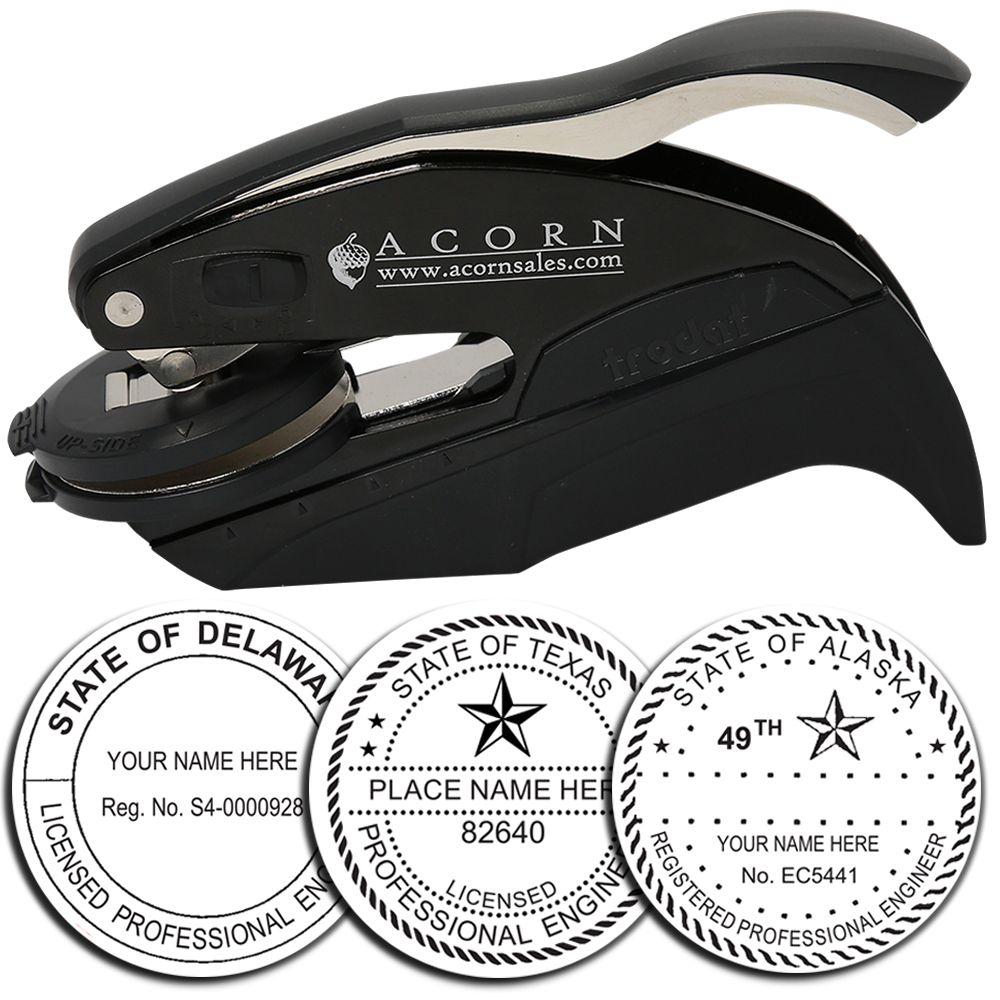
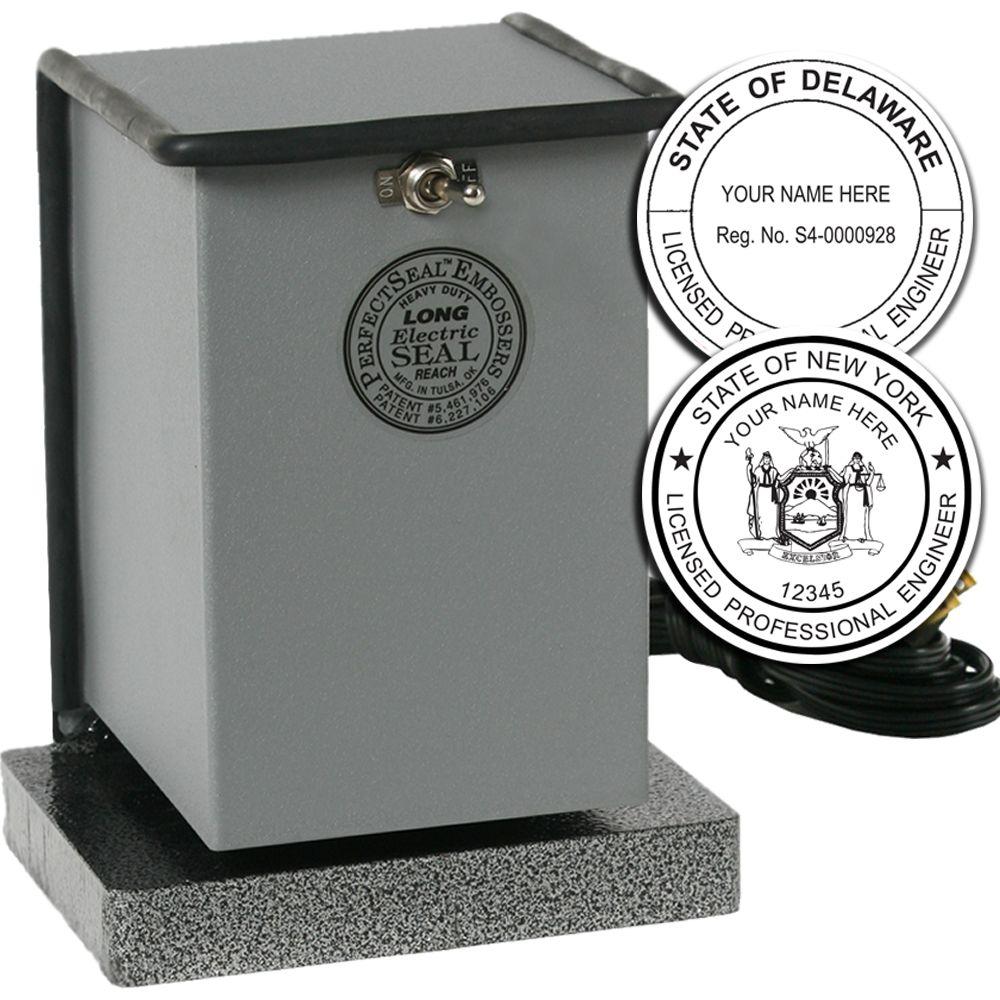
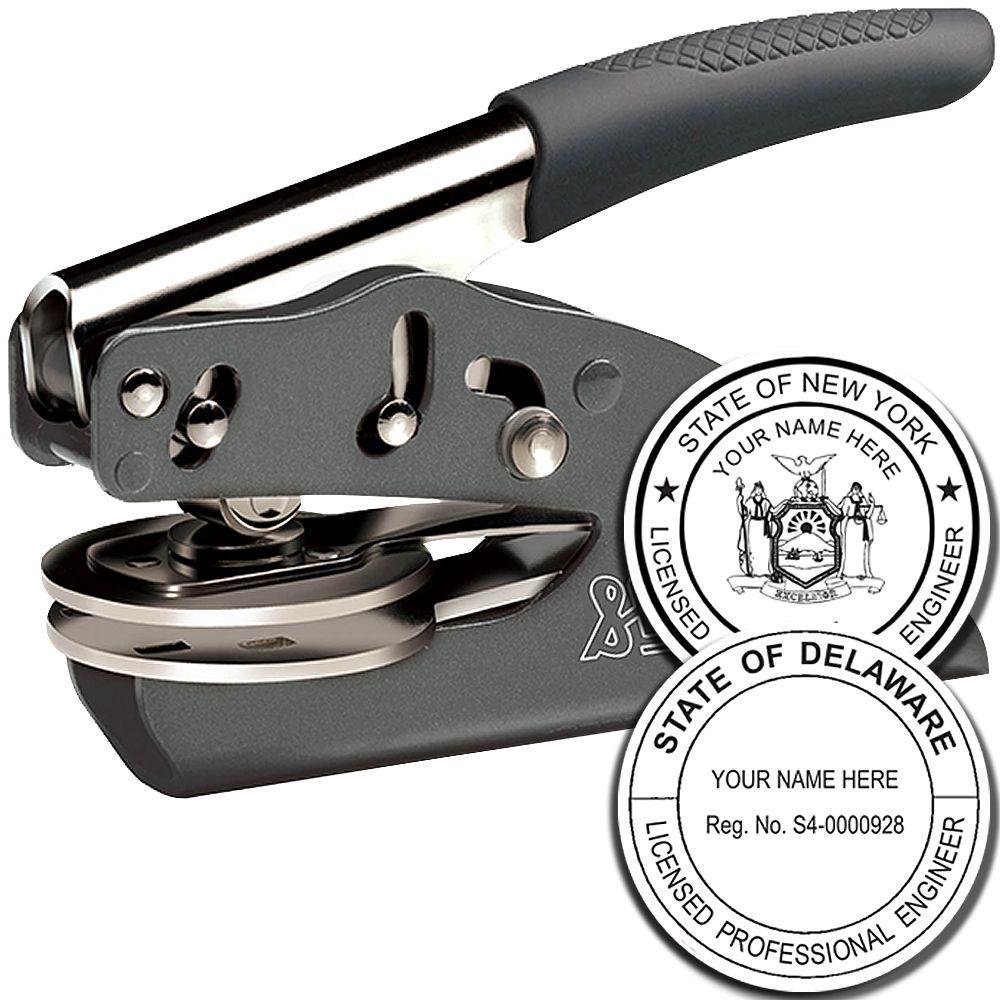
All four common devices are legal, and this paragraph was rewritten recently. A-E 2.02(3) now reads that “The registration seal may be an embossing seal, an ink stamp seal, a digitally printed seal, or digitally embedded seal in an electronic file.” That text was repealed and recreated by CR 24-028, published in Register May 2025 No. 833, effective June 1, 2025, so guidance written before mid-2025 describes a narrower list. The safe buy is an ink stamp seal sized between 1-5/8 and 2 inches, with the same artwork reused as the digitally printed or embedded version.
Signing and dating
A-E 2.02(7)(b) gives three permitted combinations for seals on documents filed as public documents: “Physical placement of a seal and a handwritten signature in permanent ink containing the name of the credential holder and date”; “Digital placement of a seal and a handwritten signature in permanent ink containing the name of the credential holder and date”; or “Digital placement of a seal and an electronic signature containing the name of the credential holder and date”. A date is required in every one of the three. Signing across the face of the seal is NOT required and NOT mentioned; the rule speaks of placement of a seal and a signature side by side. A-E 2.02(7)(c) yields to other law where it exists: “If other standards for signatures or seals are prescribed by statute, the statutes shall govern.” Watch the numbering, because A-E 2.02(7)(a) was repealed by CR 24-028 and older references to it are dead.
Your city goes on the seal, and the seal rule covers professions the seal statute does not
The element that catches buyers out is the city. A-E 2.02(1) lists exactly three things a Wisconsin seal must include: the credential holder’s name, the credential number, and the city. Very few states ask for a city. An engineer who moves within Wisconsin has bought a stamp whose accuracy depends on where they work, and a stamp ordered from a national template will simply lack the line.
The second trap is a scope mismatch between the statute and the rule. Wis. Stat. § 443.17(1) prohibits misuse of a seal only by persons “registered under this chapter to practice architecture, landscape architecture or professional engineering”, with subsections (2) to (4) added for Wisconsin registered interior designers. Designers of engineering systems and professional land surveyors are missing from that statute entirely. The board rule, A-E 2.02, does cover them: designers and professional land surveyors are named in subsections (1), (4) and (6) and must obtain seals and sign, seal and date every sheet.
So for a Wisconsin land surveyor or designer the sealing obligation is real and rests on the administrative code, while the statutory misuse prohibition that engineers and architects live under does not name them. Anyone reasoning from Wis. Stat. § 443.17 alone will reach the wrong answer about whether a surveyor or designer needs a stamp.
One stale signal to ignore: the Wisconsin Legislature site shows an alert that ch. A-E 2 may be affected by emergency rule EmR2038. That emergency rule concerned retired credential status, took effect December 1, 2020, expired no later than May 1, 2021, and was superseded by permanent rule CR 20-064. It has nothing to do with seals.
Which documents must be sealed
Every sheet, by default. The bound-volume relief in A-E 2.02(5) lets the credential holder who prepared or directed and controlled a bound volume sign, seal and date only the title or index sheet, provided that sheet identifies all the other sheets and that any sheets prepared under another credential holder are separately signed, sealed and dated by that person. Revisions get their own rule: A-E 2.02(6) bars any addition, deletion or other revision affecting public health and safety or any state or local code requirement unless it is signed, sealed and dated by the credential holder who made or directed the revision. Two carve-outs sit in the statute rather than the rule. Wis. Stat. § 443.15 exempts single-family dwellings and their outbuildings, two-family apartment buildings, buildings used exclusively for agriculture, temporary construction sheds of not more than two stories, and buildings or additions under 50,000 cubic feet total volume. A-E 2.02(8) sets the terms on which plans prepared by an out-of-state architect, professional engineer or registered interior designer may be filed by a Wisconsin credential holder, which requires both the original preparer’s seal and signature and a separate dated, signed and sealed certificate from the Wisconsin submitter.




Electronic and digital seals
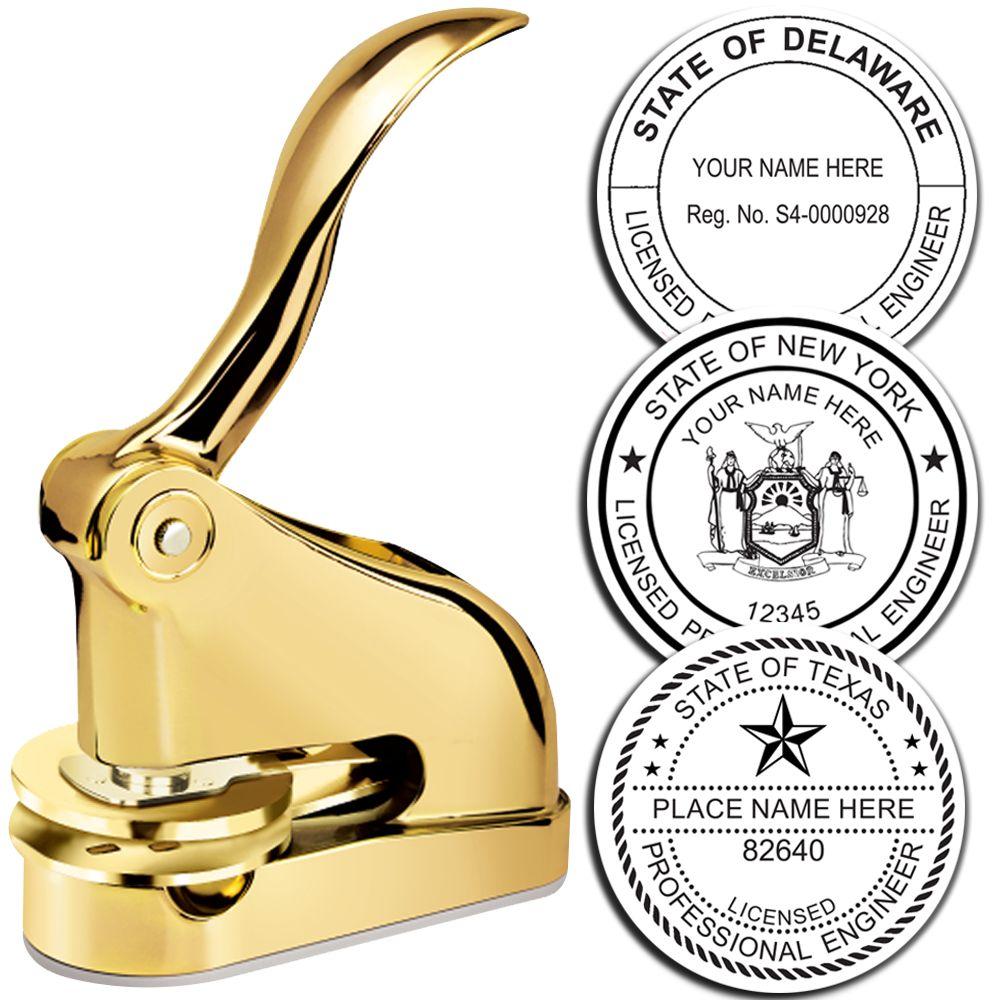
No named technology. Wisconsin’s electronic route is A-E 2.02(7)(b)3, which permits “Digital placement of a seal and an electronic signature containing the name of the credential holder and date”, and A-E 2.02(3), which recognizes a digitally printed seal and a digitally embedded seal in an electronic file. The board names no certificate authority, no cryptographic algorithm and no tamper-evidence test, and imposes no four-part digital signature criteria of the kind Missouri and Tennessee spell out. Both the digital seal text and the electronic signature text arrived with CR 24-028, effective June 1, 2025, so any Wisconsin digital-sealing guidance dated before then is describing a repealed rule.
Renewal, lapse and retirement
A credential not renewed by the renewal date can be renewed on payment of the renewal fee if the application comes within five years of expiration, under A-E 2.05(1). Past five years, A-E 2.05(2) requires the relevant section of the board to decide whether the applicant is still competent to practice, review the last five years of practice in other jurisdictions, and impose conditions that may include completing current original-licensure requirements. A-E 2.045 adds retired status for a credential holder who is at least 65 or has actively maintained the credential for at least 20 years and certifies they no longer practice; retired status is removed by satisfying the A-E 2.05(2) reinstatement requirements. Using a dead credential is a criminal matter, not just an administrative one: Wis. Stat. § 443.18(1)(a) reaches “any person who attempts to use an expired or revoked certificate of registration” with a fine of $100 to $500 or up to three months imprisonment or both. Neither the statute nor ch. A-E 2 requires the seal to be destroyed or surrendered, and neither says the credential number changes.
Firm registration
A certificate of authorization is now required, but the firm gets no seal and no number on the sheet. Wis. Stat. § 443.08(2) bars an individual architect, professional engineer, designer or Wisconsin registered interior designer from practicing as a principal, officer, employee or agent of a firm, partnership or corporation unless all personnel practicing on its behalf are credentialed and “The firm, partnership, or corporation has been issued a certificate of authorization” under sub. (3)(a). The board rule caught up on July 1, 2026: A-E 2.03(5), created by CR 25-082, Register June 2026 No. 846, carries the same prohibition and exempts a sole proprietorship practicing under the same name as the individual. Professional land surveyors are not in the certificate-of-authorization list. Nothing in § 443.08 or ch. A-E 2 requires a firm seal or the certificate number to appear on a document; § 443.08(4)(b) puts the individual’s signature and seal on the firm’s final documents instead.
What to check before you order
Order the die between 1-5/8 and 2 inches overall diameter, carrying three things without fail: your name as credentialed, your credential number, and your city. Match the approved design diagram attached to A-E 2.02(2) in the published administrative code for the ring layout, since that layout exists only as an image and not as rule text. Ask for the same artwork as a digitally printed or digitally embeddable file, because A-E 2.02(3) recognizes both and you will need them. Wisconsin credentials six professions through one seal rule, so be clear about which credential you hold before the legend is cut. Wisconsin asks you for no proof of licensure and requires no imprint filing with the board.
Browse professional engineer stamps and seals.
Frequently asked questions
Do I need a PE seal in Wisconsin?
Yes, and the duty runs sheet by sheet. Wis. Admin. Code § A-E 2.02(4): “Each sheet of plans, drawings, documents, specifications, and reports for architectural, landscape architectural, professional engineering, design, professional land surveying, and registered interior design practice shall be signed, sealed, and dated by the credential holder who prepared, or directed and controlled preparation of, the written material,” subject only to the bound-volume exception in sub. (5). Wis. Stat. § 443.08(4)(b) reinforces it for work issued through a firm, requiring final drawings, specifications, plans, reports and other papers prepared for the use of a firm, partnership or corporation, for delivery to any person or for public record, to “be dated and bear the signature and seal” of the professional in responsible charge.
What has to be on a Wisconsin PE seal?
Your name as credentialed, your credential number, and your city. That is the whole list in A-E 2.02(1). The rule text does not itself require the word Wisconsin, the profession name or an expiration date; those come from the approved designs, which A-E 2.02(2) supplies only as a diagram. That diagram is published as a separate image file attached to A-E 2.02(2) and contains no extractable text, so the exact ring wording and layout have to be copied from the published diagram rather than quoted from the rule.
Why does my city have to be on the stamp?
Because A-E 2.02(1) names it as one of the three required elements. It is the element national templates leave off. If you relocate within Wisconsin, the city line is the part of the die that goes out of date.
What size does a Wisconsin seal have to be?
Between 1-5/8 and 2 inches overall diameter. A-E 2.02(1): “The overall diameter may not be less than 15/8 inches nor more than 2 inches.” Wisconsin is a range state rather than a fixed-dimension state.
Can I use an embosser, an ink stamp or a digital seal?
All four current options are legal. A-E 2.02(3) now reads that “The registration seal may be an embossing seal, an ink stamp seal, a digitally printed seal, or digitally embedded seal in an electronic file.” That paragraph was repealed and recreated by CR 24-028 effective June 1, 2025, so anything written before mid-2025 describes a narrower list. An ink stamp between 1-5/8 and 2 inches, with the same artwork reused as the digitally printed or embedded version, covers both routes.
Do I have to sign across the face of a Wisconsin seal?
No. A-E 2.02(7)(b) gives three permitted combinations for seals on documents filed as public documents: “Physical placement of a seal and a handwritten signature in permanent ink containing the name of the credential holder and date”; “Digital placement of a seal and a handwritten signature in permanent ink containing the name of the credential holder and date”; or “Digital placement of a seal and an electronic signature containing the name of the credential holder and date.” The rule speaks of a seal and a signature placed side by side and never requires the signature to cross the seal. A date is required in every one of the three. A-E 2.02(7)(c) yields where other law exists: “If other standards for signatures or seals are prescribed by statute, the statutes shall govern.”
Does every sheet need the seal, or just the cover?
Every sheet by default. The relief is in A-E 2.02(5), which lets the credential holder who prepared or directed and controlled a bound volume sign, seal and date only the title or index sheet, provided that sheet identifies all the other sheets and that any sheets prepared under another credential holder are separately signed, sealed and dated by that person.
What about revisions to a sealed Wisconsin document?
They get sealed too. A-E 2.02(6) bars any addition, deletion or other revision affecting public health and safety or any state or local code requirement unless it is signed, sealed and dated by the credential holder who made or directed the revision.
What Wisconsin work is exempt from sealing?
The carve-outs sit in the statute. Wis. Stat. § 443.15 exempts single-family dwellings and their outbuildings, two-family apartment buildings, buildings used exclusively for agriculture, temporary construction sheds of not more than two stories, and buildings or additions under 50,000 cubic feet total volume. Separately, A-E 2.02(8) sets the terms on which plans prepared by an out-of-state architect, professional engineer or registered interior designer may be filed by a Wisconsin credential holder, which requires both the original preparer’s seal and signature and a separate dated, signed and sealed certificate from the Wisconsin submitter.
What does Wisconsin require for a digital seal or electronic signature?
No named technology. The electronic route is A-E 2.02(7)(b)3, permitting “Digital placement of a seal and an electronic signature containing the name of the credential holder and date,” and A-E 2.02(3), which recognizes a digitally printed seal and a digitally embedded seal in an electronic file. The board names no certificate authority, no cryptographic algorithm and no tamper evidence test, and imposes none of the four-part digital signature criteria that Missouri and Tennessee spell out. Both provisions arrived with CR 24-028 effective June 1, 2025, so Wisconsin digital-sealing guidance dated before then is describing a repealed rule.
Do I need a new Wisconsin seal if my credential lapses?
No, but stop using the old one. A credential not renewed by the renewal date can be renewed on payment of the fee if the application comes within five years of expiration, under A-E 2.05(1). Past five years, A-E 2.05(2) requires the relevant section of the board to decide whether you are still competent to practice, review the last five years of practice in other jurisdictions, and impose conditions that may include completing current original-licensure requirements. A-E 2.045 adds retired status for a credential holder who is at least 65 or has actively maintained the credential for at least 20 years and certifies they no longer practice. Using a dead credential is criminal, not merely administrative: Wis. Stat. § 443.18(1)(a) reaches “any person who attempts to use an expired or revoked certificate of registration” with a fine of $100 to $500 or up to three months imprisonment or both. Neither the statute nor ch. A-E 2 requires the seal to be destroyed or surrendered, and neither says the credential number changes.
Does my firm need a certificate of authorization, and does its number go on the sheet?
A certificate of authorization is required and its number does not go on the sheet. Wis. Stat. § 443.08(2) bars an individual architect, professional engineer, designer or Wisconsin registered interior designer from practicing as a principal, officer, employee or agent of a firm, partnership or corporation unless all personnel practicing on its behalf are credentialed and “The firm, partnership, or corporation has been issued a certificate of authorization” under sub. (3)(a). The board rule caught up on July 1, 2026 through A-E 2.03(5), created by CR 25-082, Register June 2026 No. 846, which carries the same prohibition and exempts a sole proprietorship practicing under the same name as the individual. Professional land surveyors are not in the certificate-of-authorization list. Nothing requires a firm seal or the certificate number on a document; § 443.08(4)(b) puts the individual’s signature and seal on the firm’s final documents instead.
I am a Wisconsin land surveyor or designer. Does the seal rule reach me?
Yes, through the administrative code rather than the statute. Wis. Stat. § 443.17(1) prohibits misuse of a seal only by persons “registered under this chapter to practice architecture, landscape architecture or professional engineering,” with subsections (2) to (4) added for Wisconsin registered interior designers, and designers of engineering systems and professional land surveyors are absent from that statute entirely. A-E 2.02 does cover them: designers and professional land surveyors are named in subsections (1), (4) and (6) and must obtain seals and sign, seal and date every sheet. Reasoning from § 443.17 alone produces the wrong answer.