

Written by Acorn Sales Company, manufacturing stamps and seals since 1964 · Reviewed by Holly R, VP of Sales and Marketing at Acorn Sales, against the South Carolina State Board of Registration for Professional Engineers and Land Surveyors and S.C. Code Ann. § 40-22-270(3), (4) on 21 September 2026 · Updated 21 September 2026
A South Carolina sheet produced through a firm carries two seals, not one. The engineer’s personal seal is the first. The second is the firm’s Certificate of Authorization seal, and Regulation 49-207.C(2) puts it on the paper: “Where the engineering or surveying practice is provided through a firm, such documents shall also carry the Certificate of Authorization seal.” That firm seal is at least 1-1/2 inches in diameter with the firm name and the assigned COA number in the center and the words South Carolina and Certificate of Authorization in the ring. A firm that orders only individual seals for a new South Carolina office has bought half of what the drawing needs.
South Carolina then forbids the thing most digital sealing advice recommends. Regulation 49-207.C(5): “Documents transmitted electronically shall have the computer-generated seal removed from the original file and a copy of the project report shall be signed, sealed and sent to the client. The electronic data shall have the following inserted in lieu of the signature and date: This document originally was issued and sealed by (name of sealer), (license number), on (date of sealing). The electronic media shall not be considered a certified document.” There is no digital signature standard in the chapter at all. The certified document is the signed and sealed paper copy, and the electronic file is a carrier that must not display the seal.
The legend depends on when your license issued. Engineers licensed before July 1, 2001 and after it do not get the same words, the statute and the regulation phrase the post-2001 legend differently, dual licensees get a third legend, and surveyors get one of four depending on tier and specialty. Confirm the issue date before anything is cut.
South Carolina PE seal requirements at a glance
| Requirement | South Carolina rule | Source |
|---|---|---|
| Seal required | Yes | S.C. Code Ann. § 40-22-270(3), (4) |
| Required elements | Your name as licensed, Your license number, Licensed Professional Engineer and Evidence of the license category | S.C. Code Ann. § 40-22-270(1) |
| Size and shape | At least 1-1/2 inches in diameter. | S.C. Code Ann. Regs. 49-207.A(1), B(1) |
| Device allowed | Three devices, expressly. | S.C. Code Ann. Regs. 49-207.A(2), B(2) |
| Signature and date | The placement is prescribed twice and identically. | S.C. Code Ann. § 40-22-270(6) |
| What must be sealed | Plans, specifications, plats and reports filed with public authorities, and plans and specifications issued as job site record documents, under § 40-22-270(3) and (4), plus each sheet under 49-207.C(2). | S.C. Code Ann. § 40-22-270(3), (4), (7), (8), and § 40-22-280 |
| Electronic seal | South Carolina runs against the grain here and the rule is easy to miss. | S.C. Code Ann. Regs. 49-207.C(5), as last amended by SCSR 46-5 Doc. No. 5076, eff. May 27, 2022 |
| Renewal and lapse | S.C. Code Ann. § 40-22-270(5) makes it “unlawful to seal documents with a seal after the certificate of the licensee or the certificate of authorization in the case of firms named on the seal has expired or has been revoked or suspended unless the certificate has been renewed, reissued, or reinstated”, which covers the firm seal as squarely as the individual one. | S.C. Code Ann. § 40-22-270(5) |
| Firm number on documents | The firm needs its own seal, and that seal goes on the document. | S.C. Code Ann. § 40-22-270 (introductory sentence and (2)) |
| Licensing board | The South Carolina State Board of Registration for Professional Engineers and Land Surveyors | S.C. Code Ann. Title 40, Chapter 22 (§§ 40-22-250, 40-22-270, 40-22-280); S.C. Code Ann. Regs. Chapter 49, in particular 49-105, 49-106 |
Rules for other states are on PE stamp requirements by state.




Is a seal required in South Carolina?
South Carolina requires a seal The statute fixes two trigger points and the regulation adds a third. S.C. Code Ann. § 40-22-270(3) requires that plans, specifications, plats and reports prepared by a licensee or under the licensee’s direct supervision “must be stamped with seals when filed with public authorities during the life of the licensee’s certificate”, and § 40-22-270(4) requires the same “when issued for use as job site record documents at construction projects within this State.” Regulation 49-207.C(2) supplies the per-sheet rule: where sealing is required by statute, other authority or contract, “each sheet of design or construction plans and drawings for engineering practice and of maps, plats, and charts for land surveying practice shall be sealed and signed by the licensee or permit holder preparing them, or in responsible charge of their preparation.”.
What must appear on the seal
- Your name as licensed
- Your license number
- Licensed Professional Engineer
- Evidence of the license category
The legend depends on when the license issued, and the statute and the regulation do not use the same words for it. S.C. Code Ann. § 40-22-270(1) requires the seal to bear the licensee’s name, registration license number, and “the legend ‘Professional Engineer’ or ‘Professional Surveyor’ except for licenses issued before July 1, 2001, which may have the legend ‘Registered Professional Engineer’ or ‘Registered Land Surveyor’”, and adds that the seal “shall bear evidence of the license category for professional engineers and the tier designation for professional surveyors.” Regulation 49-207.A(1) states the center content as the license number plus the words “Registered Professional Engineer, for engineers licensed prior to July 1, 2001”, “Licensed Professional Engineer, for engineers licensed after July 1, 2001”, “Professional Engineer and Surveyor, for engineers holding dual licenses”, “Professional Land Surveyor, for TIER A land boundary surveyors”, “Professional Photogrammetric Surveyor”, “Professional GIS Surveyor”, and and a separate TIER B land surveyor legend that the regulation prints as Professional Land Surveyor followed by a dash and TIER B. The statute says Professional Engineer for post-2001 licensees; the regulation says Licensed Professional Engineer. Copy the words from the current regulation and confirm the licensee’s issue date, because a pre-2001 licensee and a post-2001 licensee do not get the same legend. The licensee’s name is required by the statute even though the regulation’s description mentions only the number; regulation 49-207.C(2) confirms it by forbidding a signature that obliterates “the licensees name and number.”
Size and shape
At least 1-1/2 inches in diameter. Regulation 49-207.A(1) provides that “The seal of engineers and surveyors licensed by the Board shall be at least 1 1/2 inches in diameter and similar to that prescribed for the Board.” That is a floor, not a fixed size, so a larger seal is permissible and a smaller one is not. The firm seal carries the same floor under 49-207.B(1). The regulation does not dimension the inner circle.
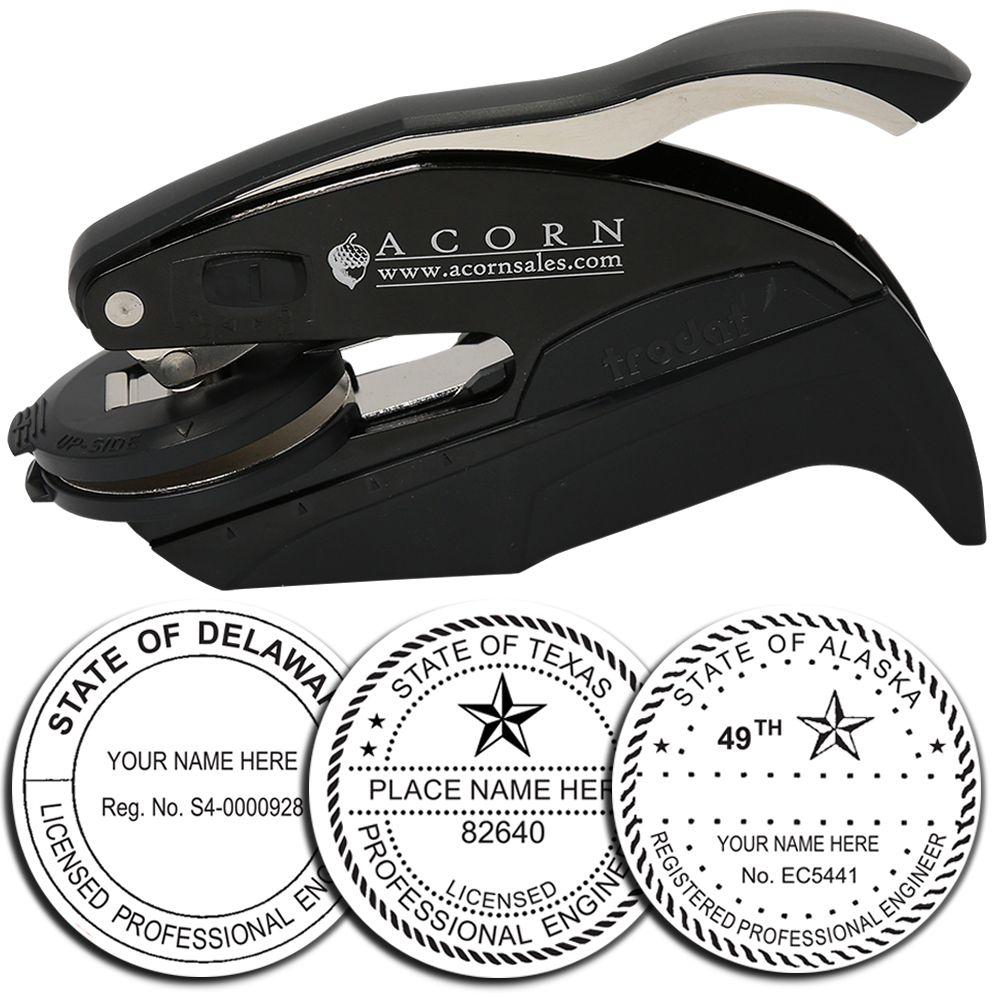

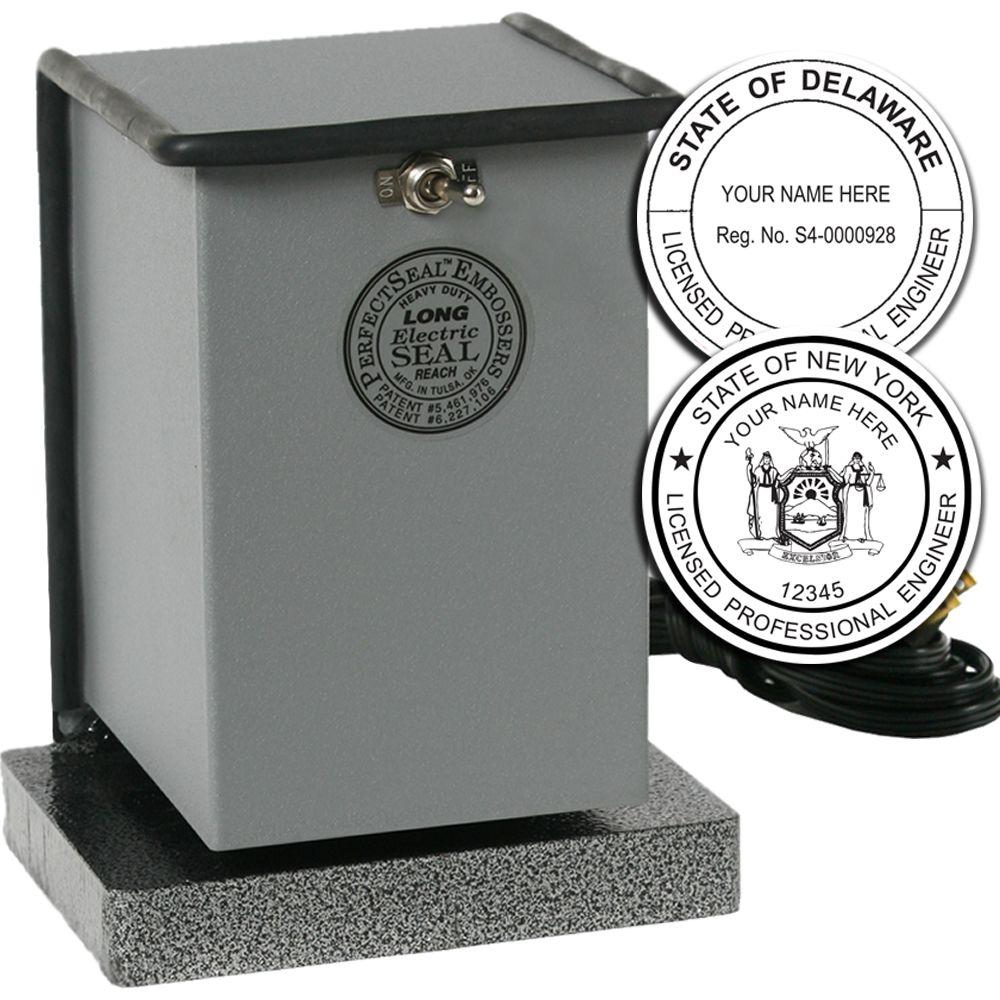

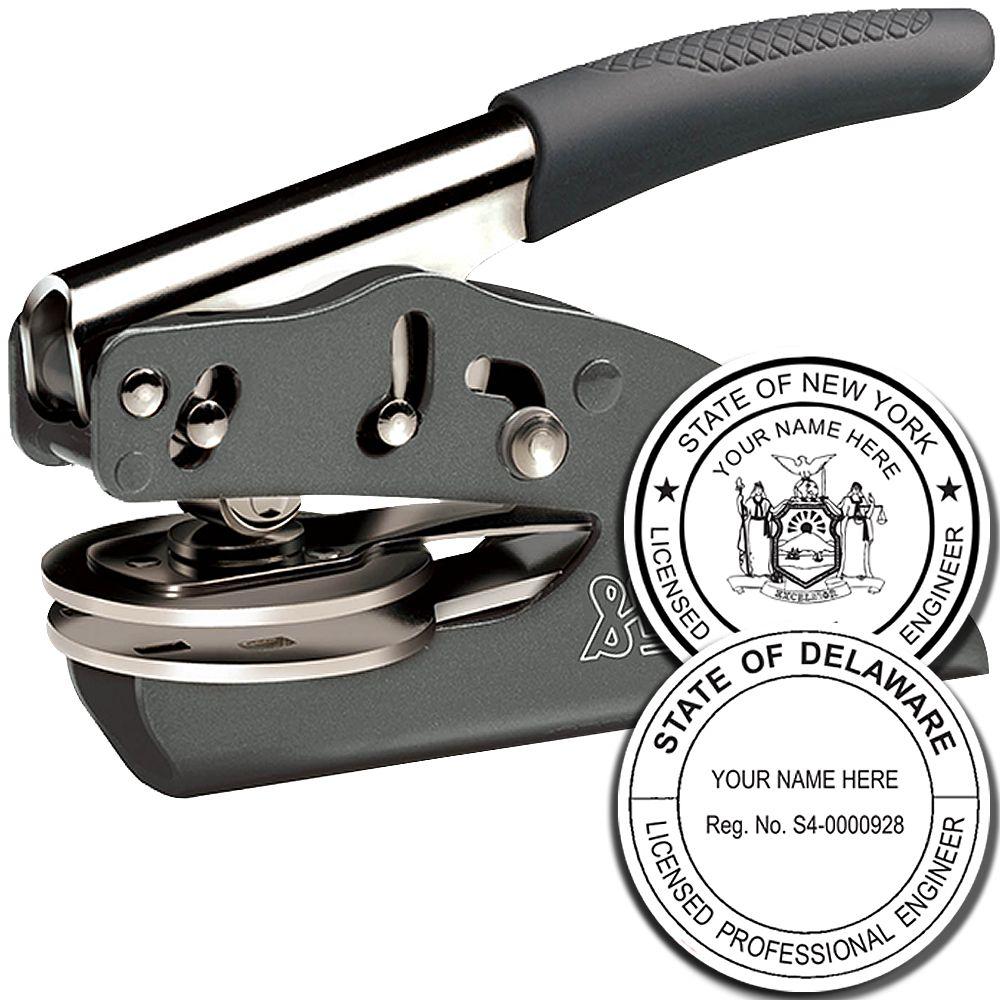

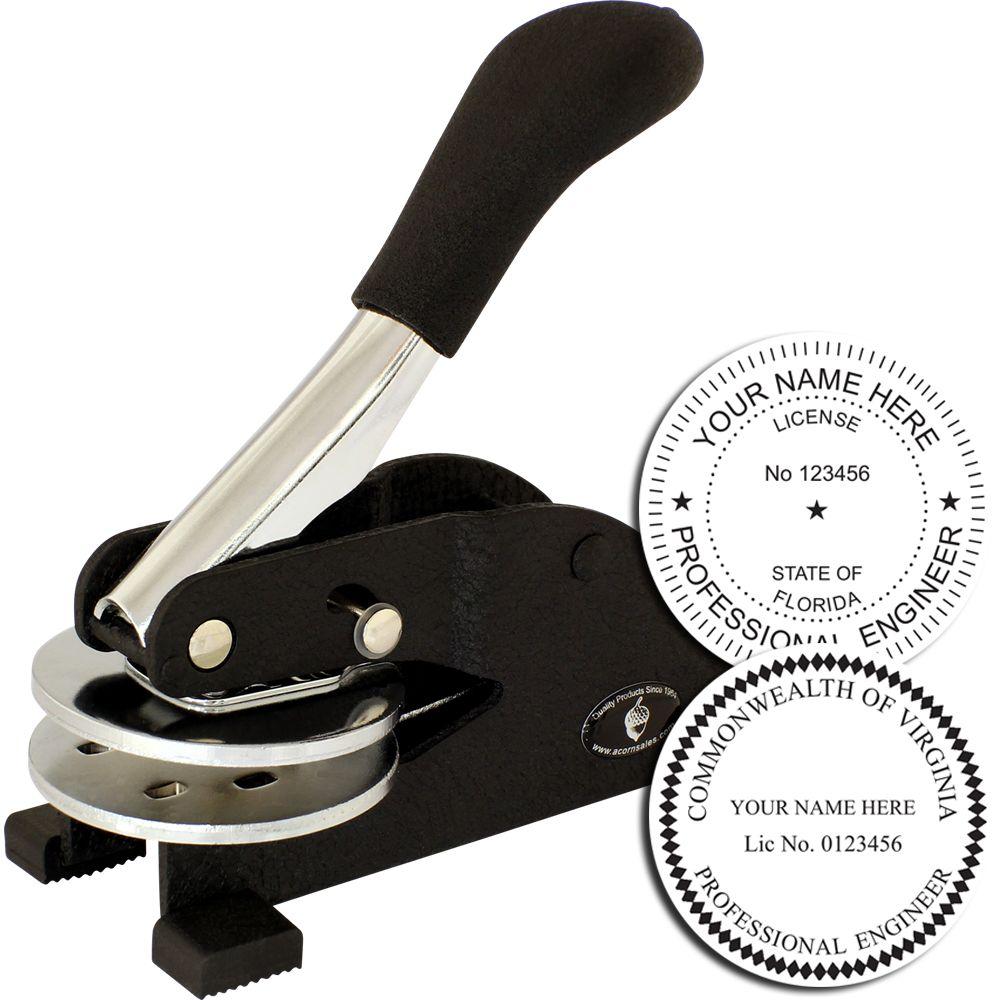

Embosser, rubber stamp or digital
Three devices, expressly. Regulation 49-207.A(2) provides that “Rubber stamps (wet seal), raised embossed seals or computer-generated seals, identical in size, design and content with the approved impression seals may be used by the licensee”, and 49-207.B(2) says the same for the firm seal. The safe buy is the rubber stamp, since South Carolina calls it the wet seal and since the computer-generated version must be identical in size, design and content to the approved impression seal anyway. Note what the computer-generated seal may NOT be used for, under 49-207.C(5), below.
Signing and dating
The placement is prescribed twice and identically. S.C. Code Ann. § 40-22-270(6) requires that “the licensee shall affix his signature and date under or across the face and beyond the circumference of the seal”, and adds that “The signature and date must not be applied in a manner that obliterates or renders illegible the licensee’s license number or name.” Regulation 49-207.C(2) repeats it and fixes which date: “The signature and date when the document was prepared must be affixed under or across the face and beyond the circumference of the seal.” So the South Carolina date is the preparation date, not a separate sealing date, and the signature may sit under the seal or across it but must in either case run past the outer circle. Neither the statute nor the regulation requires the signature to be handwritten, and neither bans a signature stamp in terms.
Two seals per drawing, and the computer-generated seal must come off the electronic file
South Carolina asks for something almost no other state does: a sheet produced through a firm carries two seals. The engineer’s personal seal is one. The firm’s Certificate of Authorization seal is the other, at least 1-1/2 inches in diameter, with the firm name and the COA number in the center and the words South Carolina and Certificate of Authorization between the inner circle and the outer edge. A firm ordering stamps for a new South Carolina office that buys only individual seals has bought half of what the drawing needs.
The second trap is electronic transmittal, where South Carolina says the opposite of what most digital-sealing guidance says. Regulation 49-207.C(5) requires the computer-generated seal to be REMOVED from the file that goes out electronically and replaced with a sentence naming the sealer, the license number and the date of sealing, and states flatly that the electronic media is not a certified document. The signed and sealed paper copy is what goes to the client. Anyone importing a workflow built for a state that wants a cryptographically signed sealed PDF will be doing the one thing this regulation forbids.
The third item is the legend date-line. Post-2001 licensees and pre-2001 licensees do not get the same words, and the statute and the regulation phrase the post-2001 legend differently. Engineers holding dual engineer and surveyor licensure get a third legend again, and surveyors get one of four depending on tier and specialty.
Which documents must be sealed
Plans, specifications, plats and reports filed with public authorities, and plans and specifications issued as job site record documents, under § 40-22-270(3) and (4), plus each sheet under 49-207.C(2). The bound-volume relief in 49-207.C(3) is narrower than most states: the preparer may seal, date and sign only the title or index sheet of a bound volume of documents, specifications or reports, provided that sheet identifies all the other sheets and any sheets prepared by another licensee are separately sealed, but the paragraph then says “This provision, however, shall not apply to design drawings and construction plans prepared by or under the responsible charge of a licensee. Such documents shall carry the required seals, date and licensees signature on each sheet.” Drawings are always sheet by sheet. Revisions need their own seal under 49-207.C(4). Two enforcement hooks sit in the statute: § 40-22-270(7) directs the clerk of court or register of deeds to refuse a map, plat or survey dated after July 1, 1977 that lacks the personal signature and prescribed impression seal of a professional surveyor, and adds that “No charge may be made by a professional surveyor for the application of his impression seal”; § 40-22-270(8) directs building officials to refuse permits absent evidence that documents requiring an engineer’s seal were prepared by a licensed engineer or are exempt. Section 40-22-280 carries the exceptions from the chapter.



Electronic and digital seals
South Carolina runs against the grain here and the rule is easy to miss. Regulation 49-207.C(5) provides that “Documents transmitted electronically shall have the computer-generated seal removed from the original file and a copy of the project report shall be signed, sealed and sent to the client. The electronic data shall have the following inserted in lieu of the signature and date: This document originally was issued and sealed by (name of sealer), (license number), on (date of sealing). The electronic media shall not be considered a certified document.” There is no digital signature standard in the chapter, no certificate authority named, no algorithm named and no tamper-evidence criteria of the kind Missouri and Tennessee set out. A scan of the full current text of Chapter 49 for the words digital and electronic turns up no other sealing provision. The board’s position, as written, is that the certified document is the signed and sealed paper copy and the electronic file is a carrier that must not display the seal.
Renewal, lapse and retirement
S.C. Code Ann. § 40-22-270(5) makes it “unlawful to seal documents with a seal after the certificate of the licensee or the certificate of authorization in the case of firms named on the seal has expired or has been revoked or suspended unless the certificate has been renewed, reissued, or reinstated”, which covers the firm seal as squarely as the individual one. The cycle is biennial: regulation 49-105.A(1) provides that the privilege to practice in any category or tier expires on June 30 biennially in even numbered years unless renewed, with firm certificates of authorization handled separately by 49-106. Neither the statute nor Chapter 49 requires an expired seal to be destroyed or surrendered, and neither says the license number changes on reinstatement, so the same die is usable again once the certificate is back in force.
Firm registration
The firm needs its own seal, and that seal goes on the document. That is the requirement most often missed here. S.C. Code Ann. § 40-22-270 opens by requiring “Each licensee and each firm practicing under a certificate of authorization” to obtain a seal, and § 40-22-270(2) provides that “Seals for firms practicing under a certificate of authorization must bear the firm’s name and authorization number.” Regulation 49-207.B(1) gives the design: at least 1-1/2 inches in diameter, with the certificate holder’s name and the assigned Certificate of Authorization number in the center, and in the space between the circle and the outside of the seal “the words South Carolina and the words Certificate of Authorization.” Regulation 49-207.C(2) then puts it on the paper: “Where the engineering or surveying practice is provided through a firm, such documents shall also carry the Certificate of Authorization seal.” Rubber stamp, raised embossed and computer-generated versions of the firm seal are all permitted under 49-207.B(2).
What to check before you order
South Carolina has two devices, not one. Your individual seal is at least 1-1/2 inches in diameter and carries your name, your license number, evidence of your license category, and the legend that matches your license issue date: Registered Professional Engineer for a license issued before July 1, 2001, Licensed Professional Engineer for one issued after it, and Professional Engineer and Surveyor for dual licensure. A firm seal is also at least 1-1/2 inches in diameter, with the firm name and Certificate of Authorization number in the center and the words South Carolina and Certificate of Authorization in the annular space. If you are a surveyor, get the tier right, because TIER A, TIER B, photogrammetric and GIS each carry a different legend; rubber stamps, raised embossers and computer-generated images are all permitted and must be identical in size, design and content. South Carolina asks you for no proof of licensure and requires no imprint filing with the board, but it does expect the individual and firm seals to be similar to the designs prescribed for the Board, so work from the current published chapter rather than an older sample.
Browse professional engineer stamps and seals.
Frequently asked questions
Do I need two seals in South Carolina?
Yes, where the work is provided through a firm. S.C. Code Ann. § 40-22-270 opens by requiring “Each licensee and each firm practicing under a certificate of authorization” to obtain a seal, § 40-22-270(2) requires that “Seals for firms practicing under a certificate of authorization must bear the firm’s name and authorization number,” and Regulation 49-207.C(2) requires the document to carry the Certificate of Authorization seal in addition to the individual one. The certificate of authorization itself comes from § 40-22-250.
What goes on the South Carolina firm seal?
Regulation 49-207.B(1) gives the design: at least 1-1/2 inches in diameter, the certificate holder’s name and the assigned Certificate of Authorization number in the center, and in the space between the circle and the outside of the seal “the words South Carolina and the words Certificate of Authorization.” Rubber stamp, raised embossed and computer-generated versions are all permitted under 49-207.B(2), on the same terms as the individual seal.
What size does a South Carolina PE seal have to be?
At least 1-1/2 inches in diameter. Regulation 49-207.A(1) provides that “The seal of engineers and surveyors licensed by the Board shall be at least 1 1/2 inches in diameter and similar to that prescribed for the Board.” That is a floor rather than a fixed size, so larger is permitted and smaller is not. The firm seal carries the same floor under 49-207.B(1). The regulation does not dimension the inner circle.
Does my South Carolina seal say Registered or Licensed Professional Engineer?
It depends on your license date, and the two sources word it differently. S.C. Code Ann. § 40-22-270(1) requires “the legend ‘Professional Engineer’ or ‘Professional Surveyor’ except for licenses issued before July 1, 2001, which may have the legend ‘Registered Professional Engineer’ or ‘Registered Land Surveyor’.” Regulation 49-207.A(1) states the center content as the license number plus “Registered Professional Engineer, for engineers licensed prior to July 1, 2001” or “Licensed Professional Engineer, for engineers licensed after July 1, 2001,” with “Professional Engineer and Surveyor” for engineers holding dual licenses. Copy the words from the current regulation and confirm the issue date.
What else has to appear on the face?
Your name as licensed, your license number, the correct legend, and evidence of the license category for professional engineers or the tier designation for professional surveyors, under S.C. Code Ann. § 40-22-270(1) and Regulation 49-207.A(1). The name is required by the statute even though the regulation’s description mentions only the number; 49-207.C(2) confirms it by forbidding a signature that obliterates “the licensees name and number.” Surveyor legends run to four: Professional Land Surveyor for TIER A land boundary surveyors, a separate TIER B form, Professional Photogrammetric Surveyor and Professional GIS Surveyor.
How do I send a sealed South Carolina document electronically?
With the seal taken off. Regulation 49-207.C(5) requires the computer-generated seal to be removed from the file that goes out, replaced with the sentence “This document originally was issued and sealed by (name of sealer), (license number), on (date of sealing),” in place of the signature and date, with a signed and sealed copy of the project report sent to the client. The regulation states flatly that “The electronic media shall not be considered a certified document.” This provision was last amended by SCSR 46-5 Doc. No. 5076, effective May 27, 2022.
Is a digitally signed PDF a certified document in South Carolina?
No. Regulation 49-207.C(5) says the electronic media is not a certified document, and Chapter 49 sets no digital signature standard: no certificate authority is named, no algorithm is named, and no tamper-evidence criteria of the kind other states publish appear anywhere. A scan of the full current text of Chapter 49 for the words digital and electronic turns up no other sealing provision. A workflow built around a cryptographically signed sealed PDF does the one thing this regulation forbids.
Where do the signature and date go on a South Carolina document?
Under or across the seal, running past the outer circle. S.C. Code Ann. § 40-22-270(6) requires that “the licensee shall affix his signature and date under or across the face and beyond the circumference of the seal,” and adds that “The signature and date must not be applied in a manner that obliterates or renders illegible the licensee’s license number or name.” Regulation 49-207.C(2) repeats it and fixes which date: “The signature and date when the document was prepared must be affixed under or across the face and beyond the circumference of the seal.” So the South Carolina date is the preparation date, not a separate sealing date. Neither source requires the signature to be handwritten, and neither bans a signature stamp in terms.
Which South Carolina documents need a seal, and on which sheets?
Plans, specifications, plats and reports filed with public authorities under § 40-22-270(3), and plans and specifications issued as job site record documents at construction projects in the state under § 40-22-270(4). Regulation 49-207.C(2) adds the per-sheet rule: each sheet of design or construction plans and drawings, and of maps, plats and charts for land surveying, is sealed and signed by the licensee preparing it or in responsible charge of its preparation. The bound-volume relief in 49-207.C(3) is narrower than most states: the title or index sheet alone may be sealed, dated and signed if it identifies all the other sheets and sheets by another licensee are separately sealed, but the paragraph then says “This provision, however, shall not apply to design drawings and construction plans prepared by or under the responsible charge of a licensee. Such documents shall carry the required seals, date and licensees signature on each sheet.” Revisions need their own seal under 49-207.C(4). Exceptions to the chapter sit at § 40-22-280.
Can I use an embosser or a computer-generated seal in South Carolina?
Yes, along with a rubber stamp. Regulation 49-207.A(2): “Rubber stamps (wet seal), raised embossed seals or computer-generated seals, identical in size, design and content with the approved impression seals may be used by the licensee.” Rule 49-207.B(2) says the same for the firm seal. South Carolina calls the rubber stamp the wet seal, and since the computer-generated version must be identical in size, design and content to the approved impression seal, the stamp is the practical starting point. Note that the computer-generated seal is the one that must come off an electronically transmitted file.
Will a register of deeds reject an unsealed plat in South Carolina?
Yes, on the surveying side. S.C. Code Ann. § 40-22-270(7) directs the clerk of court or register of deeds to refuse a map, plat or survey dated after July 1, 1977 that lacks the personal signature and prescribed impression seal of a professional surveyor, and adds that “No charge may be made by a professional surveyor for the application of his impression seal.” Section 40-22-270(8) does the parallel job for buildings, directing building officials to refuse permits absent evidence that documents requiring an engineer’s seal were prepared by a licensed engineer or are exempt.
What happens to my South Carolina seal when the license expires?
It is unusable until the certificate is back in force, and then it works again. S.C. Code Ann. § 40-22-270(5) makes it “unlawful to seal documents with a seal after the certificate of the licensee or the certificate of authorization in the case of firms named on the seal has expired or has been revoked or suspended unless the certificate has been renewed, reissued, or reinstated,” which covers the firm seal as squarely as the individual one. The cycle is biennial: Regulation 49-105.A(1) expires the privilege to practice in any category or tier on June 30 biennially in even numbered years unless renewed, with firm certificates handled separately by 49-106. Neither the statute nor Chapter 49 requires an expired seal to be destroyed or surrendered, and neither says the license number changes on reinstatement.








