
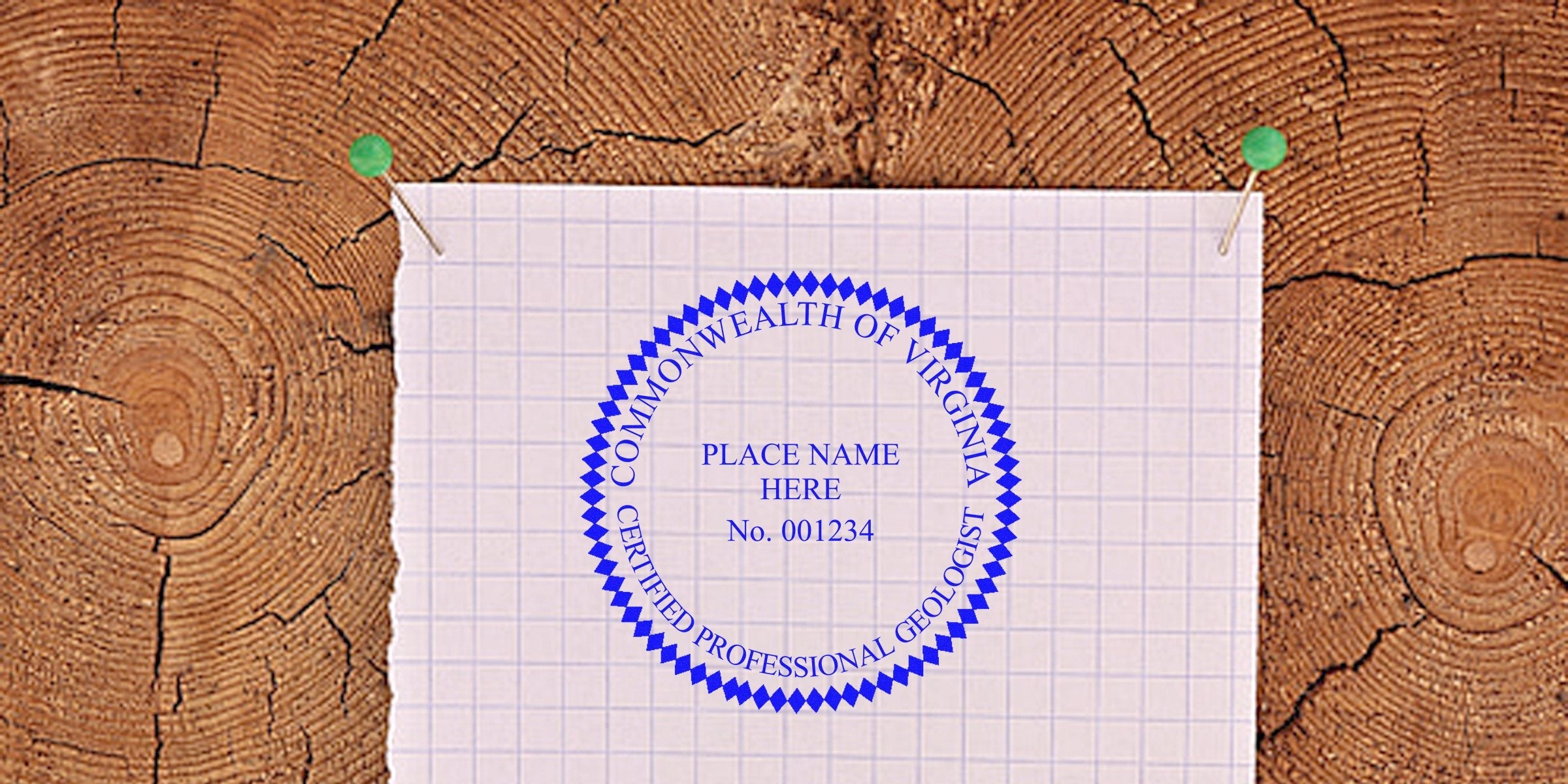
If you’re a practicing geologist in Virginia, you’ll likely need an official seal or stamp to sign off on your professional documents. One of the most common questions is how large that mark should be. After all, your seal is more than a simple circle of ink—it shows your qualifications and your compliance with state laws. But what exactly should you keep in mind regarding Virginia geologist stamp size, design, and everyday usage? Let’s explore these details in a friendly, approachable way so you can feel confident about applying your stamp each time.
Understand the Stamp’s Purpose
The official seal or stamp you use as a Virginia geologist verifies your identity and your license. Documents you sign with it, such as geological reports or site assessments, become legally recognized. This verification step helps clients and regulatory authorities trust your expertise.
Because your seal represents your professional status, it communicates that you’ve met the licensing requirements set by the state. Whenever someone sees your stamped document, they know you’re a licensed geologist with the authority to produce official work. It’s kind of like a signature, but with an added layer of authenticity and visual clarity.
On a day-to-day basis, you might use this seal on engineering drawings, environmental impact statements, or any geologic analysis that’s filed with a government agency. That means your stamp’s clarity and readability matter, which leads us to the topic of its size.
Know the Required Size
Now we get to the heart of the matter: the Virginia geologist stamp size. If you’ve ever noticed variations in professional seals, you’ll know they’re not all the same. Each state sets its own guidelines, and Virginia is no exception. Typically, official guidance will specify a standard diameter (often around 1 ⅝" to 2") for an embossed or stamped image.
There isn’t a single universal dimension that covers every field, so the size for a geologist’s seal may differ slightly from that of an engineer or architect. To make sure you get it right, it’s best to consult the state’s Board for Professional Soil Scientists, Wetland Professionals, and Geologists. However, most seals land in a tight range, often measuring around two inches in diameter. This size ensures that your text is legible, and your name, license number, and “Commonwealth of Virginia” label stand out clearly.
If the dimensions are off—say you use a tiny stamp that’s tough to read or an oversized seal that takes up half the page—you might raise eyebrows with clients or regulators. Keep it crisp, readable, and aligned with official specs.
Meet the Official Guidelines
While size is crucial, you also need to check what else is required for your seal to be valid in the Commonwealth of Virginia. For the finer points of compliance, you can learn more by visiting the Virginia geologist stamp requirements. These guidelines will walk you through the shape, wording, and any must-have elements (like your license number) that need to appear on the seal.
Some geologists worry: “If I make my seal a bit smaller, can it still be valid?” Typically, no. You risk noncompliance if the state doesn’t consider your stamp’s range acceptable. If you’re in doubt, always confirm with the licensing board or reference official rules. You want an official seal that meets every legal requirement so your work isn’t questioned down the line.
The design requirements might cover:
- Circular layout with the state name around the edge
- Your full registered name as it appears on your license
- “Licensed Professional Geologist” or other precise text
- A clear space for your license number
Beyond those elements, there’s often little room for customization. But that’s actually a good thing—everyone’s stamp looks standard, so it’s easier for someone reviewing your document to spot it.
Select a Trusted Supplier
Choosing the right supplier matters almost as much as getting the correct stamp size. After all, you want a reliable source that knows the regulations, honors them, and delivers a high-quality product you can use for years. That’s where Acorn Sales comes in.
Since 1964, Acorn Sales has specialized in stamps and seals for licensed professionals in Virginia and beyond. With such a long history, they’ve refined their craft to ensure you get:
- Correct Virginia geologist stamp size: They stay updated on current state regulations, so you won’t have to worry about compliance.
- Free electronic seal: Alongside your physical stamp, you can also get a digital version at no extra cost. This is especially helpful for modern workflows that involve electronic documents and email signatures.
- Durable construction: Their stamps and embossers hold up to repeated use, so you won’t have to replace them every few months.
- Friendly customer service: If you’re ever unsure about revisions to state rules, their team can point you in the right direction.
When you order through a trusted vendor like Acorn Sales, you streamline the entire process. You place your order, receive the properly sized seal, and can start stamping your professional documents with zero fuss. Plus, it’s nice to know you’re dealing with an established brand that’s been around for decades.
Maintain Your Professionalism
Now that you know the stamp’s size and the significance of meeting state regulations, it’s good to keep in mind how your seal contributes to your professional image. A crisp and clear stamp or embossed seal shows that you take your work seriously. Clients and peers notice these details. You might even say your seal is a small but powerful marketing tool.
Consider approaches to boost the impact of your geologist seal:
- Keep your stamp inked and ready. A faint or smudged impression doesn’t help anyone.
- Check your seal’s alignment. A crooked stamp can look unprofessional.
- Store your stamp properly so the die or embosser stays pristine. Dust and moisture can degrade the materials over time.
- Stick to the standard color (often black ink for stamps, or a single embossing press) so your documents maintain a uniform look.
When you reinforce your credibility with a consistent, professional seal, all your clients see the same level of care you bring to your geological analyses.
Explore Essential Usage Tips
The physical size of your stamp is key, but how you actually mark your documents is just as important. If you’re new to stamping, the learning curve is minimal, but a few tips never hurt. Think of it like sealing an official letter: you want everything placed neatly and in line with etiquette.
Positioning Your Stamp
The position may vary depending on the nature of the document. Some forms might specify a seal location. For instance, geotechnical reports sometimes leave a designated box at the bottom corner for the seal. If no guidelines are given, go with a lower corner or near your signature, ensuring it doesn’t obscure text or diagrams.
Using Embossers vs. Rubber Stamps
Rubber stamps are quick, portable, and easy to re-ink. Embossers, on the other hand, create a raised impression that’s tough to forge or photocopy incorrectly—ideal for preventing tampering. Whichever you choose, the crucial point is that your final seal meets the official size and layout.
Electronic Vs. Physical Seal
If you’re working with digital documents—like PDFs—a free electronic seal from Acorn Sales can be a game-changer. Rather than printing, stamping, and scanning your papers back into digital format, you can apply your electronic seal file directly within a PDF editor. Just be sure that you follow any e-seal regulations set by the Virginia board. Some organizations might still prefer a physical stamp for proposal submissions, so stay adaptable.
Keep Up With Changing Rules
Even if you’re well-versed in Virginia stamp requirements, regulations can change periodically. It’s a good habit to revisit the official guidelines at least once a year or whenever you renew your license. That way, you’re never caught off guard by a surprise revision that might invalidate your seal or require reordering a different size.
If you hear rumors from colleagues about possible changes, confirm them with the official licensing board rather than relying on word of mouth. A quick phone call or email can help you avoid a headache down the road.
Use a Checklist for Each Document
When you get busy, it’s easy to forget a small detail on your official forms. To prevent any missteps, consider keeping a short checklist nearby:
- Ensure the document is complete and accurate before stamping.
- Verify you’ve used the correct geologist title and license number.
- place your seal in a readable place, with enough margin so it’s not cut off when photocopied.
- Double-check that your stamp looks clean and is the required size.
- Sign and date near the seal if needed.
A quick two-minute review can save you from redoing an entire document later.
Final Thoughts
Your geologist stamp is more than just a formality. It shows you’ve earned the confidence of the state to practice geology professionally. Keeping it properly sized, legible, and in line with Virginia’s rules helps ensure your documents are accepted by clients, agencies, and anyone else reviewing your work.
If you’re still unsure, take time to consult the Virginia geologist stamp requirements. And if you’re ready to order, Acorn Sales has you covered with over half a century of experience, a free electronic seal, and unbeatable quality. With the right stamp, sized correctly, you can stamp your reports with pride and let everyone know they’re getting credible, professional work.
Feel free to update your seal if regulations change or your contact details shift. Doing so keeps your records and credentials in top shape. After all, it’s worth the small effort to maintain a stamp that effectively represents your expertise. Happy stamping!
Frequently Asked Questions
What Is the Standard Virginia Geologist Stamp Size?
You’ll typically see a diameter around two inches for a Virginia geologist seal. This dimension ensures that your name, license data, and the state label are all legible. Double-check official guidelines, since any big deviation from two inches might lead to noncompliance.
Can I Use a Smaller Stamp to Save Space?
It’s best to stick to the size range the state expects. A smaller stamp can be hard to read or not meet the rules. Ultimately, using the correct size helps your documents pass any official scrutiny without question.
Do I Need Multiple Stamps for Different Documents?
In most cases, one official seal should cover your professional stamping needs. However, some geologists like to have both an embosser and a rubber stamp on hand, especially if they handle both physical and digital documents. The style can vary, but the size, text, and essential design elements should remain consistent.
Does Acorn Sales Provide an Electronic Seal Too?
Yes. Acorn Sales offers a free electronic seal alongside your custom rubber stamp or embosser. Having both on hand can really streamline your workflow, especially if you work on projects that require electronic submissions.








