
Explore Maryland Land Surveyor Seal Laws
If you work as a professional land surveyor in Maryland, you’ve likely heard about the need to comply with Maryland land surveyor seal laws. These rules aren’t just bureaucratic hurdles, they help safeguard the public by ensuring that all surveyed documents come from a licensed expert. Without the proper seal, your drawings, plats, or reports may not stand up in legal or regulatory scenarios.
In this guide, you’ll learn how these regulations apply to you, what types of seals are acceptable, and how to avoid pitfalls that could cost you time and money. It’s designed to be straightforward and friendly, so you can get clear answers without wading through legalese.
Why The Seal Matters
A land surveyor’s seal does more than look official. It confirms your authority to practice in Maryland and attests that the work you provide was done under your professional supervision. Imagine signing an important contract without your signature, it likely wouldn’t hold up in court. Similarly, an unsigned survey document might be invalid if it lacks a proper seal.
Seals are also used to trace responsibility, a vital step for public safety. If an issue with land boundaries appears in the future, agencies and clients can identify the surveyor who prepared the documents. That transparency means you need to be 100 percent sure your seal meets every requirement of Maryland’s regulatory boards.
Understand Key Legal Requirements
Maryland’s laws for land surveyor seals clarify who must use a seal, when to apply it, and what form it should take. Although every detail is outlined by the Maryland Board for Professional Land Surveyors, the gist is that any final survey you share with clients, local authorities, or state agencies must bear an official seal.
When And Where You Need The Seal
You’ll typically need to apply your seal on these documents:
- Boundary surveys and plat drawings
- Topographic surveys
- Subdivision plans and related legal plats
- Any official report or document you finalize for public or client use
Maryland law requires the seal to be placed near your signature, ensuring readers know exactly who is accepting responsibility. If you’re emailing or filing documents digitally, a digital seal may be necessary, as the state recognizes electronic formats under certain guidelines. With that said, always double-check the latest state regulations to confirm whether a physical stamp or digital seal is needed for your specific project.
Format Options For Your Seal
Maryland’s statutes allow a few formats for a valid surveyor seal. Generally speaking, you can invest in an embossed seal (raised impression), a pre-inked or self-inking stamp, or a digital seal if applying your seal electronically. Each option carries its own set of perks:
| Seal Type | Advantages | Considerations |
|---|---|---|
| Embossed Seal | Classic look, tamper-evident impression | Can be tricky to reproduce via scanning |
| Pre-Inked Stamp | Clear, consistent imprints, easy to use quickly | Needs periodic ink refills |
| Self-Inking | Convenient, can handle higher volume of documents | Must be re-inked eventually |
| Digital Seal | Ideal for electronic submissions, easy to store and retrieve | Requires secure software that meets Maryland’s rules |
Pick the option that best aligns with your workflow. For instance, if your office processes a lot of physical paper records, an embossed or self-inking seal might be a perfect match. If you’re handling more online submissions, a digital seal smooths out the filing process. Whatever you choose, it must adhere to the design specifics set by the Maryland board, which normally detail the exact diameter, border text, and role identifier (e.g., “Licensed Land Surveyor”).
Obtain Your Maryland Land Surveyor Seal
So, how do you secure your official seal and make sure it’s up to Maryland’s standards? With a bit of planning, you can breeze through the ordering process and be stamping (or embossing) your documents in no time.
Choose A Trusted Supplier
Since not all surveyor seals are created equal, it’s wise to partner with a reputable vendor. Acorn Sales is one example of a long-standing provider, crafting high-quality stamps and seals for well over 60 years. Thanks to that history, you’ll find proven reliability, plus a range of products that meet Maryland’s legal specs.
Acorn Sales also includes a free digital seal with your stamp or embosser purchase, saving you the headache of finding separate solutions for paper and electronic documents. This continuity can simplify your day-to-day tasks, especially if you switch between conventional and online filing methods.
Confirm The Required Design
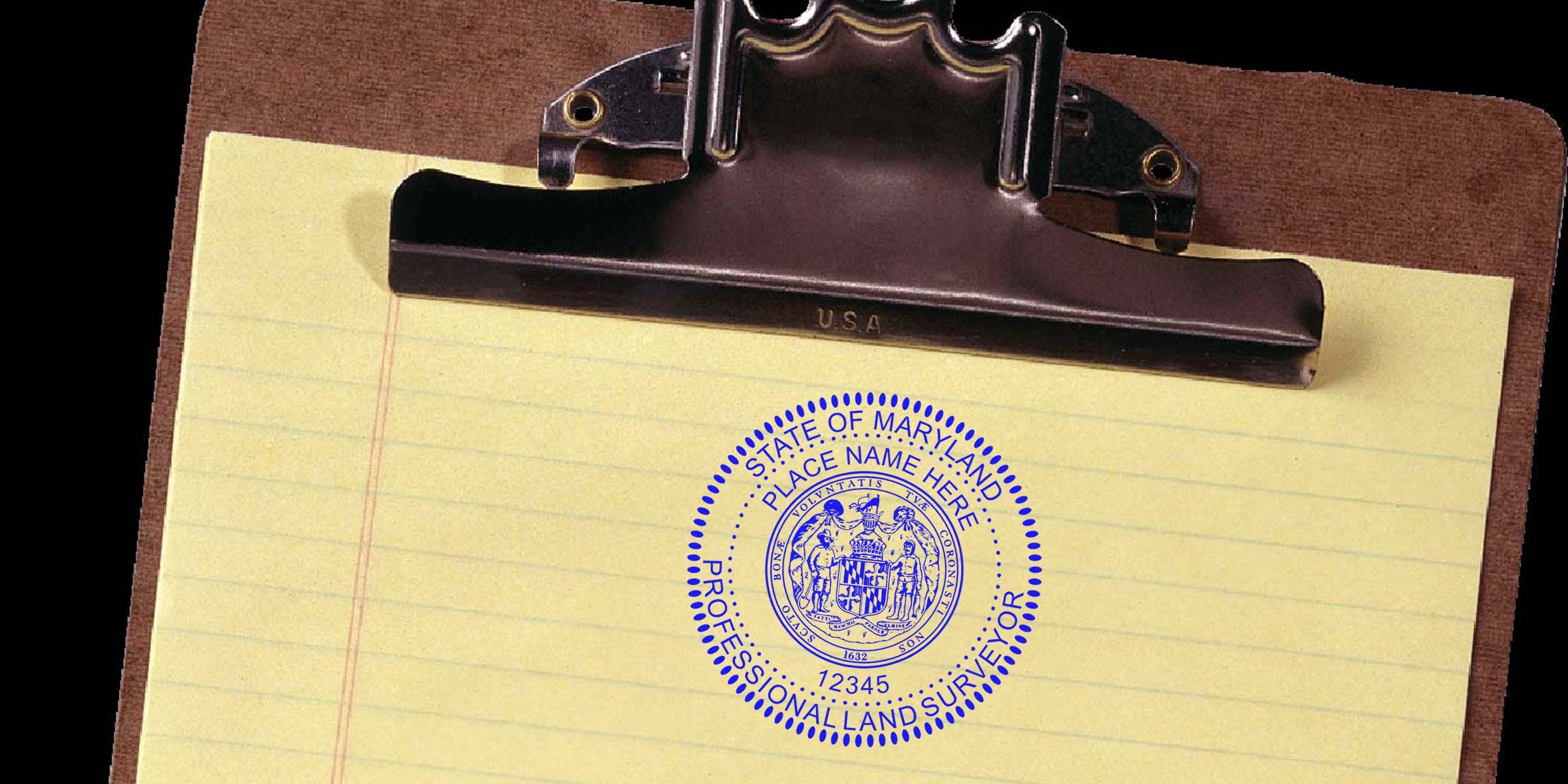
Before you place your order, make sure you’re crystal clear on Maryland’s layout criteria for land surveyor seals. The outer ring typically says “State of Maryland,” and your license number should appear clearly, so that no one mistakes your seal for someone else’s. You also need to include specific wording for your license category, such as “Professional Land Surveyor.”
If you’re unsure, poke around relevant guidelines, or consult the Maryland Board’s official documentation. You’ll find every nitty-gritty design requirement specified, including acceptable fonts and overall diameter. If you’d like more details on best practices for official seals, visit these Maryland land surveyor stamp requirements. It outlines key steps needed for ensuring your seal is both valid and professional.
Finalize Your Order
Once you have the design nailed down, it’s time to order. During checkout, you’ll typically provide:
- Your full name as it appears on your license
- License number and official title (e.g., “Licensed Professional Land Surveyor”)
- Your preference for an embossed seal, pre-inked stamp, self-inking stamp, or digital seal
After the order is confirmed, keep an eye on the proof or sample image the supplier sends. Verify every detail. If something is off, correct it right away, because your final seal must match the state’s rules precisely. When you’re good to go, approve the proof, and the supplier will manufacture your seal or finalize the digital file.
Avoid Common Pitfalls
Even well-intentioned pros can slip up. These oversights might seem minor, but they can lead to delays or even legal headaches down the line. Let’s steer clear of the usual snags altogether.
Misplacing The Seal
One common error is to place your seal too far from your signature or on a different page of the document. If someone reviews your plat, they should immediately be able to identify both your signature and the corresponding seal. Keep them side-by-side or at least in the same vicinity.
Failing To Update When Renewing
When you renew your license, the last thing you might think to do is update your seal. But if your license has any changes—like a new license number format—Maryland may require you to get an updated seal. An outdated or incorrect seal could raise doubts about the legality of your documents, so make sure your seal information is consistent with your current license details.
Mixing Up Digital Requirements
Digital seals have their own security guidelines. For instance, you might need to use a secure PDF signature or a special code to validate your seal. Forget those, and your electronically submitted plan might be rejected. Before you file anything online, confirm the protocols with your local county authorities or relevant state department.
Overusing The Same Stamp
Does your stamp produce faint or patchy impressions over time? That could happen with older self-inking stamps. If the imprint is unreadable, regulators might question the authenticity of your documents. Keep an eye on the clarity of your seal, and replace or re-ink it if the impression degrades.
Additional Tips For Compliance
Staying on top of evolving rules often feels like a chore, but a little diligence goes a long way. Here are a few more suggestions:
- Store your physical seal in a safe spot. You don’t want it floating around the office where anyone can borrow it without your supervision.
- Keep digital seals password-protected to reduce unauthorized use.
- Subscribe to official updates or newsletters from Maryland’s professional boards. New legislation or urgent changes might pop up, and you’ll want to be the first to know.
- If you move or change your name, update your licensing info and confirm you don’t need a new seal design.
Acorn Sales has specialized in professional stamps and seals for over 60 years. Their experience means fewer mishaps with your layout and faster turnaround times. You also get a free digital seal included, so whether you’re submitting a physical plat or an e-file, you’ll have total coverage. Plus, their products meet all relevant state guidelines, helping you stay in compliance automatically.
Final Thoughts
Navigating Maryland land surveyor seal laws doesn’t have to be a mind-boggling process. By choosing the right type of seal, confirming you meet every legal requirement, and taking steps to secure your seal from misuse, you’ll streamline your practice and protect both your clients and your license. Whether you prefer an embossed seal for physical docs or a digital seal for online submissions, the key is to follow Maryland’s guidelines meticulously.
If you’re looking for a reliable seal that checks every box, consider Acorn Sales. Thanks to their decades-long track record and free digital seal feature, you can quickly get equipped for your professional needs. In the end, a properly applied seal not only validates your hard work, it shows the public you’re a licensed pro who takes compliance seriously.
Frequently Asked Questions
Can I Use A General “Engineer” Or “Architect” Stamp Instead?
No. In Maryland, each discipline has its own distinct seal format that indicates your specific credentials. Using the wrong seal can invalidate your documents and put your license at risk. Always ensure you have a seal that explicitly states your role as a “Professional Land Surveyor.”
Do I Need A Seal For Preliminary Drafts Or Proposals?
Generally, preliminary sketches or proposals don’t require an official seal, but the rules can vary by agency or municipality. If your draft includes final, actionable details—such as boundary lines that a contractor will use—then it’s safer to seal and sign. Double-check local regulations to avoid confusion.
Can I Share My Seal With My Colleague?
Definitely not. Your seal is your unique professional identifier. No colleague, subordinate, or friend should use it on their own documents, even if they’re credentialed. If multiple licensed surveyors work in your office, each must have their own seal. Unauthorized use can lead to serious disciplinary actions.








