
Understand The Basics
If you’re a licensed professional in the Mount Rushmore State, a South Dakota Land Surveyor Seal Embosser is more than a convenience. It’s an official mark that shows you’ve met the state’s standards for surveying, and it confirms that the documents you sign are authentic. Whether you’re new to surveying or you’ve been in the field for years, knowing your embosser’s purpose and design options can help you present your credentials clearly and confidently.
What A South Dakota Land Surveyor Seal Embosser Does
A land surveyor’s seal embosser is designed to make a raised impression on documents. That raised impression shows clients, colleagues, and government officials that you’re a recognized surveyor in South Dakota. Although you might see colleagues using rubber stamps, the classic embosser stands out by creating a three-dimensional seal. This helps defend against tampering or photocopy duplicates that ignore the subtle details. Plus, embossed documents look more formal, which matters when you’re dealing with contracts, boundary surveys, plat maps, or legal exhibits.
Key Benefits Of Using An Embosser
- Provides a professional appearance that builds trust with clients.
- Offers a tactile, raised mark that’s harder to counterfeit.
- Maintains a consistent look across all your official documents.
- Aligns with many state regulatory requirements for surveyors.
If you prefer an ink-based tool, rubber stamps exist too. Still, many surveyors swear by the crisp, raised impression of the metal embosser, which often reflects the prestige of the profession.
Follow State Regulations
Before you finalize any purchase, it’s essential to pay attention to the state regulations that guide land surveyors in South Dakota. The state board typically outlines what’s required on the seal’s design, how it’s used, and when it must appear on official documentation. These details ensure that your seal matches professional standards and remains legally valid in court or public record.
Professional Requirements For Surveyors
You’ll want to confirm that your seal includes critical details, such as:
- Your full name, as it appears on your license.
- The words “Professional Land Surveyor” or an equivalent like “Registered Land Surveyor.”
- Your license number, which ties directly back to the registration board’s records.
- The phrase “State of South Dakota” or a similar approved reference to your licensing jurisdiction.
These wording requirements might vary if the rules are periodically updated, so it’s smart to stay current. If you’re uncertain, check directly with your state board’s published guidelines or ask a surveying mentor who regularly deals with these seals.
Role Of The Board And Rules
The South Dakota Board of Technical Professions, or a similarly named authority, ensures that you’re using your embosser properly. They approve or reject potential design formats, and they confirm whether you need both a rubber stamp and a seal embosser. If you’d like a refresher, you can also consult South Dakota Land Surveyor Stamp Requirements to see what might apply to your circumstances.
Explore Design And Format
Your embosser shouldn’t be one-size-fits-all. Instead, you can select or customize a design that captures both the functional and aesthetic side of your work. Let’s look at the essentials you’ll find on a typical land surveyor seal, plus the differences between embossers and rubber stamps.
Essential Elements Of The Seal
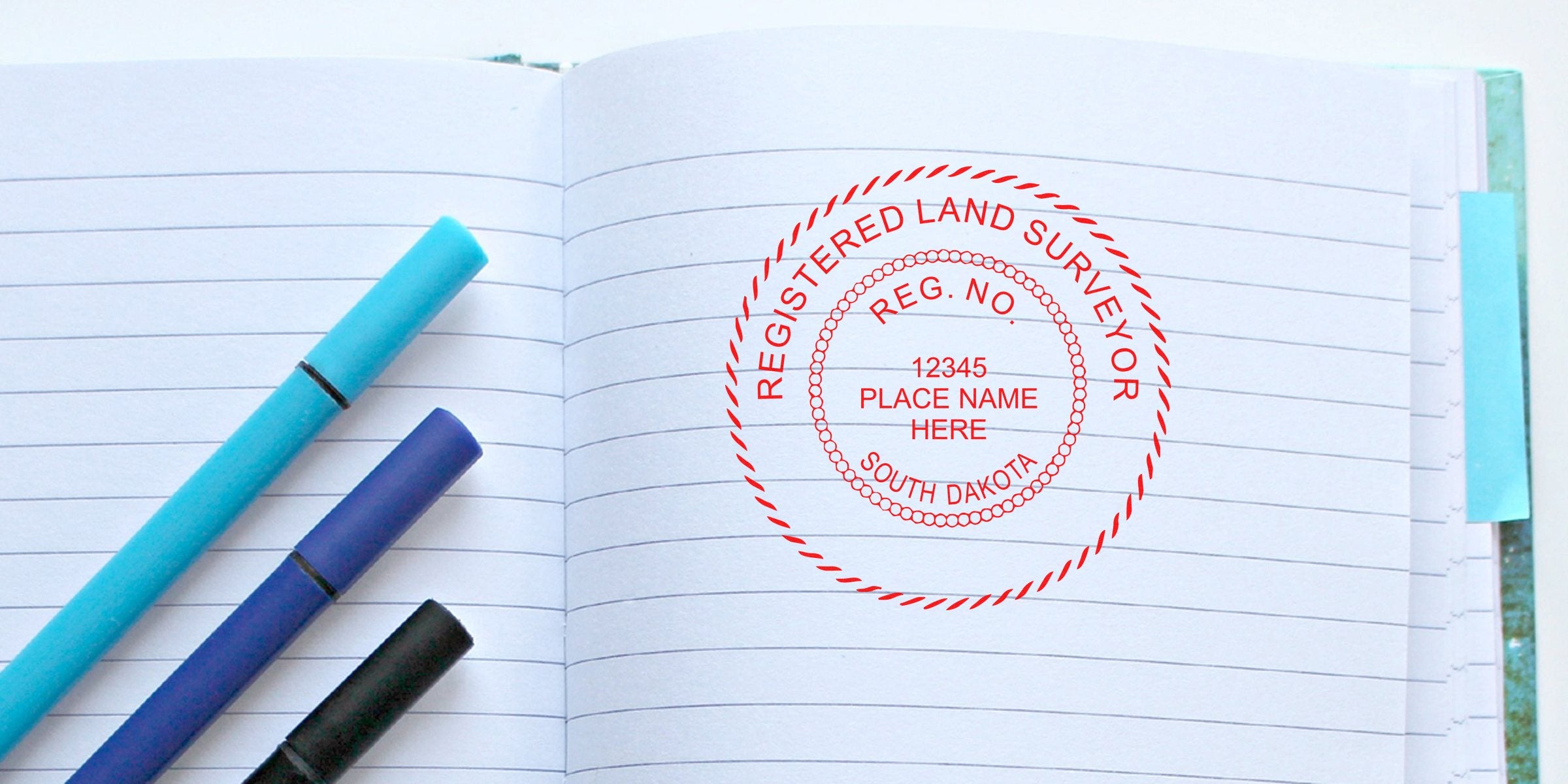
For an embosser intended for South Dakota land surveyors, the round format is usual. Inside that circle, you’ll likely place your name around the top curve and “South Dakota” or “State of South Dakota” along the bottom. In the center, you’ll typically see “Professional Land Surveyor” or an equivalent phrase, along with your license number. The text font is often clear and easy to read. Some surveyors opt for a simple outer border that emphasizes the seal for official use, while others insert a small symbol or decorative element.
Embosser Vs. Rubber Stamp
Using an embosser gives you that iconic raised impression, but a rubber stamp might be faster if you’re completing several documents every day. It’s also handy if you often scan or photocopy your forms. However, an embosser adds an undeniable sense of authority. Many surveyors end up using both, keeping the embosser for finalized, bound documents, then turning to the stamp for day-to-day drafts or internal notes.
Differences To Consider
- Visibility: An embossed mark creates physical texture, while a stamp leaves ink on the page.
- Security: Raised impressions are tougher to replicate than standard ink alone.
- Clarity: For photocopies, ink stamps might appear more clearly, so some prefer stamps for scanned documents.
When To Use Each Option
- Use your embosser for final plats, contracts, and official documents heading to local government offices.
- Use a rubber stamp for quick references, digital scans, or personal file copies.
Maintain Your Embosser
Even the best seal can wear out over time if you’re not taking care of it. A well-maintained embosser is crucial for crisp impressions, especially when certain documents call for precise detail. Fortunately, keeping your embosser in top shape isn’t too tricky.
Storage And Longevity Tips
- Keep your embosser in a protective case to avoid scratches and dust buildup.
- Store it away from extreme temperatures. Heat can warp the metal, while cold could affect the mechanism.
- Clean it periodically with a soft cloth, especially the raised metal elements. Small bits of paper can get lodged in the die after repeated use.
Mistakes To Avoid
- Pressing too lightly, resulting in half-raised or blurry impressions.
- Over-complicating your design with too much text, which can cause overlapping letters.
- Ignoring necessary updates to your seal if the state revises its requirements or if you change your name.
Partner With Acorn Sales
When you reach the point of actually purchasing your seal embosser, you’ve got to pick a supplier who knows the business inside and out. At Acorn Sales, we’ve been providing professional stamps and seals since 1964. That’s over half a century of guiding surveyors just like you. We understand that you shouldn’t have to settle for either quality or reliability. Here’s why many surveying professionals trust us to deliver top-notch service:
Established Since 1964
With decades of experience, we’ve built a reputation that speaks for itself. Whether you’re just starting your surveying career or you’re a long-time pro, we have the expertise to deliver an embosser you’ll find reliable. We continuously track changes in state regulations, helping you stay compliant from day one.
Free Digital Seal
Need a quick online submittal for a city planning commission or a local consultancy? We’ve got you covered. We include a free digital seal with qualifying orders so that you can attach your credential to electronic documents. That digital file mimics your physical seal’s layout, which means there’s no gap between your printed and online presence.
Range Of Options
Our catalog includes a variety of embossers tailored for each state’s guidelines, and that includes specialized models for South Dakota. We provide everything from handheld, portable embossers to more robust desk embossers that stay put on your worktable. If you’re curious about complementing your embosser with an ink stamp, we can supply that too.
Final Thoughts
Having the right seal embosser makes your professional life simpler. You’ll easily confirm your credentials and meet the regulatory obligations that come with each new survey. By taking good care of your embosser, you’ll produce crisp seals that reflect your competency for years to come. If you haven’t already, make sure to review official details at South Dakota Land Surveyor Stamp Requirements. And if you’re looking for a dependable supplier, know that Acorn Sales has got your back, from a free digital seal to expert advice at every step. Give yourself the best tools you can, and continue surveying with confidence.
Frequently Asked Questions
Do I need an embosser if I already have a rubber stamp?
You can technically use one or the other, depending on the state’s standards. Many professionals prefer having both. The rubber stamp is handy for scanning or photocopying large sets of documents, while an embosser provides a tactile security measure that distinguishes official copies from duplicates.
How often should I check for regulation changes?
It’s wise to keep an eye on any announcements from the South Dakota Board of Technical Professions at least once a year. If you’re part of professional associations or forums, you’ll likely hear about major updates in time to make any needed changes to your seal.
Can I customize my embosser design?
Yes, as long as it meets the basic guidelines (name, license number, correct wording). Some surveyors add a subtle border or choose from different font styles. Just make sure to include the mandatory elements so your seal remains valid.
Is a raised impression enough for legal documents?
Typically, yes. South Dakota recognizes properly embossed or stamped seals on official surveyor documents. However, remember to sign the document too. The seal alone doesn’t replace your signature.
What if my seal breaks or wears out?
You should replace a damaged embosser immediately, since a partial impression can compromise the legitimacy of your documents. At Acorn Sales, we’re happy to assist you with repairs or replacements, ensuring you’re back in action quickly.








