
Written by Acorn Sales Company, manufacturing stamps and seals since 1964 · Reviewed by Holly R, VP of Sales and Marketing at Acorn Sales, against the Tennessee State Board of Examiners for Architects, Engineers, and Land Surveyors and Tenn. Code Ann. § 62-18-119(a), (b), (d) on 21 September 2026 · Updated 21 September 2026
Tennessee land surveyors are registered under a different chapter from the state’s architects and engineers, and the familiar architect seal rules do not follow them. Architects, engineers and landscape architects sit under Title 62, Chapter 2, with their seal governed by § 62-2-306 and rule 0120-02-.08, which prescribes three diagrams, bans a signature or date inside the die and requires a wet-ink signature across and beyond the circumference. Land surveyors sit under Title 62, Chapter 18, Part 1, with their seal governed by § 62-18-119 and rules in chapter 0820. The word surveyor does not appear in 0120-02 at all.
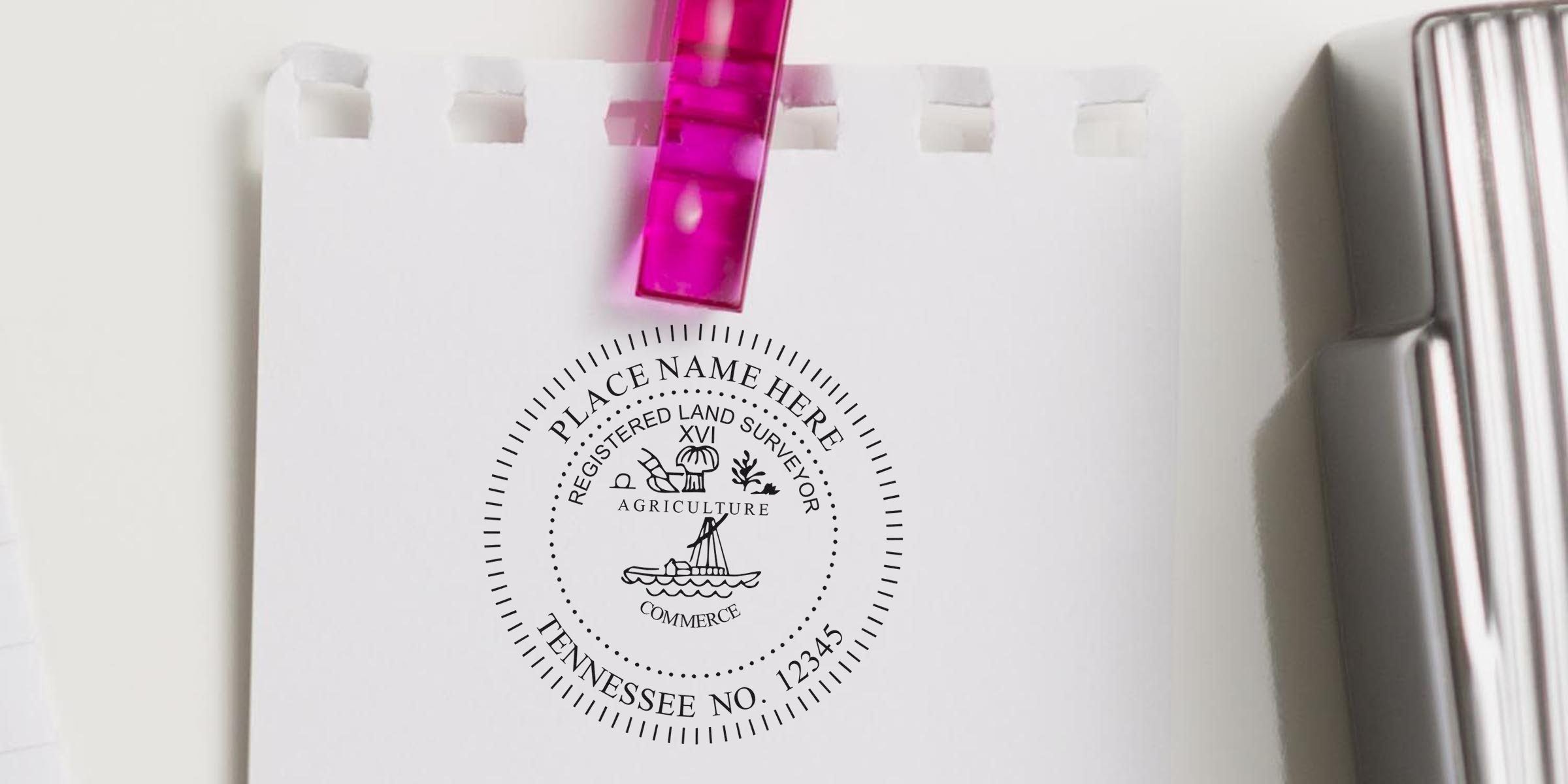
What the surveyor statute says is short and specific. Tenn. Code Ann. § 62-18-119(a) provides that “Each registrant under this part shall, upon registration, obtain a seal of the design authorized by the board, bearing the registrant’s name and the legend ‘Registered Land Surveyor.’” Two items and then the board’s design. No diameter, no device list and no signature placement rule appears in the section.
The legend wording matters. Registered Land Surveyor is the Tennessee form. Professional Land Surveyor, which Georgia, Alabama, Mississippi, Missouri and most of the country use, is not. Get the board-authorized design or an approved sample in hand before a die is cut, rather than accepting a supplier’s Tennessee template built from the architect diagram.
Tennessee land surveyor seal requirements at a glance
| Requirement | Tennessee rule | Source |
|---|---|---|
| Seal required | Yes | Tenn. Code Ann. § 62-18-119(a), (b), (d) |
| Required elements | Your name as registered, Registered Land Surveyor and The design authorized by the board | Tenn. Code Ann. § 62-18-119(a) |
| Size and shape | Not addressed. Tenn. Code Ann. § 62-18-119 states no diameter, no shape and no tolerance; it refers only to “the design authorized by the board.” Checked the full text of § 62-18-119 against two. | Tenn. Code Ann. § 62-18-119(a) (design authorized by the board, no dimension stated) |
| Device allowed | Not addressed in the statute. | Tenn. Code Ann. § 62-18-119 |
| Signature and date | The statute ties responsibility to the seal and the signature together. | Tenn. Code Ann. § 62-18-119(c) |
| What must be sealed | Tenn. Code Ann. § 62-18-119(b) reaches “Maps, plats, surveys or other documents issued by a registrant”, which is the whole of a surveyor’s issued work product. | Tenn. Code Ann. § 62-18-119(b), (c)(1), (c)(2) |
| Electronic seal | Not addressed in the statute. | Tenn. Code Ann. § 62-18-119 (silent) |
| Renewal and lapse | Tenn. Code Ann. § 62-18-119(b) provides that documents shall be stamped with the seal during the life of the certificate, “but it is unlawful for anyone to stamp or seal any documents with the seal after the certificate of the registrant named on the certificate has expired or has been revoked, unless the certificate has been renewed or reissued.” Like the architect and engineer statute, the bar reaches anyone rather than only the registrant, so an employer holding a departed surveyor’s stamp is inside it. | Tenn. Code Ann. §§ 62-18-119(b), 62-18-128 |
| Firm requirements | Tenn. Code Ann. § 62-18-122 covers business associations and personal liability for surveying practice, and § 62-18-119(c)(2) requires the survey behind a plat to be made by the surveyor, the surveyor’s employees or members of the surveyor’s own partnership, firm or joint stock association, with the sealing surveyor in responsible charge. | Tenn. Code Ann. §§ 62-18-119(c)(2), 62-18-122 |
| Regulator | The Tennessee State Board of Examiners for Architects, Engineers, and Land Surveyors | Tenn. Code Ann. Title 62, Chapter 18, Part 1, chiefly §§ 62-18-119, 62-18-122 and 62-18-128, with the text of § 62-18-119 taken from two independent public reproductions of the Tennessee Code whose wording matched word for word, the board’s own Laws page routing instead to a third-party platform behind a terms-of-use acceptance |
Is a seal required in Tennessee?
Tennessee surveyors sit in a different chapter from the state’s architects and engineers, and the duty is in the statute. Tenn. Code Ann. § 62-18-119(a) provides that “Each registrant under this part shall, upon registration, obtain a seal of the design authorized by the board, bearing the registrant’s name and the legend ‘Registered Land Surveyor.’” Subsection (b) makes the use mandatory: “Maps, plats, surveys or other documents issued by a registrant shall be stamped with the seal during the life of the registrant’s certificate.” The board may add procedure by rule under subsection (d), and rule 0820-03-.02(1) makes the land surveyor whose stamp or seal and signature appear on a document directly responsible for it.
What must appear on the seal
- Your name as registered
- Registered Land Surveyor
- The design authorized by the board
The statute names only two items, the registrant’s name and the legend “Registered Land Surveyor”, and then leaves the rest to “the design authorized by the board.” That is a narrower list than the architect and engineer statute in the neighboring chapter, which expressly requires the registration number and the words State of Tennessee or Tennessee. Whether the board-authorized surveyor design adds a registration number or a state name is not addressed in § 62-18-119 itself, so obtain the authorized design or a board-approved sample rather than assuming the architect and engineer layout carries across. Note the legend wording: Registered Land Surveyor, not Professional Land Surveyor, which is the form most neighboring states use.
Size and shape
Not addressed. Tenn. Code Ann. § 62-18-119 states no diameter, no shape and no tolerance; it refers only to “the design authorized by the board.” Checked the full text of § 62-18-119 against two independent public reproductions of the Tennessee Code, which matched word for word. The surveyor rules live in chapter 0820 rather than in chapter 0120-02, and the Secretary of State’s posted copies of chapter 0820 could not be retrieved, so ask the board for the authorized design or an approved sample before a die is cut. Do not borrow the architect and engineer diagrams at 0120-02-.08(1), which govern a different chapter and a different board committee.
Embosser, rubber stamp or digital
Not addressed in the statute. Tenn. Code Ann. § 62-18-119 uses the words seal and stamp interchangeably and names no permitted device, so it neither authorizes nor forbids an embosser, a rubber stamp or an electronic image on its face. The four-device list at 0120-02-.08(8)(a), covering rubber-stamp, embossed, transparent self-adhesive and electronically generated seals, belongs to the architect, engineer and landscape architect chapter and does not by its own terms reach chapter 0820. An inked rubber stamp is the conservative buy, because subsection (b) contemplates documents being “stamped” and because recorded plats are reproduced repeatedly, but confirm the device with the board along with the authorized design.
Signing and dating
The statute ties responsibility to the seal and the signature together. Rule 0820-03-.02(1) makes the land surveyor whose stamp or seal and signature appear on a document directly responsible for it. Tenn. Code Ann. § 62-18-119(c)(1) adds that “No surveyor shall affix a seal or stamp to any document that has not been prepared by that surveyor or under that surveyor’s individual supervision”, and (c)(2) requires the surveyor affixing the seal to a plat survey to be in responsible charge of those making the surveys. Whether the signature must cross the seal, and whether a date of signature is required beside it, are not addressed in § 62-18-119. The across-and-beyond-the-circumference rule at 0120-02-.08(3) is written for the architect and engineer chapter.
Tennessee surveyors are in a different chapter, and the architect seal rules do not follow them
This is the single most common Tennessee mistake. Architects, engineers and landscape architects are registered under Tenn. Code Ann. Title 62, Chapter 2, and their seal is governed by § 62-2-306 and rule 0120-02-.08, which prescribes three diagrams, bans a signature or date inside the die, and requires a wet-ink signature across and beyond the circumference. Land surveyors are registered under Title 62, Chapter 18, Part 1, and their seal is governed by § 62-18-119 with rules in chapter 0820. The word surveyor does not appear in 0120-02 at all.
So none of the familiar 0120-02 requirements can be assumed for a surveyor stamp. What the surveyor statute does say is short and specific: the seal bears “the registrant’s name and the legend ‘Registered Land Surveyor’”, and is otherwise “of the design authorized by the board.” No diameter, no device list, no signature placement rule appears in the section.
That wording matters too. Registered Land Surveyor is the Tennessee legend. Professional Land Surveyor, which is what Georgia, Alabama, Mississippi, Missouri and most of the country use, is not.
The practical step is to get the board-authorized design or an approved sample in hand before ordering, rather than accepting a supplier’s Tennessee template that was built from the architect diagram.
Which documents must be sealed
Tenn. Code Ann. § 62-18-119(b) reaches “Maps, plats, surveys or other documents issued by a registrant”, which is the whole of a surveyor’s issued work product. Subsection (c) carves in the responsibility limits rather than carving anything out: the surveyor may not seal a document not prepared by the surveyor or under the surveyor’s individual supervision, and the survey used in making plats must be made by the surveyor, the surveyor’s employees, or members of a partnership, firm or joint stock association of which the surveyor is a member, with the sealing surveyor in responsible charge of those making the surveys. The statute states no preliminary or draft carve-out.
Electronic and digital seals
Not addressed in the statute. Tenn. Code Ann. § 62-18-119 says nothing about digital signatures, electronic seals or electronic transmission, and the four-part digital signature test at 0120-02-.08(8)(b) is written for the architect, engineer and landscape architect chapter. Checked § 62-18-119 in full against two independent reproductions of the Tennessee Code. Confirm the board’s current position on electronic sealing before relying on a digital workflow for a recorded plat.
Renewal, lapse and retirement
Tenn. Code Ann. § 62-18-119(b) provides that documents shall be stamped with the seal during the life of the certificate, “but it is unlawful for anyone to stamp or seal any documents with the seal after the certificate of the registrant named on the certificate has expired or has been revoked, unless the certificate has been renewed or reissued.” Like the architect and engineer statute, the bar reaches anyone rather than only the registrant, so an employer holding a departed surveyor’s stamp is inside it. Tenn. Code Ann. § 62-18-128 covers retiring and reinstating a license and makes retirement no bar to disciplinary action. Whether the registration number survives reinstatement, and whether a dead seal must be surrendered or destroyed, are not addressed in §§ 62-18-119 or 62-18-128.
Firm requirements
Tenn. Code Ann. § 62-18-122 covers business associations and personal liability for surveying practice, and § 62-18-119(c)(2) requires the survey behind a plat to be made by the surveyor, the surveyor’s employees or members of the surveyor’s own partnership, firm or joint stock association, with the sealing surveyor in responsible charge. Neither section creates a firm seal nor requires a firm number on a plat. The disclosure regime at 0120-06 covers firms offering architectural, engineering and landscape architectural services and does not name land surveying.
What to check before you order
Ask the board for the authorized surveyor design or an approved sample before anything is cut, because Tenn. Code Ann. § 62-18-119(a) prescribes only your name and the legend Registered Land Surveyor and leaves the rest of the design to the board. Use that exact legend, not Professional Land Surveyor. Do not accept a die built from the architect and engineer diagrams at 0120-02-.08(1); those belong to a different chapter. An inked rubber stamp is the safe device for recorded work, and keep your signature with it, because § 62-18-119(c) and rule 0820-03-.02(1) tie responsibility to the stamp and signature together.
Browse land surveyor stamps and seals.
- What You Need to Know About Tennessee Land Surveyor Stamp Cost
- Get It Right: Tennessee Land Surveyor Seal Embosser Tips
Frequently asked questions
Is a seal required for land surveyors in Tennessee?
Yes. Tenn. Code Ann. § 62-18-119(a) requires each registrant to obtain a seal on registration, and subsection (b) makes the use mandatory: “Maps, plats, surveys or other documents issued by a registrant shall be stamped with the seal during the life of the registrant’s certificate.” The board may add procedure by rule under subsection (d), and rule 0820-03-.02(1) makes the land surveyor whose stamp or seal and signature appear on a document directly responsible for it.
What has to appear on a Tennessee land surveyor seal?
Your name as registered and the legend Registered Land Surveyor, plus whatever the board’s authorized design adds. That is a narrower statutory list than the architect and engineer chapter next door, which expressly requires the registration number and the words State of Tennessee or Tennessee. Whether the board-authorized surveyor design adds a registration number or a state name is not addressed in § 62-18-119 itself, so obtain the authorized design rather than assuming the architect layout carries across.
What size is a Tennessee land surveyor seal?
Not addressed. Tenn. Code Ann. § 62-18-119 states no diameter, no shape and no tolerance; it refers only to “the design authorized by the board.” Ask the board for the design or an approved sample before ordering, and do not borrow the architect and engineer diagrams at 0120-02-.08(1), which govern a different chapter and a different board committee.
Rubber stamp or embosser in Tennessee?
Not addressed in the statute. Section 62-18-119 uses the words seal and stamp interchangeably and names no permitted device, so it neither authorizes nor forbids an embosser, a rubber stamp or an electronic image on its face. The four-device list at 0120-02-.08(8)(a) belongs to the architect, engineer and landscape architect chapter and does not by its own terms reach chapter 0820. An inked rubber stamp is the conservative choice, because subsection (b) contemplates documents being “stamped” and recorded plats are reproduced repeatedly, but confirm the device with the board along with the design.
Where does the signature go in Tennessee?
Whether the signature must cross the seal, and whether a date is required beside it, are not addressed in § 62-18-119. The across-and-beyond-the-circumference rule at 0120-02-.08(3) is written for the architect and engineer chapter. What is clear is that the two travel together: rule 0820-03-.02(1) makes the surveyor whose stamp or seal and signature appear on a document directly responsible for it.
What may I not seal in Tennessee?
Work you did not prepare or supervise. Tenn. Code Ann. § 62-18-119(c)(1) provides that “No surveyor shall affix a seal or stamp to any document that has not been prepared by that surveyor or under that surveyor’s individual supervision”, and (c)(2) requires the surveyor affixing the seal to a plat survey to be in responsible charge of those making the surveys.
Which Tennessee documents get the seal?
Section 62-18-119(b) reaches “Maps, plats, surveys or other documents issued by a registrant”, which is the whole of a surveyor’s issued work product. The statute states no preliminary or draft carve-out. Subsection (c) also limits who may do the field work behind a plat: the surveyor, the surveyor’s employees, or members of a partnership, firm or joint stock association of which the surveyor is a member.
Can I seal Tennessee plats electronically?
Not addressed in the statute. Section 62-18-119 says nothing about digital signatures, electronic seals or electronic transmission, and the four-part digital signature test at 0120-02-.08(8)(b) is written for the architect, engineer and landscape architect chapter. Confirm the board’s current position on electronic sealing before relying on a digital workflow for a recorded plat.
What happens to a Tennessee seal after the certificate expires?
Nobody may use it. Section 62-18-119(b) provides that it is “unlawful for anyone to stamp or seal any documents with the seal after the certificate of the registrant named on the certificate has expired or has been revoked, unless the certificate has been renewed or reissued.” The bar reaches anyone rather than only the registrant, so an employer holding a departed surveyor’s stamp is inside it. Section 62-18-128 covers retiring and reinstating a license and makes retirement no bar to disciplinary action. Whether the registration number survives reinstatement, and whether a dead seal must be surrendered or destroyed, are not addressed.
Does a Tennessee surveying firm need a seal?
No. Tenn. Code Ann. § 62-18-122 covers business associations and personal liability for surveying practice, and § 62-18-119(c)(2) requires the survey behind a plat to be made by the surveyor, the surveyor’s employees or members of the surveyor’s own partnership, firm or joint stock association. Neither section creates a firm seal nor requires a firm number on a plat. The disclosure regime at 0120-06 covers firms offering architectural, engineering and landscape architectural services and does not name land surveying.








