
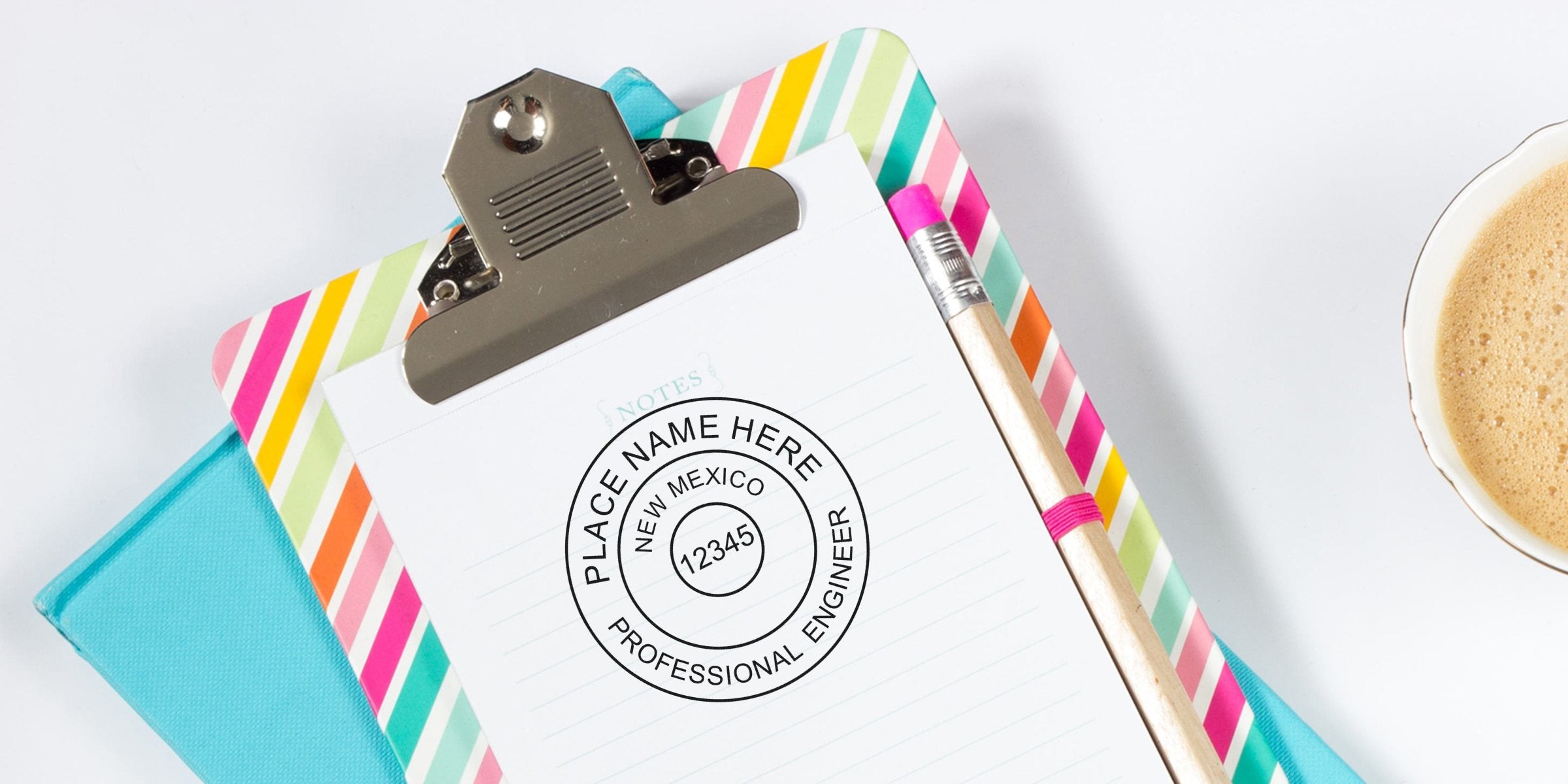
Are you searching for the perfect New Mexico professional engineer seal to use on your project documents? You’re in the right place. Before you invest in a seal that verifies your hard-earned credentials, it helps to understand key details like state regulations, design requirements, and how to find a reliable supplier. In this article, you’ll learn how to pick a high-quality, compliant seal, plus see how Acorn Sales supports you with decades of experience, fast service, and a free digital seal with your purchase.
We know that getting your official stamp or embosser isn’t just about function. It’s also about preserving professional integrity, meeting project deadlines, and ensuring that your critical documents hold up under scrutiny. So let’s break down each step of choosing and using a New Mexico professional engineer seal, piece by piece.
Understand seal requirements
When you’re working as a licensed engineer in New Mexico, your professional seal is a must-have. It’s more than a formality. It’s your statement of accountability. The state requires that you place your seal on engineering documents to confirm compliance with laws and regulations. Without the proper seal, you could be jeopardizing your work, your reputation, and the trust of the public.
Basic guidelines for New Mexico engineers
Before you lock in a design or buy your seal, check the official regulations that spell out size, layout, and wording. If you’d like a refresher on the specifics, you can head over to new mexico pe stamp requirements. These requirements typically include:
- Proper text indicating “Professional Engineer” or “P.E.”
- The registered engineer’s name and license number.
- A clear circular shape.
- Mandatory border elements (like a circle or rope edge) that match the state’s guidelines.
New Mexico’s Board of Licensure expects you to follow their outline meticulously. Even if you’ve practiced engineering for years, double-checking the current standards is crucial to avoid outdated or noncompliant imagery.
Why official compliance matters
When you mark your plans with an official New Mexico professional engineer seal, you’re telling clients, building inspectors, and government agencies that everything meets local and state codes. It protects you from legal risks because you’ve shown diligence in verifying the accuracy of your submissions. Plus, a properly stamped plan tells clients you take your responsibilities seriously.
Complying with state requirements also benefits you in the long run. If you’re ever questioned, you have foolproof evidence that all your documents were reviewed under your license. This simple measure provides peace of mind and upholds best practices within the engineering profession in New Mexico.
Choose your seal format
Once you know exactly how your seal must look, you’ll want to decide which format suits your day-to-day tasks. You can pick from a few common types, each with strengths and perks. The main options are:
- Traditional rubber stamps.
- Self-inking or pre-inked stamps.
- Physical embossers.
- Digital seals (sometimes offered as a free add-on).
Traditional rubber stamps
Rubber stamps require a separate ink pad, which might feel a bit old school. On the other hand, they offer flexibility in ink color (as long as it’s permissible) and let you control how heavy your impression is. You might prefer this method if you’re used to stamping large batches of documents quickly and don’t mind the extra step of inking.
Self-inking or pre-inked stamps
Self-inking stamps hold an internal ink pad, so re-inking is minimal and typically less messy. Pre-inked stamps, on the other hand, deliver some of the crispest impressions around. Because their ink is embedded in the die, they can produce sharp, dark images for countless uses before you need a refill. These stamps are convenient and compact—great for tossing in your bag if you travel to different job sites or offices.
Physical embossers
An embosser is a metal handheld or desk-style device that presses your seal design into paper. You get a raised impression that can be felt as well as seen. Embossing is super secure—anyone handling the document can physically confirm the authenticity of your seal. Embossers can be a bit heavier, so they’re ideal if you typically work from one location. If you love the professional look of an embossed design, this option might speak to you.
Digital seals
Some engineers are starting to use digital seals, especially for electronic submissions. Acorn Sales offers a free digital seal with your purchase, which means you can place a professional design on PDFs right in your computer. This approach simplifies record-keeping, speeds up electronic approvals, and saves you from scanning multiple paper copies. It’s also handy for a quick add-on to your project documents when tight deadlines pop up.
Check essential design
As you finalize your seal, keep a close eye on the design elements to ensure that everything meets regulatory standards. This includes the diameter of the seal, the exact wording, and any mandatory text layout. Failing to get these details right can mean reordering and wasting precious time.
Key components to confirm
- Your full name as it appears on your license.
- The licensing board’s required text (e.g., “State of New Mexico”).
- The words “Professional Engineer” or your specific discipline if mandated.
- The correct order of words based on official guidance.
- A clean border, usually a circle, with the right thickness.
Even small mistakes—like mixing up the wording or swapping the circular border with a different shape—could make your seal invalid. So double-check that your supplier understands New Mexico law before they start production.
Customizing without breaking rules
Yes, you can customize the appearance to a limited extent. Some engineers prefer to adjust certain design elements, like including a plain circle vs. a rope border, as long as the official guidelines are still met. If you’d like a slightly different font or spacing, confirm with the board that it won’t violate any standards. Remember, it’s always better to stay on the safe side than risk reprinting an entire batch of seals or stamps.
Select material and durability
When selecting a New Mexico professional engineer seal, the quality of the build matters just as much as compliance. You probably want a seal that stands up to years of use, whether that’s hundreds of daily stamps or occasional embossing. Materials vary based on the format you choose.
Materials for stamps
- Rubber: Traditional rubber stamps are basic and can last a long time, provided you keep them clean and store them away from heat or moisture.
- Polymer: High-quality polymer dies, common in self-inking and pre-inked stamps, typically produce sharper impressions and hold up well.
- Metal frames: If you opt for a heavy-duty stamp, metal frames can handle repeated pressing without warping.
For maximum longevity, look for stamps that promise clean impressions and low maintenance. That means fewer re-inkings and less time fussing with replacements.
Materials for embossers
Embossers are often made from sturdy metals, such as steel or reinforced aluminum. Cheaper versions might be all plastic, which can wear out fast if you go through numerous documents. A heavier-duty embosser keeps your impressions consistent and clear without jamming. Also, check if the embosser handle is ergonomic so you can avoid hand strain over time.
Extra tips for durability
Where you store your seal can influence its lifetime. Direct sunlight, high humidity, or dusty workspaces degrade stamps faster. If you keep your seal at your desk, invest in a small drawer or box to protect it from daily wear and tear. For traveling engineers, a compact carrying case can keep your stamp or embosser from banging around in your tool bag.
Consider your supplier
Choosing a reliable supplier for your New Mexico professional engineer seal can save you a ton of frustration. Acorn Sales has over 60 years of experience making high-quality seals and stamps. We take pride in offering products that comply with state standards right out of the box, plus a free digital seal you can use for electronic submissions. Because we know you’re often juggling multiple projects, we aim for fast service from start to finish.
Why experience matters
Engineers often face tight project timelines, so the last thing you want is a delay due to a faulty or noncompliant stamp. Working with an established supplier means you’ll have design experts who understand the legal requirements by heart. Our team at Acorn Sales has guided countless engineers through the selection process. We talk you through design specs, answer any compliance questions, and ensure the final product lines up exactly with New Mexico’s regulations.
Experience also tends to lead to better quality. A seasoned company invests in top-tier materials, updated machinery, and thorough training to produce products that last. After all, no engineer wants to replace a flimsy stamp every six months. That’s why we focus on a blend of rugged construction and clear impressions.
Checking reviews and credibility
Nothing confirms a supplier’s trustworthiness like positive feedback from professionals who’ve already tested the products. When possible, read through testimonials or ask for references. Do they mention durable products, clear impressions, and friendly customer service? You deserve to buy with confidence. If reviews show consistent results, plus prompt turnarounds, you’ll likely have a good experience, too.
Customize for compliance
While meeting official rules is nonnegotiable, you often have options to personalize minor aspects of your seal. That said, your best ally is clarity. The more clearly your seal identifies you and your license, the easier it is for officials, clients, and coworkers to see exactly who took responsibility for those documents.
Focus on legibility
Font selection can be a fun way to add character, as long as it remains crisp. If a fancy font undermines readability, you could face regulatory headaches. The text on your stamp or embosser should be easy to interpret at a glance. Consider that your seal may be photocopied or scanned, so keep the text bold and free of intricate flourishes.
Adding required details
In some instances, you might need to include certain words mandated by the state. It could be “Professional Engineer,” “P.E.,” or your exact license class. If a design element calls for your license number, confirm you’re using the current one. A small slip-up could invalidate the entire seal, so take the time to verify every letter and digit.
Ordering proofs and double-checking
An excellent way to avoid ordering the wrong style or size is to request a proof from your supplier. This preliminary mock-up shows you exactly how your seal will appear. Look over each detail with fresh eyes. It’s easy to miss a spelling or spacing error once you think you’re done. If anything feels off, let your supplier know promptly. It’s much easier to fix it before production than after.
Make the most of your seal
Once you have your New Mexico professional engineer seal in hand, make sure it works for you. After all, creating an official impression on your plans or calculations is part of your daily workflow, so a few small tips can save you time and keep you organized.
Storing and securing your seal
Keep your stamp or embosser in a safe but easily accessible place. This might be a locked drawer in your office. If you’re sharing an office with other engineers, label your seal or store it somewhere only you can access. Your seal is your professional identity, and its misuse could lead to legal issues or compromised documents.
It’s also a good idea to store any re-inking supplies or accessories in one place. Pre-inked stamps eventually run low on ink, so plan ahead. That way, you won’t be scrambling to find a refill in the middle of a pressing deadline.
Streamlining your paperwork
Use your seal consistently in all your official project documents so everything stays uniform. If you need to stamp multiple sheets in a single plan set, do them in one session to avoid missing pages. You can also jot notes on your digital calendar to restock your stamp if you’re using it heavily.
For digital seals, keep your electronic stamp files in a password-protected folder. This helps you maintain tight control over who can affix that seal to any digital engineering documents.
Verifying final impressions
Whenever you place your seal on a piece of paper, look for clarity before you move on. Is it crisp and readable? Did you line it up correctly on the page? If you notice an incomplete or blurry stamp, re-stamp on the next sheet (or use a fresh copy) to make it official. Embossers, in particular, can look faint if you don’t apply enough pressure or if the paper is too thick.
Keeping up with renewals
Take note of your license or registration renewals. If your license number changes or if you relocate and need to update your address on the seal (depending on the state’s rules), order a new one promptly. Staying on top of these administrative tasks prevents embarrassing slip-ups—and ensures everyone trusts the authenticity of your documentation.
Feel ready to make your choice? By following these steps, you’ll have a smooth journey to getting a New Mexico professional engineer seal that’s fully compliant, durable, and easy to use. Acorn Sales has been making quality stamps and seals for over 60 years, and we’d be honored to help you finalize this important element of your professional toolkit. When you’re ready, let us know how we can help so you can focus on the main event: delivering stellar engineering work.
Frequently Asked Questions
How do I confirm my stamp meets current New Mexico rules?
Double-check the guidelines posted by the New Mexico Board of Licensure and compare them to the proof your supplier provides. Also, consult new mexico pe stamp requirements for more details on lettering, size, and border requirements.
Do you offer a free digital seal with my purchase?
Yes. Acorn Sales includes a free digital seal with every physical seal purchase. You can use it for quick electronic submissions, which helps you meet deadlines without shuffling piles of paper.
Can I adjust the design to match my branding?
You can customize fonts or border styles somewhat, but be sure to keep the official compliance text and layout for New Mexico. Minor preferences are fine, but accuracy in the wording and shape is crucial.
Do I need to replace my seal if my name or license number changes?
Definitely. If the name or license number on file with the New Mexico Board changes, you’ll need a new seal that matches. It provides legitimate confirmation that any stamped documents are tied to your updated credentials.
How can I secure my stamp from unauthorized use?
Keep it in a locked drawer, office cabinet, or carrying case that only you can access. For digital seals, store them on a password-protected device or server to ensure no one applies them without your permission.








