
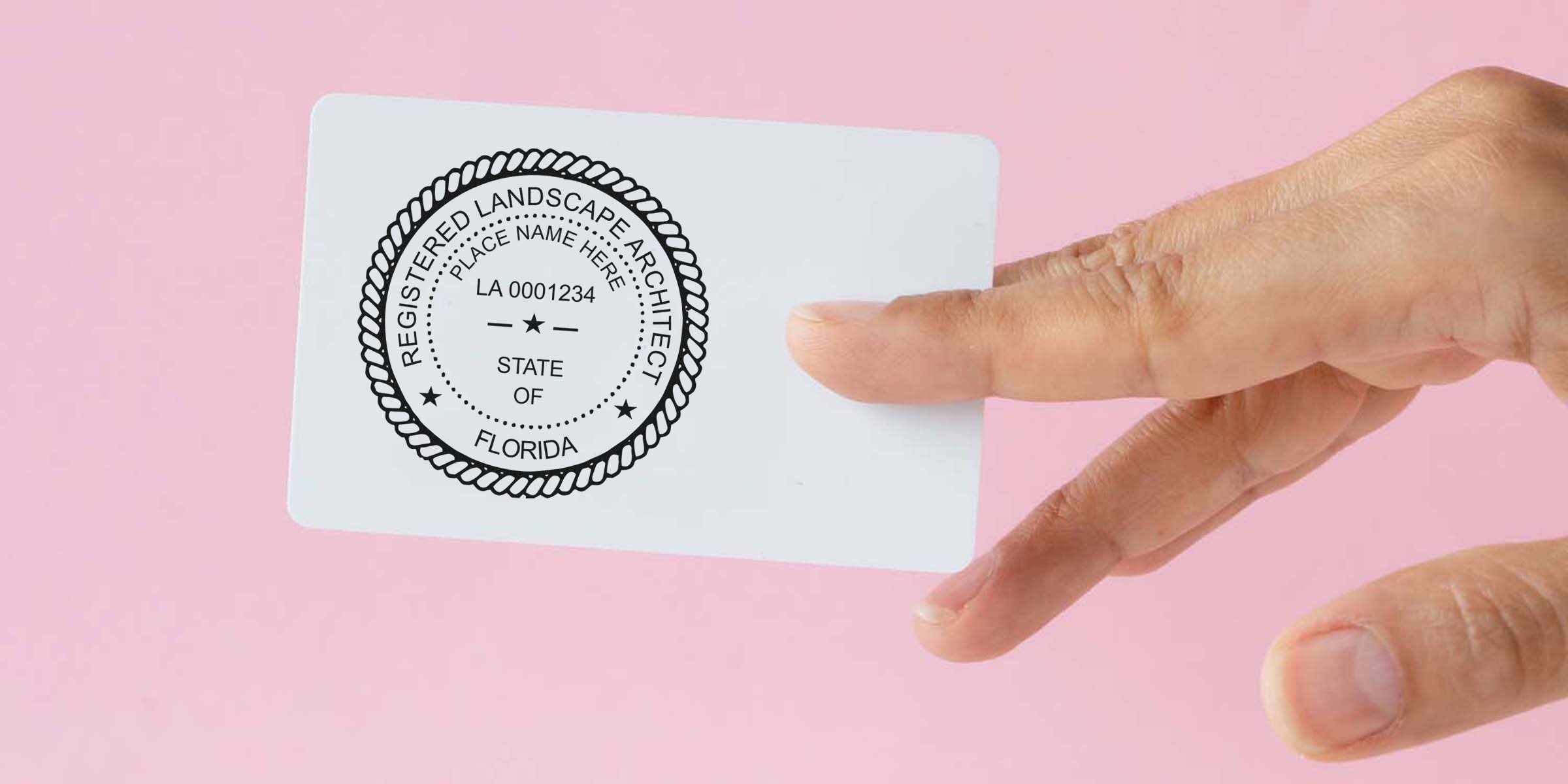
You’re standing over a freshly printed plan for a Florida landscaping project, and the final step is stamping your professional seal of approval. If you’ve ever wondered about the best Florida landscape architect stamp size, you’re in good company. Choosing the right dimensions isn’t just about meeting regulations, it’s also about making your work legible and professional. In this post, we’ll walk through what Florida’s guidelines typically look like, why stamp size matters for your practice, and how to pick a supplier who provides a crisp, compliant seal every time.
Remember, your stamp pulls a lot of weight: It signals your expertise, your accountability, and your dedication to enhancing Florida’s natural spaces. Let’s dig into how to fine-tune that seal so it fits just right.
Know Florida Landscape Architect Stamps
Before you settle on an exact dimension for your stamp, it helps to understand its basic function. In Florida, a landscape architect’s seal or stamp indicates that you, as a licensed professional, have overseen or created the official drawings or documents. It’s a visual mark of your credentials and your promise that the project meets Florida’s professional standards.
Most Florida boards, including the Board of Landscape Architecture, require landscape architects to apply a stamp on final plans and other official project documents. This stamp usually contains core details like your name, license number, and the words “Landscape Architect.” Then, around or within these words, you’ll often see the official Florida mention. Together, these elements confirm that your license is current and recognized by the state.
If you’re new to Florida practice, you might picture a massive ink stamp taking up half your page. But that’s rarely the case. The state does have specific guidelines for size, usually measured in inches, not feet. Unlike a busy layout with a huge seal slapped in the corner, a well-sized stamp balances clarity with space-saving practicality. It preserves the aesthetic integrity of your plans and allows easy reading if someone checks the document, especially when it’s time for municipal or county review.
Stamps can come in different shapes, such as round or rectangular. While Florida commonly leans toward a round footprint, you can still choose designs that reflect your personal style—within limits. The big question is: how large should it be? That’s where Florida’s unique guidelines step in.
Factor Stamp Size Requirements
When professionals talk about Florida landscape architect stamp requirements, they’re often referring to both the official content of the stamp and its physical size on the page. You need enough space to display your name, license number, and the required wording, but not so much that it crowds out the rest of your layout.
Many professionals find that a diameter or dimension around two inches is pretty standard for a round stamp. Others opt for slightly more compact or moderately larger impressions. Below is a quick reference table that highlights typical size ranges:
| Size Range | Description | Typical Usage |
|---|---|---|
| 1⅝" x 1⅝" (Round) | Compact, clear, and tidy | Smaller documents or tight layouts |
| 2" x 2" (Round/Rect.) | Crisp, easy-to-read text | Typical Florida submittals needing clarity |
| Larger than 2" x 2" | More room for logos or details | Complex designs less constrained by space |
Which dimension fits best? Ask yourself if you often create large blueprint sets or if you operate frequently with letter-sized documents. Smaller stamps can sometimes be tough to read, especially if your plan has multiple notes or tight spacing. On the other hand, an overly large stamp might overwhelm the page. A balanced approach usually hits the sweet spot, ensuring the text remains legible without hogging attention from your design details.
Understand Why Size Matters
You might think any old stamp will do, but let’s be honest: if your stamp is too big, it can overshadow crucial bits of your drawing. Too small, and the text becomes unreadable, causing local authorities—or your clients—to frown when they examine your plans. Neither scenario is ideal, especially when your professional reputation is at stake.
Legibility and Professional Appearance
When you present final construction documents, you’re telling clients and regulatory boards, “I stand behind this design.” To say that with confidence, every detail—stamp included—should be readable at a glance. If the license number is too small or your name is crammed into a tiny circle, it can look sloppy. Clear, well-sized text shows professionalism and helps ensure people can quickly confirm your credentials.
Compliance With Florida Regulations
Florida’s Board of Landscape Architecture sets out guidelines for a reason: your seal must meet specific standards, from standard wording to dimension ranges. While the state might not give an exact single-size-fits-all measurement, the board does offer recommended sizes. Straying too far from them can result in a warning or, in severe cases, a requirement to redo your seals on critical documents. It pays to check the official references or any updates from the board, so you’re always in line with current rules.
Choosing the right size also prevents you from having to reorder or redesign stamps in the future. Think of it like selecting a comfortable pair of shoes. If you’re walking around job sites all day—metaphorically speaking—you want something that fits perfectly from the start.
Explore Additional Florida Rules
Beyond the basics of florida landscape architect stamp size, you’ll want to consider the other rules that make this seal valid. These might involve where you place your signature relative to the stamp, how you add a date, or what text is legally required. In some states, for instance, you must include “State of Florida” on the stamp’s outer ring along with the words “Registered Landscape Architect.”
If you crave even more detail about the statutory requirements, take a look at the florida landscape architect stamp requirements. This resource clarifies which elements your stamp needs and offers guidance on the correct wording. Because regulatory boards can update guidelines periodically, checking the latest info is always time well spent.
Placement on Official Documents
In Florida, you typically need to place your stamp on each sheet of the plan set, particularly those that convey critical design intentions. While there’s no single rule about the upper-right corner vs. the bottom-left margin, the chosen location should be consistent and easy to spot. Consistency also helps plan reviewers and contractors quickly find your credentials, reducing back-and-forth questions.
Seals vs. Stamps
If you’re new to the sign-and-stamp game, you might wonder what’s the difference between a seal and a stamp. In everyday talk, the terms are often used interchangeably. A “stamp” usually refers to a rubber or self-inking tool you can press onto your documents. A “seal” can also mean an embossed representation or even a digital image. Florida recognizes more than one format, as long as it meets the official guidelines. The size question we’re exploring today typically applies to your physical embossing or ink stamp. However, if you rely on digital seals, you should ensure that your e-seal matches the recommended dimensions when printed.
Try Useful Sizing Tips
Picking the perfect dimensions can feel like a balancing act. Luckily, you can narrow your choices by thinking about your daily workflow, your average document size, and your personal design preferences.
Using Standard Dimensions
If you’re not sure where to start, a round stamp around two inches in diameter is often your best bet. That size is large enough to include all the necessary text but small enough to keep your drawings from looking cluttered. Opting for this standard also means your stamp rarely feels out of place on 11” x 17” sheets or larger architectural pages. That said, if your practice revolves around smaller 8.5” x 11” submissions, you might go down to around 1⅝" if it meets readability requirements.
Considering Font, Design, and Layout
Your stamp’s font size, text arrangement, and border style can influence how cramped or spacious it appears. If you have your name and license number in large, bold letters, you want a stamp that supports this design choice. Cramming them into a dimension too small might blur edges or cut off letters. Additionally, ensure a bit of white space around the text so it doesn’t feel visually jam-packed.
Ensuring Readable Contact Information
Some landscape architects also place their phone number or firm name near the seal, though this isn’t always a Florida requirement. If that’s part of your approach, be sure to factor in enough diameter or rectangular dimensions to enable clarity. Many professionals find that including a single point of contact (like phone or email) helps maintain neatness without turning your stamp into a billboard.
Find a Reliable Supplier
Once you know the size you prefer, it’s time to find a supplier. Not all stamp retailers are created equal. You need a source that understands Florida’s regulations and can help you with the correct layout. Additionally, you want a stamp or seal built to last, especially if you’re stamping multiple sheets day in and day out.
Acorn Sales: Trusted Since 1964
One top-rated option is Acorn Sales, a company that’s been in business since 1964, building a solid reputation among design professionals. If you value durability, reliability, and a stamp that arrives exactly as advertised, you might consider their offerings. They’re known for providing Florida landscape architects with stamps that hit the sweet spot: the right size, the correct wording, and an easy-to-read design. They also keep up with regulatory changes, so you won’t be caught off-guard if Florida tweaks its requirements next year.
Digital Seal Perks
In addition to physical stamps, Acorn Sales includes a Free Digital Seal with qualifying purchases. Why is that handy? Let’s say you’re submitting some of your plans online for preliminary review. You can place the digital seal on your PDFs, ensuring your design meets Florida’s electronic documentation standards. Later, when you print them out or go for final sign-off, your physical stamp can carry the exact same look. It streamlines your process and keeps everything consistent. After all, you don’t want potential clients struggling to match your digital signature with that faint, smudged stamp from another provider.
Summary
When it comes to your Florida landscape architect stamp size, you’ll want to balance readability, compliance, and visual harmony on the page. Start by checking Florida’s guidelines about licensed professionals and what text must appear. Then, decide on a dimension—usually around two inches in diameter—that ensures each detail stays sharp and eye-catching.
Before finalizing your purchase, consider the layout of your typical documents. If you often print large designs, you might be comfortable with a slightly bigger imprint. For more compact submissions, a 1⅝" diameter may suffice, as long as you confirm the text remains crisp. Also, place your seal consistently on each sheet of your design sets so that municipal reviewers and clients know where to look.
Finally, do your research when buying from any supplier. Look for a provider who understands Florida’s Landscape Architecture rules, offers strong materials, and provides a straightforward ordering experience. And if you find the right supplier—like Acorn Sales—you can score perks such as a Free Digital Seal and peace of mind that you’re meeting state requirements. A well-sized, clearly legible stamp might seem like a small part of your overall project, but it truly speaks volumes about your professionalism and pride in your work.
For in-depth coverage, including specific wording and design guidelines, head to the florida landscape architect stamp requirements. It’s wise to stay up-to-date, as requirements can shift with new legislation or policy updates.
Hopefully, these answers demystify the basics of choosing and using the right stamp dimensions. If you’re still on the fence about sizes, consider reaching out to a reputable supplier for guidance, or exploring firsthand examples from colleagues practicing in Florida. Once you’ve sized things properly, you’ll feel confident that your stamp makes the grade—both legally and aesthetically.
Frequently Asked Questions
Is There an Official State-Mandated Stamp Size?
Florida doesn’t usually mandate one specific size, but boards often recommend around two inches in diameter for consistency and legibility. Always verify with the most recent guidelines to ensure you’re using an approved dimension.
Can I Use a Digital Seal Instead of a Physical Stamp?
Yes, digital seals are recognized in many parts of Florida’s professional licensing process. However, if you print out documents for official submission, you might still need a physical stamp. Double-check with your local jurisdiction to see what they accept.
Do I Need to Restamp Every Page of a Plan Set?
Typically, yes. Especially in Florida, each sheet containing critical design information should include your stamp and signature. By stamping each page, you’re certifying that the details on that sheet were prepared or reviewed by you as the licensed landscape architect.








