
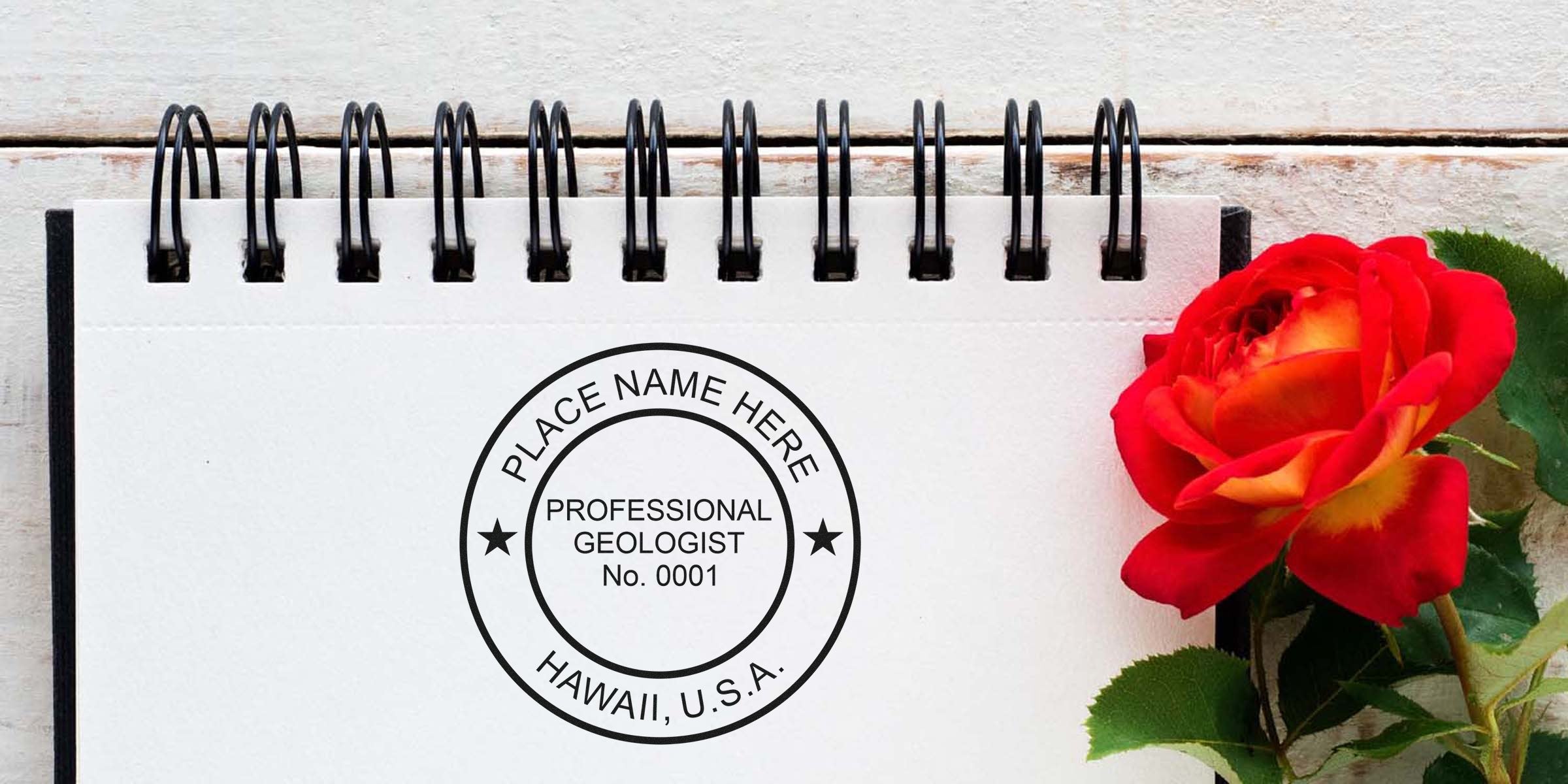
Designing the perfect Hawaii geologist seal template can feel overwhelming if you’re not sure where to start. The stakes are high: your seal or stamp acts as a formal mark of your professional credibility, and it’s required under state regulations for official documents. You want to make sure every detail meets Hawaii’s standards, so you can avoid unnecessary delays, rejections, or confusion.
Luckily, creating a compliant and professional seal doesn’t have to be complicated. By understanding the current rules, choosing the right supplier, and customizing your seal in line with Hawaii guidelines, you’ll be ready to showcase your credentials quickly and confidently. This article aims to walk you through each step, from state requirements to practical usage tips.
Explore The Hawaii Geologist Seal Template
When it comes to designing a geologist seal for Hawaii, you’ll find that each state typically has its own unique guidelines. Hawaii’s regulations outline how large your seal should be, what text it must include, and the overall design elements that confirm your professional standing. Contrary to what you might think, one size doesn’t fit all geologists across different states.
A well-crafted seal template ensures you’re not missing any crucial components. It usually includes your name, your specific license number, and potentially your area of specialization. In Hawaii, it’s best to confirm any extra markers required, such as “Professional Geologist,” around the border. Having these elements embedded in a well-structured template means you can quickly reproduce your seal for paperwork, drawings, and electronic documents.
If you’re feeling stuck, think of your seal template as a type of blueprint. Just as you would evaluate geologic data for a project, you need to evaluate how your seal will display essential credentials. Once you have a foundation in place, you can fine-tune details so everything looks neat, professional, and easily readable.
Understand Hawaii Requirements
Before you finalize your geologist seal, it helps to understand the state’s official rules. These are usually set by the Hawaii Board of Professional Engineers, Architects, Surveyors, and Landscape Architects. Even if you’re already licensed, you still need to ensure that the text, size, and format of your seal aligns with current regulations.
Most professional seals in Hawaii require a circular shape, typically around 1.75 to 2 inches in diameter. In some cases, you might see rectangular seals, but you’ll want to verify whether that’s acceptable for geologists. The outer ring often includes wording such as “State of Hawaii” and “Licensed Professional Geologist” based on local rules. The center circle is where you’ll usually place your name and license number.
Along with these primary elements, you may have to include certain designations confirming your discipline. Since geology is distinct from engineering or architecture, confirming that your text specifically references your geologist license is critical for compliance. Your seal is not just decorative. It validates your professional oversight on geological documents, so always take a moment to double-check your current state statutes for any updates.
Not certain where to find these details? You can search through Hawaii’s official licensing board site, or you could approach a reputable supplier who is familiar with state requirements. Trusted suppliers often stay on top of regulation changes and will guide you through the production process. It pays to get it right the first time because improper formatting can lead to document rejections and potentially set back your project timelines.
Partner With A Trusted Supplier
Finding a dependable supplier for your Hawaii geologist seal is just as important as nailing down the right sizes and texts. After all, you want a crisp, high-quality impression that meets professional standards, and you also need reassurance that you’re in compliance with Hawaii’s licensing protocols.
This is where Acorn Sales comes in. We’ve been in business since 1964, providing professional stamps and seals that are recognized for their accuracy and durability. When you place an order through a reputable expert like Acorn Sales, you can skip the guesswork and focus on doing the geology you love. Our experience spans decades, which means we know how to make sure everything—from the border text to your license number—fits exactly as it should.
You’ll also appreciate that Acorn Sales offers a free digital seal file with every physical seal purchase. That means you can stamp documents by hand when needed and still handle digital submissions for electronic filing. Want a more customized design or an easy upgrade to a self-inking stamp? We can guide you through each option, keeping your preferences and Hawaii regulations in mind. It doesn’t end there. We provide ongoing support should any requirement change in the future, so you’ll never have to worry about your seal going out of date.
If you’re also looking for variations, such as a rubber stamp or an embossing seal, you can pair your seal with a Hawaii geologist stamp. This ensures every version of your seal is consistent. You’ll maintain a uniform look that conveys professionalism, whether someone is reading a PDF of your work or flipping through your physical reports.
Key Elements For A Compliant Seal
During your design process, double-check you’re including all vital components in your seal. It’s smart to create a small checklist. This helps you avoid errors, especially if you’re juggling multiple projects at once.
Here’s a quick rundown of the must-have elements:
- Name: Use the exact name under which you’re licensed. Avoid nicknames or abbreviations.
- License Number: Double-check each digit for accuracy. A single digit error can invalidate a document.
- Designation: Include “Professional Geologist” or “Geologist” if your specific license mandates it.
- State Identifier: “State of Hawaii” typically appears in the outer ring.
- Shape and Size: Circular, usually 1.75 to 2 inches in diameter. Confirm your board’s official guidelines.
Creating a table of these elements can also help you visualize your final layout:
| Element | Purpose | Notes |
|---|---|---|
| Full Name | Identifies the license holder | Must match official license details |
| License Number | Verifies your professional credentials | Double-check digits for accuracy |
| “Professional Geologist” | Shows discipline and expertise | Required by Hawaii for compliance |
| “State of Hawaii” | Indicates proper jurisdiction | Usually in the outer border text |
| Acceptable Shape | Ensures consistent, official design | Typically circular; size ranges |
If you follow these guidelines, you’ll have a seal that is instantly recognizable and legally compliant, reducing the chance of confusion for any agency or client reviewing your documents.
Tips To Customize Your Hawaii Geologist Seal
Even though Hawaii has specific rules on official impressions, you still have room to tailor your seal’s look to match your preferences. Maybe you want a slightly bolder font to ensure clarity in scanned documents, or you’d like a subtle yet professional border pattern.
Below are a few pointers for customizing your stamp or seal while keeping compliance at the forefront:
-
Choose A Readable Font
Don’t pick anything too ornate. When seals get scanned or photocopied, fancy cursive text often becomes unreadable. A clean, block-style font ensures every letter remains crisp. Opt For The Right Material
You can go for an embossing seal, a self-inking stamp, or even a pre-inked style. If you anticipate sealing numerous documents each day, a self-inking or pre-inked stamp can speed things up. For a timeless, raised impression, an embossing seal is still a classic choice.Confirm The Contrast
Think about the color of ink you’ll use. Hawaii’s official documents generally benefit from sharp black or blue ink impressions. High contrast helps your seal stand out amid text and graphics.Maintain A Consistent Look
If you plan to use different stamps or digital seals, keep them all identical in design. Consistency builds trust by conveying that you’re organized and mindful of details.Ask For A Proof
Request a proof or sample impression before committing to a full production run. This way, you can see your name, license number, and other details exactly as they would appear on final documents. It’s easier to spot and correct typos at this stage than after you’ve started stamping official paperwork.
Customization might sound like a luxury, but it’s actually a way to ensure your seal does its job effectively. When done right, a custom approach not only respects Hawaii’s guidelines but also highlights your personal style as a licensed geologist.
Follow Proper Usage And Best Practices
Having the correct seal is only part of the story. You also want to use it correctly across all relevant documents, maintaining professionalism and minimizing any risk of oversight.
Start by making sure your signature accompanies every seal impression, when required. Many official documents in Hawaii expect both a seal and a signature side-by-side to confirm authenticity. The state’s licensure board typically views this as the most direct way to verify a document has been stamped by the actual geologist of record.
Next, organize your stamping routine. If you’re working on multiple reports at once, it’s easy to accidentally double-stamp or skip a crucial page. Consider creating a quick system. For instance, keep a checklist for each project, noting which pages or sections require a seal. This minor step helps you deliver reliable, consistent results that stand up to regulatory scrutiny.
Finally, stay prepared for audits or random checks from state authorities. They might request evidence that your seal usage follows official standards. If your seal is legitimate, properly sized, and accompanied by the correct information, you’ll be in good shape. For digital workflows, you can embed your digital seal in PDFs. Just remember to follow best practices for digital authentication, like password-protecting your files or using credible e-signature tools.
Common Mistakes To Avoid
Even the best-intentioned professionals can slip up when it comes to stamping rules. Here are a few pitfalls to watch out for:
- Using an outdated seal design that doesn’t meet the latest Hawaii regulations.
- Forgetting to include your exact license title, such as “Professional Geologist.”
- Stamping over critical text or sketches, making your seal partially unreadable.
- Failing to inspect your seal impression regularly. Worn-out stamps can turn crisp letters into smudges.
Minor errors in your seal can lead to rework or even disciplinary measures if the board views them as intentional. By steering clear of these common missteps, you’ll protect your professional reputation and save time.
Recap And Next Steps
You’ve walked through the essentials of developing a solid geologist seal in Hawaii, from understanding the key elements to avoiding typical mistakes. Designing and using a compliant seal may seem like one more administrative box to check, but it truly serves an important purpose in validating your work.
If you’re just starting out, begin by reviewing official guidelines from Hawaii’s licensing board. Next, pinpoint a reliable provider, like Acorn Sales, who can ensure that every aspect of your seal meets the necessary standards. Finally, customize your seal in a way that blends neat appearance with user-friendly function. Keep each impression clear and consistent, double-check your license details, and maintain a routine that prevents stamping errors. Remember: your seal is a primary representation of both your qualification and your commitment to excellence.
Once you’re ready to create, refine, or replace your Hawaii geologist seal, you’ll have plenty of options. Between embossers, self-inking stamps, and pre-inked formats, you can find a design that suits your workflow perfectly. When you invest the time to get your seal right, you’re also investing in the longevity of your professional brand.
Take these guidelines to heart as you go about finalizing your Hawaii geologist seal. With some thoughtful planning and reliable production, you’ll be well on your way to a professional seal that stands up to scrutiny, highlights your expertise, and keeps your official documents in perfect order.
Frequently Asked Questions
Do I Need A Specific Size For My Hawaii Geologist Seal?
Yes. Most Hawaii geologist seals measure about 1.75 to 2 inches in diameter if circular. It’s always wise to confirm with the Hawaii licensing board, as they specify acceptable dimensions and any other format details.
Can I Use A Digital Version Of My Seal?
In many cases, yes. You’ll want to confirm that digital seals are allowed for the specific documents you’re submitting. Acorn Sales provides a free digital seal file with every physical seal purchase, making it easier for you to handle electronic submissions.
What If I Don’t Include The Required Text On My Seal?
Leaving out crucial elements—like “Professional Geologist” or your license number—can result in rejected documents or even disciplinary measures. Always double-check your requirements before ordering or using your seal. A trusted supplier will guide you to ensure compliance.
Which Stamp Option Is Best For Everyday Use?
That often depends on the volume of documents you need to seal. Self-inking or pre-inked stamps are great for speed and convenience. Embossing seals, on the other hand, create a raised impression, which is more traditional and long-lasting. You can also have multiple versions if your projects demand different stamping methods.








