
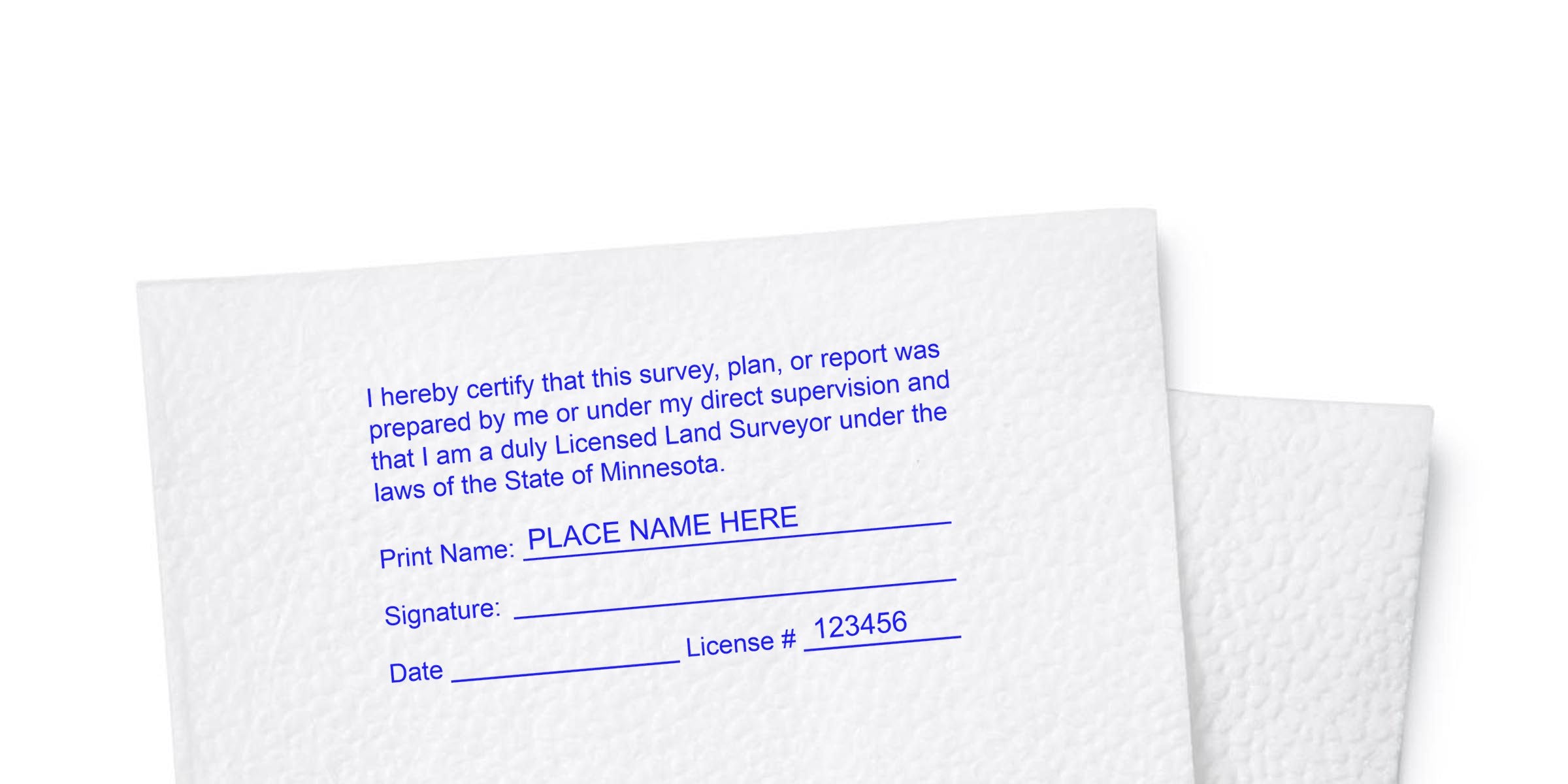
If you’re a land surveyor in Minnesota, you already know how vital having the right seal is. A Minnesota Land Surveyor Seal isn’t just a formality, it’s proof that your work meets quality and legal standards. From official plats to boundary surveys, your stamp or seal showcases your dedication to precision and your compliance with state requirements.
But a seal is more than ink on paper. It’s also a way to protect both you and your client. Whether you’re new to the profession or looking to update your current seal, let’s explore all you need to know, from state rules to practical tips for keeping everything in order.
Why You Need a Minnesota Land Surveyor Seal
A professional seal might feel like a small detail at first glance, but it’s a crucial piece of your credentialing puzzle. By placing your seal on a document, you’re effectively saying, “I stand by this work.” This level of accountability matters for everyone involved in land surveying—clients, government agencies, and even other professionals who rely on your results.
Seals also help maintain uniformity in the land surveying field. Minnesota regulators have specific rules around how you design, use, and store your seal. These rules are part of a broader effort to ensure consistent quality across the state. If you skip or ignore a seal requirement, you risk violating Minnesota regulations, which could lead to penalties or even the loss of your license. Nobody wants that headache.
Beyond the legal angle, a sealed survey fosters trust. When clients see that official impression or stamp on their documents, it reassures them that a trained, licensed professional has done the analysis. This goes a long way in building confidence in your work—and in you as a surveyor.
Understanding the State Requirements
Let’s be honest: reading through Minnesota’s legalese can feel overwhelming. Still, it’s essential to know a few fundamentals. The Minnesota Board of Architecture, Engineering, Land Surveying, Landscape Architecture, Geoscience, and Interior Design often oversees the regulations. They typically require:
- Your full name as it appears on your license
- Your license number clearly displayed
- A standard circle or shape that contains the state’s name and your professional title
These components help standardize seals across the state so that anyone reviewing your documents instantly recognizes them. Remember, rules can change over time. It’s wise to check for the latest updates or contact the relevant Minnesota board if you’re unsure.
One common point of confusion is whether you can use a rubber stamp, an embosser, or a digital seal. Minnesota generally allows all three, but you’ll need to ensure each meets the state’s visibility and legibility requirements. For instance, digital seals must have the same information as a physical seal, and they should be secured against unauthorized use.
How To Format Your Seal
Each Minnesota Land Surveyor Seal includes key elements so it’s easy to verify who prepared the document. If you’re considering a new seal design, here’s what you’ll typically include in a standard circle:
- The phrase “State of Minnesota.”
- Your professional title, such as “Licensed Land Surveyor.”
- Your full name, matching your official license details.
- Your license number, placed near your name or in a designated spot within the circle.
Some surveyors like to personalize their seals slightly with font styles, but be careful. If the state board deems it hard to read or too different from the standard format, you might run into compliance issues. When in doubt, keep the design simple and clear. That way, you maintain the seal’s official and professional appearance.
On size, many states specify a minimum diameter—often around 1.5 to 2 inches. Minnesota’s requirements might align with that range, but double-check the board’s documentation to confirm. A seal that’s too large can clutter your drawings or documents, and a seal that’s too small might be unreadable. Striking the right balance keeps everything tidy.
Applying Your Seal Correctly
Once you have your design in place, the next part is applying the seal to your project documents. Whether you’re using ink, embossing, or a digital format, accuracy is the name of the game. You normally place the seal near your signature and the date. This positioning shows that you’re signing off on the details of the specific project.
Seals are typically required for:
- Boundary surveys
- Plats and subdivision plans
- Legal descriptions
- Other engineering or surveying documents that require a professional’s oversight
Always read through the fine print in Minnesota’s guidelines. If you’re finalizing a boundary survey, for example, you’ll likely also need to include some disclaimers or notes on the document along with the seal. Double-checking each detail before you seal and sign helps you avoid late-stage corrections or, worse, invalid documents.
And if you’re using computer-generated surveys, consider embedding a digital seal. Just make sure you use secure software that prevents unauthorized copying. A password-protected PDF with a recognized e-signature solution usually meets Minnesota’s digital compliance standards, but again, verify with the board to stay on the safe side.
Choosing Your Supplier
You have several options for purchasing or updating your Minnesota Land Surveyor Seal. Some folks prefer working with local shops, but online stores can also offer reliable, high-quality options. The main factors to keep in mind include the clarity of the impression, material durability, and the turnaround time to produce the stamp or embosser.
Look for suppliers who provide:
- Clear guidelines on how to submit your name and license details
- Fast shipping or digital delivery for urgent orders
- Customer support in case you need a redesign
A reputable supplier will have experience with Minnesota’s regulations and offer a design template that you can customize. And if you choose to explore the digital route, confirm that they provide a high-resolution file that meets the state’s criteria.
The Acorn Sales Difference
A name you can trust is Acorn Sales, a reputable supplier of Minnesota Land Surveyor stamps and seals that’s been in business since 1964. Why does that matter for you? Experience. You want someone who has been around long enough to understand every nook and cranny of state requirements. Acorn Sales can guide you through the process of selecting or customizing your seal so you get it right the first time.
They also offer a free digital seal, which is handy if you’re working with electronic documents. By having both a physical and digital version, you’re set up to handle any kind of project—whether your client needs a paper copy or an electronic submission. Plus, with decades of expertise under their belt, they’re well-equipped to help you troubleshoot any issues that pop up along the way.
Maintaining Compliance Over Time
Sealing a survey is not just a one-time event. You need to maintain compliance as long as you practice. Minnesota might update its rules at any time, and you don’t want to be caught off guard. Here are a few quick pointers to keep yourself in the loop:
- Monitor State Board Updates: Check the board’s website or sign up for newsletters about changes in licensing or seal use.
- Renew Your License Promptly: An expired license can invalidate your seal. Keep track of your renewal date and set reminders.
- Store Your Seal Securely: Whether physical or digital, your seal should be protected against misuse. If it’s a physical stamp or embosser, lock it away. If it’s digital, safeguard it with a robust password or security lockout.
Minor changes in state guidelines may not sound like a big deal, but they can trip you up if you’re not paying attention. It’s far easier to stay current than to play catch-up after rules have already changed.
Wrapping Up
Having a proper Minnesota Land Surveyor Seal is a mix of art, science, and good old-fashioned compliance. When you do it right, you protect your reputation, satisfy legal requirements, and provide peace of mind to every client who trusts you with their property data. It’s an essential part of your professional toolkit.
If you’re ready to upgrade your seal, add a digital version, or just explore your options, consider Acorn Sales. With a trusted record since 1964, they’ve got you covered on everything from physical stamps to a free digital seal. And, if you’d like more detailed information about different types of stamps, head over to learn more about the Minnesota Land Surveyor Stamp. Happy surveying, and keep those documents in top-notch shape!
Frequently Asked Questions
What’s the Difference Between a Minnesota Land Surveyor Stamp and a Seal?
” A stamp usually references an ink-based device that you press onto a document, leaving an image of your credentials. A seal can also be an embosser, which creates a raised imprint on the paper. Each method is generally acceptable in Minnesota, as long as it contains all the required information—name, license title, and license number. Feel free to use a stamp or an embosser, or both. If you want a closer look at stamp options, check out the Minnesota Land Surveyor Stamp for more details.
Are Digital Seals Recognized in Minnesota?
” Yes, digital seals are commonly recognized. However, Minnesota’s board sets guidelines for secure usage. That means the digital seal must be a high-quality image that includes the same information as the physical version. You’ll also need to use a secure method for adding your signature, like an e-signature software. Acorn Sales provides a free digital seal to help you handle electronic documents while staying compliant.
How Do I Know If My Seal Design Is Approved?
” Most reputable suppliers design their seals to follow established templates. They often verify that the seal meets Minnesota’s size, clarity, and text requirements. If you’re still unsure, you can reach out to the state board for confirmation. Keeping a record of any email or written acknowledgement that your seal is acceptable can be helpful if questions arise later.
Do I Need To Update My Seal When I Renew My License?
” Usually, you don’t need a brand-new seal each time you renew your license, as long as your license number remains the same. If your name changes or your license number is updated for any reason, you should get a new seal with the correct information. Also, make sure you’re not using a seal for an expired license. That could cause issues if your documents are ever audited or contested in court.
What Happens If I Misplace or Lose My Stamp or Embosser?
” If your seal goes missing, treat it seriously. Someone could use your stamp to forge documents in your name. Immediately report the loss to the Minnesota board if required, and take steps to invalidate the missing seal. Then, order a replacement from your supplier. It’s also wise to keep your seal in a secure place, like a locked drawer, to reduce the risk of it falling into the wrong hands.








