

Written by Acorn Sales Company, manufacturing stamps and seals since 1964 · Reviewed by Holly R, VP of Sales and Marketing at Acorn Sales, against the Idaho Board of Licensure of Professional Engineers and Professional Land Surveyors, administered by the Idaho Division of Occupational and Professional Licenses and Idaho Code § 54-1215(3)(a), (b) on 21 September 2026 · Updated 21 September 2026
Idaho is the state where the published rule never says what the seal looks like. Idaho Code § 54-1215(3)(e) says only that “The design of the seal shall be as determined by the board,” and the current rule, IDAPA 24.32.01.200.01, does not fill it in. No diameter, no ratio, no shape and no content list appears in the statute, in the rule chapter or in the board’s published guidance. Any supplier printing an Idaho dimension is taking it from a template or from a neighboring state.
What the rule does say is narrow and worth knowing. Paragraph (a) describes the official seal of the Board itself, which is a different object from a licensee seal. Paragraph (b) preserves seals prepared and approved before July 1, 2008 for continued use. Paragraph (c) sends a licensee who holds both credentials to a single combined seal “as adopted by the Board” rather than to two devices.
The trap that catches Idaho work sits outside the engineering act. Idaho Code § 55-1905(1) for records of survey and § 50-1304 for plats both require that “Signatures shall be in reproducible black ink.” A blue pad or a blue signature over a correctly built seal gets the document rejected at the county recorder. Acorn cuts this seal to 1-5/8 inches. That is our production record rather than an Idaho rule; neither the statute nor IDAPA 24.32.01 states a diameter.
Idaho PE seal requirements at a glance
| Requirement | Idaho rule | Source |
|---|---|---|
| Seal required | Yes | Idaho Code § 54-1215(3)(a), (b) |
| Required elements | Not specified by statute or rule; the design is whatever the board has adopted and For a dual licensee, the board-adopted seal showing licensure as a Professional Engineer and Land Surveyor | Idaho Code § 54-1215(3)(e) |
| Size and shape | Acorn cuts this seal to 1-5/8 inches, and that is a production record rather than a published rule. | Acorn Sales production record, Idaho professional engineer seal |
| Device allowed | Three devices, named in the statute itself: “The seal may be a rubber stamp, crimp or electronically generated image.” The board's Ethics and Professional Practice Manual confirms the CAD question directly, stating that the Board determined that either a seal generated by a CAD system, or a rubber stamp or crimp, meets the requirements of the law for a seal. | Idaho Code § 54-1215(3)(a) |
| Signature and date | The statute is permissive on placement and strict on reproduction. | Idaho Code § 54-1215(3)(a), (c) |
| What must be sealed | All final specifications, land surveys, reports, plats, drawings, plans, design information, and calculations presented to a client or any public or governmental agency. | Idaho Code § 54-1215(3)(b), (c) |
| Electronic seal | No technology is named and no board approval process exists. | Idaho Code § 54-1215(3)(a), (c) |
| Renewal and lapse | Section 54-1215(3) makes it unlawful for any person to affix, or permit to be affixed, the person's seal and signature to any document after the license has “expired or has been retired, suspended, or revoked”, unless the license has been renewed, reinstated, or reissued. | Idaho Code §§ 54-1215(3), 54-1216 |
| Firm number on documents | Required, and enforced at the Secretary of State. | Idaho Code § 54-1235 |
| Licensing board | The Idaho Board of Licensure of Professional Engineers and Professional Land Surveyors, administered by the Idaho Division of Occupational and Professional Licenses | Idaho Code Title 54 Chapter 12, Engineers |
Rules for other states are on PE stamp requirements by state.




Is a seal required in Idaho?
Idaho requires a seal Idaho puts the whole duty in statute, in unusually operational detail. Idaho Code § 54-1215(3) requires each licensee on licensure to obtain a seal, except engineering faculty holding a restricted license. Subsection (3)(b) states that the seal, signature, and date “shall be placed on all final specifications, land surveys, reports, plats, drawings, plans, design information and calculations whenever presented to a client or any public or governmental agency.” The same subsection goes on to catch the preliminary dodge: a document presented to a client or agency that is not final and carries no seal “shall be clearly marked as ‘draft,’ ‘not for construction’ or with similar words”, and a final work product that is preliminary in nature, such as a preliminary engineering report, still has to be sealed, signed, and dated if it is intended to be relied on for policy decisions affecting life, health, property, or public fiscal interest. The board rule adds practice standards but does not restate the trigger.
What must appear on the seal
- Not specified by statute or rule; the design is whatever the board has adopted
- For a dual licensee, the board-adopted seal showing licensure as a Professional Engineer and Land Surveyor
Not addressed in any published source. Idaho Code § 54-1215(3)(e) says only that “The design of the seal shall be as determined by the board.” The current rule, IDAPA 24.32.01.200.01, does not list contents: paragraph (a) describes the official seal of the Board itself, which consists of the seal of the state of Idaho surrounded with the words Board of Professional Engineers and Professional Land Surveyors and State of Idaho, and paragraphs (b) and (c) only preserve seals prepared and approved before July 1, 2008 and direct a dual licensee to the combined seal “as adopted by the Board”. Do not confuse the Board's own official seal in paragraph (a) with a licensee seal; they are different objects. Checked IDAPA 24.32.01 in full, the DOPL IPELS statutes, rules and guidance page, all three current board guidance documents, and a DOPL site search for the word seal, which returns nothing. Copy the content from the board-adopted artwork, not from a template.
Size and shape
Acorn cuts this seal to 1-5/8 inches, and that is a production record rather than a published rule. The state publishes no dimension, so the figure below is what we make and ship for Idaho licensees rather than something you can point a reviewer at. Neither Idaho Code § 54-1215 nor IDAPA 24.32.01 states a diameter, ratio or shape, and the board publishes no dimensioned artwork, so there is no Idaho figure to quote. One and five-eighths inches is what we cut. What the state publishes: No diameter, ratio, or shape appears in Idaho Code § 54-1215 or in IDAPA 24.32.01, and the board publishes no dimensioned artwork on its website. Checked IDAPA 24.32.01 by extracting the text layer of the current rule PDF at adminrules.idaho.gov, the DOPL IPELS statutes, rules and guidance page, the Ethics and Professional Practice Manual of 07/10/2025, the Professional Engineering Guidance Document of 01/23/2026, and the Professional Land Surveyor Guidance Document of 05/27/2026. None states a size.



Embosser, rubber stamp or digital
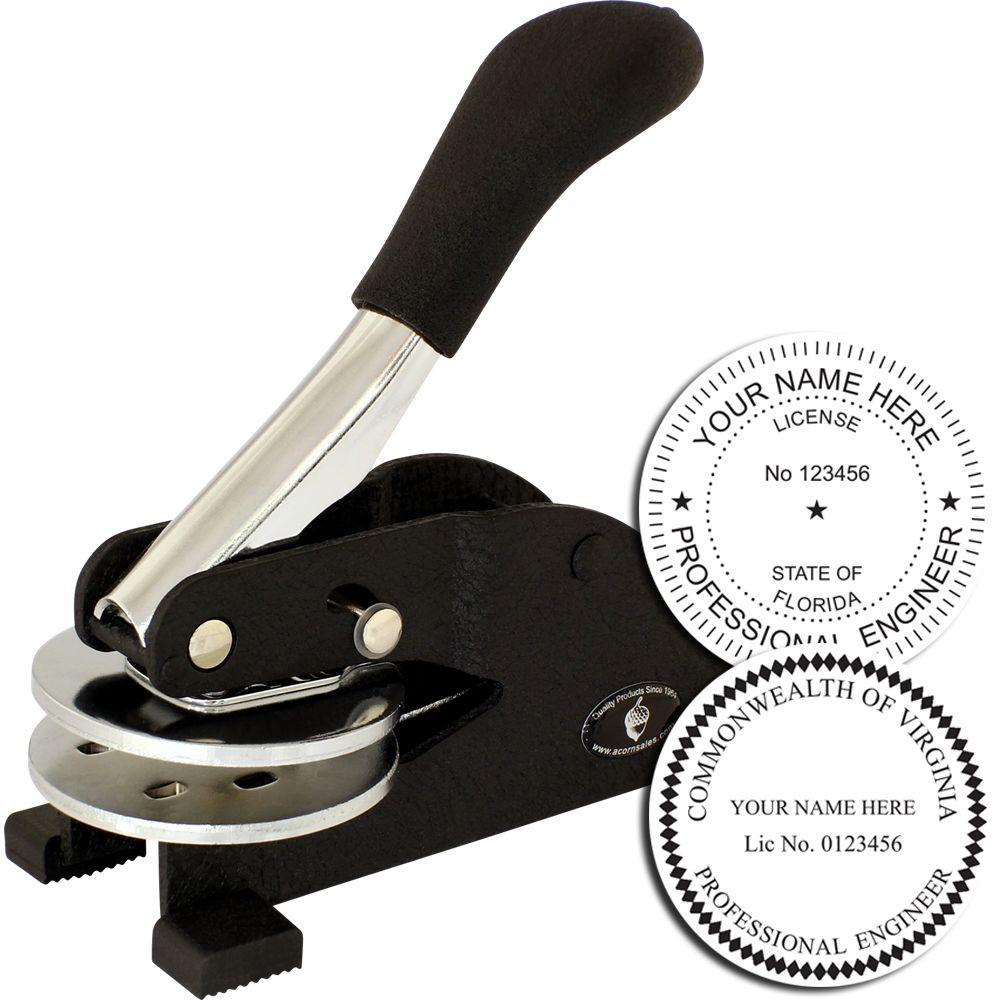
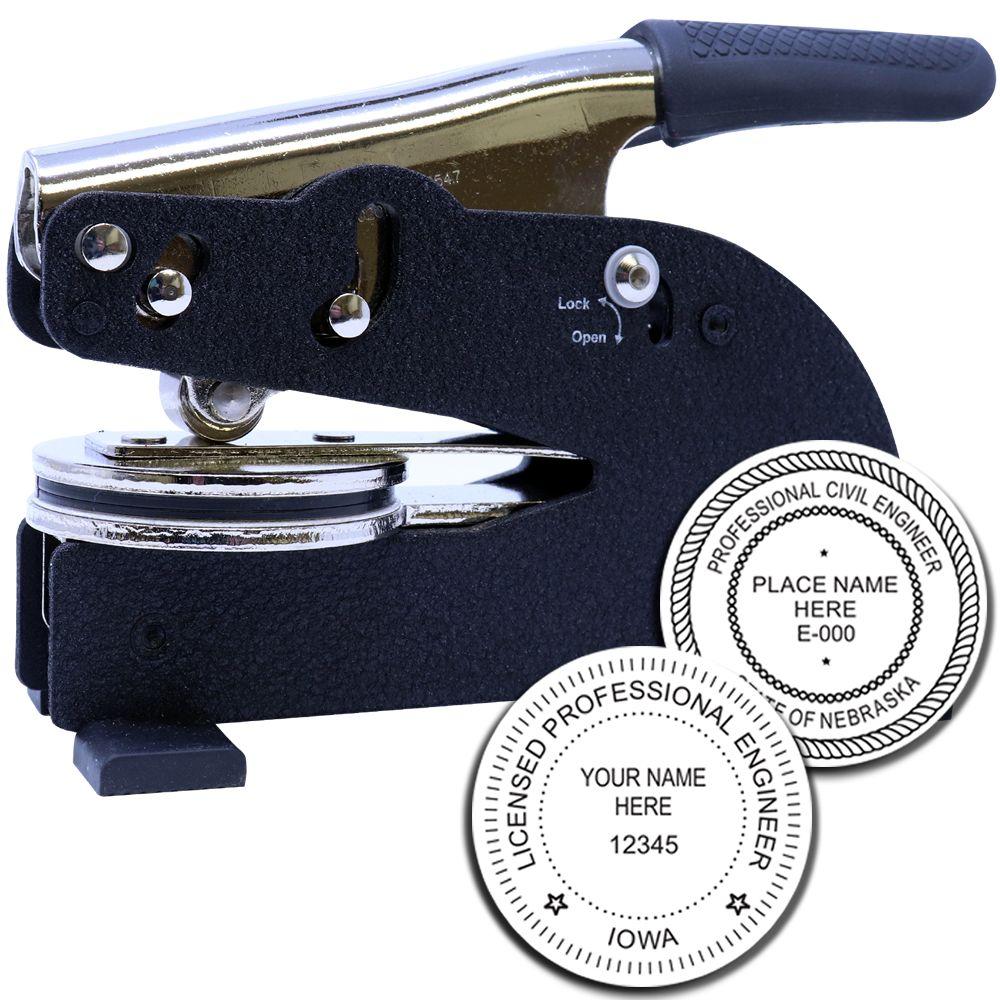
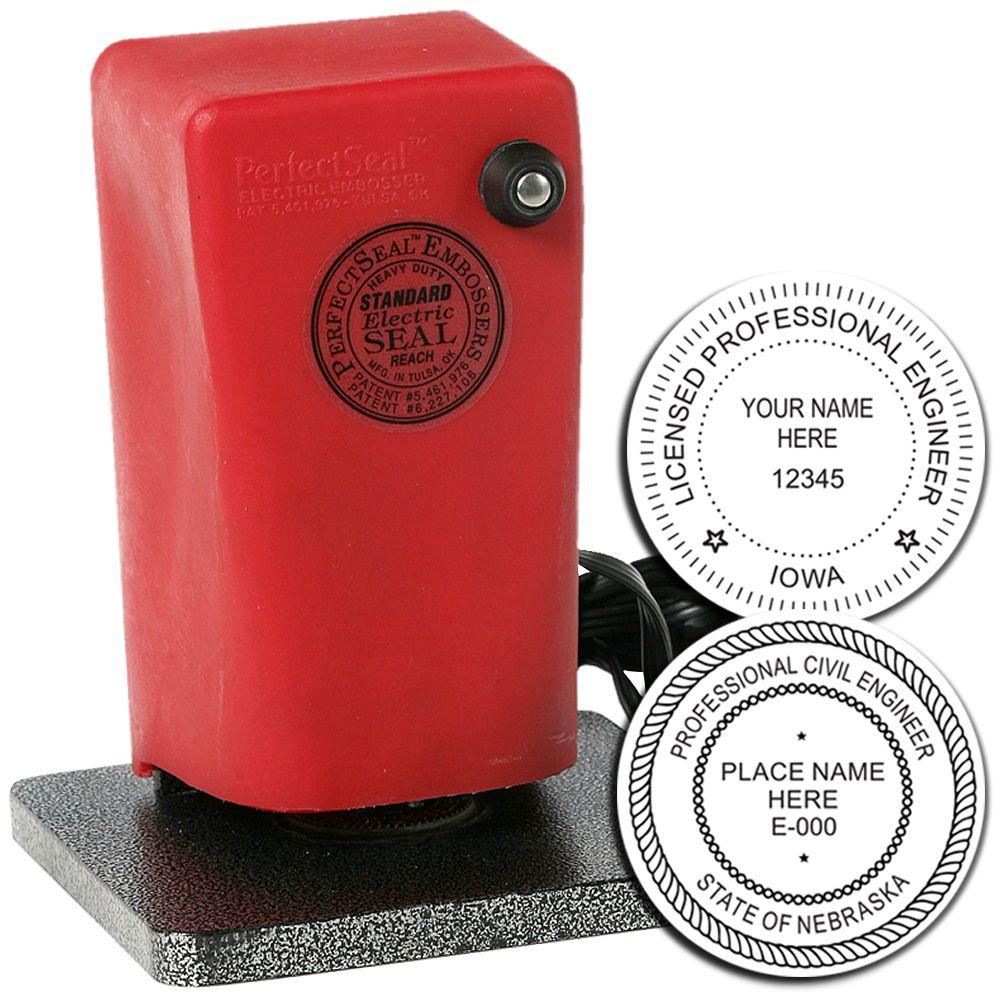
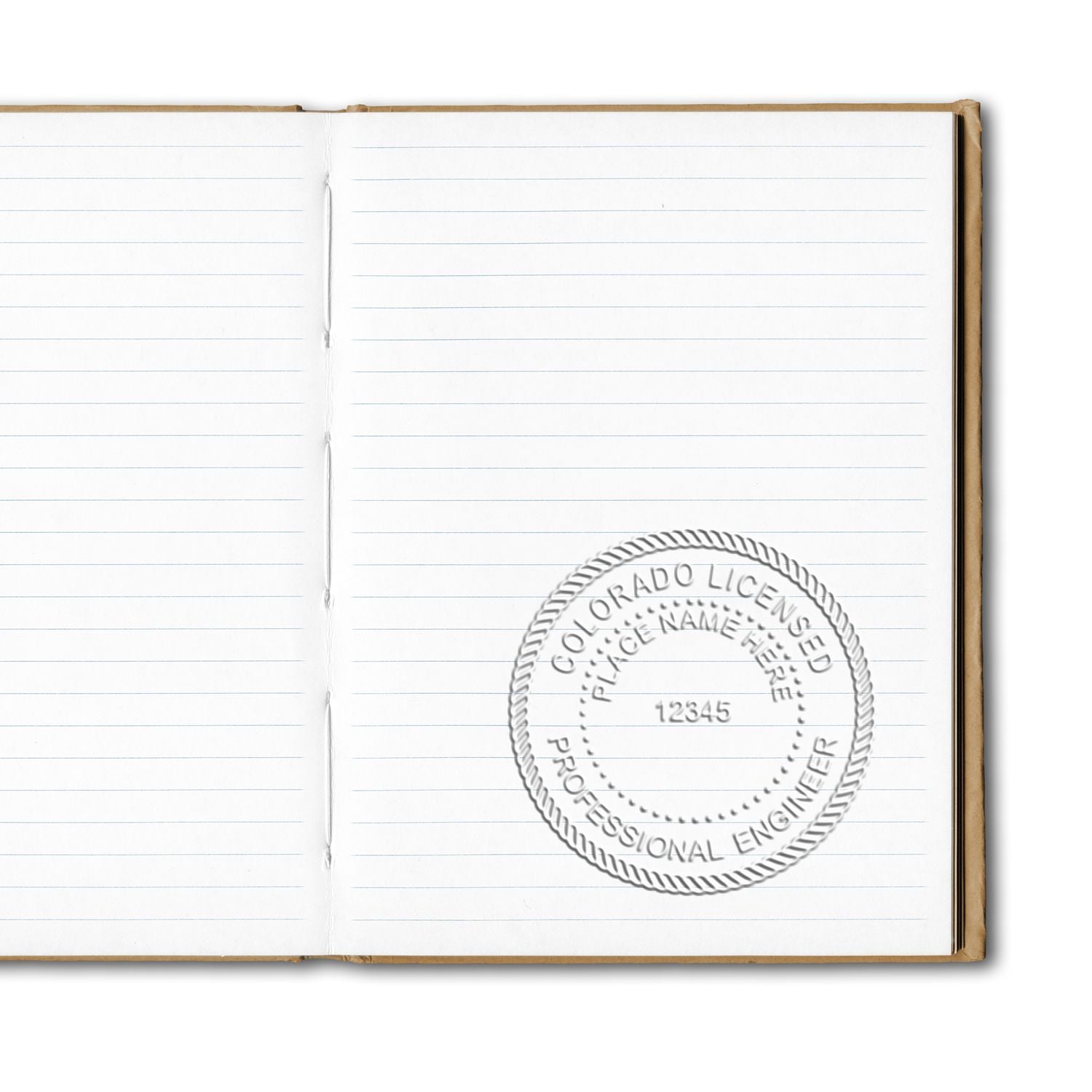
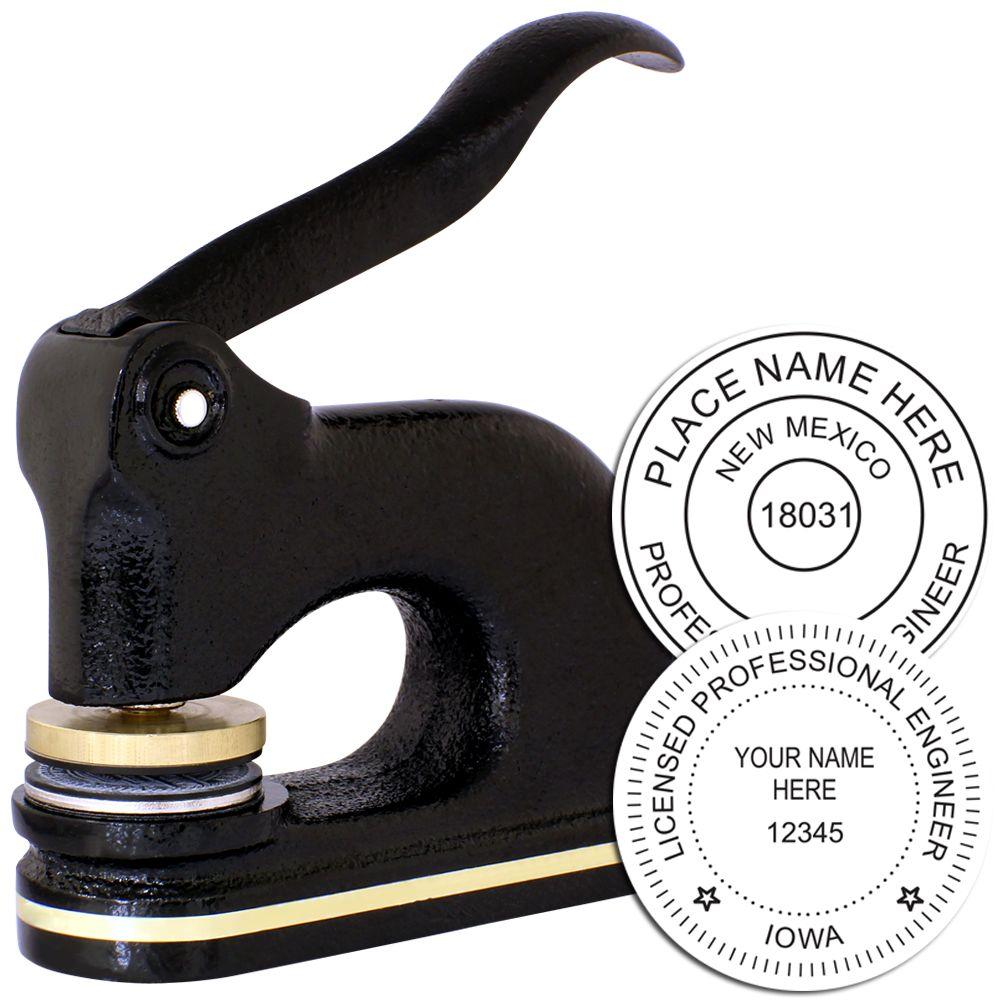
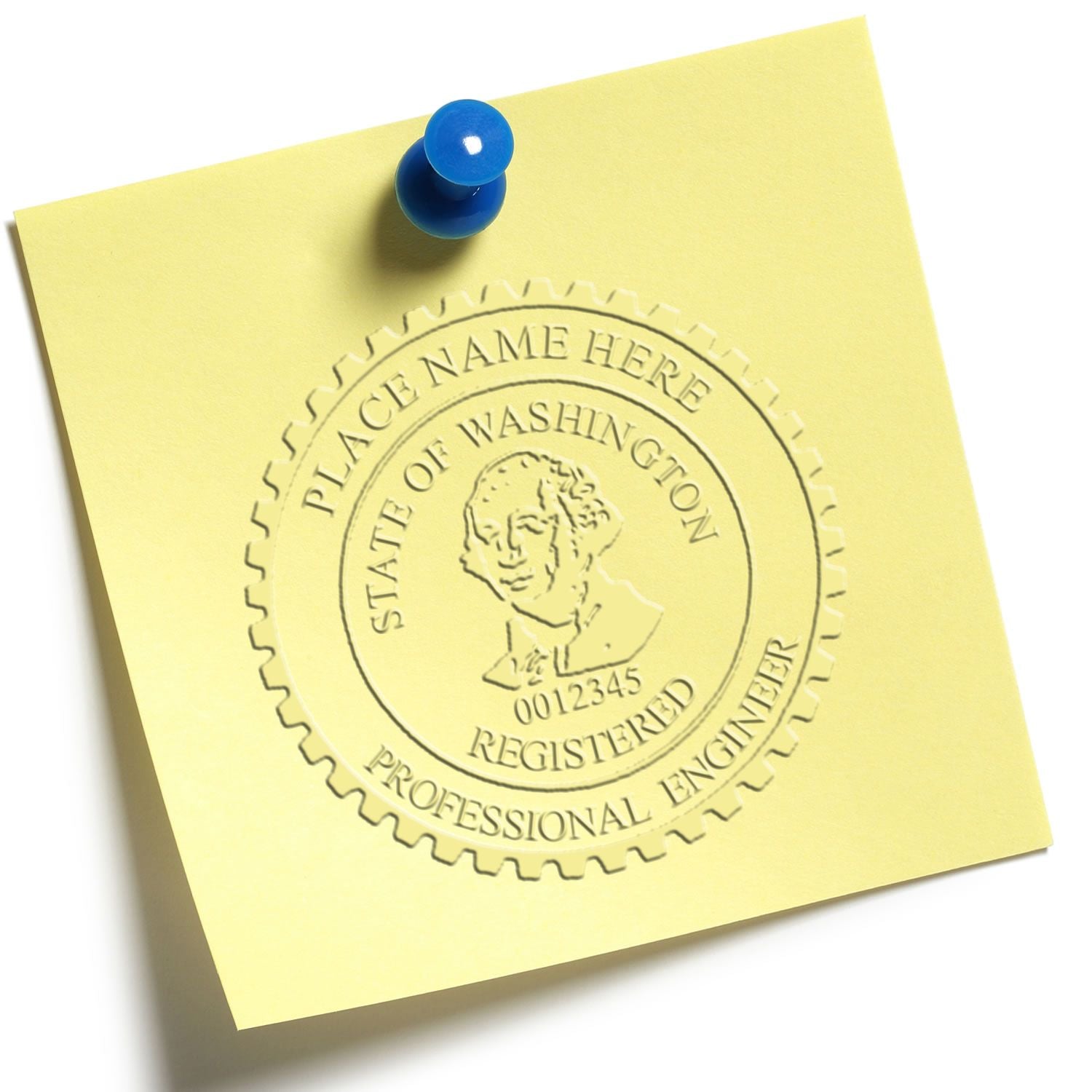
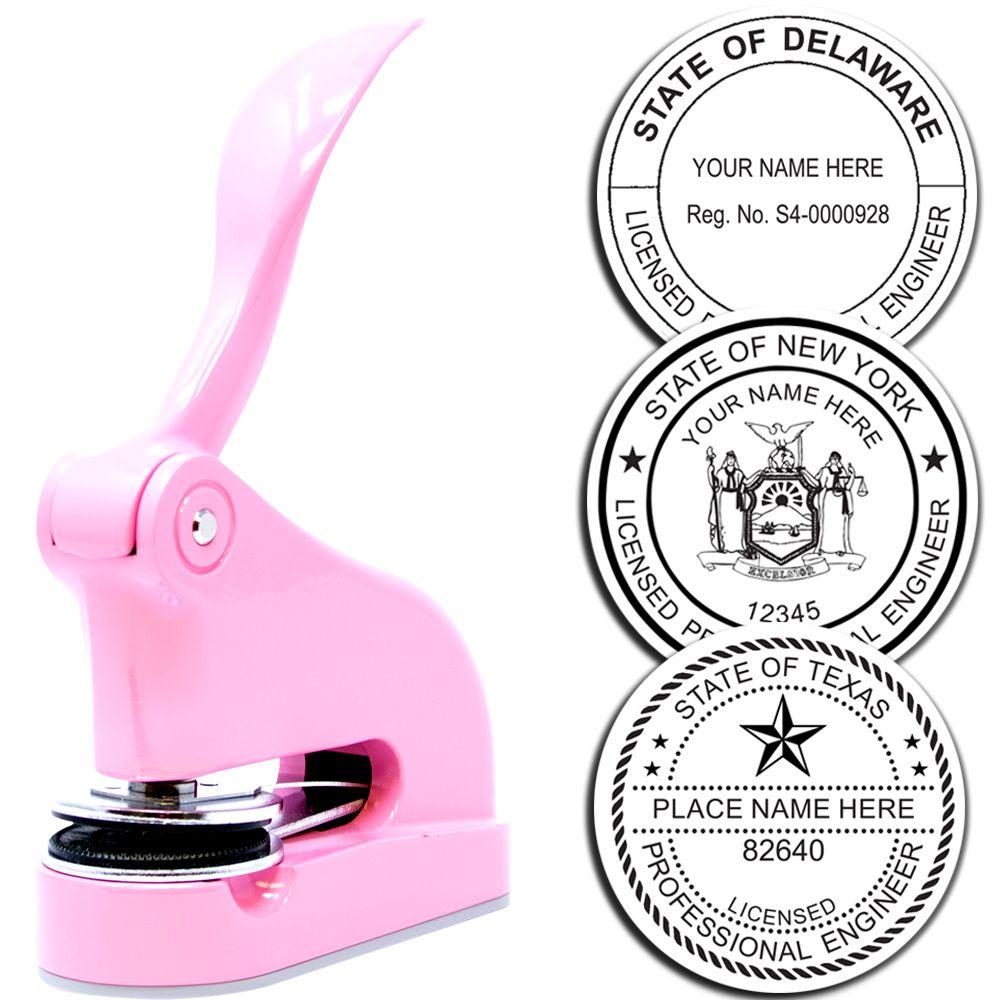
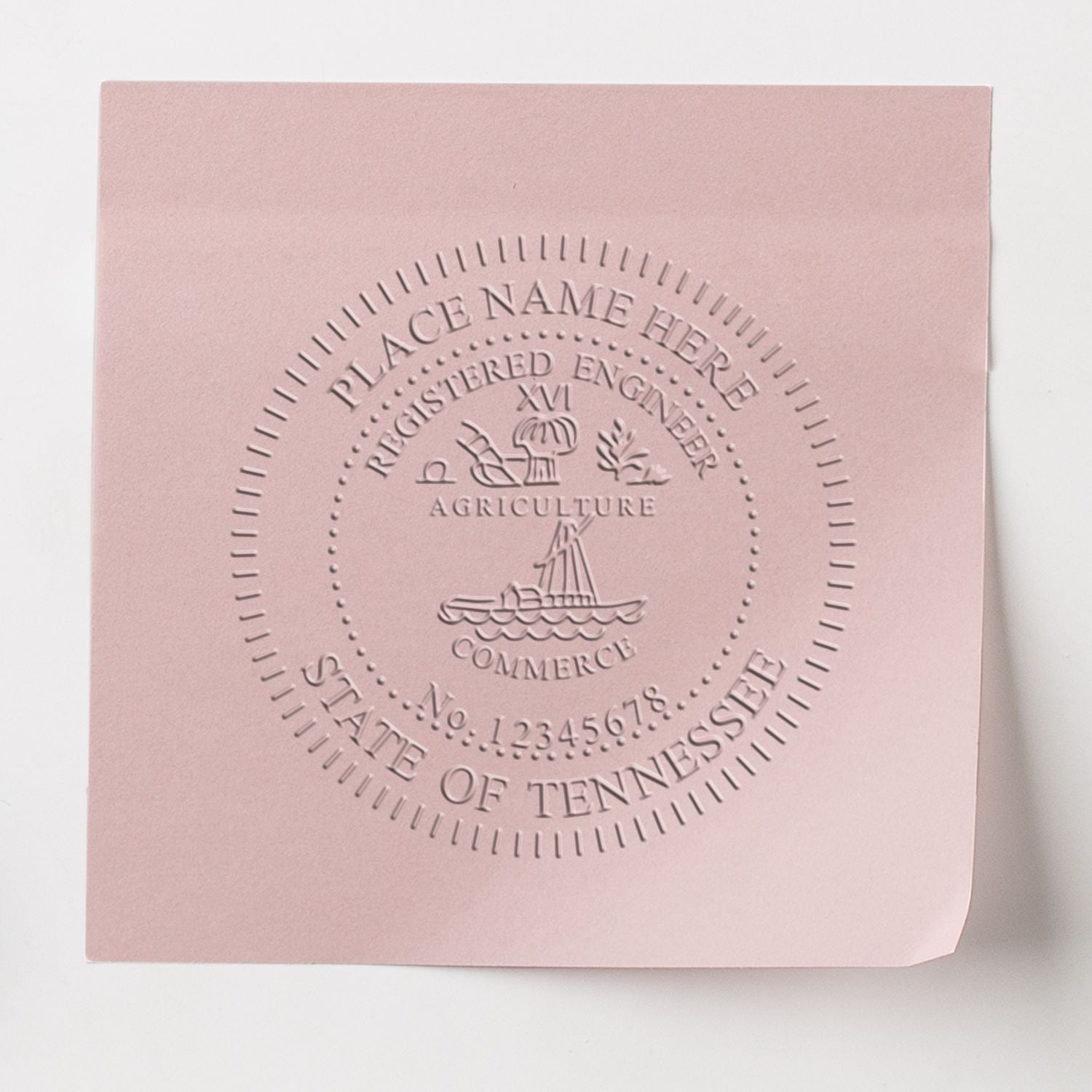
Three devices, named in the statute itself: “The seal may be a rubber stamp, crimp or electronically generated image.” The board's Ethics and Professional Practice Manual confirms the CAD question directly, stating that the Board determined that either a seal generated by a CAD system, or a rubber stamp or crimp, meets the requirements of the law for a seal. The safe buy is a rubber or self-inking stamp, because § 54-1215(3)(c) requires the seal, signature, and date to be placed so that they reproduce when the original is copied, and a crimp alone usually will not.
Signing and dating
The statute is permissive on placement and strict on reproduction. Under § 54-1215(3)(a), whenever the seal is applied “the licensee's signature and date shall be included adjacent to or across the seal”, so beside the stamp is acceptable and Idaho does not require signing through it. Under (3)(c) the seal, signature, and date must be placed so they are reproduced when the original is copied, and the application of seal, signature, and date constitutes certification that the work was done by the licensee or under the licensee's responsible charge. Idaho removed its old wet-signature language: the board's guidance lists a traditional handwritten signature, a facsimile image of the licensee's signature, and a digital signature, each adjacent to or over the stamp, as allowable forms. For electronic originals distributed as working or bidding copies, (3)(c) allows issuing the seal with a notice that the original is on file, and requires the words “Original Signed By:” and “Date Original Signed:” adjacent to or across the seal plus the storage location of the original.
The seal design is the board's, and the board does not publish it
Idaho Code § 54-1215(3)(e) says the design of the seal shall be as determined by the board, and the current rule chapter, IDAPA 24.32.01.200.01, never fills that in. What the rule does say is that seals prepared and approved before July 1, 2008 remain valid for continued use, and that an engineer who also becomes a land surveyor uses the combined seal as adopted by the Board. That wording assumes a board-adopted artwork that exists outside the rule text.
The practical consequence for a vendor is that there is no published Idaho dimension or content list to design against. Anything a supplier prints as the Idaho specification is being taken from a template or from another state, most often from a state with a written two-concentric-circle rule such as Wyoming. A stamp built that way may be perfectly legible and still not be the design the board adopted.
The second Idaho trap sits outside the engineering act entirely. Idaho Code § 55-1905(1) for records of survey and § 50-1304 for plats both require that “Signatures shall be in reproducible black ink.” The board flags this in its own guidance. A blue self-inking pad, or a blue signature applied over a correctly built seal, will get a record of survey or a plat rejected at the county recorder even though the engineering statute itself says nothing about color.
Which documents must be sealed
All final specifications, land surveys, reports, plats, drawings, plans, design information, and calculations presented to a client or any public or governmental agency. Sheet by sheet: “Each plan or drawing sheet shall be sealed and signed and dated by the licensee or licensees responsible for each sheet,” and in a business entity each sheet is sealed by the licensees involved. Reports, specifications, and like documents need the seal and signature only on the title page. Carve-outs are narrow: draft or not-for-construction marking for non-final documents, and the restricted license held by engineering faculty, whose holder is not required to obtain a seal. For land surveyors the rule adds that a corner record must include the professional land surveyor's seal, signed and dated by the surveyor, together with a printed name, board-issued license number, and employer name.


Electronic and digital seals
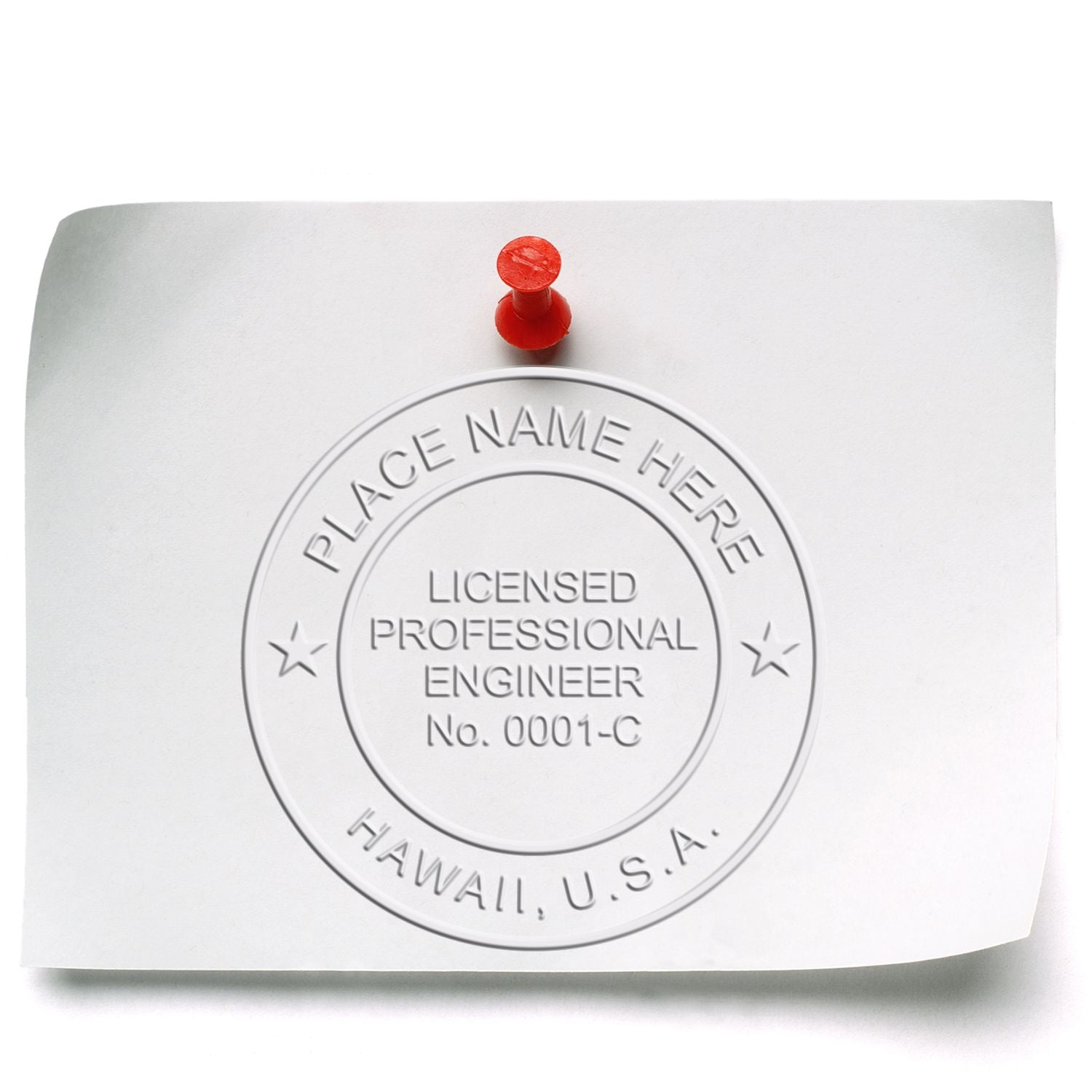
No technology is named and no board approval process exists. The statute simply lists an electronically generated image as a permitted seal form, and the board's guidance treats CAD-generated seals and digital signatures as acceptable without prescribing a standard, a certificate authority, or a verification service. Idaho instead controls the risk through the Original Signed By and Date Original Signed convention in § 54-1215(3)(c) for electronically produced copies distributed for bidding or working use.
Renewal, lapse and retirement
Section 54-1215(3) makes it unlawful for any person to affix, or permit to be affixed, the person's seal and signature to any document after the license has “expired or has been retired, suspended, or revoked”, unless the license has been renewed, reinstated, or reissued. Note that Idaho treats retired status as a sealing disqualifier alongside expiration and discipline. Not addressed: neither § 54-1215 nor IDAPA 24.32.01 requires the seal to be destroyed or surrendered, and neither says whether a license number changes on reinstatement. Checked both.
Firm registration
Required, and enforced at the Secretary of State. Idaho Code § 54-1235(1) requires a business entity practicing or offering to practice engineering or land surveying to hold a certificate of authorization from the board, with utilities regulated by the Idaho public utilities commission excepted. The entity files a description of services, an application, and a designation of the licensee or licensees in responsible charge, with changes reported within thirty days. Under § 54-1235(5) the Secretary of State may not accept an assumed business name or organizational filing containing engineer, engineering, land surveyor, or land surveying, or any derivation, without a certificate or eligibility letter from the board. The firm does not get its own seal and no firm number is required on the document. Section 54-1235(1) instead requires that all final drawings, specifications, plats, reports, or other papers prepared or approved for delivery or public record “shall be dated and bear the signature and seal of the professional engineer or professional land surveyor who prepared or approved them.”
What to check before you order
Get the artwork from the board rather than from a template: Idaho publishes no diameter and no content list, and § 54-1215(3)(e) leaves the design to the board. Settle whether you are a professional engineer, a professional land surveyor or dual licensed, because a dual licensee uses a single combined board-adopted seal rather than two stamps. Rubber stamps, crimps and electronically generated images are all lawful, and the inked stamp is the primary device because § 54-1215(3)(c) requires the seal, signature, and date to reproduce on copying. Use black ink: plats and records of survey require signatures in reproducible black ink under Idaho Code §§ 50-1304 and 55-1905. Every plan sheet gets sealed, so plan for volume use, and Idaho requires neither proof of your licensure nor the filing of an impression with the board.
Browse professional engineer stamps and seals.
Frequently asked questions
Is a PE seal required in Idaho?
Yes. Idaho Code § 54-1215(3) requires each licensee on licensure to obtain a seal, with an exception for engineering faculty holding a restricted license. Subsection (3)(b) requires that the seal, signature and date “shall be placed on all final specifications, land surveys, reports, plats, drawings, plans, design information and calculations whenever presented to a client or any public or governmental agency.” Idaho puts the whole duty in statute in unusually operational detail; the board rule adds practice standards but does not restate the trigger.
What has to appear on an Idaho PE seal?
The published sources do not say. Idaho Code § 54-1215(3)(e) delegates the design to the board, and IDAPA 24.32.01.200.01 lists no contents for a licensee seal. IDAPA 24.32.01 in full, the DOPL statutes, rules and guidance page, all three current board guidance documents and a DOPL site search for the word seal were checked. Take the content from the board-adopted artwork, and do not confuse it with the Board’s own official seal in paragraph (a), which consists of the seal of the state of Idaho surrounded by the words Board of Professional Engineers and Professional Land Surveyors and State of Idaho.
What size is an Idaho PE seal?
Not addressed. No diameter, ratio or shape appears in Idaho Code § 54-1215 or in IDAPA 24.32.01, and the board publishes no dimensioned artwork. The rule PDF at adminrules.idaho.gov, the DOPL statutes, rules and guidance page, the Ethics and Professional Practice Manual of 07/10/2025, the Professional Engineering Guidance Document of 01/23/2026 and the Professional Land Surveyor Guidance Document of 05/27/2026 were all checked, and none states a size. Treat any figure quoted as an Idaho specification with suspicion. Acorn cuts this seal to 1-5/8 inches. That is our production record rather than an Idaho rule; neither the statute nor IDAPA 24.32.01 states a diameter.
Rubber stamp, crimp or CAD image in Idaho?
All three, and the statute names them: “The seal may be a rubber stamp, crimp or electronically generated image.” The board’s Ethics and Professional Practice Manual confirms the CAD question directly, stating that the Board determined that either a seal generated by a CAD system, or a rubber stamp or crimp, meets the requirements of the law. The inked stamp is the practical buy, because § 54-1215(3)(c) requires the seal, signature and date to reproduce when the original is copied and a crimp alone usually will not.
Where do the signature and date go on an Idaho sealed sheet?
Either beside the seal or across it. Under § 54-1215(3)(a), whenever the seal is applied “the licensee’s signature and date shall be included adjacent to or across the seal,” so Idaho does not require signing through the impression. Under (3)(c) all three must be placed so they reproduce when the original is copied, and applying the seal, signature and date is itself certification that the work was done by the licensee or under the licensee’s responsible charge.
Does Idaho still require a wet signature?
No. Idaho removed its old wet-signature language, and the board’s guidance lists three allowable forms, each adjacent to or over the stamp: a traditional handwritten signature, a facsimile image of the licensee’s signature, and a digital signature. No technology is named and no board approval process exists; the statute simply lists an electronically generated image as a permitted seal form and the guidance treats CAD seals and digital signatures as acceptable without prescribing a standard, a certificate authority or a verification service.
How does Idaho handle electronic copies issued for bidding?
Through a labeling convention rather than a cryptographic one. For electronic originals distributed as working or bidding copies, § 54-1215(3)(c) allows the seal to be issued with a notice that the original is on file, and requires the words “Original Signed By:” and “Date Original Signed:” adjacent to or across the seal, plus the storage location of the original.
Which Idaho documents have to be sealed?
All final specifications, land surveys, reports, plats, drawings, plans, design information and calculations presented to a client or any public or governmental agency. Sheet by sheet: “Each plan or drawing sheet shall be sealed and signed and dated by the licensee or licensees responsible for each sheet,” and in a business entity each sheet is sealed by the licensees involved. Reports, specifications and like documents take the seal and signature on the title page only. For land surveyors, IDAPA 24.32.01.300 adds that a corner record must include the surveyor’s seal, signed and dated, together with a printed name, board-issued license number and employer name.
What about drafts and preliminary reports in Idaho?
Non-final documents get a label; some preliminary documents still get the seal. A document presented to a client or agency that is not final and carries no seal “shall be clearly marked as ‘draft,’ ‘not for construction’ or with similar words.” A final work product that is preliminary in nature, such as a preliminary engineering report, must still be sealed, signed and dated if it is intended to be relied on for policy decisions affecting life, health, property or public fiscal interest.
Why does ink color matter for Idaho plats and surveys?
Because two statutes outside the engineering act say so. Idaho Code § 55-1905(1) for records of survey and § 50-1304 for plats both require that “Signatures shall be in reproducible black ink,” and the board flags this in its own guidance. The engineering statute itself says nothing about color, which is why the requirement surprises people at the county recorder rather than at the board.
Can I keep sealing in Idaho if my license lapses or I retire?
No, and retirement counts. Section 54-1215(3) makes it unlawful for any person to affix, or permit to be affixed, the person’s seal and signature to any document after the license has “expired or has been retired, suspended, or revoked,” unless it has been renewed, reinstated or reissued. Idaho treats retired status as a sealing disqualifier alongside expiration and discipline. Neither § 54-1215 nor IDAPA 24.32.01 requires the seal to be destroyed or surrendered, and neither says whether a license number changes on reinstatement; both were checked.
Does an Idaho firm need a certificate of authorization, and does its number go on the drawing?
The firm needs the certificate; nothing goes on the drawing. Idaho Code § 54-1235(1) requires a business entity practicing or offering to practice engineering or land surveying to hold a certificate of authorization from the board, with utilities regulated by the Idaho public utilities commission excepted, and requires a designation of the licensee or licensees in responsible charge, with changes reported within thirty days. Under § 54-1235(5) the Secretary of State may not accept an assumed business name or organizational filing containing engineer, engineering, land surveyor or land surveying, or any derivation, without a certificate or eligibility letter from the board. The firm gets no seal, and § 54-1235(1) instead requires that final drawings, specifications, plats, reports or other papers “shall be dated and bear the signature and seal of the professional engineer or professional land surveyor who prepared or approved them.”