

Written by Acorn Sales Company, manufacturing stamps and seals since 1964 · Reviewed by Holly R, VP of Sales and Marketing at Acorn Sales, against the North Dakota State Board of Registration for Professional Engineers and Land Surveyors and N.D. Cent. Code § 43-19.1-21 on 21 September 2026 · Updated 21 September 2026
North Dakota does not allow a rubber stamp or facsimile signature on sealed work. N.D. Admin. Code § 28-02.1-08-02(3) requires a nonelectronic signature to be applied across the face of the seal, defines it as a handwritten identification containing the name of the person who applied it, and then states flatly: “A rubber stamp or facsimile signature is not allowed.” The only alternative is a qualifying electronic signature, which must be unique to and under the sole control of the registrant, capable of verification, and invalidated if any data on the document changes. That kind of signature, and only that kind, escapes the across-the-face rule. A scanned signature graphic dropped onto a PDF does not qualify.
The device itself is specified exactly. Two concentric circles, outer 1-3/4 inches and inner 1-1/4 inches, with metric equivalents of 44.45 and 31.75 millimeters given alongside, for any seal prepared after 1 July 2005. The band between them carries the title phrase above and North Dakota below; the inner circle carries your name, your registration number and the literal word Date. Keep the word Registered in the title phrase, which reads Registered Professional Engineer, Registered Professional Land Surveyor, or Registered Professional Engineer & Land Surveyor. Dropping it, which sounds more natural to buyers from states that say Professional Engineer, produces a seal that does not match the board’s illustrated standard.
Two layout details catch engravers. The registration number should be centered in the inner area in the space occupied by the word NUMBER, and sized no larger than the word NAME. And the placeholders themselves must go: “The words and parentheses ‘(NUMBER)’ and ‘(NAME)’ should not appear on the seal.” They are labels from the board’s illustrated standard stamps, and a die that reproduces them is defective. No expiration date and no discipline line are called for.
North Dakota PE seal requirements at a glance
| Requirement | North Dakota rule | Source |
|---|---|---|
| Seal required | Yes | N.D. Cent. Code § 43-19.1-21 |
| Required elements | The applicable phrase in the upper annular space: Registered Professional Engineer, Registered Professional Land Surveyor, or Registered Professional Engineer & Land Surveyor; The inscription North Dakota at the bottom of the annular space; Your name, inside the inner circle; Your registration number, centered in the inner circle; The word Date, inside the inner circle | N.D. Admin. Code § 28-02.1-08-02(1) |
| Size and shape | Two concentric circles: outer circle 1-3/4 inches, inner circle 1-1/4 inches. | N.D. Admin. Code § 28-02.1-08-02(1) |
| Device allowed | Four devices, and the rule groups two of them under one label: “Seals may be of rubber stamp, metal impression type, computer-generated, or electronically generated. | N.D. Admin. Code § 28-02.1-08-02(1), (2) |
| Signature and date | North Dakota draws a sharp line between handwritten and electronic signing, and bans the middle ground. | N.D. Admin. Code § 28-02.1-08-02(3) |
| What must be sealed | Original copies of all drawings, plan sheets, specifications, studies, reports, plats, maps, and other engineering and surveying work product, with earthwork cross sections expressly excepted. | N.D. Admin. Code § 28-02.1-08-03(1), (6) |
| Electronic seal | The electronic seal is defined in the rule rather than left to practice: computer-generated and electronically generated seals are together called an electronic seal, and they are lawful in the same terms as a rubber stamp or metal crimp, provided the design in § 28-02.1-08-02(1) is reproduced. | N.D. Admin. Code §§ 28-02.1-08-02(2), (3), 28-02.1-08-03(1)(c) |
| Renewal and lapse | N.D. Cent. | N.D. Cent. Code §§ 43-19.1-21, 43-19.1-22 |
| Firm number on documents | North Dakota calls it a certificate of commercial practice, not a certificate of authorization, and the firm gets no seal. | N.D. Cent. Code § 43-19.1-27(4), (5) |
| Licensing board | The North Dakota State Board of Registration for Professional Engineers and Land Surveyors | North Dakota Century Code chapter 43-19.1, Professional Engineers |
Rules for other states are on PE stamp requirements by state.




Is a seal required in North Dakota?
North Dakota requires a seal North Dakota states the duty in statute and the geometry in rule. N.D. Cent. Code § 43-19.1-21 provides that each registrant on registration may obtain a seal of the design authorized by the board, and then makes its use mandatory: final engineering drawings, specifications, maps, plats, reports, or other documents prepared by a person required to be registered, “when presented to a client, contractor, subconsultant, or any public agency, must be signed, dated, and stamped with the seal or facsimile of the seal.” The same section requires a working drawing or unfinished document to carry a statement that it is preliminary and not for construction, recording purposes, or implementation. The board rule then requires that original copies of all drawings, plan sheets, specifications, studies, reports, plats, maps, and other engineering and surveying work product, other than earthwork cross sections, must receive a seal, date, and signature.
What must appear on the seal
- The applicable phrase in the upper annular space: Registered Professional Engineer, Registered Professional Land Surveyor, or Registered Professional Engineer & Land Surveyor
- The inscription North Dakota at the bottom of the annular space
- Your name, inside the inner circle
- Your registration number, centered in the inner circle
- The word Date, inside the inner circle
The rule tells you what to leave off. The registration number should be centered in the inner area in the space occupied by the word NUMBER, the size of the numbers should not be larger than the word NAME, and “The words and parentheses ‘(NUMBER)’ and ‘(NAME)’ should not appear on the seal.” Those are layout placeholders from the board's illustrated standard stamps, and a die that reproduces them is defective. Two grandfather clauses matter for replacement orders: the two-concentric-circle geometry applies to seals prepared after July 1, 2005, and professional land surveyors who purchased a seal reading Registered Land Surveyor before January 1, 2011 are not required to purchase a new one. No expiration date and no discipline line are called for.
Size and shape
Two concentric circles: outer circle 1-3/4 inches, inner circle 1-1/4 inches. The rule gives metric equivalents alongside, 44.45 millimeters and 31.75 millimeters. These are exact values for any seal prepared after July 1, 2005. The annular band between the circles carries the title phrase above and North Dakota below; the inner circle carries the registrant's name, registration number, and the word Date.





Embosser, rubber stamp or digital
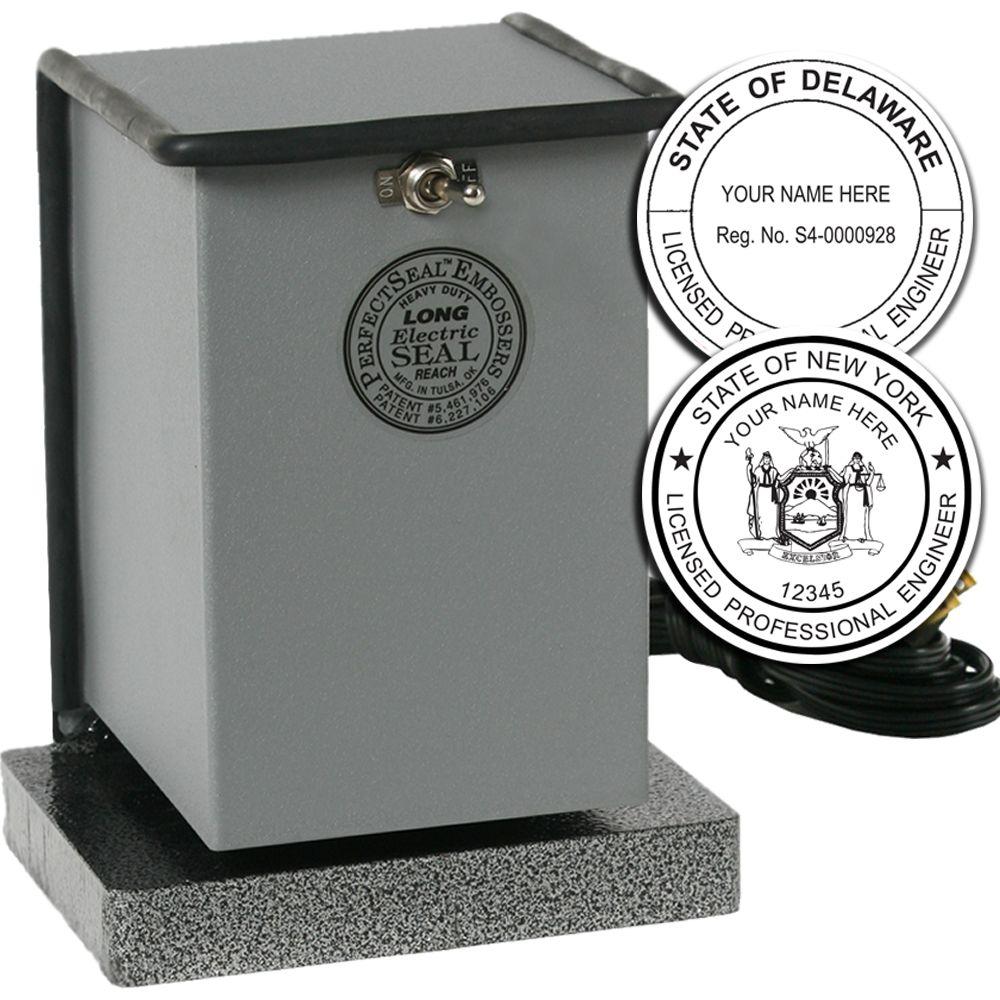
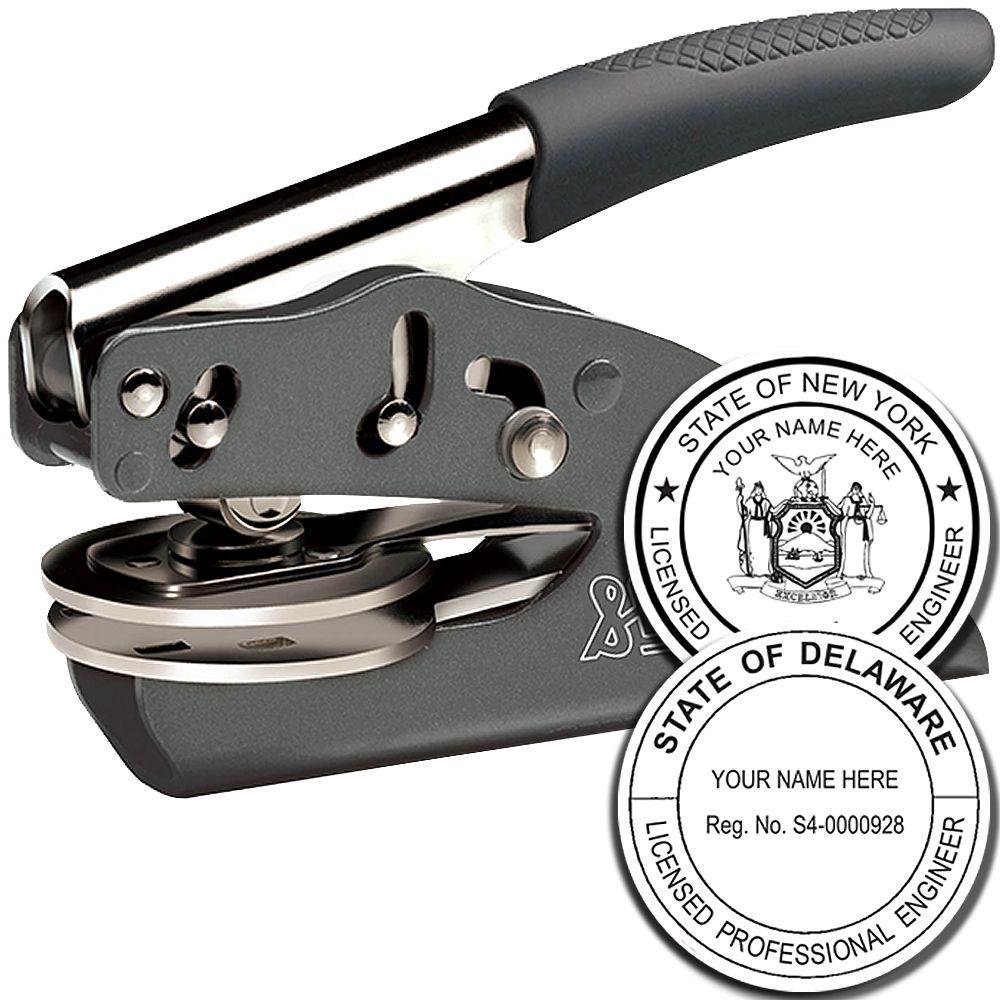
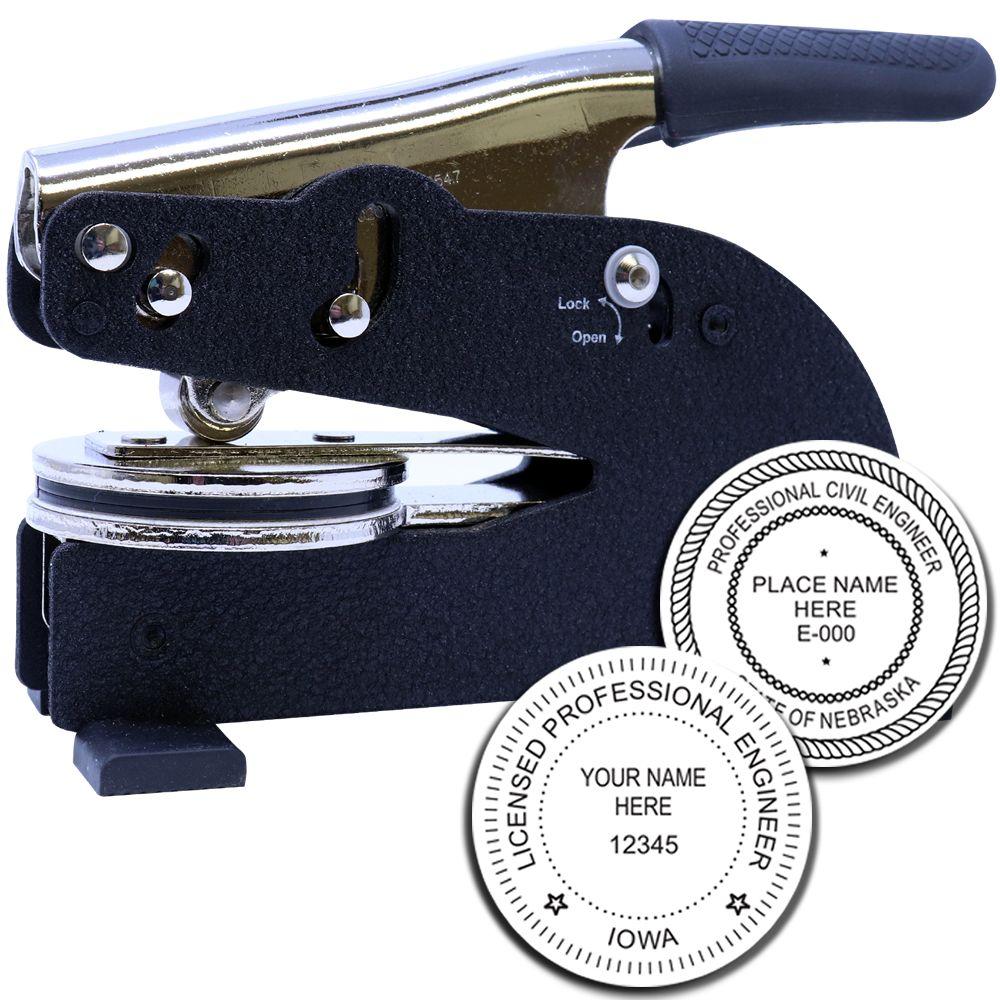
Four devices, and the rule groups two of them under one label: “Seals may be of rubber stamp, metal impression type, computer-generated, or electronically generated. Computer-generated and electronically generated seals are herein referred to as an ‘electronic seal’.” The statute frames the same set as crimp type or rubber stamp, or electronic. The safe buy is a rubber or self-inking stamp at exactly 1-3/4 inches outer diameter; a metal impression crimp is lawful but a crimp alone struggles to satisfy the legibility and reproduction expectations for recorded documents.
Signing and dating
North Dakota draws a sharp line between handwritten and electronic signing, and bans the middle ground. Under N.D. Admin. Code § 28-02.1-08-02(3) a registrant shall apply the signature across the face of the seal for a nonelectronic signature, defined as a handwritten identification containing the name of the person who applied it. An electronic signature must be unique to and under the sole control of the person using it, capable of verification, and linked to the document so that it is invalidated if any data on the document is changed, and “An electronic signature is not required to be across the face of the seal.” Then the prohibition: “A rubber stamp or facsimile signature is not allowed.” The signature and seal must also be dated. So a signature stamp, or a scanned signature image that is not a qualifying electronic signature, is not a lawful way to sign a North Dakota document.
You may sell the seal, but you may not sell the signature
North Dakota is explicit where most states are silent. N.D. Admin. Code § 28-02.1-08-02(3) requires a nonelectronic signature to be applied across the face of the seal and defines it as a handwritten identification containing the name of the person who applied it, then states flatly that a rubber stamp or facsimile signature is not allowed. An electronic signature is permitted, but only if it is unique to and under the sole control of the registrant, capable of verification, and invalidated if any data on the document changes, and only that kind of electronic signature escapes the across-the-face rule.
For a supplier this closes off a normal upsell. Signature stamps sold alongside a seal are a standing product line in most states; in North Dakota they cannot lawfully be used to sign sealed work, and a scanned signature graphic dropped onto a PDF is not an electronic signature under this rule unless it carries the verification and tamper-invalidation properties.
The geometry carries its own trap. The two-circle specification, 1-3/4 inch outer and 1-1/4 inch inner, applies to seals prepared after July 1, 2005, and the title phrase must read Registered Professional Engineer, Registered Professional Land Surveyor, or Registered Professional Engineer & Land Surveyor. Dropping the word Registered, which reads more natural to buyers from states that say Professional Engineer, produces a seal that does not match the board's illustrated standard. Land surveyors holding a pre-2011 die reading Registered Land Surveyor are grandfathered and do not need a new one.
Which documents must be sealed
Original copies of all drawings, plan sheets, specifications, studies, reports, plats, maps, and other engineering and surveying work product, with earthwork cross sections expressly excepted. Placement is split: studies, reports, and project specifications need the seal and signature only on a single introductory sheet, while “Every sheet or drawing in an original set of engineering plans must receive a seal and signature.” Where computer-generated or electronically generated seals or signatures are used on documents combined into a single file, they may be applied to all required documents by one computer action. Carve-out: a working drawing or unfinished document carries a preliminary and not-for-construction statement instead of a seal, under N.D. Cent. Code § 43-19.1-21. Recording bar: under § 43-19.1-30 it is unlawful for a county recorder or other public authority to file or record any map, plat, survey, or other land surveying document that does not have impressed and affixed the personal signature and seal of the registered professional land surveyor who prepared it. Changes after final sealing are prohibited except by the registrant or another registrant who assumes responsible charge and reseals, with a limited exception for construction phase revisions and record drawings that do not affect functional design.


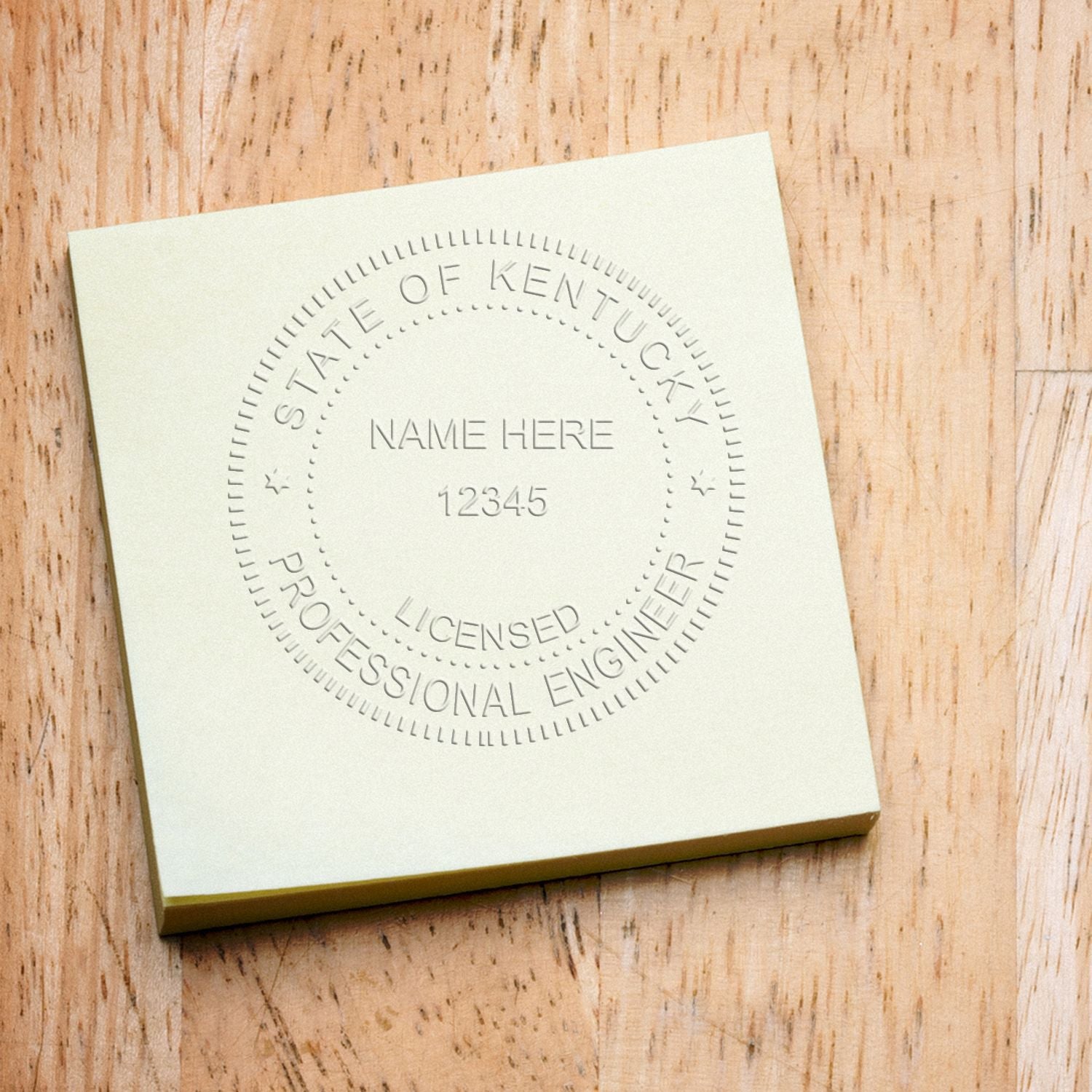
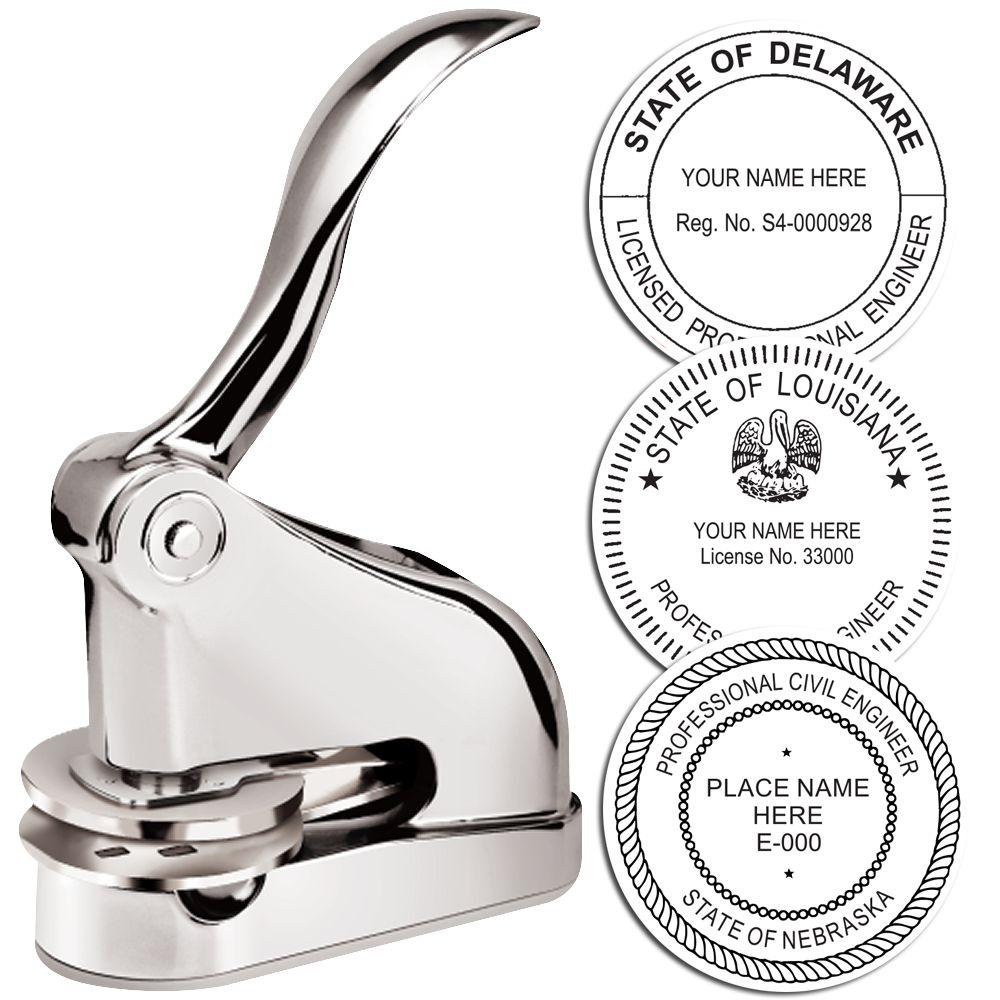

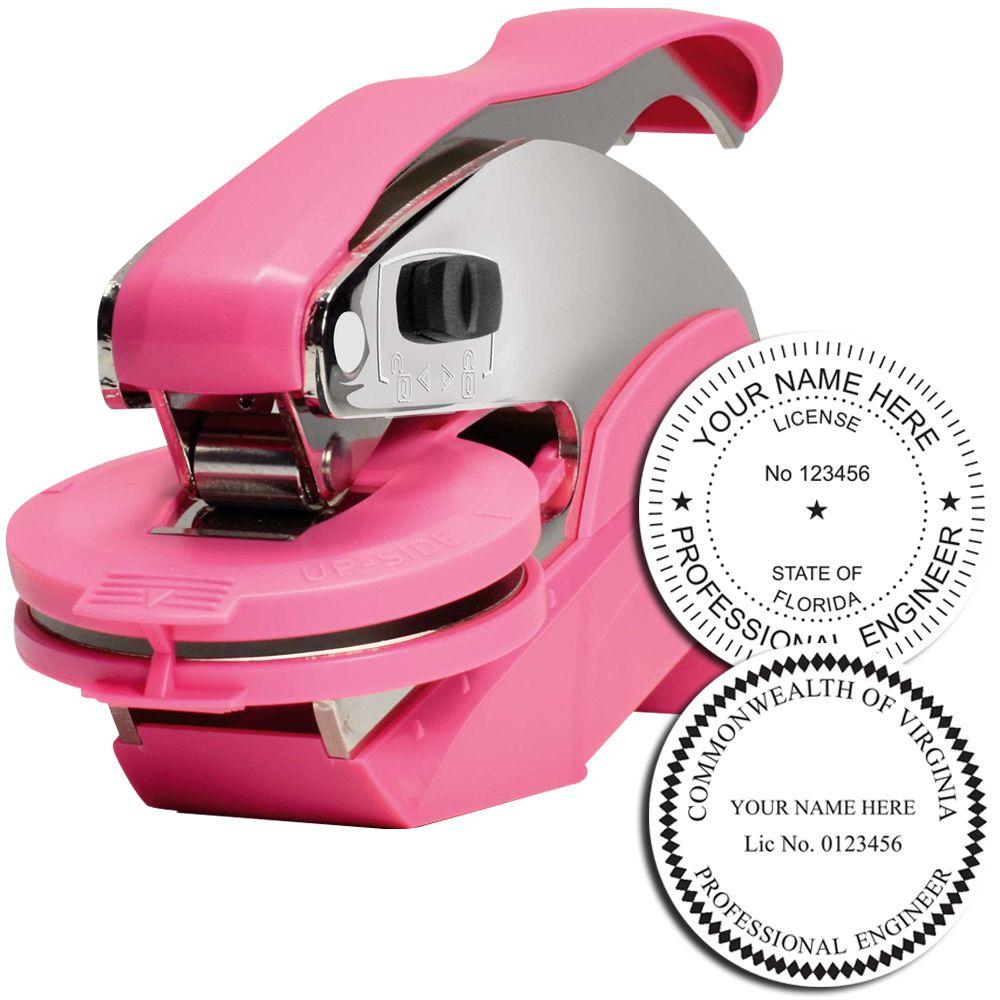

Electronic and digital seals
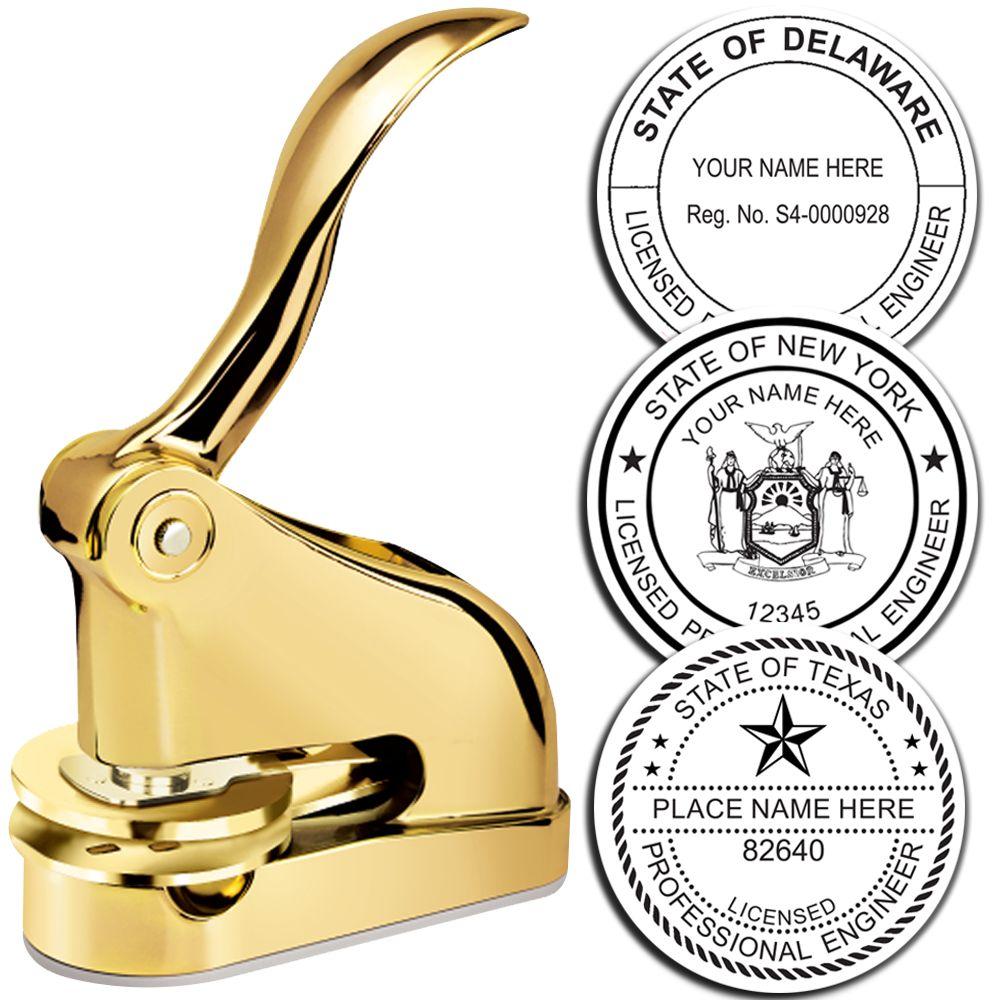
The electronic seal is defined in the rule rather than left to practice: computer-generated and electronically generated seals are together called an electronic seal, and they are lawful in the same terms as a rubber stamp or metal crimp, provided the design in § 28-02.1-08-02(1) is reproduced. The signature standard is functional and three-part, uniqueness and sole control, verifiability, and invalidation on any change to document data, with no certificate authority or product named. The one efficiency the rule grants is batch application: seals or signatures may be computer-generated on all required documents in a combined file by one computer action, which removes the need to sign every sheet by hand in an electronic set.
Renewal, lapse and retirement
N.D. Cent. Code § 43-19.1-21 makes it unlawful for a registrant to affix or permit the registrant's seal and signature, or facsimiles, to be affixed to any document after the expiration or revocation, or during the suspension, of a certificate, or to aid or abet another person in evading the chapter. Certificates expire December thirty-first of the year of issuance if issued annually, or of the year after issuance if biennial, and become invalid after that date unless renewed, under § 43-19.1-22. Retired status is regulated separately: a retired registrant retains the board-issued wall certificate and may use the title with the term retired, but under N.D. Admin. Code § 28-02.1-12-05 may not apply the person's seal to any plan, specification, plat, or report except as provided in § 28-02.1-12-04(4). Not addressed: nothing in ch. 43-19.1 or art. 28-02.1 requires the seal to be destroyed or surrendered, and nothing says a registration number changes.
Firm registration
North Dakota calls it a certificate of commercial practice, not a certificate of authorization, and the firm gets no seal. N.D. Cent. Code § 43-19.1-27(4) permits a registered professional engineer or registered land surveyor to practice as an organization or as an individual operating under a trade name if the organization is registered under or exempt from the chapter. Subsection (5)(e) keeps the sealing duty on the individual: all final drawings, specifications, plans, reports, or other engineering or land surveying papers presented to a client, contractor, subconsultant, or any public agency must be dated and bear the seals and signatures of the professionals responsible. N.D. Admin. Code § 28-02.1-07-02 makes certificates of commercial practice nontransferable and requires the organization to report disciplinary actions within thirty days, to renew and update annually the names of all employees licensed to practice in North Dakota, and to keep its certificate of authority with the Secretary of State active and in good standing. No commercial practice number is required on the face of a sealed document.
What to check before you order
The two-circle geometry is exact, 1-3/4 inch outer and 1-1/4 inch inner, with the title phrase in the upper band, North Dakota in the lower band, and your name, registration number, and the literal word Date inside the inner circle; keep the number centered and no larger than the word NAME, strip every (NAME) and (NUMBER) placeholder, and keep the word Registered in the title phrase. Rubber stamp, metal impression, and electronic seals are all lawful; take the inked stamp as your primary. Leave clear interior space, because a handwritten signature has to run across the face of the seal. A rubber stamp or facsimile signature is expressly not allowed on North Dakota sealed work, so a signature stamp is of no use to you there. Every sheet of an original set of engineering plans gets sealed, so expect heavy use, while reports and specifications need only an introductory sheet; and check your date of original licensure before replacing an older die, because pre-2005 seals and pre-2011 Registered Land Surveyor seals are grandfathered.
Browse professional engineer stamps and seals.
Frequently asked questions
Do I need a seal in North Dakota?
Yes. N.D. Cent. Code § 43-19.1-21 provides that each registrant on registration may obtain a seal of the design authorized by the board, and then makes its use mandatory: final engineering drawings, specifications, maps, plats, reports or other documents prepared by a person required to be registered, “when presented to a client, contractor, subconsultant, or any public agency, must be signed, dated, and stamped with the seal or facsimile of the seal.” The board rule adds that original copies of all drawings, plan sheets, specifications, studies, reports, plats, maps and other engineering and surveying work product, other than earthwork cross sections, must receive a seal, date and signature.
What size is a North Dakota PE seal?
Two concentric circles, outer 1-3/4 inches and inner 1-1/4 inches, under N.D. Admin. Code § 28-02.1-08-02(1). The rule gives metric equivalents alongside, 44.45 millimeters and 31.75 millimeters. These are exact values for any seal prepared after 1 July 2005.
What has to appear on a North Dakota seal?
Five things: the applicable title phrase in the upper annular space, which is Registered Professional Engineer, Registered Professional Land Surveyor, or Registered Professional Engineer & Land Surveyor; the inscription North Dakota at the bottom of that annular space; your name inside the inner circle; your registration number, centered in the inner circle; and the word Date, also inside the inner circle. No expiration date and no discipline line are called for, and the (NAME) and (NUMBER) placeholders from the board’s illustrated standard must not be engraved.
Can I sign North Dakota documents with a signature stamp?
No. N.D. Admin. Code § 28-02.1-08-02(3) states that “A rubber stamp or facsimile signature is not allowed.” A nonelectronic signature is a handwritten identification containing the name of the person who applied it. The seal may be a rubber stamp; the signature may not.
Where does the signature go on a North Dakota seal?
Across the face of the seal, for a handwritten signature. The one exception is a qualifying electronic signature, which must be unique to and under the sole control of the person using it, capable of verification, and linked to the document so that it is invalidated if any data on the document is changed; for that kind, “An electronic signature is not required to be across the face of the seal.” The signature and seal must also be dated. Leave clear interior space on the die so a handwritten signature can run across it.
Which devices are lawful in North Dakota?
Four, grouped under three labels: “Seals may be of rubber stamp, metal impression type, computer-generated, or electronically generated. Computer-generated and electronically generated seals are herein referred to as an ‘electronic seal’.” The statute frames the same set as crimp type or rubber stamp, or electronic. A rubber or self-inking stamp cut to 1-3/4 inches is the practical choice; a metal impression crimp is lawful but a crimp alone struggles with the legibility and reproduction expectations for recorded documents.
Does every sheet need a seal in North Dakota?
Every sheet of plans, yes; reports and specifications, no. “Every sheet or drawing in an original set of engineering plans must receive a seal and signature,” while studies, reports and project specifications need the seal and signature only on a single introductory sheet. Earthwork cross sections are expressly excepted from the work product list. A working drawing or unfinished document carries a statement that it is preliminary and not for construction, recording purposes or implementation, under N.D. Cent. Code § 43-19.1-21, instead of a seal. Changes after final sealing are prohibited except by the registrant or another registrant who assumes responsible charge and reseals, with a limited exception for construction phase revisions and record drawings that do not affect functional design.
Is my older North Dakota seal still valid?
Two grandfather clauses apply. The two-concentric-circle geometry applies to seals prepared after 1 July 2005, and professional land surveyors who purchased a seal reading Registered Land Surveyor before 1 January 2011 are not required to purchase a new one. Check the date of the existing device before replacing it.
Does North Dakota allow electronic seals?
Yes, and the rule defines them rather than leaving them to practice. Computer-generated and electronically generated seals are together called an electronic seal and are lawful on the same terms as a rubber stamp or metal crimp, provided the design in § 28-02.1-08-02(1) is reproduced. The signature standard is functional and three-part: uniqueness and sole control, verifiability, and invalidation on any change to document data, with no certificate authority or product named. The rule also grants one efficiency: where documents are combined into a single file, seals or signatures may be applied to all required documents by one computer action, which removes the need to sign every sheet by hand in an electronic set.
Does a North Dakota firm need a certificate of authorization?
North Dakota calls it a certificate of commercial practice, and the firm gets no seal. N.D. Cent. Code § 43-19.1-27(4) permits a registered professional engineer or registered land surveyor to practice as an organization, or as an individual under a trade name, if the organization is registered under or exempt from the chapter. Subsection (5)(e) keeps the sealing duty on the individual. N.D. Admin. Code § 28-02.1-07-02 makes certificates of commercial practice nontransferable and requires the organization to report disciplinary actions within thirty days, to renew and update annually the names of all employees licensed to practice in North Dakota, and to keep its certificate of authority with the Secretary of State active and in good standing. No commercial practice number is required on the face of a sealed document.
What happens to my seal at expiration, or in retired status?
N.D. Cent. Code § 43-19.1-21 makes it unlawful for a registrant to affix or permit the registrant’s seal and signature, or facsimiles, to be affixed to any document after the expiration or revocation, or during the suspension, of a certificate, or to aid or abet another person in evading the chapter. Under § 43-19.1-22 certificates expire on 31 December of the year of issuance if issued annually, or of the following year if biennial, and become invalid after that date unless renewed. Retired status is separate: a retired registrant keeps the board-issued wall certificate and may use the title with the term retired, but under N.D. Admin. Code § 28-02.1-12-05 may not apply the seal to any plan, specification, plat or report except as provided in § 28-02.1-12-04(4). Not addressed: nothing requires the seal to be destroyed or surrendered, and nothing says a registration number changes.
Can a county recorder refuse my plat in North Dakota?
It must. N.D. Cent. Code § 43-19.1-30 makes it unlawful for a county recorder or other public authority to file or record any map, plat, survey or other land surveying document that does not have impressed and affixed the personal signature and seal of the registered professional land surveyor who prepared it.