

Written by Acorn Sales Company, manufacturing stamps and seals since 1964 · Reviewed by Holly R, VP of Sales and Marketing at Acorn Sales, against the Kansas State Board of Technical Professions and Kan. Stat. Ann. §§ 74-7023(d), 74-7031 on 21 September 2026 · Updated 21 September 2026
Kansas gives you 30 days from the issuance of your license to obtain the seal. K.A.R. 66-6-1(a) sets that deadline, and very few states impose one at all. A newly licensed Kansas architect is on a clock from the day the certificate is dated. The statute behind it, K.S.A. 74-7023(d), requires each licensee to obtain a seal of a distinctive design authorized by the board bearing the licensee’s name and number and a uniform inscription formulated by the board.
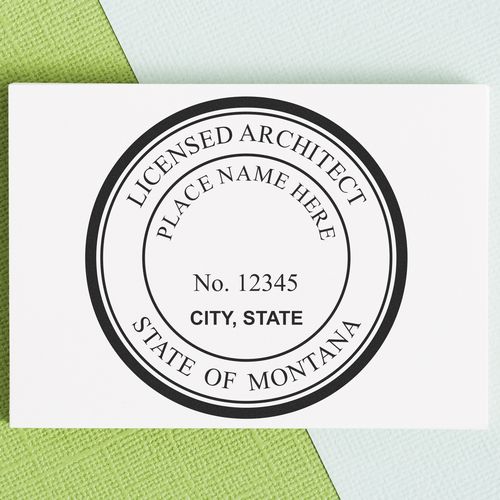
The geometry is fixed and so is every position. Outer circle 1 5/8 inches, inner circle 1 1/16 inches, LICENSED at the top of the inner circle, KANSAS at the bottom of it, your license certificate number centered inside it, your name in the upper ring and your profession in the lower ring. The one variable is that legend, and the board’s Seal FAQ fixes it as the plain word ARCHITECT.
That single word is where out-of-state templates fail. Most states letter REGISTERED ARCHITECT or ARCHITECT plus the state name on the ring. Kansas puts KANSAS inside the inner circle and leaves the lower ring for the bare profession. A die reading REGISTERED ARCHITECT does not match the authorized design, and K.S.A. 74-7023(d) forbids revising the seal without express written board approval, so the fix is a new device rather than an adjustment.
Kansas architect seal requirements at a glance
| Requirement | Kansas rule | Source |
|---|---|---|
| Seal required | Yes | Kan. Stat. Ann. §§ 74-7023(d), 74-7031 |
| Required elements | Two concentric circles, Your name as it appears on your license, The word ARCHITECT in the lower ring, The word LICENSED, The word KANSAS and Your license certificate number | Kan. Admin. Regs. 66-6-1(a) |
| Size and shape | Outer circle 1 5/8 inches in diameter, inner circle 1 1/16 inches in diameter. | Kan. Admin. Regs. 66-6-1(a) |
| Device allowed | K.A.R. 66-6-1(a) states that “The seal may be a rubber stamp, an embossed seal, or a digital seal.” All three are legal for architects on identical terms. | Kan. Admin. Regs. 66-6-1(a) |
| Signature and date | K.A.R. 66-6-1(b)(1) requires that after the seal is applied the licensee apply “the licensee’s handwritten or authenticated digital signature and the date across the seal.” Across the seal, not beside it, so the die has to leave room to sign through. | Kan. Admin. Regs. 66-6-1(b)(1) |
| What must be sealed | K.A.R. 66-6-1(c)(1) reaches “each document, including drawings, technical reports, original land descriptions for the purpose of conveying an interest in real property, records, and papers,” subject to the statutory practice exemptions. | Kan. Admin. Regs. 66-6-1(c), (d), (e) |
| Electronic seal | K.A.R. 66-6-1(b)(3) sets four tests for a digital signature: unique to the licensee, able to be verified, under the sole control of the licensee, and linked to the document so that the signature is invalidated if any data is altered. | Kan. Admin. Regs. 66-6-1(b)(3), (4) |
| Renewal and lapse | K.S.A. 74-7023(d) makes it “unlawful for anyone to stamp any document with the seal after the license has expired or has been revoked, unless the license has been renewed or reissued.” Kansas licenses renew every two years under K.A.R. 66-6-10(a), which also creates inactive status, requiring renewal and fee but no continuing education, and emeritus status for licensees at least 60 years old. | Kan. Stat. Ann. § 74-7023(d) |
| Firm requirements | A certificate of authorization is required to do business, but its number does not go on the document. | Kan. Stat. Ann. § 74-7036 |
| Regulator | The Kansas State Board of Technical Professions | Kan. Stat. Ann. §§ 74-7003, 74-7023, 74-7031 and 74-7036, from the Kansas Office of Revisor of Statutes, with Kan. Admin. Regs. 66-6-1 (seals and signatures, as amended 4 Dec. 2020), 66-6-4 and 66-6-10, and the Kansas State Board of Technical Professions Seal FAQ. K.A.R. 66-6-1 governs architects, professional engineers, landscape architects, professional surveyors and professional geologists with one design |


Is a seal required in Kansas?
Kansas puts the duty in the statute and the deadline in the regulation, and it does so for every licensed technical profession at once. K.S.A. 74-7023(d) provides that each licensee “shall obtain a seal of a distinctive design authorized by the board, bearing the licensee’s name and number and a uniform inscription formulated by the board,” and that “Documents signed by the licensee in the licensee’s professional capacity shall be stamped with the seal during the duration of the license.” K.A.R. 66-6-1(a) requires the seal to be obtained “within 30 days of a license being issued.” K.A.R. 66-6-1(c)(1) then requires each document to be sealed, signed and dated by the architect who prepared it or who is in responsible charge, subject to the architectural practice exemption in K.S.A. 74-7031.
What must appear on the seal
- Two concentric circles
- Your name as it appears on your license
- The word ARCHITECT in the lower ring
- The word LICENSED
- The word KANSAS
- Your license certificate number
Kansas fixes every position and leaves nothing to taste. K.A.R. 66-6-1(a) puts “LICENSED” at the top of the inner circle, “KANSAS” at the bottom of the inner circle and the license certificate number in the center of the inner circle; the ring between the circles carries your name at the top and your profession at the bottom. The only permitted variation is the given name: the seal “may contain, before the licensee’s surname, an abbreviated form of the licensee’s given name or a combination of initials representing the licensee’s given name.” The surname cannot be abbreviated. The board’s published Seal FAQ fixes the legend for this credential as the single word ARCHITECT. Kansas does not say REGISTERED ARCHITECT, and a template carrying that longer legend is wrong. K.S.A. 74-7023(d) also forbids tampering: “No person shall tamper with or revise the seal without express written approval by the board.”
Size and shape
Outer circle 1 5/8 inches in diameter, inner circle 1 1/16 inches in diameter. K.A.R. 66-6-1(a) states both figures and applies the same geometry to all five Kansas technical professions. The board’s Seal FAQ repeats the same two dimensions, so the numbers cross check against two board sources. No tolerance is stated and no alternative size is offered.
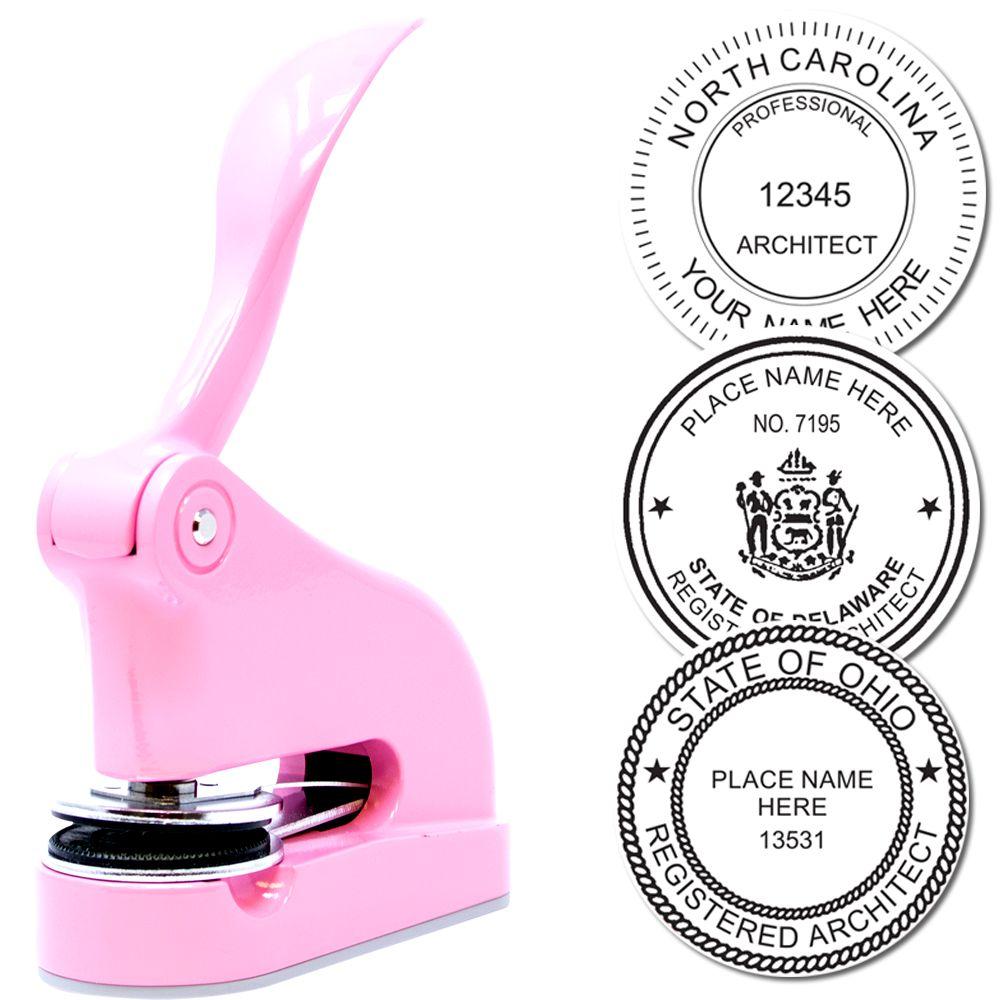
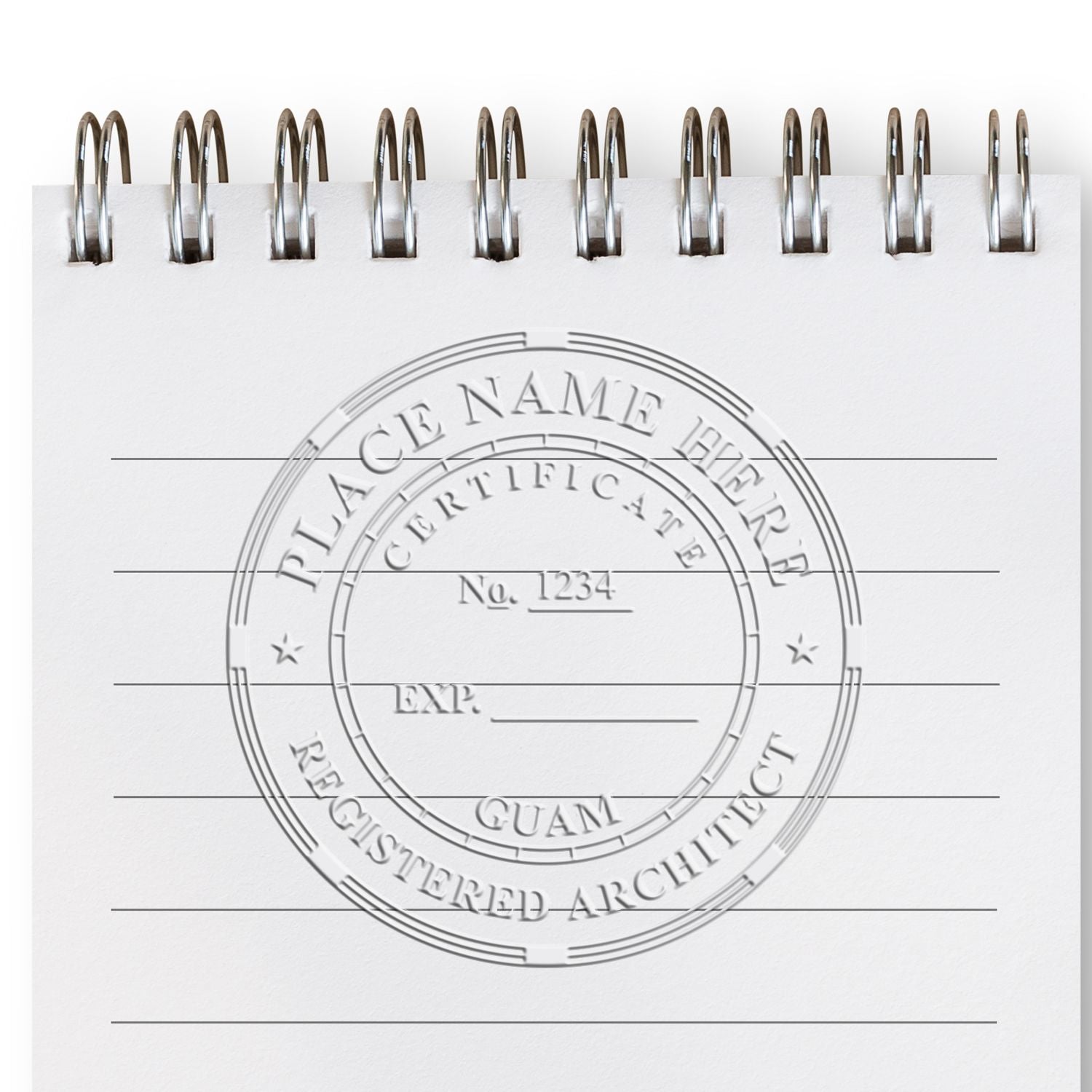
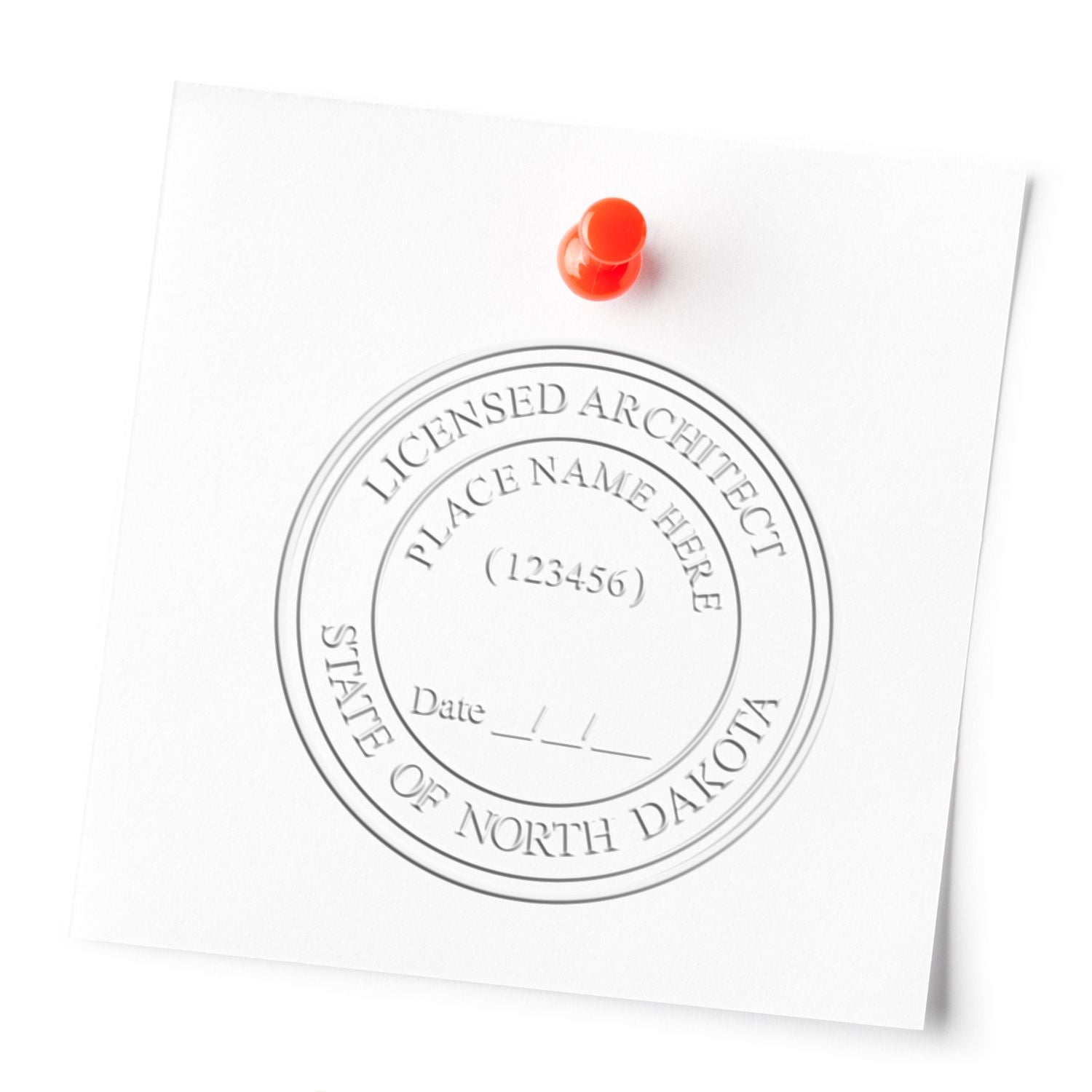
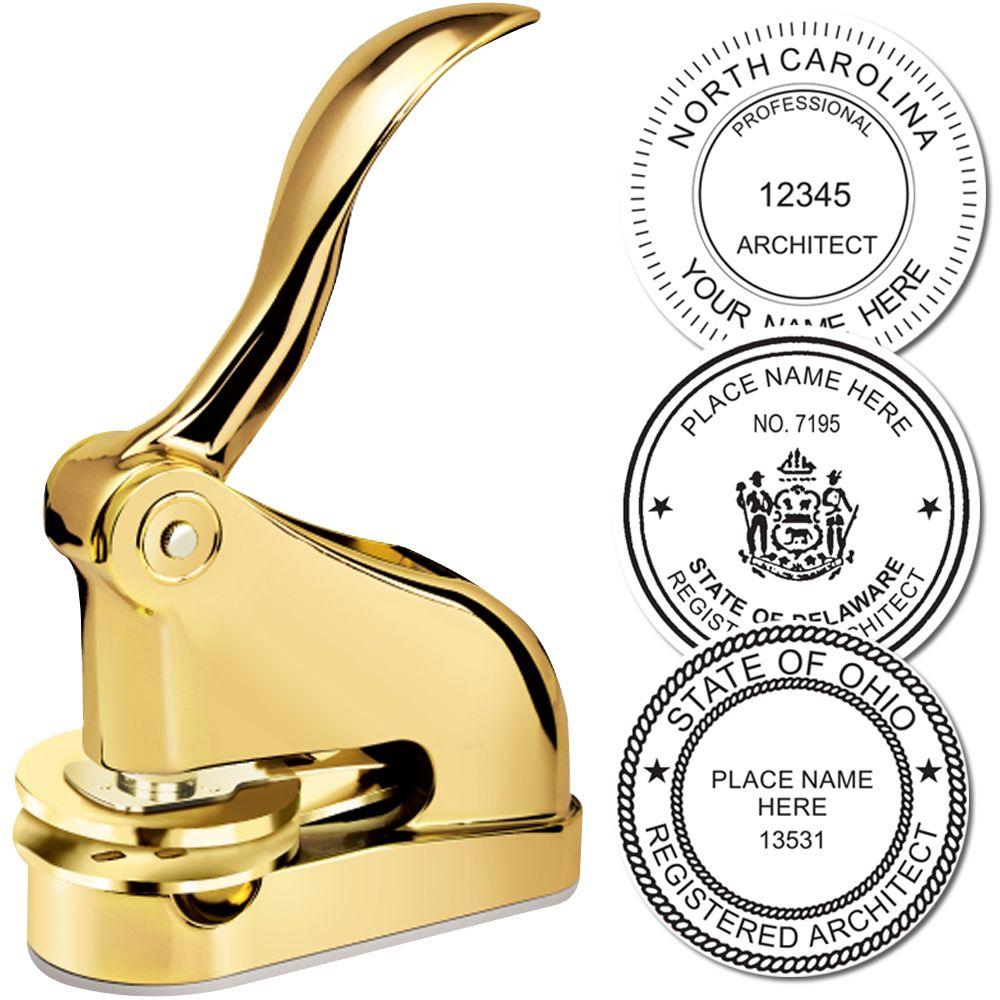
Embosser, rubber stamp or digital
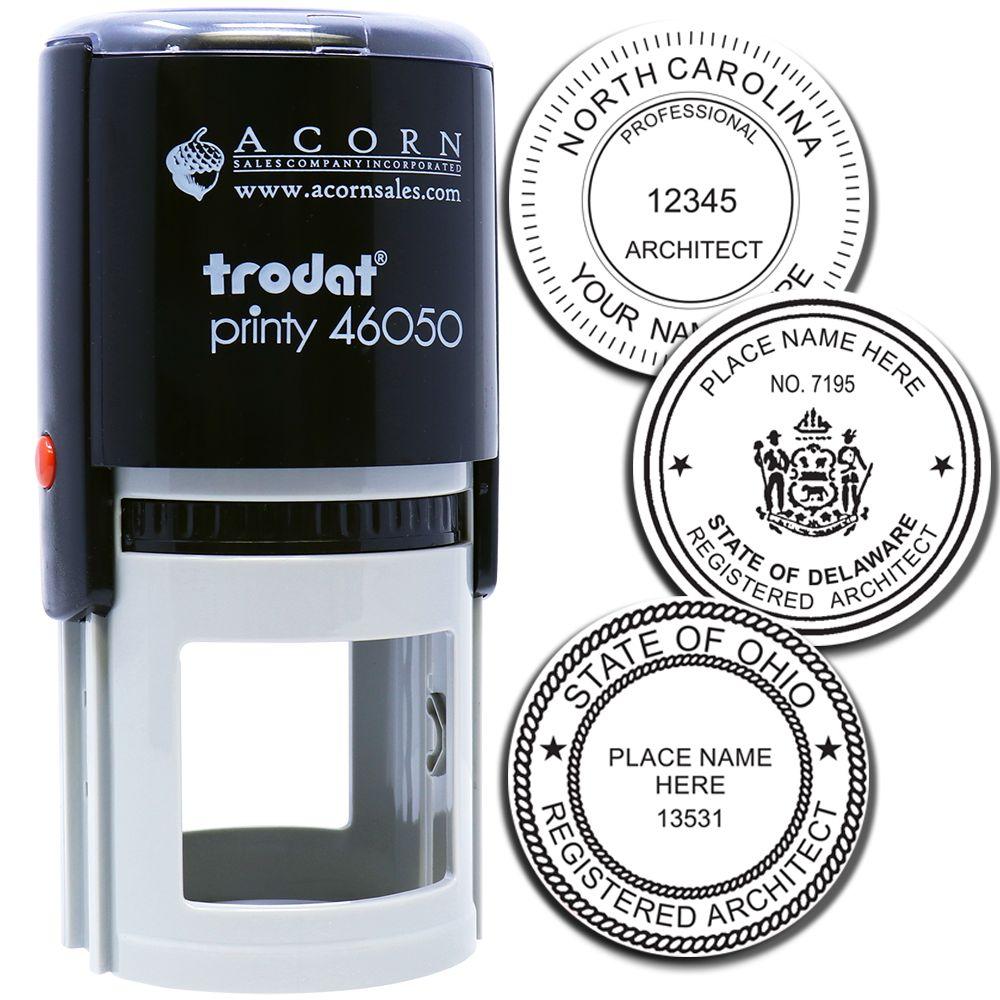
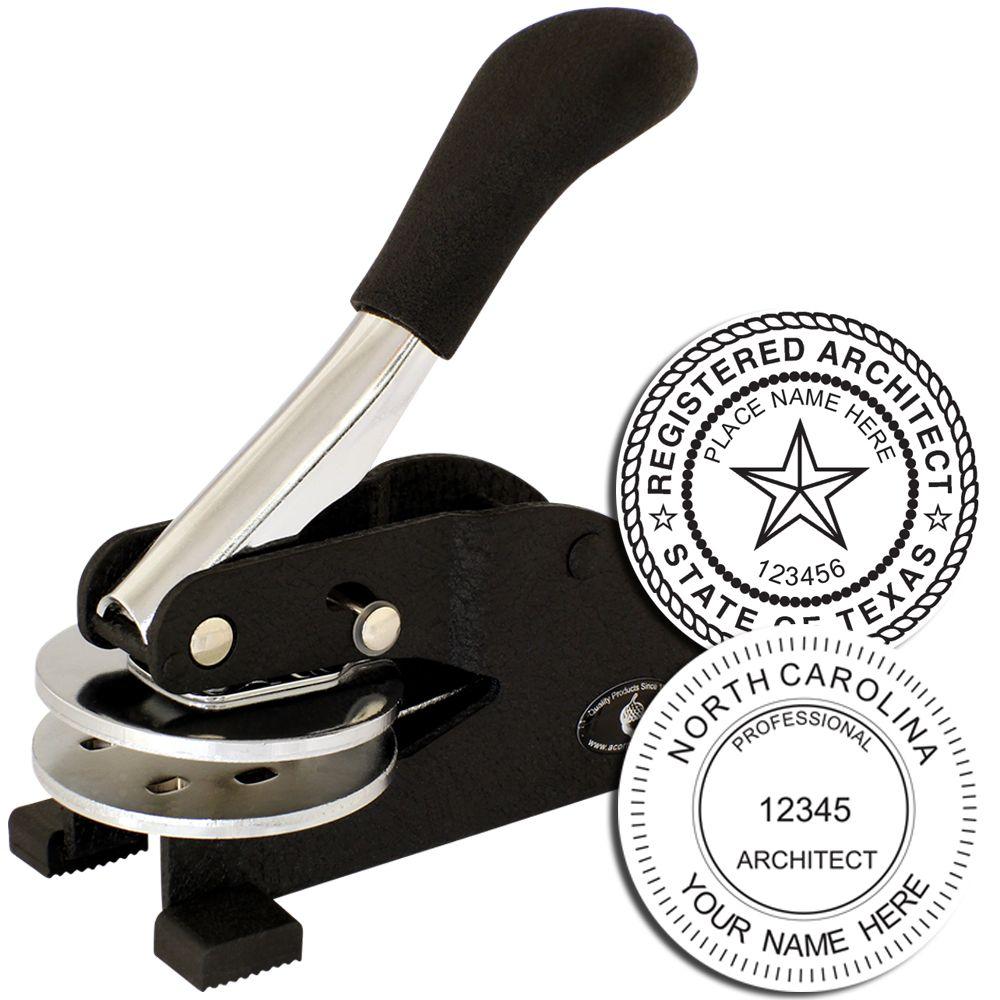
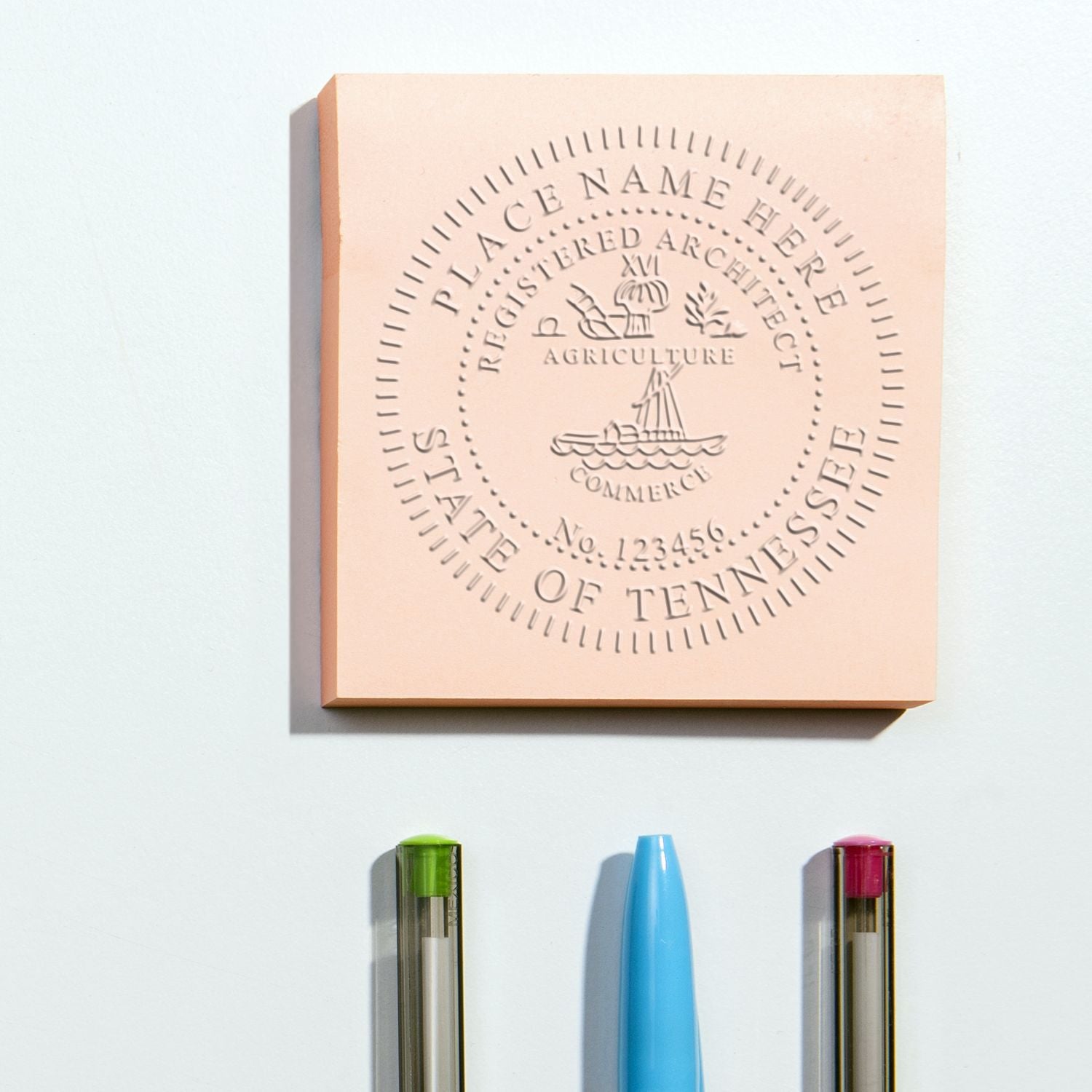
K.A.R. 66-6-1(a) states that “The seal may be a rubber stamp, an embossed seal, or a digital seal.” All three are legal for architects on identical terms. A rubber stamp is the safe buy, because K.A.R. 66-6-1(b)(2) contemplates the sealed document being reproduced as necessary for the project and an unpigmented embossed impression does not survive photocopying or scanning.
Signing and dating
K.A.R. 66-6-1(b)(1) requires that after the seal is applied the licensee apply “the licensee’s handwritten or authenticated digital signature and the date across the seal.” Across the seal, not beside it, so the die has to leave room to sign through. The seal, signature and date together certify that the document was created by you or under your responsible charge. There is no separate wet-ink original requirement; an authenticated digital signature meeting K.A.R. 66-6-1(b)(3) is equally good.
Kansas says ARCHITECT, and the clock starts the day your license issues
Kansas runs architecture, engineering, geology, landscape architecture and surveying through one Board of Technical Professions, and K.A.R. 66-6-1 gives all five the identical seal geometry. Outer circle 1 5/8 inches, inner circle 1 1/16 inches, LICENSED at the top of the inner circle, KANSAS at the bottom, certificate number in the center, your name in the upper ring. The one variable is the legend in the lower ring, and the board’s Seal FAQ fixes it as the plain word ARCHITECT.
That single word is where out-of-state templates fail. Most states letter REGISTERED ARCHITECT or ARCHITECT plus the state name on the ring. Kansas puts KANSAS inside the inner circle and leaves the lower ring for the bare profession. A die that reads REGISTERED ARCHITECT does not match the authorized design, and K.S.A. 74-7023(d) forbids revising the seal without express written board approval, so the fix is a new device rather than an adjustment.
The second trap is timing. K.A.R. 66-6-1(a) gives you 30 days from the issuance of your license to obtain the seal. Very few states impose a deadline at all. A newly licensed Kansas architect is on a clock from the day the certificate is dated.
Third, the signature and date go across the seal under K.A.R. 66-6-1(b)(1). The inner circle already carries LICENSED, the number and KANSAS, so an impression that fills the center solid leaves you nothing to sign through. Keep the artwork open.
Which documents must be sealed
K.A.R. 66-6-1(c)(1) reaches “each document, including drawings, technical reports, original land descriptions for the purpose of conveying an interest in real property, records, and papers,” subject to the statutory practice exemptions. For architecture the relevant exemption is K.S.A. 74-7031. K.A.R. 66-6-1(c)(2) covers documents submitted to a public or governmental agency, a client or a user for final approval or recording, plus each revision. Placement is set by K.A.R. 66-6-1(d)(1): every sheet of a drawing set, or only the first sheet where a digital authentication process digitally links all sheets, or a certification block on the cover sheet designating which sheets belong to which licensee; the cover sheet or index page for specifications; the first or last page for a technical report. Two carve-outs sit in K.A.R. 66-6-1(e): a working drawing or preliminary document bearing in large bold letters “PRELIMINARY, NOT FOR CONSTRUCTION, RECORDING PURPOSES, OR IMPLEMENTATION” or words of comparable meaning, and published standard details or specifications adopted by a municipal, county or public agency when used in that agency’s own projects.

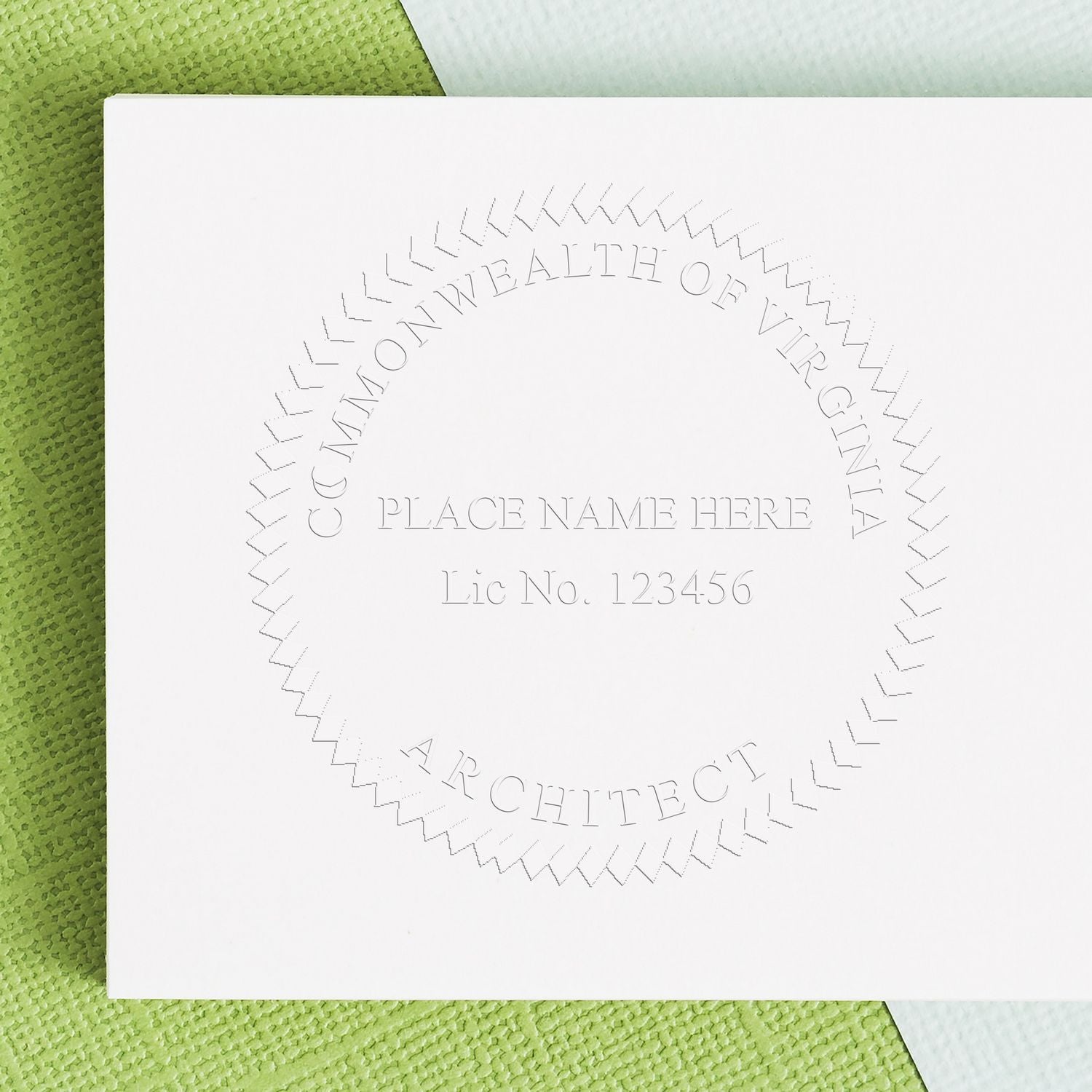
Electronic and digital seals
K.A.R. 66-6-1(b)(3) sets four tests for a digital signature: unique to the licensee, able to be verified, under the sole control of the licensee, and linked to the document so that the signature is invalidated if any data is altered. No certificate authority is named. K.A.R. 66-6-1(b)(4) adds the consequence: every transmitted or stored electronic document containing a digital signature must bear the signature, date of signing and seal as confirmation that the document was not altered after signing, and “If the electronic document is altered, the signature, date, and seal shall be void.”
Renewal, lapse and retirement
K.S.A. 74-7023(d) makes it “unlawful for anyone to stamp any document with the seal after the license has expired or has been revoked, unless the license has been renewed or reissued.” Kansas licenses renew every two years under K.A.R. 66-6-10(a), which also creates inactive status, requiring renewal and fee but no continuing education, and emeritus status for licensees at least 60 years old. A licensee on either status “shall not practice a technical profession in Kansas.” The license certificate number does not change on renewal and the seal carries no date, so a Kansas architect seal never expires and never has to be recut for renewal reasons.
Firm requirements
A certificate of authorization is required to do business, but its number does not go on the document. K.S.A. 74-7036(a) requires a business entity organized for the practice of one or more of the technical professions to obtain a certificate of authorization before doing business in Kansas, to designate one or more licensed principals in responsible charge, and to have a licensed professional regularly supervising each separate office. The certificate renews biennially. Neither K.A.R. 66-6-1 nor K.A.R. 66-6-4 requires the certificate number, the firm name or firm contact details to appear on a sealed document, and the firm holds no seal of its own.
What to check before you order
Order to K.A.R. 66-6-1(a) exactly: two concentric circles, outer 1 5/8 inches, inner 1 1/16 inches, LICENSED at the top of the inner circle, KANSAS at the bottom of it, your license certificate number centered inside it, your name in the upper ring and the single word ARCHITECT in the lower ring. Give the supplier the legend from the board’s Seal FAQ rather than a description of your job title. Decide before you order whether the seal carries your full given name or the initials the rule permits, because your surname must be spelled out either way. Rubber bulk stamps, embosser and digital seal are all authorized, so say which you want, and leave the inner area open enough to sign and date across. Kansas imposes no proof-of-licensure step on the supplier.
Browse architect stamps and seals.
Frequently asked questions
Is an architect seal required in Kansas?
Yes, with the duty in the statute and the deadline in the regulation. K.S.A. 74-7023(d) provides that each licensee “shall obtain a seal of a distinctive design authorized by the board, bearing the licensee’s name and number and a uniform inscription formulated by the board,” and that “Documents signed by the licensee in the licensee’s professional capacity shall be stamped with the seal during the duration of the license.” K.A.R. 66-6-1(c)(1) requires each document to be sealed, signed and dated by the architect who prepared it or who is in responsible charge, subject to the practice exemption in K.S.A. 74-7031.
What has to appear on a Kansas architect seal?
Six items in fixed positions under K.A.R. 66-6-1(a): two concentric circles, your name as it appears on your license, the word ARCHITECT in the lower ring, the word LICENSED, the word KANSAS, and your license certificate number. LICENSED sits at the top of the inner circle, KANSAS at the bottom, the number in the center, your name in the upper ring and the profession in the lower ring.
What size is a Kansas architect seal?
Outer circle 1 5/8 inches in diameter, inner circle 1 1/16 inches in diameter. K.A.R. 66-6-1(a) states both figures and applies the same geometry to all five Kansas technical professions, and the board’s Seal FAQ repeats the same two dimensions, so the numbers cross check against two board sources. No tolerance is stated and no alternative size is offered.
Can I abbreviate my name on a Kansas seal?
Only the given name. K.A.R. 66-6-1(a) permits a seal to “contain, before the licensee’s surname, an abbreviated form of the licensee’s given name or a combination of initials representing the licensee’s given name.” The surname cannot be abbreviated. Decide before you order, because K.S.A. 74-7023(d) forbids tampering: “No person shall tamper with or revise the seal without express written approval by the board.”
Can I use an embosser in Kansas?
Yes. K.A.R. 66-6-1(a) states that “The seal may be a rubber stamp, an embossed seal, or a digital seal,” and all three are legal for architects on identical terms. A rubber stamp is the safer buy, because K.A.R. 66-6-1(b)(2) contemplates the sealed document being reproduced as necessary for the project and an unpigmented embossed impression does not survive photocopying or scanning.
Where do the signature and date go in Kansas?
Across the seal. K.A.R. 66-6-1(b)(1) requires that after the seal is applied the licensee apply “the licensee’s handwritten or authenticated digital signature and the date across the seal.” Across, not beside, so the die has to leave room to sign through. The inner circle already carries LICENSED, the number and KANSAS, so an impression that fills the center solid leaves you nothing to sign across. The seal, signature and date together certify that the document was created by you or under your responsible charge.
Which documents have to be sealed in Kansas?
K.A.R. 66-6-1(c)(1) reaches “each document, including drawings, technical reports, original land descriptions for the purpose of conveying an interest in real property, records, and papers,” subject to the statutory practice exemptions, which for architecture means K.S.A. 74-7031. Subsection (c)(2) covers documents submitted to a public or governmental agency, a client or a user for final approval or recording, plus each revision.
Where does the seal go on a Kansas drawing set?
K.A.R. 66-6-1(d)(1) gives three routes: every sheet of a drawing set; or only the first sheet where a digital authentication process digitally links all sheets; or a certification block on the cover sheet designating which sheets belong to which licensee. Specifications are sealed on the cover sheet or index page, and a technical report on the first or last page.
Does preliminary work need a Kansas seal?
Two carve-outs sit in K.A.R. 66-6-1(e). A working drawing or preliminary document bearing in large bold letters “PRELIMINARY, NOT FOR CONSTRUCTION, RECORDING PURPOSES, OR IMPLEMENTATION” or words of comparable meaning, and published standard details or specifications adopted by a municipal, county or public agency when used in that agency’s own projects.
What does Kansas require of a digital signature?
Four tests under K.A.R. 66-6-1(b)(3): unique to the licensee, able to be verified, under the sole control of the licensee, and linked to the document so that the signature is invalidated if any data is altered. No certificate authority is named. K.A.R. 66-6-1(b)(4) adds the consequence: every transmitted or stored electronic document containing a digital signature must bear the signature, date of signing and seal as confirmation that the document was not altered after signing, and “If the electronic document is altered, the signature, date, and seal shall be void.”
Does a Kansas seal ever have to be recut?
Not for renewal reasons. The license certificate number does not change on renewal and the seal carries no date, so a Kansas architect seal never expires. Licenses renew every two years under K.A.R. 66-6-10(a), which also creates inactive status, requiring renewal and fee but no continuing education, and emeritus status for licensees at least 60 years old; a licensee on either status “shall not practice a technical profession in Kansas.” K.S.A. 74-7023(d) makes it “unlawful for anyone to stamp any document with the seal after the license has expired or has been revoked, unless the license has been renewed or reissued.”
Does a Kansas firm number go on the document?
No. K.S.A. 74-7036(a) requires a business entity organized for the practice of one or more of the technical professions to obtain a certificate of authorization before doing business in Kansas, to designate one or more licensed principals in responsible charge, and to have a licensed professional regularly supervising each separate office, with biennial renewal. Neither K.A.R. 66-6-1 nor K.A.R. 66-6-4 requires the certificate number, the firm name or firm contact details to appear on a sealed document, and the firm holds no seal of its own.








