
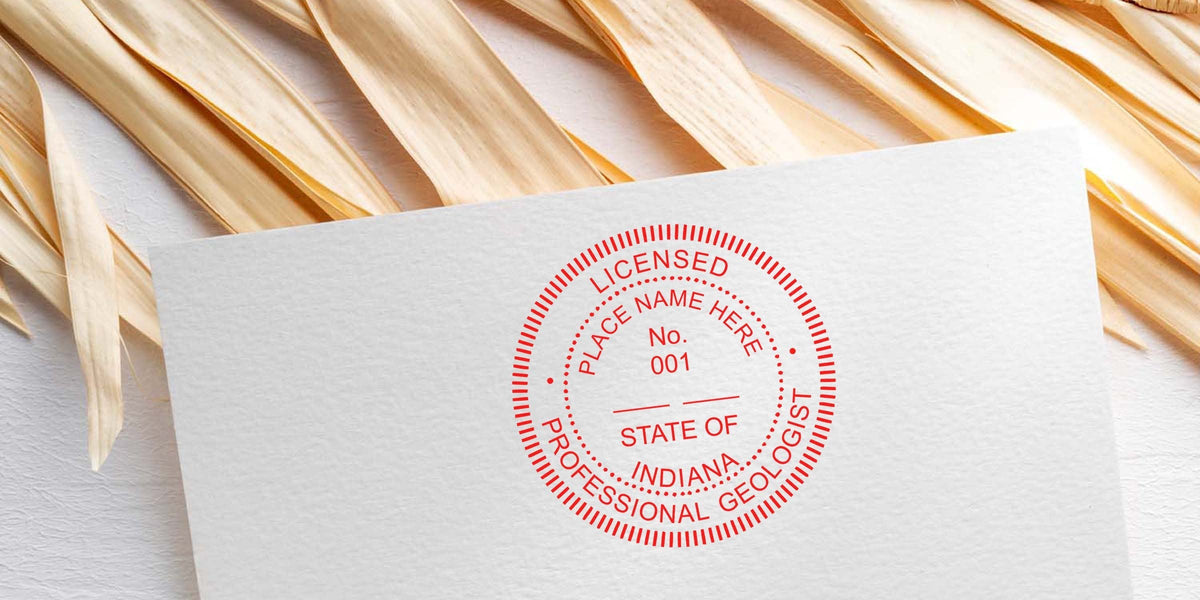
Understand The Indiana Geologist Seal Embosser
You might be wondering, “Why do I need an Indiana geologist seal embosser in the first place?” The short answer is that this specialized tool helps you validate and professionalize your work as a licensed geologist in Indiana. An embosser creates a raised impression that represents your official seal, confirming that any documents you sign off on meet the state’s regulatory standards. It’s not just about following the rules, though. An embosser shows clients and colleagues that you’re serious about accuracy and ethics, because you’re literally leaving your mark on each submission.
In Indiana, geology isn’t just a field of study; it’s a profession that requires precision. Whether you’re analyzing groundwater projects or examining rock structures for a new construction site, you have significant responsibilities. This is where an embosser becomes more than a mere rubber stamp. Think of it as an extra layer of security, one that ensures you stand behind your work with integrity. The embossment can’t be easily altered or copied, which also makes it a strong deterrent to unauthorized document changes. Ultimately, you’re protecting not only your own reputation but the interests of whoever relies on your geological expertise.
Beyond legality, having a reliable embosser streamlines your day. Instead of hunting for outdated stamps or reprinting forms, you can reach for your seal embosser and finalize the paperwork in seconds. It’s like having a personal signature that also instantly verifies the document’s authenticity. Plus, when your peers or clients see the raised imprint, it emphasizes a sense of professionalism. They’ll understand that every letter and data point on that page has been properly vetted by someone who’s earned the right to emboss.
The Role Of Your Embosser
Your Indiana geologist seal embosser acts like your personal handshake in the professional world. Anyone who reviews your reports or project proposals can instantly notice your official impression. It’s the perfect way to announce, “Yes, I did this work, and I’m standing by its accuracy.” Because it’s a mechanical process that literally presses your seal design into the page, you’re left with a physically tactile mark, which is much harder to tamper with than a simple ink or digital stamp.
However, you must confirm that the seal meets the specific guidelines set by the state of Indiana. These guidelines generally outline things like diameter, seal wording, and any distinguishing symbols that separate a geologist’s seal from other professional credentials. By ensuring the embosser you choose aligns with the official design, you’re free to use it on documents without any second-guessing.
Common Designs
If you’ve ever seen an embosser in action, you know the final imprint can vary. Some geologists opt for a simpler layout containing just the state name and license information. Others prefer a more elaborate design that includes a state emblem or geologic symbol. As long as you follow Indiana’s rules, you’re at liberty to choose the look that best represents you.
Still, keep in mind that compliance is king. Consider double-checking indiana geologist stamp requirements to make sure your chosen layout has everything in place. Once you’re confident in the design, you’re well on your way to using your embosser for critical documents like site assessments, official reports, and geological certifications.
Why The Seal Embosser Matters
An Indiana geologist seal embosser isn’t a trivial accessory. It’s a professional essential. When you’re working with geological data, your seal effectively declares that you’ve verified and endorsed every figure, test result, and conclusion. It indicates you accept liability for the accuracy of the work, which fosters trust among clients, colleagues, and regulatory bodies. In some cases, your reports can influence engineering decisions or environmental policies—big responsibilities that require serious accountability.
Building Professional Credibility
When clients see that raised seal on your report, they immediately perceive greater authority behind your conclusions. It’s like wearing a name badge by choice instead of requirement, telling everyone who you are and why you matter. The embossed impression can also help you stand out in a crowded profession. It assures readers that they’re not just looking at a random set of numbers or simulated data. Instead, they’re reading a geologist’s official verdict, which can sway opinions and guide pivotal decisions.
Moreover, a crisp, neatly embossed seal gives a polished finish to your documents, so you also gain an aesthetic edge. There’s something about a raised imprint that exudes confidence. Even those who don’t fully grasp the nuances of geological studies might still be impressed by the attention to detail and authenticity that an embosser conveys.
Meeting Legal Requirements
In Indiana, professional geologists are subject to certain guidelines that call for a stamped or embossed seal. If you’re actively practicing, you might already know how essential it is to stay completely compliant. Failing to affix a proper seal on significant documents can lead to complications. These range from rejections of project proposals to more serious ramifications like fines or sanctions. That’s why the seal embosser is not just a piece of office equipment. It’s a legal necessity.
One good practice is to keep your seal embosser at arm’s reach in your workspace, so you’re never scrambling when a new submission is due. This kind of preparedness reflects your professionalism to both your employer and your clients. After all, you’re in a field that deals with real-world impacts, from environmental safety to infrastructural stability. Ensuring every document is properly embossed shows that you’re on top of your responsibilities as a licensed geologist in the Hoosier State.
Comply With Indiana Rules
Before you start stamping every page, you’ll want to double-check the specifics of Indiana’s rules for geologists. The design requirements, usage regulations, and renewal schedules can all change over time. Consistently brushing up on the latest guidelines helps keep your work bulletproof. We recommend bookmarking official state resources, or regularly checking with professional boards that monitor changes in geologist licensing, so you’re always up to date.
The Approved Stamp Layout
In many cases, the official Indiana geologist seal must feature your name, license number, and the words “Registered Professional Geologist,” along with “State of Indiana.” The embosser you select should reflect this precise text in the correct arrangement and font size. Some versions might include a small symbol indicating geology, such as a pickaxe or a stylized outline of Indiana—but only if the state board permits it.
If you’re unsure whether your preferred design is acceptable, it’s wise to reach out to your local licensing agency for clarification. Doing so not only saves you headaches down the line, it also highlights your respect for compliance. Readers of your documents will sense that you value accuracy and thoroughness, qualities that are key in fields like geology.
Additional State Requirements
Indiana might also dictate how your seal is positioned on official documents. For instance, some forms require the seal to appear on every page, while others only need it on the cover sheet. By clarifying these details from the get-go, you’ll avoid the need to re-emboss or re-print any critical reports. This is especially beneficial when you’re prepping multiple documents for large-scale projects.
Remember, your role as a licensed geologist doesn’t end with acquiring the embosser. Maintenance of your license, continuing education credits, and awareness of legislative updates all matter for long-term success. Having the right tool is a great start, but using it in tune with official expectations is what really cements your professional stature.
Choose A Reliable Supplier
With so many suppliers out there, it’s easy to feel overwhelmed. However, relying on a well-established provider can spare you a ton of frustration. Since you’re trusting them with your official seal design, you’ll want to go with a business that knows the ropes and consistently follows state laws.
Why Acorn Sales Stands Out
Acorn Sales has been in business since 1964, and that longevity alone speaks volumes about our commitment to quality and customer satisfaction. We understand that your Indiana geologist seal embosser is more than just a piece of hardware—it’s a stamp of your reputation. That’s why we ensure each embosser meets state guidelines precisely. Our experience also helps us quickly adapt to any changes in regulations, so you won’t have to worry about falling behind the curve.
Additionally, Acorn Sales offers a free digital seal version for Indiana geologists. This comes in handy if you need to file electronic documents or simply prefer to keep a digital record. You’ll be able to use the digital seal for quick approvals or references, then break out the physical embosser for final, hard-copy submissions. It’s all about giving you the tools you need to succeed in a fast-paced professional environment.
How To Use Your Embosser
Once you have your embosser in hand, you’re ready to make a professional statement with every impression. Using an Indiana geologist seal embosser is straightforward, but small details can enhance your results. Let’s break it down.
A Simple Step-by-Step
- Prepare Your Document: Ensure that your document is completely finalized and that you’re ready to sign off. It’s a good idea to proofread everything and confirm you have no last-minute corrections.
- Position The Embosser: Align the embosser over the designated seal area. Make sure the text will be correctly oriented, so you don’t end up with a sideways or inverted impression.
- Clamp And Press: Grip the embosser handles and apply firm pressure. You should hear or feel the embossing plate press into the paper. You don’t need to be a bodybuilder to do this, but a confident, even press will yield a clearer result.
- Inspect The Impression: After you release the embosser, check to make sure every piece of text is legible. If the seal is faint, you might need to apply slightly more pressure or adjust the paper thickness.
- Sign And Date: If Indiana mandates signatures and dates alongside the seal, do so immediately. Most forms will clearly state whether these elements are required.
Embossers typically work best on standard document paper. If you’re using cardstock or a thicker sheet, you might have to try a few test runs first. On the flip side, if the paper is too thin, you risk tearing it, so be gentle yet firm.
Care And Maintenance Tips
Even the best embosser needs some upkeep. When properly cared for, your seal embosser can last for years—maybe even decades—although it’s always wise to stay alert to wear and tear. After all, it’s a precision tool.
Proper Storage
Store your embosser in a clean, dry place, away from direct sunlight or moisture. You don’t want dust settling into the plates or rust creeping into the metal parts. Many embosser owners like to keep theirs in a dedicated drawer or protective pouch, ensuring that no other items knock against it.
If you’re constantly on the move—say, traveling between field sites—consider investing in a small carrying case. This way, you can keep the plates lined up correctly and avoid any accidental damage in transit.
Periodic Adjustments
Over time, the surfaces of the embossing plates may develop minor misalignments or worn edges. Regularly check that the text still prints clearly on the page. If it begins to fade or becomes uneven, consult the embosser’s manual or contact the supplier for guidance. In many cases, a quick tune-up can fix these minor issues.
It also helps to keep a small stack of test sheets on hand. Run the embosser once a month (even if you aren’t working on an official document) just to confirm it’s functioning properly. This habit can catch problems before they escalate.
FAQs About Indiana Geologist Seal Embossers
-
What Are The Official Guidelines For My Indiana Geologist Seal?
You’ll need to include your name, your license number, and the words “Registered Professional Geologist” and “State of Indiana.” Some seals also have small images or the state outline, but always verify current regulations before finalizing your design. -
Is A Digital Seal Acceptable In Indiana?
Generally, digital seals can be used for electronic documentation, but it depends on the specific requirements of your project or regulatory body. Acorn Sales offers a free digital seal so you can sign files electronically. Just remember that some physical document submissions still require an actual embossed impression. -
How Often Do I Need To Renew My Stamp Or Seal?
Renewal times vary according to licensing regulations. Usually, you renew your professional license at the frequency the Indiana board sets. While your physical embosser doesn’t expire, your active license status must remain in good standing, so you’re legally allowed to keep using it. -
Can I Get A Custom Design For My Indiana Geologist Seal Embosser?
Yes, but custom elements must still stay within any guidelines set by Indiana for official geologist seals. Make sure you incorporate the mandate text exactly. If you add a logo or a small symbol, confirm with the state board that the design is acceptable. -
Where Can I Buy A Seal Embosser That Meets Indiana Regulations?
Acorn Sales is a dependable option, having helped professionals since 1964. By partnering with a company that’s been around for decades, you get an embosser that’s crafted with accuracy in mind. We also provide personalized support to ensure you’re fully compliant with every state requirement.
All things considered, an Indiana geologist seal embosser is a must-have if you’re serious about maintaining high professional standards. You’re not just punching a design into paper. You’re delivering a clear message to anyone reading your documents: you’ve done your research, adhered to the rules, and stand behind your findings. Think of it like signing off with confidence—except now, that signature is raised, distinctive, and unmistakably official.
Once you’ve secured a proper embosser, safeguard it carefully. Stay updated on the latest geologist guidelines, and be sure to renew your license when required. When the time comes for specialized guidance or a new seal design, a trusted supplier like Acorn Sales is ready to back you up. By combining your dedication to geology with the right stamping tools, you’ll keep your reports credible, professional, and well-respected in the scientific community. Above all else, you’ll be making your mark the right way, every single time.
Frequently Asked Questions
What is an Indiana geologist seal embosser used for?
An Indiana geologist seal embosser is used to create an official raised seal on reports, certifications, and other professional documents. It helps verify that the work was completed by a licensed geologist and supports compliance with Indiana state requirements.
What information must appear on an Indiana geologist seal?
In most cases, the seal should include your name, license number, “Registered Professional Geologist,” and “State of Indiana.” Before ordering, always confirm the latest Indiana geologist seal requirements to make sure your embosser is compliant.
Is a digital seal acceptable for Indiana geologists?
A digital seal may be acceptable for certain electronic documents, but requirements can vary by project and regulatory use. Some submissions still require a physical embossed seal, so many Indiana geologists use both a digital seal and a traditional embosser.
Where can I buy an Indiana geologist seal embosser that meets state requirements?
You can purchase a compliant Indiana geologist seal embosser from a trusted supplier that understands state regulations. A knowledgeable provider can help ensure your seal layout, wording, and format match Indiana requirements.
How do I use an Indiana geologist seal embosser correctly?
Place the completed document in the correct seal location, align the embosser carefully, and press firmly to create a clear impression. After embossing, check that the text is legible and add your signature and date if required.
How do I care for and maintain my geologist seal embosser?
Store your embosser in a clean, dry place and protect it from dust, moisture, and damage. Check it regularly for wear or misalignment, and test it occasionally to make sure it continues producing a sharp, readable seal.








