
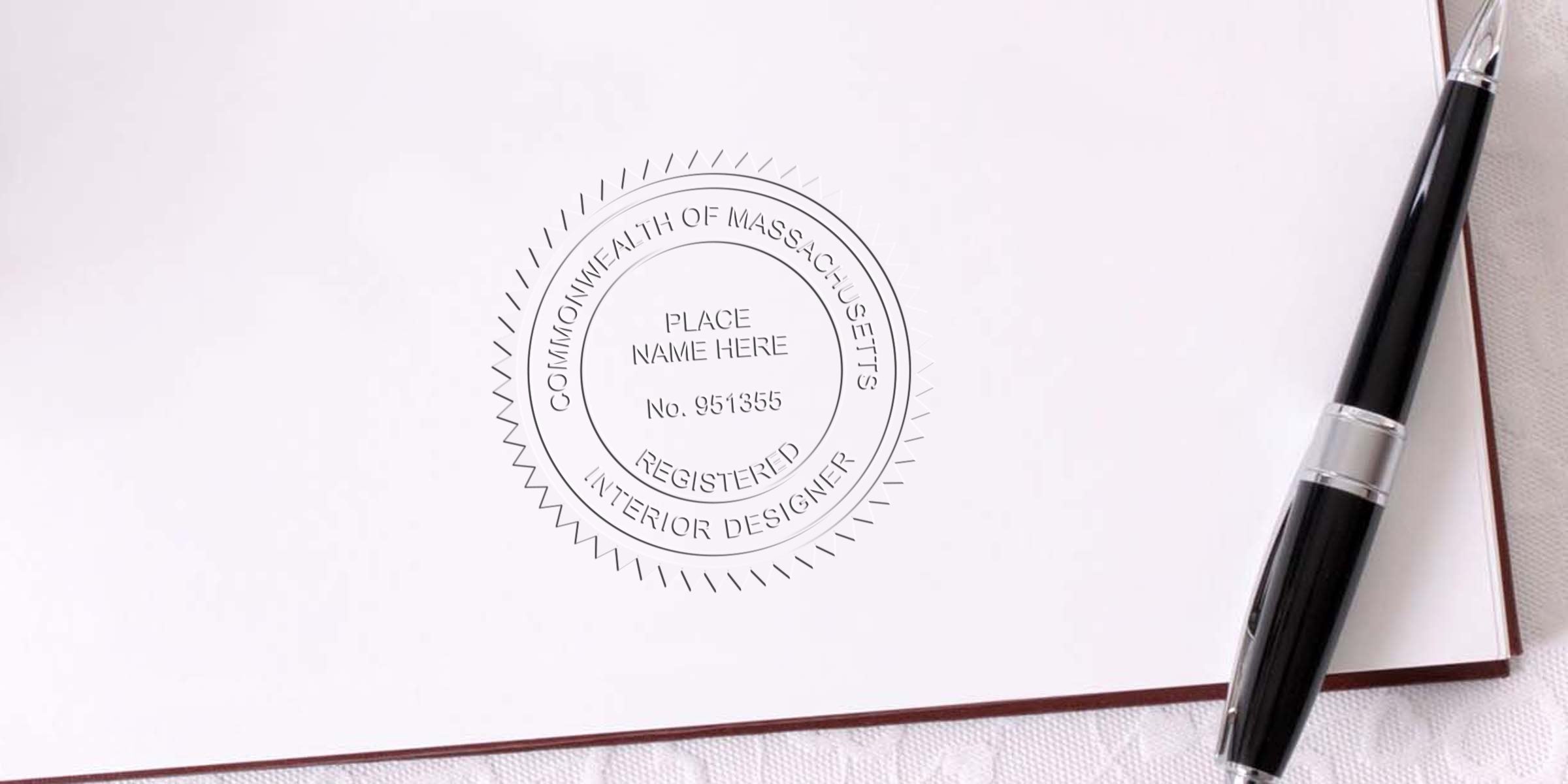
Massachusetts Does Not Require an Interior Designer Seal
Start with the part most articles about this get wrong. Massachusetts does not license, register or certify interior designers. The Division of Occupational Licensure runs boards for architects, professional engineers and land surveyors, landscape architects, real estate appraisers, home inspectors and a long list of other occupations, and there is no board of registration of interior designers among them. Because the Commonwealth issues no such credential, no Massachusetts statute or rule tells an interior designer to seal anything.
There is a related rule worth knowing, and it belongs to a different credential. Construction documents filed for approval in Massachusetts carry the seal of a registered architect or professional engineer under M.G.L. c. 143, Sec. 54A. Architects and engineers are registered here and interior designers are not, so those are separate credentials with separate rules. An interior designer's own mark is a professional identifier on the designer's own work product, and it does not stand in for an architect's or an engineer's seal.
For the underlying rules and the sources behind them, read Massachusetts Interior Designer Stamp: What Can Go on It, and our earlier Massachusetts interior designer seal requirements page covers the same sources. Legislation does move, so if the Commonwealth ever creates a credential, those pages are where the change will be recorded. Either way, the reason to buy a seal stays the one described below.
What the Commonwealth Asks For Instead
In practice, what ties a document to you is your signature and your name. Sign the drawing, the schedule or the letter, put your studio name on it, and the work is attributable to you. A seal is something you add on top of that because you want the page to look finished, not because a rule obligates you.
Know the Purpose of a Seal
So why do so many interior designers in Massachusetts order one? Because a clean impression next to a signature does real work. It marks the author at a glance. It makes a finish schedule, a furniture plan, a proposal or a transmittal look like it came from a practice that takes its paperwork as seriously as its design work. Clients keep those pages. Contractors mark them up. General contractors hand them to subs. A recognizable mark on every copy keeps your name attached to the work as it travels.
There is also a quieter benefit. A seal forces you to settle on how your practice name is written, how your title reads and what your documents look like when they leave the studio. Most designers find the consistency worth more than the stamp itself.
Quick Perks of a Professional Mark
- Identifies the author of a drawing set or report at a glance
- Gives printed pages a finished, deliberate look
- Reduces confusion about who prepared which sheet
- Carries your studio identity onto documents you hand to clients and trades




Consider Design and Layout
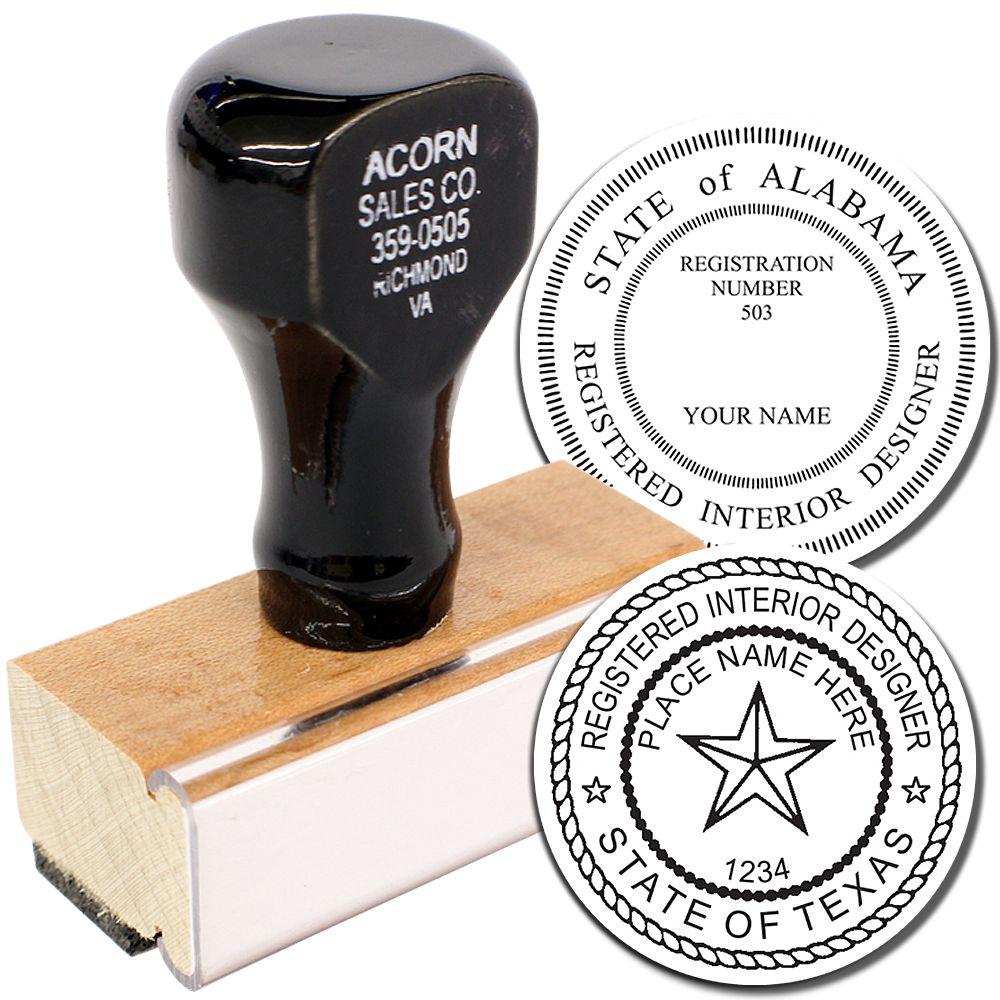
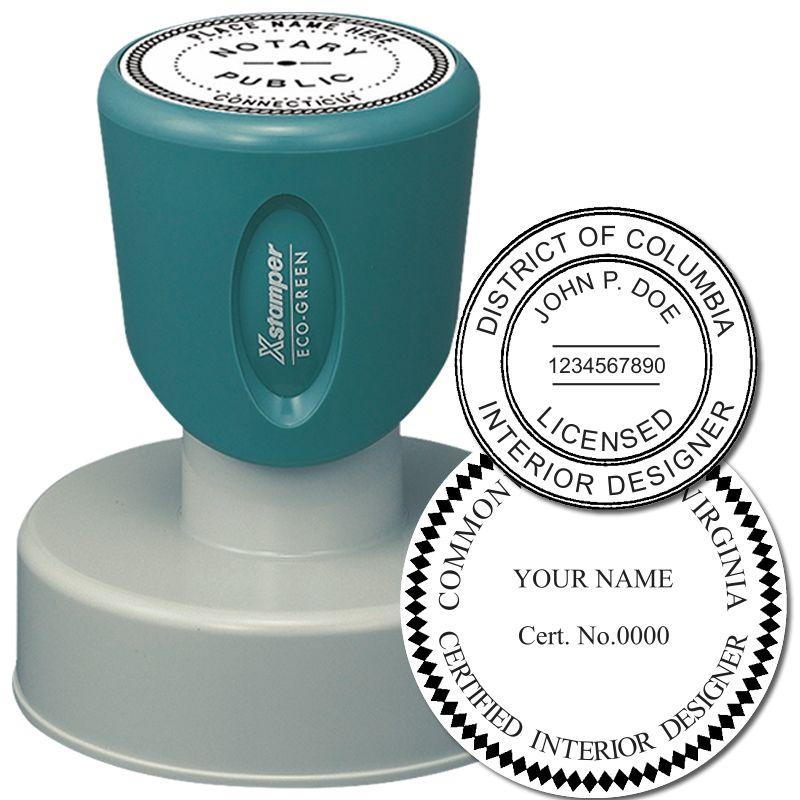
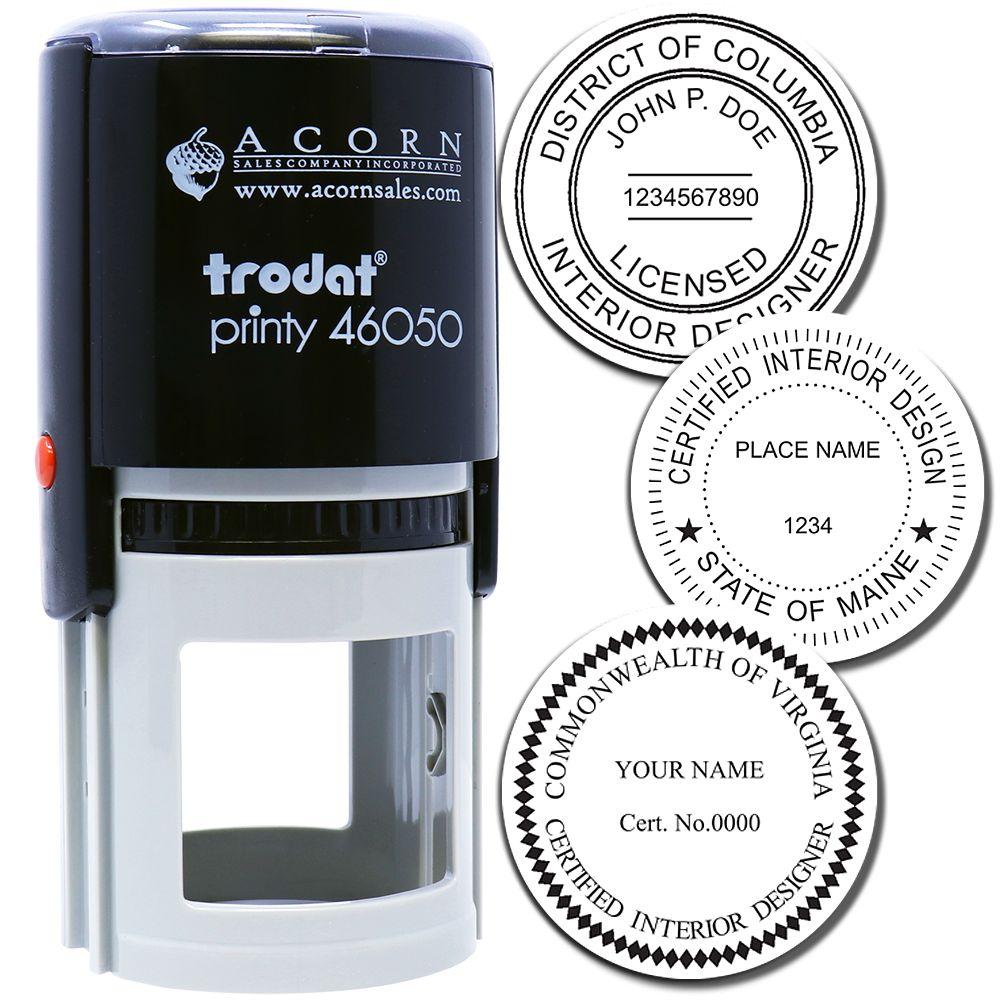
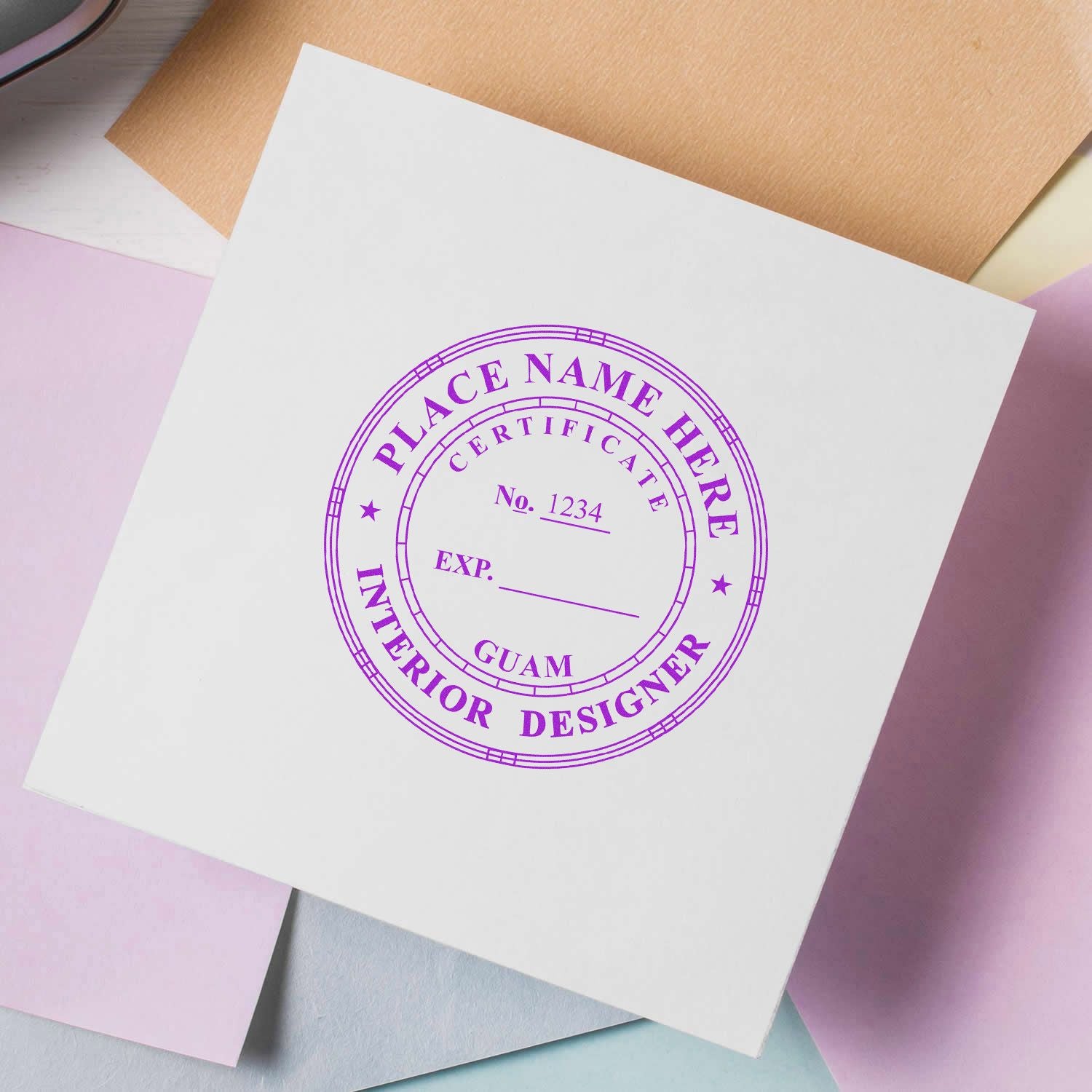
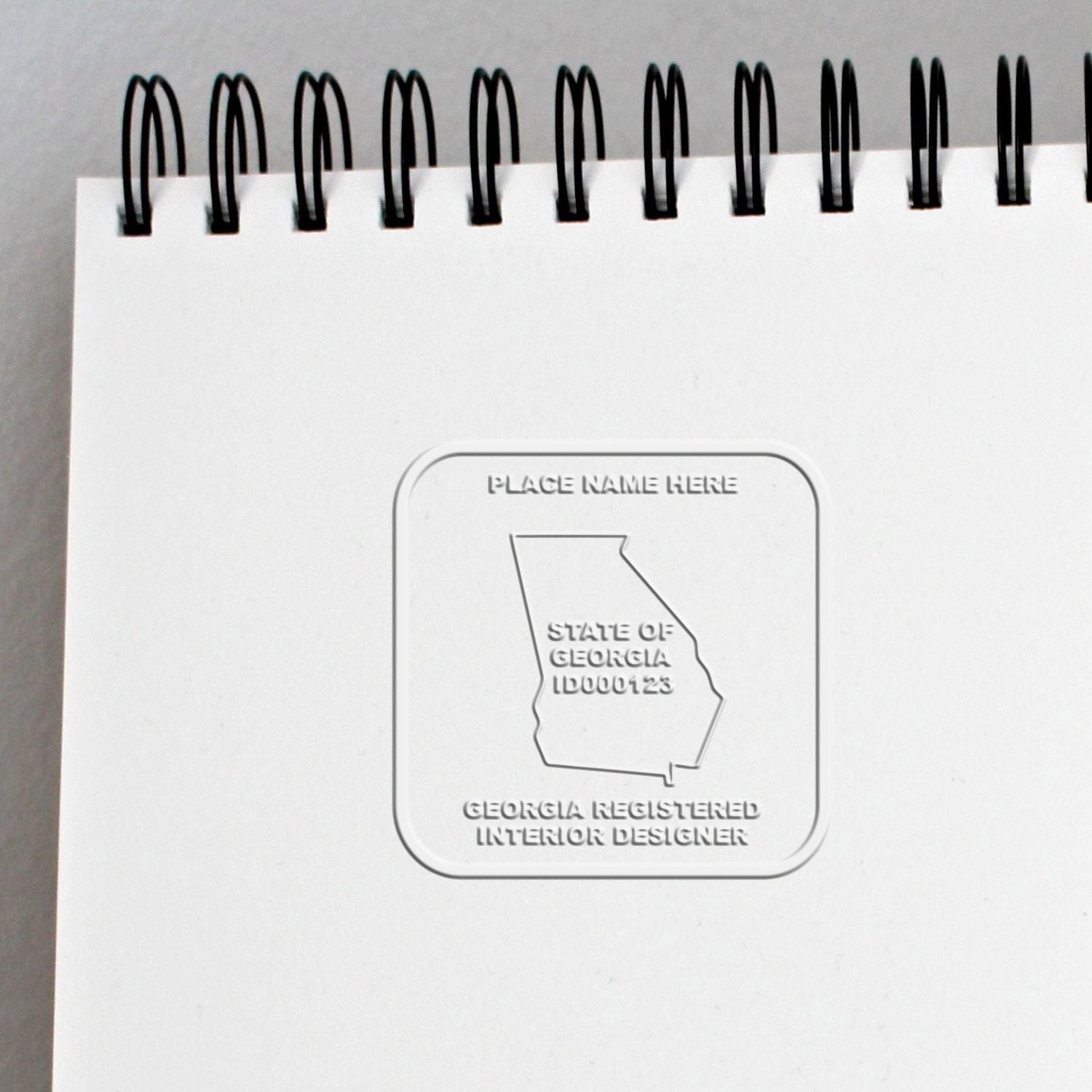
Since Massachusetts prescribes nothing for interior designers, the layout is yours to decide. That freedom comes with one responsibility: the wording should describe what you actually are. Most designers use their name, their studio name, the words Interior Designer or Interior Design, and a state or city line. Some add a border or a small emblem so the impression reads as a mark rather than a block of text.
Leave off anything that implies a state registration. There is no Massachusetts interior designer license and no license number to print, so a line like "Registered Interior Designer, Commonwealth of Massachusetts" would say something untrue on every page it touches. If you hold a certification from a national body or another state, use that body's exact wording and only while it is current.
Whatever you choose, keep it legible. Seals get reproduced, scanned, faxed and shrunk into PDF sets, and text that looks fine at full size can close up at half. Ask for a proof and look at it small before you approve it.
Common Elements in a Massachusetts Designer Seal
| Element | Purpose |
|---|---|
| Designer's Name | Identifies the person who prepared the document |
| Studio or Business Name | Ties the page to your practice |
| Professional Title | The title you actually use, such as Interior Designer |
| State or City Line | Shows where you practice |
| Border or Symbol | Gives the impression a defined edge and makes it easy to spot |
Follow the Purchase Journey
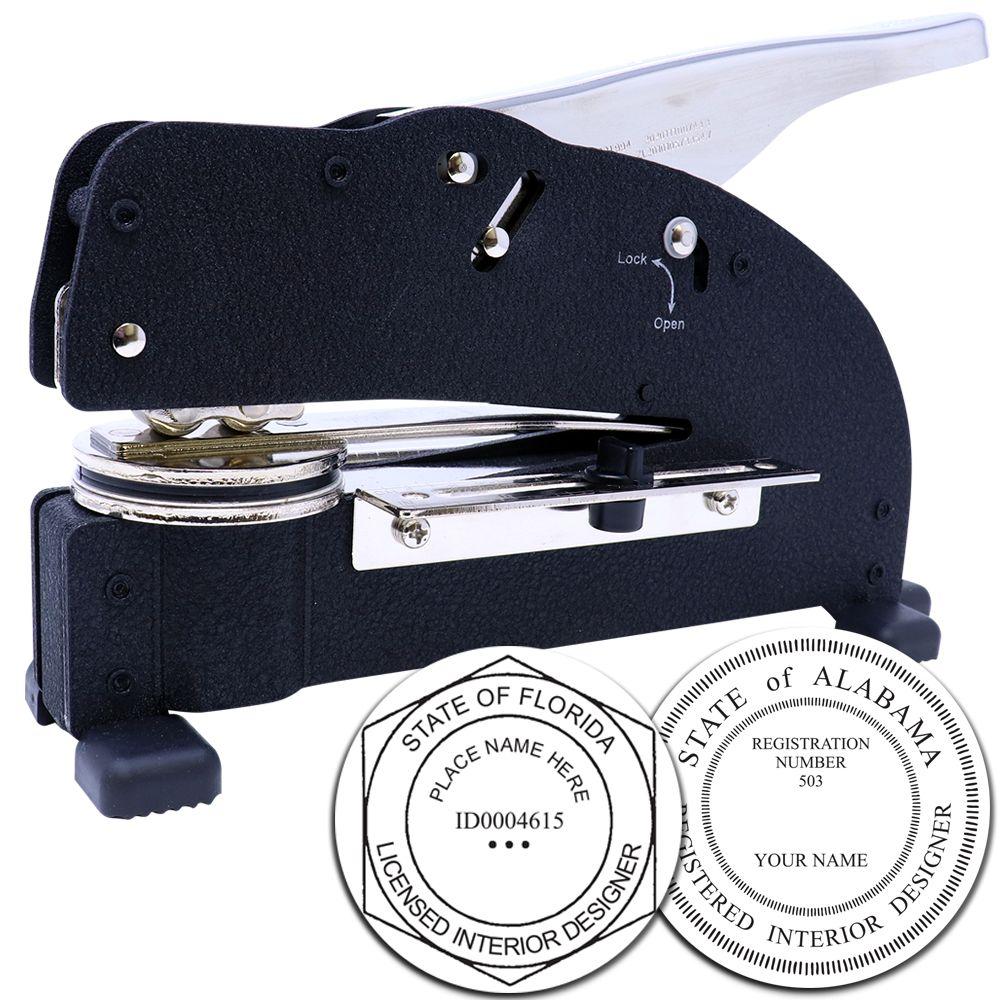
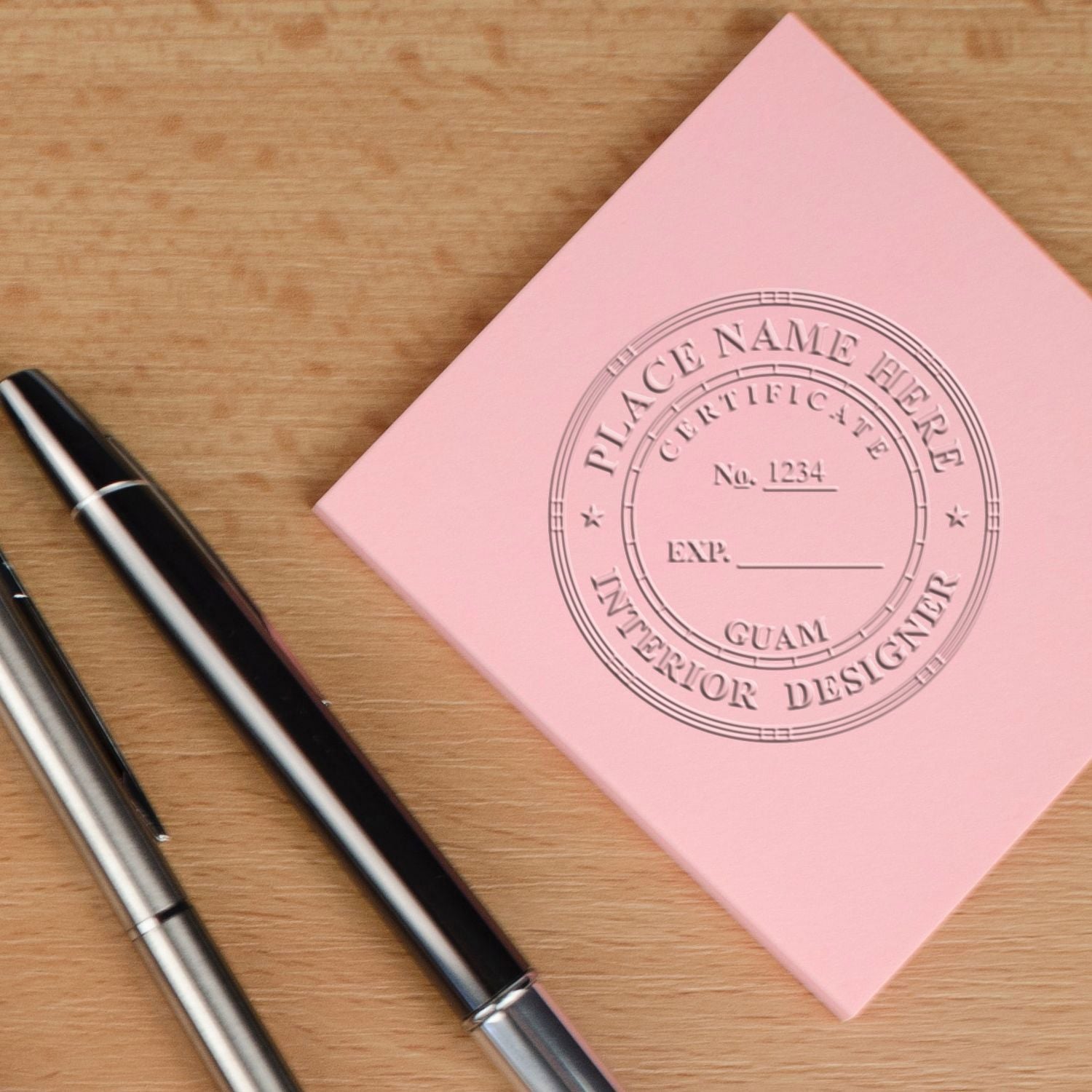
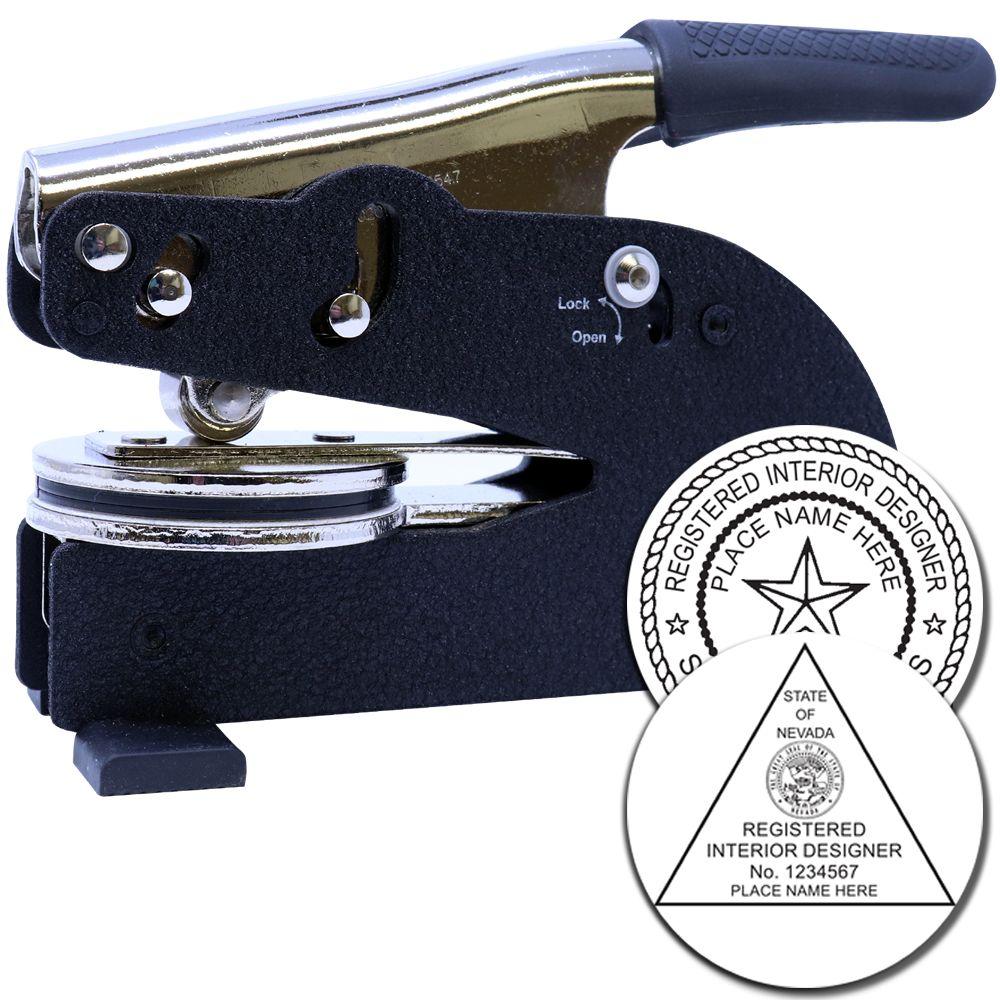
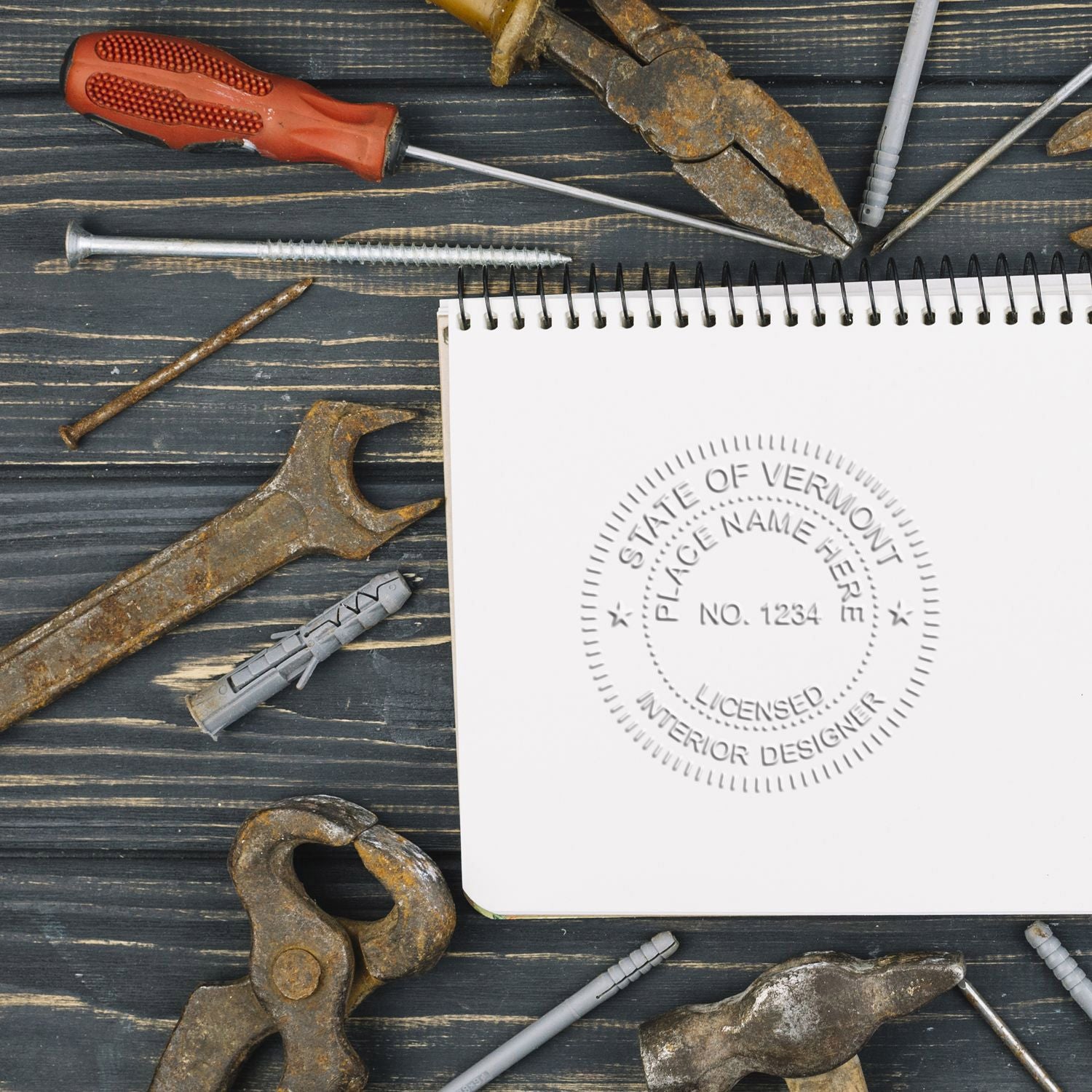
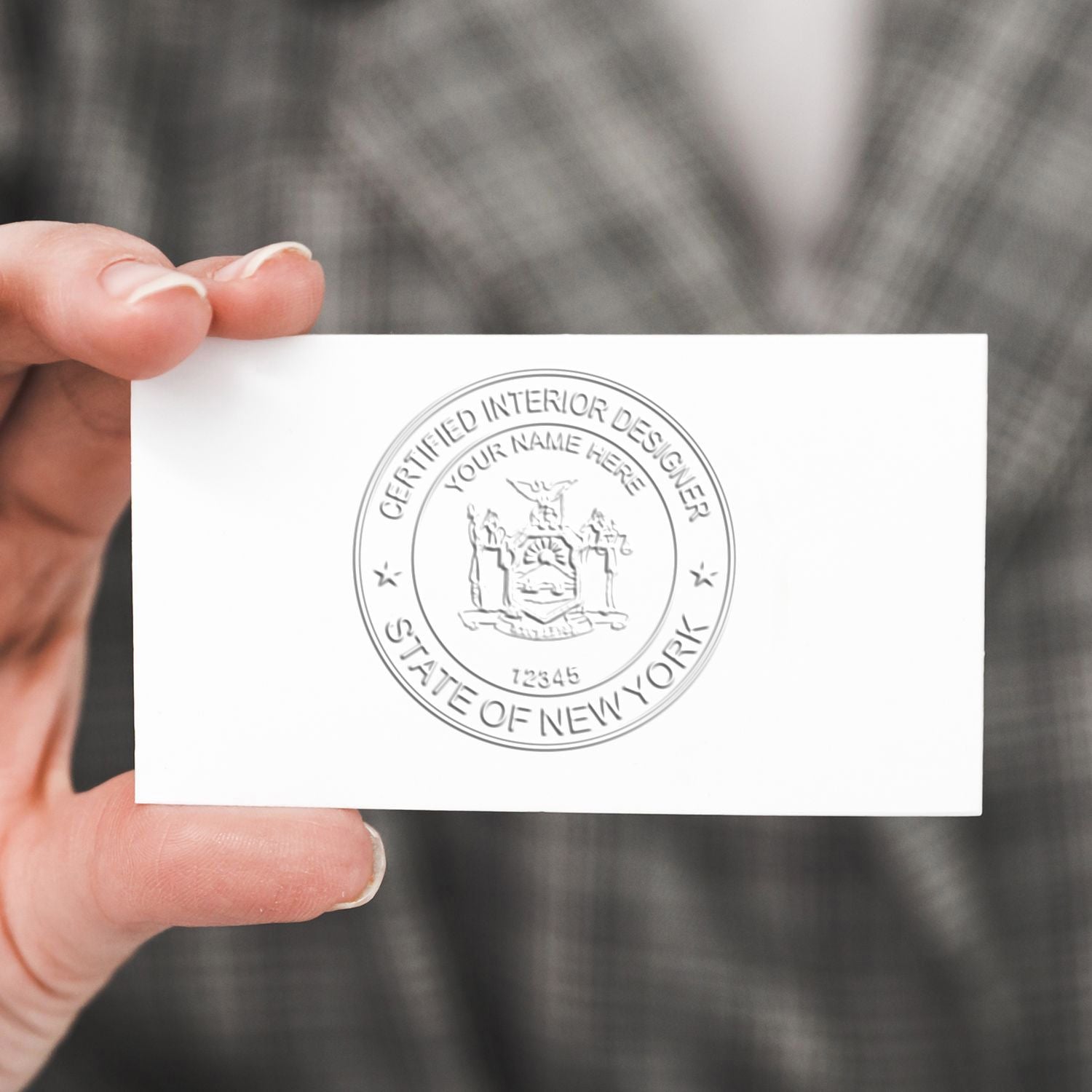
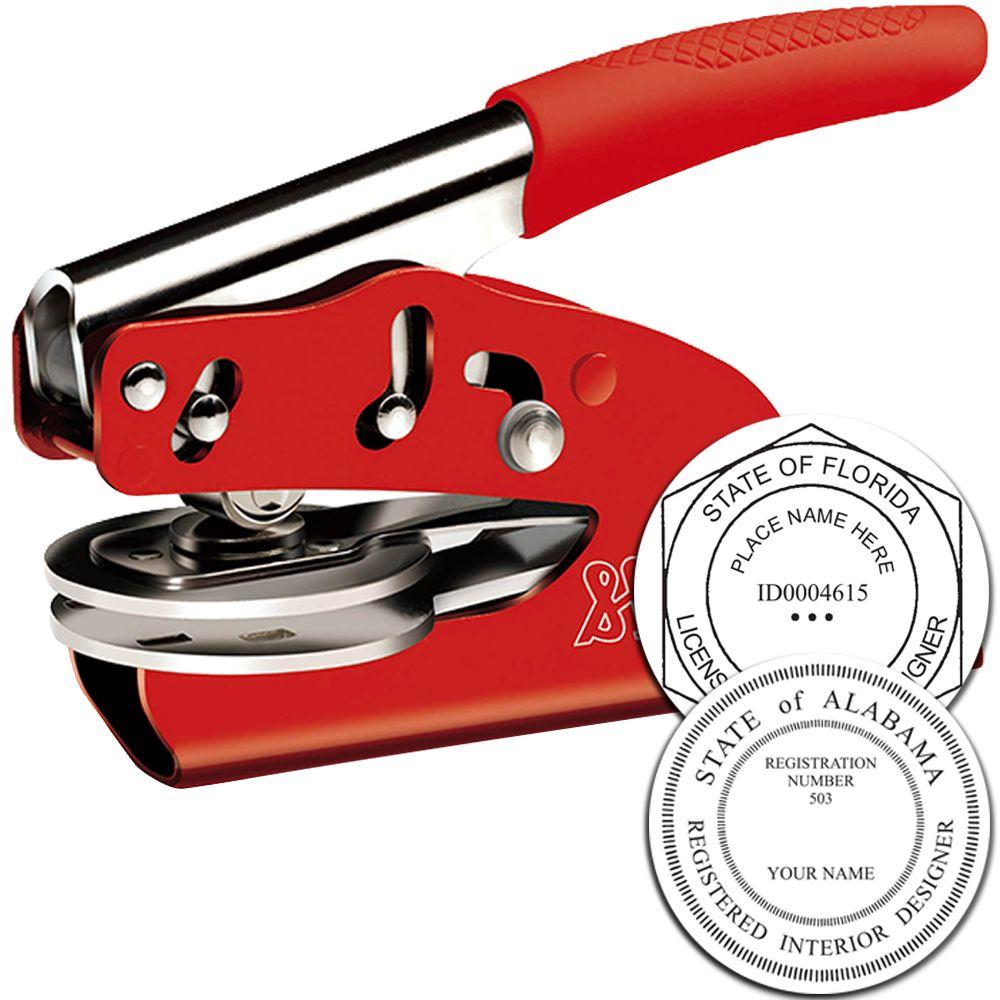
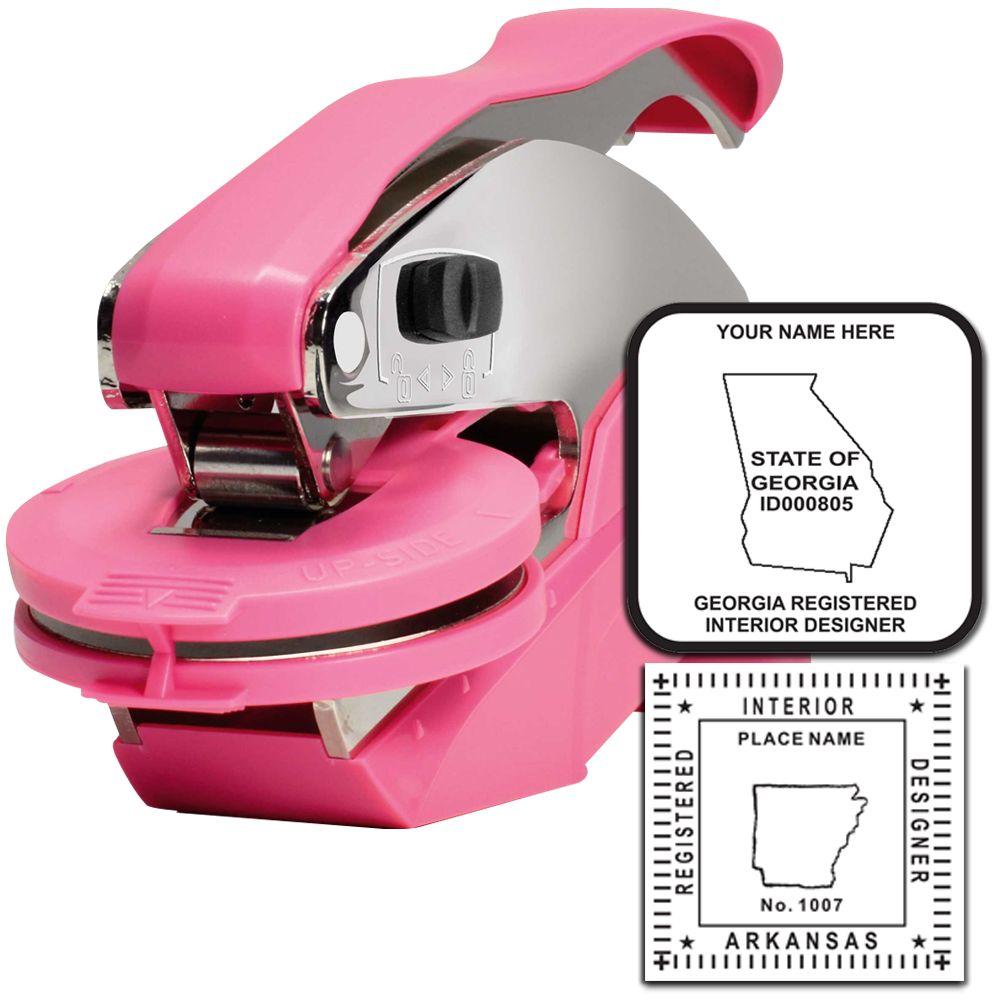
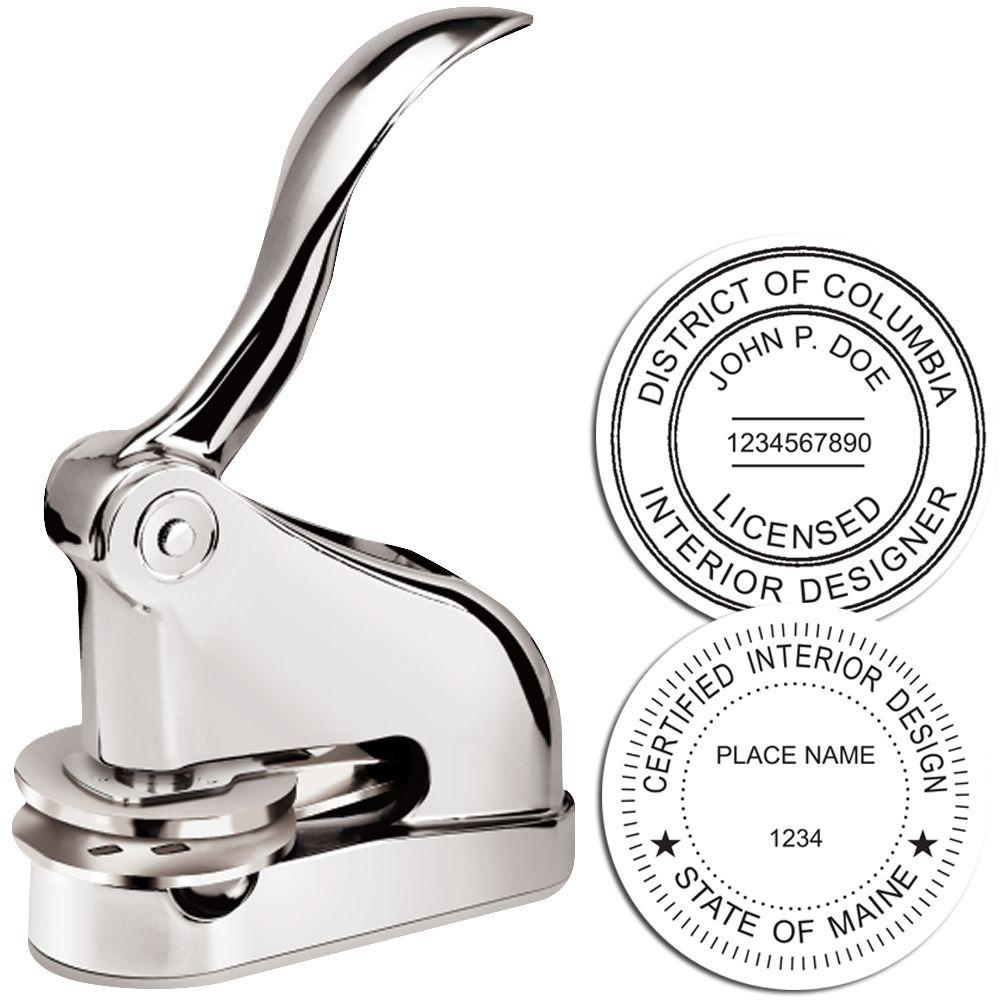
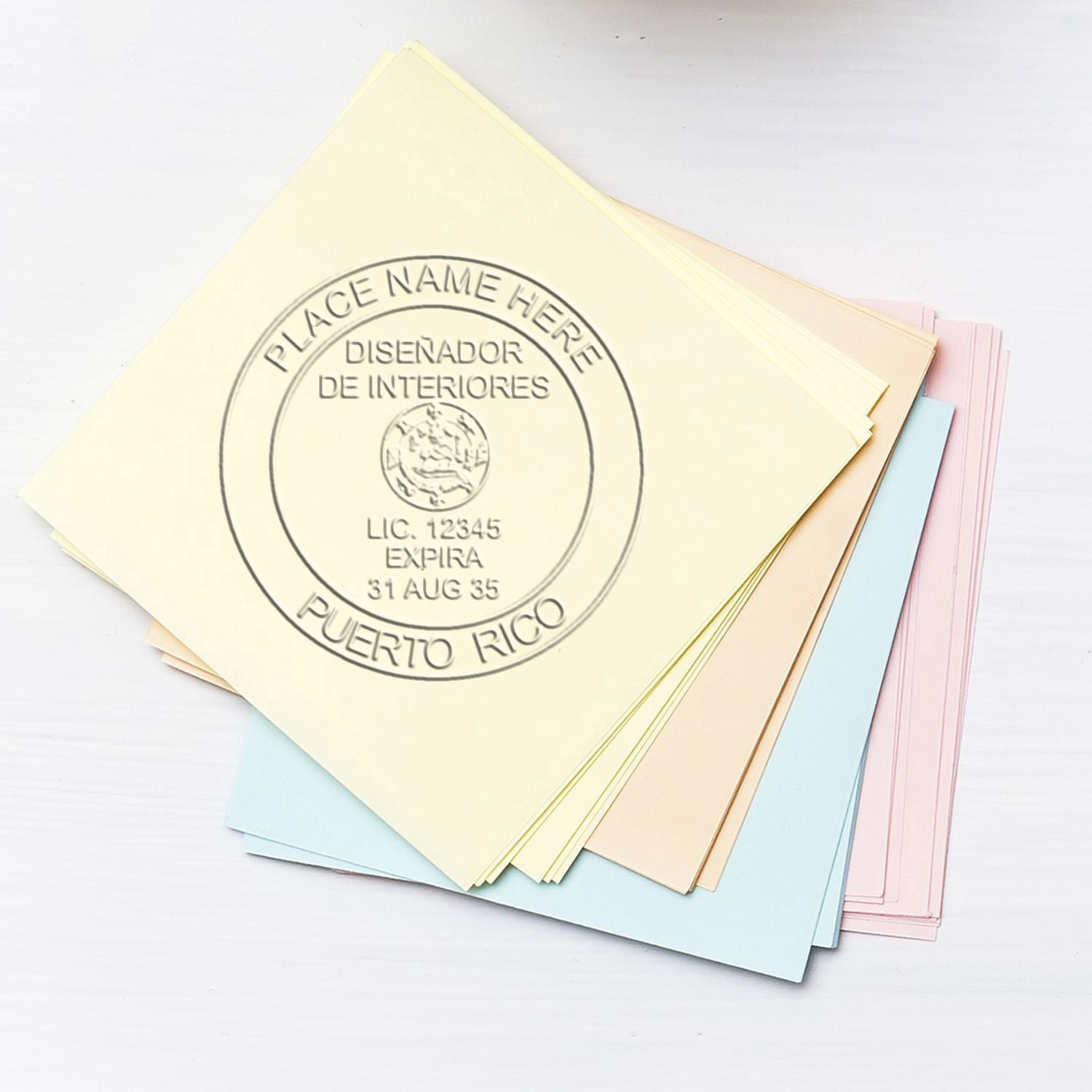
There is more to ordering a seal than clicking buy. The first decision is the device. A traditional embosser leaves a raised impression with no ink, which looks handsome on heavier stock and on cover sheets and certificates. A self-inking stamp snaps back into its own pad and suits a designer who marks dozens of pages at a time. A pre-inked stamp gives a denser, sharper impression and is the quieter of the two inked options. A digital image file lets you place the same mark on a PDF without printing anything.
Plenty of designers keep an embosser for presentation copies and an inked stamp for working sets. Decide how the pages actually leave your studio and buy for that, rather than buying the most expensive option and using it twice a year.
Then confirm the artwork. Read the proof letter by letter. Names, studio names and titles are exactly the kind of text a fast eye skips, and correcting a die after production costs time you would rather spend on the project.


Steps to Getting Your Seal
- Decide the exact wording, including how your studio name is written
- Choose the device: embosser, self-inking stamp or pre-inked stamp
- Send the wording to your seal maker and ask for a proof
- Review the proof closely, at full size and reduced
- Approve it and place the order
Get to Know Acorn Sales
For something that will appear on every set you issue, it helps to buy from a maker who does this work all day. Acorn Sales has been making professional stamps, seals and embossers since 1964, including for Massachusetts interior designers who want a mark of their own.
Along with many of its stamp and embosser products, Acorn Sales includes a free digital seal: a high-resolution image file of your artwork that you can drop into a PDF. That pairing covers both halves of the job, the printed page you hand across a table and the file you email at nine at night. If you want a second opinion on wording before you order, you can contact us with the text you have in mind.
Why Consider Acorn Sales
- Decades of experience making professional seals and embossers
- A free digital seal included with many products
- Staff who will look over your wording before the die is cut
- Materials that hold a crisp impression through years of use
Wording to Use and Wording to Skip
Because nothing is prescribed, the only real constraint is accuracy. A short checklist:




- Use your own name and your studio name, spelled the way they appear on your contracts.
- Use a title that describes your work honestly, such as Interior Designer or Interior Design.
- Skip any license or registration number, since Massachusetts does not issue one for this profession.
- Skip wording that suggests state registration or state approval.
- If you hold a national or out-of-state certification, print its exact name and keep it current.
If the Legislature does eventually create a credential, the wording rules will come with it, and this is a good page to revisit at that point.
Keep Quality Control in Mind
Seal makers use different production methods, and the difference shows in the impression. A laser-engraved die holds fine text that a molded one closes up. A well-made embosser presses a clean raised impression without tearing the sheet, while a cheap one leaves a fuzzy edge and a dent. A seal you use weekly for a decade is worth a few dollars more at the start.
Practical Ways to Judge Quality
- Ask how the die is made, whether laser-engraved, etched or molded.
- Request a proof of the artwork before anything is manufactured.
- Read reviews and ask colleagues what they have been using.
- Ask how long the device typically lasts under normal use.
Post-Purchase Tips
Once the device is on your desk, a little care keeps the impression sharp. Store it somewhere clean and dry.
Handy Care Suggestions
- Keep an embosser in a protective case so it cannot press on anything in a bag.
- Wipe a die gently with a dry cloth to clear dust and paper fibers.
- Save your digital seal file somewhere backed up, not loose on a desktop.
The Case for a Great Seal
A seal is not a rule you are satisfying in Massachusetts. It is a piece of your presentation, and it is one of the cheaper pieces. Clients notice a document that looks considered, and a neatly embossed cover sheet or a cleanly stamped schedule is a small signal that the person who prepared it pays attention.
Going through the exercise of ordering one also tends to sharpen the rest of your branding. Designers who settle on how their name reads in an impression usually end up tidying their title block, their letterhead and their proposal cover at the same time. That consistency is what people remember.
Choosing a Massachusetts Seal Maker
Your seal can be a small but useful asset in your daily workflow. It marks your authorship, it finishes a page, and it travels with every copy of the set. Buying it from a maker with decades of experience means you can stop thinking about it after the first order.
If you are ready to explore a Massachusetts interior designer stamp for your next project, decide on your wording first, pick the device that matches how you actually work, check the proof carefully and store the finished seal properly. Do that and you will have a tool that keeps your documents looking professional for years.
Frequently Asked Questions
Is a Massachusetts interior designer seal required by law?
No. Massachusetts does not license or register interior designers, so there is no state rule that asks an interior designer to seal anything. What identifies your work is your signature and your name. Designers buy a seal because a clean impression makes reports, schedules, proposals and client copies look finished and shows who prepared them.
Do I need multiple seals for different project types?
One seal covers everything you produce. Some designers keep two devices rather than two designs, usually an embosser for presentation copies and an inked stamp for working sets, but the artwork is the same on both.
How quickly can I get a seal made?
Turnaround times vary by manufacturer and by device. Acorn Sales produces most orders promptly once the proof is approved, and a digital seal arrives by email ahead of the physical device.
Which is better: embosser or self-inking stamp?
It depends on the page. An embosser raises the paper and looks elegant on thicker stock, while a self-inking stamp is faster and easier for volume work and shows up clearly on a copy or a scan. Plenty of designers keep both.
Is a free digital seal enough for all my electronic documents?
For most of what an interior designer sends, yes. A high-resolution image file drops straight into a PDF or a proposal template. Where a particular client or agency has its own rules about electronic files, follow those.








