

Written by Acorn Sales Company, manufacturing stamps and seals since 1964 · Reviewed by Holly R, VP of Sales and Marketing at Acorn Sales, against Chapter 222 of the Massachusetts General Laws and the Secretary of the Commonwealth on 21 September 2026 · Updated 21 September 2026
Massachusetts requires a notary seal on every notarization, and it is stricter than most states about what that seal looks like. It must carry your name exactly as commissioned, the words “Notary Public” and “Commonwealth of Massachusetts” or “Massachusetts”, your expiration date in the words “My commission expires ___”, and a facsimile of the seal of the commonwealth. If the seal uses ink, that ink must be black. And Massachusetts requires a new seal at every renewal, which no neighboring state does.
Massachusetts notary stamp requirements at a glance
| Requirement | Massachusetts rule | Source |
|---|---|---|
| Stamp required | Yes | M.G.L. c.222 § 8(b)(1) |
| Required wording | Name exactly as indicated on the commission; The words “notary public” and “Commonwealth of Massachusetts” or “Massachusetts”; The expiration date in these exact words: “My commission expires ___”; A facsimile of the seal of the commonwealth | M.G.L. c.222 § 8(b)(1) |
| Size and shape | Not specified. | M.G.L. c.222 §§ 1, 8 |
| Ink color | Black, where the seal uses ink: “If a notarial seal that requires ink is employed, black ink shall be used.”. | M.G.L. c.222 § 8(b)(2) |
| Embosser | Permitted. | M.G.L. c.222 § 1, § 8(b)(2) |
| Commission term | A new seal is mandatory at every renewal, with no exception for identical information: “A notary public shall obtain a new seal upon renewal of the commission, upon receipt of a new commission or if the name of the notary public has changed.” Massachusetts commissions run seven years. | M.G.L. c.222 §§ 8(b)(1), 14, 25 |
| Name or address change | Within 10 days of a change of name, residence, business address or mailing address, send the state secretary a signed notice giving both the old and the new information. | M.G.L. c.222 §§ 8(b)(1), 14, 25 |
| Lost or stolen stamp | Massachusetts has no lost-or-stolen seal reporting duty. | M.G.L. c.222 § 24 |
| Commissioning authority | The Governor with the advice and consent of the Governor’s Council, with the Secretary of the Commonwealth maintaining the appointments | Chapter 222 of the Massachusetts General Laws |
Rules for other states are on notary stamp requirements by state.


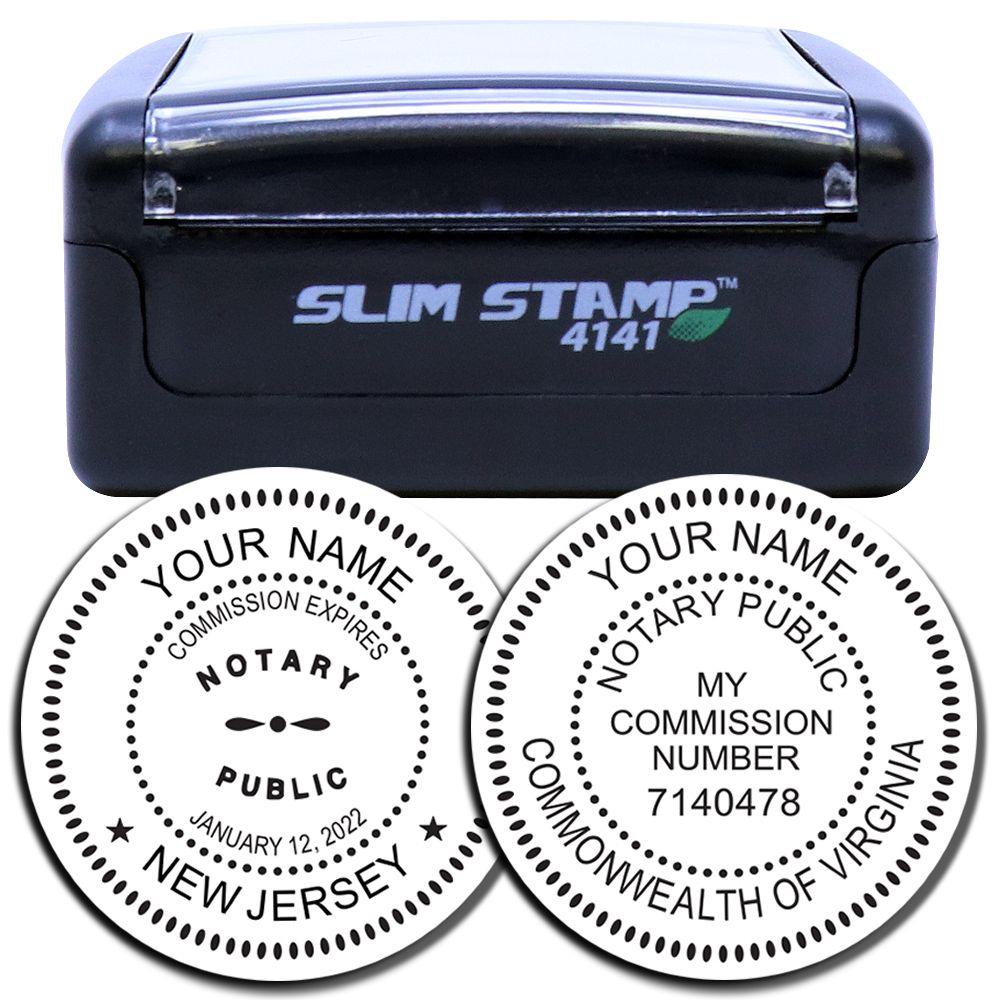



Is a notary stamp required in Massachusetts?
Yes, you must keep an official notarial seal, and it is your exclusive property: “A notary public shall not permit another to use such notarial seal”.
The governing text is M.G.L. c.222 § 8(b)(1).
What must appear on a Massachusetts notary stamp?
- Name exactly as indicated on the commission
- The words “notary public” and “Commonwealth of Massachusetts” or “Massachusetts”
- The expiration date in these exact words: “My commission expires ___”
- A facsimile of the seal of the commonwealth
An electronically generated seal must also include the words “Electronically affixed”.
What size and shape must a Massachusetts notary stamp be?
Not specified
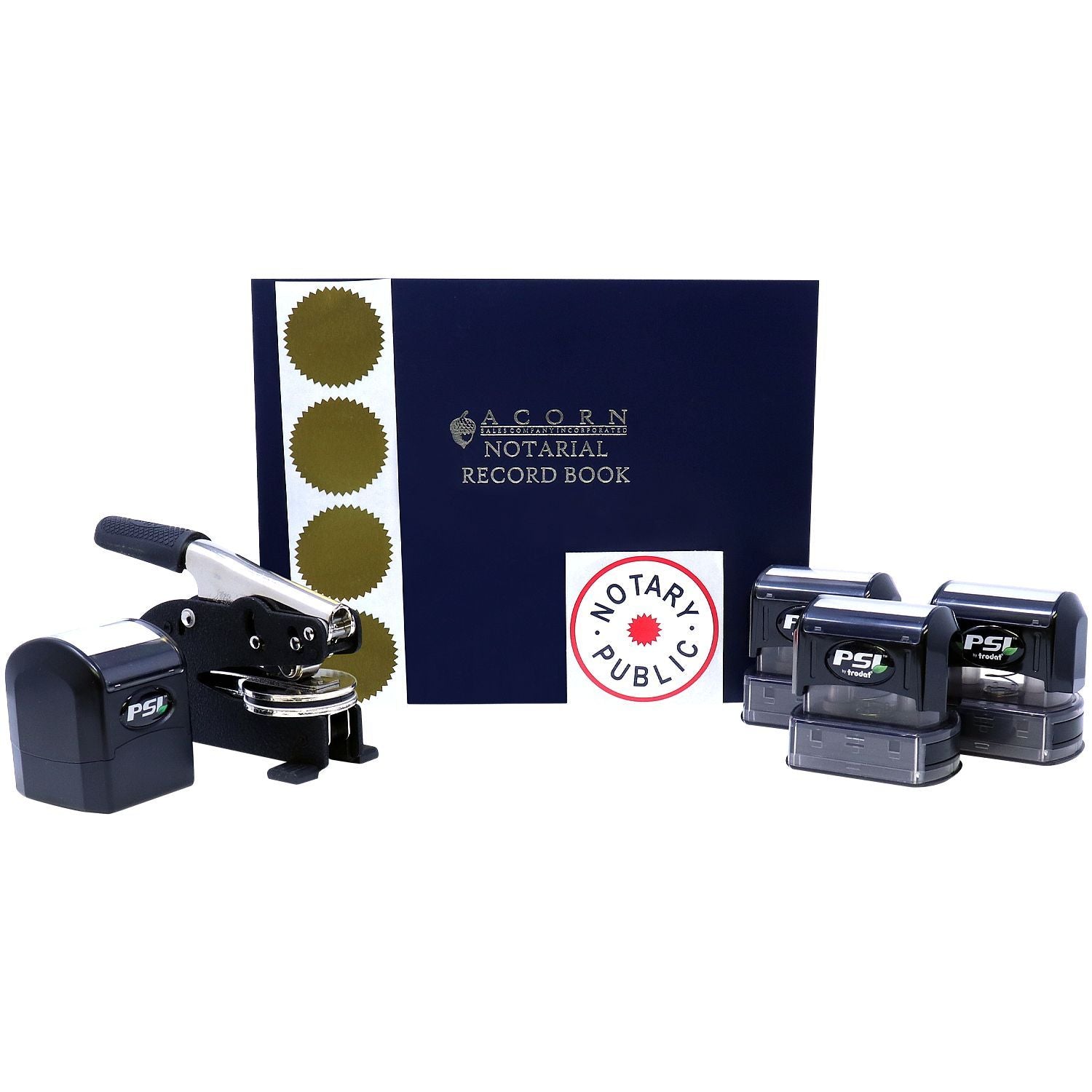
Notary public stamps are made to these conventions, and we check your lines against the statutory wording before we make the stamp.






What ink color is required for a Massachusetts notary stamp?
Black, where the seal uses ink: “If a notarial seal that requires ink is employed, black ink shall be used.”
More on the trade-off in stamp ink color rules.
Is a notary embosser required or optional in Massachusetts?
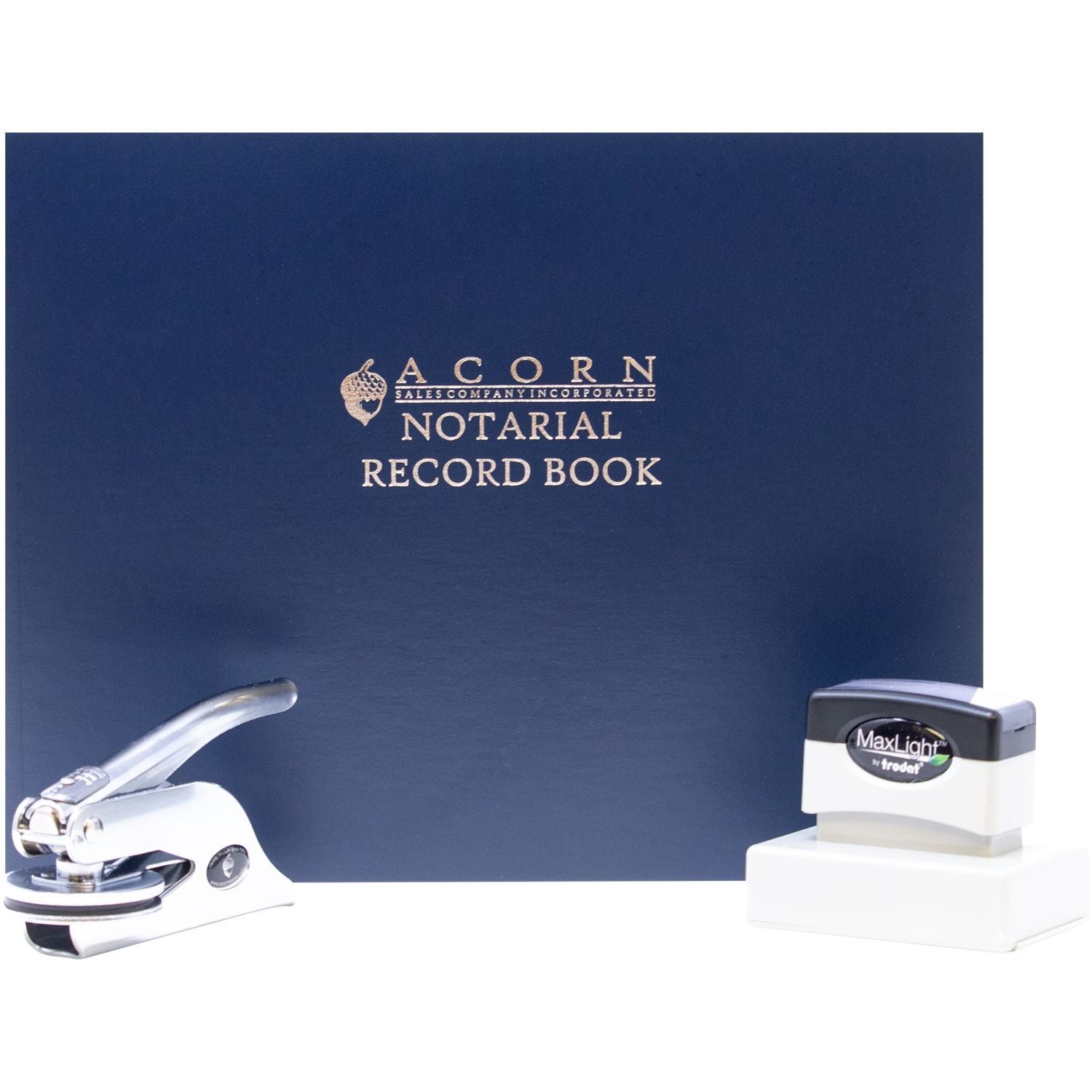
Permitted. The statutory definition of a notarial seal covers an image “affixed, stamped or embossed on a tangible record”, and the ink rule is written conditionally (“If a notarial seal that requires ink is employed”), which assumes a non-inked seal is lawful.
Notary embossing seal kits and inked stamp kits cover both formats. See also notary stamp vs. embosser.
Massachusetts is the renewal-seal state
Most states let you keep a seal that still reads correctly. Massachusetts does not. Section 8(b)(1) requires a new seal on renewal, on a new commission, and on a name change, and it draws no exception for a seal whose wording has not changed.
With a seven-year term, that is a predictable reorder you can diary the moment your commission is issued.
Do I need a new stamp when my commission is renewed or my name changes?
A new seal is mandatory at every renewal, with no exception for identical information: “A notary public shall obtain a new seal upon renewal of the commission, upon receipt of a new commission or if the name of the notary public has changed.” Massachusetts commissions run seven years.
Within 10 days of a change of name, residence, business address or mailing address, send the state secretary a signed notice giving both the old and the new information. A name change also triggers the new-seal requirement above.




What do I do if my Massachusetts notary stamp is lost or stolen?
Massachusetts has no lost-or-stolen seal reporting duty. The sources here are c.222 §§ 1, 8, 22, 24 and 25 and the Secretary of the Commonwealth’s notary pages. The safeguarding duty in § 22 covers the journal and records, not the seal.
How do I dispose of an expired Massachusetts notary stamp?
On expiry, resignation or revocation you must, as soon as reasonably practicable, destroy or deface all notary seals and stamps so they cannot be used, and keep the journal and records for seven years.
More on retiring an old device in how to dispose of an expired notary stamp.
Can I notarize electronically or remotely in Massachusetts?
Electronic notarization is authorized and operating: the seal may be a digital image resembling a physical seal, only the notary named on it may affix it, and it must be attached by digital certificate in a way that is independently verifiable and renders later changes tamper evident. Remote online notarization is on the statute books but not yet available in practice: the Secretary of the Commonwealth states that the required training and notification form are not yet available and notaries should not use remote platforms at this time.
If you need your seal as an image file for electronic work, see electronic notary seal images.
Related Massachusetts guides
Next step
Have your commission details in front of you before you order, because they go on the stamp and a wrong line means a reorder. Then browse notary public stamps, or contact us and we will check your wording against the statute before we make it.
Frequently asked questions about Massachusetts notary seals
Is a notary seal required in Massachusetts?
Yes. A notary public must keep an official notarial seal that is the exclusive property of the notary, and the statutory certificate forms all end with the official signature and seal of the notary public.
What has to appear on a Massachusetts notary seal?
Four things: your name exactly as indicated on the commission; the words “notary public” and “Commonwealth of Massachusetts” or “Massachusetts”; the expiration date in the exact words “My commission expires ___”; and a facsimile of the seal of the commonwealth.
Does Massachusetts require black ink?
Yes, but conditionally. The statute reads: “If a notarial seal that requires ink is employed, black ink shall be used.” So an inked stamp must be black, while an embossed or digital seal is not subject to the rule at all.
Do I need a new seal when my Massachusetts commission is renewed?
Yes, and this is the rule Massachusetts notaries are most often caught by. The statute requires you to obtain a new seal upon renewal of the commission, upon receipt of a new commission, or if your name has changed. Massachusetts terms run seven years, so the reorder comes around slowly enough to be forgotten.
Can I use a digital notary seal in Massachusetts?
Yes. The seal may be a digital image resembling a traditional physical seal, and only the notary whose name and registration number appear on it may affix it. An electronically generated seal must also include the words “Electronically affixed”.
What do I do with my Massachusetts seal when my commission ends?
Destroy or deface it. On expiration, resignation or revocation you must, as soon as reasonably practicable, destroy or deface all notary seals and stamps so they cannot be used, and keep your journal and records for seven years.
What if my Massachusetts notary seal is lost or stolen?
Chapter 222 imposes no duty to report a lost or stolen seal and sets no deadline, which is unusual. Report a theft to local law enforcement anyway, and order a replacement, since you cannot notarize without a seal.
How long does a Massachusetts notary commission last?
Seven years, unless it is earlier revoked or you resign. That is one of the longest terms in the country, and it is paired with the requirement to buy a new seal at each renewal.








