
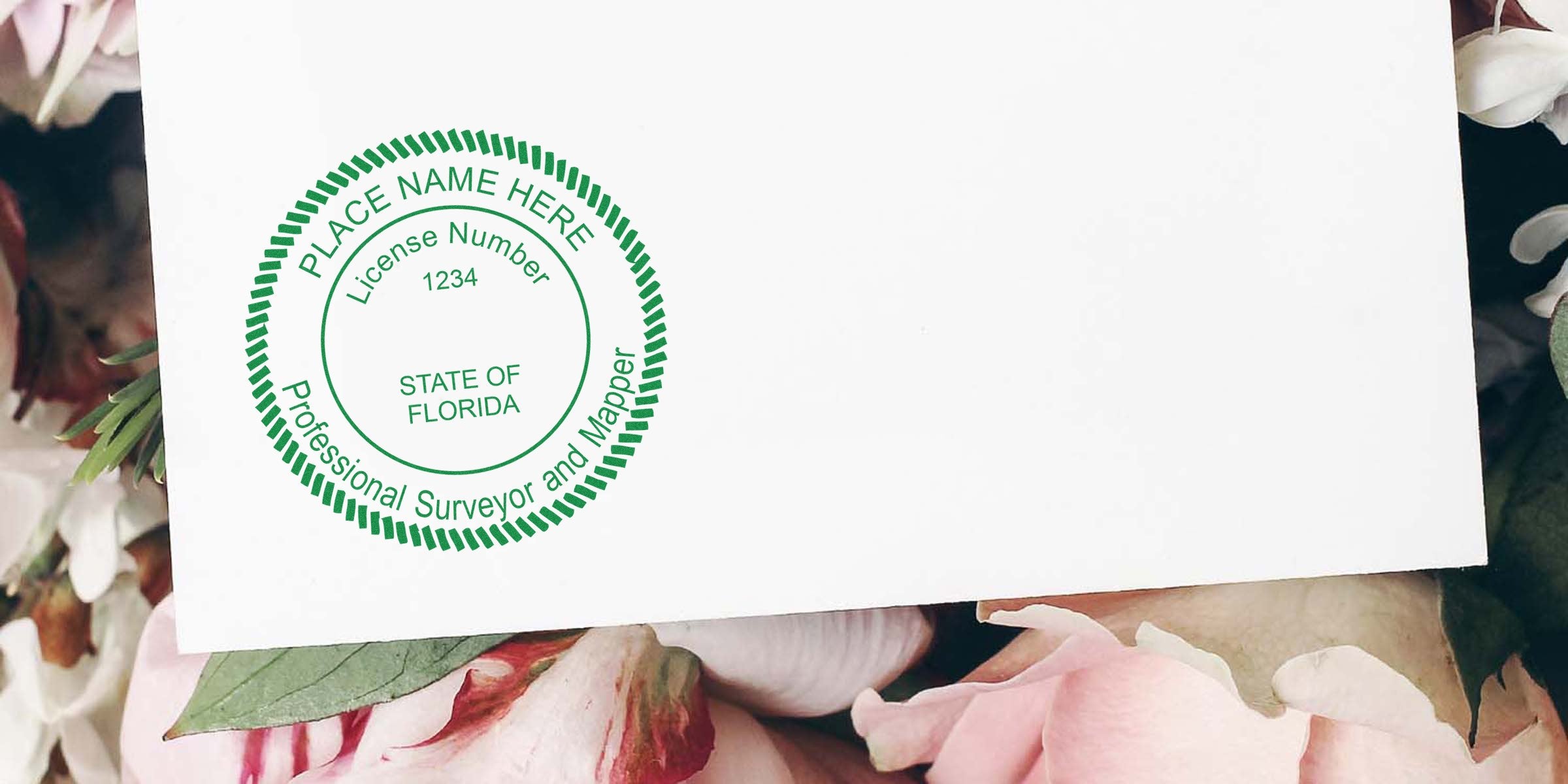
Whether you’re taking on a brand-new surveying project or upgrading your professional credentials, understanding florida land surveyor seal laws is crucial for staying compliant. You may know that any surveying work you submit must be sealed, but what exactly does it mean to do it the right way in Florida? Let’s explore the guidelines step by step so you feel confident using or ordering your seal.
Master Florida Land Surveyor Seal Laws
It’s easy to see why Florida is strict about land surveyor seals. These seals represent your professional endorsement of the work you prepare. In other words, when you stamp your seal, you’re taking ownership of the accuracy and quality of the plans or documents you produce. The state’s rules help ensure that the public, and anyone who relies on your surveys, can trust your credentials.
What Are These Laws?
Florida’s regulations specify that a land surveyor must affix a seal to final drawings, legal descriptions, or any documents that require official certification. The Florida Board of Professional Surveyors and Mappers enforces these rules. The laws cover everything from what the seal looks like to where and how you must use it. You’ll typically find guidelines on its diameter, wording, and any design elements. Plus, you’ll see references to acceptable impressions, like embossed stamps or electronic alternatives.
Why Must You Comply?
breaking the rules here can lead to serious consequences. Noncompliance can mean hefty fines, revoked licenses, or even the invalidation of your work. This all can create headaches for both you and your clients. By following Florida’s regulations closely, you show you take your profession seriously and maintain the highest standard of integrity. You also shield yourself from legal and financial risks. If you’re ever in doubt, double-check the official statutes or consult a trusted resource to stay on track.
Identify Key State Requirements
Florida’s laws don’t just define who can use a seal, but also spell out how the seal should be designed and applied. You’ll need to confirm the materials you use are authorized, such as self-inking stamps or crimpers. Even digital seals have to meet certain criteria before they’re considered valid.
Physical vs Digital
Ever wonder if a digital seal can replace a traditional stamped or embossed version? In Florida, electronic seals can be used if they meet the criteria laid out by the state’s licensing board. They should be uniquely tied to you, verifiable, and under your sole control. Florida often refers to the “digital signature,” which must remain traceable back to your license. If you choose a digital seal, keep a backup approach in mind so you’re never caught without a valid way to seal your work.
Traditional seals, on the other hand, typically use rubber stamps or embossers to leave a visible impression. These are straightforward and well-accepted, but they do require physical handling of the documents. Think about how often you need to process paperwork and which format—digital or physical—fits best with your workflow.
Approved Seal Elements
Like many states, Florida requires certain elements on your seal. Generally, these include:
- Your full name as it appears on your license
- Your license number
- The phrase “Professional Surveyor and Mapper” or a similar authorized label
- The word “State of Florida”
If you want more specifics, check out the florida land surveyor stamp requirements for a closer look at the legal language. While the font style and precise layout can vary, make sure any design choices follow state rules. A seal that’s too fancy or missing critical text might not be recognized as valid. It’s best to keep things simple, clear, and easy to read.
Implement Proper Usage
Once you have your seal nailed down, the next challenge is knowing when and how to use it. Unlike a casual signature you might place on everyday documents, a land surveyor seal is used in very precise circumstances. Every time you seal a document, you’re confirming that it meets Florida’s standards and that you personally supervised (or performed) the work.
Sealing Standard Documents
The big question is often: “Which documents do I need to seal?” Here are the main categories:
- Final surveys or reports.
- Legal descriptions attached to property transactions.
- Plats, subdivision documents, or official maps filed for public record.
- As-built or record drawings that reflect what currently exists on the property.
Make sure the seal is placed on the cover of the document or each pertinent sheet. You’ll also find that each sealed document must accompany your signature and professional statement. This clarifies that the content is accurate to the best of your ability.
Rules for Revisions
What happens if you need to revise your work after you’ve already sealed it? Maybe the client requested a change, or you spotted an error. In Florida, the typical approach is to issue a revised version that includes a fresh seal and statement, along with an indication that it’s been amended. This prevents confusion if someone comes across conflicting versions of your survey. Each revision should show a date or an identifiably unique version number.
Find a Reliable Partner
If you’re wondering where to get an official Florida land surveyor seal, make sure you’re working with an experienced supplier who can vouch for the seal’s compliance. That’s where Acorn Sales comes in. Acorn Sales has been in business since 1964, which means they’ve seen plenty of regulatory evolutions. They also understand every detail that goes into designing a state-approved seal.
Acorn Sales: A Quick Overview
Acorn Sales has built a reputation for producing high-quality stamps and seals for professionals in Florida. Whether you’re a brand-new surveyor or have 20 years in the field, you’ll find historically proven craftsmanship. Their team is also known for helpful, friendly service, so you can feel confident asking questions about your particular seal design.
Free Digital Seal Offer
Worried about digital sealing? Acorn Sales includes a free digital seal with your purchase of a physical seal, making it easy to switch between physical and electronic as your projects demand. Digital seals can save you time when you need to send documents electronically, and they’re usually quicker to incorporate into your workflow if you’re dealing with multiple revisions. More flexibility, plus a stamp you can hold in your hand—sounds like a win-win.
Spot Key Differences in Physical and Digital Seals
Although we’ve touched on how Florida’s laws accommodate both physical and digital approaches, it helps to see a quick breakdown. Each option offers its own advantages, especially when you look at the day-to-day execution of your projects.
| Feature | Physical Seal | Digital Seal |
|---|---|---|
| Application | Manual stamping or embossing on paper and physical documents | Electronic file embedding and digital signatures |
| Legality (Florida) | Accepted if it meets Florida’s size and content rules | Accepted if it meets security and verification requirements |
| Accessibility | Requires physical presence and manual stamping in many cases | Can be applied remotely, as long as only you hold the encryption keys |
| Revision Process | New printouts must be stamped again; can be time-consuming | Updates can be done instantly; new digital files get fresh e-seals |
| Long-Term Record Keeping | Hard copies must be stored in fireproof or safe areas | Digital copies need secure backups; watch out for data corruption or software obsolescence |
Adopt Best Practices in Documentation
Florida’s seal laws extend beyond simply placing your stamp on a piece of paper. They also dictate that the entire document must reflect professional standards. For instance, your final survey and accompanying documentation should be neat, legible, and complete.
Keep Your Records Organized
As a working professional, you may occasionally face audits by the Florida Board of Professional Surveyors and Mappers. To prepare for that, keep your sealed documents, draft versions, and any relevant notes in clearly labeled folders. If you’re using software, maintain consistent naming conventions so your digital copies are always easy to find. Some surveyors use cloud-based storage solutions coupled with a local hard drive for extra security. Whatever you decide, having a reliable system in place prevents you from scrambling if an authority requests a file.
Provide Informative Notes
Do you need to add disclaimers or clarifications about measurement methods or assumed boundaries? Placing explanatory notes alongside your sealed documents shows that you’re mindful of disclaimers or conditions. When a question pops up—like whether a neighbor’s fence is encroaching—it’ll be easier to trace your reasoning and assure all parties that your data is accurate.
Avoid Common Mistakes
Surprisingly, the trouble spots for Florida land surveyors often aren’t the laws themselves. Instead, it’s small oversights that can cause big hassles. Whether you’re new or experienced, staying alert to these common errors can save you from having to redo surveys or face disciplinary action.
Incorrect Stamp Usage
One of the biggest mistakes is failing to place the seal in the right location or forgetting to sign and date your documents. You might think you’ve handled the details, then realize you sealed the wrong page or only sealed the cover sheet. It’s also easy to overlook the exact statement required by the Florida Board, which may call for your name, license number, and a specific acknowledgment. Always double-check the final print or digital document before handing it over.
Misplaced or Faded Imprints
If your seal is barely visible—even if it’s technically on the page—it might not pass muster. Embossed seals sometimes lose their clarity over time if the paper is mishandled. Rubber-stamped marks can smear if not applied on a smooth surface. Check each impression to ensure legibility. If you spot a faint or incomplete seal, go ahead and re-apply. A crisp seal is vital for legal acceptance.
Wrap Up: Keep It Compliant and Professional
When you align with Florida’s expectations, your seal becomes more than ink or an emboss—it’s a statement of your professional accountability. You’re assuring clients, government bodies, or anyone else relying on your survey that you stand behind your work. Each project you take on in Florida is an opportunity to reaffirm that you’re knowledgeably applying the law so everyone benefits from accurate, trustworthy results.
Need help finding a seal that satisfies every rule in Florida? Acorn Sales has you covered. You’ll get a durable physical product plus a free digital seal, offering you the versatility to handle any job. After all, your focus should be on delivering high-quality surveys, not worrying about your seal’s compliance.
Use these pointers as a roadmap to navigate Florida’s land surveyor seal laws successfully. By staying organized, verifying each detail, and working with reputable suppliers like Acorn Sales, you’ll make compliance a breeze. Remember, a well-applied seal isn’t just ink on paper—it’s a symbol of your professional commitment to quality.
Frequently Asked Questions
Do I need separate seals for different types of land surveying work?
In most cases, one seal with the correct wording for your Florida license is enough. However, if you have multiple licenses or different designations, you might require additional seals. Verify this based on your specific credentials.
How often do I need to renew my Florida surveyor’s license to keep my seal valid?
You must maintain your license according to the state’s renewal schedule. If your license lapses, your seal is no longer valid. Renewing on time ensures you can continue to seal your work without interruption.
Is it legal to reproduce my seal for digital use by scanning my physical stamp?
Generally, no. Florida often wants a secure electronic process, not just a scanned image. A scanned seal might not meet verification or encryption standards. Stick with an approved digital seal, such as the one you’d receive from Acorn Sales.
Can I let someone else use my seal if I’m supervising their work?
The short answer is no. Even if you supervise another individual, your seal is supposed to be used exclusively by you. That prevents unauthorized use and preserves the integrity of the documents you endorse.
Are notations like “Preliminary” or “For Review” still required to be sealed?
Typically, drafts and preliminary documents do not need a seal. The seal is meant for final documentation. However, make sure you label them clearly to avoid confusion. Once you finalize a drawing, you’re expected to apply your seal and signature.








