
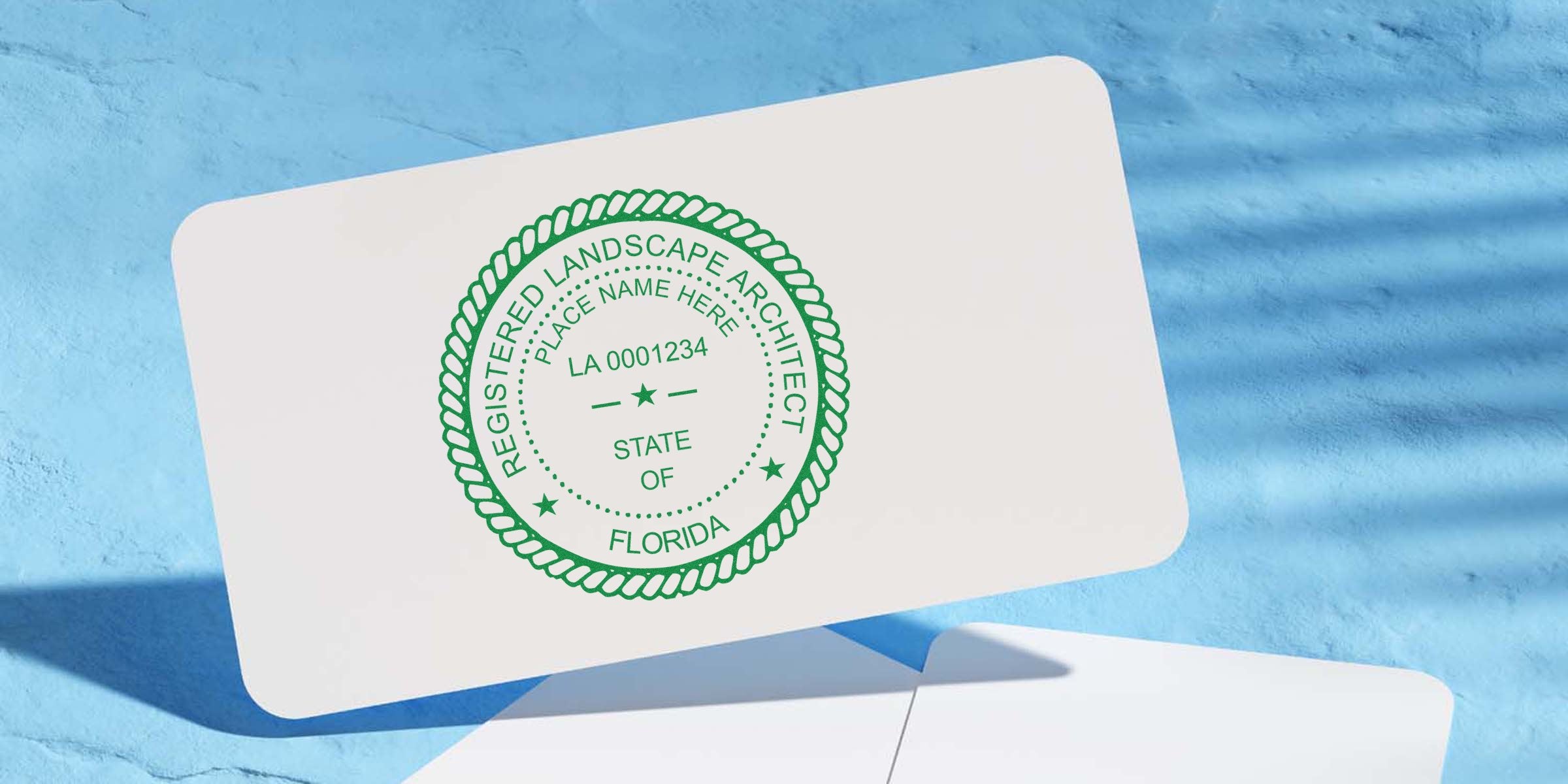
Florida landscape architect stamp regulations can sometimes feel overwhelming, right? You know you need the correct seal, and you know there are rules. But how exactly do you stay on top of it all? In this post, you’ll learn the essentials of Florida’s guidelines, from licensure requirements to choosing the proper seal and staying compliant for the long haul. By the end, you’ll feel confident managing your professional stamp needs so you can focus on what you do best: creating beautiful outdoor spaces.
Learn Florida Stamp Basics
Before you dive into the details, it helps to understand the basics of Florida’s stamp rules for landscape architects. You might be wondering why these regulations exist in the first place. It’s simple. Regulators want to ensure that every project plan or document bearing an official seal has the necessary credentials behind it. Your stamp is a visual signal that tells clients, authorities, and colleagues your work meets Florida’s professional standards.
Why Regulations Matter
Stamp regulations serve a clear purpose: to protect the public and uphold quality in the profession. Just as you wouldn’t drive a car without a proper license, you shouldn’t submit official landscape architecture documents without the right stamp and seal.
- They verify authenticity: A stamped document indicates you’ve reviewed and approved it.
- They maintain standards: When everyone follows the same guidelines, the industry remains consistent and trustworthy.
- They protect your reputation: Accuracy shows you take your responsibilities seriously.
Who Enforces The Rules
In Florida, the Board of Landscape Architecture (under the Florida Department of Business and Professional Regulation) handles oversight. They decide what shape your stamp should be, how it should be affixed, and where. They also manage disciplinary actions for those who ignore or misuse their seals. If you want more details, you can check out the florida landscape architect stamp requirements. These guidelines are updated periodically, so staying informed will keep you on the right track.
Understand Licensing Requirements
Getting your professional stamp hinges on meeting Florida’s licensure rules. These vary slightly from one state board to the next, but the underlying principle is consistent: you need to demonstrate competency before practicing landscape architecture.
Educational Pathways
To obtain a Florida landscape architecture license, you typically need a degree from a program accredited by the Landscape Architectural Accreditation Board (LAAB). If you don’t have an LAAB-accredited degree, you might qualify through additional work experience or meeting other equivalency standards. Checking Florida’s specific guidelines will help you map out the path that fits your background.
- Complete an accredited bachelor’s or master’s degree in landscape architecture.
- Log approved work experience under a licensed landscape architect.
- Pass the national Landscape Architect Registration Examination (LARE).
License Renewal Timelines
Once licensed, you’ll need to renew your credential periodically. Florida usually requires license renewals every two years. Renewal involves continuing education courses in topics like ethics, safety, and industry updates. Keeping your license active is essential. It’s also a good idea to set a calendar reminder so you never miss out on upcoming deadlines.
Choose The Right Seal
Your seal is more than a rubber stamp. It’s a small but vital tool that validates your professional identity. Florida mandates a specific seal design for landscape architects. This seal often includes your name, license number, and the words “Landscape Architect.” However, you still have some room to pick the format that best suits your workflow, whether that’s an embosser or an ink stamp.
Embossers Vs. Rubber Stamps
An embosser presses a raised impression into the paper, while a rubber stamp (or pre-inked stamp) delivers ink directly onto the page. Which one is best for you? That might depend on how you prefer to store and present your documents.
| Type | Look & Feel | Ease of Use | Notable Benefits |
|---|---|---|---|
| Embosser | Raised, elegant impression | Extra pressure needed | Harder to forge |
| Rubber Stamp | Ink impression, easy to read | Very convenient, quick | Compact and portable |
- Embossers create a professional finish that some clients love, but you’ll need to press firmly for a clean impression.
- Rubber stamps are easier to handle, especially when you have multiple pages to label. They offer consistent results and are simple to re-ink or replace.
Recommended Dimensions
Although the Florida Board of Landscape Architecture sets design standards, you still have choices for size. Common diameter sizes might be around two inches. Make sure to confirm dimension requirements with the board so your seal is easily visible and does not crowd your project documents. If you need guidance, Acorn Sales is a trusted supplier that has provided professional stamps and seals since 1964 and can help you customize your seal’s dimensions. They also offer a free digital seal, which is handy when you’re working with electronic documentation.
Maintain Professional Compliance
So you’ve got your stamp, and you’re ready to seal your first set of landscape plans. Now what? Compliance goes beyond just owning the right tool. It requires consistent use of that tool under the rules set by the state.
Proper Documentation
Florida requires that your stamp and signature appear on final project documents. This includes drawings, estimates, calculations, or anything else the Board deems official. Make sure every page that needs your mark gets it. If you’re using a digital seal, confirm your files embed it securely so it can’t be tampered with.
- Stamp final plans and calculations.
- Sign or initial near the seal to confirm authenticity.
- Keep documentation stored securely (physical or digital).
Careful record-keeping protects you if questions arise about a specific design or calculation in the future. Think of it like tossing keys on a hook: you always know where your records are if you need them in a hurry.
Handling Revisions
Picture this scenario: you stamp and sign your plan, but a few days later, you realize you need to revise certain sections. What do you do? Generally, you’ll need to re-stamp the updated drawings. You may need a note indicating the revision date. That way, anyone reviewing the file can see the latest, board-compliant version.
Don’t forget to remove or mark any outdated pages clearly, so nobody accidentally references a previous version. Mixing old and new documents can lead to confusion and possible compliance issues.
Maximize Your Stamp’s Potential
You might not think of a seal as something you can “maximize,” but how you treat and use your stamp can help reinforce your professional brand. Whether you’re stamping a blueprint, a client presentation, or an official application, there are small touches that elevate the final product.
Efficient Use Of Digital Seals
Digital seals are like the high-tech cousin of ink stamps. In Florida, you can use a digital seal on electronic documents, provided it meets security and tamper-evident requirements. This approach is especially useful if you often submit your designs online or collaborate with teams in different locations.
- Integrate your seal into PDFs for easy document sharing.
- Keep an encrypted backup of your digital seal in case of system issues.
- Ask clients if they prefer digital files for faster turnaround.
Having a valid digital seal is also a good safety net if you lose your physical seal or find yourself working remotely. Remember, Acorn Sales includes a free digital seal with their stamps, which can save you time and money.
Brand Impression Tips
When you add your seal to a document, you’re not just meeting a regulation. You’re showcasing your personal brand. If your seal is neat and well placed, it tells others you handle the details responsibly. Clients notice when everything looks clean and professional. Placing your seal consistently in the same area (usually the bottom-right corner of a sheet) makes it easy for project reviewers to locate critical information.
You can also develop a brief style guide for your office. Decide on a standard location for the seal, how large it should appear, and any text that goes alongside it. If you frequently produce marketing materials or proposals, that consistency ties everything together in a nice, cohesive package.
Wrap Up And Move Forward
Mastering the stamp process might seem daunting at first, but it’s just another part of being a well-prepared landscape architect. By understanding the Florida landscape architect stamp regulations, choosing the right tools, and applying your seal correctly, you protect your work and present it with confidence. You also do your part to keep Florida’s professional standards at the highest level.
If you’re still wondering about precise sizing or the best format for your next project, consider partnering with a trusted supplier like Acorn Sales, a company that has provided Florida Landscape Architect stamps and seals since 1964. Their experience makes it easier for you to follow the board’s guidelines, plus they’ll throw in a free digital seal to cover your online needs. Over the years, they’ve simplified the ordering process for countless landscape architects, giving you more time to focus on design instead of red tape.
Start by reviewing the official requirements, as well as any updates posted by Florida’s Board of Landscape Architecture. Then gather your documents and outline where and how you’ll use your seal. Keep your licensing deadlines on your calendar, and ensure your continuing education credits are on track. These steps might feel small, but together, they form the foundation of a strong, professional legacy—one stamped document at a time.
Frequently Asked Questions
Can I use just a digital seal and skip the physical one?
Florida requires that you maintain a proper physical stamp, but you can often use a digital seal for electronic documents. Just ensure it meets the security protocols the board requires. Having both is typically the best strategy.
Do I have to replace my seal if my license number changes?
If your license number changes for any reason, you must update your stamp to reflect your new number. Using an outdated stamp can invalidate your documents and put you at risk of disciplinary action.
How do I handle lost or stolen stamps?
First, report it to Florida’s Board of Landscape Architecture. You may also need to notify local authorities if you suspect theft. Once you’ve taken those steps, you’ll order a new stamp with the correct credentials. Make sure you no longer use the old seal if it turns up later.
Can I keep using my stamp after moving out of state?
You typically need a valid Florida license to seal documents for projects based in Florida, even if you move. If you decide to relocate but still practice on Florida projects, maintain your license and all requirements from the Florida Board of Landscape Architecture.








