

Written by Acorn Sales Company, manufacturing stamps and seals since 1964 · Reviewed by Holly R, VP of Sales and Marketing at Acorn Sales, against the Washington State Board of Registration for Professional Engineers and Land Surveyors and Wash. Admin. Code 196-23-020(1) on 21 September 2026 · Updated 21 September 2026
Washington gives no seal diameter at all. WAC 196-23-010 requires instead that the impression or image “be of a size that assures full legibility” of the four required items. WAC 196-23-010, 196-23-020 and 196-23-070 and RCW 18.43.070 were checked and none gives a measurement, so any specific Washington dimension quoted to you is not from the current rule.
Two Washington rules invert the advice engineers bring from elsewhere. First, preliminary documents are not the thing you leave unstamped: WAC 196-23-020(2) requires them to be clearly identified as preliminary and then says they must be stamped, but need not be signed or dated. Second, the signature goes on top. WAC 196-23-070(1)(d) requires the handwritten identification to be “Placed directly over the seal/stamp of the licensee,” so the four legend items have to stay legible underneath a signature.
Washington also accepts something Florida and North Carolina forbid. A scanned image of an original handwritten signature is acceptable under WAC 196-23-070(1)(a), provided the licensee is the one who applies it and it is permanently affixed. That is not the same as a signature stamp: the image must be of a genuine handwritten original.
Washington PE seal requirements at a glance
| Requirement | Washington rule | Source |
|---|---|---|
| Seal required | Yes | Wash. Admin. Code 196-23-020(1) |
| Required elements | State of Washington, Registered professional engineer or registered professional land surveyor, Certificate number and Licensee’s name as shown on wall certificate | Wash. Admin. Code 196-23-010 |
| Size and shape | No dimension is specified. | Wash. Admin. Code 196-23-010 |
| Device allowed | The rule is written in terms of “The impression or image of the seal/stamp”, which covers an embosser that makes an impression and an inked stamp or applied graphic that makes an image. | Wash. Admin. Code 196-23-010 |
| Signature and date | Washington is unusually permissive about the signature image and unusually strict about where it goes. | Wash. Admin. Code 196-23-070(1) |
| What must be sealed | Final documents, defined as plans, specifications, plats, surveys, land descriptions as defined in WAC 332-130-020, reports and as-built documents. | Wash. Admin. Code 196-23-020(1) through (5) |
| Electronic seal | The board does not name a product or a certificate authority. | Wash. Admin. Code 196-23-070(2) |
| Renewal and lapse | RCW 18.43.080(1) provides that certificates of registration and certificates of authorization “are valid for a period of time as determined by the board” and that if a completed renewal application has not reached the board by the expiration date, “the license is invalid.” RCW 18.43.070 then makes it unlawful to use the seal after the certificate expires or is revoked unless it is renewed or reissued. | RCW 18.43.080 |
| Firm number on documents | A firm needs a certificate of authorization but its number does not go on the document. | RCW 18.43.130(6) and (8) |
| Licensing board | The Washington State Board of Registration for Professional Engineers and Land Surveyors | Chapter 196-23 WAC, sections 196-23-010, 196-23-020 |
Rules for other states are on PE stamp requirements by state.


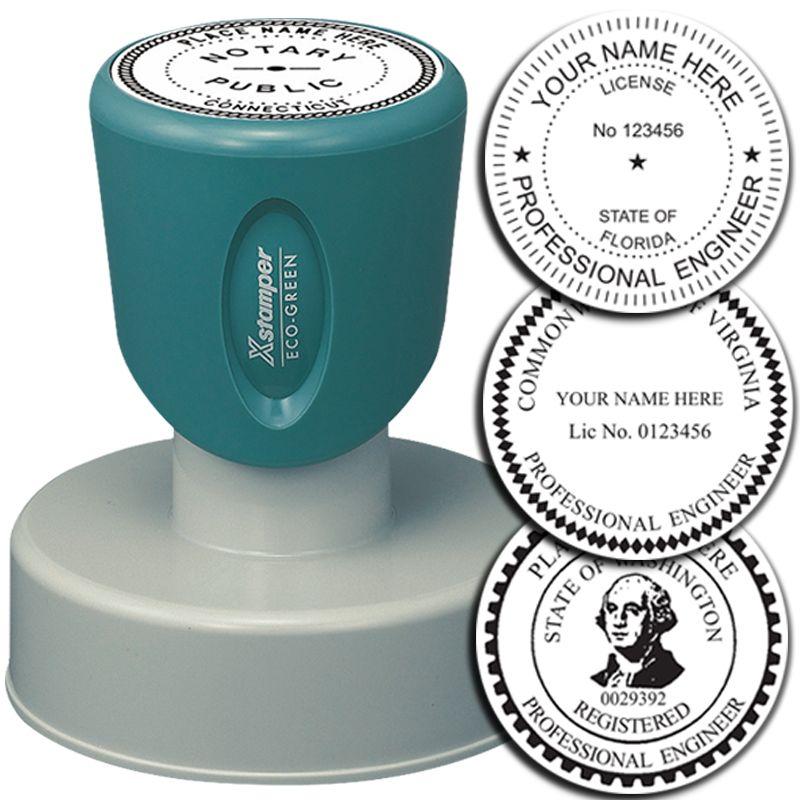

Is a seal required in Washington?
Washington requires a seal Washington puts the seal duty in both places. RCW 18.43.070 requires each registrant to obtain a seal of a design authorized by the board and to stamp plans, specifications, plats and reports with that seal or a facsimile, and makes it unlawful to use the seal after the certificate expires or is revoked. The board rule is where the real test sits: “Any final document must contain the seal/stamp, signature and date of signature of the licensee who prepared or directly supervised the work.” Final documents are defined in the same rule as “those documents that are prepared and distributed for filing with public officials, use for construction, final agency approvals or use by clients.”.
What must appear on the seal
- State of Washington
- Registered professional engineer or registered professional land surveyor
- Certificate number
- Licensee’s name as shown on wall certificate
The four items are mandatory and the rule ties them to a legibility standard rather than to a layout. Two details matter for artwork. The name must be the name “as shown on wall certificate”, so a preferred name, a nickname or a changed married name that has not been updated with the board does not belong on the die. The professional legend is the full phrase, registered professional engineer or registered professional land surveyor, not the abbreviation PE. The rule also prints the authorized design as an illustration, so the ring layout should be copied from the board’s figure rather than reconstructed.
Size and shape
No dimension is specified. WAC 196-23-010 requires instead that the impression or image “be of a size that assures full legibility” of the four required items. Checked WAC 196-23-010, 196-23-020, 196-23-070 and RCW 18.43.070; none gives a diameter. Any specific Washington measurement circulating online is not from the current rule.



Embosser, rubber stamp or digital
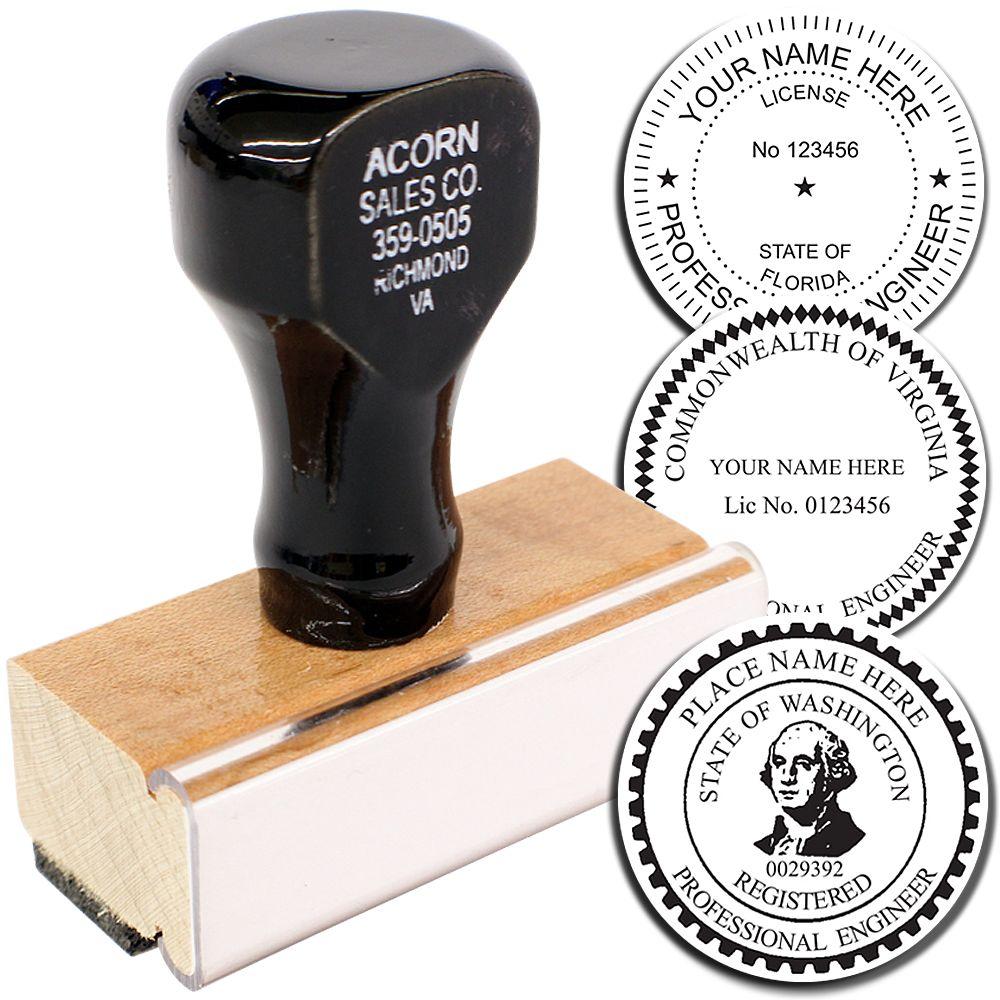
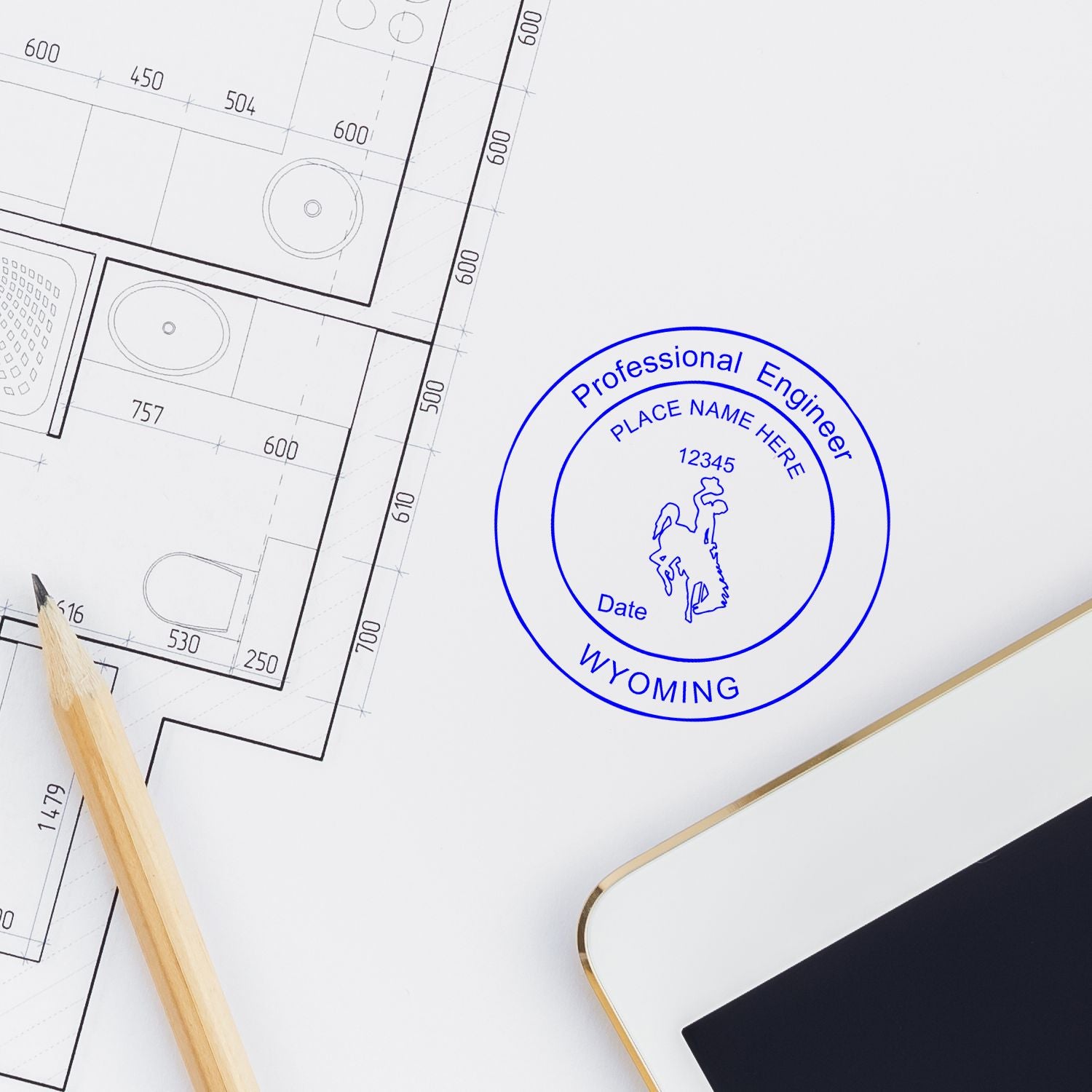
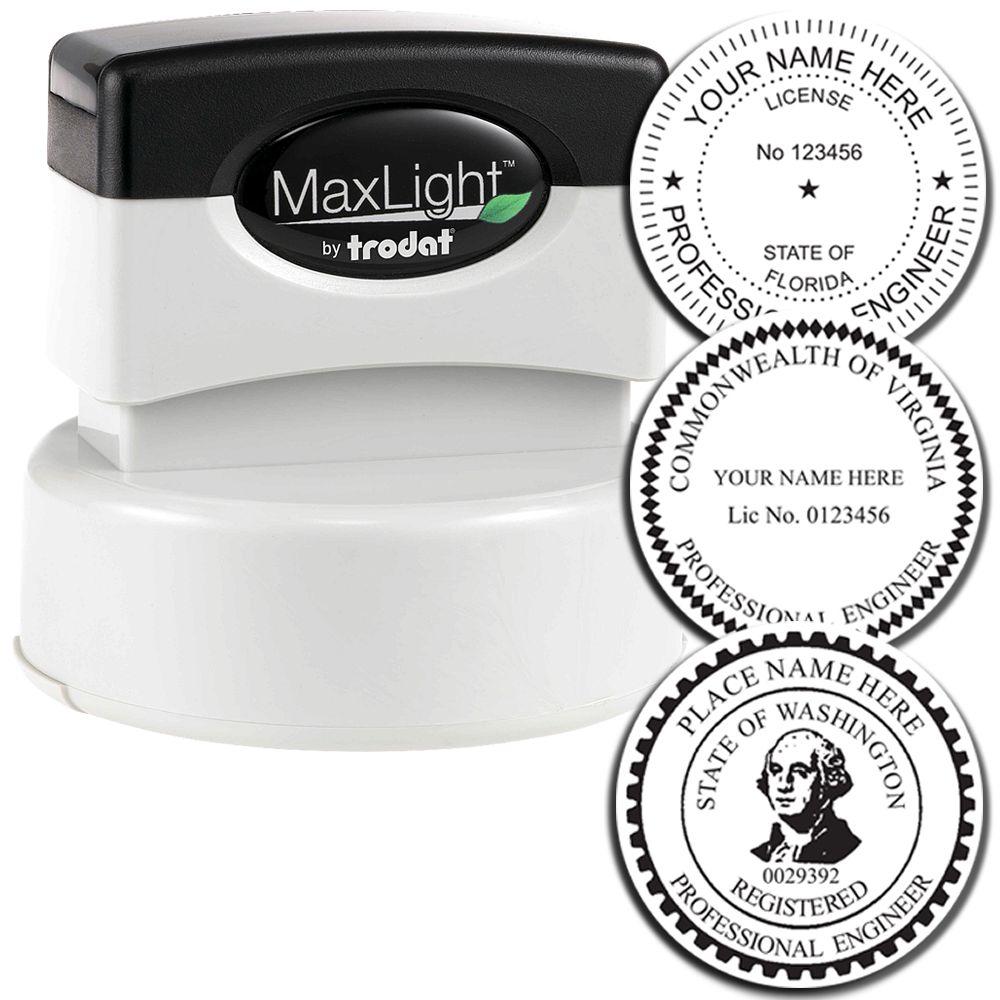
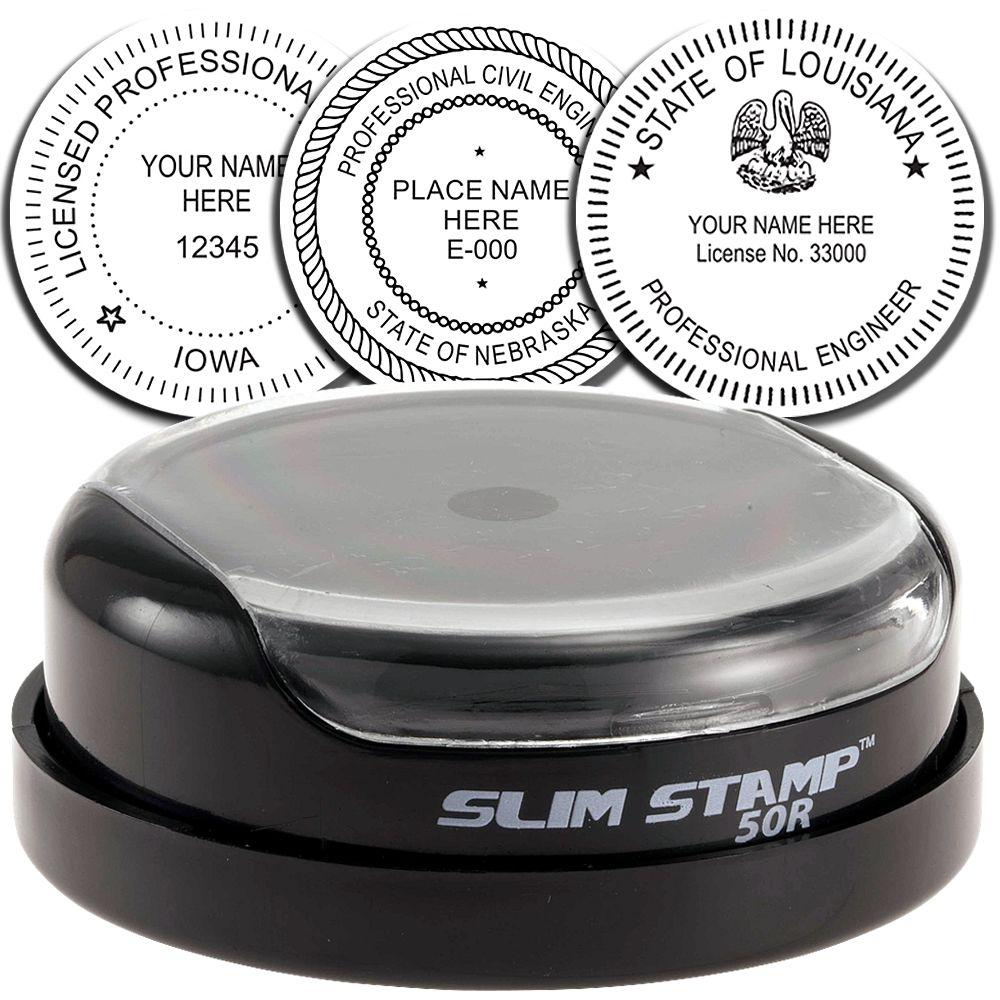
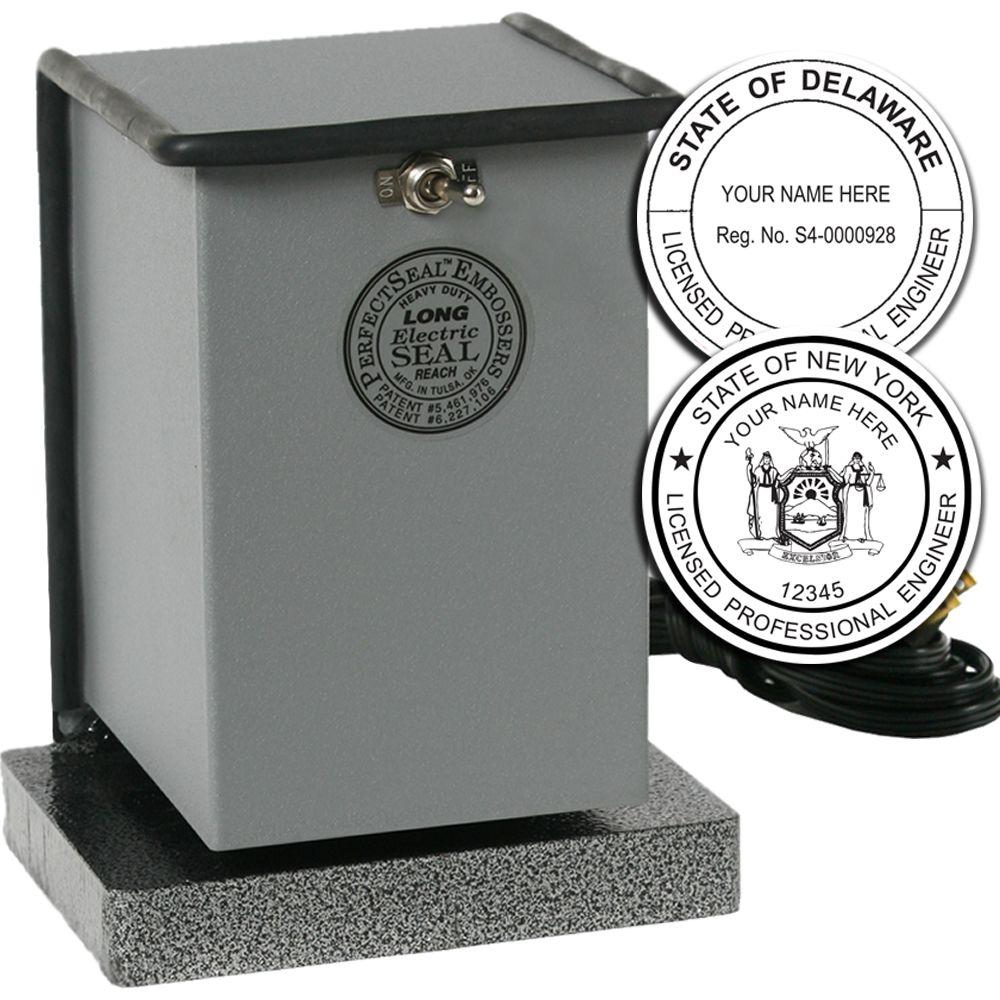
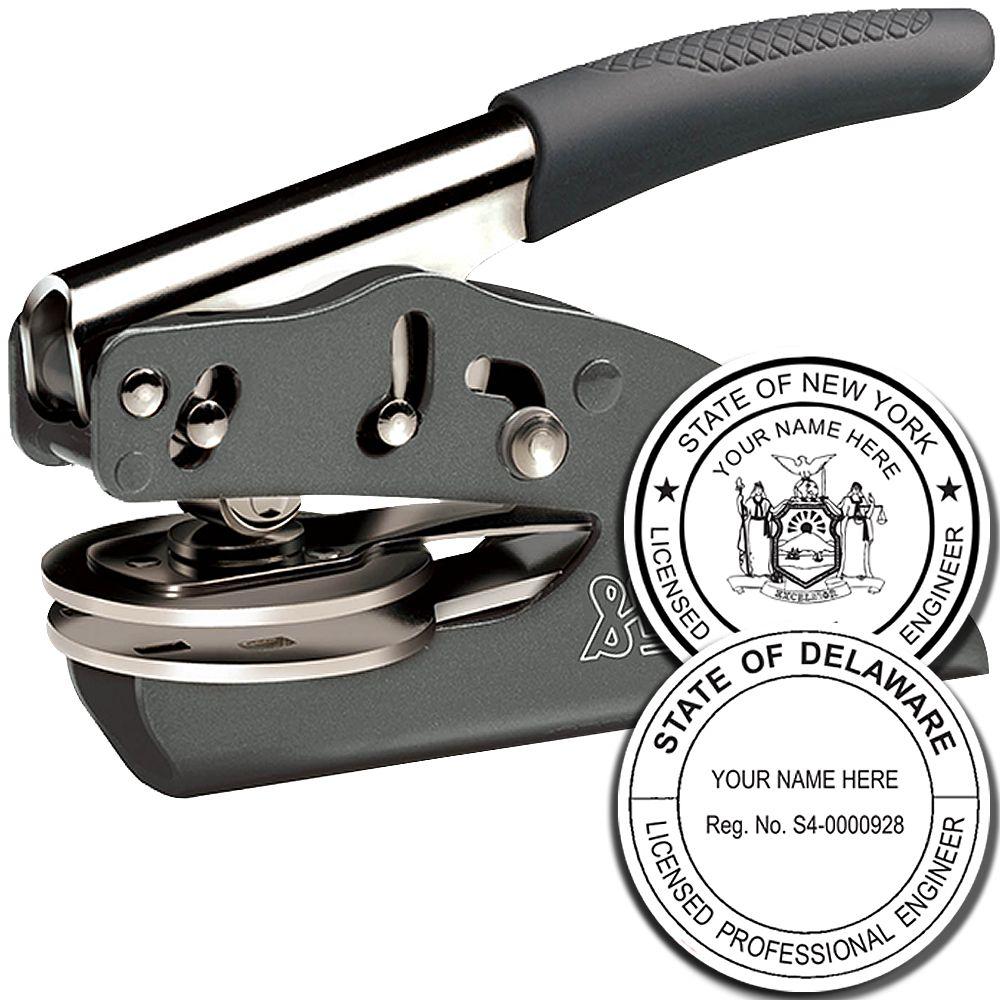
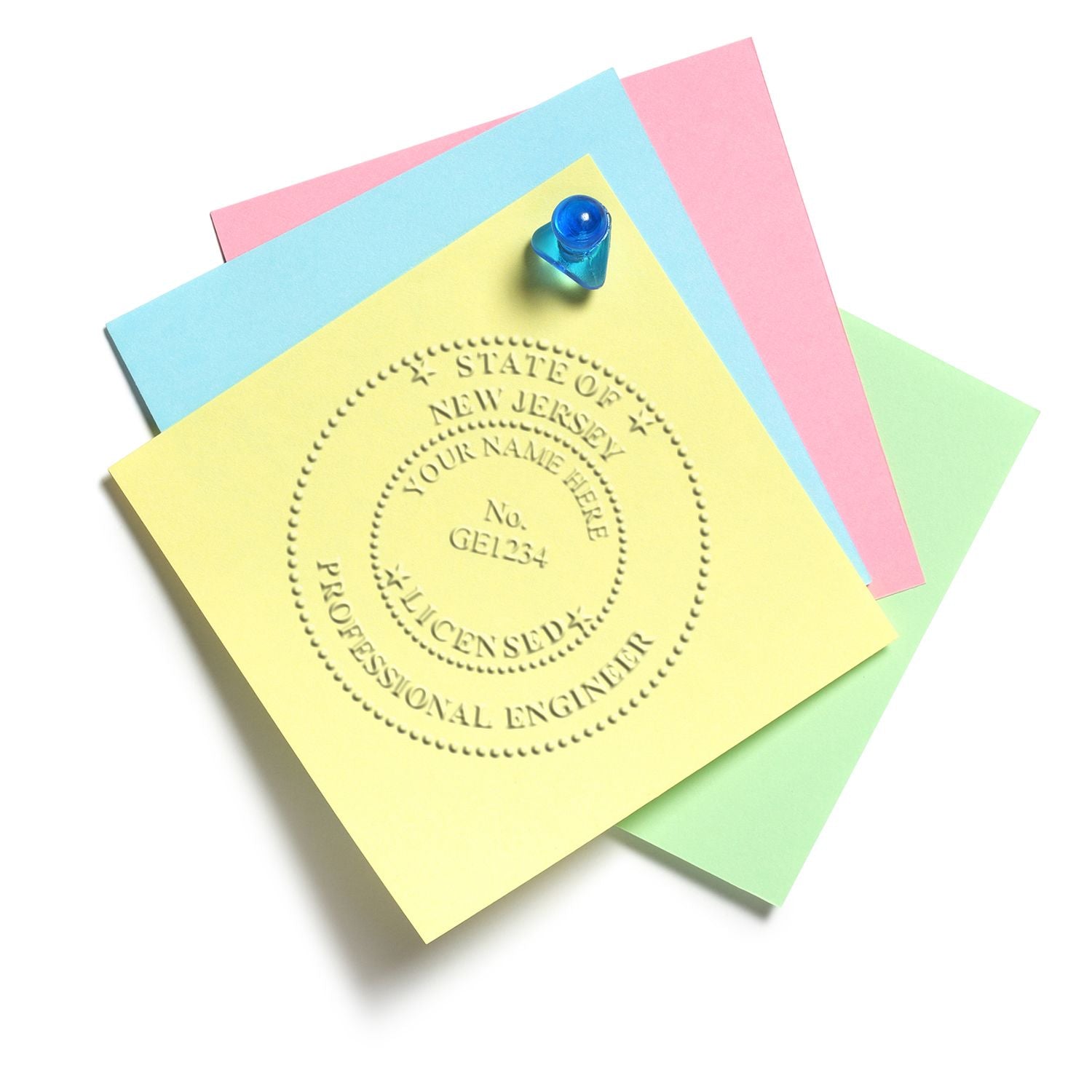
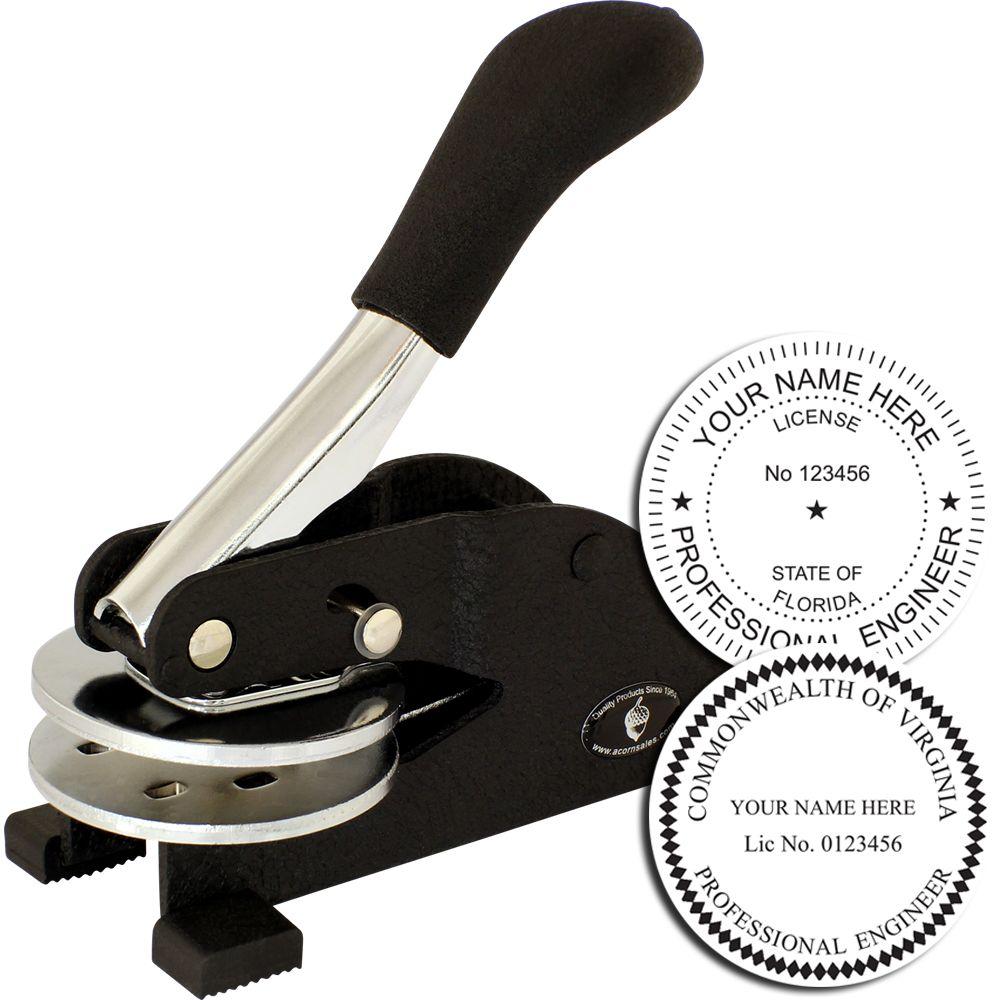
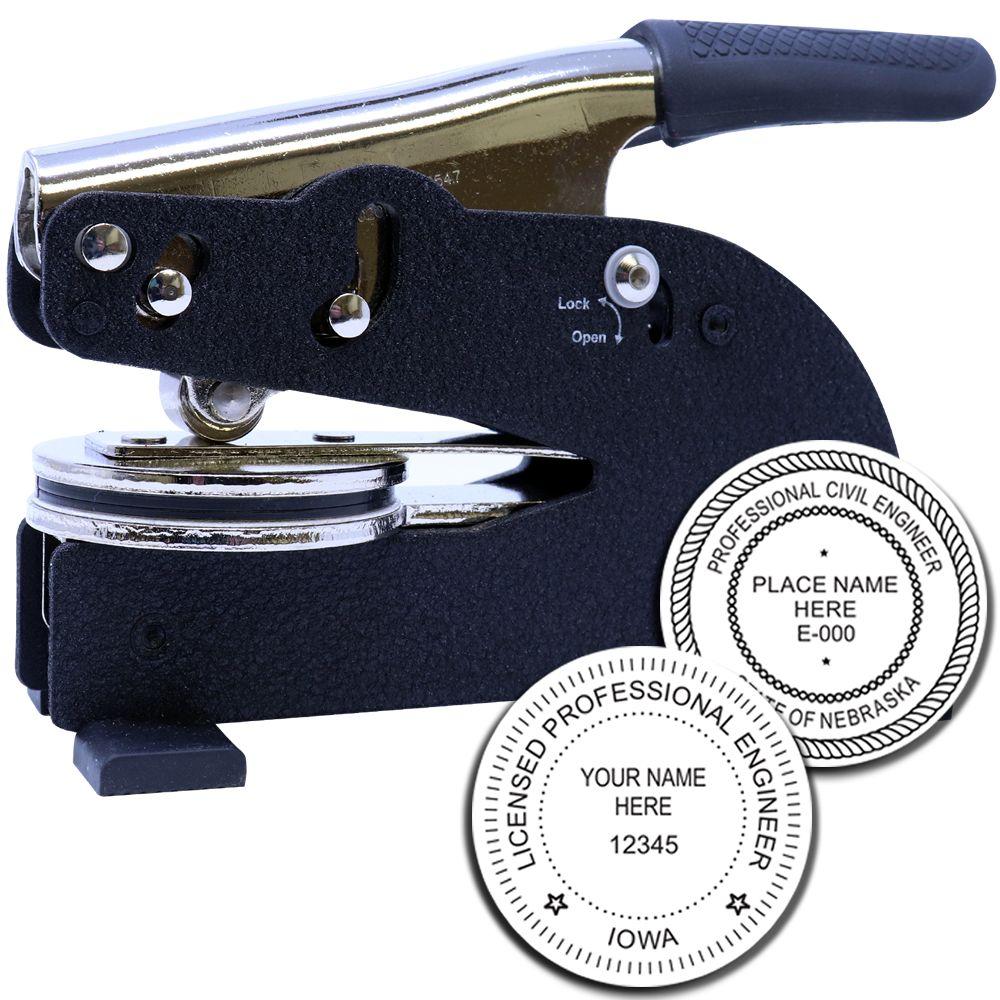
The rule is written in terms of “The impression or image of the seal/stamp”, which covers an embosser that makes an impression and an inked stamp or applied graphic that makes an image. RCW 18.43.070 accepts “the seal or a facsimile”. Nothing restricts the device to one technology. The safe buy is an inked rubber or self-inking stamp sized so all four legend items stay fully legible, since legibility is the only dimensional test the rule imposes. An embosser alone risks failing that test on reproduction.
Signing and dating
Washington is unusually permissive about the signature image and unusually strict about where it goes. The signature must be “Original and written by hand, or a scanned image of an original, handwritten identification”, and it must be “Permanently affixed to the document(s) being certified”, “Applied to the document by the identified licensee”, and “Placed directly over the seal/stamp of the licensee.” So a scanned signature is lawful here, unlike Florida and North Carolina, but it must be the licensee who applies it, and it goes across the seal rather than beside it. The date is the date of signature, listed as a separate element from the seal and the signature in WAC 196-23-020.
Preliminary drawings still get stamped, and the signature goes on top of the seal
Most states treat a preliminary drawing as the thing you do not stamp. Washington inverts that. WAC 196-23-020(2) says preliminary documents must be clearly identified as preliminary and then says they must be stamped, but need not be signed or dated. An unstamped preliminary set released to a client is the non-conforming case here, not the cautious one.
Which documents must be sealed
Final documents, defined as plans, specifications, plats, surveys, land descriptions as defined in WAC 332-130-020, reports and as-built documents. Every page of a plan set must carry the seal, signature and date. Specifications need the seal only on the portion the licensee is responsible for, and the rule states that nothing in it should be read to require each page of a specification to be sealed. Preliminary documents are the notable carve-out and they are not fully exempt: they must be clearly identified as preliminary and “must be stamped, but need not be signed or dated by the licensee.” Design revisions to final plan or plat sheets must identify the revisions on each sheet and carry the name, seal, signature and date. A licensee who reviews another licensee’s work seals, signs and dates the review report.



Electronic and digital seals
The board does not name a product or a certificate authority. WAC 196-23-070(2) defines a digital identification as an electronic authentication process attached to or logically associated with an electronic document, which may include a scanned or digitized signature, and requires that it be “Unique to the licensee using it”, “Capable of independent verification”, “Under the exclusive control of the licensee using it”, and “Linked to a document in such a manner that the digital identification is invalidated if any data in the document is changed.” That is a functional standard, so any cryptographic signature meeting all four qualifies.
Renewal, lapse and retirement
RCW 18.43.080(1) provides that certificates of registration and certificates of authorization “are valid for a period of time as determined by the board” and that if a completed renewal application has not reached the board by the expiration date, “the license is invalid.” RCW 18.43.070 then makes it unlawful to use the seal after the certificate expires or is revoked unless it is renewed or reissued. Continuing professional development is not a universal condition: RCW 18.43.080(2) withholds renewal for a professional land surveyor who has not completed the required hours, and imposes no such condition on a professional engineer. Nothing requires the seal to be surrendered or destroyed, and nothing changes the certificate number on renewal.
Firm registration
A firm needs a certificate of authorization but its number does not go on the document. A corporation or a limited liability company practicing engineering or land surveying must file for and hold a certificate of authorization and must designate a registered engineer or land surveyor in responsible charge. Professional service corporations under chapter 18.100 RCW and professional limited liability companies are exempt from applying. What appears on the work is the individual’s seal: “All plans, specifications, designs, and reports when issued in connection with work performed by a corporation under its certificate of authorization shall be prepared by or under the direct supervision of and shall be signed by and shall be stamped with the official seal of a person holding a certificate of registration under this chapter.” The identical sentence governs limited liability companies. No firm seal exists and no firm number is required on the sheet.
What to check before you order
Build to legibility, not to a number: there is no prescribed diameter, and the only dimensional test is that all four legend items stay fully legible, including with a signature written across the face. Those four items are your name exactly as it appears on your wall certificate, your certificate number, the state name, and the full professional legend, spelled out. Copy the ring layout from the figure printed in WAC 196-23-010. Both an impression device and an inked stamp are lawful, and an inked stamp is the safer single purchase. No licensure check is imposed before your seal is made.
Browse professional engineer stamps and seals.
- Professional Engineer Stamp Requirements You Can’t Ignore
- The Best Washington Engineer Seal Embosser for Your Needs
- Washington Engineer Embossing Seals
Frequently asked questions
Do I need a PE stamp in Washington?
Yes. RCW 18.43.070 requires each registrant to obtain a seal of a design authorized by the board and to stamp plans, specifications, plats and reports with that seal or a facsimile. The board rule is where the working test sits: “Any final document must contain the seal/stamp, signature and date of signature of the licensee who prepared or directly supervised the work.” Final documents are defined in the same rule as “those documents that are prepared and distributed for filing with public officials, use for construction, final agency approvals or use by clients.”
What size should a Washington PE stamp be?
No size is specified. WAC 196-23-010 sets a legibility standard rather than a dimension: the impression or image must “be of a size that assures full legibility” of the four required items. Because the signature is written across the face, size the device so the name, number, state and legend all stay readable under it.
What has to be on a Washington PE seal?
Four items, per WAC 196-23-010: State of Washington, the legend registered professional engineer or registered professional land surveyor, the certificate number, and the licensee’s name as shown on the wall certificate. The legend is the full phrase, not the abbreviation PE. The name is the wall certificate name, so a preferred name, a nickname or a changed married name not yet updated with the board does not belong on the die. The rule prints the authorized design as an illustration, so copy the ring layout from the board’s figure rather than reconstructing it.
Where does my signature go on a Washington sealed document?
Directly over the seal. WAC 196-23-070(1) requires the signature to be “Original and written by hand, or a scanned image of an original, handwritten identification,” “Permanently affixed to the document(s) being certified,” “Applied to the document by the identified licensee,” and “Placed directly over the seal/stamp of the licensee.” Signing tidily in a box beside the seal does not match the rule text. The date is listed separately from the seal and the signature in WAC 196-23-020(1) and is the date of signature.
Can I use a scanned signature in Washington?
Yes. A scanned image of an original handwritten identification is expressly acceptable under WAC 196-23-070(1)(a), which is the opposite of the rule in Florida and North Carolina. The conditions are that the image be of a genuine handwritten original, that the identified licensee apply it, and that it be permanently affixed to the document.
Do preliminary drawings get stamped in Washington?
Yes. WAC 196-23-020(2) requires preliminary documents to be clearly identified as preliminary and then says they “must be stamped, but need not be signed or dated by the licensee.” An unstamped preliminary set released to a client is the non-conforming case here, not the cautious one.
Does every page of a plan set need the stamp?
Every page of a plan set, yes. Specifications are different: the seal is needed only on the portion the licensee is responsible for, and the rule states that nothing in it should be read to require each page of a specification to be sealed. Final documents are defined as plans, specifications, plats, surveys, land descriptions as defined in WAC 332-130-020, reports and as-built documents. Design revisions to final plan or plat sheets must identify the revisions on each sheet and carry the name, seal, signature and date, and a licensee who reviews another licensee’s work seals, signs and dates the review report.
Embosser or inked stamp for Washington?
Either is lawful, and an inked stamp is the safer single purchase. The rule speaks of “The impression or image of the seal/stamp,” which covers an embosser that makes an impression and an inked stamp or applied graphic that makes an image, and RCW 18.43.070 accepts “the seal or a facsimile.” Nothing restricts the device to one technology. Since legibility is the only dimensional test, an embosser alone risks failing it on reproduction.
What does Washington require for a digital signature?
A four part functional standard and no named product. WAC 196-23-070(2) defines a digital identification as an electronic authentication process attached to or logically associated with an electronic document, which may include a scanned or digitized signature, and requires that it be “Unique to the licensee using it,” “Capable of independent verification,” “Under the exclusive control of the licensee using it,” and “Linked to a document in such a manner that the digital identification is invalidated if any data in the document is changed.” Any cryptographic signature meeting all four qualifies. No certificate authority is named.
Does a Washington firm number go on the sheet?
No. A corporation or limited liability company practicing engineering or land surveying must hold a certificate of authorization and designate a registered engineer or land surveyor in responsible charge, though professional service corporations under chapter 18.100 RCW and professional limited liability companies are exempt from applying. What appears on the work is the individual’s seal: “All plans, specifications, designs, and reports when issued in connection with work performed by a corporation under its certificate of authorization shall be prepared by or under the direct supervision of and shall be signed by and shall be stamped with the official seal of a person holding a certificate of registration under this chapter.” The identical sentence governs limited liability companies. No firm seal exists.
What happens to my seal if my Washington certificate lapses?
You may not use it. RCW 18.43.080(1) provides that certificates are valid for a period determined by the board and that if a completed renewal application has not reached the board by the expiration date “the license is invalid,” and RCW 18.43.070 makes it unlawful to use the seal after the certificate expires or is revoked unless it is renewed or reissued. Continuing professional development is not universal: RCW 18.43.080(2) withholds renewal for a professional land surveyor who has not completed the required hours and imposes no such condition on a professional engineer. Nothing requires the seal to be surrendered or destroyed, and the certificate number does not change on renewal, so a Washington stamp is a one time purchase.
Is older Washington seal guidance still accurate?
Check the date. WAC 196-23-010 was amended by WSR 25-02-004, filed 18 December 2024 and effective 18 January 2025, and WAC 196-23-020 was amended by WSR 22-10-034 effective 28 May 2022. Guidance written before 2022 does not reflect the current plan-set and preliminary-document language.








