
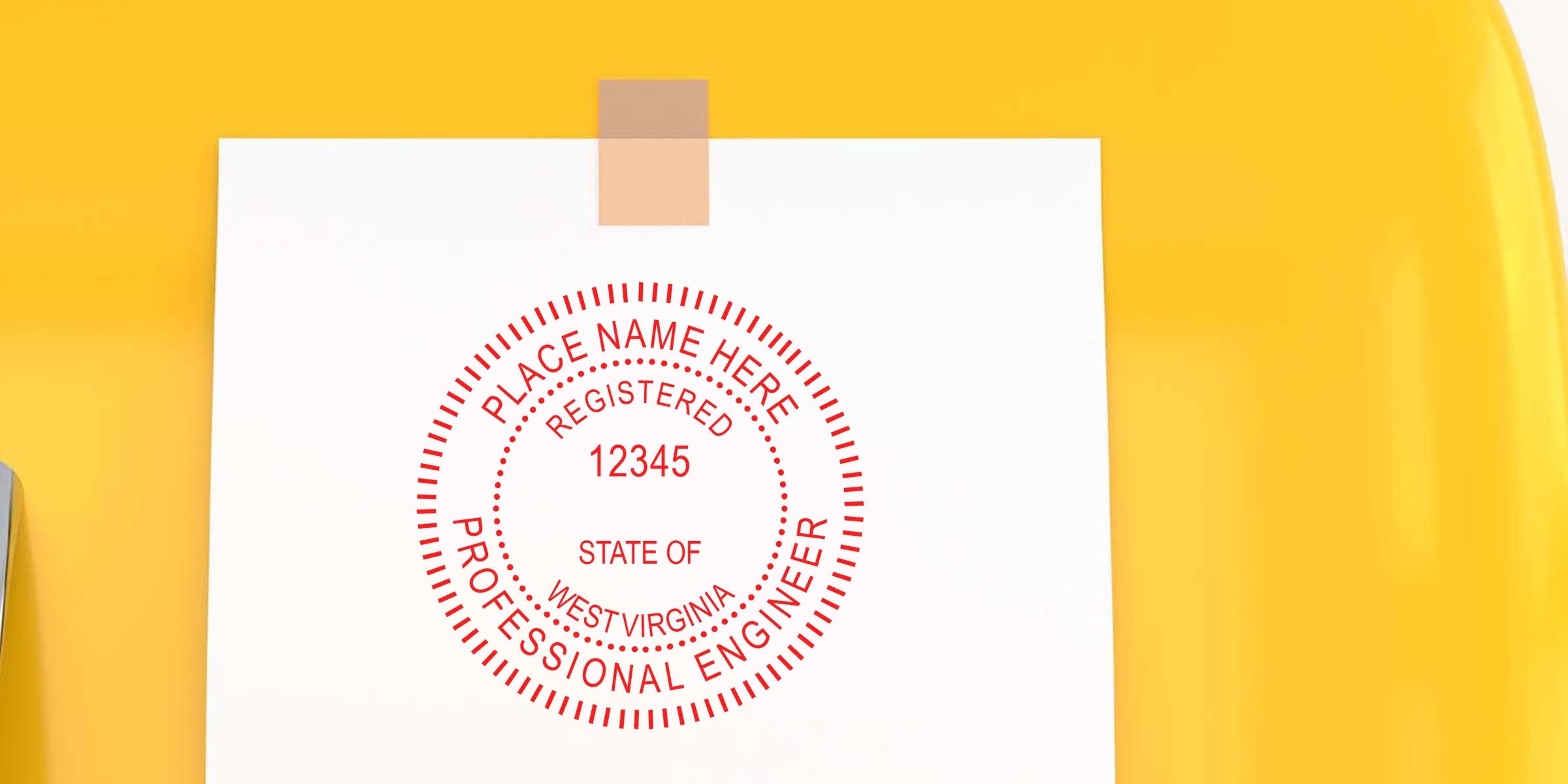
Do you plan to work as a Professional Engineer (PE) in West Virginia? If so, you’ve probably come across WV engineer stamp regulations in your research. Understanding these regulations can make or break your professional standing, especially when it comes to submitting official drawings, reports, and other technical documents. In a nutshell, your seal signals that you stand behind every detail of your work. That’s a huge responsibility, and it all starts with knowing the specific regulations tied to your West Virginia engineer stamp.
In this guide, you’ll learn what the rules cover, why they matter, and how to ensure you’re applying your seal correctly. You’ll also find practical tips about selecting a trustworthy supplier, keeping your records up to date, and steering clear of common pitfalls. By the end, you’ll feel confident that you can navigate every regulation seamlessly, whether you’re brand new to engineering in the Mountain State or just need a refresher.
Explore WV engineer stamp regulations
West Virginia, like every state, has its own set of guidelines for professional engineers. Some states are stricter than others, but the bottom line remains: you must follow WV engineer stamp regulations to stay clear of legal troubles and solidify your credibility with clients and peers.
Why West Virginia requires a PE seal
Ever wonder why a seal is even necessary? By law, a PE seal signifies that a licensed engineer has verified the contents of the plans or documents. When you stamp a drawing, you’re effectively saying, “I vouch for this design.” That promise provides confidence for everyone involved, from the local municipality green-lighting your project to your client footing the bill.
- A seal offers a quick visual cue that all technical evaluations have been handled by a qualified professional.
- It helps regulatory agencies and clients hold you accountable if something goes off track.
- It also boosts public safety by ensuring vital structures, systems, and processes are overseen by competent individuals.
What regulations typically cover
Although regulations can feel dense, they’re broadly concerned with a few key areas:
- Qualifications and licensure: You must hold a valid West Virginia PE license before you seal anything.
- Use of your seal: The rules specify how you apply your seal, whether that’s physical stamping or digital stamping.
- Document types: You’ll need to know exactly which documents require a signature and seal, such as construction drawings, engineering reports, or final design plans.
- Format and design: Some states dictate the size, shape, and content of your seal, and West Virginia is no exception.
Keeping these aspects in mind helps you remain compliant and protects your professional reputation. If you’re specifically looking for the correct seal format, your best bet is reading up on current legislation or the official West Virginia State Board of Registration for Professional Engineers guidelines. It’s also wise to keep an eye out for any updates to these policies that might come down the line.
Recognize the importance of compliance
So, why does compliance matter so much? Compliance isn’t merely about ticking a box or collecting a piece of paper you rarely use. It’s about safeguarding your career and retaining the trust that people place in your work.
By properly stamping and signing your professional documents, you:
- Demonstrate that you’re adhering to the highest standards.
- Protect your clients by guaranteeing the integrity of calculations and design choices.
- Enhance your legal defense if a conflict arises, since a correctly applied seal shows you followed official procedures.
Penalties for non-compliance
Failing to comply with WV engineer stamp regulations can lead to:
- License suspension or revocation, which halts your ability to practice engineering in the state.
- Significant financial penalties or fines, potentially draining your resources.
- Civil or even criminal liability if non-compliance leads to public harm or unsafe structures.
It’s a no-brainer to stay on top of the regulations. Falling behind or ignoring them entirely puts your livelihood at risk, not to mention the safety of the projects you manage. Luckily, with a bit of planning, compliance becomes part of your normal workflow rather than an unwelcome afterthought.
Understand WV PE stamp design
Your seal isn’t just a generic round stamp with your name on it. West Virginia has specific guidelines on how your seal should look, what text it needs to include, and sometimes even the exact dimension. Generally speaking, you can expect your name, your license number, and a reference to West Virginia’s professional engineering board in the outer ring.
Key design elements
Although exact design details may shift depending on the updated board rules, here are the nuts and bolts you’ll want to keep in mind:
- Name and license number: Your name should match the one the state board has on file.
- State designation: “State of West Virginia” or “West Virginia” typically appears around the border, reaffirming your sealed documents pertain to WV projects.
- PE identification: The words “Professional Engineer” should be prominent to confirm the credentials.
- Legibility: Check that all text is readable, from the outer ring to the center. If the print is too small, your stamp could be deemed invalid.
Approved formats and materials
You have options for physical and digital seals:
- Traditional rubber stamp: Easily adjustable and portable.
- Self-inking or pre-inked stamp: More convenient, as you won’t have to carry a separate ink pad around.
- Embossing seal: Offers a raised impression that is tamper-resistant but might be less clear when photocopied.
- Electronic seal: Used for digital documents if permitted by the state board. This approach streamlines submittals and can include security features like encrypted signatures.
Depending on how often you stamp documents, one format may fit better than another. If you’re regularly traveling to project sites, a self-inking stamp might be the easiest way to go. If you’re doing a lot of electronic plan submissions, an approved digital seal addresses your needs best.
Choose a trusted supplier
Once you know what your seal or stamp needs to look like, the next step is ordering from a reliable provider. The engineering profession places a high priority on precision, and that precision extends to the quality of your seal. A sloppy or incorrect stamp not only looks unprofessional, but it can also fail to meet official guidelines if, for instance, the lettering isn’t clear.
What to look for in a supplier
Your seal provider should offer:
- A strong track record: Look for a company with a robust history in creating engineer stamps and seals.
- Customization options: You’ll need a supplier who can match West Virginia’s specific requirements for layout and text.
- High-quality materials: A cheap-looking stamp reflects poorly on your professionalism, so check for durable construction.
- Timely delivery: If you’re facing a project deadline, you can’t afford unnecessary delays.
Why Acorn Sales stands out
If you’re seeking a reliable West Virginia PE seal, look no further than Acorn Sales. We’ve been a stamp and seal maker for 60+ years, catering to professionals nationwide. Our longstanding experience means we’ve mastered the quality control process, giving you a crisp, compliant impression every single time. We’re also a trusted provider of West Virginia PE stamps and West Virginia PE seals, as well as other state-specific items like the Washington PE stamp, if you happen to need credentials in multiple jurisdictions.
Here’s what you can expect when you work with Acorn Sales:
- Free digital seal with your purchase, giving you both a physical and electronic option.
- Fast service that meets tight deadlines.
- Expert guidance on WV engineering requirements, so you don’t have to break a sweat deciphering the fine print.
When you’re ready to order, you can also check out our WV professional engineer seal to see our current offerings and find the perfect fit for your professional needs.
Learn stamping best practices
Regulations define the concept of stamping, but you might be wondering how to integrate that process into your everyday workflow. After all, you don’t just need the right stamp. You need to know how, where, and when to apply it.
When and where to stamp
A general rule of thumb is to stamp final, issued-for-construction documents, along with any major revisions submitted afterward. Drafts typically don’t require a seal, but always confirm whether your client or the local jurisdiction needs a stamped version for preliminary reviews.
Below are a few guidelines to keep in mind:
- Stamp key pages: Start with the cover sheet or the first page of the report, plus any pages where critical calculations or designs appear.
- Sign near your seal: Regulations often require a handwritten or electronic signature directly adjacent to the stamp.
- No partial stamping: Don’t seal only selected details within a set of drawings. Either seal the entire set or break it into specialized sections for separate stamps if multiple engineers are involved.
Physical vs digital stamping
You may have heard buzz about digital stamping. Electronic seals are becoming more common, and West Virginia allows them under certain conditions. Typically, you must use an encrypted form of electronic signature software that ensures:
- The seal can’t be easily copied or altered.
- The person sealing the document truly has the authority to do so.
- Each revision is traceable to the engineer who authorized it.
Digital stamping often comes in handy for large organizations or remote work settings where physically signing and shipping documents is cumbersome. However, some clients might still prefer a tangible, inked stamp, especially if they’re dealing with older processes or prefer to keep each sheet physically signed and stored.
Keep your records current
Stamping is only part of the puzzle. To fully align with WV engineer stamp regulations, you’ll also need to stay on top of license renewals and maintain proper documentation related to your projects. By building a system for tracking your license status and recording each stamped document, you’ll ensure you can prove compliance if you ever face an audit.
Renewals and continuing education
West Virginia, like many states, requires periodic license renewals for PEs. You’ll see continuing education (also called PDH—Professional Development Hours) in the mix too, which might entail:
- Attending conferences or workshops
- Completing online courses on engineering standards and safety
- Gaining new proficiencies in relevant software or design tools
Keep clear records of:
- Your renewal date, so you never miss it
- The list of courses you’ve completed, along with approved PDH credit
- Confirmation of any fees or forms required by the state board
When it’s time to renew, you’ll be able to whip out these records and show the board you’ve met every requirement.
Audits and documentation
You might never experience an audit in your engineering career, but it pays to be prepared. When the state board or another regulatory body checks your compliance, they may ask for:
- Copies of projects you’ve stamped
- Documentation of where and when you used your seal
- Proof of your continuing education credits
- Any email threads or notes demonstrating your oversight on a project
Get into the habit of organizing your engineering documents by project. Within each project folder, keep a log that lists the documents you sealed, along with the date each was filed. If you’re using digital stamps, maintain version histories. This level of detail can be a lifesaver if the board ever calls you to demonstrate your compliance.
Avoid these common pitfalls
Nobody’s perfect, and even experienced engineers can slip up. By spotting these pitfalls before they become real issues, you’ll avoid the headaches of redoing work, paying fines, or facing disciplinary action.
Document errors
If you’re in a hurry, you might accidentally place your PE seal on a version of the plans that isn’t final or has mislabeled elements. Always double-check:
- The revision number on each sheet
- The spelled-out scope of the project
- The correct detail references and schedules
Sealing incorrect documents makes you responsible for any confusion. Plus, you risk legal exposure if the final built structure differs from the sealed plans.
Misuse of the seal
Using your seal on a project outside your area of expertise is a surefire way to invite trouble. The hallmark of any PE license is competence in a specific branch of engineering. For instance, a civil engineer might not have the background to seal electrical design elements. Misrepresenting your skills can lead to serious sanctions or lawsuits if something goes wrong.
Inconsistent usage
Sometimes, an engineer will meticulously stamp some drawings but forget to seal others, especially if the submittal includes many sheets. This partial sealing can cast doubt on the entire set’s validity. As a best practice:
- Keep a structured approach—seal each new edition or addendum as soon as it’s finalized.
- If multiple engineers are working on the project, determine who is responsible for which sections early on so you don’t stamp each other’s work by accident.
Review final thoughts
Mastering WV engineer stamp regulations can feel like juggling an extra workload on top of your day-to-day responsibilities. But in most cases, all it takes is a few good habits to integrate these requirements into your normal project flow. Before you know it, stamping and organizing your work becomes second nature, giving you peace of mind that you’re always on the right side of any compliance check.
If you’re in the market for a West Virginia PE stamp or seal, Acorn Sales provides the reliability and quality you need, including free digital seals with every purchase. Plus, you’ll gain peace of mind from over 60 years of experience in the stamp and seal industry. Whether you’re looking to keep your license active or you’re branching into a new specialty, having the right supplier can streamline your setup and help get your projects off to a great start.
Whenever a new project rolls in, simply consult your checklist: confirm your license, ensure your stamping tools meet West Virginia’s guidelines, and properly seal the final documents. With each stamped sheet, you reinforce your professionalism and commitment to safety. Armed with this information, you can step forward confidently into your next project—no matter how large or complex—knowing you’ve got every requirement covered.
Frequently Asked Questions
How long does a WV engineer stamp remain valid?
Your physical stamp doesn’t come with an official expiration, but your license does. You must renew your West Virginia PE license according to the state’s schedule, typically every two years. During that period, your stamp remains valid as long as you maintain your license. If your license expires, you must not use your seal until your status is reinstated.
Can I use my West Virginia PE stamp in other states?
Generally, no. Each state administers its own PE license and has unique requirements for practicing. Even if your stamp physically works, your West Virginia license isn’t considered valid proof of licensure elsewhere. If you want to seal documents in another state, such as Washington, you’ll typically need to earn or transfer that state’s PE credential.
Is there a difference between a seal and a stamp?
Technically, “seal” refers to the concept of marking a document to certify its authenticity. A “stamp” is one option for applying that mark. You could also use an embosser or an electronic seal. In practice, many engineers say “seal” and “stamp” interchangeably, but the end goal remains the same: to validate your work as a licensed professional.
When should I renew my West Virginia PE license?
You’ll want to check the state board’s timeline. Most PEs in West Virginia renew every two years, and some continuing education hours may be required to qualify for renewal. It’s wise to mark the expiry date on your calendar or set an annual reminder to check on your PDH credits. Missing your renewal deadline can interrupt your ability to practice legally.
What do I do if my stamp or seal is lost or damaged?
If your physical stamp becomes unreadable or goes missing, your best move is to order a replacement promptly. You can continue using a digital seal if you have one, as long as it meets all West Virginia guidelines. To stay fully prepared, note your stamp’s serial number or order details. That information helps your supplier—like Acorn Sales—quickly replicate your design and get you a new stamp in record time.








