
Written by Acorn Sales Company, manufacturing stamps and seals since 1964 · Reviewed by Holly R, VP of Sales and Marketing at Acorn Sales, against Michigan Board of Foresters, administered by the Michigan Department of Natural Resources, Forest Resources Division on 22 September 2026 · Updated 22 September 2026
Michigan prescribes no forester seal in any source we could read, and the registration itself is voluntary. The Department of Natural Resources states it in its own words in the program FAQ: “The program is 100% voluntary,” and it is “not licensing.” We read the DNR Registered Forester Program page, the Registered Forester Program FAQs, the “Qualifications to be a Michigan Registered Forester” sheet and the Michigan Board of Foresters materials, and none of them mentions a seal or a stamp. There is no seal provision to quote, no design, no size and no device list.
One honest qualification before you read on. Part 535 of the Natural Resources and Environmental Protection Act, MCL 324.53501 to 324.53519, is the statute behind the program, and the state’s own legislature site is blocked to our tools, so we did not read the statutory text and we do not quote it. Nothing in the DNR material suggests a seal is hiding there, and the Board’s own policy documents prescribe none, but we would rather name the gap than write over it. If a seal matters to your work, ask the DNR Forest Resources Division before ordering anything. The rest of this page is about what a professional mark can honestly do for a Michigan registered forester, which is a real thing even where the state requires nothing.
Michigan forester seal requirements at a glance
| Requirement | Michigan rule | Source |
|---|---|---|
| Seal required | No. Not addressed anywhere we could read. We checked the DNR Registered Forester Program page, the DNR Registered Forester FAQ, the DNR qualifications sheet and the Michigan Board of Foresters materials, and none contains a seal or stamp provision. The verbatim text of MCL 324.53501 to 324.53519 is blocked to us, so we report this as our finding on the readable sources rather than as a complete statutory search. | Michigan DNR, Registered Forester Program and Registered Forester Program FAQs |
| Required elements | Not addressed. There is no seal provision, so there is no element list. We looked for one in every DNR and Board document we could open and found none. | Michigan DNR, Registered Forester Program and Registered Forester Program FAQs |
| Size and shape | None is published. No diameter, dimension or shape appears in any Michigan source we could read. We did not infer one from a neighboring state or from any product. | Michigan DNR, Registered Forester Program and Registered Forester Program FAQs |
| Device allowed | Not addressed. No embosser, stamp or electronic device is named or excluded, because no seal is prescribed in the first place. | Michigan DNR, Registered Forester Program and Registered Forester Program FAQs |
| Signature and date | Not addressed. No Michigan source we could read requires a registered forester to sign, date or endorse a document in any prescribed form. | Michigan DNR, Registered Forester Program and Registered Forester Program FAQs |
| What must be sealed | Nothing. No document type carries a sealing duty, because no seal exists in the program as published. | Michigan DNR, Registered Forester Program and Registered Forester Program FAQs |
| Electronic seal | Not addressed. No electronic or digital seal, digital signature or certificate provision appears in any DNR or Board material we read. | Michigan DNR, Registered Forester Program and Registered Forester Program FAQs |
| Renewal and lapse | Registration runs in 2 year periods. DNR publishes a $200 fee per 2 year registration period and requires “not fewer than 24 hours of continuing education every 2 years.” A Board reinstatement policy dated 2024 exists. Because there is no seal, nothing happens to a seal on lapse. | Michigan DNR, Registered Forester Program and Registered Forester Program FAQs; Michigan Board of Foresters reinstatement policy (2024) |
| Firm requirements | Not addressed. No firm registration, firm mark or business entity provision appears in the program material we read. | Michigan DNR, Registered Forester Program and Registered Forester Program FAQs |
| Regulator | Michigan Board of Foresters, administered by the Michigan Department of Natural Resources, Forest Resources Division. The DNR describes itself as fiduciary for the Board. | Michigan DNR, Registered Forester Program |
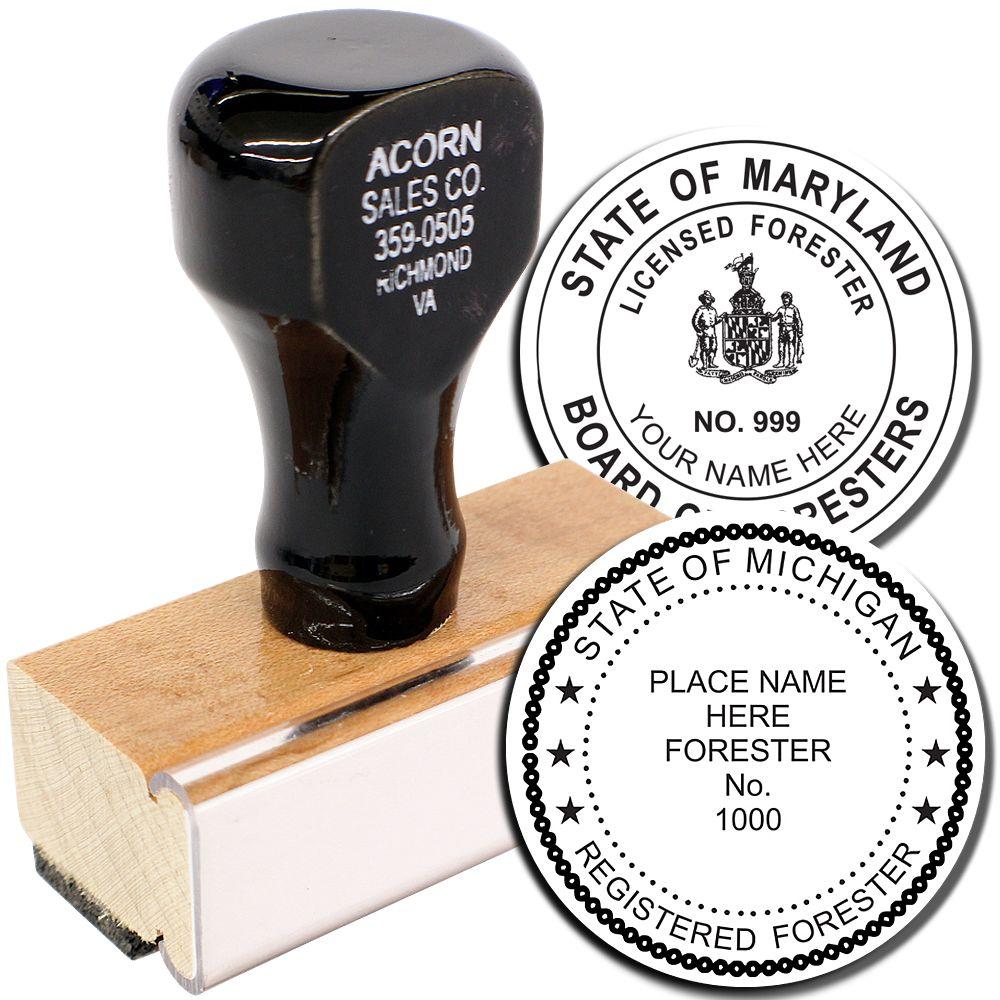

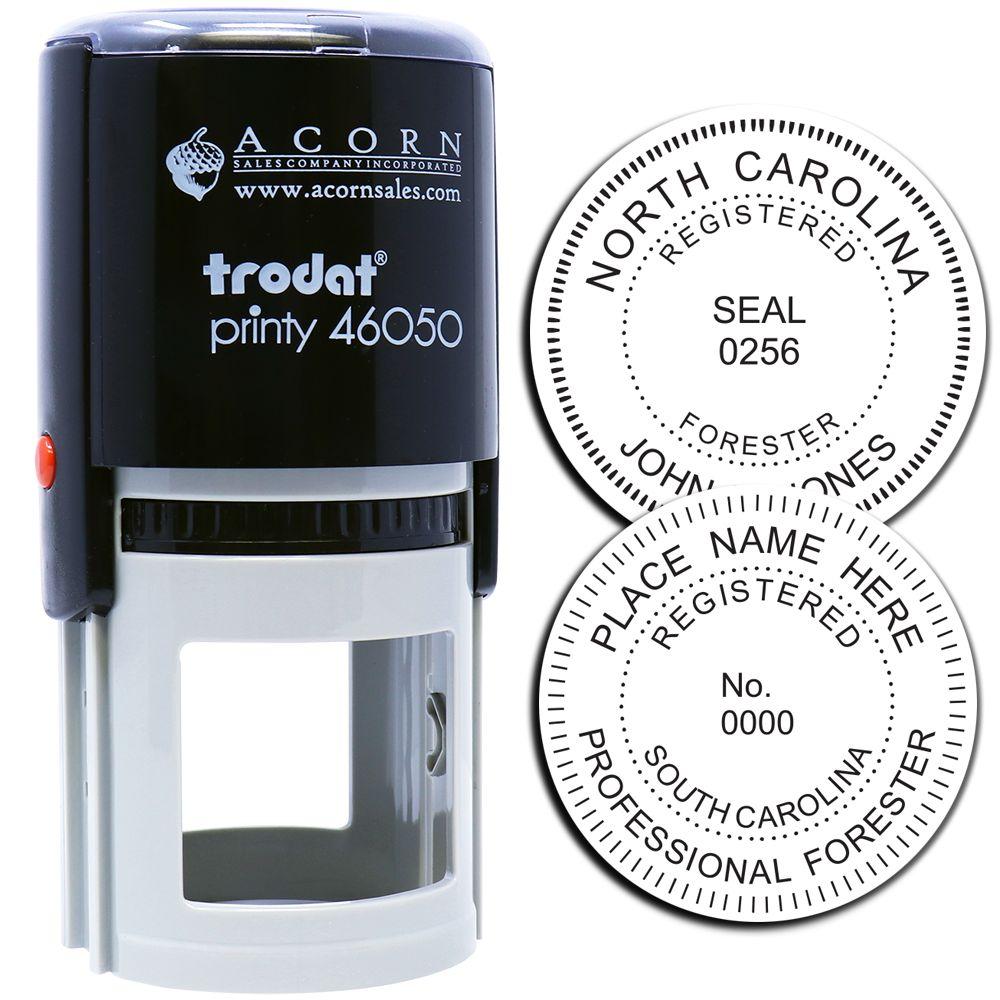

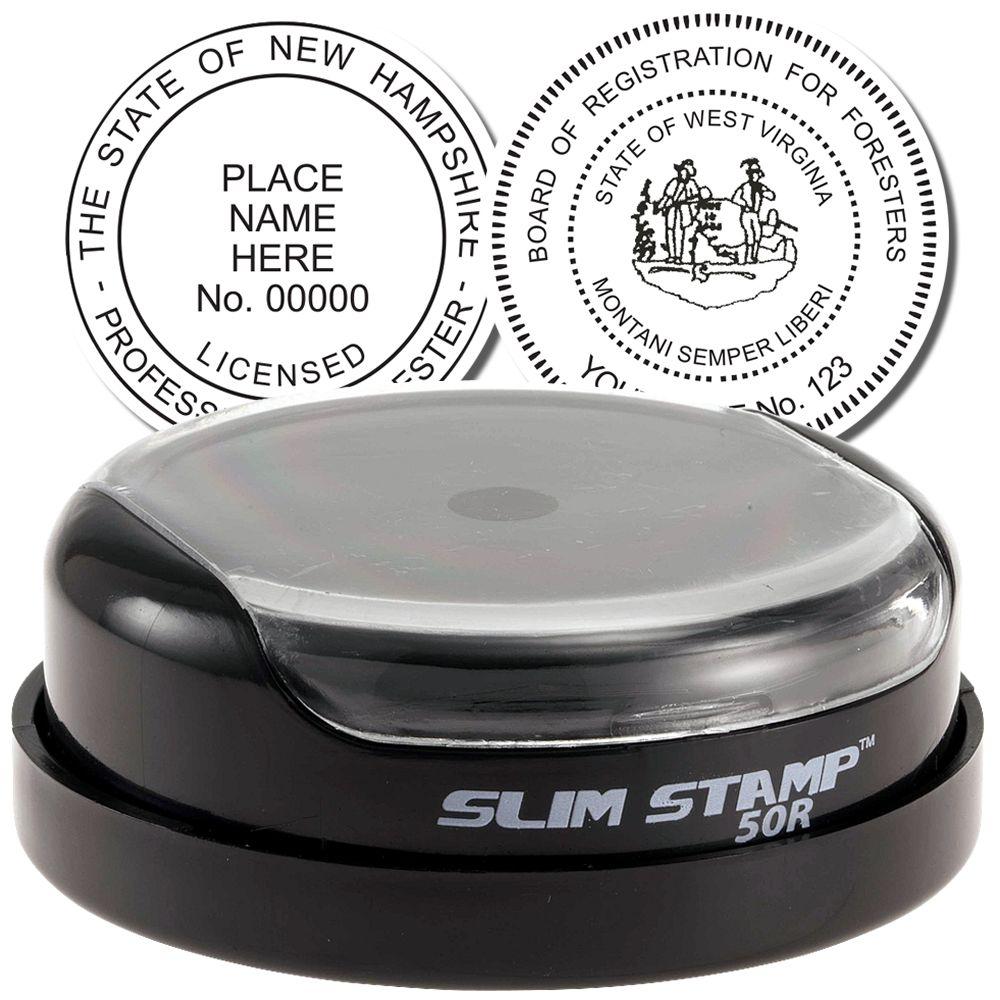

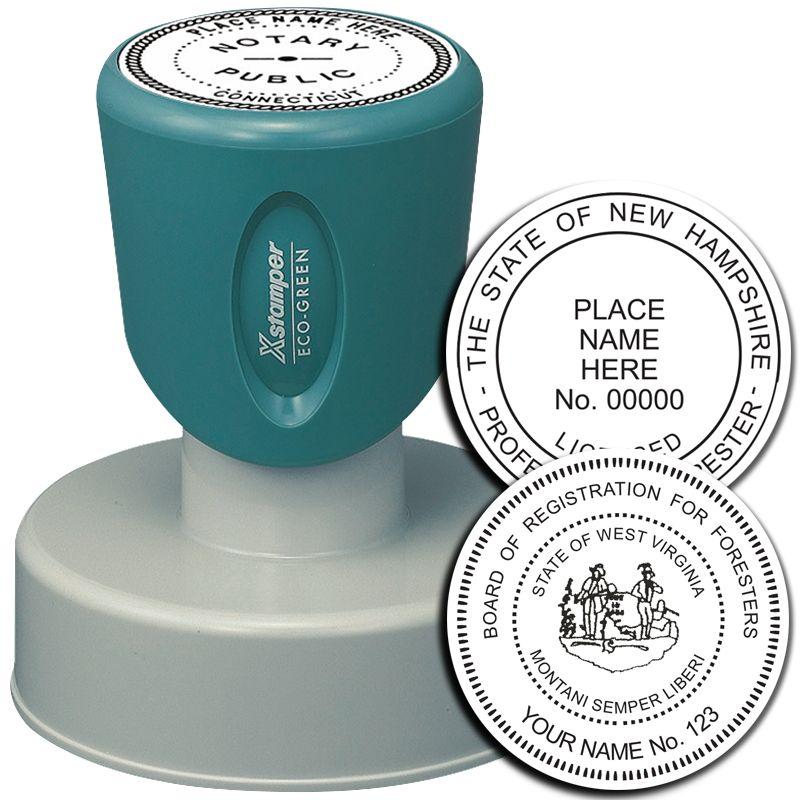
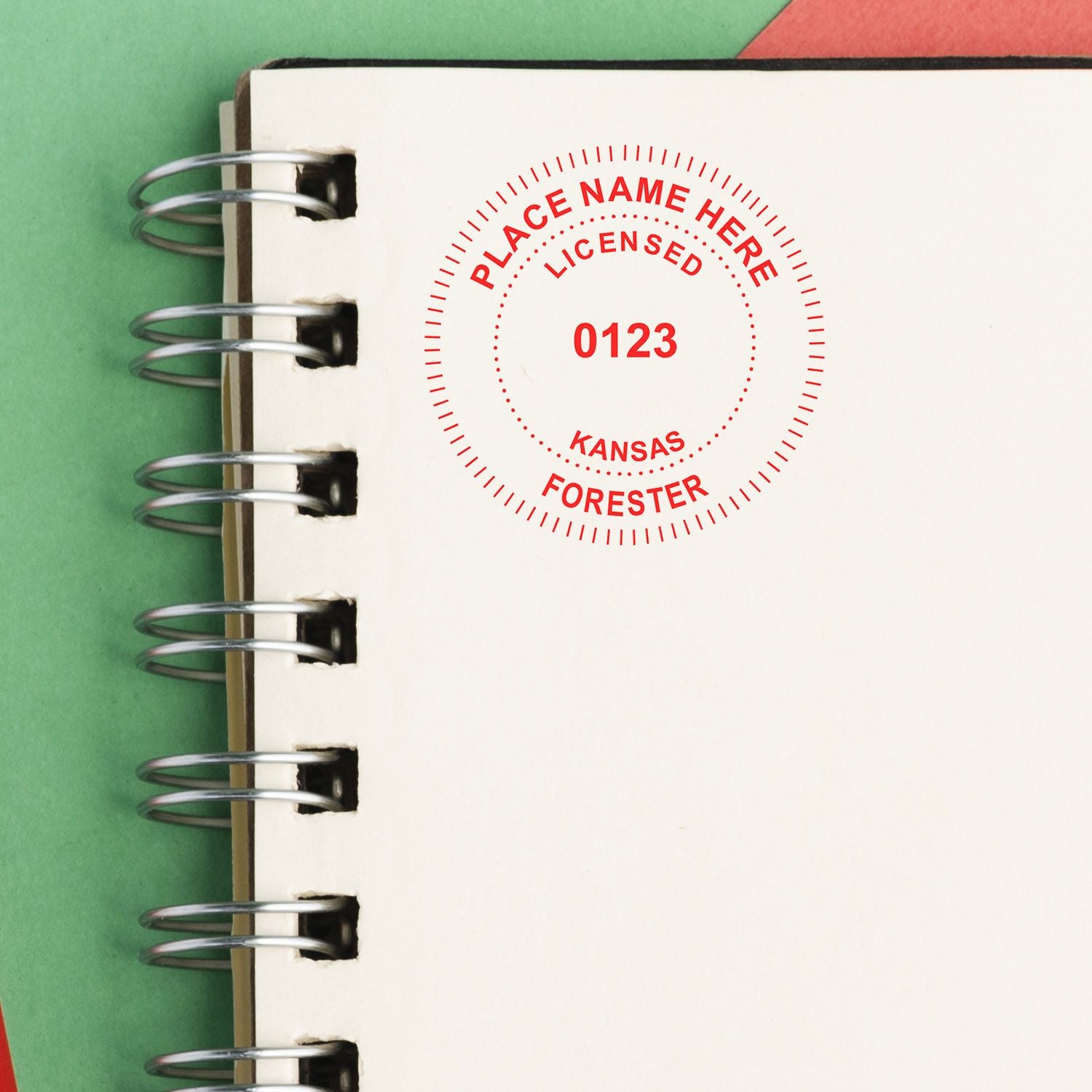
Does Michigan require a forester to have a seal?
No seal appears anywhere in the Michigan registered forester program as published. We went through the DNR Registered Forester Program page, the DNR Registered Forester Program FAQs, the DNR sheet titled “Qualifications to be a Michigan Registered Forester” and the Michigan Board of Foresters materials, including the Board bylaws. None of them contains a seal, a stamp, a design, a diameter or a device list.
That is a different finding from a state that considered the question and said no. Michigan does not appear to have addressed it at all, which fits the shape of the program. A voluntary registration that the DNR describes as “not licensing” has no documents it compels you to mark, so there is nothing for a seal rule to attach to.
What the Michigan program actually is
The DNR puts it plainly on its own program page: “Voluntary registration is a way to let landowners know you’re a professional, credentialed forester.” The FAQ is blunter still: “The program is 100% voluntary,” and it is “not licensing.” Registrants are referred to by DNR as Registered Foresters, abbreviated RF.
The statutory basis is Part 535 of the Natural Resources and Environmental Protection Act, 1994 PA 451, added by 2018 PA 116, which was House Bill 5001. The DNR’s own qualifications sheet cites “PA116 of 2018, Sec 53509”. So the program is recent, it sits inside the environmental code rather than the occupational licensing code, and it is administered through Board policy documents such as the Michigan Board of Foresters Bylaws rather than through a licensing rule set of the kind other states publish.
What we could not read, and why we are telling you
We did not read the statute. Part 535 runs MCL 324.53501 through 324.53519, and the state’s own publisher at legislature.mi.gov is blocked to our tools: automated retrieval is disallowed and a direct request is refused at our network boundary. We located the citation range through a republisher in order to name it correctly, and we quoted nothing from that republisher as operative text.
What that means for this page is a narrow but real limit. Our finding of no seal rests on the DNR and Board documents, which are the operating documents of the program and would be the natural home for a seal specification, and on the absence of any administrative rule establishing one. It does not rest on a reading of Part 535 itself. We are not going to pretend otherwise, and we would rather lose a sale than sell a device against a specification we could not confirm exists. If your work depends on the answer, ask the DNR Forest Resources Division directly before you order anything.
Whether the title is protected is also unresolved
A related question we could not settle. The DNR FAQ does not address whether an unregistered person may practice forestry in Michigan or call themselves a forester, and it is careful to say the program is not licensing. Whether Part 535 restricts the term registered forester, or the term forester, and whether any penalty attaches, is in the statute we could not read.
So Michigan does not sit cleanly in either of the usual categories. It is not a practice act like Vermont or South Carolina, and it is not a plain title act like North Carolina or West Virginia. It is a voluntary credential whose scope we cannot pin down from the readable sources. For a marking device, that argues for wording that describes the credential accurately and claims nothing beyond it.
What the DNR does publish: qualifications, fees and continuing education
The parts of the program that are well documented are the entry requirements and the upkeep. The qualifications sheet sets out who can register, citing PA116 of 2018, Sec 53509. Registration runs in two year periods. The DNR publishes a fee of $200 per two year registration period, and requires “not fewer than 24 hours of continuing education every 2 years.” A Board reinstatement policy dated 2024 covers registrants coming back after a gap.
None of that touches a seal, and there is no seal consequence on lapse because there is no seal. It does tell you something useful about the credential though. Twenty four hours of continuing education every two years is a genuine standard, and a landowner who understands that the RF after your name stands for something maintained is the audience a professional mark speaks to.
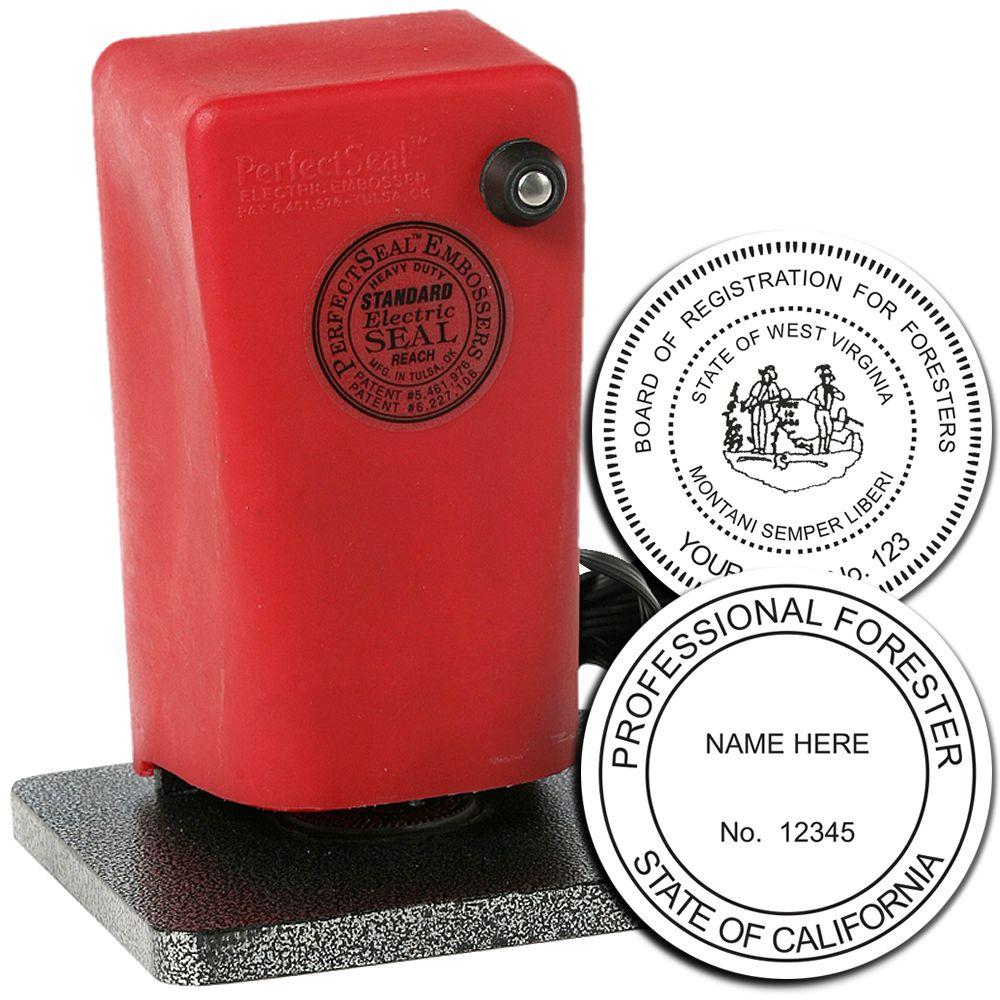

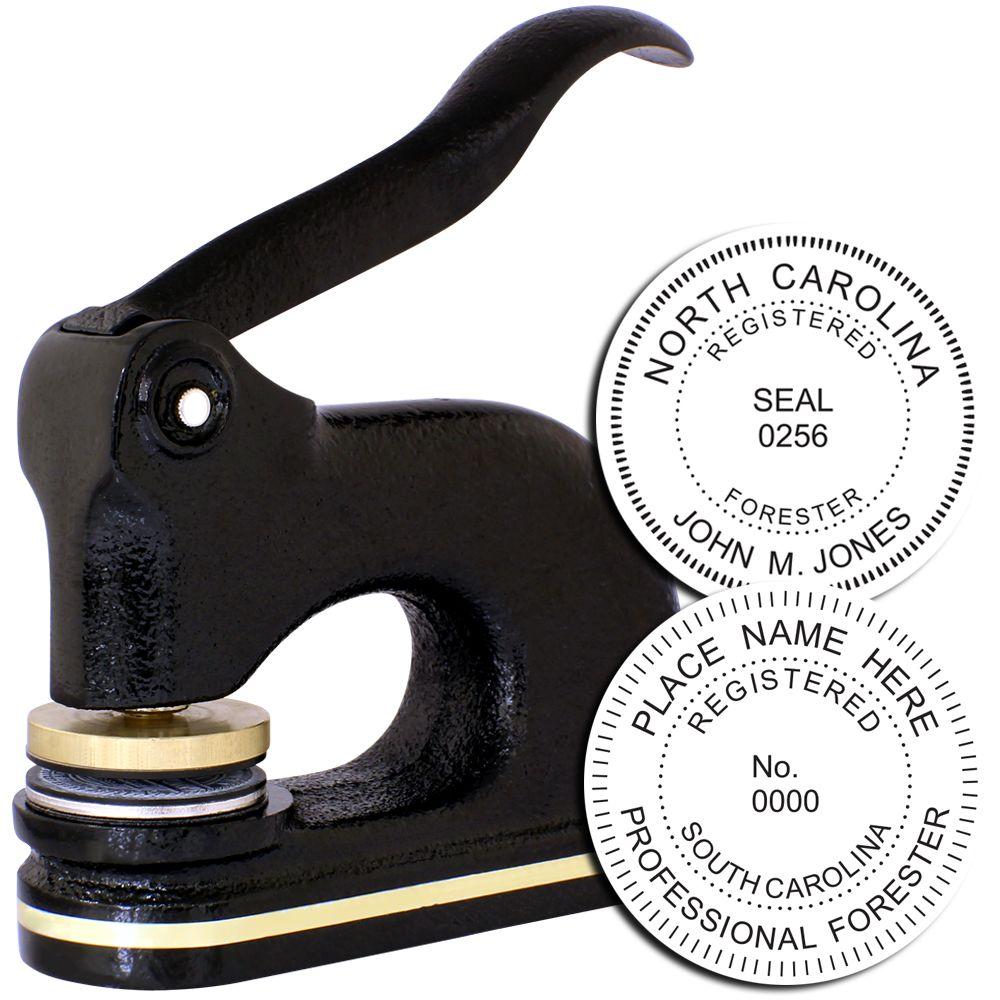

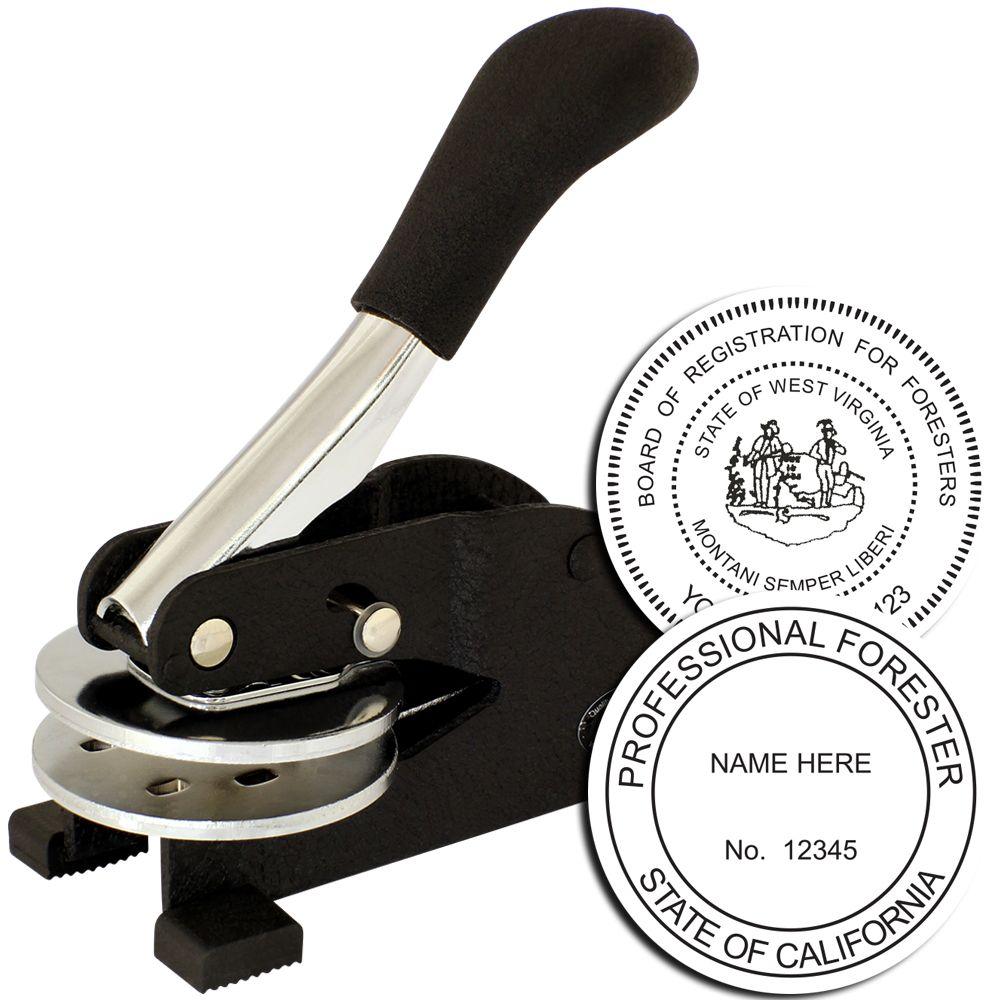


What a Michigan registered forester gets, and what nobody issues
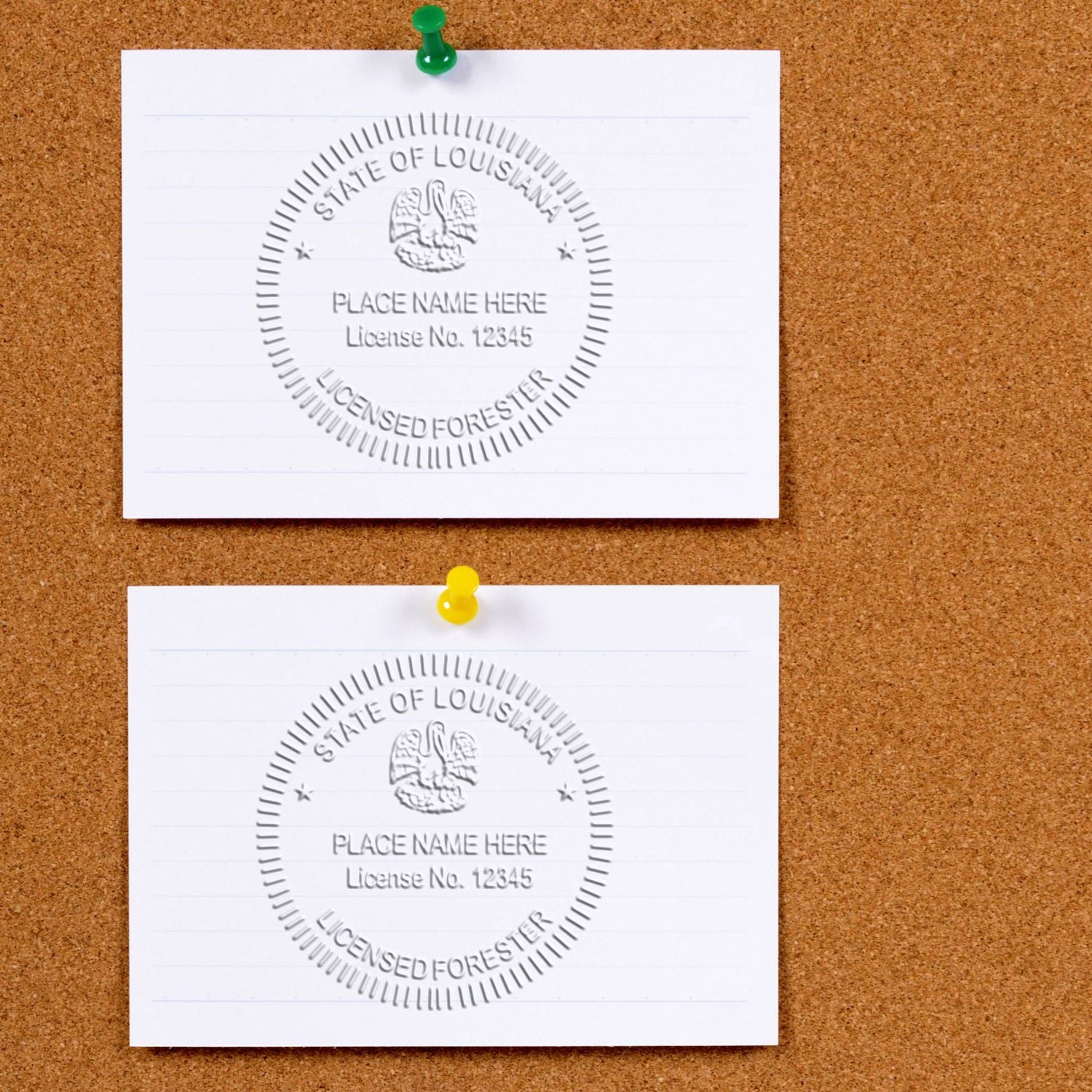
Worth being clear on this because it comes up in every state. Nothing in the Michigan program is a board issued seal. There is no device the DNR supplies, none that stays state property and none that has to be returned when a registration lapses. The Board and the Department issue a registration, not an instrument.
That means any marking device a Michigan registered forester uses is an ordinary professional purchase, made by you, designed by you, owned by you. It also means no supplier can offer you a “Michigan forester seal” made to a state specification, because there is no state specification. If you are shown one, ask which rule it is cut to. We could not find one.
The case for a professional mark anyway
Here is the honest version. Michigan requires nothing, so a stamp is a business tool rather than a compliance item, and the question is whether it earns its place on your deliverables.
What it does is identify the author of a document at a glance. A forest management plan, a stand prescription, a timber sale recommendation, a cruise summary or a letter of opinion usually leaves your office as a printed document or a PDF a landowner will print. A mark that prints your name, the Registered Forester designation and your registration number in one press tells the reader who stood behind the recommendation, separates your work from an assistant’s or a contractor’s, and gives a page of technical prose a finish that a typed line at the bottom does not. In a state where the credential is voluntary, the people who hold it are the ones with a reason to show it.
Where the mark actually lands
It helps to think about the documents rather than the device. A Michigan registered forester in private practice produces a fairly predictable set of deliverables: forest management plans written for a landowner and often filed with a program administrator, stand prescriptions, timber sale recommendations and marking reports, cruise and inventory summaries, and letters of opinion on value, health or treatment. Several of those travel further than the client. They go to a timber buyer, to a lender, to a conservation program, to a township or to the next forester who picks up the property years later.
That is the audience a professional mark is really for. The landowner already knows who wrote the plan. The third party reading it in 2031 does not, and the typed name in a footer of a document that has been photocopied twice is easy to lose. A mark carrying your name, the Registered Forester designation and your registration number survives a photocopy, sits in the same place on every deliverable, and gives a reader a single point to check the credential against the DNR register. None of that is required in Michigan. All of it is the ordinary reason professionals in states with no seal rule still buy one, and it is a better reason than the look of the thing.
What to put on a Michigan forester stamp
With no prescribed design, the sensible content is the credential as the DNR itself uses it. Your name. The words Registered Forester, or the abbreviation RF that the DNR uses, or both. Your Michigan registration number. A rectangular stamp of two or three lines handles that comfortably and stays readable at small size, which a crowded circular die does not.
Some registrants add a firm name or a contact line. That is a business decision, not a rule question, and there is no Michigan provision on firm marks either way. Keep the credential line accurate to what you actually hold, and keep the number current with your registration.



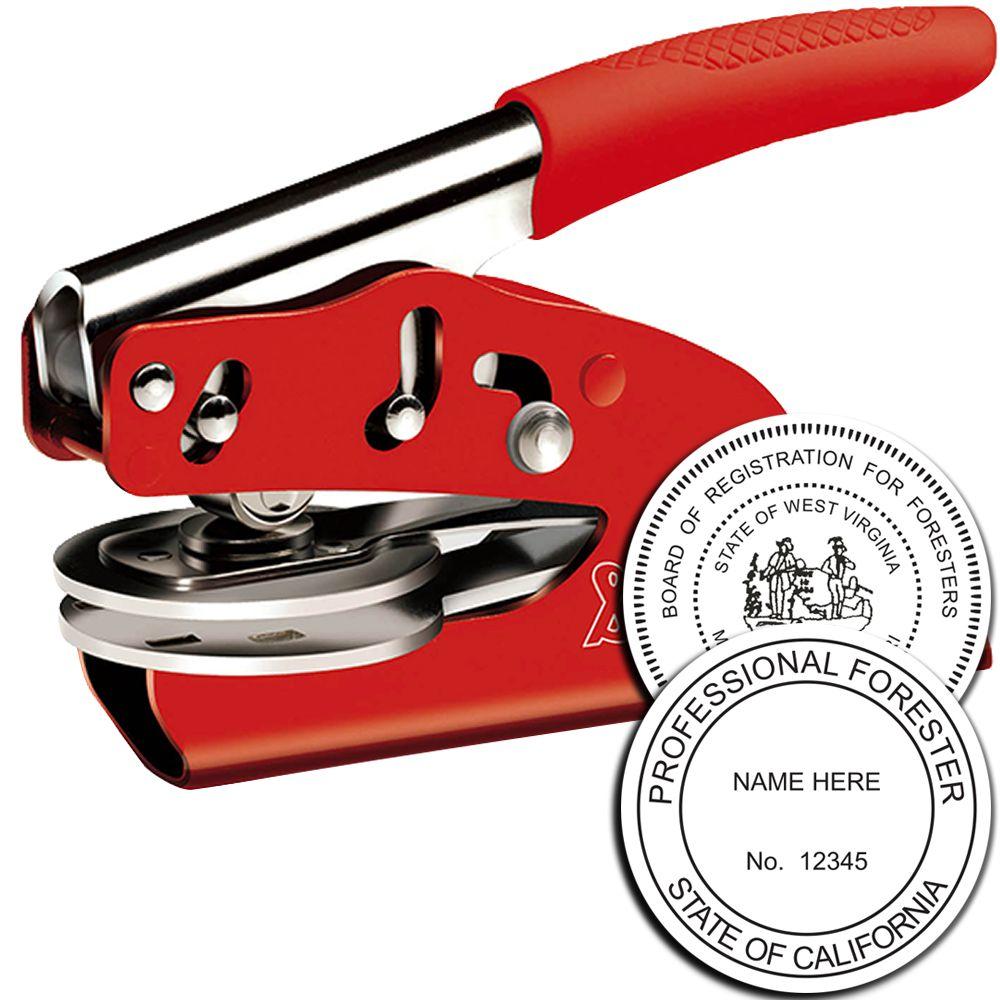

What a Michigan mark should not imply
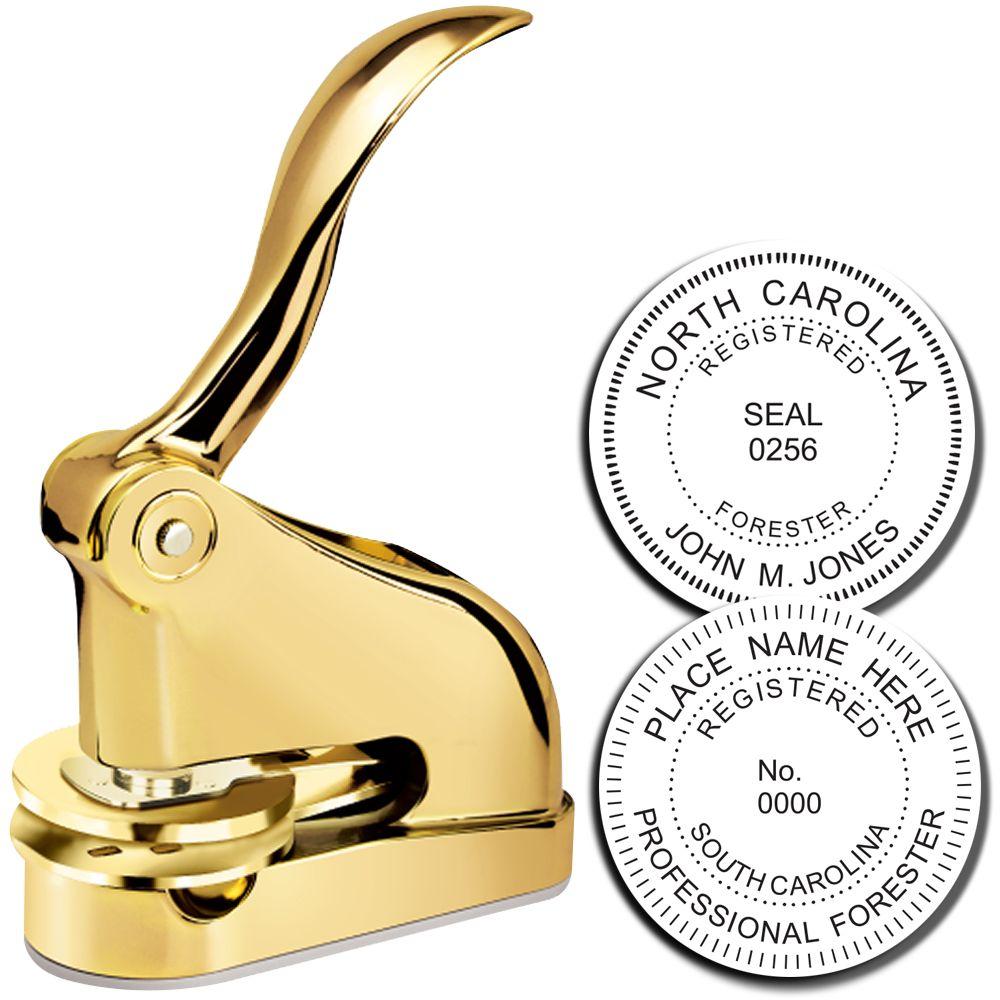
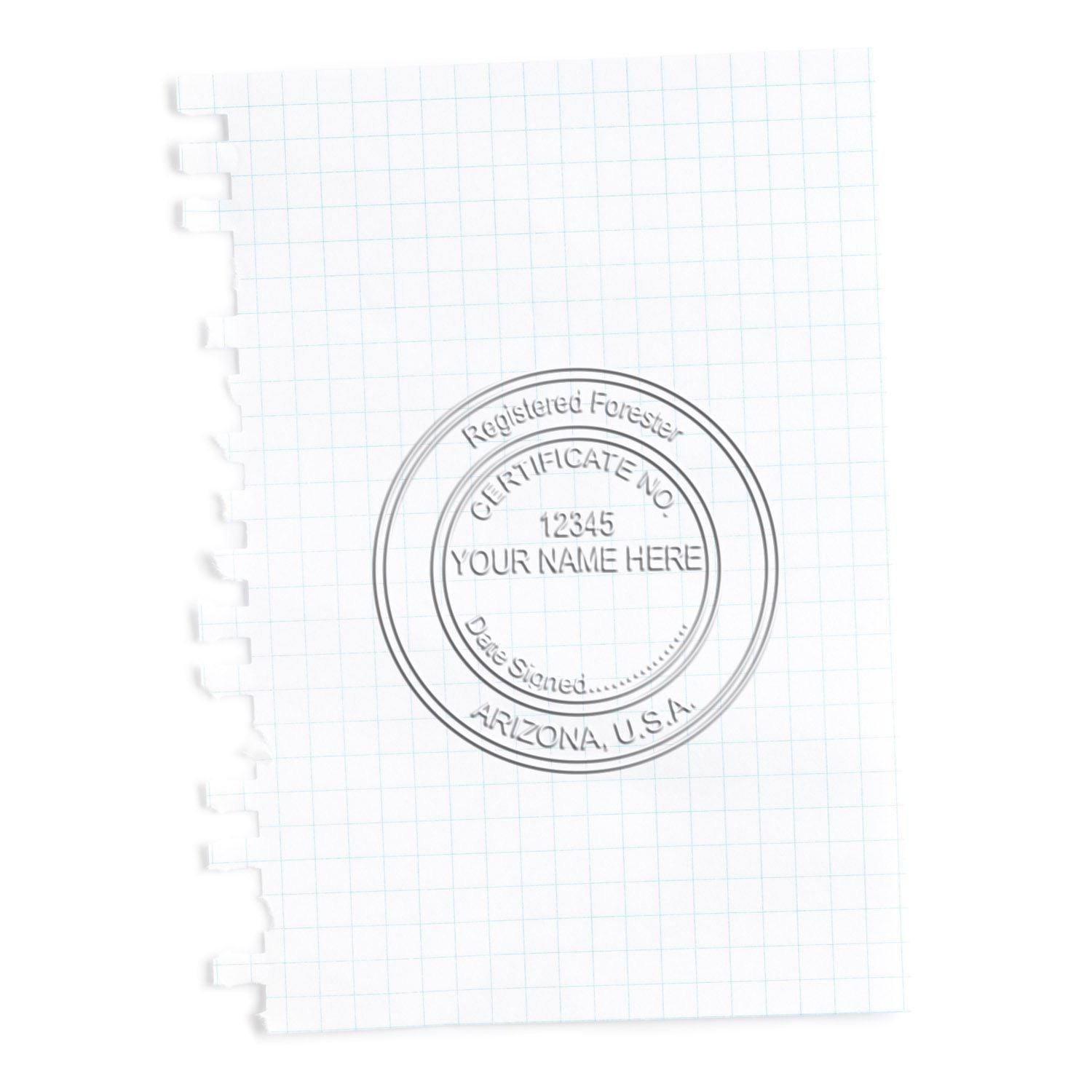
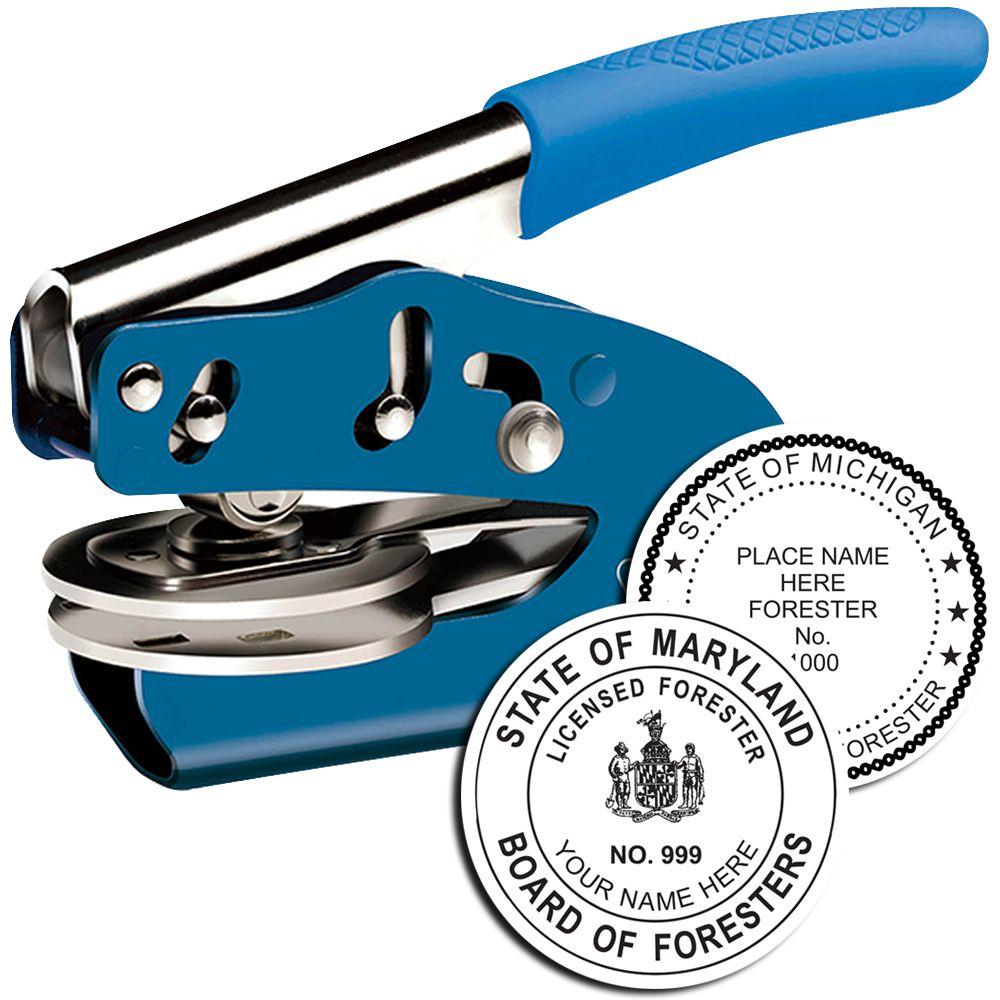
One caution, and it is the reason we write these pages the way we do. A device lettered to look like a state prescribed seal, with a heavy circular border and a State of Michigan legend, implies an authority that no Michigan rule confers on a forester’s marking. Where the credential itself is voluntary and its scope is not established in any source we could read, a mark that overstates it is a poor idea.
The cross profession version of the same trap is worth naming. Michigan licensed professional engineers, land surveyors and architects have seal rules of their own, under their own board, with their own prescribed content. Those specifications belong to those credentials. Borrowing the look of one for a forester’s stamp does not make the stamp more official; it makes it misleading about which credential is speaking.
Conduct and complaints, which do exist
Although there is no seal misuse provision, because there is no seal, the program is not without a conduct process. The DNR publishes a complaint form for registered foresters, form PR4605, which indicates a complaint and conduct route exists for the credential.
The practical read is that the registration is something you can be held to, even though it is voluntary to obtain. That is a further reason for a marking device to describe the credential exactly: a mark that claims more than the registration gives is the kind of thing a complaint process is for. If your registration lapses, the sensible step is to stop using a device that states the credential, even though no Michigan provision says so, because the statement on the face of the stamp is about a live registration whether or not a rule spells that out. A device costs far less than an argument about what it was claiming.
Ordering, and what to check
Send the name you want engraved, the credential wording you want, either Registered Forester or RF or both, and your Michigan registration number. Say whether you want a self inking stamp, a hand stamp and pad, a pre inked stamp for the sharpest lettering or an image file for PDFs. Ask for a proof at actual size so you can read the number before the die is cut. Contact us with those details, and the forester stamps and seals overview shows which states do prescribe a design, which Michigan does not.
Care is the usual. Re ink a self inking stamp when the impression starts to gray rather than when it fails, keep a pre inked stamp capped, and keep any ink device out of heat and direct sun. At each two year renewal, check that the name still reads correctly, that the registration number still matches, and that the credential wording still describes what you hold. And if you ever hear that Michigan has adopted a forester seal rule, check with the DNR rather than with a supplier, since that is the question we could not close. This page is a research summary and not legal advice.
- Forester Stamps and Seals: State Rules, Sizes and Prices
- Mississippi Forester Seal: No Seal Is Prescribed
- West Virginia Forester Seal: None Is Prescribed
Frequently asked questions
Does Michigan require a registered forester to have a seal?
No seal or stamp appears in any Michigan source we could read, including the DNR Registered Forester Program page, the program FAQ, the qualifications sheet and the Board of Foresters materials. No administrative rule establishing a forester seal was found.
Is Michigan forester registration mandatory?
No. The DNR states in its own FAQ that “The program is 100% voluntary” and that it is “not licensing.” The program page describes it as a way to let landowners know you are a professional, credentialed forester.
Why does this page say the seal question is unresolved?
Because we could not read the statute. Part 535, MCL 324.53501 to 324.53519, sits at the state legislature’s own site, which is blocked to our tools. Our finding of no seal comes from the DNR and Board documents. If it matters to your work, ask the DNR Forest Resources Division before ordering.
What size should a Michigan forester stamp be?
No size is published in any Michigan source, so there is no prescribed dimension to match. Choose a size that keeps your name, credential and registration number readable. We did not infer a size from another state or from a product we sell.
What should go on a Michigan forester stamp?
With nothing prescribed, the sensible content is your name, the Registered Forester designation or the RF abbreviation that the DNR uses, and your Michigan registration number. A rectangular stamp of two or three lines reads better at small size than a crowded circle.
Does Michigan issue a seal to registered foresters?
No. Nothing in the program is board issued, state owned or returnable. The Board and the Department issue a registration, not an instrument. Any marking device is an ordinary professional purchase you make and own.
How often does Michigan registration renew?
Every two years. The DNR publishes a $200 fee per two year registration period and requires not fewer than 24 hours of continuing education every two years. A Board reinstatement policy dated 2024 covers registrants returning after a gap.
Is the title forester protected in Michigan?
Not established. The DNR FAQ does not address whether an unregistered person may practice forestry or use the title, and it is careful to say the program is not licensing. Whether Part 535 restricts the term is in the statute we could not read.








