
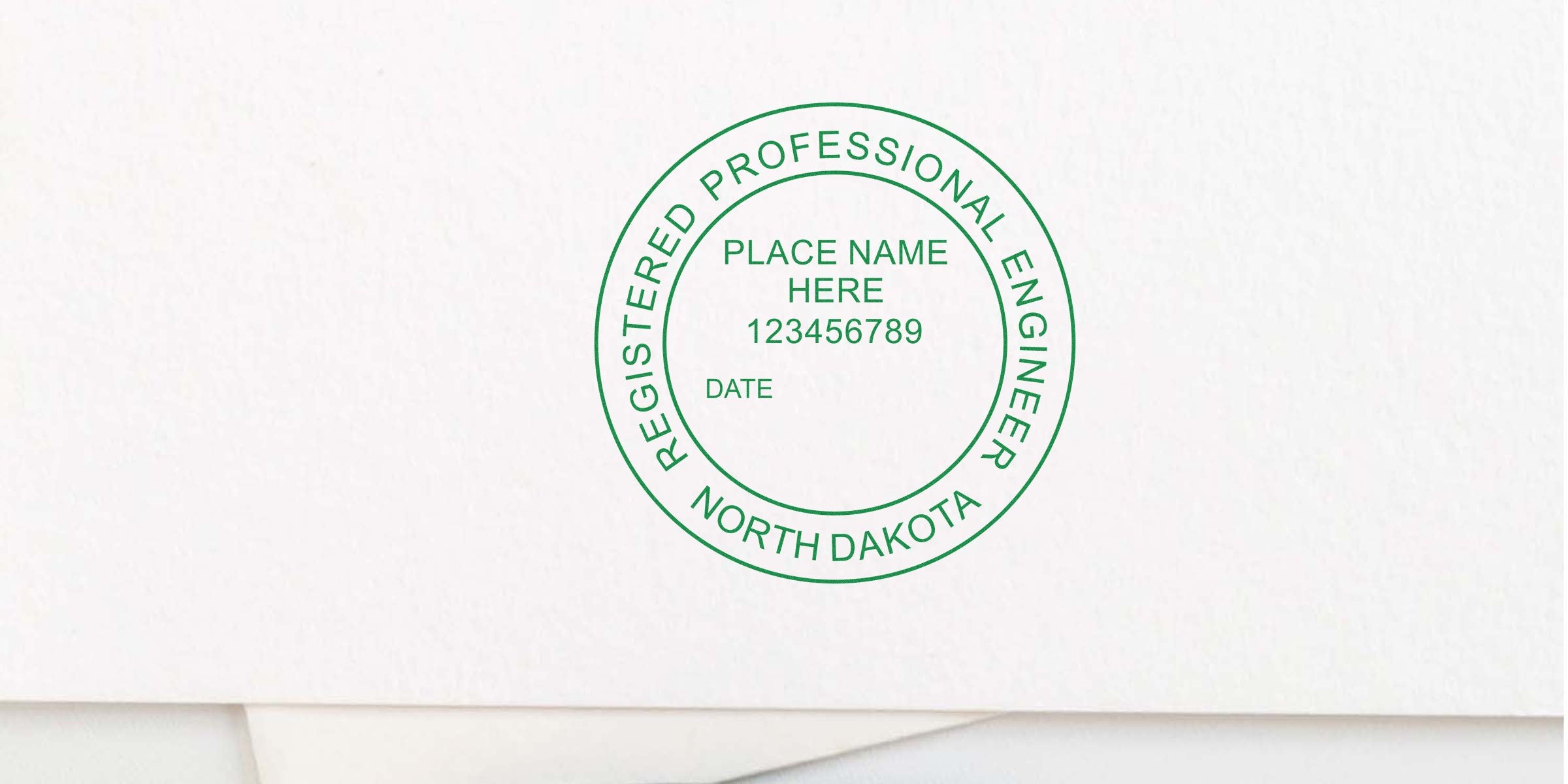
If you’re getting ready to engineer in North Dakota, chances are you’ve come across ND PE seal requirements and wondered what all the fuss is about. It can feel intimidating at first, especially if you’ve never had to navigate professional licensing before. The good news is that once you understand the basics and get your seal squared away, you’ll be free to focus on your real passion: designing, building, and problem-solving. In this post, we’ll break things down step by step, chat through what you really need to know, and point you toward a few tips that can simplify the process.
At Acorn Sales, we’ve spent over 60 years making professional seals and stamps, including the North Dakota engineer stamp you might be looking for. We’re proud of the quality we deliver, and we also make it easy to grab a free digital seal with your purchase. Because having the right stamp or seal quickly is a lifesaver, we offer fast service so you’re never in limbo. Let’s walk through the details of ND PE seals and help you feel comfortable and confident about meeting the requirements.
Recognize why seals matter
Have you ever thought about why a seal is so pivotal in an engineer’s daily work? It’s not just a random formality. Your professional seal represents your credibility, your years of study, and your commitment to upholding industry standards. Seals also provide a quick visual verification for anyone reviewing your documents, assuring them that the work has been approved by a licensed professional.
- Seals boost trust: Clients and state boards instantly know your documents come from someone who meets state regulations.
- They identify responsibility: When your seal is on a blueprint, it signals you stand behind the work.
- They help protect public safety: The North Dakota licensing board uses your seal to confirm that a knowledgeable engineer has overseen the project.
Essentially, the seal aims to keep professional accountability front and center. In many ways, it’s the key step in turning raw expertise into practical, approved designs.
Understand ND PE seal requirements
North Dakota’s professional engineering regulations aren’t there to make your life harder. They’re in place to protect the public and ensure that every engineer stamping a document is genuinely qualified. So, what are these ND PE seal requirements?
At a high level, the North Dakota Board of Registration for Professional Engineers and Land Surveyors sets guidelines around:
- Your valid engineering license: You must pass the Fundamentals of Engineering (FE) exam and the Professional Engineering (PE) exam before you can legally stamp any engineering documents.
- The official seal design: There are rules on size, shape, and the text that appears around the edges, typically including “Professional Engineer” and your name and license number.
- Proper usage: The state expects you only to seal final documents ready for issuance, rather than early drafts.
- Digital forging: If you choose a digital seal, it needs to be secure enough to be unique to you, ensuring no one can copy or tamper with it.
It’s worth keeping an eye out for any updates or modifications the board might make over time. Sometimes states tweak representation requirements, or they put out clarifications on whether an electronic seal needs extra security or verification steps. The best approach is to check with the North Dakota board or a trusted supplier, like Acorn Sales, whenever you’re in doubt.
Clarify licensing steps
Before you can even think about stamping your documents, you have to hold a proper license. This process is straightforward but can take time. Why wait until the last minute? Let’s clarify the path so you can stay a step ahead.
- Study and pass the FE exam: This test focuses on the fundamentals you picked up during your engineering degree. Once you pass, you become an Engineer Intern (EI) or Engineer in Training (EIT).
- Accumulate work experience: In most cases, North Dakota requires four years of progressive engineering experience under the supervision of a licensed PE.
- Tackle the PE exam: When the board deems you qualified to sit for it, you can schedule your test. This exam covers a broader field of engineering topics.
- Submit your application: After passing the PE exam and meeting all other conditions, you’ll file an application with the North Dakota board.
- Receive your license: Once approved, you’ll get your official license number, which you’ll include on your seal.
Rushing through your licensing steps can lead to stress or missed paperwork. It might sound obvious, but double-checking deadlines, references, and mandatory forms can save you from re-submissions or potential denial. Think of it like your final exam for the administrative side of engineering.
Choose the right seal format
Now that you’re licensed, the next step is deciding how you want your seal to look and function. Do you prefer a handheld embosser, a self-inking stamp, or maybe a digital seal for online submissions? Let’s be honest: it’s easy to get lost in all the options. But you can narrow it down by focusing on your daily habits, budget, and personal preference.
Comparing seal types
Below is a quick table comparing common choices:
| Format | Features | Who it’s best for |
|---|---|---|
| Embosser | - Raised, crisp impression | - Engineers who love a classic look and a tactile seal |
| - Manual pressure required | - Occasional paper stamping | |
| Self-inking stamp | - Pre-loaded ink pad | - Frequent use with minimal effort |
| - Quick, uniform impressions | - Medium to high volume stamping | |
| Pre-inked stamp | - Very clean, sharp imprint | - Professional presentation |
| - Can be re-inked, low-mess | - Regular stamping in an office | |
| Digital seal | - Electronic file or PDF overlay | - Online submissions, remote teams |
| - Avoids physical handling | - Tech-savvy or paperless setups |
Planning to submit electronic drawings or documents? A digital seal might be your go-to. Are you someone who appreciates a time-tested classic? Embossers are iconic and give a raised impression that feels official. For most everyday tasks, a self-inking or pre-inked stamp can be a lifesaver, especially if you have multiple pages that need stamping in one sitting.
Follow best usage practices
Once you have the seal in hand, your next question might be: “When exactly do I use it?” The short answer: you apply your seal to any final, legally binding engineering plan or technical document where you’re the responsible engineer. Let’s break this down to keep it simple.
- Final drawings: Any set of project drawings that clients or authorities will use for construction.
- Reports and calculations: Seal your engineering reports, especially if they’re headed to regulatory bodies.
- Project specifications: If you’re creating a spec that contractors must follow, your seal assures its validity.
- Revisions: Got an updated plan that changes key designs or calculations? That new final version will often need a fresh seal.
Remember, the seal signals a completed document. If you’re still in early design, you typically shouldn’t stamp it. The best approach is to keep the practice consistent so there’s never confusion about what documents are truly final.
Simple compliance tips
- Keep a clear record: Log which documents are sealed, along with the date and any distribution notes.
- Use the right color ink: Some states prefer a darker ink (like blue or black) for clarity.
- Double-check your info: Make sure your name, license number, and the words “Professional Engineer” are clearly visible.
Don’t forget, North Dakota might change certain details over time. It’s a good habit to do a quick check-in with the board’s site once a year to confirm nothing has shifted that would impact your seal usage.
Get your seal from Acorn Sales
Acorn Sales has been around for more than six decades, focusing on precision-crafted seals and stamps. We know the ND PE seal requirements well, so we can guide you through each choice, from standard embossers to the newest digital options. If you’re not entirely sure which type suits your routine, we’re happy to give you personalized recommendations.
- Personalized guidance: Not sure about size or style? Let us walk you through the options.
- High-quality materials: Our seals are built to last, so you’re not replacing them in a few months.
- Free digital seal: We’ll send a digital version of your stamp at no extra charge, perfect for emailing or online submissions.
- Fast service: Because waiting forever for a seal shouldn’t be part of your engineering career.
If you’re specifically after a physical stamp, be sure to check out our north dakota engineer stamp page. You’ll find detailed information there on self-inking and pre-inked stamps plus tips for re-inking down the road.
By now, you should have a clearer view of how to align with ND PE seal requirements and what to expect when you finally place that stamp of approval on your engineering plans. Remember that your seal is not just a symbol of your professional qualification, but also a promise that your work serves the greater good.
If you need help picking the right seal format, or if you simply have questions about the ND PE process, Acorn Sales is here to lend a hand. Our heritage of over 60 years in the seal and stamp world, combined with our free digital seal offering, makes it easy for you to get set up quickly. There’s no need to get bogged down by the fine print—life is simpler when you have the perfect seal right there on your desk, ready to make its mark.
Feel free to reach out if any questions pop up along the way, and don’t forget to update your seal details whenever you renew or modify your license. That way, you’ll stay in compliance with any changes North Dakota rolls out. Here’s wishing you all the best on your engineering journey—and an official, properly sealed stamp of success.
Frequently Asked Questions
How soon can I start stamping after I get my license?
You can begin as soon as your license is officially active. Make sure you have your license number on the seal, and double-check it matches your board records before you start using it.
Do I need to include my signature next to the seal?
Typically, yes. In many states, including North Dakota, the seal must go together with your signature and the date. This confirms it was you, not someone else, who applied the seal.
Are electronic seals valid for all documents?
Electronic seals are valid if they meet the security requirements from the North Dakota board. Always confirm that you’re using a board-approved method of encryption or verification, especially if you’re sending sensitive files.
How do I store my physical stamp or embosser?
Keep it in a safe spot, like a locked drawer or cabinet, so it’s not accessible to anyone else. This prevents unauthorized use, which could land you in trouble if documents get sealed without your knowledge.
Can I reuse my old seal if I switch states?
Seals are state-specific, so you generally can’t reuse a seal from another state. You’ll likely need a new one that meets North Dakota’s requirements, especially for the text and design.
What if my stamp wears out or breaks?
Replacements are easy to order. Just make sure you provide your current, correct license info when ordering a new seal. If you’re replacing a digital seal, coordinate with your supplier or software provider for secure re-issuance.
Do I need to stamp every single page?
You usually seal the cover sheet or the first page of a set of plans, then sign or initial subsequent pages. Check with your local authorities or the North Dakota board for any specifics about multi-page documents.








