
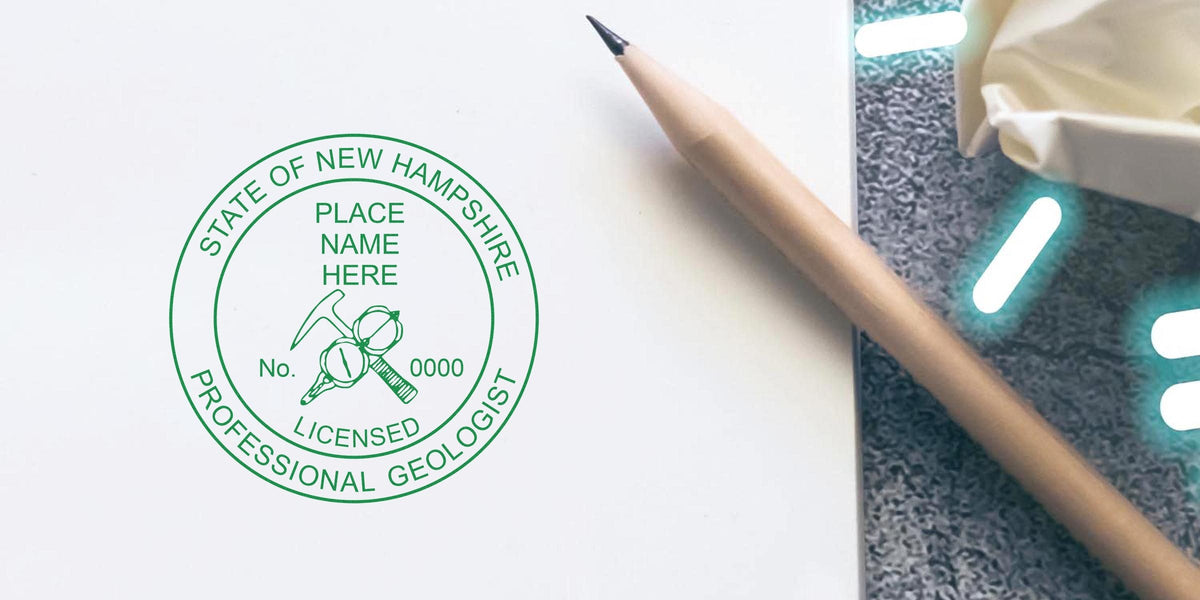
Working as a geologist in New Hampshire means you have specific professional responsibilities to uphold. Among them is the requirement to affix an official seal to your documents, commonly known as the geologist stamp. This stamp is more than just an imprint, it verifies your credentials and ensures you’re meeting state standards.
One question you might have is, “Where do I start?” Navigating the geologist stamp New Hampshire guidelines can initially feel confusing, especially if you’re new to professional licensing. Here’s the good news: once you know the ins and outs, the stamping process becomes second nature.
In the sections below, you’ll learn precisely what the state requires, how to design a compliant seal, and ways to keep your credentials valid. This straightforward overview is here to make sure you can stamp your reports, papers, and maps with confidence.
Know The Significance
Why does New Hampshire place so much emphasis on a stamp or seal? In short, it’s an easy, universally recognized way to confirm that a professional geologist has authenticated the work. Whenever you sign a geology-related document, your seal confirms the integrity of the material, even at a glance.
The state’s licensing board relies on these stamps to keep track of who’s taking responsibility for geological findings. If there’s a question about a particular survey or analysis, the stamp quickly indicates your credentials are up to date and that you stand behind the data. Think of it as your signature’s helpful sidekick, adding an extra layer of assurance.
Skipping or neglecting to use your stamp can lead to serious issues, such as disciplinary action or even invalidation of your work. By contrast, proper usage reinforces trust in your conclusions and protects the interests of clients, stakeholders, and institutions that rely on accurate geological information.
In plain language, the stamp is part of your identity as a New Hampshire geologist. Once you recognize its significance, you’ll see it as a dependable ally for your professional documentation.
Understand The Requirements
Each state in the country has its own procedures for professional stamps, and New Hampshire is no exception. First, you generally need to register with the New Hampshire Board of Professional Engineers and Land Surveyors, which also covers geology. The application process involves providing proof of education, testing your competencies, and verifying relevant work experience.
After you earn your license, you’ll need a New Hampshire geologist seal. This state-approved imprint must display your name, your license number, and a reference to your geologist status. Always check the board’s current guidelines because design specifications may change over time.
Once you have your seal, you’re required to include it on final documents that identify geological evaluations, studies, and other relevant materials. The presence of your seal confirms that you, as a licensed professional, have conducted or overseen the work. Omitting your seal can be a red flag, so take the requirement seriously.
Keep in mind, New Hampshire’s licensing board reserves the right to audit or investigate any filing that lacks a proper seal. If your documentation is flagged, you could face legal or administrative complications. Following these requirements is the best way to ensure your professional credibility remains intact.
Verify Your Qualifications
Before you purchase your official seal, it’s a good idea to verify your qualifications through the licensing board. Do you have the right academic background, relevant examinations, and documented professional experience? Ensuring you meet these prerequisites helps you avoid spending time and money on a seal that you can’t use.
For instance, if you studied geology at an accredited institution, the board will likely want to see transcripts or other proof of completion. You might also need to pass a specialized exam that demonstrates your knowledge of geological ethics, practices, and methodologies. The board is strict about who can claim the title, and that’s for a good reason: it protects public welfare and fosters trust in the profession.
Once you confirm your eligibility, you’ll typically receive an official license number and instructions on how to proceed with getting your stamp or seal. Double-check that all the information the board has on file is accurate. If your name, number, or any other detail is incorrect, you’ll need to rectify it before ordering your seal.
Taking the time to verify your qualifications also gives you peace of mind that you’re fully legit. When you finally use that stamp on a critical geological report, you’ll do so knowing you’ve followed every step required by the state.
Ensure Proper Stamp Design
The design of your stamp is crucial to staying on the right side of New Hampshire rules. Typically, your seal needs to be circular or rectangular, with your name and license number clearly visible. The text often reads “Licensed Professional Geologist” or a similar phrase that matches your official designation.
Font size, spacing, and overall layout might be specified in official guidelines. If you create a stamp with letters that are too small or unclear, you could face criticism from the board or have your documents rejected. A well-designed seal avoids smudging or misinterpretation, so choose high-quality materials and a clear font style.
It’s also wise to think about digital options. Many geologists work remotely and submit electronic documents, so a digital seal can save time. A well-crafted digital seal replicates the same design elements as your physical one, ensuring consistency across all your deliverables.
Always confirm that your chosen layout meets state specifications. If you’re uncertain, consult the board’s published requirements or get in touch with a stamp supplier experienced in producing official geologist seals. You’ll be glad you verified before finalizing your order.
Choose A Trusted Supplier
When ordering your geologist seal, working with a reputable provider can streamline the process. It’s not just about getting a neat design, you also need top-tier materials that won’t wear out quickly. A smudged or faint imprint fails to convey professionalism, and you probably don’t want to replace your stamp every few months.
This is where Acorn Sales comes into play. Known for over 60 years of expertise in making professional stamps and seals, Acorn Sales offers high-quality craftsmanship you can rely on. Their stamps deliver crisp, clear imprints that stand the test of time, plus they include a free digital seal, so you can handle both physical and electronic documents.
When you choose a dependable supplier, you also benefit from their understanding of current regulations. Acorn Sales keeps up with the state’s design requirements, so you can worry less about whether your seal meets board specifications. If you need any clarifications, their team is ready to guide you through the ordering process and answer your questions.
Before you commit, explore the options for a new hampshire geologist stamp. You’ll find variations in size, shape, and handle type. Some geologists prefer a pre-inked or self-inking stamp to facilitate quick and clean markings, while others opt for a traditional hand-stamp style. Whichever model you choose, be sure to confirm it fits your workflow and usage needs.
Maintain Your Credentials
After you obtain your seal, your responsibilities don’t end there. You must maintain your geologist license by fulfilling any continuing education units (CEUs) and renewing your license by the specified deadlines. New Hampshire often requires practicing professionals to stay updated on new regulations, scientific discoveries, and methods that impact geological work.
Be sure to track your renewal dates, as late renewals can lead to extra fees or even suspension. Keep a record of any professional development courses you take, so if the board requests proof, you have it ready. Proper recordkeeping also helps you stay organized and reduces the stress of last-minute compliance checks.
Always keep your stamp in good condition. If the impression starts to fade or distort, consider re-inking or replacing the device. A neglected stamp can cast doubt on the authenticity of your documents, so routine maintenance is worth a few extra minutes of your time.
Embrace the idea that maintaining credentials is an ongoing process. By staying proactive, you’ll extend the value of your New Hampshire geologist seal and continue serving your clients and stakeholders with tools they can rely on.
Common Mistakes To Avoid
Even the most seasoned geologists can slip up if they don’t pay close attention to details. One common error is applying the seal to documents that don’t require it. Over-stamping can raise questions about whether all files truly meet professional standards. Check the guidelines for which documents do or don’t need a formal seal.
Another oversight is forgetting to sign the document manually alongside your seal. In some cases, the board requires both a hand-signed signature and your stamped impression to validate the content. Make sure to follow the complete sign-and-stamp process so your work is unquestionably official.
You’ll also want to avoid using an outdated stamp design. The board might modify the seal’s text or format over time, so be sure your stamp aligns with the most recent version. If you keep using an older design, your paperwork could face rejection, or worse, your license might come under review.
Lastly, storing your stamp in a safe location is essential. An unsecure stamp can be misused, putting your professional reputation at risk. Keep it in a locked drawer or a secure digital folder if you have an electronic version. That way, you remain in control of your official imprint at all times.
Wrap Up Key Points
Acquiring and using your geologist stamp in New Hampshire doesn’t have to be a maze of red tape. By verifying your qualifications, adhering to state guidelines, and selecting a trusted supplier, you can ensure your documents meet the professional standards demanded by the board.
Set yourself up for long-term success by properly storing your stamp, renewing your license on schedule, and staying aware of any guideline changes. A few proactive measures can save you time, money, and potential headaches down the road. With the right approach, your stamp becomes an essential tool that underscores your commitment to excellence in geological work.
Frequently Asked Questions
Do I need multiple stamps if I’m licensed in multiple states?
Yes, you generally need separate stamps for each state where you hold a license, because each jurisdiction sets its own approval criteria. Using the wrong stamp in the wrong state can invalidate your professional documentation.
Can I use a digital seal in place of a physical stamp?
In many cases, yes. New Hampshire allows digital seals as a legitimate representation of your professional credentials, but ensure it meets board guidelines for format, clarity, and security.
What happens if I lose my physical stamp?
If your stamp is lost or stolen, you should replace it promptly and consider notifying the licensing board if you suspect misuse. Using a tampered or unauthorized seal can lead to disciplinary measures, so act quickly to protect your professional standing.
Are there penalties for misusing the seal?
Yes. Penalties can range from formal warnings to license suspension, depending on the severity of the misuse. Always follow board regulations to avoid jeopardizing your standing as a licensed geologist.








