
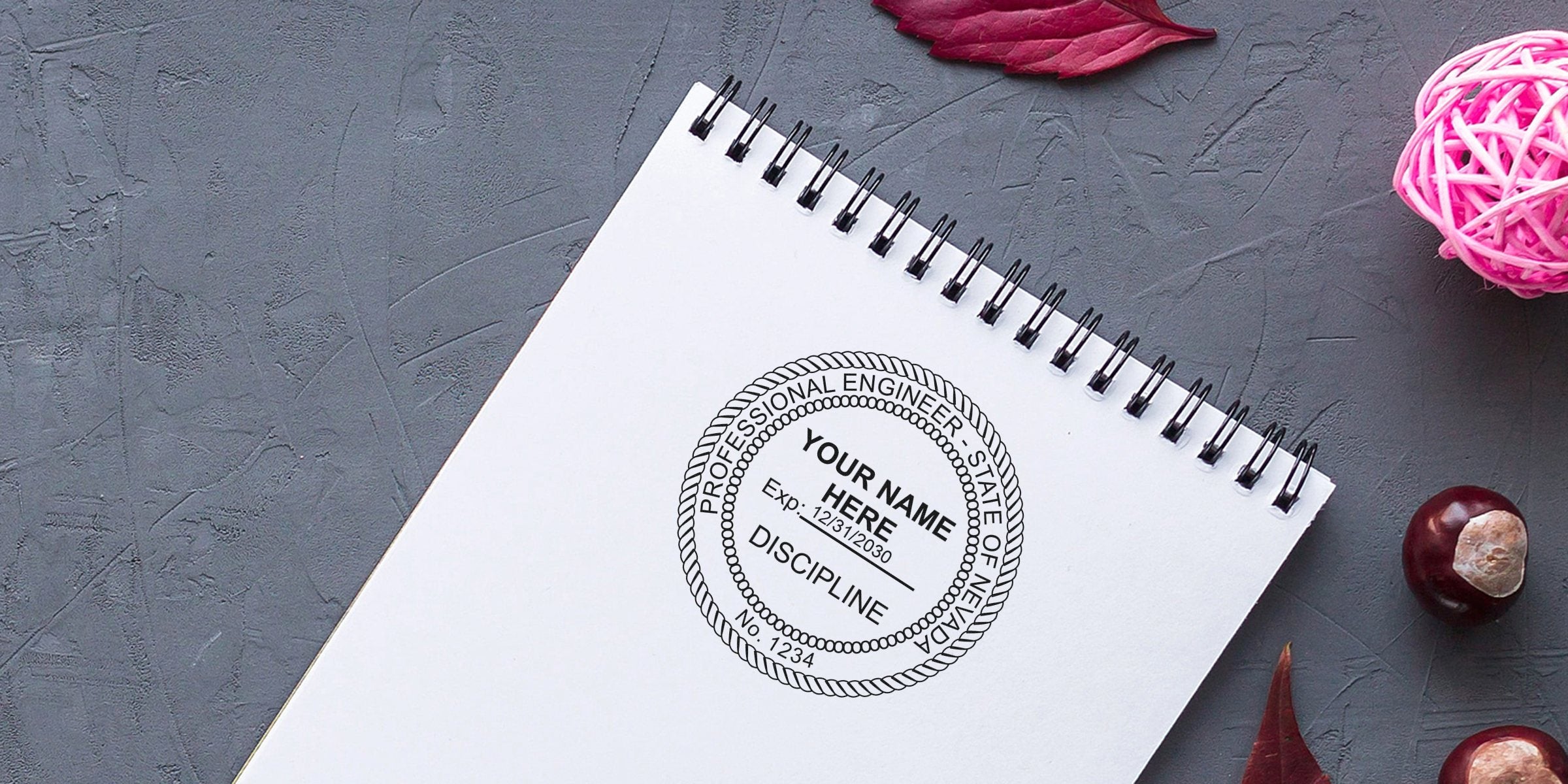
Whether you’re a newly licensed engineer or a seasoned veteran preparing project plans in the Silver State, you’ve probably come across Nevada engineer stamp requirements. They sometimes sound strict or complicated, don’t they? The good news is that understanding these rules can be straightforward once you connect the dots between official guidelines, proper stamp design, and everyday usage. In this post, we’ll walk through exactly what you need to know so you can stay compliant and feel confident about your stamp. It’s time to dive in and clear up those nagging questions.
You’ll see that the Nevada Board of Professional Engineers and Land Surveyors sets forth specific details about how your seal should appear and how it should be used. There’s size, shape, wording, and other points to keep in mind, but none of this needs to be daunting. By the end of this, you’ll know where to get your Nevada engineer seal, when to apply it, and how to store it properly. Plus, we’ll tackle a few common mistakes to help you avoid headaches down the line.
Before we jump in with the specifics, we’d like you to know that you’re not alone in this journey. Many engineers find themselves juggling multiple state requirements, each with different standards. Nevada is a wonderful place to practice engineering, and it all starts by making sure your stamp meets the official specs. So, let’s break down the simple steps to ensure your stamp is a perfect fit.
Understand official guidelines
Knowing the rules behind your Nevada stamp is like having the right blueprint before you build. If you’re familiar with state regulations, you’ll avoid the guesswork and ensure your final stamp is recognized for professional use. In Nevada, your seal signals that your work meets industry standards and that you’re authorized to oversee projects as a licensed engineer.
Consult recognized sources
The first place to look is the Nevada Board of Professional Engineers and Land Surveyors. They outline what must be included in your seal, such as your name, license number, and the words “State of Nevada” or a variation of that phrase. They also regulate how large the stamp can be. For quick reference, you can consult our nevada engineering stamp guidelines page. These guidelines keep you in line with state rules and reinforce the legitimacy of the documents you stamp.
Key elements to include
- Your full name exactly as it appears on your engineering license
- Your valid Nevada license number
- State identification (commonly “California,” “Arizona,” or “Nevada,” but in your case it must be “Nevada”)
- The appropriate wording around the perimeter indicating your professional status
Watch synonyms or abbreviations that don’t match the official instructions. If the regulations say “Professional Engineer,” you shouldn’t shorten it to “Prof. Eng.” unless explicitly allowed. Consistency matters, and it creates clarity when a reviewing agency checks your work.
Why being precise matters
Imagine you spend weeks crafting a technical design, only to have it rejected because your stamp is too small or missing crucial text. That’s the scenario you want to avoid. Ensuring every requirement is met from day one removes the stress of redoing or reissuing drawings. It also shows clients you take your professional responsibilities seriously.
Explore design elements
Getting the design of your Nevada seal right involves more than just picking a font and circle size. You’ll need to confirm it meets certain layout standards so regulatory boards, clients, and peers can instantly spot your credentials. A well-designed seal also looks clean on official paperwork.
Official circles and imagery
Nevada’s rules typically call for a circular seal. The outer ring often includes your name and license designation, while the inner circle might hold the state name and official insignia reference. If you’re curious about the arrangement or spacing, check out our resources on nevada engineering seal design. You can find visuals that clarify how text should flow around the circle.
Here’s a quick comparison of typical design features:
| Feature | Description | Purpose |
|---|---|---|
| Outer Ring Wording | Name, License Number | Identifies you and your unique credentials |
| Inner Circle Details | State Name, “PE” Label | Confirms you’re licensed in Nevada |
| Border Thickness | Clearly visible, consistent line | Enhances readability on printed or digital docs |
| Font Style | Legible, standard typeface | Avoids confusion in official documents |
Graphical clutter to avoid
You might be tempted to add fancy decorations, but that’s rarely beneficial. Nevada guidelines want clarity, not flashy designs. The simplest route is to follow the standard layout, incorporate required text, and keep the design free from extra graphics. If you want a template that’s already designed to fit these requirements, our nevada engineer stamp template is a handy blueprint.
Customization tips
While you should never alter mandated elements, you can customize certain details when you order from a reputable vendor like Acorn Sales. Your license number and name are obviously unique to you, but you might choose a traditional rubber stamp, pre-inked version, or even an embosser. As long as you maintain the official size and wording, you can pick the style that makes your job easier.
Choose the right stamp type
Not all stamps are created equal. Engineers in Nevada typically use one of several stamp types, ranging from the traditional rubber stamp to an embossing seal. Digital stamps are also increasingly common, especially for electronic plan submissions. Selecting the right type depends on how you usually present your documents and whether you’re dealing with physical copies or digital files.
Rubber vs. self-inking vs. embosser
- Rubber Stamp: Requires a separate ink pad but gives clear, bold impressions. Often cost-effective, but you have to keep track of your ink source.
- Self-Inking Stamp: A handy all-in-one option that includes its own ink. It’s neat, portable, and needs refills only after many uses. Check out the official professional engineer stamp nevada designs for a sense of what’s possible.
- Embosser: Creates a raised imprint on the paper. This style looks particularly professional for final documents because it’s harder to copy or forge. If you’re intrigued, read about our nevada engineer seal embosser solutions.
Digital seals and e-signatures
In a world where PDFs and online submissions are growing in popularity, digital seals can speed up your workflow. Nevada typically allows electronic seals as long as they meet secure encryption and design standards. When you purchase from Acorn Sales, you get a free digital seal to complement your physical one. That means you’ll have the flexibility to stamp your technical drawings electronically or on paper, whichever suits your clients or regulatory agencies best.
Matching the requirements to your workflow
Choosing a stamp or embosser isn’t just about preference. Think about how frequently you finalize documents and the format you use most often. If you constantly work on the go, a self-inking stamp is convenient. If your work demands tamper-evident documents, an embosser and digital seal combo might be best. The point is to streamline your submission process without compromising compliance.
Stay on top of usage rules
Having the correct seal is only half the battle. To meet Nevada engineer stamp requirements, you need to apply it at the right stage, on the correct documents, and in a manner consistent with state regulations. Stamping your documents incorrectly can lead to project delays or even disciplinary action if the board sees it as a violation.
When to stamp your documents
Typically, you’ll apply your stamp to any official engineering plan, specification, or study you submit to a public authority. It might also be required on drawings that go to clients, especially if they’ll later submit them for permits. Double-check with local building departments or your client’s guidelines if you’re unsure.
Here’s a quick breakdown of common scenarios:
- Preliminary drawings: Usually not stamped, because they’re for internal review only.
- Permit applications: Almost always require your professional seal.
- Final deliverables: Whether it’s a plan set or calculations, you’ll want to stamp these once they’re complete.
- Revisions: If you revise a stamped plan, you typically have to re-stamp. Each iteration should show valid credentials.
Signing alongside your seal
In many cases, your stamp alone isn’t enough. You also need to sign across or near the seal, and note the date. This affirms that you’re taking responsibility for the document’s contents at a specific time. If you work digitally, a secure electronic signature may be required in addition to the digital seal.
Keep consistent records
When you stamp important documents, keep a record of where and when you applied your seal. This can be as simple as maintaining a spreadsheet or saving digital copies of each sealed set. If a question arises later, you’ll have a clear paper trail to show you followed the rules. Nevada’s licensing board might ask for proof in an audit, and you’ll be relieved to have everything organized.
Maintain compliance easily
Engineers are busy tackling design challenges, coordinating with vendors, and meeting tight deadlines. The last thing you need is to stumble on compliance details. Luckily, maintaining compliance doesn’t have to be a chore. With a few simple habits in place, you’ll keep your sealing process smooth and safeguard your license.
Keep up with licensing renewals
Nevada, like most states, has specific deadlines for renewing your professional engineering license. Don’t let an expired license slip under the radar. If your license isn’t active, using your seal is a violation. Mark your calendar with renewal dates and plan to submit your continuing education credits, fees, or any other requirements well before the cutoff.
Review official updates
While the laws and guidelines around engineering stamps don’t change every day, it’s wise to check for updates periodically. State boards occasionally revise the language to address new technologies or clarify existing rules. A quick annual glance at nv pe seal specifications or nevada engineering stamp guidelines can alert you to any tweaks so you aren’t caught off guard.
Protect your stamp
Stamps and embossers can be tempting to casual onlookers or staff in a shared office. You don’t want unauthorized use of your seal, which can put your license at risk. Lock your stamp in a drawer or cabinet. For digital seals, use strong passwords and follow best practices so only you can place that seal on official documents.
Get your stamp with confidence
There are plenty of places to order a seal, but not all are created equal. The best choice is a vendor that understands Nevada’s regulations inside and out. Acorn Sales has been producing professional seals and stamps for over 60 years, and we’re well-versed in what you need to comply with local guidelines.
Why choose a trusted supplier
- Guaranteed compliance: If the vendor recognizes your state’s design standards, you avoid shipping back a noncompliant stamp.
- Quality materials: Inexpensive stamps might fade or smudge, jeopardizing the clarity of your official documents.
- Free digital seal: When you work with Acorn Sales, each purchase also comes with a complimentary digital seal. That means you get both a physical tool and an electronic option in one go.
We offer fast service, so you aren’t left waiting weeks for a stamp when a submission deadline is looming. If you ever need more info about designs or ordering steps, take a look at order pe stamp nevada. You’ll find guidance on which type of seal suits your practice, how to place an order, and even how to customize it.
Custom options
Maybe you want a specific handle style, or you’re partial to a certain ink color. As long as the official size and lettering remain intact, you can customize quite a bit to match your preference. Our team can also help you explore custom engineer seals nv for that perfect fit. Whether it’s rubber, self-inking, or an embosser, you can choose the format that matches your workflow.
Measuring up your stamp
Nevada typically expects a stamp diameter around 1 5/8 inches to 2 inches, though variations exist. If you’re not sure what size is allowed, check out nevada pe stamp size for official sizing guidelines. The right dimensions ensure your text is readable and recognized by permit offices and regulatory bodies. Nobody wants a stamp that’s so tiny you can barely see the license number, right?
Key reminders before you order
Let’s recap some of the details you’ll want to keep on your checklist so your Nevada seal is exactly what you need. Think of these as your final pit stops before placing that order.
Headline tips
- Confirm your license status: Only order a Nevada stamp if your license is active and in good standing.
- Verify design protocol: Double-check the wording, arrangement, and required text with official guidelines.
- Choose your medium: Rubber stamp, self-inking, or embosser. Decide which matches your usage needs.
- Look for reputable vendors: Seek out companies like Acorn Sales that have a track record of compliance and high-quality products.
- Store it securely: Once your stamp arrives, make sure you keep it in a safe spot.
Double-check your info
It’s easy to make a spelling mistake or invert a number. Spend a moment verifying your name, license number, and any text on your draft design. A small error at this stage can cause big headaches later. If you’re not sure about the required text, our nv pe seal specifications guide might help you confirm the final details.
Summing it up
Navigating Nevada engineer stamp requirements doesn’t have to be a chore. By focusing on the essentials, you’ll end up with a seal that checks all the boxes. You want clarity, reliability, and a design that matches Nevada’s official rules. Pair that with a vendor like Acorn Sales—offering fast service, a free digital seal, and 60+ years of expertise—and you’re setting yourself up for success.
At the heart of it all, your stamp serves as a professional mark of responsibility. You’re telling clients, peers, and regulators that you stand behind the quality of your work. So don’t let the small details trip you up. Order with confidence, keep records of your stamped documents, and always stay in tune with licensing rules. You’ll be well on your way to hassle-free approvals and a smooth engineering practice.
Use this information as your go-to reference whenever you need to confirm stamping details for the State of Nevada. With a compliant seal in hand, you’ll free yourself up to focus on what truly matters: delivering top-notch engineering solutions. If you do have more questions, feel free to explore our resources or reach out to us directly. We’re here to help you seal your success.
Frequently Asked Questions
Do I need to re-stamp updated drawings?
Yes. Each new revision that heads out for official review should have a fresh stamp. This ensures the date and your license status at the time of the revision are clear.
Can I just scan my physical stamp for digital submissions?
Generally, scanning a stamped paper isn’t enough for official electronic submissions. You usually need a valid digital seal, which includes secure encryption. Acorn Sales offers a free digital seal with your stamp purchase, so you can handle both paper and electronic documents correctly.
What if the Nevada Board updates its seal format?
Periodically, guidelines may shift. We recommend checking in once a year—or whenever you renew your license—to see if there are new nevada engineering stamp guidelines. If an update does occur, you can easily request a new stamp or digital file.
Is an embosser more official than an inked stamp?
Both are equally valid if they meet the size and text requirements. An embosser leaves a raised impression that can be harder to replicate, which some engineers prefer for security. However, a self-inking stamp is convenient when you stamp large batches of documents.
How quickly can I get my Nevada engineer seal?
That depends on where you order it, but Acorn Sales prides itself on fast service. We’ve been making seals for over six decades and understand how urgent these requests can be. Once you finalize your details, we usually ship promptly, so you can meet your deadlines without stress.








