
Know the Basics of Licensing
If you’re aiming to practice geology in the Granite State, you’ve probably heard of the New Hampshire Geologist Stamp. This official marking is a key requirement for licensed geologists like you, but it can feel a bit mystifying at first glance. The rules, the design options, and the legal obligations all seem to stack up quickly.
But don’t worry. By breaking things down step by step, you’ll see that obtaining, using, and maintaining your stamp or seal isn’t as daunting as it sounds. This guide walks you through the essentials—from what the stamp represents to how you can secure the best option for your professional needs.
Understand the Importance of a Geologist Stamp
You might be wondering: why bother with a geologist stamp in the first place? In New Hampshire, your work often involves reports, drawings, or other official documents that need your professional endorsement. The stamp is like your signature—an easily identifiable mark that confirms you hold a valid license and are authorized to offer geologic services.
Think of it this way: you wouldn’t sign a contract without your name. Similarly, a geologist stamp is how you “sign” vital documents. It instills confidence in clients, government bodies, and peers that the data and conclusions you submit are prepared by someone who meets the state’s qualifications.
Follow the Licensing Requirements
Before you can even think about stamping documents, you need to be fully licensed in New Hampshire. The state board typically checks academic credentials, professional references, and any required examinations. Once you’ve cleared those hurdles, you’ll receive your official license number. This number is the foundation of your stamp or seal—no number, no valid marking.
New Hampshire also has particular guidelines for format and usage. You can find detailed criteria by reviewing the relevant sections on New Hampshire Geologist Seal Requirements. That resource spells out not only the physical characteristics of your seal, but also proper placement on reports. By staying on top of these rules, you’ll save yourself from costly errors or compliance issues later.
Recognize the Difference Between a Stamp and a Seal
If you’ve encountered the terms “New Hampshire Geologist Seal” and “stamp,” you may wonder if they mean the same thing. The short answer is yes, in most respects—they both serve as the authenticated mark of a professional geologist. However, the appearance can vary:
- A pre-inked or self-inking stamp featuring your name, license number, and “Licensed Professional Geologist” wording.
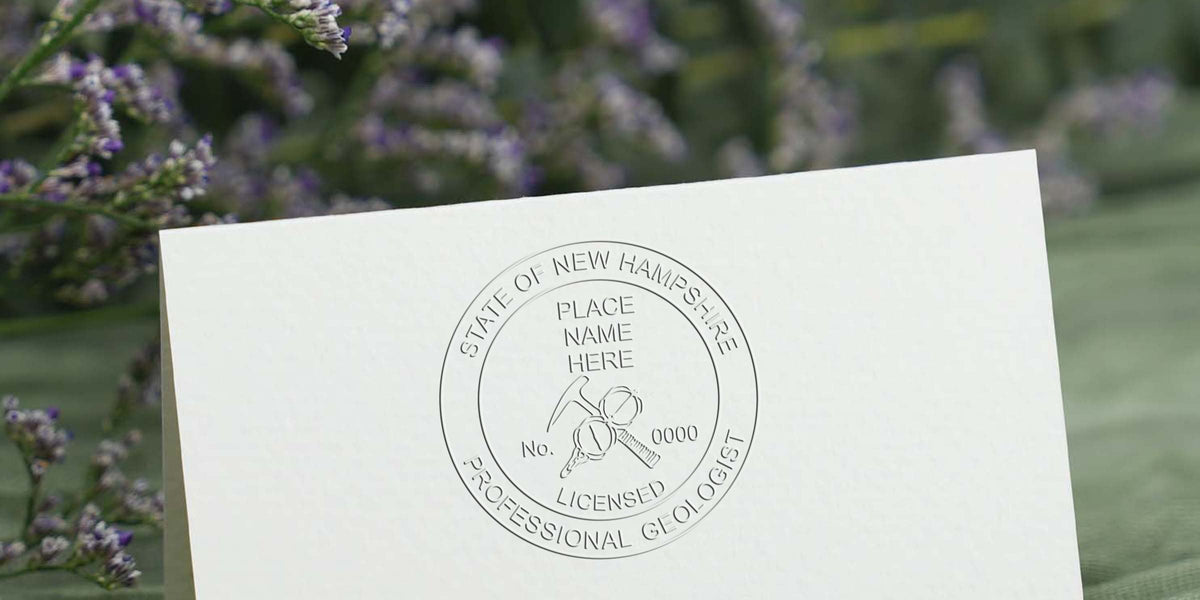
- An embosser that creates a raised impression on paper, providing a tactile feel.
Both methods are valid in New Hampshire, so it comes down to personal preference and how often you need to apply your mark. If you want a crisp, easy-to-scan imprint, a New Hampshire Licensed Geologist Stamp might be your best bet. For formal documents or where a more traditional look is preferred, an embosser could suit your style.
Explore Different Design Options
Even if all New Hampshire seals must contain certain phrases and your license number, the overall design can differ slightly. For example, some stamps come in a circular layout, while others appear in a rectangular format. You’ll typically see:
- The official state name (New Hampshire).
- A reference to your license (Professional Geologist).
- Your unique license number.
Multiple layouts exist to suit your professional taste. If you’re unsure which layout is acceptable, consult the New Hampshire Geologist Stamp Design guidelines. It’s worth noting that choosing a style you truly like might encourage you to use it consistently and keep your documents looking polished.
Mark Documents the Right Way
Once your stamp is in your hands, you’ll want to know exactly where and how to apply it. Because every official submission, plan, or technical report might have different formatting, the state doesn’t enforce an ultra-specific place on the page for your seal. Typically, though, you’ll place the mark near your signature block or as stated by your employer’s guidelines.
Here’s a quick to-do list when applying your seal:
- Double-check that the date on the document is accurate.
- Ensure your license is active (not expired).
- Stamp in a clearly visible area, often above or next to your signature.
- Use a dark ink color, like black or blue, so it reproduces well in scans.
Following these steps shows diligence and prevents your documentation from being questioned down the line.
Comply With New Hampshire Rules and Regulations
Securing a stamp means you’ve crossed a significant milestone, but your compliance duties don’t end there. One crucial aspect is consistent usage: if you’re overseeing or approving a geologic assessment, your name and stamp typically must appear. If not, your submission could be deemed incomplete.
You’ll also need to hold onto your license in good standing. Renewals usually involve continuing education or practice hours, so it’s best to keep track of those deadlines. Failing to renew on time might affect your ability to stamp new project files and could invalidate previously sealed documents.
Find a Trusted Supplier
Not all stamp makers deliver the same level of quality, and a poorly constructed seal can result in smudges or uneven impressions. When you’re signing off on geological data that impacts public safety or environmental projects, clarity matters. That’s why finding a proven manufacturer is essential.
Acorn Sales has been crafting stamps and embossers for professionals over 60 years, including countless geologists across multiple states. We understand the precise guidelines for New Hampshire, so you can expect a properly formatted product the moment it arrives. Plus, we offer a free digital seal for licensed professionals—a handy option if you’re filing electronic documents or want to keep a backup of your mark in the cloud.
If you’d like to explore your purchase or talk design specifics, you can check out New Hampshire Geologist Seal Purchase. It’s a great starting point if you’re ready to order or just want to learn more about the options on the market.
Compare Stamp Formats (Table)
When deciding between stamp and embosser, consider this quick comparison:
| Format | Pros | Cons |
|---|---|---|
| Self-Inking Stamp | - Quick, clear imprint - Compact size | - Ink can run low over time |
| Pre-Inked Stamp | - Crisp detail - Generally lasts for thousands of imprints | - Slightly higher cost than self-inking options |
| Embosser | - Elegant, raised impression - No ink needed | - May be harder to scan or photocopy clearly |
Choosing a product that fits your workflow is key. If you’re stamping large volumes of documents, a self-inking or pre-inked device might save you time and effort. For official certificates or decorative documents, an embosser often excels.
Avoid Common Mistakes
Even the most diligent professionals can slip up when dealing with official seals. Here are some pitfalls to avoid:
- Missing the Mark: Forgetting to stamp a critical report can delay project approvals.
- Incorrect Layout: An unofficial or incomplete design can invalidate your submission.
- Expired License: Always confirm your license is active before ordering or using your stamp.
- Poor Quality Stamps: Low-grade materials can cause faint or uneven marks, creating confusion.
Curious about the details? The Geologist Stamp New Hampshire reference includes helpful tips on verifying state guidelines. Likewise, keep an eye on any updates to your local regulations—it’s much easier to address small tweaks now than to overhaul your seal later.
Ensure Smooth Online Ordering
Shopping online for a geologist stamp may seem convenient, but you should still ensure your supplier is reputable. Look for:
- Clear specification of state requirements.
- High-resolution previews of your seal design.
- Secure payment and return or replacement policy.
- Reputation for delivering on time.
If you’re new to internet shopping for professional supplies, New Hampshire Geologist Stamp Online can offer a few safety pointers to guarantee a smooth transaction.
Keep Your Stamp in Good Shape
Seals are long-term tools, so a bit of care goes a long way. For ink-based stamps, store them in a cool, dry place. If your stamp starts to fade, simply replace the ink cartridge. With an embosser, occasional cleaning around the die (the engraved part that leaves theraised imprint) helps maintain crisp impressions.
Storing your embosser properly also matters. If it’s jostled around in a crowded drawer, you might accidentally dent the embossing plates. Such damage can alter the impression enough to cause confusion or require you to purchase a replacement.
Stay Informed About State Updates
Occasionally, New Hampshire may revise the guidelines for professional geologists. These changes could affect your seal’s layout or the usage rules. Signing up for email alerts from the state board or checking in periodically can help you stay compliant. If you ever need to adapt your seal or order a minor design tweak, you can visit New Hampshire Geologist Seal for the latest product offerings.
Partner With Acorn Sales
When it comes to compliance, reliability, and longevity, a good vendor can make or break your stamping experience. Acorn Sales has served geologists and many other professionals for decades, earning a reputation for quality and quick turnaround times. Along with the free digital seal we provide, you’ll appreciate a smooth ordering process and helpful customer service. If you need specialized guidance, our team is happy to walk you through the best New Hampshire Professional Geologist Stamp or embosser choices.
By partnering with a manufacturer that truly understands licensing standards, you’ll cut out a lot of guesswork. It’s reassuring to know that your stamp or embosser will arrive meeting all the official requirements without last-minute drama.
By now, you have a clear picture of what a geologist stamp or seal entails for your professional role in New Hampshire. From understanding the legal requirements to selecting the device that fits your style, you’re set up for a smooth process. Once you’re ready to stamp your next big report, you’ll do so with the lowest possible hassle and the highest confidence in your officially recognized credentials.
Frequently Asked Questions
Do I need both a stamp and an embosser?
You only need one valid seal, whether that’s a rubber stamp or an embosser. Each tool meets the requirements as long as it contains the correct wording and license details.
Can I renew my license if my stamp has worn out?
Renewing your license is a separate process from maintaining your seal. However, if your stamp is worn out, you’ll want to replace it promptly so you can legally endorse documents. You can check out New Hampshire Geologist Stamp Online for reorder options.
Does New Hampshire allow digital seals on PDF documents?
Many agencies do accept a digitally applied seal, especially in electronic submissions. However, always confirm the current rules. Acorn Sales includes a free digital seal with most physical stamp orders, which you can use in PDF or other digital files when permitted.
How long does a typical stamp last?
With standard care, a high-quality self-inking stamp can produce thousands of clean impressions. If you prefer an embosser, you’ll have an even longer lifespan, but you should watch for wear around the die for best results.








