

Written by Acorn Sales Company, manufacturing stamps and seals since 1964 · Reviewed by Holly R, VP of Sales and Marketing at Acorn Sales, against the North Carolina Board of Architecture and Registered Interior Designers and N.C. Gen. Stat. §§ 83A-1, 83A-10(b) on 21 September 2026 · Updated 21 September 2026
Your seal is required by statute and its artwork comes from the Board, not from the published seal rule. G.S. 83A-10(b) provides that “Each registered interior designer shall obtain a seal as prescribed by the Board,” and requires documents filed for public record to bear “the signature and seal of the interior designer who prepared or approved the document and the date on which it was sealed.” The rule that fixes architect and architectural firm seal artwork, 21 NCAC 02.0206, does not mention registered interior designers at any point, so ask the Board for its prescribed design rather than adapting an architect face that carries the words Registered Architect.
The same is true of size. The 1-1/2 to 1-3/4 inch band in 21 NCAC 02.0206(a)(2) and (a)(3) is stated for the architect individual seal and the architectural firm seal, G.S. 83A-10(b) states no dimension, and the Board’s Seal Brochure states no size for any profession. That is a real question to put to the Board before you order, rather than a figure to assume.
Scope is where this credential most often comes unstuck. G.S. 83A-10(b) bars a registered interior designer from affixing a seal or signature to any document depicting work for which the designer is not competent or certified, and the Board’s Seal Brochure states that registered interior designer seals are permissible only for interior design work as defined in G.S. 83A-1. Keep the device off any sheet that crosses into structural systems, load changes, occupancy changes or life safety modifications.
North Carolina interior designer seal requirements at a glance
| Requirement | North Carolina rule | Source |
|---|---|---|
| Seal required | Yes | N.C. Gen. Stat. §§ 83A-1, 83A-10(b) |
| Required elements | A seal as prescribed by the Board, Your signature on documents filed for public record and The date on which the document was sealed | N.C. Gen. Stat. § 83A-10(b) |
| Size and shape | Not addressed for registered interior designers. | N.C. Gen. Stat. § 83A-10(b) (silent) |
| Device allowed | Not addressed in the statute. | N.C. Gen. Stat. § 83A-10(b) |
| Signature and date | Three marks, stated in the statute itself. | N.C. Gen. Stat. § 83A-10(b) |
| What must be sealed | Documents filed for public record, under G.S. 83A-10(b), and only within the scope of interior design. | N.C. Gen. Stat. §§ 83A-1(5a), 83A-1(8), 83A-10(b) |
| Electronic seal | The Board states in its Seal Brochure that electronic seals are permitted for registered interior designers subject to the detailed requirements in 21 NCAC 02.0206(d) and (e). | 21 N.C. Admin. Code 02.0206(d), (e), as applied to registered interior designers by the Board’s Seal Brochure |
| Renewal and lapse | G.S. 83A-11 governs expirations and renewals for the credentials this Board issues, and G.S. 83A-12 makes prohibited practice an offense. | N.C. Gen. Stat. §§ 83A-10(b), 83A-11, 83A-12 |
| Firm requirements | Not addressed for interior design firms. | N.C. Gen. Stat. § 83A-10(a) |
| Regulator | The North Carolina Board of Architecture and Registered Interior Designers | N.C. Gen. Stat. ch. 83A, principally §§ 83A-1(5a), 83A-1(8), 83A-1(11), 83A-10(b), 83A-11 and 83A-12, as amended by S.L. 2021-81, read from the North Carolina General Assembly |




Is a seal required in North Carolina?
North Carolina registers interior designers, and the seal duty is statutory. G.S. 83A-10(b) provides that “Each registered interior designer shall obtain a seal as prescribed by the Board,” and then requires that documents filed for public record bear “the signature and seal of the interior designer who prepared or approved the document and the date on which it was sealed.” The same subsection bars a registered interior designer from affixing a seal or signature to any document depicting work for which the designer is not competent or certified. The Board’s Seal Brochure states the scope limit plainly: registered interior designer seals are permissible only for interior design work as defined in G.S. 83A-1.
What must appear on the seal
- A seal as prescribed by the Board
- Your signature on documents filed for public record
- The date on which the document was sealed
The statute delegates the face to the Board and describes it only as “a seal as prescribed by the Board.” The published rule that fixes the architect and firm seal artwork, 21 NCAC 02.0206, was read in full and does not mention registered interior designers at any point, so the prescribed interior designer design comes from the Board directly rather than from that rule. Order from the Board’s own prescribed artwork and do not adapt the architect face, which carries the words Registered Architect and would assert a credential you do not hold.
Size and shape
Not addressed for registered interior designers. The 1 1/2 to 1 3/4 inch band in 21 NCAC 02.0206(a)(2) and (a)(3) is stated for the architect individual seal and the architectural firm seal, and that rule does not reach interior designers. G.S. 83A-10(b) states no dimension. The sources here are G.S. 83A-1 and 83A-10 in full, 21 NCAC 02.0206 in full, and the Board’s 2026 Seal Brochure, which states no size for any profession. Ask the Board for the prescribed artwork rather than assuming the architect dimension.




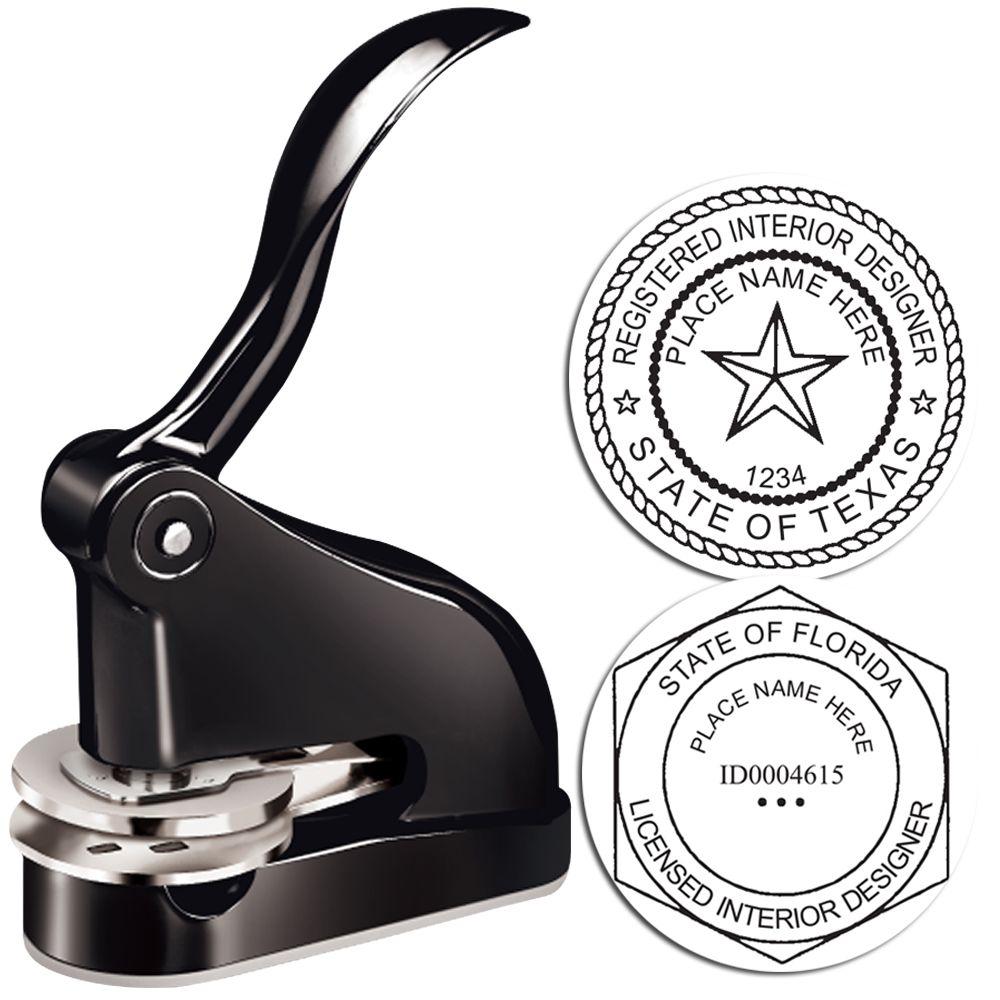
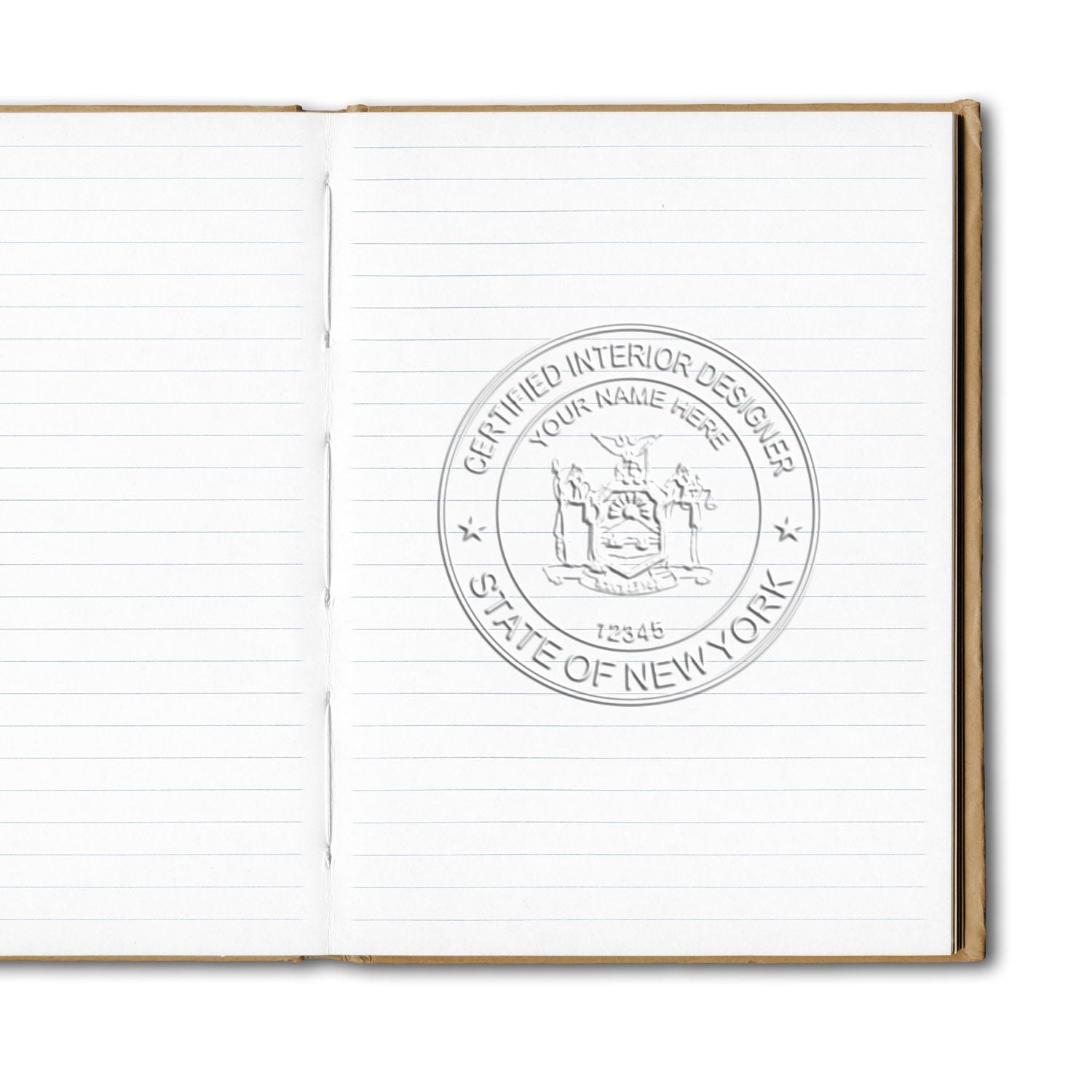
Embosser, rubber stamp or digital
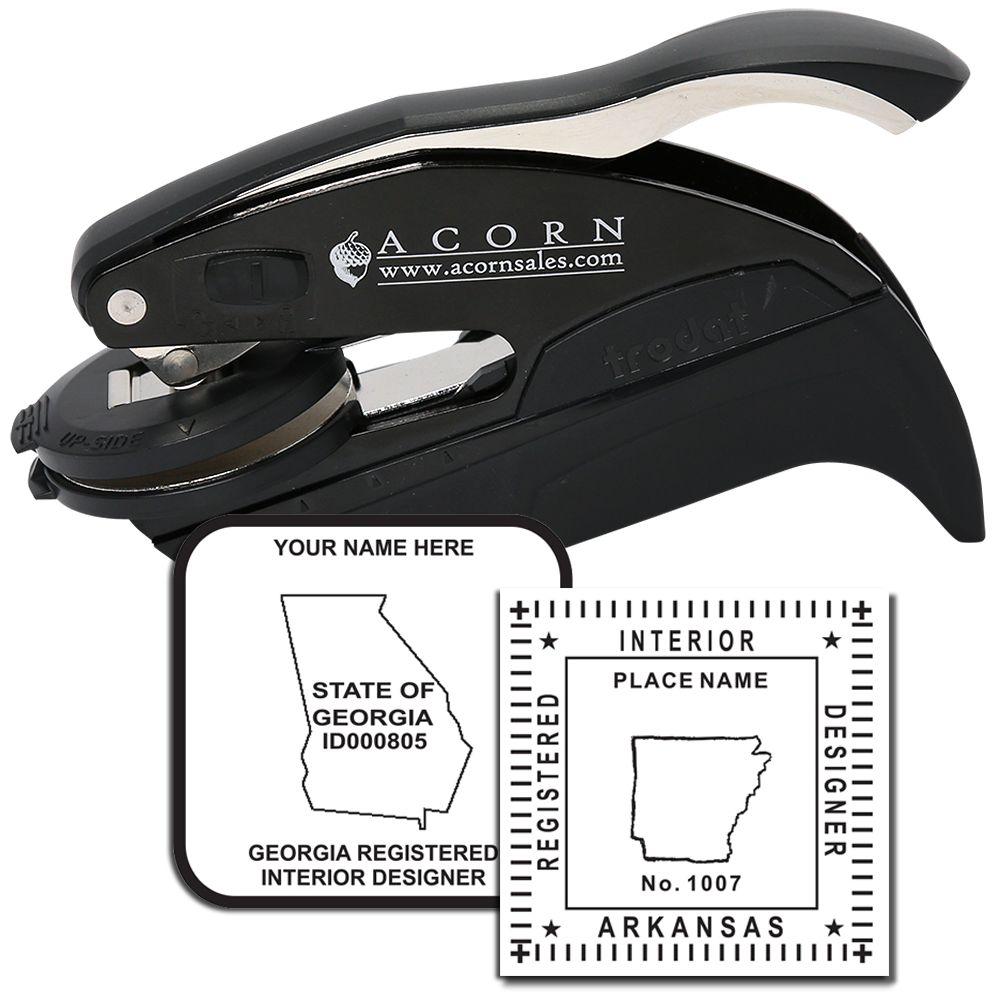
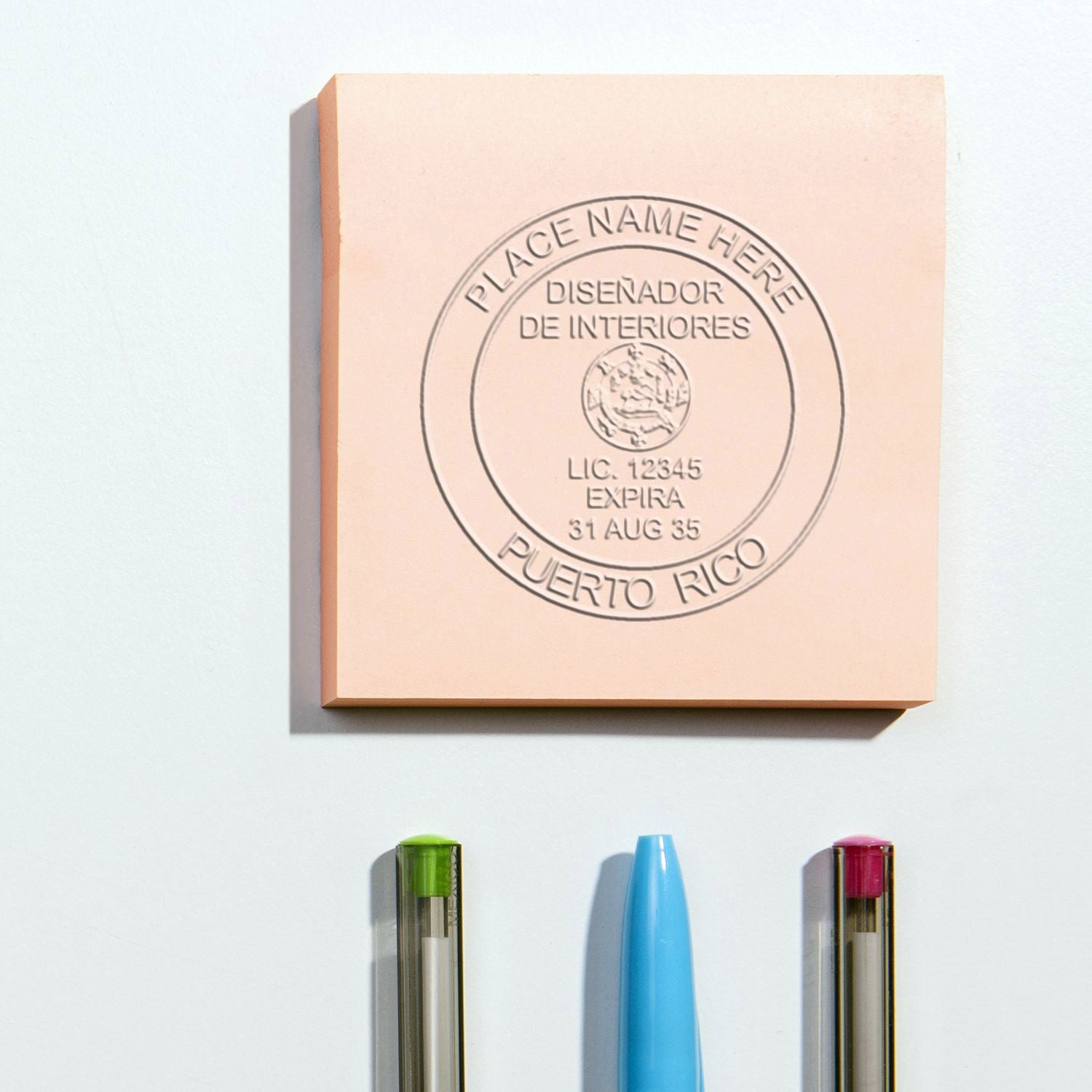
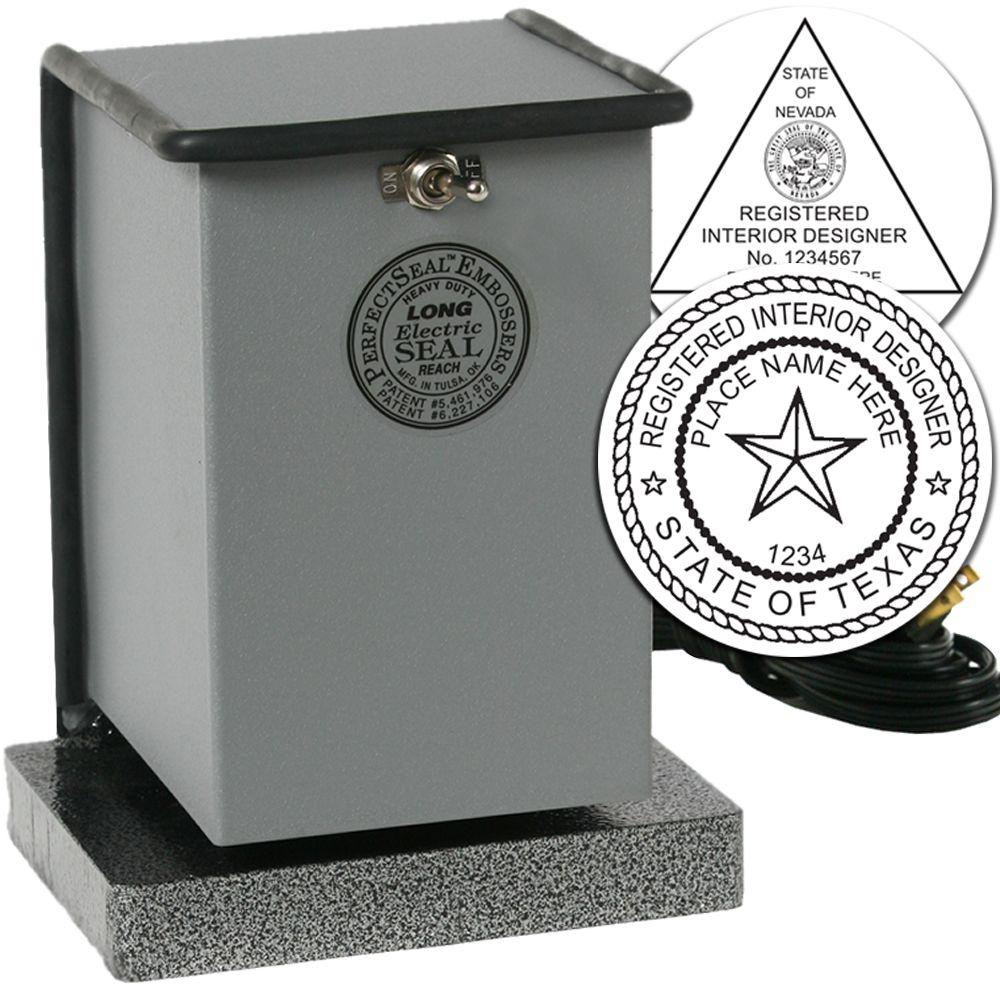
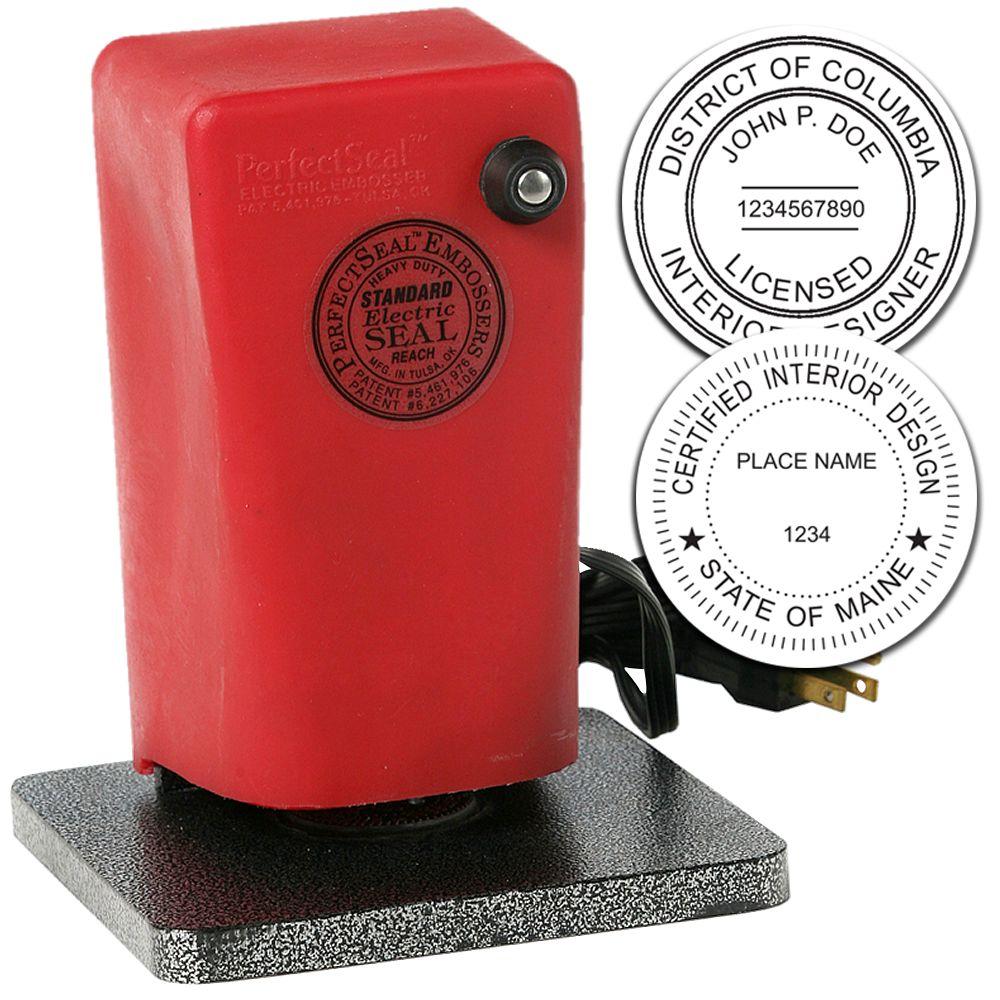
Not addressed in the statute. G.S. 83A-10(b) requires a seal prescribed by the Board and does not name a device family. The Board’s Seal Brochure states that electronic seals are permitted for registered interior designers subject to the requirements in 21 NCAC 02.0206(d) and (e), which is the Board applying those paragraphs to this credential. An inked stamp is the practical physical buy, because the statute requires the signature and the sealing date on documents filed for public record, and those have to reproduce.
Signing and dating
Three marks, stated in the statute itself. G.S. 83A-10(b) requires documents filed for public record to bear the signature and seal of the interior designer who prepared or approved the document “and the date on which it was sealed.” So the date is the sealing date, not merely a signing date. The statute does not require the signature to cross the seal, which is a real difference from the architect rule at 21 NCAC 02.0206(a)(2). Whether the handwritten signature prohibitions in.0206(a)(9) reach interior designers is not stated, because that rule does not mention them.
North Carolina really does register interior designers, and the seal is statutory
The Board changed its name for a reason. It is now the North Carolina Board of Architecture and Registered Interior Designers, and G.S. 83A-10 was amended in 2021 to add subsection (b), which requires each registered interior designer to obtain a seal as prescribed by the Board. That places North Carolina in a small group of states with a genuine interior design seal, alongside Maryland, Georgia and California, each of which prescribes something completely different.
Which documents must be sealed
Documents filed for public record, under G.S. 83A-10(b), and only within the scope of interior design. G.S. 83A-1(5a) defines interior design to include the preparation of reflected ceiling plans, space planning, creation or alteration of paths of egress, occupancy calculations provided no increase in occupancy or number of exits is required, selection of furnishings, and the fabrication of nonstructural elements within and surrounding interior spaces of buildings. G.S. 83A-1(8) defines the practice of interior design as the preparation of working drawings and documents relative to interior construction, materials, finishes, space planning, furnishings, fixtures and equipment as defined in subdivision (5a). The statute excludes structural system alterations, changes to access systems, live or dead load changes, occupancy changes and life safety modifications. G.S. 83A-10(b) separately bars sealing work for which you are not competent or certified.




Electronic and digital seals
The Board states in its Seal Brochure that electronic seals are permitted for registered interior designers subject to the detailed requirements in 21 NCAC 02.0206(d) and (e). Those paragraphs require a digital signature that is unique to the person using it, capable of verification, under that person’s sole control, and linked to the document so that it is invalidated if any data changes, with an authentication code defined as a message digest under Federal Information Processing Standards 180-4, and they prohibit using a scanned image of an original signature in lieu of a digital or electronic signature.
Renewal, lapse and retirement
G.S. 83A-11 governs expirations and renewals for the credentials this Board issues, and G.S. 83A-12 makes prohibited practice an offense. G.S. 83A-10(b) limits sealing to work for which the designer is competent or certified. Nothing in chapter 83A requires the seal to be surrendered or destroyed, and nothing changes the registration number. Because no expiration date is a stated element, renewal does not make the device stale.
Firm requirements
Not addressed for interior design firms. The firm seal duty in G.S. 83A-10(a) is written for licensed architectural firms, and the firm artwork in 21 NCAC 02.0206(a)(3) is lettered Registered Architectural Corporation or Registered Architectural Company. The Board’s Seal Brochure notes that a firm seal goes on the cover sheet of plans under rule 21 NCAC 02.0206, in the architectural context. No interior design firm seal or firm number is prescribed by statute.
What to check before you order
Ask the Board for its prescribed registered interior designer artwork before you order, because G.S. 83A-10(b) describes the device only as a seal as prescribed by the Board, and the published rule that sets architect seal artwork does not cover you. Do not start from an architect face: those carry the words Registered Architect and a 1 1/2 to 1 3/4 inch specification that is written for architects. An inked stamp is the practical choice, since documents filed for public record have to carry your signature and the date on which the document was sealed, and both must reproduce. Keep the device off any sheet that crosses into structural systems, load changes, occupancy changes or life safety modifications, which G.S. 83A-1 puts outside interior design.
Browse interior designer stamps and seals.
- The Essential Guide to North Carolina Interior Designer Seal Stamping
- Why You Need a North Carolina Interior Designer Stamp Online
Frequently asked questions
Is a seal required for a North Carolina registered interior designer?
Yes, by statute. G.S. 83A-10(b) requires each registered interior designer to obtain a seal as prescribed by the Board, and requires documents filed for public record to bear the signature and seal of the interior designer who prepared or approved the document and the date on which it was sealed. Subsection (b) was added to G.S. 83A-10 by S.L. 2021-81, and the Board is now named the North Carolina Board of Architecture and Registered Interior Designers.
What does a North Carolina interior designer seal look like?
The statute delegates the face to the Board and describes it only as “a seal as prescribed by the Board.” The published seal rule, 21 NCAC 02.0206, sets a two circle layout and a 1-1/2 to 1-3/4 inch diameter written for architects and architectural firms, and does not address registered interior designers. Order from the Board’s own prescribed artwork rather than from that rule.
What size is a North Carolina interior designer seal?
No dimension is stated for this credential. G.S. 83A-10(b) is silent, 21 NCAC 02.0206 does not reach interior designers, and the Board’s Seal Brochure states no size for any profession. Assuming the architect figure is the mistake to avoid; ask the Board for the prescribed artwork and order to it.
Rubber stamp or embosser in North Carolina?
The statute names no device family, so an inked stamp is the practical buy. G.S. 83A-10(b) requires your signature and the sealing date to appear on documents filed for public record, and both have to reproduce when the set is copied, which a dry emboss does not manage.
Does my signature have to cross the North Carolina seal?
The statute does not require it. G.S. 83A-10(b) asks for the signature, the seal and the date on which the document was sealed, without stating placement. That is a real difference from the architect rule at 21 NCAC 02.0206(a)(2). Whether the handwritten signature prohibitions at.0206(a)(9) reach interior designers is not stated either, because that rule does not mention them.
What date goes on a North Carolina sealed document?
The sealing date. G.S. 83A-10(b) asks for “the date on which it was sealed,” which is a narrower thing than a general signing date, so record the day you apply the seal.
What work can a North Carolina registered interior designer seal?
Interior design work as G.S. 83A-1 defines it, and nothing else. G.S. 83A-1(5a) lets interior design reach reflected ceiling plans, space planning, creation or alteration of paths of egress, occupancy calculations provided no increase in occupancy or number of exits is required, selection of furnishings, and the fabrication of nonstructural elements within and surrounding interior spaces. G.S. 83A-1(8) defines the practice as preparing working drawings and documents relative to interior construction, materials, finishes, space planning, furnishings, fixtures and equipment. The statute excludes structural system alterations, changes to access systems, live or dead load changes, occupancy changes and life safety modifications.
What happens if I seal work outside that scope?
G.S. 83A-10(b) bars affixing a seal or signature to any document depicting work for which you are not competent or certified, and the Board’s Seal Brochure states that registered interior designer seals are permissible only for interior design work as defined in G.S. 83A-1. A seal on a sheet that crosses those lines is the straightforward complaint, so it is worth checking the sheet rather than the set.
Can I seal North Carolina interior design documents electronically?
Yes. The Board states in its Seal Brochure that electronic seals are permitted for registered interior designers subject to the requirements in 21 NCAC 02.0206(d) and (e). Those paragraphs require a digital signature unique to the person using it, capable of verification, under that person’s sole control, and linked to the document so that it is invalidated if any data changes, with an authentication code defined as a message digest under Federal Information Processing Standards 180-4, and they prohibit using a scanned image of an original signature in lieu of a digital or electronic signature.
Does my North Carolina seal change when the registration renews?
No. G.S. 83A-11 governs expirations and renewals for the credentials this Board issues, and G.S. 83A-12 makes prohibited practice an offense. Nothing in chapter 83A requires the seal to be surrendered or destroyed, and nothing changes the registration number. Since no expiration date is a stated element, renewal does not make the device stale.
Is there a North Carolina interior design firm seal?
None is prescribed by statute. The firm seal duty in G.S. 83A-10(a) is written for licensed architectural firms, and the firm artwork at 21 NCAC 02.0206(a)(3) is lettered Registered Architectural Corporation or Registered Architectural Company. The Board’s Seal Brochure notes that a firm seal goes on the cover sheet of plans under rule 21 NCAC 02.0206, in the architectural context.








