
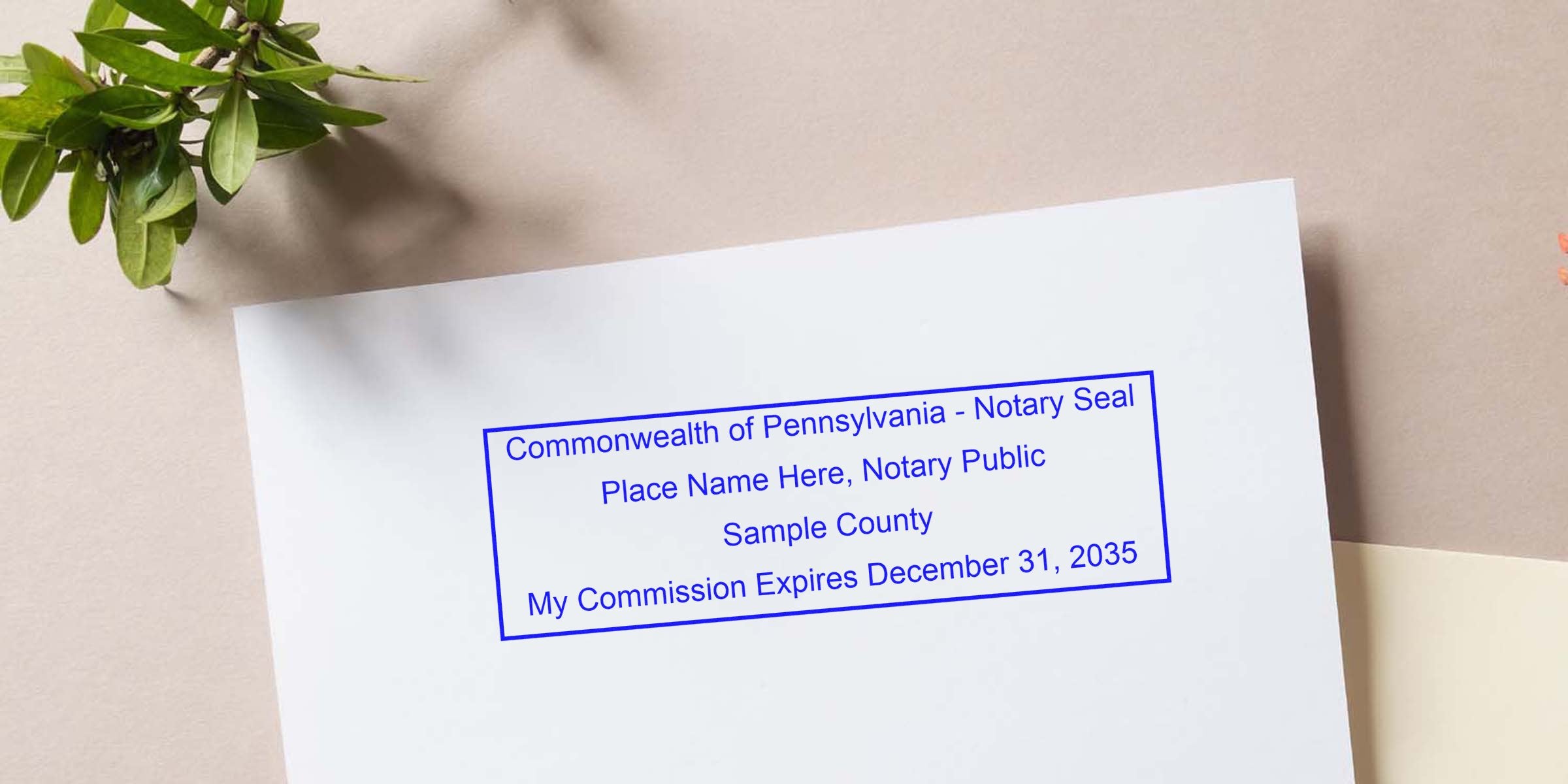
If you’re a notary public in the Keystone State, you already know how essential your official Pennsylvania notary stamp is for your daily tasks. It’s more than just an imprint on a piece of paper, though. Your stamp signifies legal credibility, ensures that documents are properly notarized, and underlines your professional dedication. In this post, we’ll walk through everything you need to know, from legal guidelines to finding a reliable supplier. By the end, you’ll be prepared to sign and stamp documents with confidence.
Understand The Stamp Essentials
A Pennsylvania notary stamp is a handheld device that imprints specific information onto legal documents, verifying that a qualified notary has witnessed a signature or administered an oath. Think of it as your personal seal of authenticity. It’s crucial in preventing fraud and ensuring the legitimacy of countless documents, from affidavits to property deeds.
What Does It Include?
- Your name exactly as it appears on your notary commission
- The words “Notary Public”
- The word “Pennsylvania” or “PA”
- Your commission expiration date (in some layouts)
These details leave a printed record of who notarized the document and can be crucial in any future legal scrutiny. Official notary stamps remove doubts and guesswork, making sure that anyone reviewing the document later can verify its authenticity.
Why You Need One
Without your stamp, a notarized document can be viewed as incomplete and potentially invalid. Think about the chaos that might ensue if someone tries to verify a signature years down the line, only to find no clear indication of the exact notary who handled it. That’s where the official Pennsylvania notary stamp takes center stage. It offers a quick, straightforward way to confirm your credentials.
Meet Pennsylvania’s Legal Guidelines
Pennsylvania has specific rules that determine what your stamp should look like and what information it should contain. As a commissioned notary, you bear the responsibility of staying compliant with these guidelines, mostly outlined by the Pennsylvania Department of State.
Format And Shape
State regulations allow for a rectangular or circular stamp. However, the rectangular design is more common among notaries for ease of alignment and readability. Whichever style you choose, you’ll want to confirm that your chosen device carries the proper text size so it remains legible.
Ink Color Requirements
Pennsylvania law doesn’t strictly say which ink color you must use, but black or dark blue ink is usually preferred. Dark colors ensure your stamp is easily readable and photocopies clearly, which is vital for maintaining an appropriate record.
Placement On Documents
Where you place your stamp on the document can matter. Aim for a blank spot near or around the signer's signature, but avoid overlapping any text. Overlapping can render important details illegible. If you want to ensure your notarial act is valid, give your stamp enough space to be clear and unobstructed.
Choose The Right Type
Notary stamps come in several varieties, and the one you pick often comes down to personal preference and frequency of use. Let’s run through the main types so you can figure out which one fits your lifestyle:
Self-Inking Stamps
- Built-in ink pad, automatically re-inks for each impression
- Delivers a swift, clean imprint
- Ideal if you handle moderate to high volume notarizations
Pre-Inked Stamps
- Uses an ink reservoir in the stamp’s body
- Typically offers crisp, highly detailed impressions
- Lasts longer before you need to refill, which is perfect for busy notaries
Traditional Rubber Stamps
- Requires a separate ink pad
- Potentially more cost-effective upfront
- Can be a bit messier, but remains a classic choice
If you’re constantly stamping documents, a self-inking or pre-inked version might be your best bet. If you occasionally handle notarizations and prefer a more old-school approach, you might lean toward a traditional rubber stamp. Always remember to keep an extra pad or ink refill handy to avoid inconvenient interruptions.
Ensure A Compliant Design
Even tiny details can make the difference between a valid notarial act and one that raises eyebrows later. So, whenever you order or re-order your official Pennsylvania notary stamp, confirm the design meets current state standards.
Mandatory Elements
- Full legal name as it appears on your commission
- “Notary Public” or an abbreviation recognized in Pennsylvania
- “Commonwealth of Pennsylvania” or an acceptable state abbreviation
- Optional: Commission expiration date (some prefer placing it on the stamp for clarity)
Any omission can lead to headaches down the road. Make sure every character is spelled correctly and spaced appropriately. If your name contains special characters, verify that your stamp provider can accommodate them so there’s no mismatch between your official record and the stamp imprint.
Tips For Clarity
- Opt for a font size that’s visible but not bulky
- Don’t overcrowd the stamp layout
- Check a proof or sample before finalizing your order
A quick check now can save you from having to reorder a non-compliant stamp later.
Maintain And Store Properly
Your notary stamp is a critical piece of your daily routine, so caring for it pays off. Treat it like you would any other professional tool, and you’ll see fewer ink smudges, more consistent impressions, and a longer lifespan overall.
Storage Techniques
Keep your stamp in a cool, dry place, away from direct sunlight. Extreme heat or cold can affect the ink and even warp certain plastic components. Also, avoid tossing it in an overstuffed drawer where pressure on the stamping surface could degrade its imprint quality.
Cleaning Up
Wiping your stamp with a soft, slightly damp cloth can remove dust or debris that collects on the surface. However, stay away from harsh chemicals that could wear down the rubber or degrade the ink.
Ink Refills And Replacements
- Self-inking or pre-inked stamps often come with easy refill options
- Traditional stamps require a separate pad replacement from time to time
- Keep extra ink refills on hand to avoid running out at a critical moment
By showing your stamp a little TLC, you ensure crisp, clear imprints every time.
Replace Or Renew Promptly
Every notary stamp, no matter how well you care for it, will eventually show signs of wear. Maybe the imprint becomes fuzzy, or a part of your name doesn’t appear clearly. That’s when you know it’s time for a replacement.
Signs Your Stamp Is Wearing Out
- Blurred letters on the imprint
- Spotty or uneven ink distribution
- Visible cracks or tears in the stamp’s rubber
If you notice even mild distortion, consider reordering right away. A worn stamp can cause legal complications if the information isn’t legible.
Changes In Commission Information
Also, don’t forget to update your stamp if anything about your notary commission changes. If your name changes or you renew your commission with a new expiration date, your official Pennsylvania notary stamp should reflect these edits immediately so your documentation stays valid.
Find A Trusted Supplier
One of the biggest pitfalls for notaries is purchasing from an unreliable source. You don’t want to risk poor-quality materials, outdated designs, or a supplier that isn’t up to speed on Pennsylvania regulations.
Look For Compliance Expertise
Suppliers who have years of experience serving Pennsylvania notaries typically understand the ins and outs of design requirements. At Acorn Sales, we have been creating notary stamps and seals for over 60 years, and we keep up to date with all the state’s guidelines. We also offer quick turnaround and multiple customization options so you can get your stamp just right.
If you need other supplies for your commission, feel free to check out our pennsylvania notary supplies. You’ll find everything from seals to record books, all in one convenient place.
Why Quality Matters
Inferior ink or poorly molded stamp components can lead to smudges or partial imprints. That’s the last thing you want when validating a contract or verifying an affidavit. Plus, a well-made stamp feels and functions better, saving you from repeated re-stamping to get it right.
Protect Yourself Legally
Notarizing a document is a legal undertaking. You can face penalties if your stamp is improperly used or if your records aren’t in line with regulations. While the stamp itself won’t shield you from every liability, having a proper imprint will help confirm your compliance.
Security Measures
- Store your stamp out of reach of unauthorized individuals
- Never lend your stamp, even to colleagues
- Keep a log of your notarizations to back up your stamp’s usage
Locking up your stamp after business hours is a simple way to avoid misuse. In the event your stamp is lost or stolen, notify the appropriate authorities immediately to protect both your notary commission and anyone who might rely on your services.
Potential Repercussions
An invalid stamp impression or a missing stamp can cause official documents to be questioned. This can lead to revocation of your notary commission or even civil lawsuits if significant harm occurs. By following best practices, you reduce these risks dramatically.
Boost Your Professional Image
Even though your official Pennsylvania notary stamp is primarily about legality, it also shapes how others perceive you. A well-organized, clearly printed stamp makes you look prepared and professional in front of clients who trust you with important legal documents.
Consistency And Branding
While you’re not running a major corporation, consistency in how you present your notary services can quietly enhance your reputation. If you display a neat, legible stamp every time, clients notice your attention to detail. This might even lead to referrals and repeat business.
Personal Touch
Some notaries choose a stamp design that includes optional flair, like a slim border around the perimeter. While you have to keep core elements in place, a subtle creative touch can make your stamp stand out. That said, be sure not to clutter the design. After all, clarity remains priority number one.
Recap And Next Steps
You’ve covered a lot of ground on the official Pennsylvania notary stamp, from understanding what should be on it to keeping it in tip-top shape. Before you dive back into your day, let’s highlight some key steps:
- Confirm your stamp includes all required elements and meets Pennsylvania guidelines
- Choose a stamp type that fits your workflow, whether self-inking, pre-inked, or traditional rubber
- Partner with a supplier that specializes in Pennsylvania notary needs, such as Acorn Sales, to ensure high quality and quick turnaround
Once you’ve got your stamp sorted out, you’ll be able to notarize documents with complete peace of mind. If you have any questions, never hesitate to reach out to trusted professionals, the state’s notary commission office, or your colleagues.
Pennsylvania generally requires a notary stamp, but embossers are popular for adding a more official or traditional appearance. Whether or not you need both depends on your personal preference and the documents you handle. Some clients appreciate the embossed imprint for formality, but always confirm if it’s required by the receiving party.
With your official Pennsylvania notary stamp in hand and a solid understanding of the rules, skills, and supplies you need, you’re all set to manage your notarial duties confidently. Happy stamping!
Frequently Asked Questions
How Often Should I Replace My Official Pennsylvania Notary Stamp?
In general, replace your stamp as soon as you notice any wear and tear. If your impressions start looking fuzzy or incomplete, that’s your cue. You’ll also need a new stamp if any part of your official details changes, such as your legal name or commission expiration date.
Can I Order An Official Pennsylvania Notary Stamp Online?
Yes, you can order a compliant stamp online, especially from reputable providers like Acorn Sales. We’ve specialized in custom stamping solutions for more than six decades, offering reliable, professionally crafted products that meet Pennsylvania requirements. Ensure the company you choose stays current with state regulations so your stamp is indeed valid.








