

Written by Acorn Sales Company, manufacturing stamps and seals since 1964 · Reviewed by Holly R, VP of Sales and Marketing at Acorn Sales, against the Georgia State Board of Architects and Interior Designers and Ga. Comp. R. & Regs. r. 50-2A-.01 on 21 September 2026 · Updated 21 September 2026
Georgia sets the diameter at exactly 1 3/4 inches and then names the typeface and point size for every line. Rule 50-2A-.01(9) is one of the most prescriptive seal specifications in the country: State of Georgia in Arial black 10 point, Registered Architect in Arial black 7 point, your name in Arial 10 point and your certificate number in Arial 7 point, all in accordance with the sample printed in the rule. A supplier who substitutes a similar sans serif face or nudges the point size to fit a house die has produced something that does not comply in all respects with that sample.
The shape contrast inside the same board is worth holding onto. The Georgia registered interior designer seal at rule 50-9-.07(8) is also 1 3/4 inches, but it is square: 1 3/4 by 1 3/4 inches with a 1/16 inch border and a 1/4 inch corner radius. Same board, same dimension, completely different die. Georgia engineers and land surveyors are different again, a 1 1/2 inch outer circle with a 1 inch inner circle.
Keep the firm off the face. Rule 50-2A-.01 states that “A SEAL containing a firm name or a corporate name is not acceptable under this paragraph,” because the device is the personal professional seal of a Georgia registered architect under Code chapter 43-4.
Georgia architect seal requirements at a glance
| Requirement | Georgia rule | Source |
|---|---|---|
| Seal required | Yes | Ga. Comp. R. & Regs. r. 50-2A-.01 |
| Required elements | Your name, Your certificate number, REGISTERED ARCHITECT and STATE OF GEORGIA | Ga. Comp. R. & Regs. r. 50-2A-.01(9) |
| Size and shape | 1 3/4 inches in diameter. | Ga. Comp. R. & Regs. r. 50-2A-.01(9) |
| Device allowed | An inked device is the baseline and an electronic seal is permitted. | Ga. Comp. R. & Regs. r. 50-2A-.01 |
| Signature and date | Seal plus signature with the issue date and the purpose. | Ga. Comp. R. & Regs. r. 50-2A-.01(1), (3) |
| What must be sealed | All documents prepared by the architect or under the architect’s responsible control, and prototypical documents for which the architect of record assumes responsibility. | Ga. Comp. R. & Regs. r. 50-2A-.01, 50-2A-.02, 50-2A-.03 |
| Electronic seal | Permitted, with an opt out the Board wrote into the rule. | Ga. Comp. R. & Regs. r. 50-2A-.01(2) |
| Renewal and lapse | Rule 50-2A-.01 requires the architect to hold a current Georgia certificate of registration when affixing the seal, and provides that an architect shall not affix or permit to be affixed the seal or the architect’s name to any document unless holding a current certificate at that time. | Ga. Comp. R. & Regs. r. 50-2A-.01, 50-6 |
| Firm requirements | Firm data stays off the seal. | Ga. Comp. R. & Regs. r. 50-2A-.01(5), 50-3 |
| Regulator | The Georgia State Board of Architects and Interior Designers | Ga. Comp. R. & Regs. ch. 50-2A, Signing and Sealing Documents as Registered Architect, rules 50-2A-.01, 50-2A-.02 and 50-2A-.03, read from the Georgia Secretary of State rules portal, together with chapters 50-3 and 50-6. One board covers architects and registered interior designers, but each has its own sealing chapter: 50-2A for architects and rule 50-9-.07 for registered interior designers. Georgia engineers and land surveyors are a different board entirely, under chapter 180-12. |



Is a seal required in Georgia?
Georgia puts the duty in a dedicated chapter of the Board rules. Rule 50-2A-.01 requires every holder of a certificate of registration to secure a seal which shall be imprinted on all documents prepared by the architect or under the architect’s responsible control, or which are prototypical documents for which the architect of record is assuming professional responsibility. The seal goes on each drawing, on the cover and index pages identifying all specifications covered by those index pages, and on all other documents of service. For documents submitted to obtain a building permit or for any other requirement set by law, “the architect’s signature shall be applied with the issue date and purpose appropriately identified on the document.”
What must appear on the seal
- Your name
- Your certificate number
- REGISTERED ARCHITECT
- STATE OF GEORGIA
Georgia specifies the typography, which almost no other state does. Rule 50-2A-.01(9) sets the fonts and sizes: State of Georgia in Arial black 10 point, Registered Architect in Arial black 7 point, the name in Arial 10 point and the certificate number in Arial 7 point, all in accordance with the sample printed in the rule. One thing is prohibited outright: “A SEAL containing a firm name or a corporate name is not acceptable under this paragraph,” because the seal is the personal professional seal of a Georgia registered architect under Code chapter 43-4. No expiration date belongs on the face.
Size and shape
1 3/4 inches in diameter. Rule 50-2A-.01(9) states that “It shall be 1 3/4 inches in diameter with type font and size as indicated,” and requires the seal to comply in all respects with the printed sample. That is a single figure, not a range, so a nominal 1.75 inch die is the target and a vendor tolerance that drifts to 1.5 or 2 inches is out of specification. Georgia registered interior designers are the same measurement but a completely different shape, and Georgia engineers and land surveyors are a 1 1/2 inch outer circle with a 1 inch inner circle.





Embosser, rubber stamp or digital
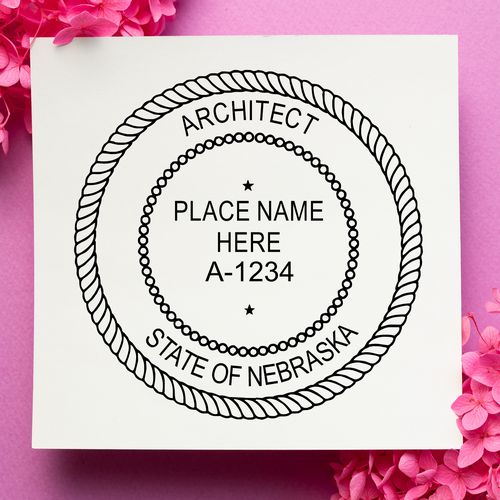
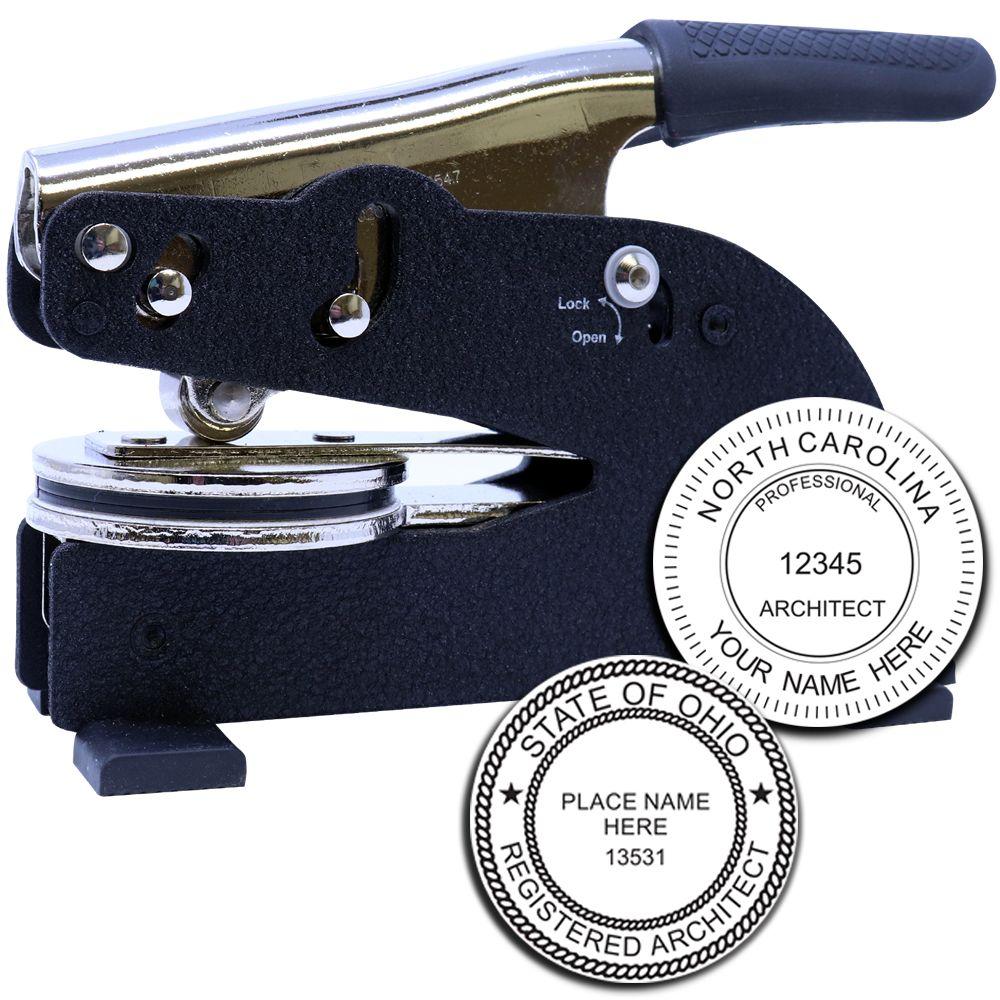
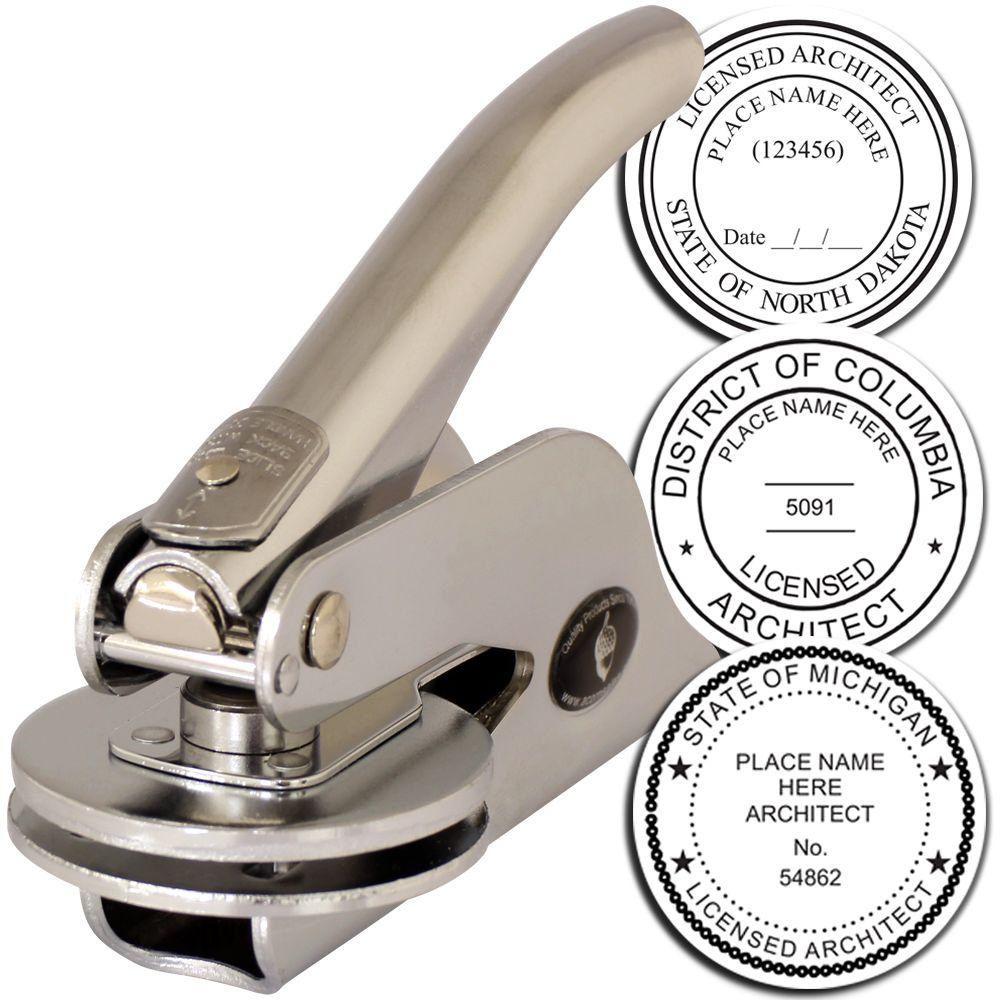
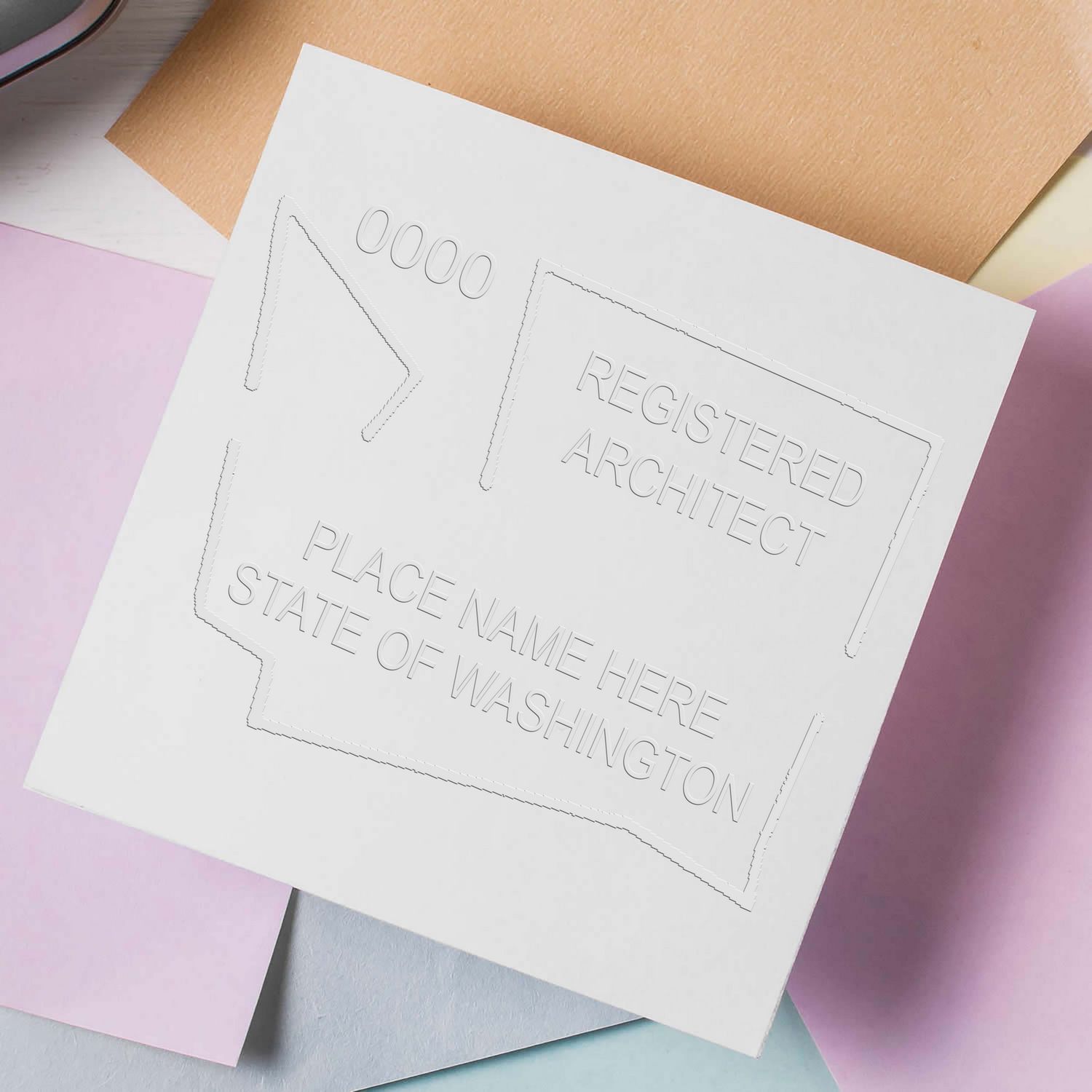
An inked device is the baseline and an electronic seal is permitted. Rule 50-2A-.01 provides that “Nothing in these rules shall preclude the use of a seal and signature electronically applied to the document.” The safe buy is a rubber stamp reproducing the printed sample at exactly 1 3/4 inches, because the rule polices the face against that sample and a crimp impression does not carry the typography through a photocopy.
Signing and dating
Seal plus signature with the issue date and the purpose. Rule 50-2A-.01(1) requires that for all documents of service submitted to obtain a building permit or for any other requirement set by law, the architect’s signature be applied with the issue date and purpose appropriately identified on the document. Georgia does not require the signature to cross the seal and does not require blue ink from architects, which is a real divergence from the registered interior designer rule in the same chapter set. Subsequent revisions made under the responsible control of the architect of record, when so noted, are treated the same as documents originally signed, sealed and dated.
Georgia specifies the font, and your architect seal is round while the interior designer seal is square
Rule 50-2A-.01(9) is one of the most prescriptive seal specifications in the country. It gives a diameter of exactly 1 3/4 inches and then names the typeface and point size for each line: State of Georgia in Arial black 10 point, Registered Architect in Arial black 7 point, your name in Arial 10 point and your certificate number in Arial 7 point, all conforming to the sample printed in the rule. A supplier substituting a similar sans serif face or nudging the point size has produced a device that does not comply in all respects with the sample, which is what the rule asks for.
Which documents must be sealed
All documents prepared by the architect or under the architect’s responsible control, and prototypical documents for which the architect of record assumes responsibility. Placement is per drawing: the seal is imprinted on each drawing, on the cover and index pages identifying all specifications covered by the index pages, and on all other documents of service. The rule limits when you may seal at all: only where you prepared the work or supervised it, where a registered interior designer prepared documents that you thoroughly reviewed, or for prototypical drawings with written authorization from the originating architect. Rule 50-2A-.03 governs prototypical drawings and requires the architect of record to identify the original architect and retain the written authorization for ten years. Rule 50-2A-.02 adds a Notice of Shared Responsibility where the architect provides construction document preparation only.


Electronic and digital seals
Permitted, with an opt out the Board wrote into the rule. Rule 50-2A-.01 allows a seal and signature electronically applied, and then lets the architect of record restrict electronic access to the seal and signature by substituting, for all documents subsequently issued, the notation “These documents have been properly sealed and signed by (named) architect of record. Original permitted sets of these documents are on file with (name permitting authority) and are kept at the job site.” No certificate authority, hash standard or technology is named. That substitution is a Georgia specific device and it is not available in most states.
Renewal, lapse and retirement
Rule 50-2A-.01 requires the architect to hold a current Georgia certificate of registration when affixing the seal, and provides that an architect shall not affix or permit to be affixed the seal or the architect’s name to any document unless holding a current certificate at that time. Improper use of the seal, or permitting improper use, is ground for discipline. Renewal and professional development sit in chapter 50-6. Because no expiration date is a seal element and the certificate number does not change, renewal does not make the device stale.
Firm requirements
Firm data stays off the seal. Rule 50-2A-.01 states that a seal containing a firm name or a corporate name is not acceptable, because the device is the personal professional seal of a Georgia registered architect. Firm and partnership naming is governed separately by chapter 50-3, Firms, Partnerships, Corporations Proper Names. This is a sharp contrast with Georgia engineers and land surveyors, where chapter 180-12 requires the certificate of authorization name, number and expiration date on the issued document itself.
What to check before you order
Order a round rubber stamp exactly 1 3/4 inches in diameter, reproducing the sample printed at rule 50-2A-.01(9). Four lines: STATE OF GEORGIA in Arial black 10 point, REGISTERED ARCHITECT in Arial black 7 point, your name in Arial 10 point, and your certificate number in Arial 7 point. Do not let a supplier substitute a similar typeface or resize the text to fit a house die. Keep your firm or corporate name off the seal entirely, because the rule says such a seal is not acceptable. On permit documents apply your signature with the issue date and the purpose identified. If you want to limit electronic exposure of your seal, the rule lets you substitute the prescribed notation on subsequently issued documents.
Browse architect stamps and seals.
Frequently asked questions
Is an architect seal required in Georgia?
Yes. Rule 50-2A-.01 requires every holder of a certificate of registration to secure a seal, which is imprinted on all documents prepared by the architect or under the architect’s responsible control, or which are prototypical documents for which the architect of record assumes professional responsibility. The seal goes on each drawing, on the cover and index pages identifying all specifications covered by those index pages, and on all other documents of service.
What has to appear on a Georgia architect seal?
Four lines under rule 50-2A-.01(9): your name, your certificate number, REGISTERED ARCHITECT and STATE OF GEORGIA. Each has its own typeface and point size, and the seal must comply in all respects with the sample printed in the rule. No firm name, no corporate name and no expiration date belongs on the face.
What size is a Georgia architect seal?
1 3/4 inches in diameter. Rule 50-2A-.01(9) states that “It shall be 1 3/4 inches in diameter with type font and size as indicated.” That is a single figure, not a range, so a nominal 1.75 inch die is the target and a vendor tolerance that drifts to 1.5 or 2 inches is out of specification.
What typefaces does Georgia require on the seal?
State of Georgia in Arial black 10 point, Registered Architect in Arial black 7 point, your name in Arial 10 point and your certificate number in Arial 7 point, per rule 50-2A-.01(9) and the printed sample. Give a supplier that specification rather than a description of the layout, and check the proof against the sample before approving it.
Can I use an embosser or an electronic seal in Georgia?
Rule 50-2A-.01 provides that “Nothing in these rules shall preclude the use of a seal and signature electronically applied to the document.” A rubber stamp reproducing the printed sample at exactly 1 3/4 inches is the practical buy, because the rule polices the face against that sample and a crimp impression does not carry the typography through a photocopy.
Do I have to sign across a Georgia seal?
No. Rule 50-2A-.01(1) requires that for all documents of service submitted to obtain a building permit or for any other requirement set by law, the architect’s signature be applied with the issue date and purpose appropriately identified on the document. Georgia does not require the signature to cross the seal and does not require blue ink from architects, which is a real divergence from the registered interior designer rule in the same chapter set. Subsequent revisions made under your responsible control, when so noted, are treated the same as documents originally signed, sealed and dated.
Which documents get the Georgia architect seal?
All documents prepared by you or under your responsible control, and prototypical documents for which you are the architect of record assuming responsibility. Placement is per drawing: each drawing, the cover and index pages identifying all specifications covered by the index pages, and all other documents of service. Rule 50-2A-.02 adds a Notice of Shared Responsibility where the architect provides construction document preparation only.
Can I seal a prototypical drawing in Georgia?
Yes, on conditions. Rule 50-2A-.01 limits sealing to work you prepared or supervised, documents prepared by a registered interior designer that you thoroughly reviewed, or prototypical drawings with written authorization from the originating architect. Rule 50-2A-.03 governs prototypical drawings and requires the architect of record to identify the original architect and retain the written authorization for ten years.
Can I limit electronic access to my Georgia seal?
Yes, and the opt out is written into the rule. Rule 50-2A-.01(2) lets the architect of record restrict electronic access to the seal and signature by substituting, for all documents subsequently issued, the notation “These documents have been properly sealed and signed by (named) architect of record. Original permitted sets of these documents are on file with (name permitting authority) and are kept at the job site.” No certificate authority, hash standard or technology is named anywhere in the rule. That substitution is specific to Georgia and is not available in most states.
Does renewal make my Georgia seal stale?
No. No expiration date is a seal element and the certificate number does not change, so renewal never requires a new device. What rule 50-2A-.01 does require is a current certificate at the moment you seal: an architect shall not affix, or permit to be affixed, the seal or the architect’s name to any document unless holding a current certificate at that time. Improper use of the seal, or permitting improper use, is ground for discipline. Renewal and professional development sit in chapter 50-6.
Can a Georgia firm name go on the seal?
No. Rule 50-2A-.01(5) states that a seal containing a firm name or a corporate name is not acceptable, because the device is the personal professional seal of a Georgia registered architect. Firm and partnership naming is governed separately by chapter 50-3. Georgia engineers and land surveyors go the other way, with chapter 180-12 requiring the certificate of authorization name, number and expiration date on the issued document, so an office running both disciplines carries two habits that pull in opposite directions.








