
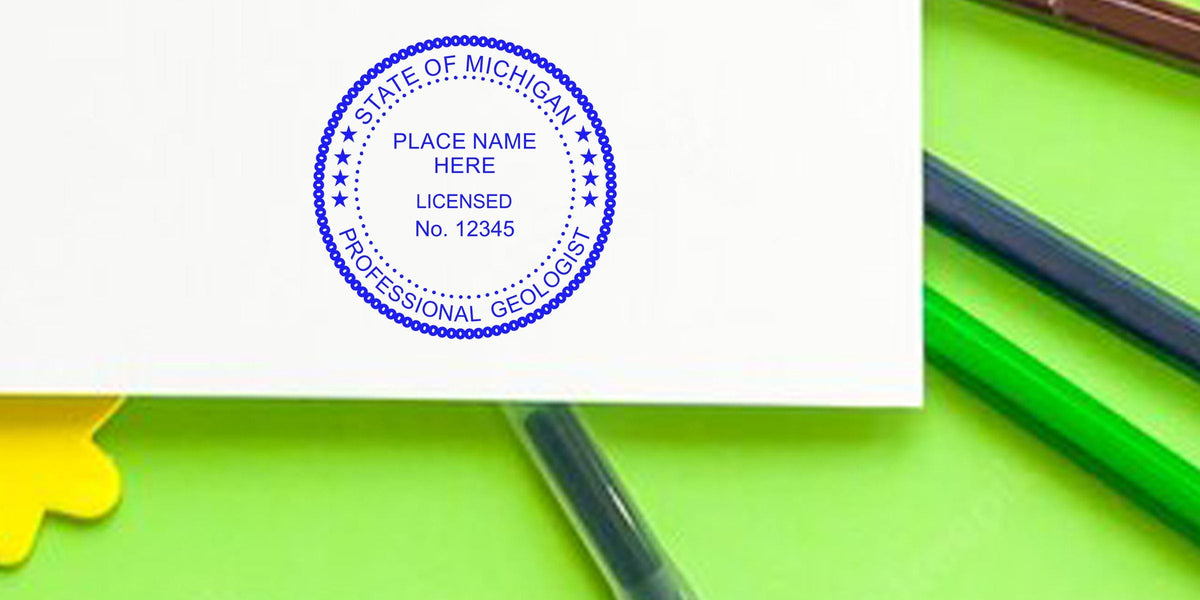
Navigating the Michigan geologist stamp requirements can feel a bit daunting, especially when you’re juggling multiple tasks as a practicing geologist. You want to make sure you’re using the proper format, following the right guidelines, and staying compliant with state regulations. After all, your stamp or seal carries weight—it’s a formal reflection of your expertise and professional standing. But don’t worry, it doesn’t have to be complicated. With a bit of know-how about licensing basics, required elements, and stamp options, you’ll be set to meet Michigan’s rules. Let’s break it all down, so you can spend less time on paperwork and more time out in the field.
Before we dive into specifics, here’s the core idea: your professional stamp or seal is designed to demonstrate that you meet the standards to practice geology in Michigan. That little piece of equipment ensures your reports, site evaluations, and other official documents are recognized for their credibility. In the sections ahead, you’ll learn how to secure your stamp, which details it needs to include, and how to keep things organized. By the end, you’ll have a clear framework for fulfilling these requirements confidently.
Know the Licensing Basics
Licensing is your starting point. Without a Michigan geology license in hand, a stamp or seal alone won’t mean much. Understanding the fundamentals of licensure ensures that when you do invest in a seal, you’ll be using it in a fully authorized capacity.
Michigan Requirements at a Glance
The rules for geologist licensing in Michigan aren’t terribly complex, but there are a few key areas you should keep in mind:
- Educational Credentials: You typically need a relevant degree in geology or a closely related field from an accredited institution.
- Experience: Expect to show some professional experience (often a set number of years) working under a licensed geologist or in a geology-related position.
- Examination: You’ll likely need to pass a professional geology exam recognized by the state.
- Ethics and Conduct: Every licensed geologist must adhere to Michigan’s professional ethics guidelines to maintain that license in good standing.
If you’re just starting, you can visit the state’s official licensing board website to verify your exact requirements, but the above points give you a general road map.
When You Need a Stamp
Once you’ve secured your license, a stamp (or seal) becomes a visible symbol of your professional authority. You’ll usually apply it to documents such as investigative reports, survey records, and any official submission where your geologist credentials are required. The stamp not only confirms your contribution but also safeguards the integrity of your work.
If you’re not sure whether you need a stamp for a particular document, ask yourself: “Is this a formal report or official plan requiring a licensed geologist’s signature?” If the answer is yes, then your stamp or seal should be there. Some agencies and clients might even insist on it before accepting your paperwork.
Understand Required Stamp Elements
Once you understand the license behind the stamp, the next step is to figure out exactly what goes on your stamp face. Michigan’s regulations specify several must-have components. Missing any one of them could leave your documentation incomplete or risk rejection from regulatory bodies.
What Must Be Included?
Most states want your full name, license number, and your professional title included in the design. Michigan is no exception. Typically, you’ll see some combination of:
- Your Full Legal Name: Make sure this matches the name on your license or certificate.
- The Words “Licensed Professional Geologist” (or similar phrasing recognized by Michigan).
- Your License Number: This is essential for verifying your credentials instantly.
- A State Identifier (e.g., “State of Michigan” or “Michigan Licensed Geologist”).
Don’t forget legibility. A smudged or faint imprint can be as useless as no imprint at all. If your stamp text is too small or packed in, you risk losing sharpness. Aim for clarity so that every required detail is easy to read.
Avoiding Common Mistakes
Even with straightforward guidelines, it’s easy to overcomplicate your stamp. Here are a few pitfalls to avoid:
- Overcrowding: Resist the urge to add decorative elements or a large logo. Simplicity helps ensure text is readable.
- Wrong Terminology: Double-check you’re using the exact wording or abbreviations required by the state board.
- Incorrect Size: Trying to shrink your stamp to fit a tight margin can make the imprint illegible. Keep a comfortable stamp diameter, typically around 1 5/8 to 2 inches.
The key to meeting all Michigan geologist stamp requirements is following official standards for text, content, and readability. When in doubt, always refer back to Michigan’s licensing board for confirmation.
Follow Michigan Geologist Seal Rules
When people say “stamp,” they often mean the same thing as “seal.” In practice, states like Michigan use the terms interchangeably. You’ll see references to a “seal” in legal texts, which typically translates to any authorized marking that verifies your identity and professional status. Let’s go a step deeper to help you confidently handle the seal portion.
Digital vs Physical Seals
You might be surprised to learn digital seals are on the rise—and for good reasons. Whether you’re sending documents electronically or storing them in a cloud-based system, a digital seal can expedite processes and reduce paper shuffling. Michigan often allows:
- Digital Seals: If recognized by the appropriate authorities, these can be embedded into your electronic documents, speeding up approvals.
- Physical Stamps: Tried-and-true rubber or metal stamps have a tangible presence on hard copies that some clients prefer for their records.
Check local rules for specifics on whether you can use a digital seal in place of a physical stamp, or if both are required in certain scenarios. Some agencies or firms might want a hard copy, while others are fully satisfied with digital documentation.
Proper Usage Guidelines
Regardless of the format, keep usage consistent. Guidelines that apply to physical stamping usually apply to digital stamping too. Here are a few universal rules:
- Use It Only on Final Documents: Remember, stamping a draft could confuse recipients about what’s official.
- Avoid Stamping Someone Else’s Work: If you didn’t directly supervise or create the content, you usually shouldn’t seal it.
- Keep a Stamp Log: Some professionals track when and where they use each seal to maintain a paper trail of their work.
Consistency is your friend. If you stick to a reliable routine for when and how you use your seal, you’ll stay compliant and make audits or license renewals much easier.
Pick the Right Stamp Option
Not all stamps are created equal. Whether you prefer a traditional rubber stamp with a separate ink pad or a self-inking model, you’ll find different nuances. You might even want a pre-inked option, saving you from re-inking altogether. Let’s go over your main choices so you can find the best fit.
Self-Inking vs Pre-Inked
These two often get confused, but they have some distinct differences:
-
Self-Inking Stamps
- Have an internal ink pad.
- Can produce several thousand impressions before re-inking.
- Typically last many years with ordinary use.
- Re-inking is straightforward.
-
Pre-Inked Stamps
- Contain ink within the die itself.
- Often produce crisp, precise impressions due to oil-based inks.
- Usually provide more impressions before needing a refill.
- Tend to be pricier but offer high detail.
Your choice depends on budget and preference for image quality. Both types can meet Michigan’s requirements as long as your stamp design is correct.
Choosing a Reliable Supplier
You have countless options online and in local shops, so how can you decide where to get your stamp? First, look for a supplier that knows the ins and outs of state mandates. For instance, if you’re considering upgrading your stamp, check out the michigan geologist stamp options to see designs that already align with the board’s standards. This helps you skip guesswork and ensures accuracy.
Beyond that, consider:
- Customer Reviews: See how others have rated the supplier’s service and product durability.
- Turnaround Time: Prompt delivery matters if you’re facing a tight deadline.
- Customer Support: If they’re quick to respond and knowledgeable about state-specific details, that’s a great sign.
You want to be certain your chosen stamp provider understands Michigan’s laws, especially if you’re purchasing a customized seal.
Rely on Acorn Sales
If you’re looking for a supplier with decades of experience, friendly customer service, and a proven commitment to quality, Acorn Sales fits the bill. We’ve been in business since 1964, serving professionals like you who need stamps and seals that meet diverse state standards—including Michigan. Let’s dig into why so many geologists trust us.
Why Trust Acorn Sales
Over the years, we’ve learned the importance of consistent quality and reliable support. Our custom stamps and seals adhere to each state’s mandated specifications. We even stay on top of regulation changes so you don’t have to. If you send us your licensing details, we ensure your seal is compliant before it arrives at your door.
Our customers also appreciate these perks:
- Free Digital Seal: We include a digital version of your official stamp. That means you can quickly attach it to electronic documents without scanning paper copies.
- Quality Guarantee: Every stamp we produce is rigorously checked for clarity and durability.
- Ongoing Customer Support: Not sure how to re-ink your new stamp or whether dimensions are correct? We’re just a phone call or email away.
Ordering Process
Ordering from Acorn Sales is straightforward. You’ll provide your name, license number, and any other state-required text. Once we have those details, our design team crafts a proof for you to review. After your thumbs-up, we manufacture your stamp or seal, perform final checks, and ship it out. We work quickly, so you aren’t stuck waiting to finalize important reports.
Here’s a peek at the ordering steps:
- Fill Out Our Online Form: Enter your state, profession, and relevant license info.
- Review the Proof: Check for spelling, correct license number, and layout.
- Approve and Pay: Once everything looks right, complete checkout.
- Receive Your Stamp: Your physical stamp (and digital seal) will be on its way.
It’s just that simple—and since we’ve been perfecting this since 1964, we can pretty much guarantee a hassle-free process.
Summarize Key Points
If you remember nothing else, keep these essentials in mind:
- Make sure you’re properly licensed before purchasing a stamp or seal.
- Include all mandatory elements on your stamp (your name, license number, professional title, and state reference).
- Follow Michigan guidelines on usage, especially regarding digital or physical copies.
- Choose a trusted supplier, like Acorn Sales, for a seamless, worry-free ordering experience.
When you’re ready to put your Michigan geologist stamp or seal into action, you’ll find peace of mind knowing it meets the state’s requirements. That little imprint instantly validates your professional work, helping you move ahead with confidence. Feel free to explore our offerings or ask more questions if you need extra guidance. Meanwhile, don’t be shy about sharing your own tips and experiences in the comments—your insights might help another geologist navigate the process with ease!
Frequently Asked Questions
Do I really need both a stamp and a seal?
In many official documents, “stamp” and “seal” can be used interchangeably. Michigan typically allows a seal to be either physical or digital, but make sure your usage matches relevant project requirements.
Is there an expiration date on my seal?
Normally, your stamp or seal remains valid as long as your license is active. If your license lapses, you cannot legally use the stamp until you renew. Be sure to keep your license current to avoid any issues.
Will I get a digital seal if I order a physical stamp?
Yes, at Acorn Sales we provide a free digital seal when you purchase a physical stamp. You can use that digital file whenever you submit electronic documents, saving a lot of time whenever you’re pulling together reports.
Can I customize the layout of my Michigan stamp?
You can request certain design preferences, but the core elements (like your name, license number, and state designation) must remain visible and compliant. We encourage you to keep things simple to ensure readability and adherence to state rules.








