
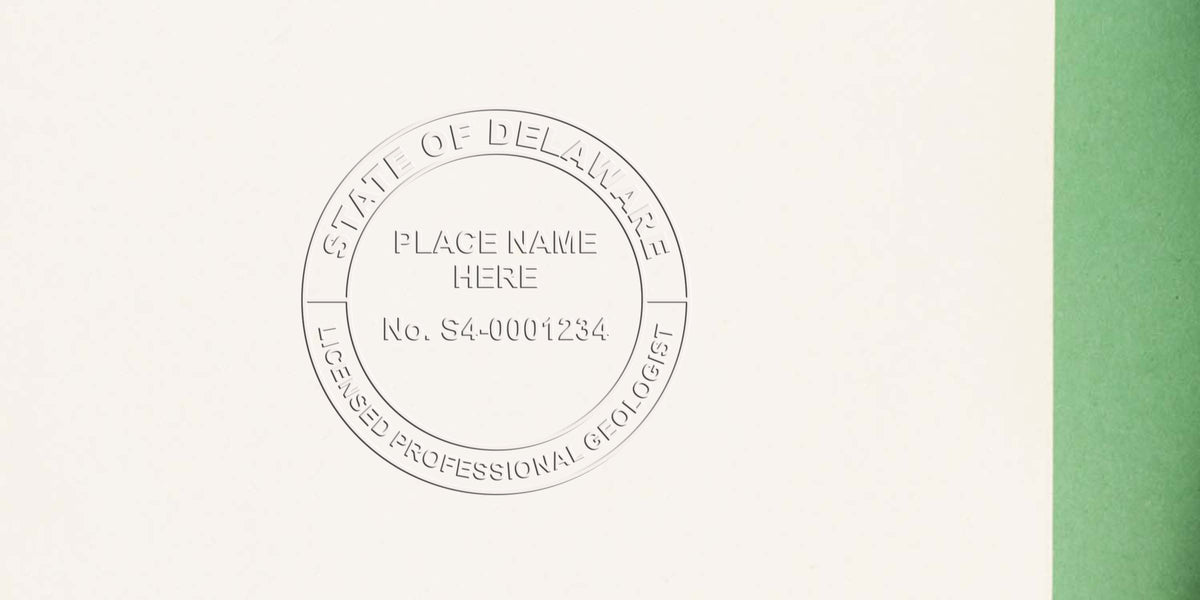
If you’re a geologist in Delaware, you’ve likely come across the term “delaware geologist stamp guidelines.” These guidelines ensure you’re properly credentialed, maximize your professional credibility, and stay on the right side of state regulations. In this friendly guide, we’ll walk through everything from basic licensing steps to choosing the right supplier. By the end, you’ll feel confident about your stamp, your seal, and how to use both in the field.
Explore Delaware Geologist Stamps
Before diving into the fine print, let’s talk about why the Delaware Geologist Stamp and Seal matter. As a geologist, you’re not just punching holes in the ground or logging rock formations. You’re producing official documents, signing off on site evaluations, and advising clients on important decisions. This stamp proves you’ve met the state’s education, experience, and ethical standards.
The state’s stamping rules aren’t just bureaucratic red tape. They exist to protect public safety and preserve the integrity of geological work. You can think of your official seal as your professional autograph. It conveys, “I stand behind these findings and can confirm their accuracy.” Without it, you risk potential legal issues and missed job opportunities.
Historical Context
Delaware introduced stamp guidelines to ensure consistency and accountability within the industry. Over time, these guidelines have evolved to reflect new technology and increased specialization in geology. When you place that seal on your report, you’re participating in a tradition that underscores trust and professionalism.
Why It Matters
- Establishes trust in your work.
- Ensures compliance with state laws.
- Helps clients and employers see you as a credible expert.
Check Licensing Steps
You can’t jump directly into stamping documents. Delaware requires specific prerequisites before issuing a license to practice. Make sure you understand these steps so you won’t run into any last-minute surprises.
Education and Experience
Generally, you need a degree in geology or a closely related field. The state also expects a set number of years in geological work, which might include internships, entry-level field roles, and supervised projects. This combination of education and experience assures the licensing board that you can apply academic knowledge to real-world situations.
Exams
Delaware typically aligns with national standards for professional geology exams. If you’re new to licensure, be prepared to sit for a qualifying test. It may include questions on geophysics, mineralogy, engineering geology, and more. Passing shows you have the right analytical and problem-solving skills.
Documentation
Once you’ve met the education and exam requirements, you’ll need to gather and submit:
- Official transcripts.
- Letters of reference.
- Completed application forms.
- Proof of passing the required exam or exams.
If you’re uncertain about certain parts of the application, you can consult the delaware geologist stamp requirements for more details. It’s a good starting point to ensure you check all the credential boxes correctly.
Meet All Stamp Guidelines
Now, let’s get to the heart of the matter: the delaware geologist stamp guidelines. At their core, these rules ensure your stamp features the right design, includes mandatory details, and follows any size or shape parameters set by state authorities. Think of them like instructions for building a LEGO set—everything has its place, and each piece confirms your license is valid.
Key Regulation Points
- You must include your name exactly as it appears on your license.
- The stamp should also display your license number for quick verification.
- The stamp’s diameter often falls within a specific range, usually around 1.5 to 2 inches.
- You are responsible for safeguarding your stamp against misuse.
Formatting Best Practices
When you place your stamp on an official document, ensure it’s readable. If the text is cramped, distributing physical copies can lead to smudges and confusion. You might want to keep a digital version on file, so you can apply your seal effortlessly.
Design and Format Requirements
Stamp design might sound minor, but it’s actually a big part of the guidelines. The state wants uniformity and clarity. That’s why many professional stamp suppliers adhere to these design requirements right down to the smallest detail.
Shapes and Layout
- Circular stamps tend to be the default design.
- Your name and profession usually circle the outer edge.
- The center portion often contains the state’s name and your license number.
Digital Seals
In a world where more documents are delivered via email than snail mail, digital seals make life easier. This is where you’ll be happy to know about Acorn Sales: not only do they provide physical stamps, but they also offer a free digital seal so you can place it on PDFs, online reports, or anywhere else you need quick, secure approval. Having both physical and digital versions is priceless for busy geologists moving between the field, the office, and virtual client meetings.
Avoid Common Mistakes
Even with clear guidelines, it’s easy to trip up on minor details. These errors might seem small, but they could lead to bigger problems like rejected documents, client disputes, or even disciplinary action.
1. Incorrect Information
Double-check your name before you finalize the stamp. If you recently changed your name or have a middle initial on your license, every letter matters. Stamps with the wrong spelling or missing license numbers aren’t valid.
2. Illegible Impressions
An old, worn-out stamp can wreak havoc on your documents. If the seal is too light to read or blurred around the edges, you should replace or re-ink it. This might feel like a chore, but clarity can protect you from serious misunderstandings down the road.
3. Stamping Before You’re Licensed
Tempted to pre-purchase your stamp before you’ve been fully approved? Be careful. You should only use that seal once your license is official. Premature stamping can raise questions about your practice.
4. Neglecting Record-Keeping
You’ll be adding your seal to multiple projects over the years. Keeping a record of every stamped document might feel tedious, but it’s beneficial if there’s ever a need to confirm authenticity or date of submission.
Choose a Reliable Supplier
Now that you know how important a proper stamp is, where do you get one? This is where it pays to do a little homework. A reliable supplier like Acorn Sales ensures you’re fully compliant with the latest Delaware guidelines, plus you gain the peace of mind that comes with high-quality workmanship.
Why Acorn Sales?
- Trusted Name: Acorn Sales has been around since 1964, serving professionals who need official seals in countless industries. That’s more than 60 years of expertise.
- Free Digital Seal: With every physical stamp, you’ll receive a complementary digital version, cutting down on time and hassle.
- Personalized Service: Any supplier can churn out stamps, but Acorn Sales prides itself on attention to detail, making sure your stamp meets Delaware’s specification to the letter.
Ordering Tips
When you order:
- Confirm the exact spelling of your name.
- Provide your license number accurately.
- Ask about customization if you have special sizing requirements.
- Clarify shipping times, especially if you have approaching deadlines.
After receiving your stamp, test it on a spare piece of paper first. Make sure every line, letter, and number is crystal clear. That way, you won’t ruin any official documents if the ink doesn’t come out right on the first try.
Use Your Seal Correctly
Congratulations, you’ve got the stamp in hand. The next step is using it correctly to validate reports, sign off on official documents, and demonstrate that you’re an authoritative voice in Delaware’s geology circles.
Offline vs. Online
If you primarily sign digital documents, your free digital seal from Acorn Sales simplifies the process. You can attach the seal image in PDFs and other electronic formats. However, always confirm if a client or government office requires a physical mark. In that case, you’ll stamp the original paper copy, and perhaps follow up by emailing a scanned version.
Secure Your Stamp
You’re the only one allowed to use your seal—period. Keep the physical stamp locked away if you have a shared office. For digital versions, store them on a secure device or cloud folder with restricted access. This protects your license from being used without your permission and keeps your professional standing safe.
Record Your Work
Whenever possible, log the date and project name whenever you use your stamp. This extra layer of documentation could come in handy if someone questions the authenticity of your work or if you need to prove completion dates to clients or regulators. Even a simple spreadsheet for record-keeping can save a lot of headaches later.
Take immediate action. Notify the licensing board or the relevant state authority to ensure no unauthorized usage occurs. You’ll likely need to order a new stamp and take measures to safeguard it. If you used a digital seal, change any passwords or permissions connected to that seal immediately to prevent tampering.
Wrap Up And Next Steps
Navigating delaware geologist stamp guidelines doesn’t have to be stressful. With the right know-how, you’ll secure your license, select a stamp that meets state standards, and handle your official documents like a pro. Remember:
- Make sure you meet all educational, testing, and application requirements before you pick up that stamp.
- Pay attention to the design details, ensuring your name and license number are legible and accurate.
- Avoid pitfalls by checking for typos, smudges, and improper usage.
- Rely on a trustworthy supplier like Acorn Sales for both your physical stamp and your free digital seal, giving you flexibility in today’s mix of in-person and online work.
By following these guidelines, you’ll reinforce your credibility as a licensed Delaware Geologist. Your stamp and seal are more than just formalities—they are statements of your professionalism and commitment to high-quality geological practice. Good luck on your licensure journey, and don’t forget to enjoy the satisfaction of seeing your name and seal on projects that contribute to Delaware’s future.
Frequently Asked Questions
Do I Need Separate Stamps For Different States?
If you practice geology in more than one state, each location may have its own licensing process and stamp standards. You’ll likely need a distinct stamp for each jurisdiction to comply with local regulations.
Can I Order My Delaware Stamp Before Passing All Exams?
It’s generally best to wait. Ordering ahead might seem efficient, but using that stamp before you’ve officially earned your license can lead to serious legal issues. If you really want to get a head start, you can design it, but avoid any official usage until you have the green light from the licensing board.
How Often Should I Replace Or Update My Stamp?
Your stamp should be replaced any time it becomes illegible or shows significant wear. If your name or license number changes, you’ll need a new stamp that reflects the correct information. Some geologists swap out stamps every few years, while others continue using a single stamp as long as it produces crisp impressions.








