

Written by Acorn Sales Company, manufacturing stamps and seals since 1964 · Reviewed by Holly R, VP of Sales and Marketing at Acorn Sales, against the Maine State Board for Licensure of Architects, Landscape Architects and Interior Designers and 32 M.R.S. § 225 on 21 September 2026 · Updated 21 September 2026
Maine delegates the whole design to the board and publishes nothing further. 32 M.R.S. § 225 requires each licensed architect to obtain “a seal of such design as the board authorizes and directs,” and the board’s rules do not take the delegation up. 02-288 C.M.R. chapters 10, 12, 13, 14, 17 and 18 contain no seal design chapter, no diameter, no legend and no element list. Ask the board for the authorized design before ordering anything. We can tell you what comes off our own bench: Acorn cuts this seal to a 1-3/4 inch nominal circle with a plain double border, LICENSED ARCHITECT above and STATE OF MAINE below, a star at each side and a dotted inner ring around the name and number.
Do not substitute a figure from elsewhere. The separate Maine State Board of Licensure for Professional Engineers publishes an Approved Seal Format giving a 1 3/4 inch figure as board guidance, and that figure belongs to the engineers’ board. The board’s own Display of Legend guidance covers advertising, promotional materials, correspondence and business cards, requiring the legend Maine Licensed Architect, and is not a seal specification.
The statute is clear about one thing: the seal dies with the license. “It is unlawful for anyone to stamp or seal any documents with the seal after the license named on the seal has expired or has been revoked, unless the license has been renewed or reissued.” Note the phrase the license named on the seal, which presupposes that the license is identified on the face.
Maine architect seal requirements at a glance
| Requirement | Maine rule | Source |
|---|---|---|
| Seal required | Yes | 32 M.R.S. § 225 |
| Required elements | The words “LICENSED ARCHITECT” around the upper arc; The words “STATE OF MAINE” around the lower arc; A five-pointed star at each side, separating the two arcs; Your name in the center; Your license number below it, in the form “No. 0000”; A dotted inner ring around the center block; A plain double outer border | Acorn Sales production artwork, Maine architect seal |
| Size and shape | This is what Acorn actually makes for Maine, taken from our own production artwork rather than from a published rule. | Acorn Sales production artwork, Maine architect seal |
| Device allowed | Not addressed. Section 225 speaks of technical submissions being “stamped with the seal” and names no device; the words embossed, rubber stamp, facsimile and computer generated do not appear. What the board. | 32 M.R.S. § 225 |
| Signature and date | Not addressed for architects. | 32 M.R.S. § 225 (silent as to signature and date) |
| What must be sealed | Technical submissions prepared by or under the direct supervision of the licensed architect. | 32 M.R.S. §§ 225, 226 |
| Electronic seal | Maine addresses reliance rather than technology. | 02-288 C.M.R. ch. 18 s. 3 |
| Renewal and lapse | The seal dies with the license and the statute says so. | 32 M.R.S. §§ 218, 224-B, 225 |
| Firm requirements | Not applicable. 32 M.R.S. § 220-C provides that a license under this chapter is limited to individuals, and chapter 3-A contains no certificate of authorization, firm registration or firm seal provision: the subchapter runs from licensing requirements through the interior designer title, licensure by endorsement, examinations, fees, licensure without examination, certification by reciprocity, the license, continuing education, the seal, the certified signature, exceptions and penalties. | 32 M.R.S. § 220-C |
| Regulator | The Maine State Board for Licensure of Architects, Landscape Architects and Interior Designers | 32 M.R.S. ch. 3-A, §§ 210 through 228, principally § 225 (Seal), § 225-A (Certified signature), § 220-C and § 226, read from the Maine Legislature’s published statutes |




Is a seal required in Maine?
32 M.R.S. § 225 creates the seal and ties its life to the license: “Each licensed architect or landscape architect shall upon licensure obtain a seal of such design as the board authorizes and directs. Technical submissions prepared by or under the direct supervision of a licensed architect or under the direct supervision of a licensed landscape architect must be stamped with the seal during the life of the licensee’s license. It is unlawful for anyone to stamp or seal any documents with the seal after the license named on the seal has expired or has been revoked, unless the license has been renewed or reissued.” One section covers two of this board’s three credentials; the third, certified interior designer, has no seal at all.
What must appear on the seal
- The words “LICENSED ARCHITECT” around the upper arc
- The words “STATE OF MAINE” around the lower arc
- A five-pointed star at each side, separating the two arcs
- Your name in the center
- Your license number below it, in the form “No. 0000”
- A dotted inner ring around the center block
- A plain double outer border
The list above is Acorn’s own production artwork, not a published specification. It is what we cut and ship for this credential, and it is offered as a starting point rather than as the rule. As for what the state itself publishes: Not addressed in any source we could read. Section 225 delegates the whole design to the board, and the board’s rules do not take the delegation up: we read 02-288 C.M.R. chapters 10 (Definitions), 12 (Licensure of Architects), 13 (Licensure of Landscape Architects), 14 (Licensure of Certified Interior Designers), 17 (Grounds for Disciplinary Action) and 18 (Documentation) in full and none of them contains the word seal except chapter 18, which regulates who may seal rather than what the seal says. The board’s published Display of Legend guidance covers advertising, promotional materials, correspondence and business cards, requiring the legend Maine Licensed Architect, and is not a seal specification. Ask the board for the authorized design.
Size and shape
This is what Acorn actually makes for Maine, taken from our own production artwork rather than from a published rule. No diameter, shape or proportion appears in 32 M.R.S. ch. 3-A or in 02-288 C.M.R., because § 225 hands the design to the board rather than fixing it in text. What follows is the die we cut. The die is built to a 1-3/4 inch nominal circle, measured to the outer of the two border rings. Do not confuse that figure with the 1 3/4 inch Approved Seal Format published by the separate Maine State Board of Licensure for Professional Engineers; the two agree by coincidence of practice, not because the engineers’ guidance reaches architects.
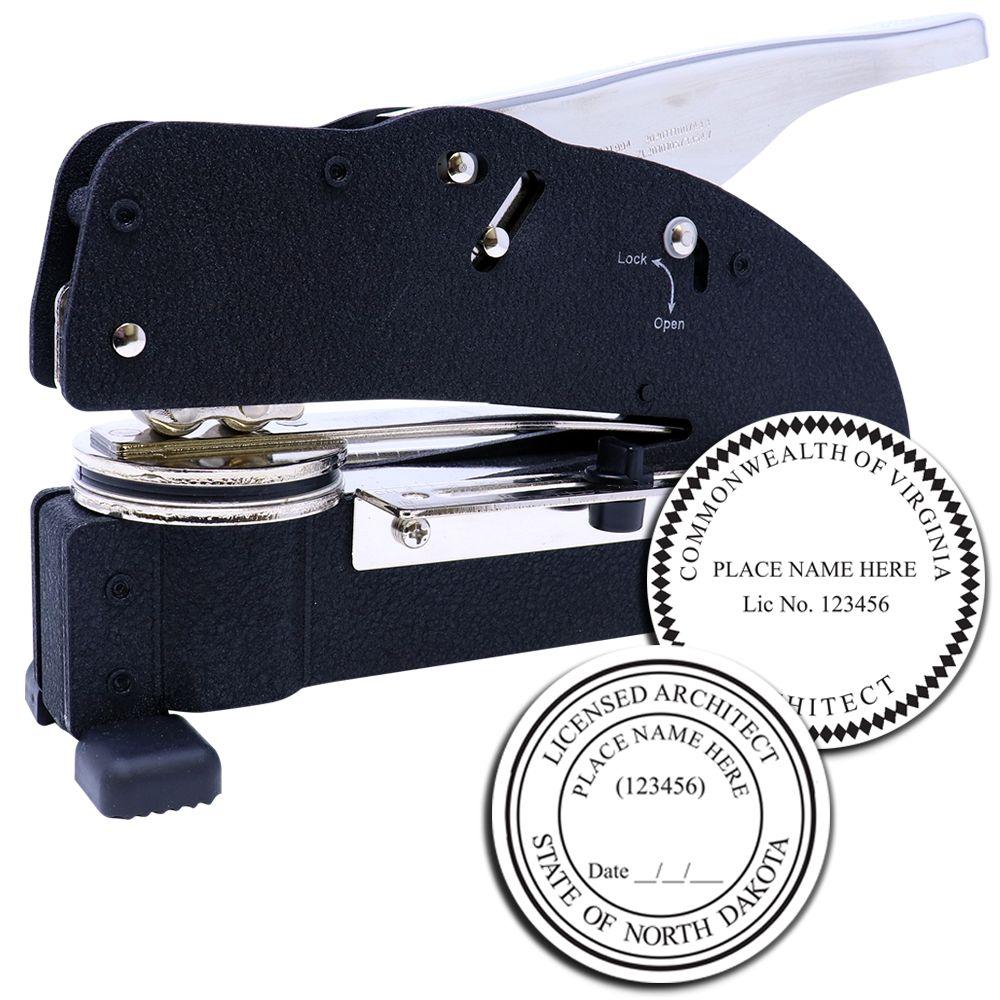

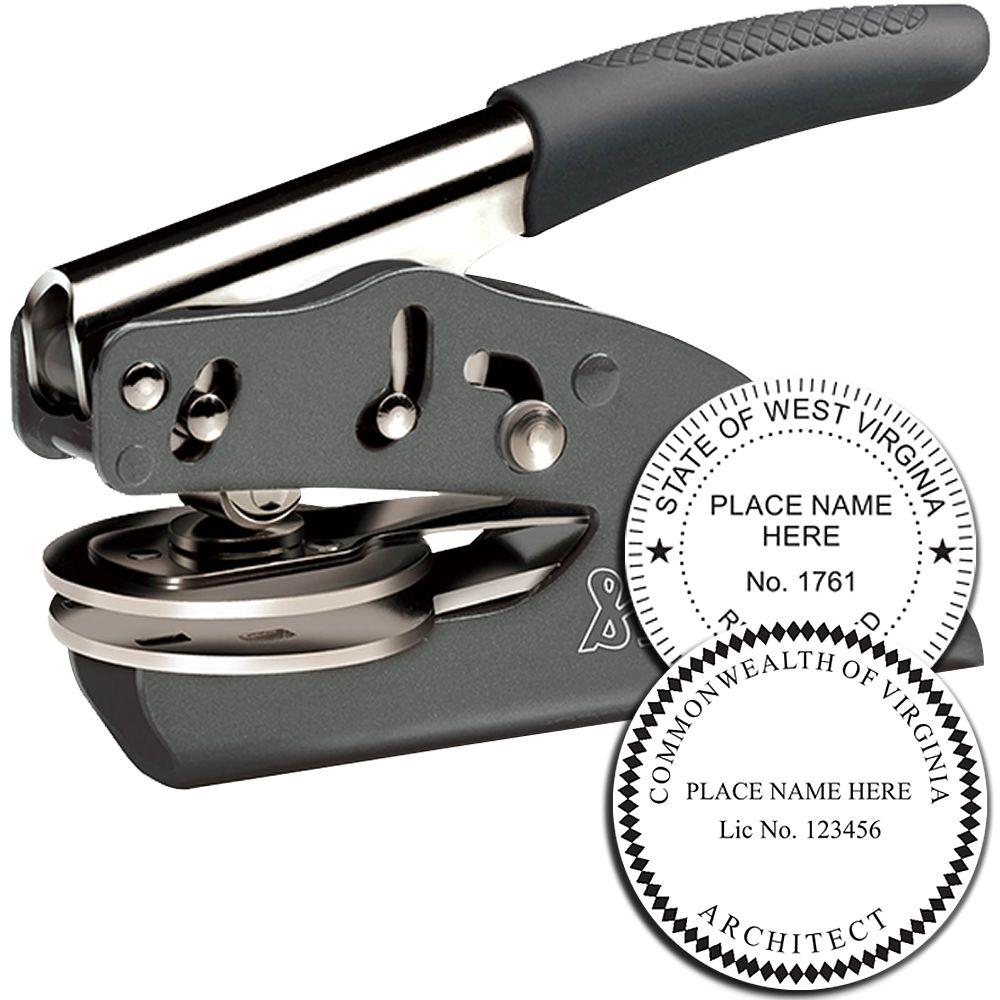

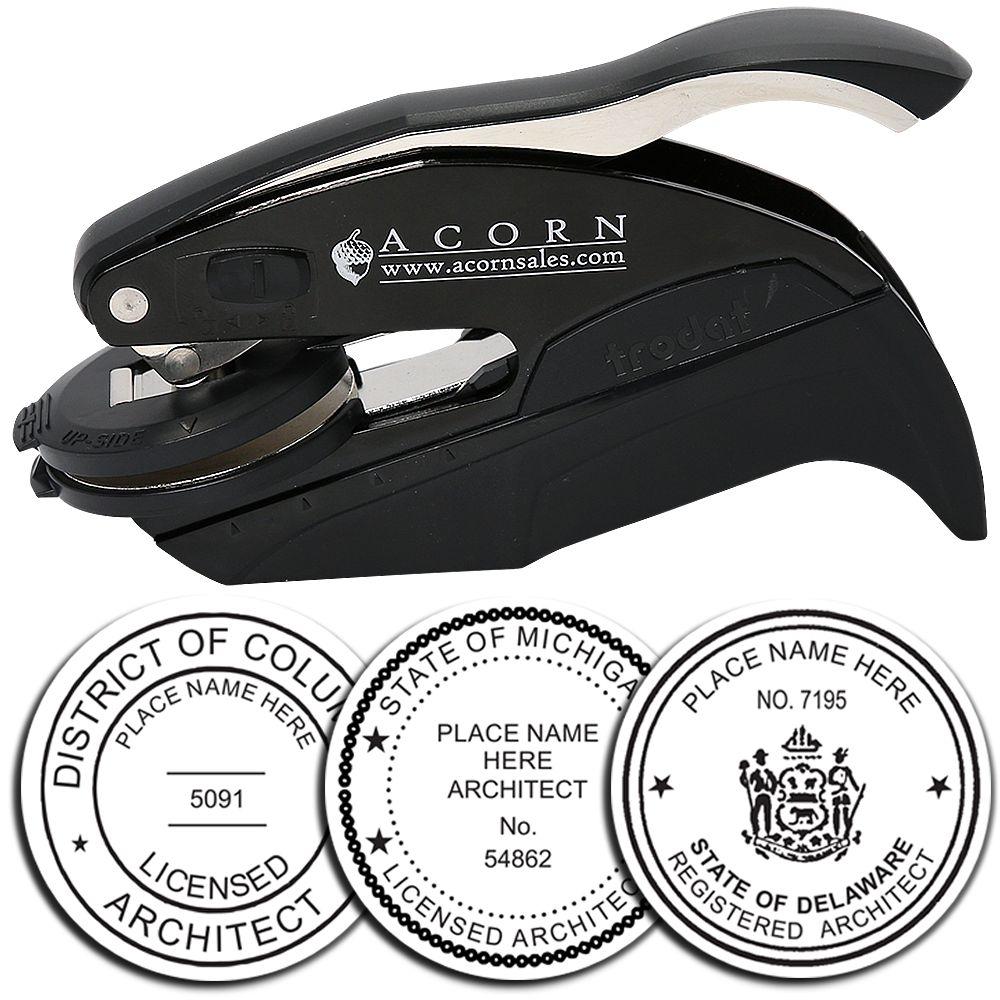

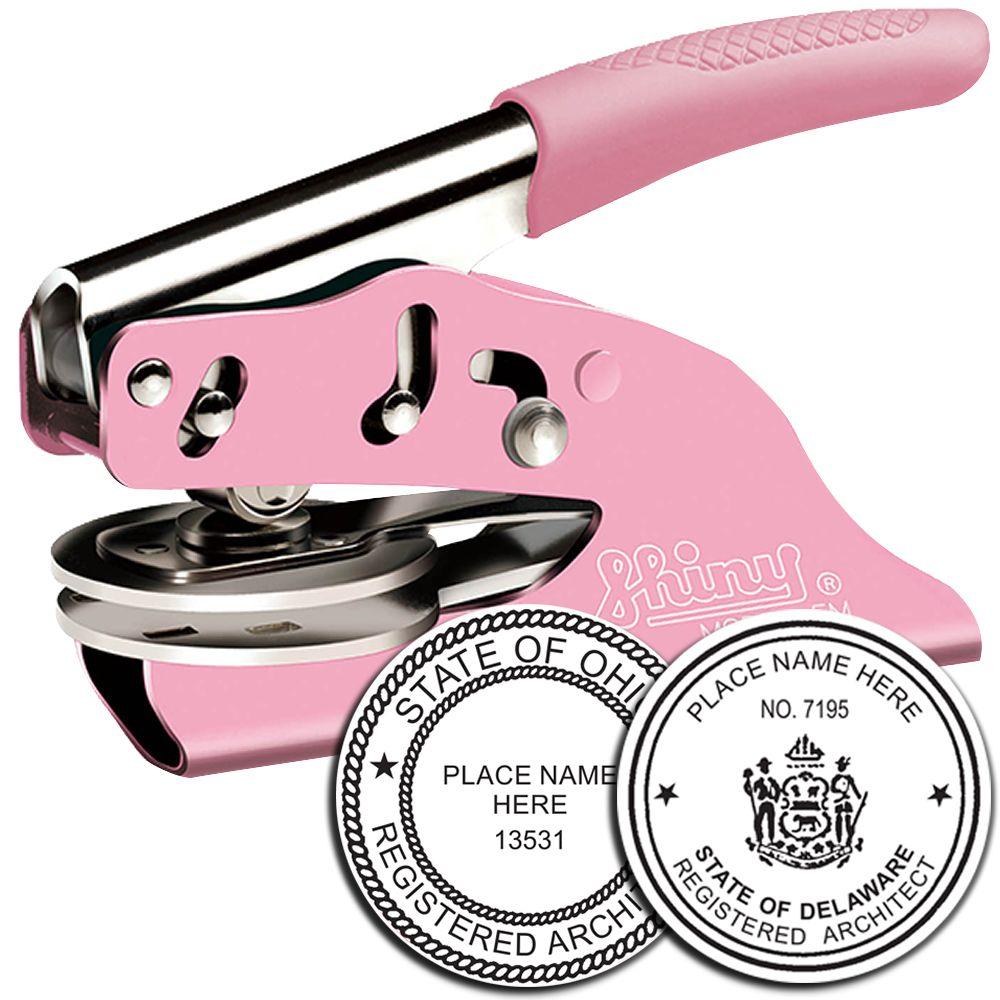

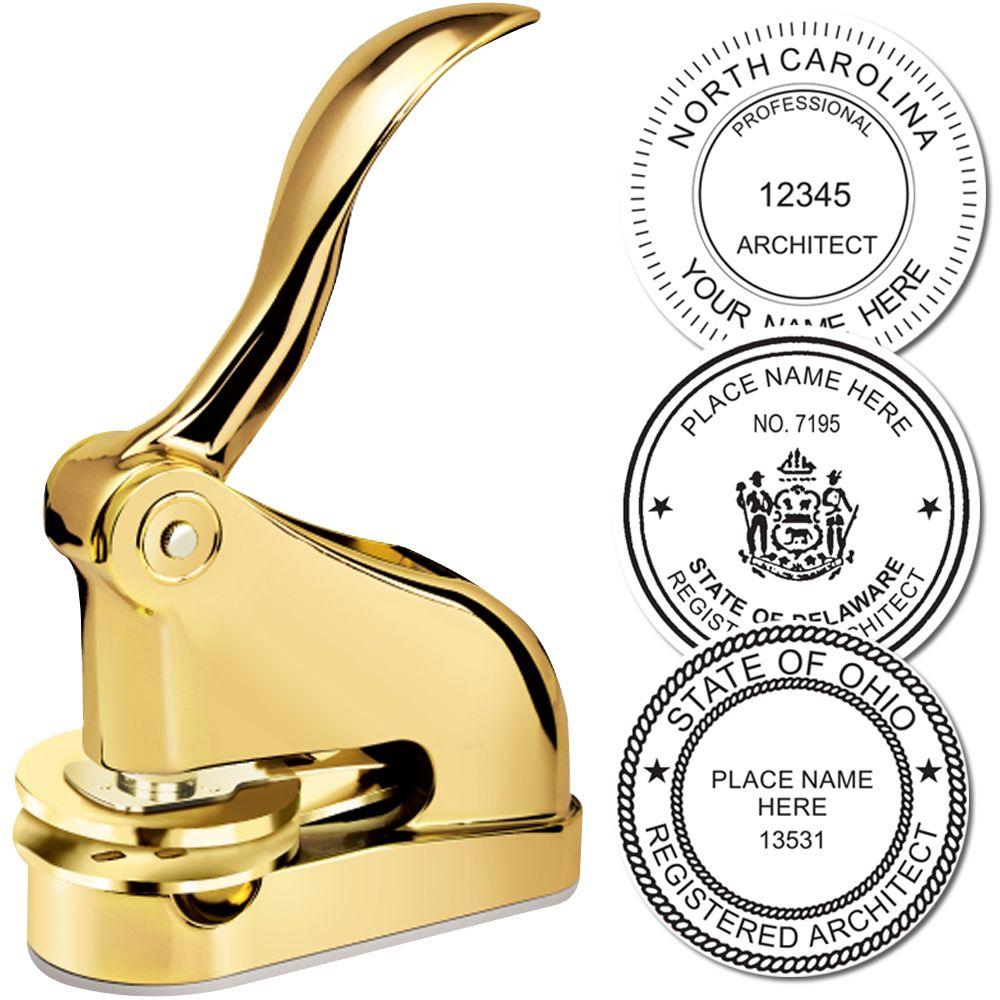
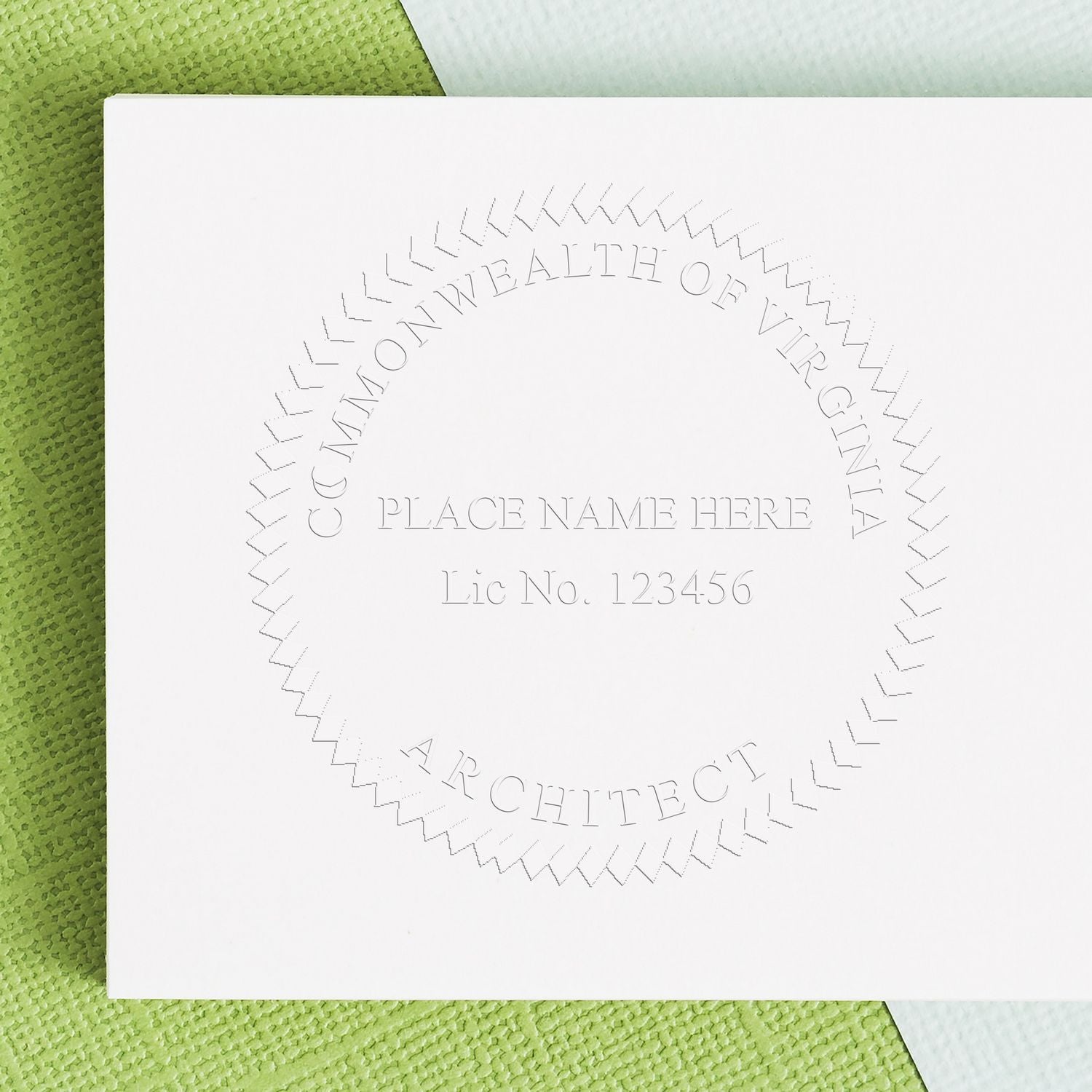
Embosser, rubber stamp or digital
Not addressed. Section 225 speaks of technical submissions being “stamped with the seal” and names no device; the words embossed, rubber stamp, facsimile and computer generated do not appear. What the board does address is the electronic copy: 02-288 C.M.R. ch. 18 s. 3 provides that “An architect, landscape architect or certified interior designer may rely upon technical submissions in electronic form (e.g., portable document format), including the seals reproduced thereon, to the same extent as their physical counterparts.” Because the operative verb is stamped and because the rule contemplates seals reproduced in PDF, an inked stamp cut to the board’s authorized design is the safe buy.
Signing and dating
Not addressed for architects. Section 225 requires the seal and says nothing about a signature, a date or placement. The sources here are 32 M.R.S. §§ 210 through 228 and read 02-288 C.M.R. chapters 10, 12, 13, 14, 17 and 18 in full. The contrast inside this board is instructive: 32 M.R.S. § 225-A requires a certified interior designer’s documents filed for public record to bear the designer’s signature with a certification of licensure, the license number and the date, while the architect section requires a stamp and nothing else. Sign and date anyway, because Maine code enforcement officers expect both.
One seal section for architects and landscape architects, and none at all for interior designers
32 M.R.S. § 225 is written to cover both licensed architects and licensed landscape architects in a single sentence. The third credential this board issues, certified interior designer, is dealt with in the very next section, § 225-A, and it gets a certified signature rather than a seal. One board, three credentials, two of which stamp and one of which signs.
Which documents must be sealed
Technical submissions prepared by or under the direct supervision of the licensed architect. Section 225 defines the supervision test: “direct supervision of a technical submission” means the supervising licensee has personal knowledge of the submission and direct knowledge of involvement with and control over its preparation, provided that persons consulting with or employed by the licensee who are licensed in Maine under any other provision of law may provide direct supervision of portions, which are treated as under the licensee’s direct supervision if the licensee has reviewed them, coordinated their preparation and is responsible for their adequacy. Chapter 18 s. 1 of the board rules then restricts sealing work prepared by another person to two routes: prototypical building construction documents that the sealing architect has reviewed and integrated into the licensee’s own technical submissions, or non-prototypical documents where the architect familiarized themselves with the client’s goals before further preparation, coordinated preparation or had significant and controlling personal involvement or integrated the work, and thoroughly reviewed the submissions on completion. A review, or review and correction, of completed submissions by a licensee who has not met those tests does not qualify. Section 226 carries the statutory exceptions.






Electronic and digital seals
Maine addresses reliance rather than technology. Chapter 18 s. 3 allows an architect, landscape architect or certified interior designer to rely on technical submissions in electronic form, including the seals reproduced on them, to the same extent as their physical counterparts, with portable document format given as the example. No digital signature criteria, certificate authority, cryptographic standard or stripping language appears in 02-288 C.M.R. or in 32 M.R.S. ch. 3-A. The sources here are chapter 18 in full, including its source note, repealed and replaced 15 September 2023 by filing 2023-154.
Renewal, lapse and retirement
The seal dies with the license and the statute says so. Section 225: “It is unlawful for anyone to stamp or seal any documents with the seal after the license named on the seal has expired or has been revoked, unless the license has been renewed or reissued.” Note the phrase the license named on the seal, which presupposes that the license is identified on the face. Continuing education for licensed architects sits at 32 M.R.S. § 224-B and at 02-288 C.M.R. ch. 19, adopted with an effective date of 1 July 2026. Not addressed: whether the license number changes on reissuance and whether the device must be surrendered or destroyed. Checked 32 M.R.S. §§ 218, 224, 224-B and 225 and 02-288 C.M.R. chapters 12, 17 and 18.
Firm requirements
Not applicable. 32 M.R.S. § 220-C provides that a license under this chapter is limited to individuals, and chapter 3-A contains no certificate of authorization, firm registration or firm seal provision: the subchapter runs from licensing requirements through the interior designer title, licensure by endorsement, examinations, fees, licensure without examination, certification by reciprocity, the license, continuing education, the seal, the certified signature, exceptions and penalties. Documents carry the individual architect’s seal only.
What to check before you order
Ask the board for the seal design it authorizes and directs, because 32 M.R.S. § 225 delegates the design entirely to the board and neither the statute nor 02-288 C.M.R. states a size, a legend or an element list. Buy an inked stamp: the statute speaks of technical submissions being stamped, and the board’s rules contemplate seals reproduced on PDFs. Stamp technical submissions you prepared or directly supervised, and stop the day the license named on the seal expires or is revoked. If you seal work another person prepared, you must have been involved before completion and you must keep records of your review and integration for five years. Sign and date as a matter of practice, even though the architect section does not require it.
Browse architect stamps and seals.
Frequently asked questions
Is an architect seal required in Maine?
Yes. 32 M.R.S. § 225 provides that “Each licensed architect or landscape architect shall upon licensure obtain a seal of such design as the board authorizes and directs. Technical submissions prepared by or under the direct supervision of a licensed architect or under the direct supervision of a licensed landscape architect must be stamped with the seal during the life of the licensee’s license.”
What has to appear on a Maine architect seal?
Nothing is specified in the statute or the rules. Section 225 delegates the design to the board, and 02-288 C.M.R. chapters 10, 12, 13, 14, 17 and 18 do not contain the word seal except in chapter 18, which regulates who may seal rather than what the seal says. The board is the source for the artwork. Acorn’s own production artwork carries LICENSED ARCHITECT on the upper arc, STATE OF MAINE on the lower arc, a star at each side, the name in the center with the license number beneath it in the form No. 0000, a dotted inner ring and a plain double outer border. That is what we cut, not a published specification.
What size is a Maine architect seal?
No diameter, shape or proportion appears in 32 M.R.S. ch. 3-A or in 02-288 C.M.R. Sections 210 through 228 of the statute, the six board rule chapters, the board’s Laws and Rules page and its Display of Legend guidance all read the same way. The 1 3/4 inch figure in circulation for Maine comes from the professional engineers’ board and does not transfer to an architect. Acorn’s own production artwork for this seal is built to a 1-3/4 inch nominal circle, measured to the outer of the two border rings. The agreement with the engineering board’s 1 3/4 inch figure is a coincidence of practice, not a rule reaching architects. That is our production record rather than a published rule, so the board remains the authority if it later publishes a figure.
Can I use an embosser in Maine?
Section 225 speaks of technical submissions being “stamped with the seal” and names no device: the words embossed, rubber stamp, facsimile and computer generated do not appear. What the board does address is the electronic copy, at 02-288 C.M.R. ch. 18 s. 3. Because the operative verb is stamped and because the rule contemplates seals reproduced in PDF, an inked stamp cut to the board’s authorized design is the safe buy.
Does Maine require a signature and a date with the seal?
Not for architects. Section 225 requires the seal and says nothing about a signature, a date or placement, and sections 210 through 228 and the six board rule chapters add nothing. The contrast inside this board is instructive: § 225-A requires a certified interior designer’s documents filed for public record to bear the designer’s signature with a certification of licensure, the license number and the date, while the architect section requires a stamp and nothing else. Sign and date anyway, because Maine code enforcement officers expect both.
Can I rely on a sealed PDF in Maine?
Yes. 02-288 C.M.R. ch. 18 s. 3 provides that “An architect, landscape architect or certified interior designer may rely upon technical submissions in electronic form (e.g., portable document format), including the seals reproduced thereon, to the same extent as their physical counterparts.” Maine addresses reliance rather than technology: no digital signature criteria, certificate authority, cryptographic standard or stripping language appears in 02-288 C.M.R. or in 32 M.R.S. ch. 3-A. Chapter 18 was repealed and replaced on 15 September 2023 by filing 2023-154.
Which documents have to be sealed in Maine?
Technical submissions prepared by or under the direct supervision of the licensed architect. Section 225 defines direct supervision as the supervising licensee having personal knowledge of the submission and direct knowledge of involvement with and control over its preparation, and allows persons consulting with or employed by the licensee who are licensed in Maine under any other provision of law to supervise portions, which count as under the licensee’s direct supervision if the licensee has reviewed them, coordinated their preparation and is responsible for their adequacy. Section 226 carries the statutory exceptions.
Can I seal work another person prepared in Maine?
Only by two routes, and review alone is not one of them. Chapter 18 s. 1 allows prototypical building construction documents that you have reviewed and integrated into your own technical submissions, or non-prototypical documents where you familiarized yourself with the client’s goals before further preparation, coordinated preparation or had significant and controlling personal involvement or integrated the work, and thoroughly reviewed the submissions on completion. A review, or a review and correction, of completed submissions by a licensee who has not met those tests does not qualify, and records must be kept for five years.
Can I seal after my Maine license expires?
No. Section 225 makes it unlawful to stamp or seal any documents with the seal after the license named on the seal has expired or has been revoked, unless the license has been renewed or reissued. Continuing education for licensed architects sits at 32 M.R.S. § 224-B and at 02-288 C.M.R. ch. 19, adopted with an effective date of 1 July 2026. Whether the license number changes on reissuance, and whether the device must be surrendered or destroyed, is not stated in §§ 218, 224, 224-B or 225 or in chapters 12, 17 and 18.
Does a Maine architecture firm need registration or a seal?
Neither. 32 M.R.S. § 220-C provides that a license under this chapter is limited to individuals, and chapter 3-A contains no certificate of authorization, firm registration or firm seal provision: the subchapter runs from licensing requirements through the interior designer title, licensure by endorsement, examinations, fees, licensure without examination, certification by reciprocity, the license, continuing education, the seal, the certified signature, exceptions and penalties. Documents carry the individual architect’s seal only.








