
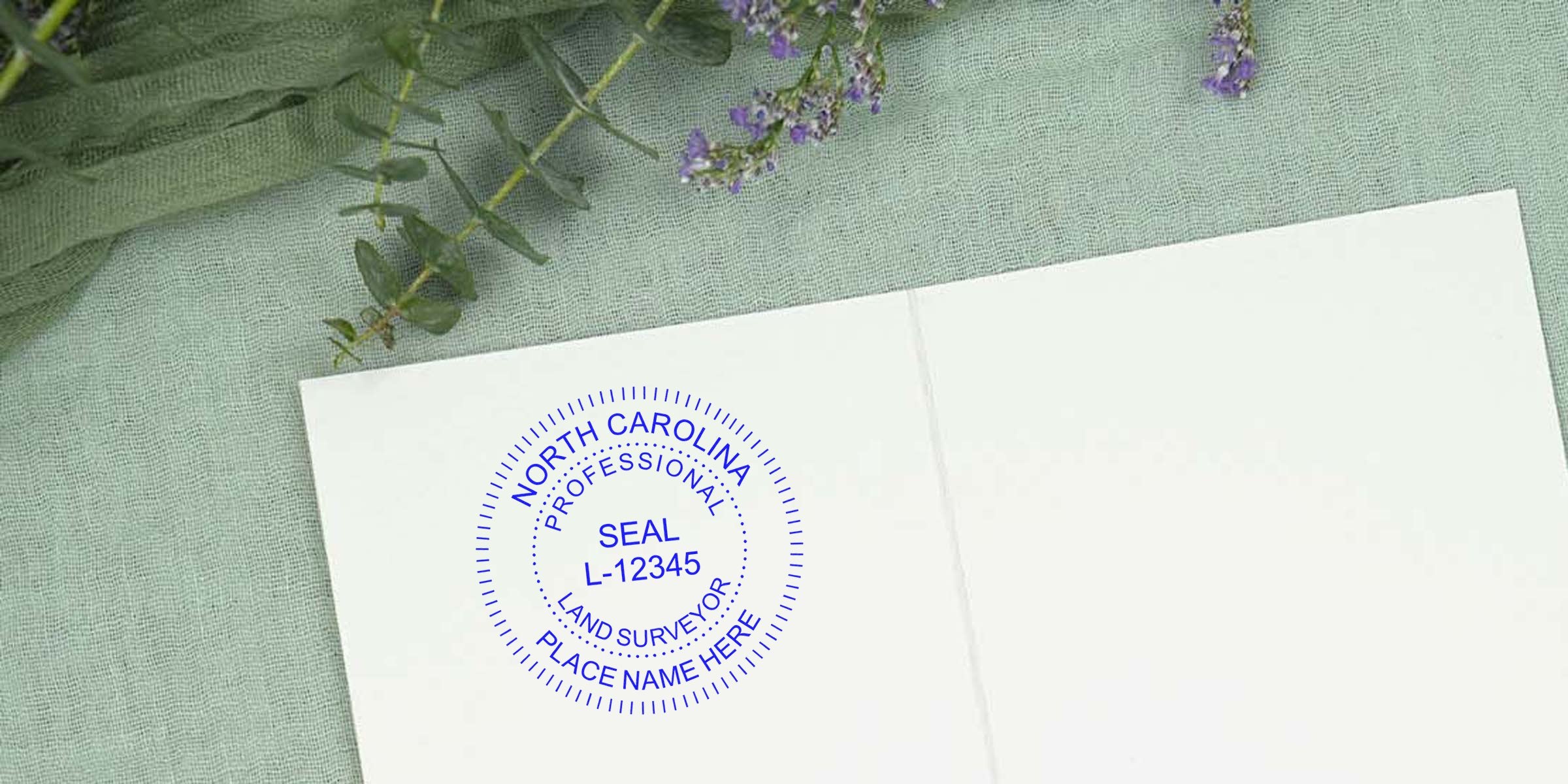
Explore The North Carolina Land Surveyor Seal
If you’re preparing to submit maps, plats, or other official documents in the Tar Heel State, you’ll need a proper North Carolina Land Surveyor Seal to meet the relevant professional requirements. Without it, your paperwork may be turned away, delaying important projects and causing headaches you’d rather avoid. In this guide, let’s look at why the seal matters, what rules you should follow, and how to select the best stamp or seal for your needs.
Why The Seal Matters
The seal is a legal and professional mark that identifies you as a licensed surveyor in North Carolina. It assures clients, regulatory bodies, and local authorities that you’ve met the correct education and testing standards to practice land surveying. You can think of your seal as your handshake in official settings: it’s your unique imprint that says, “I stand by my work.”
In addition to verifying your qualifications, it helps prevent misuse of survey documents. Once you place your North Carolina Land Surveyor Seal on a plat or report, you’re certifying the accuracy and completeness of that information. This accountability is crucial, because small surveying mistakes can be costly, both in time and money—for you and the property owner.
Official Requirements
Any land surveyor in North Carolina must secure and use an official seal that’s been approved by the North Carolina Board of Examiners for Engineers and Surveyors. You’ll typically see rules guiding the seal’s format (outer ring, inner ring, your name, and license number), along with specifications about size and design. To get the exact details, you can refer to the Board’s regulatory documents. Here are some widely recognized guidelines:
- The seal must display your name exactly as it appears on your license.
- The license number must be clearly shown.
- The outer circle often reads “Professional Land Surveyor” or a close variant.
Make sure you confirm all specifications directly with the state Board to stay fully up to date, as rules can evolve over time.
Pick The Right Stamp Or Seal
When it’s time to choose your stamping device, you’ll find a few options. Stamps come in different sizes, shapes, and types of impressions. You might also weigh electronic seals against physical ones. Since North Carolina allows both, it’s a good idea to consider what your typical workflow looks like—do you often print and sign physical documents, or do you deal mostly in digital files?
Physical Seals vs. Digital Seals
- Physical Seals: These can be embossers or ink stamps. An embosser creates a raised impression, while an ink stamp leaves a sharp, clear print that’s easily scannable.
- Digital Seals: If your local jurisdiction or your clients use more paperless processes, an electronic seal (used in PDF or CAD documents) might be the simpler route. However, confirm that your software management systems and official recipients accept digital seals before you rely on them exclusively.
Acorn Sales, a trusted supplier for North Carolina Land Surveyor stamps and seals, has been in business since 1964. Over the years, we’ve seen how vital it is for surveyors to have reliable, precise, and convenient solutions, whether they prefer a physical seal or a digital one. If you’re leaning toward a self-inking or rubber stamp, be sure to check out our North Carolina Land Surveyor Stamp for a simple, foolproof option.
Material And Design Tips
Durability matters more than you might think. While you don’t need to drop your seal off a building to test its resilience, you do need a sturdy device that holds up under consistent use. Here are some things to keep in mind:
- Metal Embossers: Known for longevity, these are great if you want a classic raised impression.
- Self-Inking Stamps: These offer the convenience of quick stamping without applying separate ink each time.
- Rubber Hand Stamps: Typically stamp-based and require a separate ink pad, but they’re affordable and easy to replace.
Look for a device that’s comfortable to grip and produces crisp impressions. Also, ensure the text size is large enough to be legible when printed or scanned as part of a legal file.
How To Apply And Store Your Seal
Once you’ve settled on the best device for your practice, it’s time to ensure proper usage and care. Investing in a professional seal means taking the right steps to make sure it stays accurate and easy to use.
Proper Usage
Let’s be honest, no one wants to fiddle with a faulty impression moments before a deadline. So, here’s how to reduce last-minute stress:
- Verify Your Format: Always double-check the position of your name and license number. A quick glance saves you from frustration down the road.
- Impress Clearly: If you’re using an inking stamp, press firmly and evenly to avoid smudges. For embossers, position your paper carefully for a neat, raised seal.
- Follow State Protocol: Some documents require your signature to overlap the seal, while others insist on a designated seal location. Make sure you know exactly where it needs to go.
Storage Tips
Proper storage is surprisingly impactful on the life of your seal. If you treat it well, it’ll serve you happily for years. Here’s what helps:
- Keep it in a cool, dry place to avoid damage from humidity.
- For self-inking devices, remember to replace ink cartridges promptly so you never run out mid-project.
- If you’re using an embosser, store it where the handle isn’t pressed down, so the die remains in good shape.
As a bonus, Acorn Sales offers a free digital seal when you purchase a physical seal. This allows you to maintain a neat, consistent look on both printed and electronic documents without juggling multiple vendors.
Common Mistakes And How To Avoid Them
Even seasoned surveyors can trip up on the little details. Here are some frequent errors and how you can steer clear of them:
- Incorrect Name Format: Sometimes your name is missing a middle initial, has a typo, or differs slightly from your official license. Always confirm your official licensing details before ordering your seal.
- Unclear Impressions: A sloppy impression isn’t just a sloppy impression, it can lead to rejections. Take a moment to test the clarity if you’re using a new or re-inked stamp.
- Not Keeping Up With Rule Changes: Regulations sometimes shift. If the state Board updates the seal’s required size or wording, don’t use an outdated design.
- Failing To Secure The Seal: If someone else uses your seal without your knowledge, that can open you up to liability. Keep your devices safe and within your control.
Acorn Sales has served surveyors for decades, and we’ve seen just about every pitfall possible. Your best prevention plan is staying organized, being mindful of new guidelines, and checking your stamp or embosser regularly to ensure it’s still doing its job well.
At the end of the day, your North Carolina Land Surveyor Seal is an essential tool in your professional toolkit. It’s a direct representation of your credibility and expertise, so you want to pick something you can trust. Wherever you buy your seal, keep it secure, care for it, and stay on top of any rule changes. With the right seal at your side, you’ll ensure your land surveying documents always pass muster—no hassle, no rejections.
Feel free to reach out if you have further questions or want guidance on selecting the right stamp or embosser. You deserve a smooth, steady workflow, and your seal should support that every step of the way. Remember: accurate land surveys not only keep you in good standing with the Board, but they also build client confidence in your work. That’s a win-win for everyone involved.
Frequently Asked Questions
Do I Need A Physical Seal If I Already Have A Digital One?
You might. Some counties or agencies still require hard-copy submissions. If you frequently submit documents in-person or via mail, a physical seal is indispensable. If your submissions are mostly digital, a free digital seal from Acorn Sales can handle those tasks.
Does The State Board Require A Specific Size For The Seal?
Yes, but the exact dimensions can vary based on changing regulations. Generally, the diameter is around 1⅝ inches to 2 inches. Consult official Board guidelines to see if there have been any updates.
What Happens If My Seal Breaks Or Wears Out?
In that case, you should promptly replace it to stay compliant. Aim to order your new seal as soon as you notice any damage or fading impressions. That way, you won’t get stuck when you need to finalize time-sensitive documentation.
Where Can I Buy An Approved North Carolina Land Surveyor Seal?
You can order from a variety of suppliers, but it pays to choose a reputable source like Acorn Sales. We’ve been in operation since 1964 and provide a free digital seal with every purchase. Our customers appreciate our reliable materials, comfortable handle designs, and fast turnaround times.








