
Written by Acorn Sales Company, manufacturing stamps and seals since 1964 · Reviewed by Holly R, VP of Sales and Marketing at Acorn Sales, against the Georgia State Board of Registration for Professional Engineers and Land Surveyors and Ga. Comp. R. & Regs. r. 180-12-.02(2), (3) on 21 September 2026 · Updated 21 September 2026
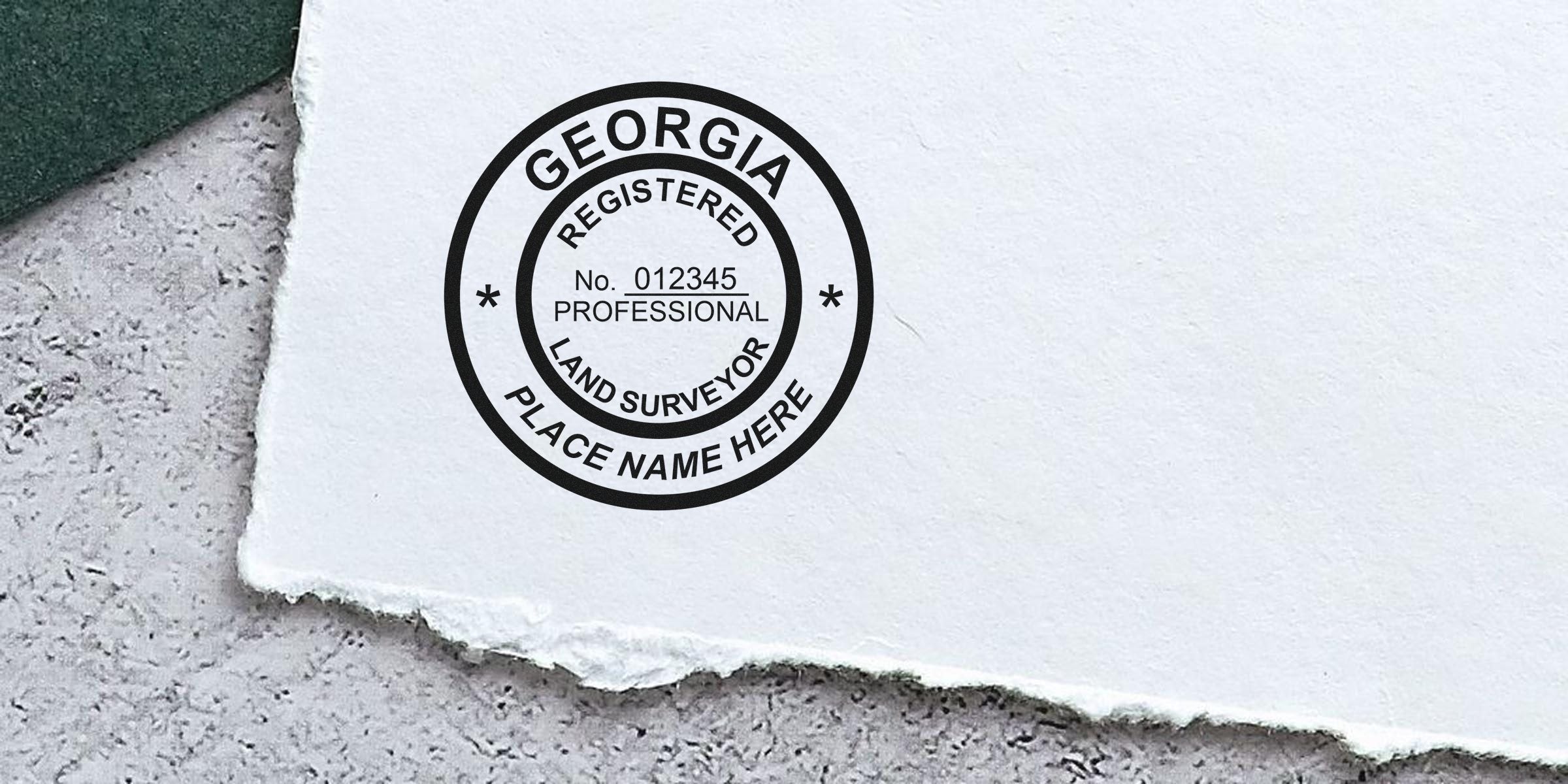
Circular, outer circle 1 1/2 inches, inner circle 1 inch, and the license number carries its LS prefix. Rule 180-12-.01 gives both figures and the Board’s Seals and Stamps publication repeats them and is specific about the number: use the complete license number in the pattern LS999999, not the bare digits. It is equally specific about the name, which should appear as the Board carries it, with a first initial where you use a middle name and no nicknames.
What is not on the seal matters more in Georgia than almost anywhere else. The certificate of authorization name, number and expiration date are required on the document, not on the seal. That expiration date is the item that goes stale, which is exactly why a stamp with firm data baked into it is a liability rather than a convenience.
Georgia has three design boards and three different seal geometries. Land surveyors and engineers take the 1 1/2 inch outer circle with a 1 inch inner circle. Architects take a single 1 3/4 inch circle under rule 50-2A-.01(9). Registered interior designers take a 1 3/4 inch square under rule 50-9-.07(8). There is no Georgia house size, and borrowing across boards produces a non compliant device every time.
Georgia land surveyor seal requirements at a glance
| Requirement | Georgia rule | Source |
|---|---|---|
| Seal required | Yes | Ga. Comp. R. & Regs. r. 180-12-.02(2), (3) |
| Required elements | Your name as it appears in Board records, Your complete license number including its LS prefix and Circular design with an outer and an inner circle | Ga. Comp. R. & Regs. r. 180-12-.01 |
| Size and shape | Circular, with the outer circle 1 1/2 inches in diameter and the inner circle 1 inch. | Ga. Comp. R. & Regs. r. 180-12-.01 |
| Device allowed | Rule 180-12-.01 authorizes a seal that “may be of the crimp type and/or rubber stamp facsimile or may be computer generated.” All three are lawful. | Ga. Comp. R. & Regs. r. 180-12-.01 |
| Signature and date | Seal, signature and date, plus the COA block. | Ga. Comp. R. & Regs. r. 180-12-.02(3), (5) |
| What must be sealed | Documents are defined broadly at rule 180-12-.02(1) as engineering or land surveying work issued as plans, drawings, maps, surveys, reports, specifications, design information and calculations, “including such work issued in digital form.” Every original final document issued to a client or a public agency gets the seal, signature, date and COA block. | Ga. Comp. R. & Regs. r. 180-12-.02(1), (4), (6), (7) |
| Electronic seal | Rule 180-12-.02(8) is strict. | Ga. Comp. R. & Regs. r. 180-12-.02(8), (9) |
| Renewal and lapse | Chapter 180-8 covers reinstatement of an expired license at rule 180-8-.01 and inactive status at rule 180-8-.02, and refers to a biennial renewal fee. | Ga. Comp. R. & Regs. r. 180-8-.01, 180-8-.02 |
| Firm requirements | Georgia is the state where firm data lands on the document. | Ga. Comp. R. & Regs. r. 180-12-.02(2), (3), (6), (7) |
| Regulator | The Georgia State Board of Registration for Professional Engineers and Land Surveyors | Ga. Comp. R. & Regs. ch. 180-12, Sealing of Documents, rules 180-12-.01 and 180-12-.02, and ch. 180-8, Renewal of License, read from the Georgia Secretary of State rules portal |



Is a seal required in Georgia?
The operative duty sits in the Board rule. Rule 180-12-.02(3) provides that the registrant “shall seal, sign and date and provide COA name, Authorization Number and expiration date of the COA all original final documents which are issued to a client or any public agency,” and that sealing “shall certify that the work was performed by the registrant or under the direct supervisory control of the registrant on a daily basis.” Rule 180-12-.02(2) defines an issued document as one in final form bearing the seal, signature and date plus the entity’s certificate of authorization name, number and expiration date. The Board’s Seals and Stamps publication cites O.C.G.A. 43-15-22 as the statutory hook.
What must appear on the seal
- Your name as it appears in Board records
- Your complete license number including its LS prefix
- Circular design with an outer and an inner circle
The Board’s Seals and Stamps sheet is specific about the number: use the complete license number with its prefix, in the pattern LS999999, not the bare digits. It is equally specific about the name: use the name as it appears in Board records, avoid nicknames, and include a first initial where a middle name is carried. What is not on the seal matters more in Georgia than almost anywhere else. The certificate of authorization name, number and expiration date are required on the document, not on the seal, so a stamp with firm data baked into it is a liability rather than a convenience.
Size and shape
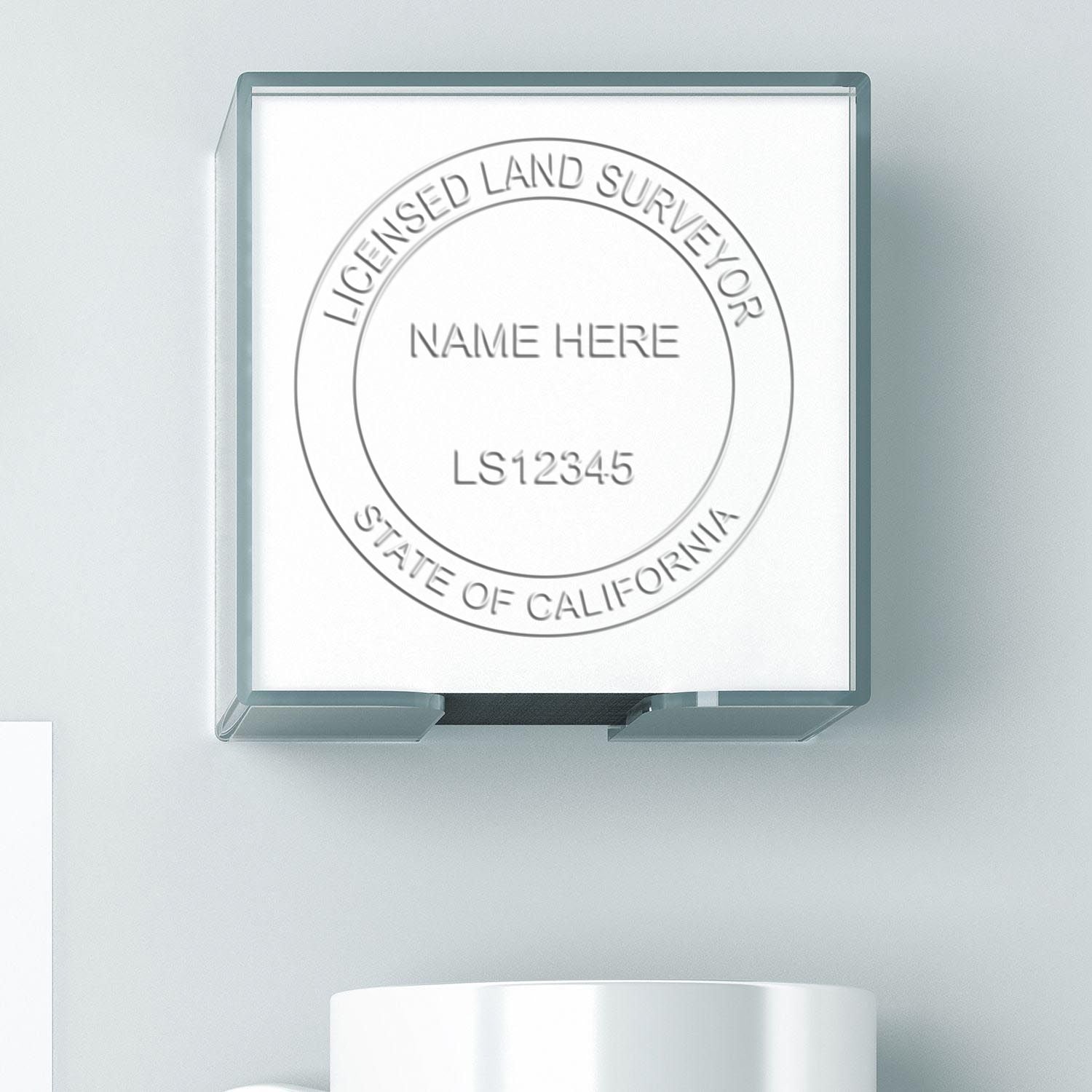
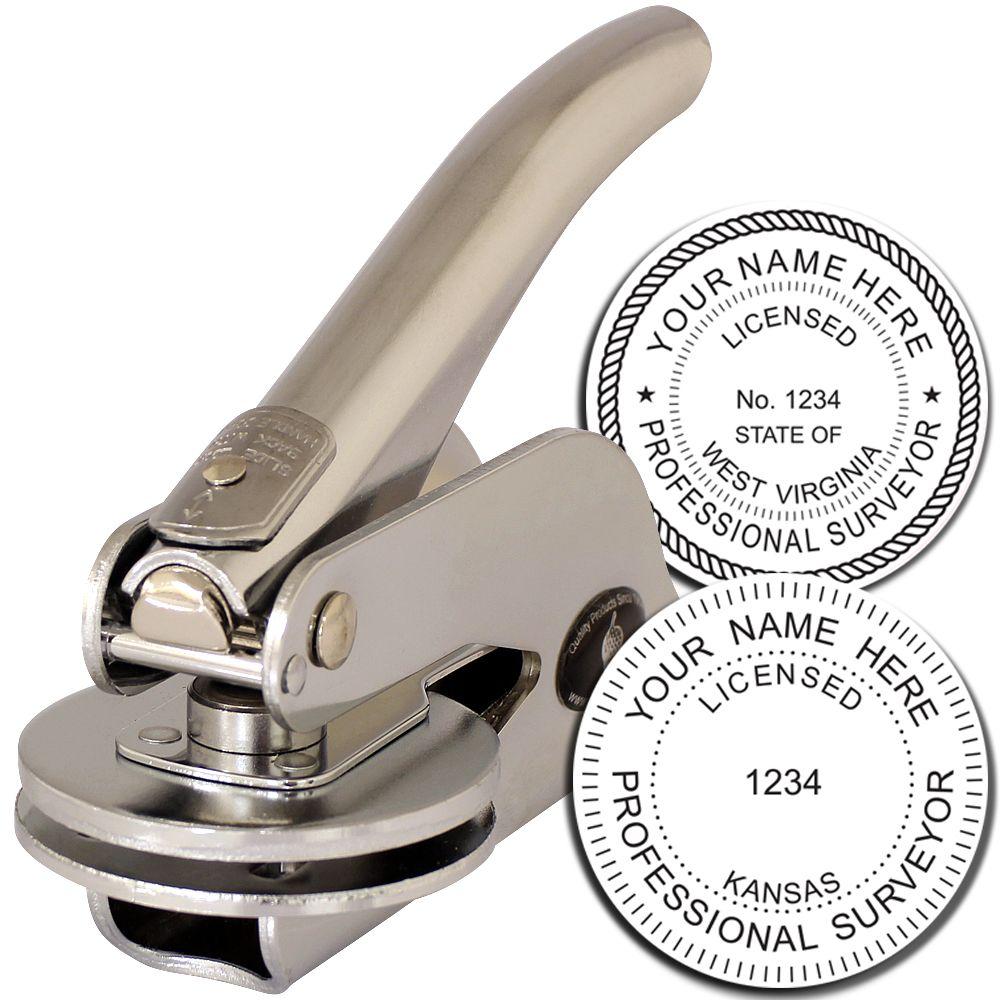
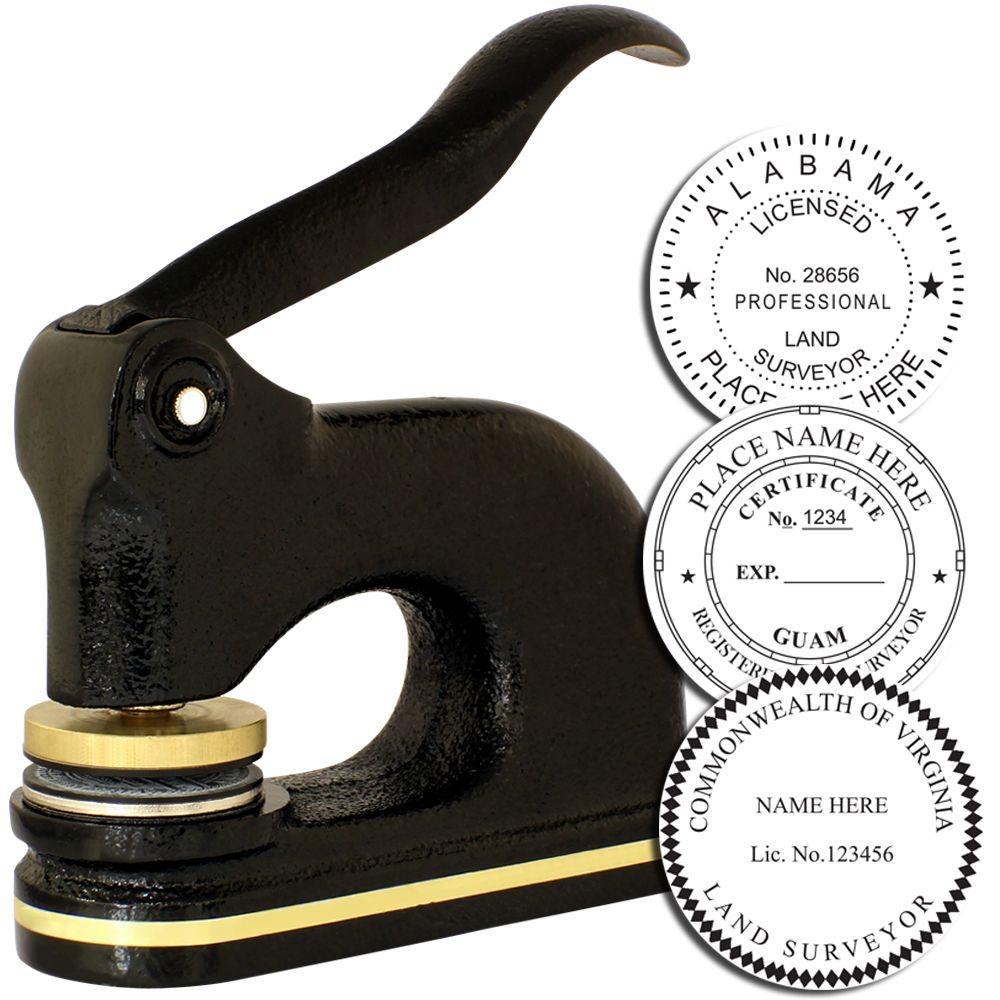
Circular, with the outer circle 1 1/2 inches in diameter and the inner circle 1 inch. Rule 180-12-.01 gives both figures and the Board’s Seals and Stamps publication repeats them. Note that this is a different specification from both of the other Georgia design boards: architects are a single 1 3/4 inch circle under rule 50-2A-.01(9), and registered interior designers are a 1 3/4 inch square under rule 50-9-.07(8).



Embosser, rubber stamp or digital
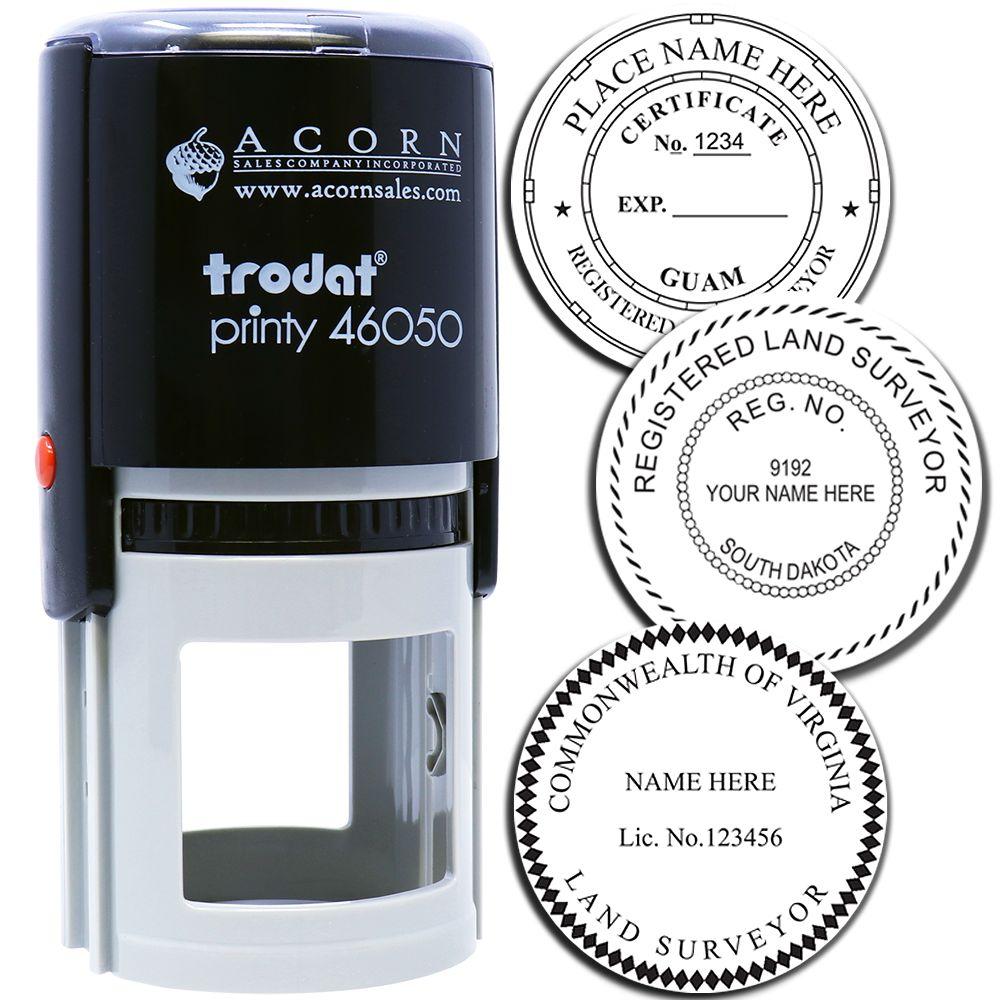
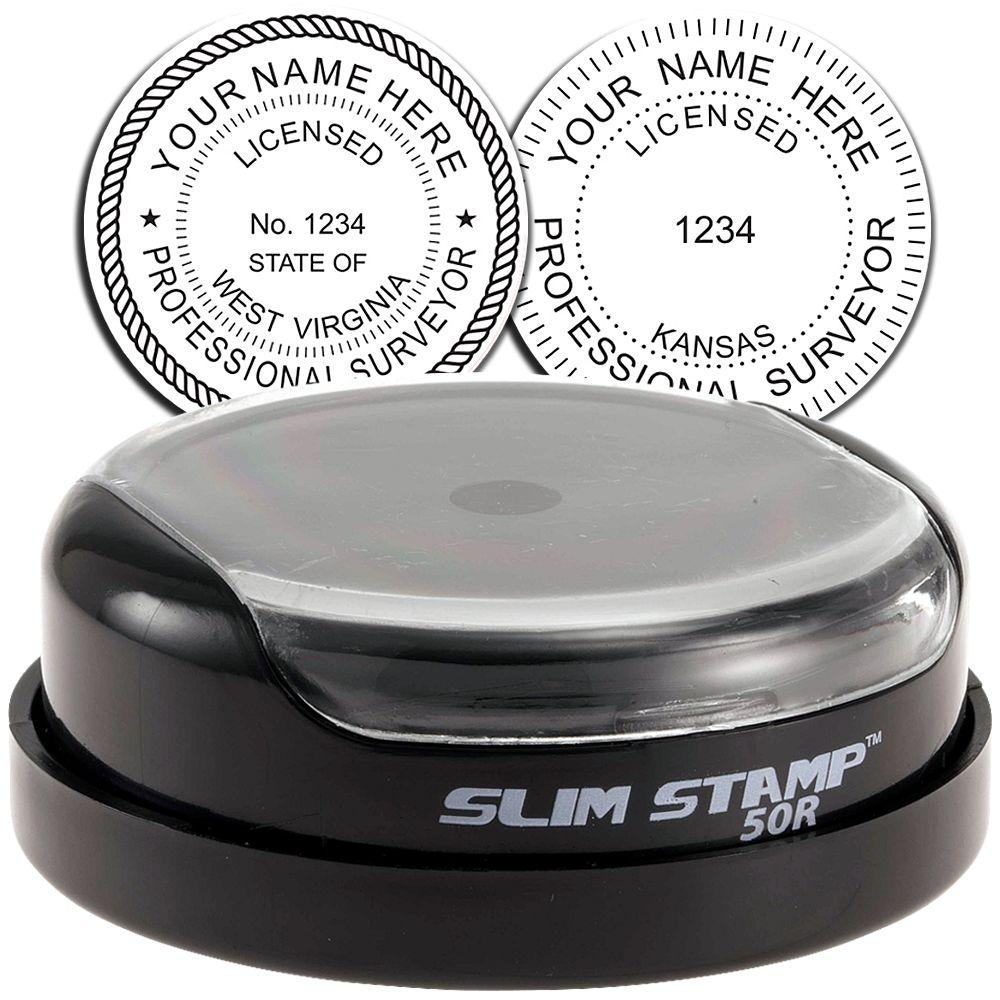
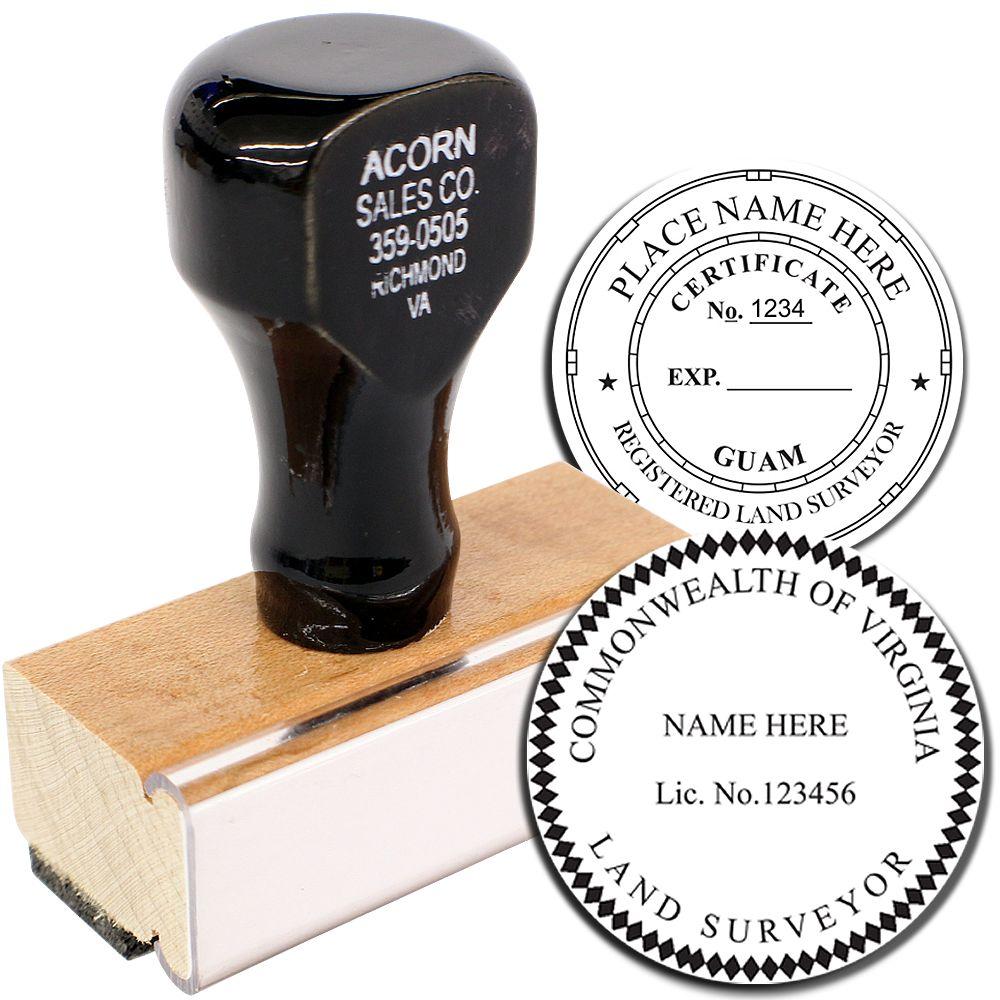
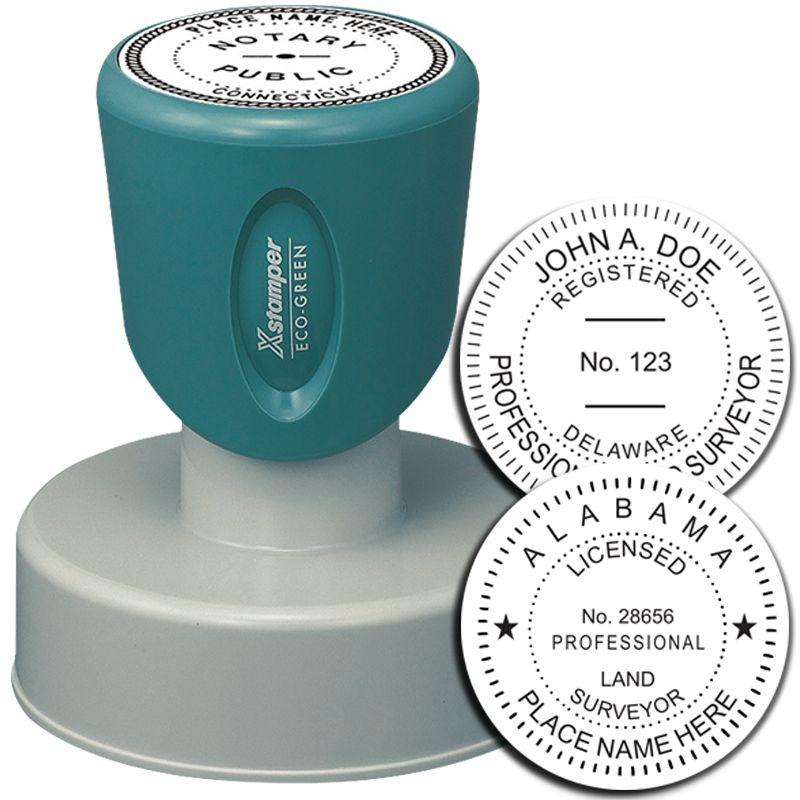
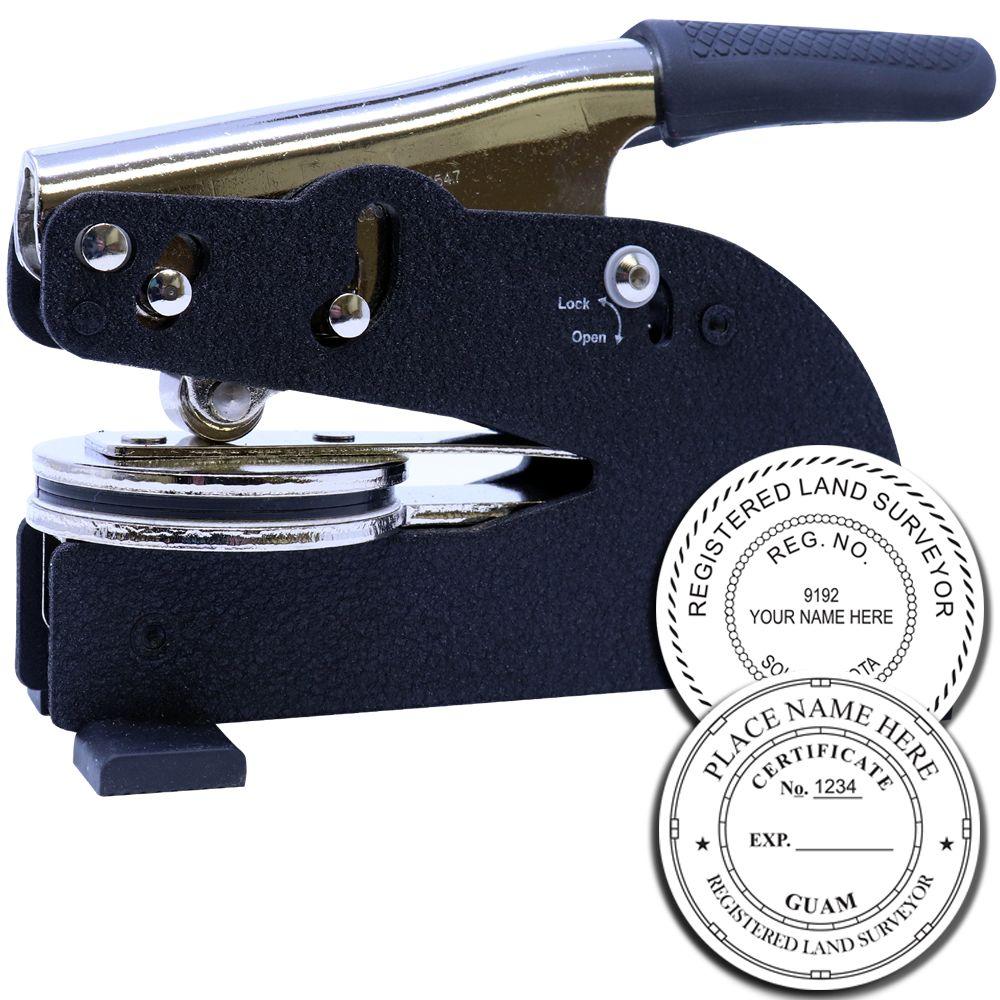
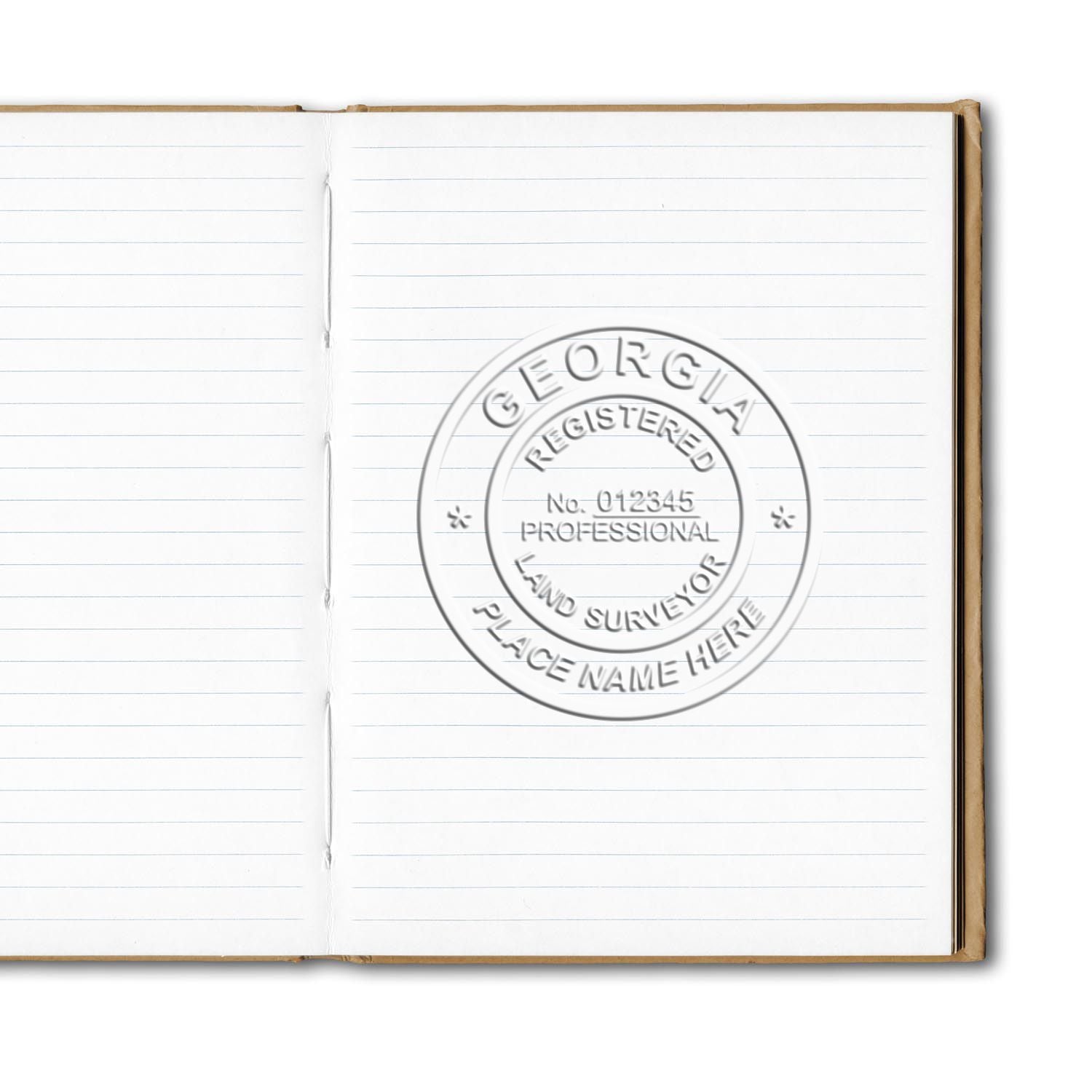
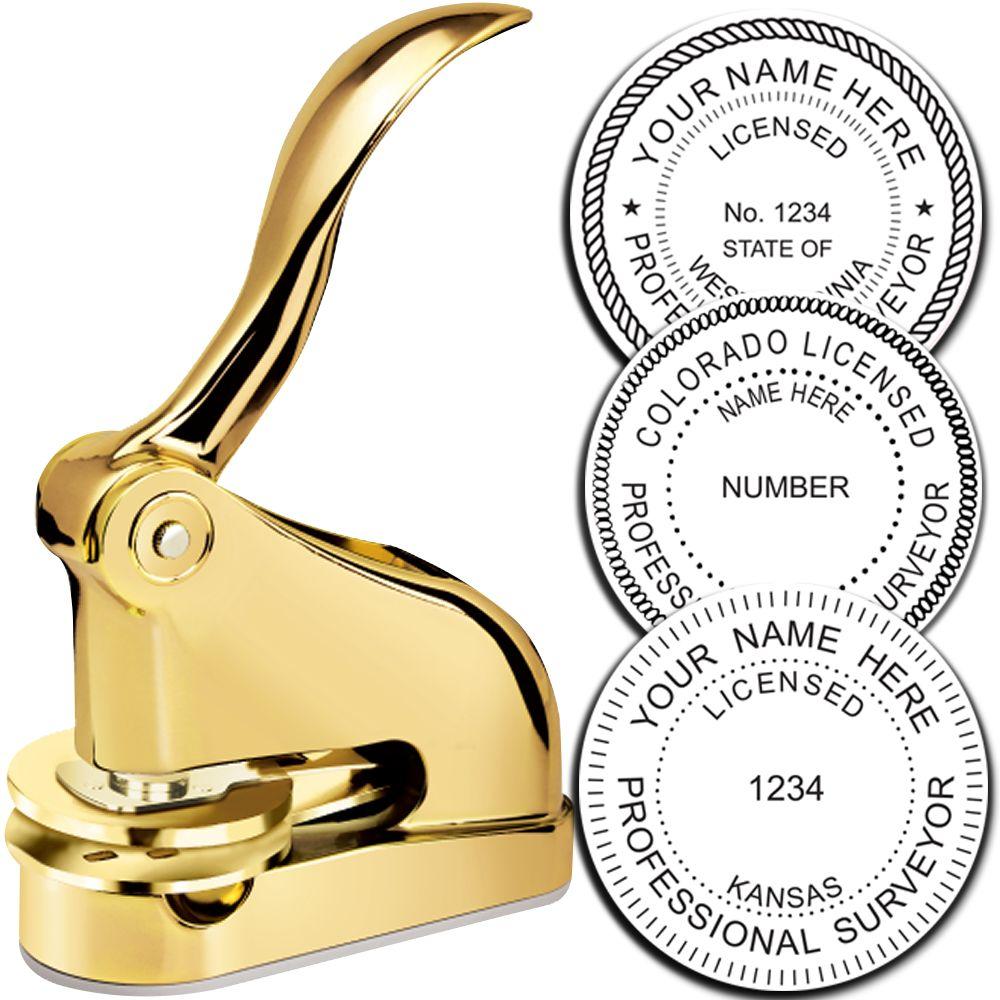
Rule 180-12-.01 authorizes a seal that “may be of the crimp type and/or rubber stamp facsimile or may be computer generated.” All three are lawful. The safe buy is the rubber stamp, because rule 180-12-.02(5) requires the seal, signature, date and COA information to be placed so they reproduce when copies or scans are made, and a crimp impression does not survive photocopying.
Signing and dating
Seal, signature and date, plus the COA block. Rule 180-12-.02(5) is the land surveyor specific provision: it allows a facsimile signature on a property survey map or plat under O.C.G.A. 15-6-67, which may be a scanned image of an actual signature or a computer generated signature and “must be kept in the strict control of the land surveyor.” That allowance belongs to land surveyors and property plats only and does not extend to engineering drawings. The date placement rule at 180-12-.02(3), putting the date of signature immediately under the seal and signature, is written for engineering documents.
A facsimile signature is lawful on a plat and nowhere else
Georgia gives land surveyors something it withholds from engineers. Rule 180-12-.02(5) permits a facsimile signature on a property survey map or plat under O.C.G.A. 15-6-67. It may be a scanned image of an actual signature or a computer generated signature, and it “must be kept in the strict control of the land surveyor.” That is a narrow allowance tied to recorded property plats, and it does not travel to engineering drawings, reports or specifications. A surveyor who builds a signature image into a general workflow has taken a plat rule somewhere it does not reach.
Which documents must be sealed
Documents are defined broadly at rule 180-12-.02(1) as engineering or land surveying work issued as plans, drawings, maps, surveys, reports, specifications, design information and calculations, “including such work issued in digital form.” Every original final document issued to a client or a public agency gets the seal, signature, date and COA block. Each drawing sheet is sealed individually, or a summary sheet may be used where the sheet count makes that impractical, provided it tabulates each registrant’s seal, signature, date and COA information and narrates which element of work each registrant is responsible for. Drafts are the carve out and Georgia words it as a trap: a draft, incomplete, preliminary, in progress or for review document may not be issued bearing the seal “unless such document does not contain a signature,” and it must show the date of issue and a bold notation such as PRELIMINARY, DRAFT, NOT FOR CONSTRUCTION or FOR REVIEW ONLY.

Electronic and digital seals
Rule 180-12-.02(8) is strict. A document transmitted electronically beyond the direct control of the licensee “shall have the computer-generated seal removed from the original file” unless it carries a conforming electronic signature, and the file must instead carry the statement that the document was originally issued and sealed by the named sealer, license number and date of sealing, with the COA information, and that “This medium shall not be considered a certified document.” Scanned images of a signed and sealed hardcopy are exempt from stripping; CAD, vector and other easily edited files are not. Rule 180-12-.02(9) sets the electronic signature standard, an authentication procedure in a secure mode accompanied by a list of the hardware, software and parameters used, with the signature unique to the licensee, capable of verification, under the licensee’s sole control, and linked so that it is invalidated if any data changes. Property survey maps and plats governed by O.C.G.A. 15-6-67 are treated separately.
Renewal, lapse and retirement
Chapter 180-8 covers reinstatement of an expired license at rule 180-8-.01 and inactive status at rule 180-8-.02, and refers to a biennial renewal fee. Whether the license number changes on reinstatement is not addressed, and neither is any duty to destroy or surrender the seal. The sources here are chapter 180-12 in full, chapter 180-8, and the Board’s Seals and Stamps publication. The practical effect on the device is indirect but real: because the COA expiration date has to be correct on every issued document, a stamp carrying COA data goes stale on the firm’s renewal cycle even though your own seal does not.
Firm requirements
Georgia is the state where firm data lands on the document. Rule 180-12-.02(2), (3), (6) and (7) require the entity’s certificate of authorization name, authorization number and COA expiration date on issued documents, and rule 180-12-.02(7) adds that each sealed document “shall contain the name, address, and contact information of the firm or sole practitioner certifying the work.” The rule ties the COA requirement to O.C.G.A. 43-15-23. The firm itself has no seal; the COA information is a text block beside your seal. Georgia architects and registered interior designers go the other way, with rules 50-2A-.01(5) and 50-9-.07(5) making a seal containing a firm or corporate name unacceptable.
What to check before you order
Order a circular rubber stamp with the outer circle exactly 1 1/2 inches and the inner circle 1 inch. Set your name exactly as the Board carries it, with a first initial where you use a middle name and no nicknames, and set your license number complete with its LS prefix rather than the bare digits. Do not engrave certificate of authorization data into the die: the COA name, number and expiration date belong on the document as text, and the expiration date changes. Crimp and computer generated seals are lawful too, but the rule requires the seal, signature, date and COA information to reproduce on copies and scans, which is why the inked stamp is the practical device. If you do property plats you also need a facsimile signature image kept in your strict control, which is a separate artifact from the seal.
Browse land surveyor stamps and seals.
Frequently asked questions
Is a seal required for land surveyors in Georgia?
Yes. Rule 180-12-.02(3) provides that the registrant “shall seal, sign and date and provide COA name, Authorization Number and expiration date of the COA all original final documents which are issued to a client or any public agency,” and that sealing “shall certify that the work was performed by the registrant or under the direct supervisory control of the registrant on a daily basis.” Rule 180-12-.02(2) defines an issued document as one in final form bearing the seal, signature and date plus the entity’s certificate of authorization name, number and expiration date. The Board’s Seals and Stamps publication cites O.C.G.A. 43-15-22 as the statutory hook.
What has to appear on a Georgia land surveyor seal?
Your name as it appears in Board records, your complete license number including its LS prefix, and a circular design with an outer and an inner circle. Do not engrave certificate of authorization data into the die.
What size is a Georgia land surveyor seal?
Circular, with the outer circle 1 1/2 inches in diameter and the inner circle 1 inch, under rule 180-12-.01. That is a different specification from both of the other Georgia design boards, so do not carry an architect or interior designer figure across.
Crimp, rubber stamp or computer generated in Georgia?
All three. Rule 180-12-.01 authorizes a seal that “may be of the crimp type and/or rubber stamp facsimile or may be computer generated.” The rubber stamp is the safe buy, because rule 180-12-.02(5) requires the seal, signature, date and COA information to be placed so they reproduce when copies or scans are made, and a crimp impression does not survive photocopying.
Can I use a facsimile signature on a Georgia plat?
On a property survey map or plat, yes, and nowhere else. Rule 180-12-.02(5) permits a facsimile signature on a property survey map or plat under O.C.G.A. 15-6-67. It may be a scanned image of an actual signature or a computer generated signature, and it “must be kept in the strict control of the land surveyor.” That allowance is tied to recorded property plats and does not travel to engineering drawings, reports or specifications.
Which Georgia documents have to be sealed?
Every original final document issued to a client or a public agency. Documents are defined broadly at rule 180-12-.02(1) as engineering or land surveying work issued as plans, drawings, maps, surveys, reports, specifications, design information and calculations, “including such work issued in digital form.” Each drawing sheet is sealed individually, or a summary sheet may be used where the sheet count makes that impractical, provided it tabulates each registrant’s seal, signature, date and COA information and narrates which element of work each registrant is responsible for.
How does Georgia handle drafts and preliminary work?
As a trap worth reading twice. A draft, incomplete, preliminary, in progress or for review document may not be issued bearing the seal “unless such document does not contain a signature,” and it must show the date of issue and a bold notation such as PRELIMINARY, DRAFT, NOT FOR CONSTRUCTION or FOR REVIEW ONLY.
What does Georgia require for electronic transmission?
Rule 180-12-.02(8) is strict. A document transmitted electronically beyond your direct control “shall have the computer-generated seal removed from the original file” unless it carries a conforming electronic signature, and the file must instead carry the statement that the document was originally issued and sealed by the named sealer, license number and date of sealing, with the COA information, and that “This medium shall not be considered a certified document.” Scanned images of a signed and sealed hardcopy are exempt from stripping; CAD, vector and other easily edited files are not. Rule 180-12-.02(9) sets the electronic signature standard: an authentication procedure in a secure mode accompanied by a list of the hardware, software and parameters used, with the signature unique to the licensee, capable of verification, under the licensee’s sole control, and linked so that it is invalidated if any data changes.
Where does the Georgia COA information go?
On the document as text. Rule 180-12-.02(2), (3), (6) and (7) require the entity’s certificate of authorization name, authorization number and COA expiration date on issued documents, and rule 180-12-.02(7) adds that each sealed document “shall contain the name, address, and contact information of the firm or sole practitioner certifying the work.” The rule ties the COA requirement to O.C.G.A. 43-15-23. The firm has no seal.
Does my Georgia seal need replacing at renewal?
Your own seal does not. Chapter 180-8 covers reinstatement of an expired license at rule 180-8-.01 and inactive status at rule 180-8-.02, and refers to a biennial renewal fee. Whether the license number changes on reinstatement is not addressed, and neither is any duty to destroy or surrender the seal. The practical effect is indirect: because the COA expiration date has to be correct on every issued document, a stamp carrying COA data goes stale on the firm’s renewal cycle even though your seal does not.








