

Written by Acorn Sales Company, manufacturing stamps and seals since 1964 · Reviewed by Holly R, VP of Sales and Marketing at Acorn Sales, against the Guam Board of Registration for Professional Engineers, Architects and Land Surveyors and 22 GCA §§ 32103(c)(1), 32116(d) on 21 September 2026 · Updated 21 September 2026
The signature and the date have to be handwritten, and a stamped or computer-generated one will not do. 22 GCA § 32116(d) requires that “The registrant’s written signature, and date shall be signed adjacent to the seal with the statement ‘This work was prepared by me or under my responsible control’,” and then states flatly: “A facsimile signature will not be acceptable. Computer-generated signatures and dates are not acceptable.” That prohibition runs to the signature and the date, not to the seal, which the same subsection allows to be an image or another approved medium.
Guam registers landscape architects on the same board as engineers, architects and land surveyors. Section 32103(c)(1) defines a landscape architect as “a person who has been duly registered/licensed by the Board to engage in the practice of landscape architecture in Guam,” and § 32116(d) requires a seal of a Board authorized design bearing your name, registration number and designation.
The seal section is one shared article, and its profession-specific paragraphs are (d)(9) for architects and (d)(10) for land surveyors. There is no landscape architecture paragraph, so everything certain comes from the general opening of § 32116(d), and no diameter appears anywhere in 22 GCA ch. 32. Ask the Board for the authorized design and the exact designation wording before you order.
Guam landscape architect seal requirements at a glance
| Requirement | Guam rule | Source |
|---|---|---|
| Seal required | Yes | 22 GCA §§ 32103(c)(1), 32116(d) |
| Required elements | Your name as registered, Your registration number, Your professional designation and The design authorized by the Board | 22 GCA § 32116(d) |
| Size and shape | No size is stated. 22 GCA ch. 32 gives no diameter, shape or lettering height for any profession. | 22 GCA § 32116(d) (no dimension) |
| Device allowed | The general provision governs: “The seal shall be an image, imprint or other medium approved by the Board,” and “Seals must be a permanent mark on the document being sealed.” An inked stamp, an embossed impression and an approved electronic image can all qualify, with permanence as the test. | 22 GCA § 32116(d) |
| Signature and date | Handwritten, adjacent to the seal, with the statutory sentence. | 22 GCA § 32116(d) |
| What must be sealed | The general provision applies the seal to the registrant’s professional work. | 22 GCA § 32116(d) (no landscape-architect-specific document paragraph) |
| Electronic seal | A Board-approved electronic seal image is possible; an electronic signature is not. | 22 GCA § 32116(d) |
| Renewal and lapse | Not addressed in readable form. | 22 GCA § 32116(d) |
| Firm requirements | Not addressed in the seal provision. | 22 GCA § 32116(d) (no firm seal provision) |
| Regulator | The Guam Board of Registration for Professional Engineers, Architects and Land Surveyors | 22 GCA (Business Regulations) ch. 32, The Professional Engineers, Architects and Land Surveyors Law, §§ 32103(c)(1) and 32116(d) including paragraphs (d)(9) and (d)(10), read from the PDF published by the Guam Board at guam-peals.org |





Is a seal required in Guam?
Guam registers landscape architects and seals them under the same shared provision as the board’s other professions. Section 32103(c)(1) defines a landscape architect as “a person who has been duly registered/licensed by the Board to engage in the practice of landscape architecture in Guam,” and 22 GCA § 32116(d) requires each registrant to obtain a seal of a design authorized by the Board, bearing the registrant’s name, registration number and the designation, with the signature, date and certification sentence adjacent to it.
What must appear on the seal
- Your name as registered
- Your registration number
- Your professional designation
- The design authorized by the Board
The landscape architect takes the general elements at § 32116(d) and nothing more, because the section’s profession-specific paragraphs are (d)(9) for architects and (d)(10) for land surveyors and there is no equivalent paragraph for landscape architecture. The expiration-date and discipline elements in the general provision are written with professional engineers in mind, so do not assume they belong on a landscape architect’s face. Not verified: the Board’s authorized landscape architect design and the exact designation wording. Ask the Board.
Size and shape
No size is stated. 22 GCA ch. 32 gives no diameter, shape or lettering height for any profession. The sources here are § 32116(d) and its numbered paragraphs and the definitions at § 32103. The Board’s specimen seal images carry no text layer, so no figure is reported here.






Embosser, rubber stamp or digital
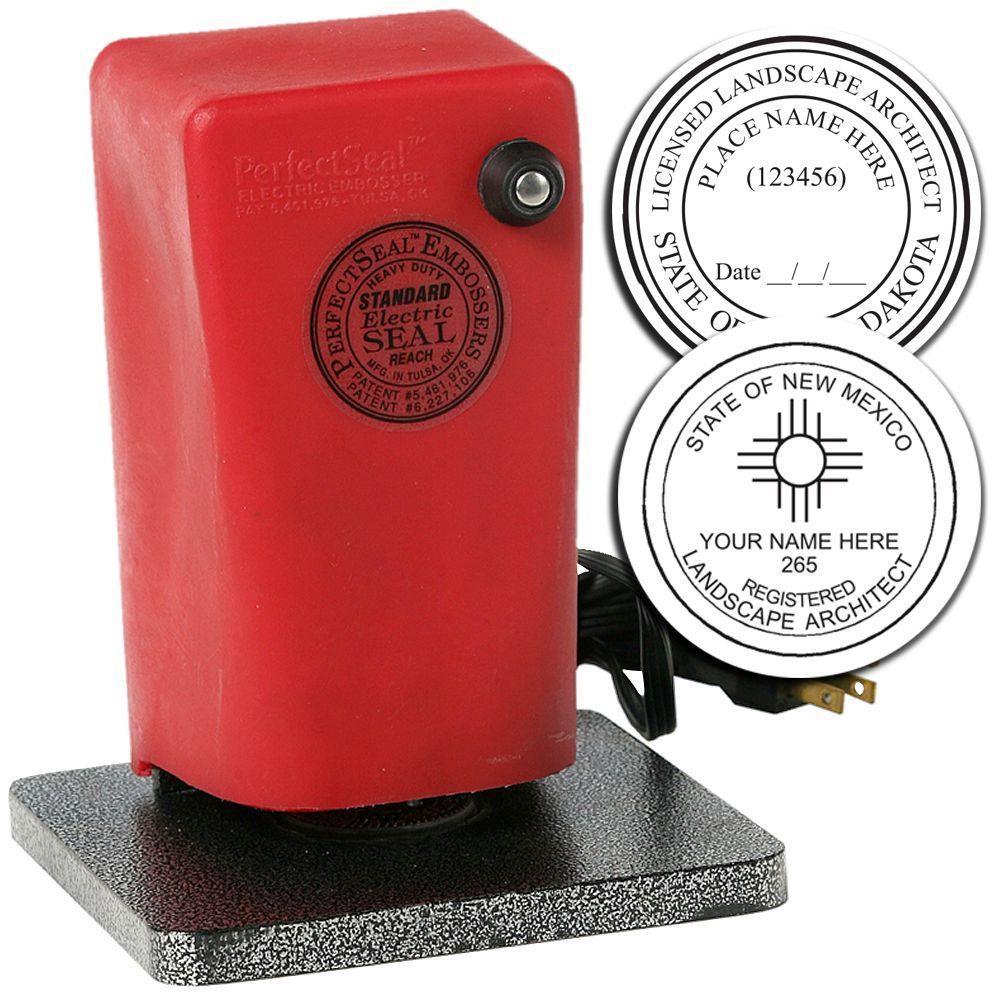
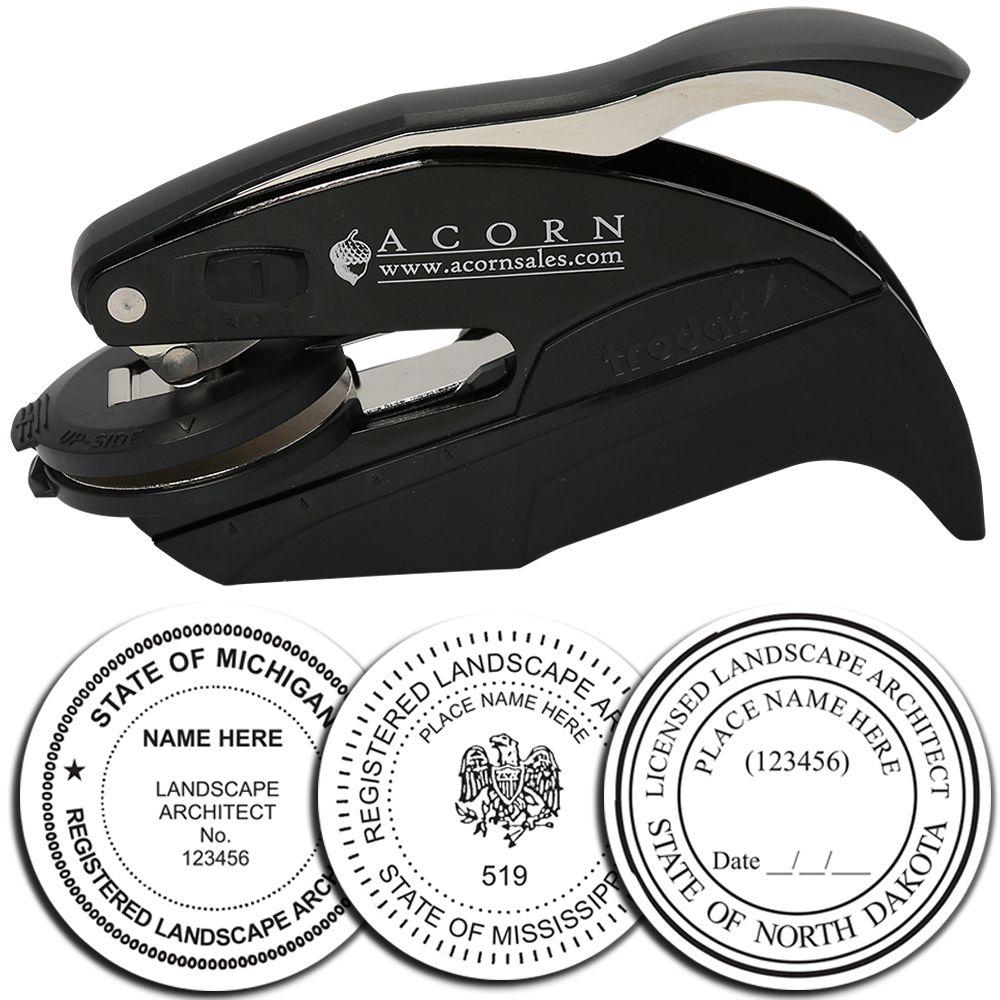
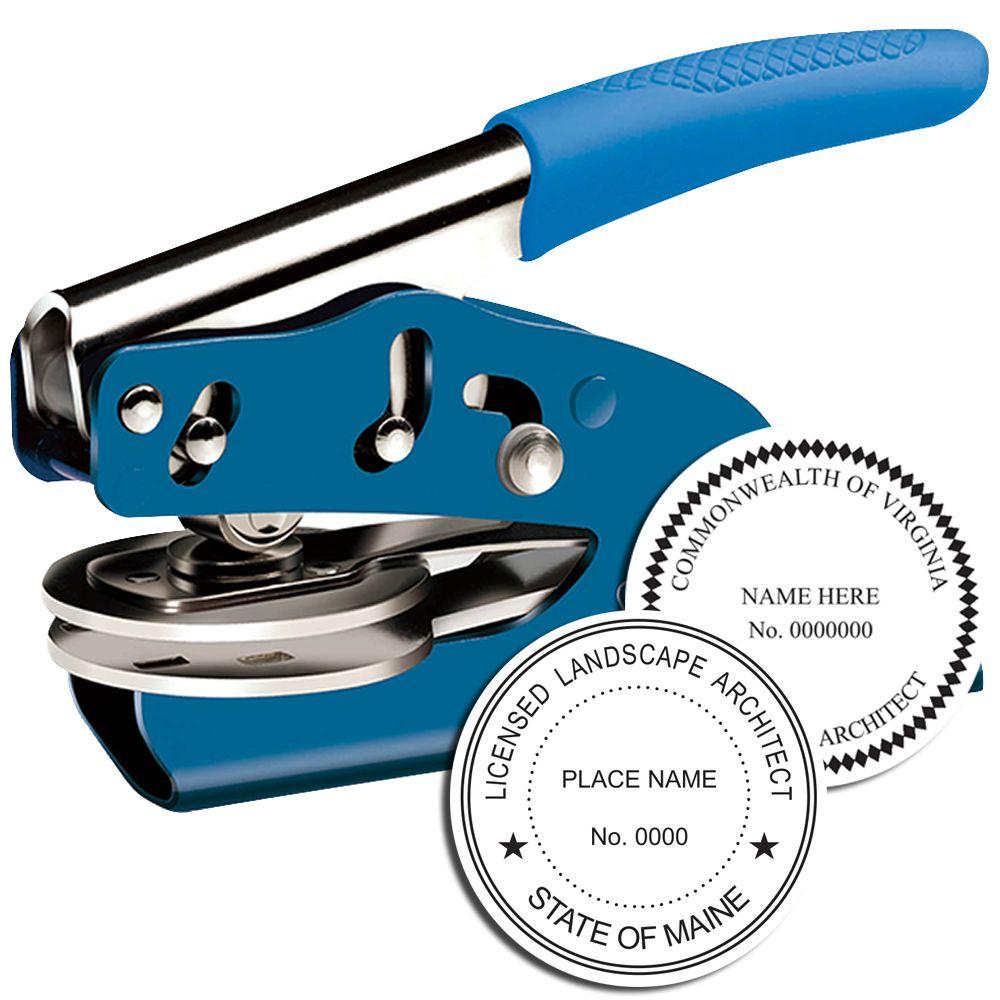
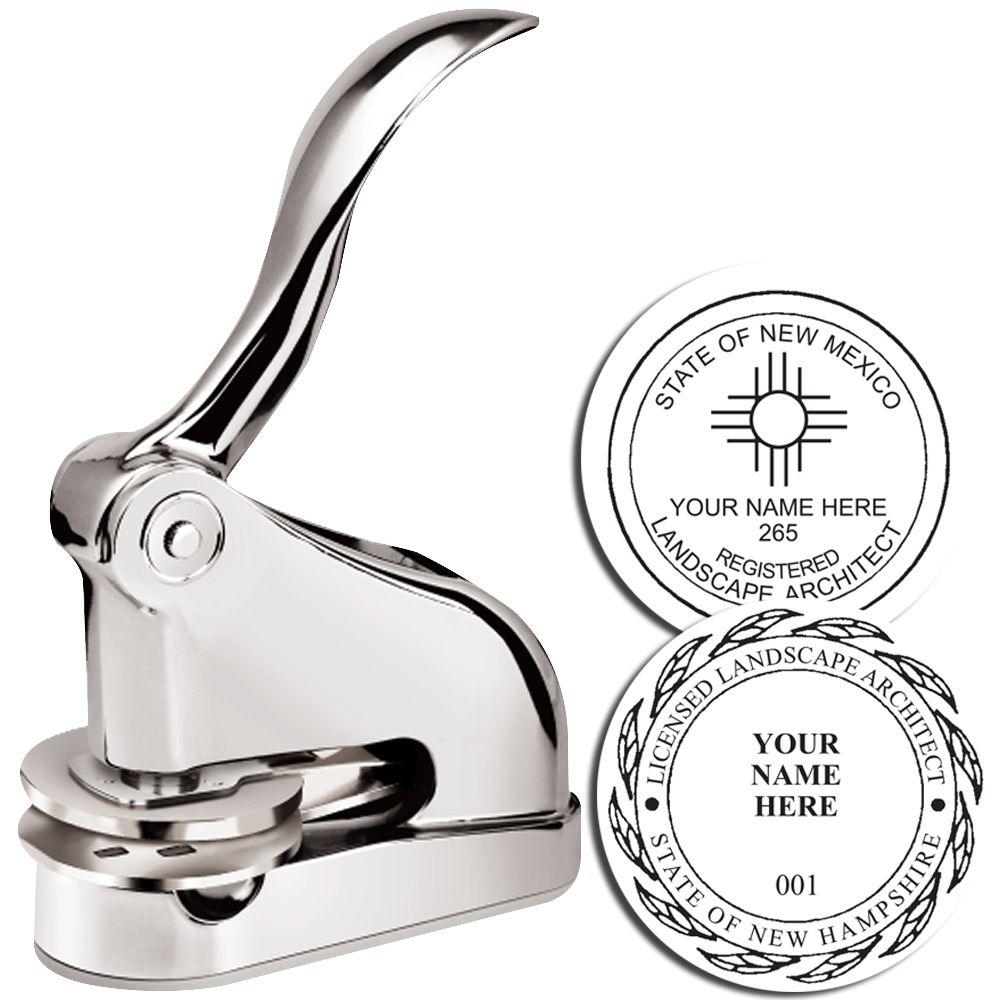
The general provision governs: “The seal shall be an image, imprint or other medium approved by the Board,” and “Seals must be a permanent mark on the document being sealed.” An inked stamp, an embossed impression and an approved electronic image can all qualify, with permanence as the test. A rubber or self-inking stamp is the practical choice because the signature, date and certification statement go beside the impression by hand.
Signing and dating
Handwritten, adjacent to the seal, with the statutory sentence. Section 32116(d): “The registrant’s written signature, and date shall be signed adjacent to the seal with the statement ‘This work was prepared by me or under my responsible control’.” Then: “A facsimile signature will not be acceptable. Computer-generated signatures and dates are not acceptable.” The prohibition is on the signature and the date, not on the seal, which the same subsection allows to be an image or other approved medium.
Registered on Guam, and sealed by a provision written for someone else
Guam is one of the few jurisdictions that puts landscape architects on the same board as engineers, architects and land surveyors, and 22 GCA § 32103(c)(1) defines the landscape architect as a person duly registered by the Board. But the seal section is a single shared article. Its profession-specific paragraphs are (d)(9), written for architects, and (d)(10), written for land surveyors. There is no landscape architecture paragraph, so everything you can verify comes from the general opening of § 32116(d).
Which documents must be sealed
The general provision applies the seal to the registrant’s professional work. Not addressed: 22 GCA § 32116(d) has no paragraph listing the document classes a registered landscape architect must seal, in contrast to (d)(9) for architects and (d)(10) for land surveyors. The sources here are § 32116(d) and its numbered paragraphs in full. Treat final technical submissions issued in the registrant’s professional capacity as the class, and confirm with the Board and with the permitting authority.






Electronic and digital seals
A Board-approved electronic seal image is possible; an electronic signature is not. Section 32116(d) allows the seal to be an image, imprint or other medium approved by the Board and bars facsimile signatures and computer-generated signatures and dates. No certificate authority, cryptographic standard or verification procedure is named.
Renewal, lapse and retirement
Not addressed in readable form. Section 32116(d) treats an expiration date as an element of the seal, which ties the device to the certificate, but the chapter does not say what becomes of the seal on expiration, suspension or revocation and does not say whether a registration number is reissued. The Board’s rules at 25 GAR ch. 1 are the other primary text and its posted draft amendments are not law.
Firm requirements
Not addressed in the seal provision. Section 32116(d) prescribes no firm seal and requires no firm number on the face of a document. The staffing requirement in (d)(10)(A)(i) about a licensed professional land surveyor in charge of a surveying office is written for land surveying and does not reach landscape architecture.
What to check before you order
Ask the Guam Board of Registration for Professional Engineers, Architects and Land Surveyors for the authorized landscape architect seal design and the exact designation wording before ordering. The statute requires a seal of a Board-authorized design bearing your name, registration number and designation, and gives no diameter. The device may be an image, an imprint or another medium the Board approves provided the mark is permanent, so an inked stamp, an embossed impression or an approved electronic image can all work; a rubber or self-inking stamp is the practical choice. Leave room beside the seal for your handwritten signature, the date and the statutory sentence This work was prepared by me or under my responsible control. Do not order a signature stamp; facsimile and computer-generated signatures and dates are not acceptable.
Browse landscape architect stamps and seals.
- The Benefits of Using the Landscape Architect Stamp Guam Official
- Your Guide to Guam Landscape Architect Seal Purchase
Frequently asked questions
Is a seal required for landscape architects on Guam?
Yes. 22 GCA § 32116(d) requires each registrant to obtain a seal of a design authorized by the Board, bearing the registrant’s name, registration number and designation, with the signature, date and certification sentence adjacent to it. Landscape architects are registered by this board under § 32103(c)(1) and seal under the same shared provision as its other professions.
What has to appear on a Guam landscape architect seal?
Your name as registered, your registration number, your professional designation, and the design the Board authorizes. The landscape architect takes the general elements at § 32116(d) and nothing more, because the section’s profession-specific paragraphs are (d)(9) for architects and (d)(10) for land surveyors with no equivalent for landscape architecture. The expiration-date and discipline elements in the general provision are written with professional engineers in mind, so do not assume they belong on your face. The Board’s authorized design and the exact designation wording are questions for the Board.
What size is a Guam landscape architect seal?
No size is stated. 22 GCA ch. 32 gives no diameter, shape or lettering height for any profession, and the Board’s specimen seal images carry no text layer, so there is no figure to report. Get the authorized design from the Board before ordering.
What device can I use on Guam?
Whatever the Board approves, provided the mark is permanent. Section 32116(d) says “The seal shall be an image, imprint or other medium approved by the Board” and “Seals must be a permanent mark on the document being sealed.” An inked stamp, an embossed impression and an approved electronic image can all qualify. A rubber or self-inking stamp is the practical choice, because the signature, date and certification statement go beside the impression by hand.
What sentence goes beside a Guam seal?
This one, word for word from § 32116(d): “This work was prepared by me or under my responsible control.” It sits adjacent to the seal with your written signature and the date. Leave room beside the impression for all three.
Can I use an electronic seal or signature on Guam?
A Board-approved electronic seal image is possible; an electronic signature is not. Section 32116(d) allows the seal to be an image, imprint or other medium approved by the Board, and then bars facsimile signatures and computer-generated signatures and dates. No certificate authority, cryptographic standard or verification procedure is named anywhere in the section.
Which Guam documents does a landscape architect have to seal?
The statute does not list them for this profession. Section 32116(d) has no paragraph listing the document classes a registered landscape architect must seal, unlike (d)(9) for architects and (d)(10) for land surveyors. The honest approach is to treat final technical submissions issued in your professional capacity as the class, and to confirm with the Board and with the permitting authority rather than borrowing the architect paragraph, which is written around technical submissions and carries a residential carve-out allocating single and two family dwellings to a civil engineer’s seal.
Why does the Guam seal provision read as if it were written for engineers?
Because it largely was. Guam puts landscape architects on the same board as engineers, architects and land surveyors, and § 32116(d) is a single shared article whose detailed paragraphs address architects and land surveyors. The general opening applies to you; the profession-specific detail does not. That is why the authorized design has to come from the Board rather than from the statute.
What happens to a Guam seal when the registration expires?
The chapter does not say. Section 32116(d) treats an expiration date as an element of the seal, which ties the device to the certificate, but it does not state what becomes of the seal on expiration, suspension or revocation, and it does not say whether a registration number is reissued. The Board’s rules at 25 GAR ch. 1 are the other primary text, and posted draft amendments are not law.
Does a Guam landscape architecture firm need a seal or a number on the sheet?
The seal provision prescribes neither. Section 32116(d) sets out no firm seal and requires no firm number on the face of a document. The staffing requirement at (d)(10)(A)(i) about a licensed professional land surveyor in charge of a surveying office is written for land surveying and does not reach landscape architecture.








