
Have you ever wondered why the notary seal seems so central to every notarized document, especially in South Carolina? From stamping official paperwork to ensuring legal validity, your seal is more than just an ink impression. Understanding South Carolina notary seal requirements keeps you aligned with state guidelines and helps you serve clients with confidence. Plus, it reassures anyone looking at a notarized document that all protocols have been followed correctly.
Below, you’ll find a friendly guide on everything from physical presence rules to choosing the right type of seal (rubber stamp, embosser, or electronic). Whether you’re a brand-new notary or a seasoned signer, these insights will help you navigate the specifics of South Carolina notary work. Let’s dive in!
Understand The Basics
The first step toward successful notarizations is grasping the general framework of state rules. In South Carolina, a notary public is a commissioned officer who can administer oaths, witness signatures, and confirm the authenticity of documents.
- Your jurisdiction: You may only notarize within South Carolina’s borders.
- Your term: South Carolina notaries serve a 10-year term before renewing.
- Your bond: Unlike some states, South Carolina doesn’t require a notary bond, though it’s recommended to keep one for added protection.
- Your recordkeeping: A dedicated journal isn’t mandatory, but many experienced notaries keep one to avoid any future disputes.
Physical Presence Requirement
No matter which type of document you notarize, you must confirm the signer is physically present. This isn’t an optional courtesy, but a core part of the state’s regulations. For instance, if you’re completing a signature witnessing or an acknowledgment, you should have the signer right in front of you. Confirming their identity is crucial to prevent any fraud or forgery.
Dive Into Physical Presence
It’s easy to underestimate the importance of this rule until someone tries to ask you about remote or virtual notarizations. Rest assured that South Carolina law mandates the signer’s physical presence when you perform a traditional (paper) notarization. Even with the growth of electronic notarization, the state still requires the signer and notary to be in the same room.
- Double-check ID: Always verify government-issued identification for accuracy.
- Ask questions: Confirm the signer understands the document’s purpose.
- Watch for pressure: Make sure the signer is under no duress or coercion.
These steps help you avoid invalid notarizations that could land you in hot water.
Explore The Types Of Notary Seals
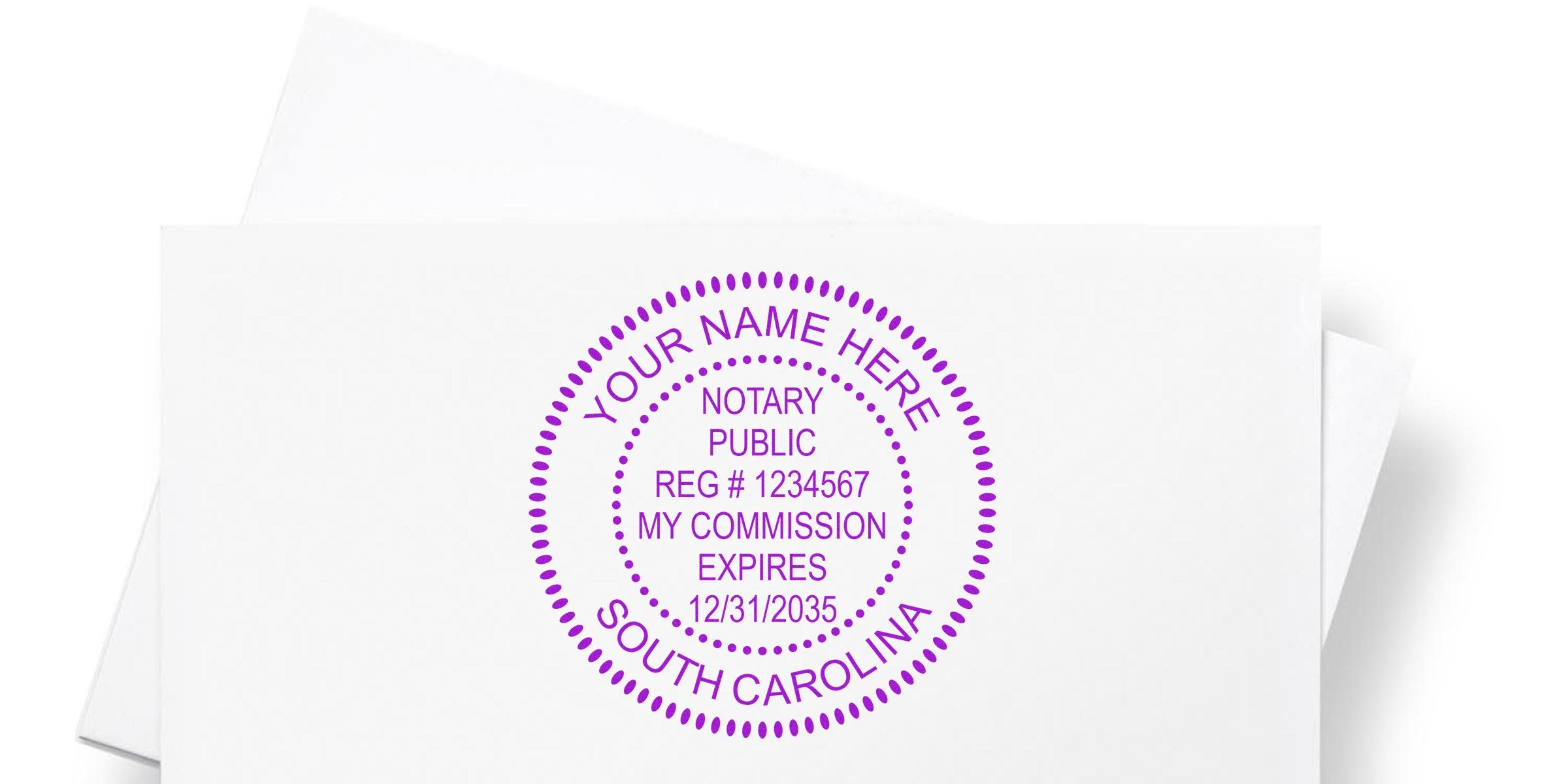
When it comes to meeting the state’s guidelines, paying attention to your seal is crucial. South Carolina notaries can use different types of seals, as long as they comply with legibility and content requirements. The Secretary of State doesn’t demand a particular shape or size, but your seal has to include your commission name, the words “Notary Public,” and optionally, your commission expiration date.
Rubber Stamps
A rubber stamp is the common go-to because it’s quick, affordable, and easy to apply. You simply press ink on the document near your signature. The state says you should ensure each impression is clear, so check your ink levels regularly.
Here’s why stamps are popular:
- Speed: Applying a stamp takes seconds.
- Convenience: They’re portable and relatively mess-free.
- Clarity: If you maintain your equipment, each impression is easy to read.
Embossing Seals
An embosser creates a raised impression on the paper. Historically, embossers were the traditional choice and, to this day, many people see them as an official marker of notarized documents. However, some offices prefer an inked stamp because an embossed seal might not show up well on photocopies.
Reasons to consider an embosser:
- Visual authority: That raised imprint signifies authenticity at a glance.
- Durability: The mechanism can last for years with minimal upkeep.
- Photocopy concerns: You can invest in an embossment inker, though, if you need photo-friendly documents.
Electronic Seals
Did you know that South Carolina’s Electronic Notary Public Act, signed into law on May 18, 2021, opened the door to electronic notarizations (often referred to as IPEN, or In-Person Electronic Notary)? Under the new rules, you and the signer still meet face-to-face, but you apply your notary seal and signature through electronic platforms or devices instead of paper.
Key points for electronic seals:
- eNotary registration: You must register and select an approved technology vendor.
- Physical presence remains: Your signer still needs to be with you, even if the documents are digital.
- Saves time: Electronic notarization speeds up certain real estate deals, lending processes, or eRecording in participating counties.
Clarify The Legal Requirements
By now, you probably see that “south carolina notary seal requirements” expand beyond a simple stamp design. Here are the big points you should remember:
- Commission name and state: Your stamp or embosser must clearly display your name and the words “Notary Public” plus “South Carolina.”
- Expiration date: Although including the date is optional, it’s best practice to have it.
- Legibility: If the seal isn’t clear, the document’s authenticity might be questioned.
- Physical presence: Whether it’s a paper certificate or an electronic one, you and the signer must be in the same location.
- Updates: Keep an eye on recent notary legislation, particularly around technology changes and eNotarization methods.
These essentials maintain the authority of your notarized documents and help you steer clear of any compliance issues.
Step Through Electronic Notarization
You might wonder, “If I’m using an electronic platform, wouldn’t that let me notarize remotely?” In South Carolina, no. IPEN means “in-person” electronic notarization. The process follows these steps:
- Meet the signer face-to-face.
- Verify the signer’s identity (ID check, plus a few questions if needed).
- Present the document electronically on a tablet or computer.
- Both of you sign digitally.
- You apply your electronic seal as the final verification of the notarization.
Since you’re still physically together, it aligns with the traditional presence rule. For more information, examine Title 26, Chapter 2 of the S.C. Code of Laws and Chapter 113, Article 4 of the S.C. Code of Regulations.
Choose The Right Seal
Now that you know your options, how do you pick the best notary seal for your everyday tasks? It depends on your personal preference and the nature of your notarial acts. If you travel a lot and perform notarizations on the go, a compact rubber stamp could be the most convenient. If you want that classic, formal feel, you might enjoy using an embosser.
Below is a quick comparison:
| Seal Type | Pros | Cons |
|---|---|---|
| Rubber Stamp | Quick and easy, clearly visible in photocopies | Ink can smear if you’re not careful |
| Embossing Seal | Highly official look, durable mechanism | Not as visible on copies unless you use embossment inker |
| Electronic Seal | Faster for digital transactions, eco-friendly | Requires setup and registration, must still meet physically |
Whichever you choose, make sure it aligns with South Carolina’s specifications. If you’re looking for a trusted supplier with 60+ years in the field, Acorn Sales offers quick turnaround on compliant seals and stamps. Check out our south carolina notary supplies whenever you’re ready for a new commission seal or a replacement.
Register As A South Carolina Electronic Notary
Curious about becoming an eNotary? The state outlines a clear process:
- Already be a commissioned notary in South Carolina.
- Watch the instructional video provided by the Secretary of State’s Office.
- Complete the online testing to confirm your knowledge of electronic procedures.
- Select a registered technology vendor that meets South Carolina’s standards.
- Obtain your digital certificate or seal from the chosen vendor.
Once approved, you can start offering in-person electronic notarizations. It’s great if you want to streamline closings, real estate deals, and other document-heavy transactions.
Why Trust Acorn Sales
We know that choosing party-favor stamps or budget seals isn’t an option when it comes to legal documents. After all, notarial acts have serious legal consequences if something goes wrong. That’s why Acorn Sales stands behind every product we provide, making sure it meets South Carolina’s guidelines.
- Longevity: With over six decades of experience, we’ve refined our process to deliver durable stamps and embossers that last.
- Compliance: Our seals contain mandatory elements like your name and “Notary Public, South Carolina,” plus optional details like commission expiration.
- Speedy Delivery: We understand you can’t put notarial work on hold for weeks, so we process orders quickly.
- Customer Support: Still unsure which seal is best for you? Our friendly team can help you decide and walk you through the ordering process.
We’re proud to be part of your professional journey as a South Carolina notary. With the right seal from Acorn Sales, you’ll feel confident every time you stamp or emboss a document.
Final Thoughts
Navigating the requirements for a South Carolina notary seal doesn’t have to be complicated. By focusing on clarity, physical presence, and the correct seal type, you’ll create valid notarizations that stand up to scrutiny. Whether you’re leaning toward a convenient rubber stamp or planning to go the electronic route, remember that you hold an important role in safeguarding the integrity of legal documents.
And if you ever need a quick reference or updated supplies, Acorn Sales is here to help you find exactly what you need. Trust yourself to meet each requirement, serve your community well, and enjoy the peace of mind that comes from knowing your notarizations meet the highest standards.
Feel free to explore your options, pick the seal that best suits your style, and keep these guidelines handy. And remember, when you need reliable stamps and seals, Acorn Sales has you covered. Enjoy your notary journey in the Palmetto State!
Frequently Asked Questions
Do I need a notary bond in South Carolina?
The state doesn’t require a bond, but many notaries get one for added financial protection. It’s purely optional and depends on your comfort level.
How can I confirm my seal meets South Carolina standards?
Ensure it contains your name, the words “Notary Public” and “South Carolina,” plus a clear impression or raised image. Adding your commission expiration date is optional but encouraged for clarity.
What if someone asks me to notarize a document from another state?
Yes, you can because South Carolina allows you to notarize documents from other states, as long as you’re physically in South Carolina while performing the act.
Can I conduct a notarial act outside of South Carolina?
No. Your commission is only valid within the physical borders of South Carolina. If you’re across state lines, you don’t have jurisdiction.
Is it difficult to convert to electronic notarization?
Not really. You’ll need to register with the state, take an online test, select an approved vendor, and obtain a digital certificate. Once your application is complete, you can perform electronic notarizations with the signer physically present.








