
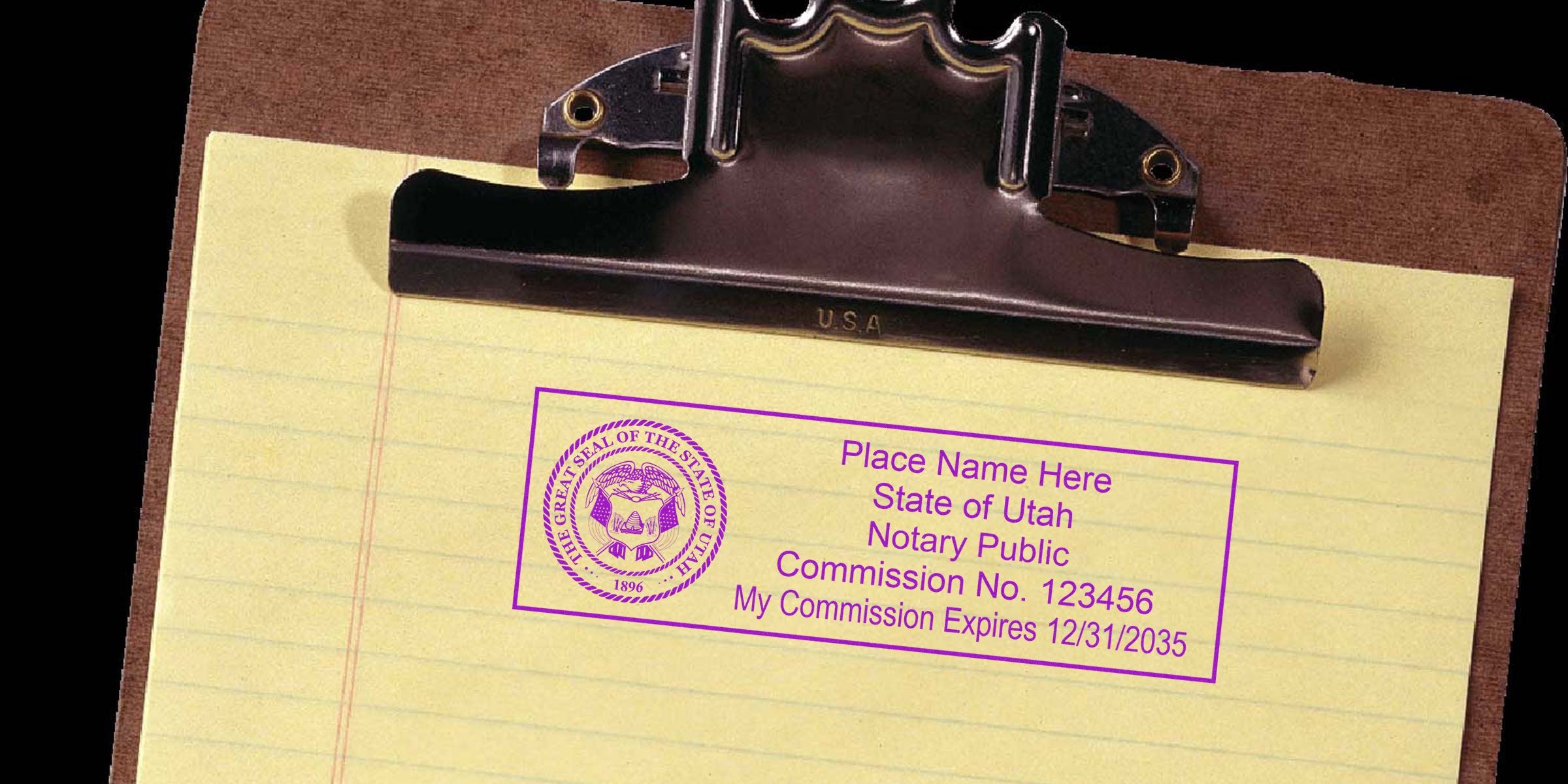
The Acts That a Utah Notary Public May Legally Perform
The Secretary of State for Utah provides would-be notaries with a diversity of information to help them become official notaries and do the job properly. Among the different items made available online through the SOS offices is a document that details ten of the biggest and most common errors made by notaries in the state. Designed to help people pass the state exam and perform flawlessly when they become a notary, it also very clearly lists the notarial acts legal for notaries to perform:
- Taking oaths and affirmations
- Jurats
- Certifying copies
- Taking acknowledgements
Each of the acts requires the use of an official Utah Notary Public stamp and seal along with proper notarial language. There are differences between each of these acts, and it is the job of the notary to understand everything as clearly as possible. They should do this during their preparation for the mandatory exam that all notaries must take and pass.
Becoming a Utah State Notary Public
If you would become an official notary in Utah and use the Utah Notary Public stamp and seal accordingly, you must follow a specific series of steps that include:
- Being eligible and qualified for a commission according to state standards
- Preparing for the exam using the appropriate study guide
- Take and pass the test
- Apply for a commission (submitting the appropriate fees)
- Obtaining two valid endorsements for your application
- Obtaining surety bonding in the amount of $5k and offering proof of that with the application
- Taking an oath of office
When completed, these steps allow you to receive a certificate that gives you the authority of a notary in the state, and allows you to obtain an official Utah Notary Public stamp and seal from a reliable vendor.
You commission lasts for four years and is easily renewed. However, that means that your Utah Notary Public stamp and seal will have to be updated to reflect the expiration date of your current commission, and if your name changes you must also update the records and the Utah Notary Public stamp and seal at the same time.
A Utah Notary Public stamp and seal is customized to match the details relating to each, individual notary.
The Guidelines and Requirements for a Utah State Notary Stamp
The state's guidelines for the design and content on any Utah Notary Public stamp and seal are universal and require:- The use of purple ink
- Photographically reproducible
- The notary's name as it was commissioned
- The phrase "Notary public"
- The name of the state as "State of Utah"
- The details about the expiration of the commission written as "my commission expires on" followed by the date
- The notary's commission number (if issued after July 1, 2008)
- The seal of the State of Utah
- Rectangular in shape and the dimensions must be no greater than 1" x 2.5"
- A border
- An embosser may be used in addition to a rubber stamp, but not on its own
- Cannot be used over or in any way to obscure information in the document
Clearly, there are many details relating to the proper use of your Utah Notary Public stamp and seal, and this is why education and training are important. Don't forget that the quality of the Utah Notary Public stamp and seal is significant too, and investing in a high quality device is a smart step in the right direction.
Frequently Asked Questions
What information is required on a Utah notary public stamp and seal?
A Utah notary public stamp and seal must include the notary’s commissioned name, the words “Notary public,” “State of Utah,” the expiration date in the format “my commission expires on” plus the date, the commission number if issued after July 1, 2008, and the State of Utah seal. It must also be in purple ink, photographically reproducible, rectangular, and bordered.
What notarial acts can a Utah notary public legally perform?
A Utah notary public may legally take oaths and affirmations, perform jurats, certify copies, and take acknowledgments. Each of these notarial acts requires proper wording and the correct use of the Utah notary public stamp and seal.
Can a Utah notary use an embosser instead of a stamp and seal?
No. In Utah, an embosser may be used in addition to the required notary stamp, but it cannot be used on its own. The official Utah notary public stamp and seal is still required for valid notarizations.
How big can a Utah notary stamp be?
A Utah notary stamp must be rectangular and no larger than 1 inch by 2.5 inches. Staying within the state’s size and format requirements helps prevent errors that could invalidate a notarization.
When should a Utah notary update their stamp and seal?
A Utah notary should update their stamp and seal whenever their commission expires or their name changes. Since Utah notary commissions last four years, the expiration date on the stamp must always match the current commission.
What are the most common mistakes Utah notaries make with stamp and seal use?
Common mistakes include using the wrong ink color, leaving out required information, using an outdated expiration date, stamping over document text, using a stamp that is too large, or failing to match the stamp exactly to the commissioned name. Careful review before notarizing helps protect both the client and the notary’s commission.








