
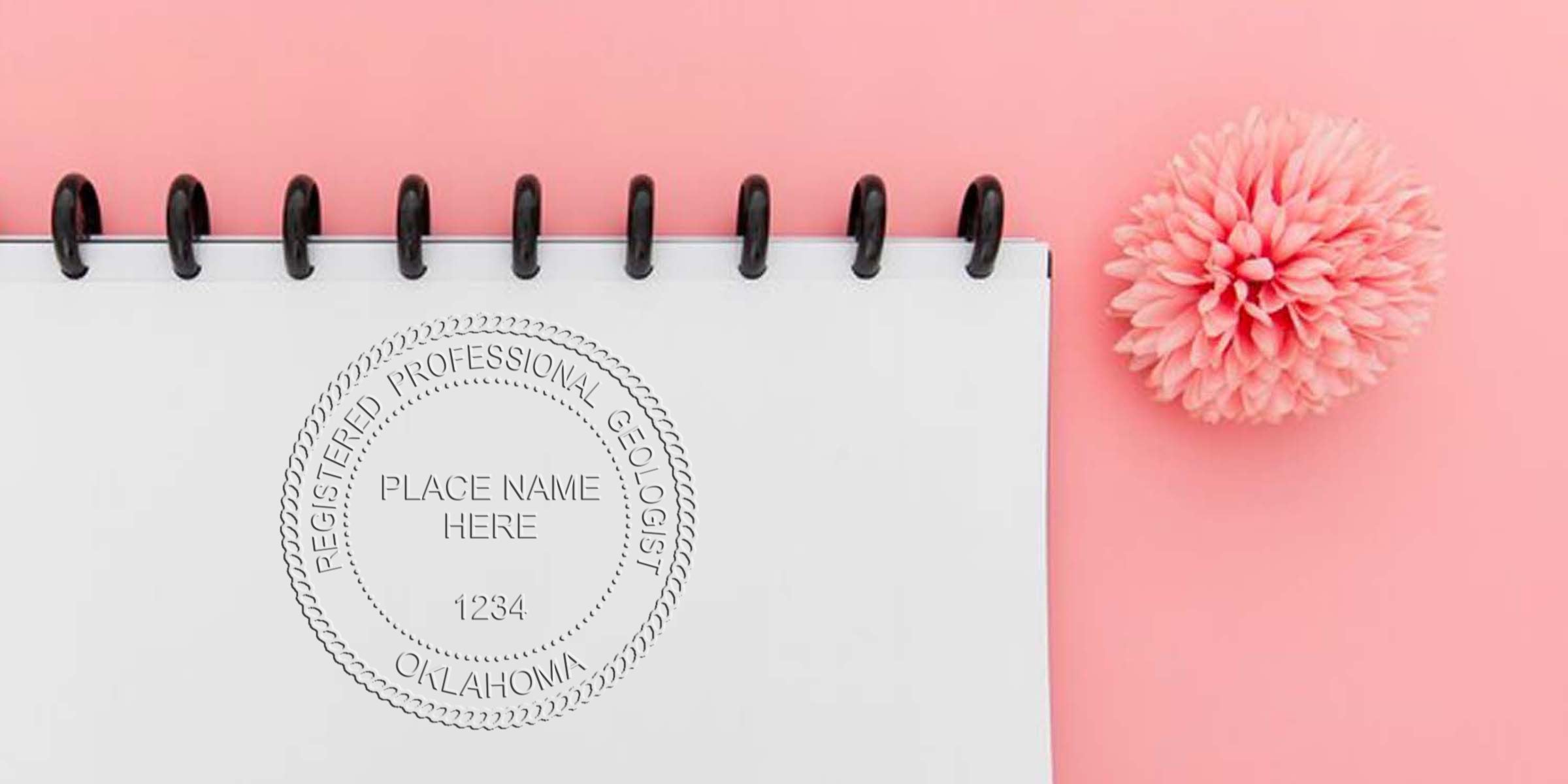
If you practice geology in Oklahoma and you are shopping for an embossing seal, start with the fact that changes the whole decision: Oklahoma does not license geologists. There is no state geology board, no geologist registration, and no seal the state tells you to carry or tells you how to design. An embossing seal is something you choose to own, not something that arrives with a credential.
That does not make it pointless. Geologists across the state emboss reports, letters, proposals and client copies because a raised impression beside a signature makes a document look finished and says at a glance who stands behind it. This post covers how an embossing seal works, how to choose one, what people put on theirs when nothing is prescribed, how to order, and how to keep it producing clean impressions for years. For the underlying research on where the state stands, read Oklahoma Geologist Stamp: What Belongs on the Die.
Where Oklahoma Actually Stands
Oklahoma's official occupational licensing directory lists the state's licensing boards, and no geology board appears on it. No Oklahoma agency licenses, registers or certifies geologists. There is no geologist license number to print, no title the state grants and protects, and no rule telling you when a geological document has to be sealed.
Two nearby credentials come up in conversation, and both belong to other people:
- The Oklahoma State Board of Licensure for Professional Engineers and Land Surveyors (59 O.S. Sec. 475.1 et seq.) licenses engineers and land surveyors. That is a separate credential with its own rules, and it does not cover geologists.
- The Oklahoma Water Resources Board licenses well drillers and pump installers. Also a separate credential, also not a geologist license.
If you hold one of those licenses on top of your geology work, the rules attached to that license are the ones to follow. If you do not, nothing in Oklahoma law hands you a seal obligation. What clients and agencies generally look for on geological work is a signature and a clear statement of who prepared it. An embossed mark sits next to that signature as a finishing touch you decided to add.
So Why Buy One?
Because a plain signature on a plain page looks like a draft, and a signature with a clean raised seal beside it looks like a deliverable. A seal identifies the author without anyone squinting at handwriting. It travels with the paper copy that ends up in a client's project file or a county records drawer. Plenty of geologists buy one for exactly that reason and no other.


Understand the Geologist Embossing Seal
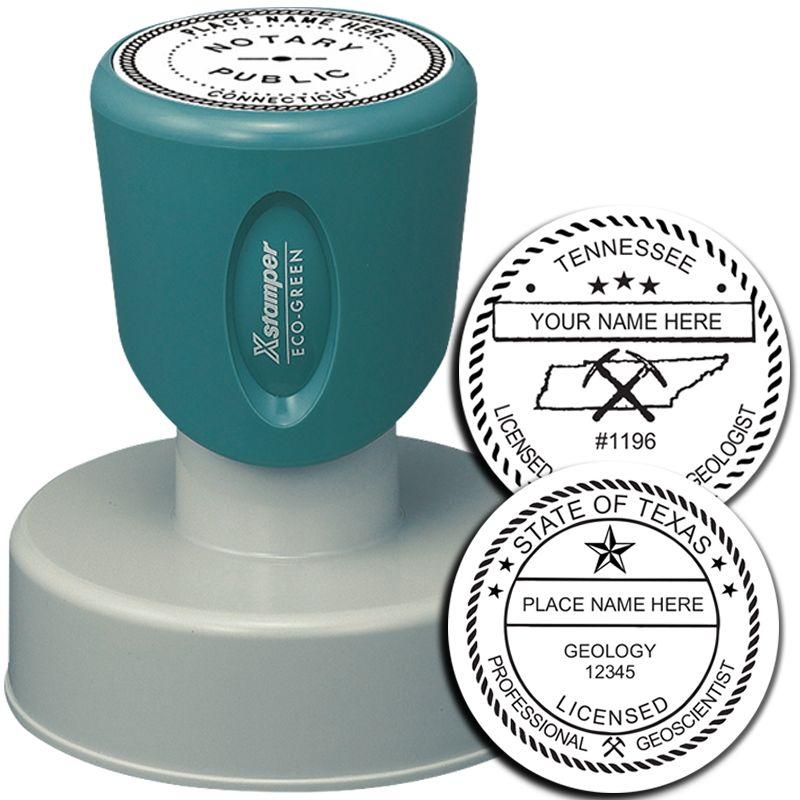
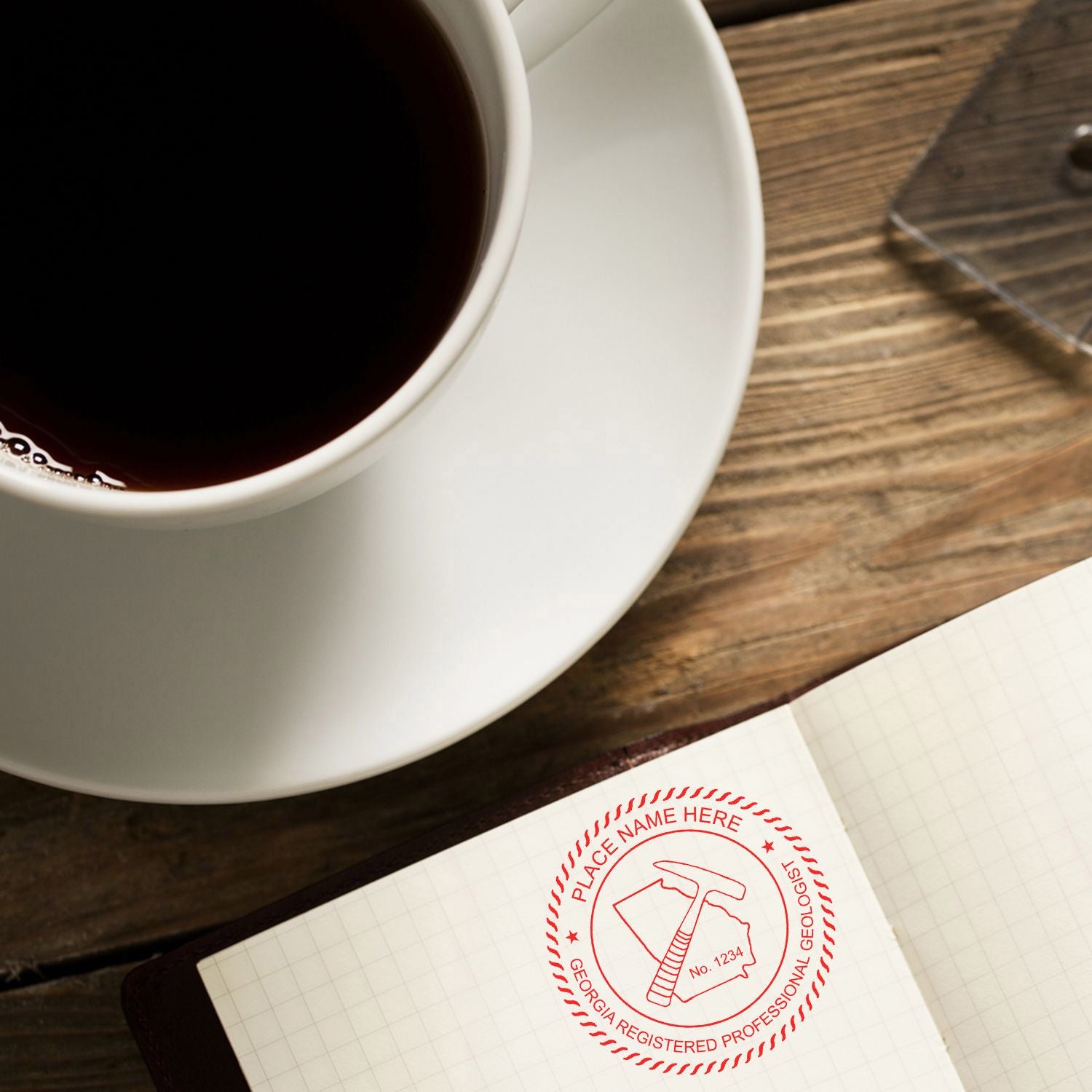
An embossing seal is a hand-operated device that raises a design in the paper itself instead of laying ink on top of it. The impression usually carries your name and whatever professional wording you choose, arranged inside a border.
How It Works
- You slide the page between the two jaws of the seal.
- The jaws hold a matched pair of the design, one raised and one recessed.
- Squeezing the handle presses the paper into that shape, leaving a raised image an office stamp cannot copy.
It works the same way a notary seal does, with wording chosen for geology instead. If you have seen an old certificate with a raised mark in the corner, that is the effect. It reads as deliberate, which is most of the reason people want it.
Embossing vs. Ink Stamps
Ink stamps, whether self-inking, pre-inked or a traditional handle and pad, are faster and show up on photocopies and scans. Embossers are quieter, harder to fake, and look more formal in the hand. Oklahoma asks a geologist for neither one, so the choice comes down to how your documents get used. Work that gets scanned and emailed favors ink. Work that gets signed, bound and handed over favors embossing. Some geologists keep both and use whichever suits the document.
When People Reach for the Seal
There is no state rule setting these occasions, but the pattern is consistent across the profession:
- Final reports and drawings that go to a client or an agency.
- Letters and opinions where the reader needs to know who wrote them.
- Project proposals and transmittals, where a seal reads as care taken.
If a client or an agency asks for a sealed copy of something, that request comes from them, not from Oklahoma law. It is still easy to honor once you own the device.
Choose Your Seal Design
Because Oklahoma prescribes nothing for geologists, the layout is yours. Most people keep it simple and readable: their name as they sign it, a professional line such as professional geologist, and a border. If you hold a national or voluntary credential you want to show, that can go on as well, printed in that body's exact wording. Leave off anything you cannot back up, and never print a state license number, because Oklahoma does not issue one to geologists.
Options to Consider
- Pocket vs. desk. Pocket embossers are compact and easy to carry to a site. Desk models sit steady and are easier on your hand when you have a stack to get through.
- Orientation. Some devices feed from the top of the page, others from the side. Pick the one that matches where you want the impression to land.
- Imprint quality. Heavier frames generally give sharper, deeper impressions. A lighter model gives a good impression too and asks for a firmer squeeze.
You can pair an embosser with an ink stamp if your work splits between paper deliverables and scanned files. An everyday ink stamp for internal markups, the embosser for anything a client keeps.


Order and Purchase Tips
Once you have settled on a style, the next question is where to buy. Acorn Sales has been making stamps and seals since 1964, for Oklahoma geologists and for professionals in every other state.
Why Buy from Acorn Sales
- Decades of practice. More than half a century of making these devices, which shows up in how the impressions come out.
- Free digital seal. A digital version of your design comes with the order at no extra cost, handy for electronic documents.
- Proof before production. Our team checks your spelling and spacing with you before anything is cut.
- Several formats. Pocket embosser, desk embosser or ink stamp, whichever fits how you work.
Before you confirm an order, check that:
- Your name reads exactly the way you sign it.
- Any professional wording is accurate and something you actually hold.
- The format is the one you meant to buy: embossing, ink, or both.
The Ordering Process
- Choose your model. Pick the style that fits your normal workflow.
- Provide your details. Send the wording exactly as you want it to read.
- Preview your seal. Look over spacing, borders and line breaks on the proof.
- Finalize the purchase. Approve the proof and the device goes into production.
None of this takes long, and the proof step is what keeps you from reordering over a misspelled middle initial. Shipping times vary, so order with some room if you have a deadline in mind.


Maintain Your Stamp or Seal
An embosser is a simple machine and it lasts a long time when you treat it well. A few habits keep the impressions crisp.
Simple Care Tips
- Keep it clean. Brush or wipe away paper fibers and dust that collect in the jaws.
- Store it safely. A crowded drawer knocks things out of true. A pocket model is happier in its pouch.
- Watch the alignment. Jaws that shift give crooked or half-formed impressions, and a small adjustment usually fixes it.
- Press evenly. A smooth, firm squeeze beats a hard, fast one every time.
Troubleshooting Common Issues
- Faint impressions. Add a little pressure, or reposition the page so the jaws meet flush.
- Heavy paper. Very thick stock can defeat a light pocket model. A heavier frame handles it, or emboss a thinner part of the document.
- Warping. Keep the device out of extreme heat and damp, which is what usually pulls a frame out of shape.
These devices are built for years of professional use. Get into a habit of wiping and storing it, and it will keep giving you the same impression it gave on day one.
Extras Worth Knowing About
A specialist supplier can usually do a few things a general office store cannot:
- Custom wording and borders. Adjust the font or the border to suit how you want the mark to read.
- Bundled orders. If you want an embosser and an ink stamp, ordering them together is simpler than two separate jobs.
- Help with the layout. When nothing is prescribed, a second set of eyes on the wording is worth having.
Digital Advantages
Take the free digital seal when it is offered. It is a high-resolution image of your design that you can drop into a PDF, a proposal template or an email signature. For work that never gets printed, it gives you the same visual mark without the paper step.
Bringing It All Together
Oklahoma does not license geologists and does not prescribe a geologist seal, so nobody can tell you that you need one. What a seal does is make your finished work look like finished work, and make the author obvious to whoever picks up the page a year later. That is a fair reason to buy, and it is the real one.
If you decide you want one, Acorn Sales has been making them since 1964. Choose the wording, look at the proof, and you will have a mark that belongs to you rather than to a rulebook. Questions about layout or format are welcome any time through our contact us page, and our full write-up on Oklahoma geologist seal research has the sources.
Frequently Asked Questions
Is a Geologist Embossing Seal Required in Oklahoma?
No. Oklahoma does not license, register or certify geologists, and no state rule tells a geologist to seal anything. People buy these seals because a raised mark next to a signature finishes a document and identifies the author. If a particular client or agency asks for a sealed copy, that is their request, not a state rule.
Do I Need Both an Embosser and an Ink Stamp?
Only if your work calls for both. An embosser looks more formal and is harder to copy. An ink stamp is faster and survives photocopying and scanning. Geologists whose work splits between printed deliverables and scanned files often keep one of each. One device covers most people.
Does the Seal Itself Ever Need Renewing?
No. There is no Oklahoma geologist license behind it, so there is nothing to renew. The only reason to order another is a change in what the seal says, such as a legal name change or new professional wording you want to show.
Are There Specific Guidelines for Document Layout?
None set by the state. Common practice is to place the impression near your signature, clear of important text, so both stay legible. If an agency or a client has a preference about placement, ask them.
Can I Emboss on Glossy or Textured Paper?
Yes, though the result varies. Heavy texture and high-gloss coatings can soften how the raised image reads. If you work on specialty paper often, run a test impression on a spare sheet before you emboss the real thing.








