

Written by Acorn Sales Company, manufacturing stamps and seals since 1964 · Reviewed by Holly R, VP of Sales and Marketing at Acorn Sales, against Title 18 of the Maryland State Government Article, COMAR 01.02.08 and the Secretary of State’s notary FAQ and handbook on 21 September 2026 · Updated 21 September 2026
Maryland requires a notary stamp on every notarial certificate for a paper record. It carries your name and office, your county of residence, and your commission expiration date. One detail is worth knowing before you order: Maryland lets the expiration date live in the certificate instead of on the stamp, which means a dateless Maryland stamp can run across renewals. The duty to use a stamp is also not where you would look for it. It sits in the certificate section, not the section headed “Requirements for official stamp”.
Maryland notary stamp requirements at a glance
| Requirement | Maryland rule | Source |
|---|---|---|
| Stamp required | Yes | Md. Code, State Gov’t § 18-215(b)(1), (b)(3) |
| Required wording | The notary’s name and office, which in practice means your name exactly as commissioned plus the words “Notary Public”; The county in which you reside; For a notary who resides outside Maryland, the county in which you qualified instead (Baltimore City counts as a county); The commission expiration date, unless you put it in the certificate instead | Md. Code, State Gov’t § 18-217(a)(1), (b) |
| Size and shape | Not addressed. | Md. Code, State Gov’t § 18-217(a)(2) |
| Ink color | Not addressed in the notary law. | Md. Code, State Gov’t §§ 18-215 to 18-223 (silent) |
| Embosser | Expressly permitted as a full alternative. | Md. Code, State Gov’t § 18-215(b)(1) |
| Commission term | Terms run four years: “The term of a notary public commission is 4 years.” The Secretary of State issues a renewal application before expiry, the handbook puts the window at 60 days before to 30 days after, and you then re-qualify before the circuit court clerk within 30 days. | Md. Code, State Gov’t § 18-103(b)(1), (d) |
| Name or address change | Notify the Office of the Secretary of State within 30 days of a change of name, home address, home or cell phone, personal email, business phone, business address, business email, or county of residence. | Md. Code, State Gov’t § 18-103(b)(1), (d) |
| Lost or stolen stamp | Notify the Secretary of State promptly on discovering the device is lost or stolen. | Md. Code, State Gov’t § 18-218(a)(1)-(3), (b) |
| Commissioning authority | The Governor, on approval of the applicant’s State Senator, with the Office of the Secretary of State running the Notary Division day to day and the clerk of the circuit court taking your qualification within 30 days | Title 18 of the Maryland State Government Article, COMAR 01.02.08 |
Rules for other states are on notary stamp requirements by state.


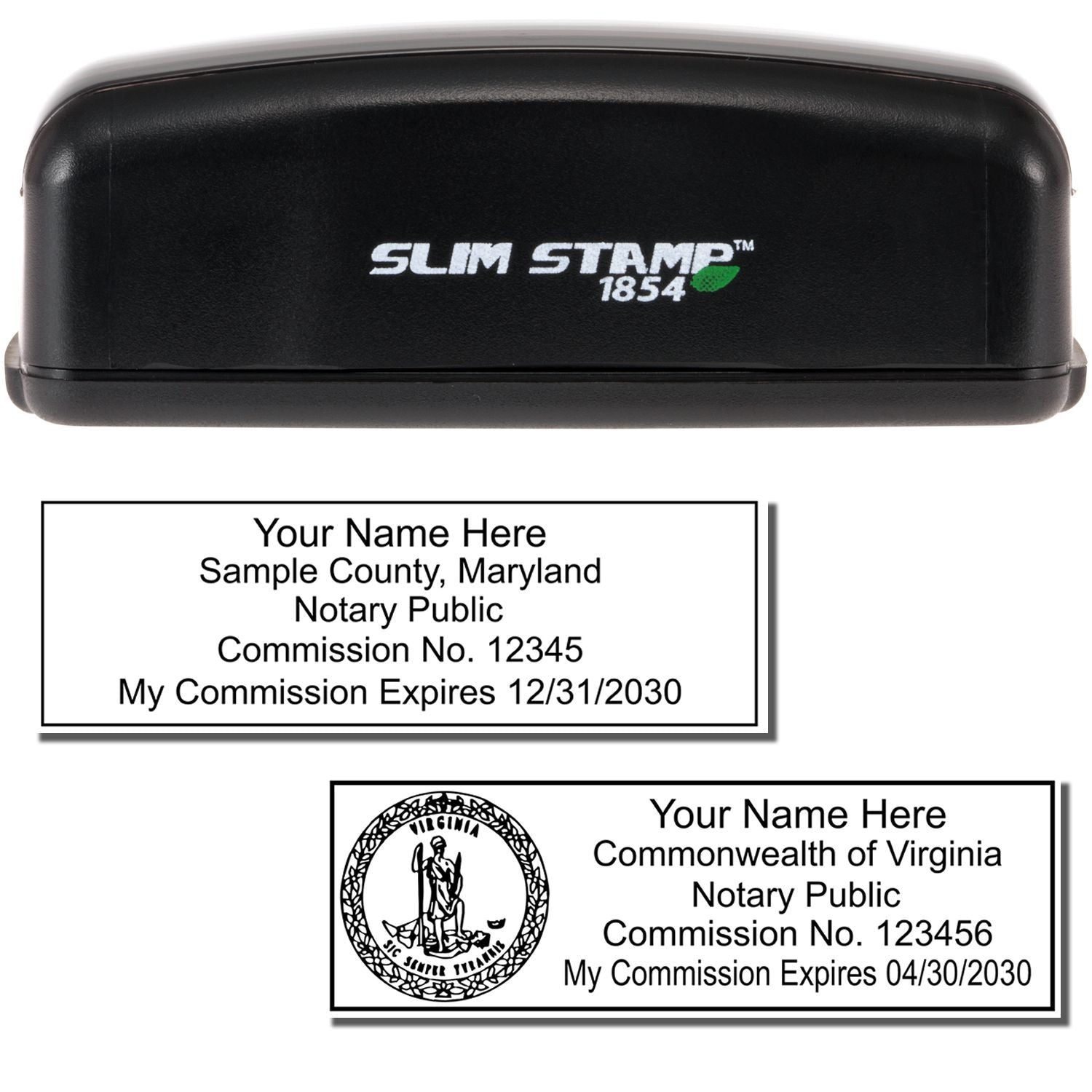
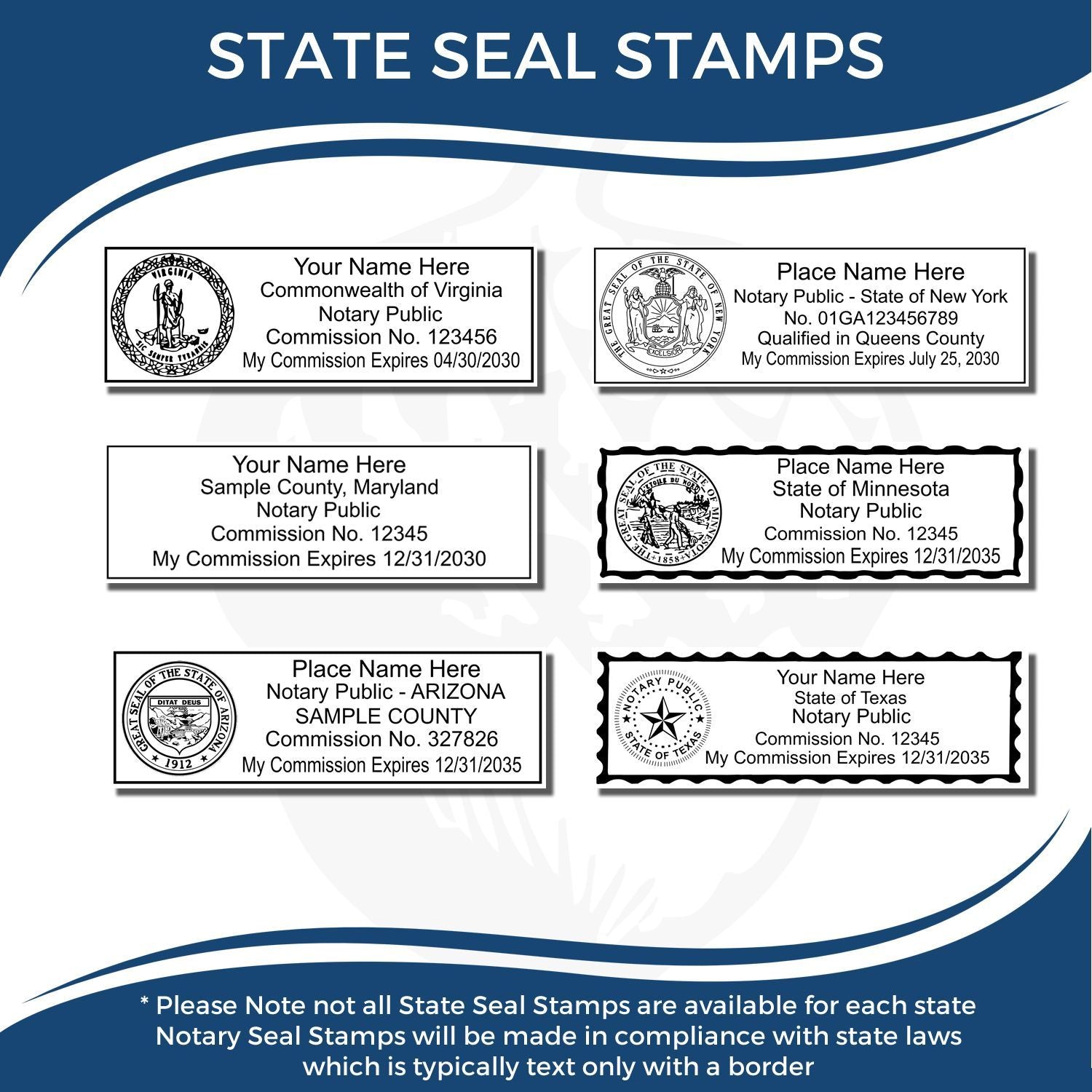

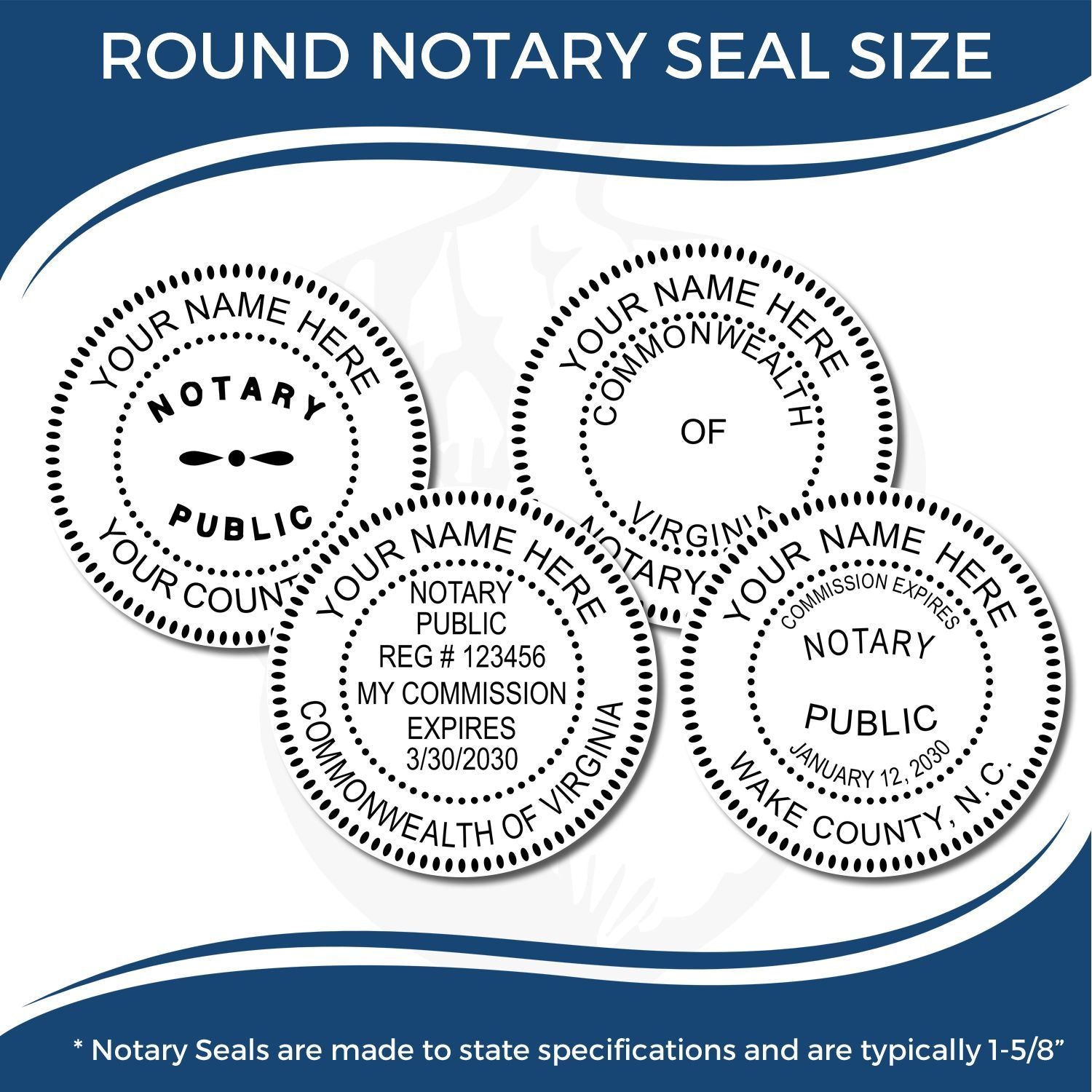


Is a notary stamp required in Maryland?
Yes, on every notarial certificate for a tangible record, and the duty sits in the certificate section rather than the stamp section: “If a notarial act regarding a tangible record is performed by a notary public, the notary public shall affix an official stamp to or emboss an official stamp on the certificate.” For an electronic record the very next paragraph says may, not shall.
The governing text is Md. Code, State Gov’t § 18-215(b)(1), (b)(3); § 18-217.
What must appear on a Maryland notary stamp?
- The notary’s name and office, which in practice means your name exactly as commissioned plus the words “Notary Public”
- The county in which you reside
- For a notary who resides outside Maryland, the county in which you qualified instead (Baltimore City counts as a county)
- The commission expiration date, unless you put it in the certificate instead
Two points about that list. The expiration date is a document requirement, not a stamp requirement: § 18-217(b) lets it go on the stamp “or within a certificate of notarial act”. And the stamp must be “capable of being copied together with the record to which it is affixed or attached or with which it is logically associated” (§ 18-217(a)(2)). The Secretary of State may add elements under § 18-217(a)(1)(iii) but has not done so; we read COMAR 01.02.08.01 through.10 and there is no seal regulation in it at all.
What size and shape must a Maryland notary stamp be?
Not addressed. No dimension, no shape, no border requirement anywhere in State Gov’t §§ 18-101 to 18-109 and 18-201 to 18-227, or in COMAR 01.02.08.01 through.10. The only physical constraint is functional: the impression has to copy with the record. The Secretary of State’s FAQ confirms the format may be an ink stamp, an embosser, or an electronic device or process.
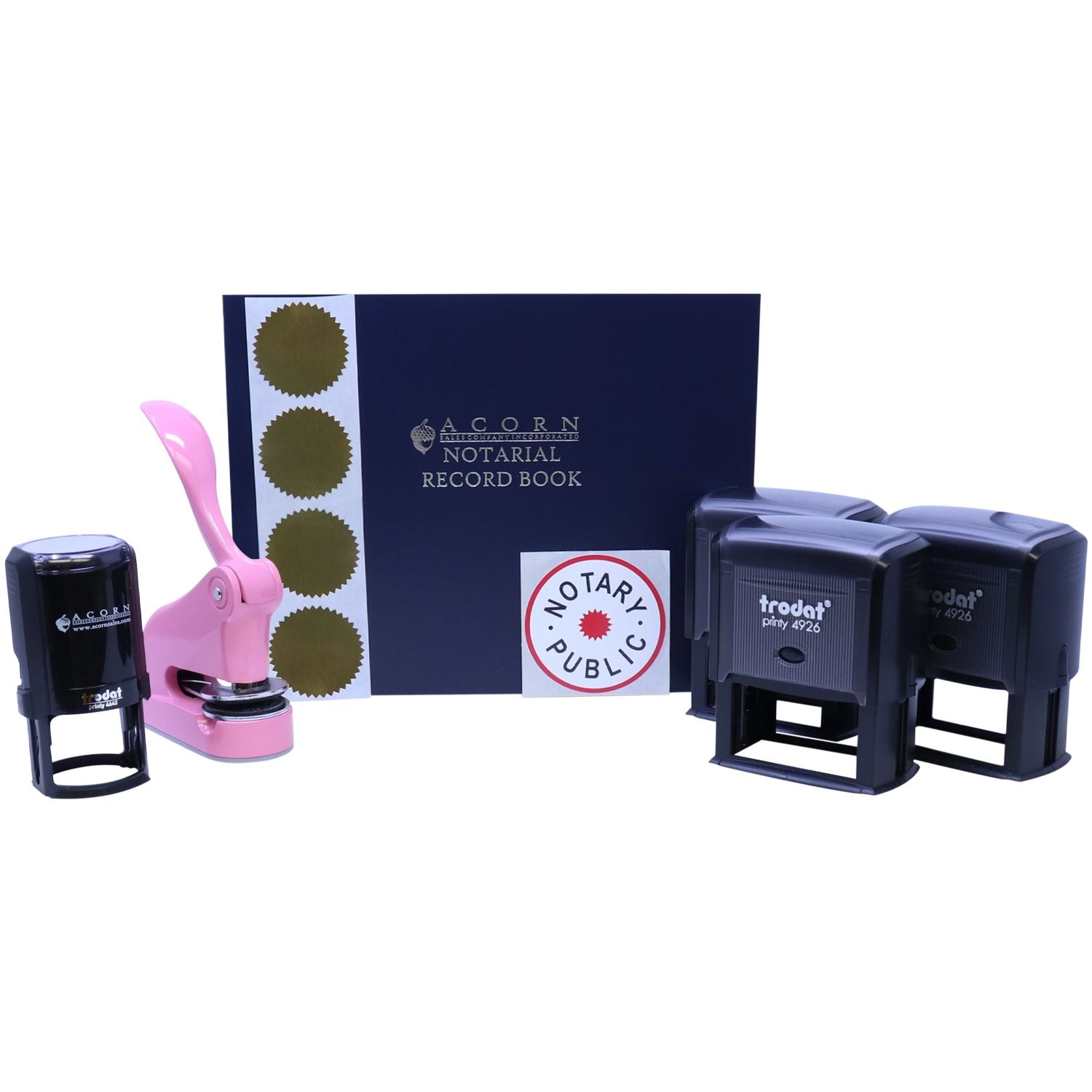
Notary public stamps are made to these conventions, and we check your lines against the statutory wording before we make the stamp.


What ink color is required for a Maryland notary stamp?
Not addressed in the notary law. The sources here are State Gov’t §§ 18-215, 18-216, 18-217, 18-218, 18-219, 18-220 and 18-223, all of COMAR 01.02.08, the Secretary of State’s notary FAQ, and the Handbook for Maryland Notaries Public, which discusses the stamp and says nothing about color. There is a black-ink rule next door, and it governs the instrument rather than your stamp: anything presented for recording must “be printed in not less than 8 point type and in black letters” on white paper, with typewriting likewise in black letters, and a non-conforming instrument is charged triple recording fees. That reaches the printed body of the deed, not the notary impression. Maryland does not require a black stamp, but a blue impression on a deed is a gray area at the land records counter.
More on the trade-off in stamp ink color rules.
Is a notary embosser required or optional in Maryland?
Expressly permitted as a full alternative. The mandate itself says “affix an official stamp to or emboss an official stamp on” the certificate, and the Secretary of State’s FAQ says the stamp can be an ink stamp or an embosser. The catch is § 18-217(a)(2): the impression must be capable of being copied together with the record, so a bare uninked emboss is authorized in form and non-compliant in substance. Nothing requires an embosser as a supplement.
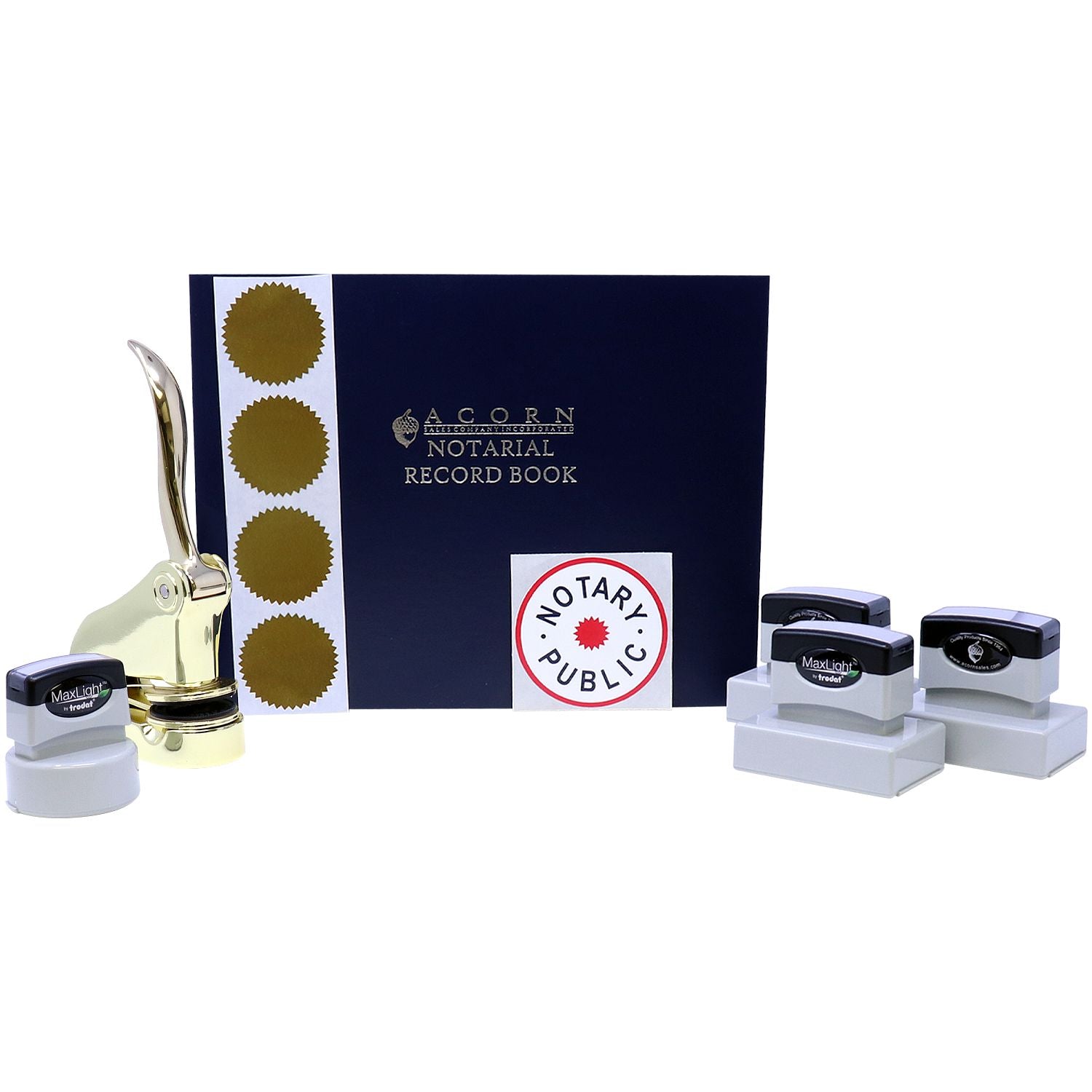
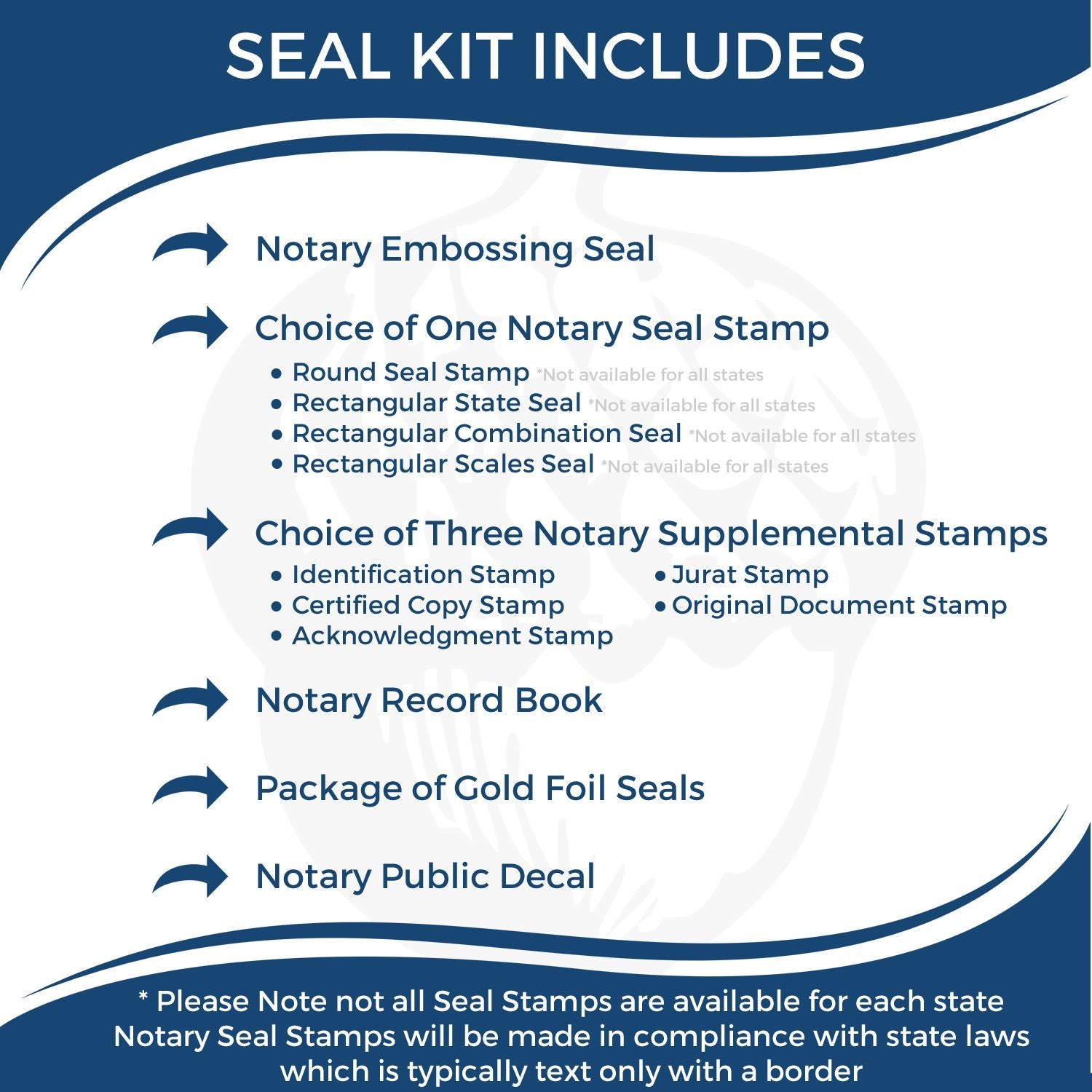
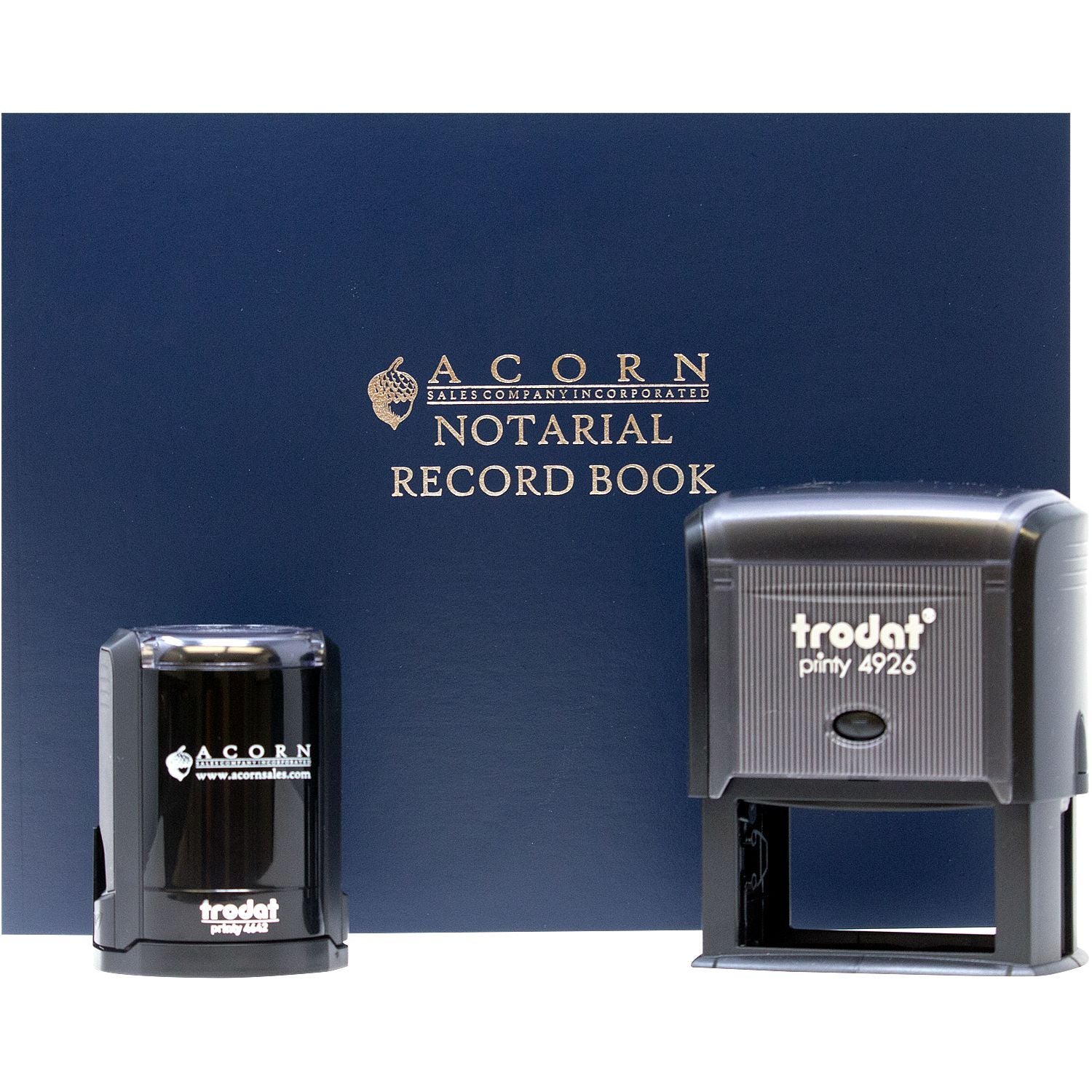
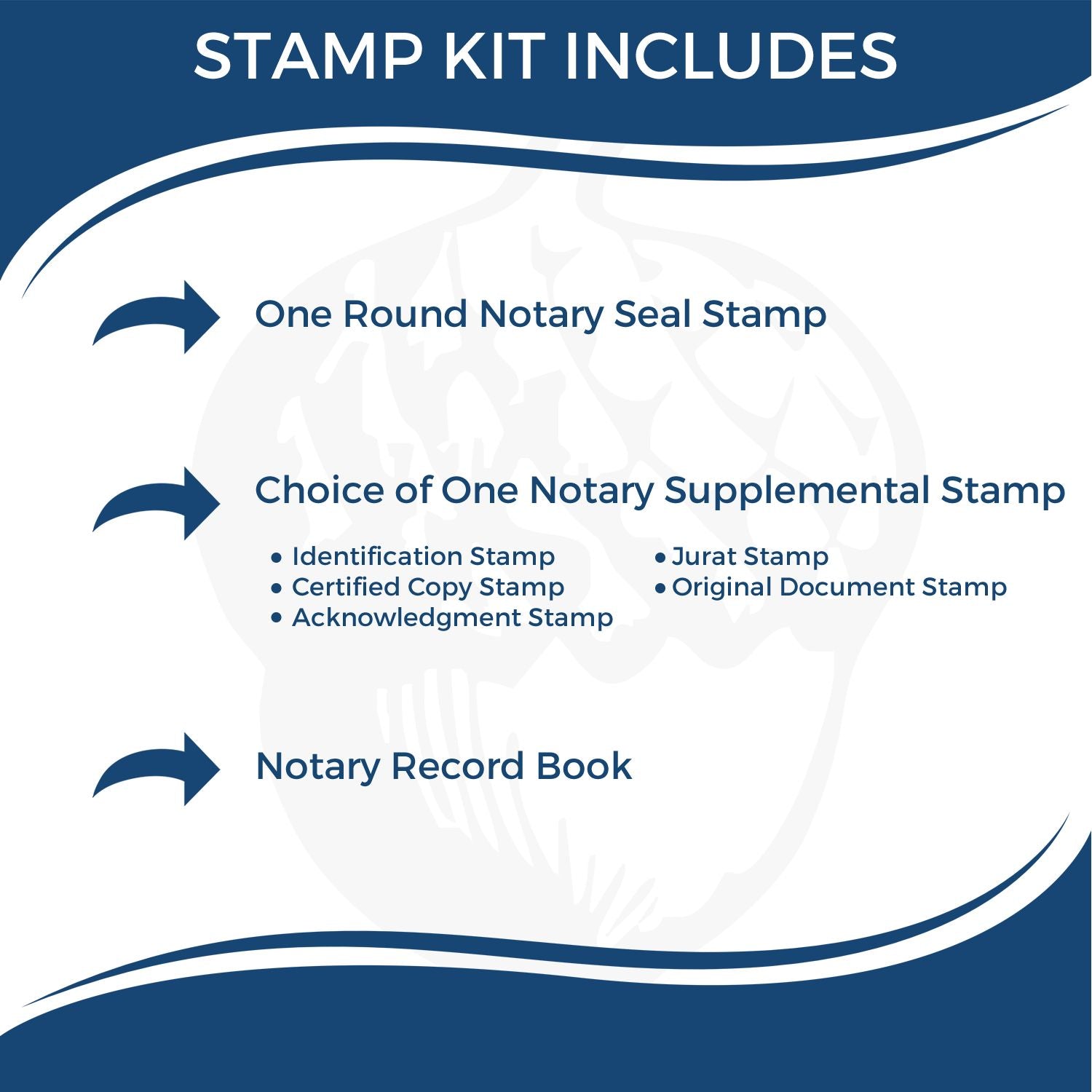
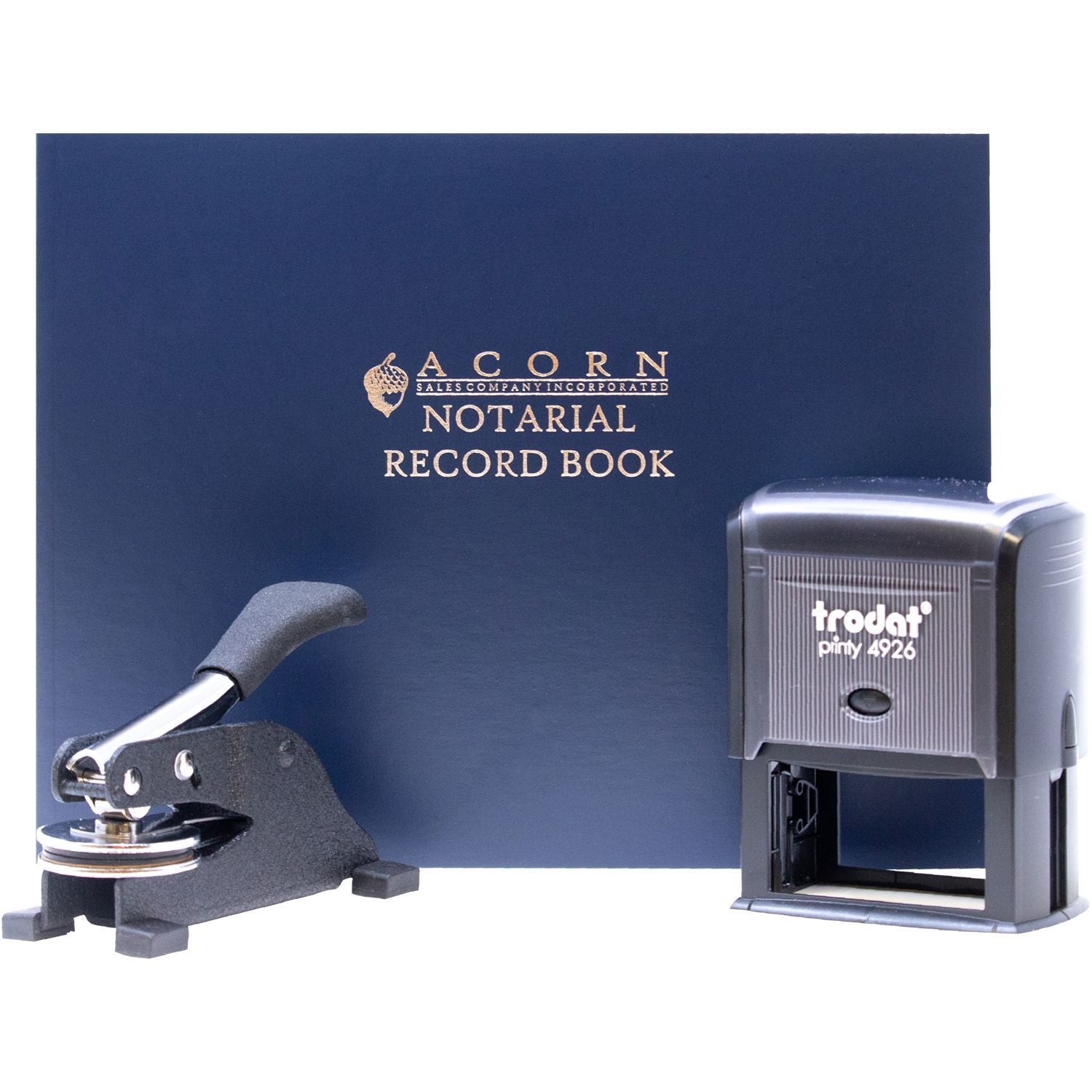
Notary embossing seal kits and inked stamp kits cover both formats. See also notary stamp vs. embosser.
The Maryland stamp rule is not in the Maryland stamp section
Section 18-217 is titled “Requirements for official stamp” and it is the section every checklist quotes. Read it alone and you will get Maryland wrong, because it only says what the stamp must contain. The duty to use one lives two sections earlier, in the certificate rules: “If a notarial act regarding a tangible record is performed by a notary public, the notary public shall affix an official stamp to or emboss an official stamp on the certificate” (§ 18-215(b)(1)).
Read the next paragraph of that same section and Maryland gets stranger. For an electronic record the stamp is permissive: the notarial officer “may attach an official stamp to or logically associate an official stamp with the certificate” (§ 18-215(b)(3)). Mandatory on paper, optional on screen. Almost no supplier page says this.
The third surprise is the expiration date, which is a document requirement rather than a stamp requirement. Section 18-217(b) lets it sit on the stamp or in the certificate, so a Maryland notary who writes the date into the certificate can legally use one dateless stamp across renewal after renewal. The element that does force a reorder is the county: move to another Maryland county and your stamp is wrong the day you move.
One more, because it catches paper-only notaries. Maryland requires a journal from every notary, not just electronic ones, in a bound register with numbered pages, kept 10 years (§ 18-219). Plenty of Maryland notaries do not keep one.
Do I need a new stamp when my commission is renewed or my name changes?
Terms run four years: “The term of a notary public commission is 4 years.” The Secretary of State issues a renewal application before expiry, the handbook puts the window at 60 days before to 30 days after, and you then re-qualify before the circuit court clerk within 30 days. Whether you need a new stamp depends on what is on it: a stamp carrying the expiration date has to be replaced every term, and a stamp that omits the date, with the date written into the certificate instead, can run indefinitely. Moving to a different Maryland county always means a new stamp, because the county is a mandatory element.
Notify the Office of the Secretary of State within 30 days of a change of name, home address, home or cell phone, personal email, business phone, business address, business email, or county of residence. The Secretary’s own handbook additionally instructs you to tell the Clerk of the Circuit Court, which COMAR does not say. Keep a current personal email on file: since 1 January 2021 the Secretary sends all communications except enforcement by email only.




What do I do if my Maryland notary stamp is lost or stolen?
Notify the Secretary of State promptly on discovering the device is lost or stolen. No day count is given; promptly is the whole standard. The Secretary’s FAQ gives the channel: email the notary division with your name, address, county of commission and the date of loss. A lost or stolen journal carries the same prompt-notice duty, and a former notary keeps the journal 10 years and tells the Secretary where it is.
How do I dispose of an expired Maryland notary stamp?
On resignation, revocation or expiry you disable the stamping device yourself, “by destroying, defacing, damaging, erasing, or securing it against use in a manner that renders it unusable”. Your personal representative or guardian carries the same duty after death or an adjudication of incompetency. You are responsible for the device’s security throughout and “may not allow another individual to use the stamping device to perform a notarial act”.
More on retiring an old device in how to dispose of an expired notary stamp.
Can I notarize electronically or remotely in Maryland?
Both authorized, and they are separate steps. For electronic notarization you notify the Secretary of State before your first electronic act and identify the technology you will use (§ 18-220). For remote notarization you give written notice naming the authorized vendor or vendors, and the vendor itself must be authorized by the Secretary of State under COMAR 01.02.08.04 through.06, which require a United States incorporated provider with at least three years of operation and United States based encryption. Tell the Secretary within 10 business days of changing vendors, and file a fresh remote-notary notification at every renewal. Electronic seal contents are the same § 18-217 elements, and remember the stamp is optional on an electronic record. Maryland is a mandatory journal state for every notary, paper or electronic: a bound register with numbered pages, or a permanent tamper-evident electronic format, kept 10 years after the last entry, with the identification credential number journaled under COMAR 01.02.08.08(C). Audio-video recordings of remote acts are kept at least 10 years. Fees are $8 per act and $30 per remote act.
If you need your seal as an image file for electronic work, see electronic notary seal images.
Related Maryland guides
Next step
Have your commission details in front of you before you order, because they go on the stamp and a wrong line means a reorder. Then browse notary public stamps, or contact us and we will check your wording against the statute before we make it.
Frequently asked questions about Maryland notary seals
Is a notary stamp required in Maryland?
Yes, for paper records. The rule is in the certificate section rather than the stamp section: if a notarial act regarding a tangible record is performed, the notary shall affix or emboss an official stamp on the certificate (Md. Code, State Gov't § 18-215(b)(1)). For electronic records the same provision is permissive.
What has to appear on a Maryland notary stamp?
Your name and office, and your county of residence, or for a non-resident notary the county in which you were commissioned. The commission expiration date is required on the document but may appear either on the stamp or elsewhere in the certificate.
Can my Maryland stamp leave off the expiration date?
Yes, and there is a reason to. The expiration date is a document requirement rather than strictly a stamp requirement, so it may be placed in the certificate instead. A Maryland stamp made without the date keeps working across renewals, while one made with the date is scrap the day your commission ends.
What size must a Maryland notary stamp be?
Maryland sets no size, no shape and no border requirement. The sources here are the notary act and the Secretary of State's regulations at COMAR 01.02.08 and found nothing on dimensions.
What ink color does Maryland require?
None. The notary law is silent on color. There is a black-letters rule in the real property recording statute, but it governs the body of the instrument rather than your stamp. Choose a color that copies cleanly.
Does Maryland require a notary journal?
Yes, and this is stricter than most states: every Maryland notary must keep a journal of every notarial act, and it is kept for ten years. Many notaries moving to Maryland are caught out by this.
Do I need a new stamp when my Maryland commission is renewed?
Only if the expiration date is printed on it. If you put the date in the certificate instead, your stamp carries only your name, office and county, none of which change at renewal. A name change or a move to a different county does require a new stamp.
Can I notarize electronically or remotely in Maryland?
Yes. Maryland authorizes both, with registration through the Secretary of State. Note the asymmetry in the statute: the stamp is mandatory on a paper certificate but permissive on an electronic one.








