
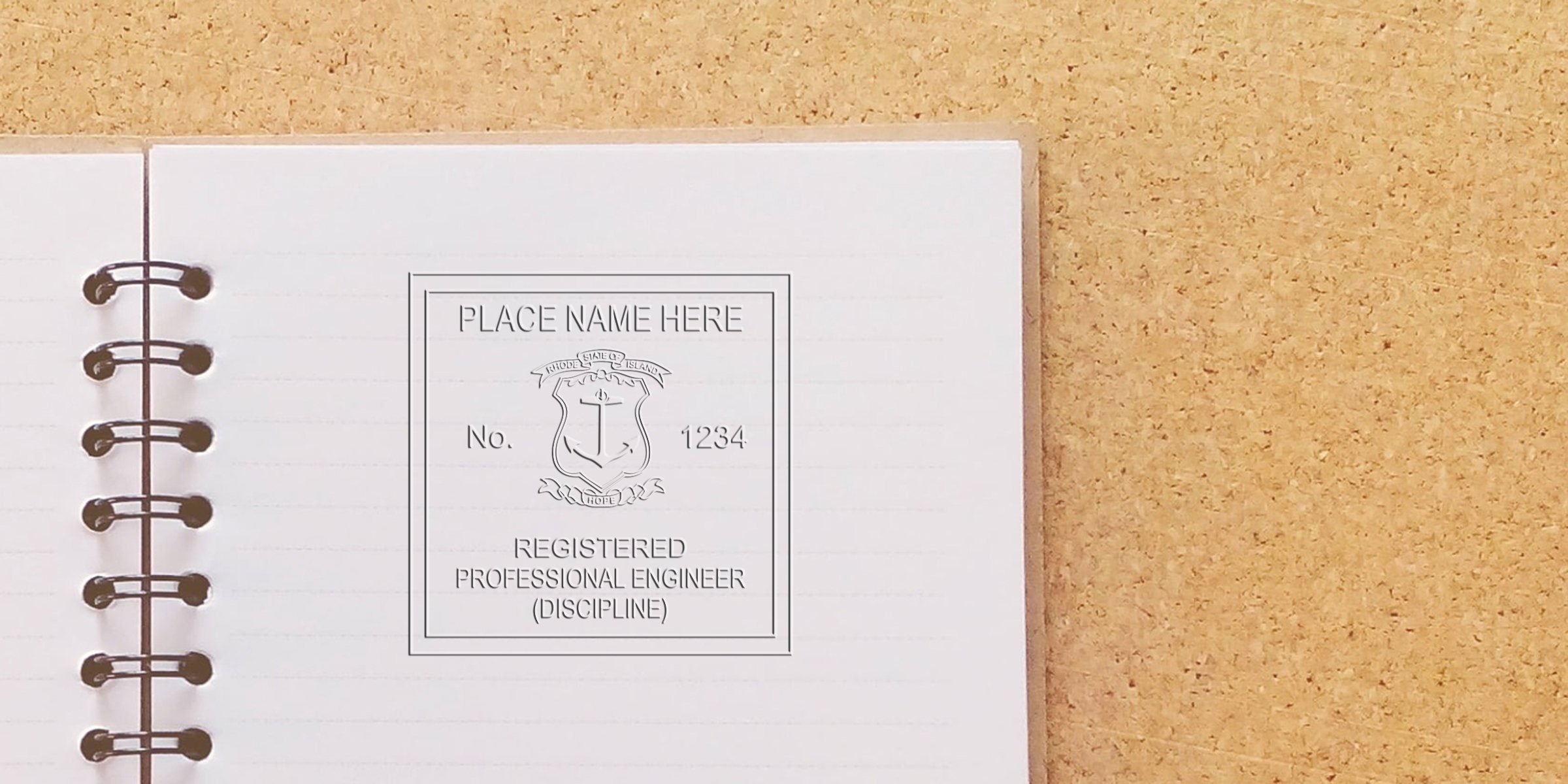
Are you looking for clear and reliable information on Rhode Island engineer stamp requirements? It can feel a bit intimidating, especially if you’re new to professional licensing rules or are used to engineering in different states. However, this guide will walk you through everything you need to know, from official regulations to practical usage tips, so you can confidently stamp your documents and keep your projects on track.
A professional seal is not just a formality. When you attach it to your plans, you’re taking responsibility for the designs and calculations included. In Rhode Island, the governing board mandates certain specifications so that the public remains protected and quality standards stay high. Ready to dive in? Let’s explore the ins and outs of licensing protocols, how to pick the right stamp, and why Acorn Sales is a dependable partner for your stamping needs.
Grasp the official requirements
The first step in ensuring engineering compliance is understanding the basic requirements set forth by Rhode Island’s Board of Registration for Professional Engineers. These regulations specify that only properly licensed individuals can use an official seal, and that seal must accompany all significant project documents.
It might surprise you just how detailed these requirements can get. For instance, Rhode Island often requires a circular seal containing your name, license number, and the words “State of Rhode Island” plus “Professional Engineer.” The design shouldn’t be overly decorative because clarity is key. Reviewing these details upfront will save you from headaches when you submit your final plans.
You’ll also need to place the seal in a clearly visible spot, typically near the title block or project information. It should never obscure vital notes, dimensions, or other details. The goal is to prove responsibility without interfering with the plan’s readability.
Along with the license number, your seal and accompanying signature should match the name you registered with the Rhode Island Board. If you ever change your legal name or license status, be sure to update your seal accordingly. Using an outdated or incorrect stamp can cause confusion and potential compliance issues.
Worried about the official measurements or fonts you must use? Don’t be. While Rhode Island offers general guidelines, they’re not overly rigid. The main priority is that your seal is legible and meets standard diameter requirements. If you need specifics, check out the ri pe seal specifications. It will give you exact details on lettering sizes and recommended design templates.
In most cases, official regulations also outline that only final documents or official versions should receive the stamp. Preliminary documents marked “Draft” or “Not for Construction” do not typically require a seal. This ensures your stamp only appears on the finished product—the one you stand behind professionally.
As you might imagine, these requirements are in place for consumer safety. They confirm that a qualified engineer is taking full accountability for the design and its compliance with state codes. By understanding and respecting these rules, you’ll not only avoid legal complications but also bolster trust in your expertise.
Ultimately, grasping the official requirements boils down to diligence. Stay aware of any rule changes by periodically checking in with the Rhode Island Board’s updates and guidelines. That way, you’ll always be ready to stamp the right document at the right time.
Follow essential stamp guidelines
Having the right seal design is one thing, but using it properly is another. You’ll want to follow a few key guidelines to ensure each stamped document remains legitimate and professional.
First, confirm that you or someone under your direct supervision has performed the engineering work. Never stamp plans created outside your oversight. Doing so compromises the purpose of the seal, which is to identify who’s legally responsible for the finished project.
Second, consistency matters. Use the same ink color—as recommended or allowed by local review agencies—for every stamp on a document set. Black ink is the usual go-to for clarity, but you’ll find some engineers prefer a distinct hue like blue or red to stand out. Either way, be sure it’s legible even after photocopying.
Many engineers wonder about the best moment to apply the stamp. Generally, you apply it once all calculations, drawings, and changes have been finalized to your satisfaction. This reduces the likelihood of conflicting revisions or confusion over which iteration is “official.”
Additionally, every plan you seal should also include your signature and the date. That trio—seal, signature, and date—serves as a complete statement of responsibility. Missing any one of these components might raise red flags with building departments or other agencies reviewing your submission.
Some Rhode Island jurisdictions might still require paper copies, while others accept digital submissions. Verify this with the local authority. If you’re submitting electronically, make sure your digital seal appears clearly and includes an e-signature or some certification method that locks the document from alterations.
Record keeping is another crucial part of correct usage. It’s wise to maintain a log—including the project name, stamp dates, and any relevant specs—so if someone questions the authenticity or timing of your stamp, you have a clear paper trail to back up your documentation.
Finally, if you collaborate with other professionals—architects, contractors, or consultants—set up a clear workflow that defines who stamps what. You don’t want to double-stamp or miss stamping a critical component of a project. Good communication prevents mistakes and clarifies responsibilities at every stage.
Following these essential guidelines fosters a professional image and keeps your projects running smoothly. It’s one of those habits that, once established, makes your entire process more efficient and transparent.
Pick the right stamp type
A significant part of meeting Rhode Island’s engineering seal rules is choosing what type of stamp (or seal) you’ll use. Whether you’re old-school with a manual stamp or prefer the speed of digital impressions, each type has pros and cons. Let’s break down three of the most popular options:
| Stamp Type | Pros | Cons | Ideal For |
|---|---|---|---|
| Traditional Rubber | - Simple to use. - Affordable initial cost. |
- Requires a separate ink pad. - Might be messy if rushed. |
Infrequent stamping at a desk. |
| Self-Inking | - Built-in ink reservoir for quick use. - Clean, consistent impressions. |
- Slightly more expensive upfront. - Stamp pad inside may dry over time. |
Large project sets, frequent stamps. |
| Digital Seal | - Perfect for electronic documents. - Quick to email or share. |
- Some jurisdictions still want physical stamps. - Requires secure file formats. |
Engineers who work mainly online. |
Traditional rubber stamps remain a favorite for those who don’t mind manually inking each impression. These stamps tend to be sturdy and cost-effective, but the separate ink pad can slow you down. If your stamping volume is low, it might work just fine.
Self-inking stamps, on the other hand, are incredibly convenient if you’re dealing with a large number of documents. They let you stamp quickly, without fussing with an external pad. However, keep an eye on ink levels. Over time, you’ll need replacements to keep the impression sharp.
Digital seals have seen a surge in popularity thanks to the increasing number of online project submissions. They remove the hassle of dealing with physical documents, especially if you’re sending in multiple versions or working remotely. Just be sure your software or system meets Rhode Island’s guidelines for secure digital seals, including ways to prevent unauthorized use.
No matter which type you choose, always prioritize clarity. A smudged or incomprehensible stamp can lead to rejections, lost time, and frustration. Testing your seal on scrap paper (or reviewing a digital preview) before stamping the real deal can save you from those issues down the line.
In some situations, you may need more than one type of seal. For instance, if your local building department requires physical copies but certain agencies you work with accept digital documents, you’ll want both options handy. This dual-approach ensures versatility and stops you from scrambling at the last minute.
Finally, consider how portable you need your seal to be. If you frequently travel between offices or job sites, a small self-inking device or a digital seal on your laptop can help you stay productive on the go. Meanwhile, if you usually stamp from a single, permanent desk, a traditional rubber stamp with a separate pad might suffice.
Picking the right stamp type is a mix of preference, budget, regulatory acceptance, and convenience. Take some time to weigh your workflow against each option’s pros and cons before you finalize your choice.
Explore crucial design elements
When you look at a Rhode Island engineer seal, you’ll notice consistent design themes: a circle, a ring of text identifying the state and your license status, plus your name and license number. Though straightforward, these elements serve a defined purpose. They clearly communicate that you’re a credentialed professional acknowledging responsibility for the documented work.
Font choice is a big part of the design. Overly elaborate fonts might look fancy, but they often end up unreadable on smaller prints or after multiple photocopies. A simple, bold font ensures clarity. Likewise, the spacing between text and surrounding borders should be balanced. Cramming text too close can make it appear cluttered.
Generally, the text “Professional Engineer” appears prominently, along with “State of Rhode Island.” Your individual license number typically goes near the center. Some designs place the name near the top or bottom, but consistency in sizing is key. You don’t want your name overshadowed by the state label.
Many engineers wonder if they can add personal flourishes. While some states allow minimal design liberties, it’s safer to adhere closely to officially recognized seal patterns, especially for the shape and order of text. That consistency helps plan reviewers instantly recognize a valid engineer’s seal.
You might also notice small details like an encircling border or a standard diameter size. This border or ring keeps the text contained and provides a uniform look on documents. Most guidelines recommend sizes around 1.5 to 2 inches in diameter, though exact specifications can vary. Always double-check with the Rhode Island Board if you’re unsure.
Remember, your seal stands alongside your signature and the date. This cohesive grouping approach is part of the recommended design convention—placing your signature close to the seal clarifies who used it. For digital seals, the system might automatically lock these elements together or encrypt them, ensuring they can’t be tampered with after the fact.
If you ever change your license details—say, your name changes or you obtain a new license number—be sure to update your stamp design accordingly. Using an outdated seal can lead to confusion or potential disciplinary action if it no longer matches the board’s records.
Ultimately, these design elements might seem minor, but they reinforce trust in your professional judgment. When you see a properly designed seal on project documents, you know a licensed, responsible engineer stands behind every detail of the plan.
Fulfill usage regulations
While the design of your Rhode Island seal is important, using it in line with state regulations is critical. It’s easy to accidentally misapply your seal, especially if you’re juggling multiple deadlines or working with a team. Let’s clarify these usage rules so you can avoid any compliance mishaps.
Typically, official practice dictates that each page of final drawings bears the official seal, signature, and date. However, some authorities allow you to seal only the cover sheet or an index page, as long as all included sheets are clearly referenced. Check local procedures to confirm which approach your region prefers.
Another key aspect is working only within your area of expertise. If you’re a civil engineer, for instance, you shouldn’t stamp a structural analysis unless you’re also licensed in that discipline or are completely sure you’ve done the necessary work to comply with structural standards. Overstepping your skillset can result in stiff penalties.
For preliminary or conceptual sketches, you can add disclaimers like “Not for Construction.” Generally, those shouldn’t carry your official seal since they’re considered incomplete. The seal symbolizes readiness, thorough review, and final accountability.
Also keep in mind that every stamped project might be subject to random audits or in-depth checks during the permitting process. If a query arises, you might need to produce support documentation, such as your calculations or references. Properly labeling your plans and keeping a detailed record of all relevant codes helps expedite these reviews.
In recent years, more engineers have shifted to electronic stamping. Check ahead for local acceptance of digital seals. Some jurisdictions provide guidance on approved e-signature platforms or encryption methods. Others might still prefer a wet signature. To meet usage regulations in both realms, have a backup plan for physical stamping if needed.
Finally, never delegate your seal to someone else. It might be tempting to let a colleague handle high-volume stamping duties, but that undermines the point of personal responsibility. Your seal is an extension of your professional license and cannot be loaned out or copied.
Following these involvement rules, final document policies, and disclaimers ensures you’re always on the right side of Rhode Island’s regulations. It also protects you from unwelcome surprises if an authority questions the legitimacy of your stamped plans.
Find a trusted supplier - ACORN Sales
Picking the right supplier for your Rhode Island engineer stamp might not sound like a monumental decision, but it can have a big impact on how smoothly your workflow goes. At Acorn Sales, we’ve been taking the guesswork out of professional stamps and seals for more than six decades.
Why does that matter to you? Experience breeds expertise. Over the years, we’ve seen changes in design requirements, technology, and usage patterns. We keep tabs on these shifts so you don’t have to worry about out-of-date designs or unreliable materials.
Our products are crafted with longevity in mind. We know you rely on crisp, clean impressions to demonstrate your professional credibility. That’s exactly why we use high-quality dies and ink supplies that stand the test of time, whether you’re stamping a few documents a week or multiple reports daily.
When you order from Acorn Sales, you’ll also receive a free digital seal. This perk is a real timesaver if you ever submit electronic documents. Instead of scrambling to create your own digital version, you have it ready to paste into CAD files, PDF drawings, or other digital mediums within moments.
Fast service stands out as another hallmark of Acorn Sales. If you’re staring down a tight deadline, the last thing you want is a prolonged wait for your new stamp. With our streamlined ordering process and rapid turnaround, you’ll be on your way to finalizing designs without delay.
Another perk is personalized support. Not all engineer seals are created equal, and we realize you might have specific preferences or questions. Our team enjoys assisting customers in identifying the best option—traditional rubber, self-inking, or digital—and ensuring the layout meets Rhode Island’s official guidelines.
We’re also a one-stop shop if you hold multiple licenses or practice across different states. Whether you need a Rhode Island-specific seal or stamps tailored to another jurisdiction, we can streamline the process. This means less searching and juggling different vendors and more time focusing on your engineering projects.
Finally, our long history with professional seals means we’ve collected countless stories, use-cases, and best practices that can benefit you. We’re not just a supplier, we’re a resource. When you choose us, you’re selecting a partner who wants to help your projects succeed.
Use practical stamping tips
Even if you’ve lined up the right seal and verified all the official guidelines, you can still run into minor frustrations when physically stamping documents or inserting digital seals. The good news is that a few simple tips will help you avoid these hiccups, keeping your work looking professional every time.
Make test impressions: Before stamping your final blueprints, test the seal on a piece of scrap paper. Confirm it’s clear, centered, and free of any smudges or uneven ink distribution.
Choose a smooth surface: When stamping paper documents, place them on a flat, stable surface. Stamping on uneven or textured surfaces may result in partial or distorted impressions.
Avoid staples or folds: If your document is folded or stapled, you risk creating lines or uneven pressure points. Keep the stamping area flat and uncluttered for the sharpest result.
Let it dry: If using a traditional or self-inking stamp, let the ink fully dry before stacking documents to prevent smears. Some quick-drying inks help, but a few seconds of caution can spare you reprints.
Organize digital file layers: For digital seals, layer management is crucial. Make sure the seal is on a top layer and anchored, so it doesn’t shift around when you export to PDF.
Retain original files: Always keep an original version of your stamped document—physical or digital—in its finalized form. This is key if disputes arise or if you need to prove the date of stamping later.
Document your workflow: Jot down the date and reason behind each stamp application. That extra bit of documentation can protect you if a question arises about the validity or timing of your seal.
Maintain equipment: If you’re using a self-inking stamp, check the ink reservoir regularly. Having a backup ink pad or replacement cartridge on hand can keep your workflow steady if you run low unexpectedly.
Following these tips not only preserves the quality of each stamped plan or report, but it also showcases your professionalism. Over time, you’ll develop a smooth routine that turns stamping from a mundane task into a quick, confident step in your process.
Avoid common misunderstandings
Misinterpretations around Rhode Island’s engineer seal rules can cause real trouble, not just in terms of compliance but for your professional reputation. Let’s zero in on a few typical mistakes so you can steer clear of them.
Some professionals believe their stamp grants them blanket authority across any engineering field. In reality, you should only stamp work in your area of competence. For instance, if you’re a mechanical engineer, stamping complex structural designs may be viewed as overextending your role. That mismatch can land you in trouble with the licensing board.
Others assume that stamping every single page is optional. Always confirm local procedures. Some building departments might require a stamp on every sheet of a plan set, while others allow a single stamp on the cover or index page with references to subsequent pages. Doing the wrong one can delay approvals or trigger repeated reviews.
You might also run across the belief that digital seals are automatically accepted everywhere. Although electronic submission is more common these days, certain municipalities still require wet seals on physical paperwork. Clarify these details in advance to avoid last-minute scrambling. If in doubt, maintain a physical stamp for backup.
Another pitfall is neglecting to keep updated logs. Years later, you may need to confirm exactly when you stamped a revision. If you have no record, you’re relying entirely on memory—risky business if you’re dealing with multiple projects. A consistent tracking method can be as simple as a spreadsheet with dates, project IDs, and any relevant notes.
Finally, watch out for letting interns or administrative staff apply your seal. This is a big no-go. Only the licensed engineer whose name appears on the seal should handle its use. Even if you have full confidence in your team, the law typically holds the seal owner personally responsible for its application.
Straightening out these misunderstandings protects your license and keeps your business rolling smoothly. An honest mistake can quickly spiral into a serious issue, so it’s worth taking the time to double-check proper procedures and communicate them to anyone who assists you.
By keeping these answers handy, you’ll be ready to handle the small details that sometimes trip people up. Clarity around these FAQs can protect your license status, expedite approvals, and prevent last-minute confusion.
When you keep the Rhode Island engineer seal regulations front and center, everything else—project approvals, client trust, and efficient workflows—tends to fall in line. If you need a new stamp that meets official guidelines and balances convenience with professionalism, Acorn Sales is here to help. Our decades of experience, free digital seal offer, and fast turnaround make it easy to stay compliant and confident.
Whether you finalize your plans in a design studio, on a construction site, or at the kitchen table, remember to follow best practices: stamp legibly, log your paperwork, and verify that your seal stays accurate. When your clients see that official Rhode Island seal and your signature, they’ll know they’re in good hands. And when you’re ready to order your next seal, we’ll be here to guide you every step of the way.
Frequently Asked Questions
Can I use my Rhode Island seal for other states?
It depends. Each state has specific rules and design elements tied to its own Board of Registration for Professional Engineers. If you’re licensed in multiple states, you usually need a distinct seal for each. Double-check every jurisdiction’s guidelines.
Is a digital seal legally binding in Rhode Island?
Often, yes. However, you still need to confirm with the particular city or county where you’re submitting documents. Some agencies fully embrace digital seals, while others request a physical impression. Maintaining both options is a good idea.
How often do state requirements change, and how can I stay updated?
Modifications don’t happen constantly, but they do occur. Signing up for newsletters or checking the Rhode Island Board’s official website every few months can keep you in the loop about any major changes to seal dimensions, usage, or licensure rules.
Do I have to reorder a new stamp if my license number changes?
Yes. If you get a new license number or if the name you registered with changes, you need to update your seal. Using an outdated stamp is viewed as non-compliant. At Acorn Sales, we can quickly create a new stamp so you stay valid.
Where should I place the date on my stamped documents?
It’s common to place the date right next to your signature, but it can also go directly below or above the seal. The key is uniformity and visibility. Make sure the date is clear so that it’s obvious when you officially took responsibility for the document.








